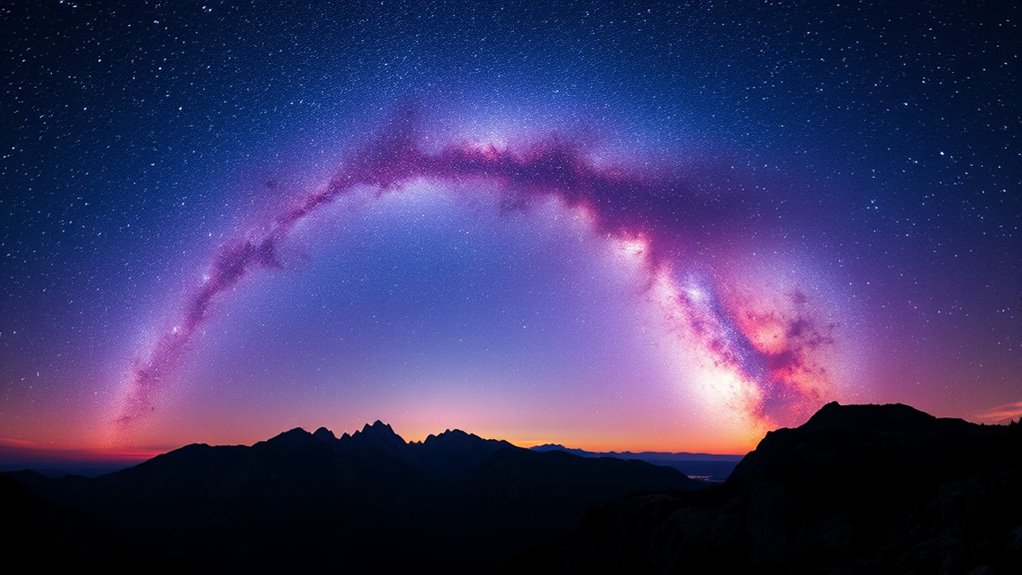

Astrophotography cameras are specialized tools designed to capture stunning images of the night sky, stars, and celestial objects. The best options balance high sensitivity, low noise, and durability, but often involve tradeoffs between price, complexity, and features. The SVBONY SC571CC stands out as the best overall with its cooled sensor and high resolution, ideal for serious astrophotographers. Meanwhile, the SVBONY SV105 offers a more affordable, beginner-friendly entry point, and the Celestron NexImage 20 excels at planetary imaging. Keep reading to explore these options and find the right fit for your sky-watching ambitions.

Get business pricing on tech for your team
- Business-only prices and quantity discounts
- Tax-exempt purchasing
- Multiple users, one account, clear invoices
Key Takeaways
- Top picks balance sensitivity, noise reduction, and ease of use, with cooled sensors favored for long exposures.
- Price often correlates with sensor quality and features, but the most expensive isn’t always the best choice for beginners.
- Versatility varies; some cameras excel in planetary imaging, others in deep-sky astrophotography, influencing the best fit for each user.
- Connectivity and software compatibility can significantly impact workflow, especially for advanced users.
- Portability and build quality matter for field astrophotography, making compact or rugged models appealing for outdoor use.
| SVBONY SC571CC Cooled Color Astronomy Camera with IMX571 CMOS Sensor |  | Best Overall for Deep-Sky Imaging | Sensor: IMX571 CMOS APS-C | Resolution: 26MP | Sensor Size: 23.4×15.7mm | VIEW ON AMAZON | See Our Full Breakdown |
| SVBONY SV105 Telescope Camera, 1.25″ IMX307 CMOS Color Eyepiece Camera |  | Best for Beginners and Planetary Imaging | Sensor: 1/2.8″ IMX307 CMOS | Resolution: 1920×1080 | Frame Rate: Up to 30 fps | VIEW ON AMAZON | See Our Full Breakdown |
| SVBONY SC715C Telescope Planetary Camera, 1.45μm Micro Pixel IMX715 Color | 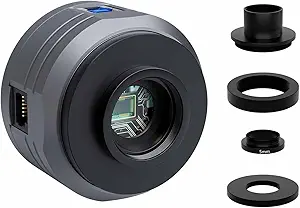 | Best for High-Resolution Planetary Imaging | Sensor: IMX715 | Pixel Size: 1.45μm | Resolution: 4K | VIEW ON AMAZON | See Our Full Breakdown |
| SVBONY SV305C Pro Telescope Camera, USB 3.0 2MP IMX662 Sensor |  | Best for Low-Light and Fast Imaging | Sensor: IMX662 | Resolution: 1920×1080 | Frame Rate: 107FPS | VIEW ON AMAZON | See Our Full Breakdown |
| ZWO Seestar S30 Pro Smart Telescope |  | Best for Beginners and Urban Astrophotography | Weight: 3.64 lb | Optics: Apochromatic | Imaging: Dual 4K cameras | VIEW ON AMAZON | See Our Full Breakdown |
| 4K Wireless Telescope Camera, 1.25’’ 2’’ Universal Eyepiece Camera | 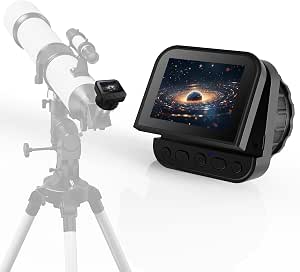 | Best Versatile Wireless Astrophotography Camera | Resolution: 8MP CMOS sensor, supports 4K video and 64MP images | Display: 2.8-inch IPS mini screen | Battery: 2000mAh lithium polymer | VIEW ON AMAZON | See Our Full Breakdown |
| Smart Telescope with 4K Astrophotography Camera and Dual Screens |  | Best for Beginner and Kid-Friendly Astronomy | Focal Length: 300mm | Aperture: 78mm | Magnification: up to 350X | VIEW ON AMAZON | See Our Full Breakdown |
| SVBONY SV305C Astrophotography Camera, 2.1MP IMX662 Color Telescope Camera |  | Best Entry-Level Planetary and Lunar Camera | Sensor: IMX662 | Resolution: 2.1MP | Sensor Size: 1/2.8” | VIEW ON AMAZON | See Our Full Breakdown |
| DWARFLAB Dwarf Mini Smart Telescope – Portable Astronomy Telescope |  | Best for Travel and Outdoor Astronomers | Weight: 1.85 lbs | Sensor: Sony IMX662 (1/2.8-inch, 2.9μm pixels) | Exposure Support: Up to 90 seconds | VIEW ON AMAZON | See Our Full Breakdown |
| SVBONY SV605CC Cooled Color Astrophotography Camera, 9MP IMX533 Eyepiece |  | Best for Deep Space and Meteor Monitoring | Sensor: IMX533 | Resolution: 3008×3008 | Pixel Size: 3.76μm | VIEW ON AMAZON | See Our Full Breakdown |
| DWARFLAB Dwarf 3 Smart Telescope, App-Controlled Astrophotography Camera |  | Best for Portable Travel and Versatile Shooting | Weight: 3 lbs / 1.35 kg | Imaging System: Dual Lens (Telephoto and Wide-Angle) | Auto-Tracking: Yes | VIEW ON AMAZON | See Our Full Breakdown |
| 4K 8MP USB Astronomy Camera for Telescopes |  | Best for Beginners Wanting 4K High-Res Imaging | Sensor Resolution: 8MP | Video Support: 4K | Frame Rate: 1080P high frame rate | VIEW ON AMAZON | See Our Full Breakdown |
| Celestron NexImage 20 Solar System Imager – Lunar & Planetary Camera, Color |  | Best for High-Resolution Solar System Imaging | Sensor: AR2020 CMOS, 20 MP | Resolution: 5240 x 3840 | Pixel Size: 1.4 microns | VIEW ON AMAZON | See Our Full Breakdown |
| astrophotography camera | Resolution | Sensor |
|---|---|---|
| SVBONY SC571CC Cooled Color As | 26MP | IMX571 CMOS APS-C |
| SVBONY SV105 Telescope Camera | 1920×1080 | 1/2.8" IMX307 CMOS |
| SVBONY SC715C Telescope Planet | 4K | IMX715 |
| SVBONY SV305C Pro Telescope Ca | 1920×1080 | IMX662 |
| ZWO Seestar S30 Pro Smart Tele | — | — |
| 4K Wireless Telescope Camera | 8MP CMOS sensor, supports 4K video and 64MP images | — |
| Smart Telescope with 4K Astrop | — | — |
| SVBONY SV305C Astrophotography | 2.1MP | IMX662 |
| DWARFLAB Dwarf Mini Smart Tele | — | Sony IMX662 (1/2.8-inch, 2.9μm pixels) |
| SVBONY SV605CC Cooled Color As | 3008×3008 | IMX533 |
| DWARFLAB Dwarf 3 Smart Telesco | 4K | — |
| 4K 8MP USB Astronomy Camera fo | — | — |
| Celestron NexImage 20 Solar Sy | 5240 x 3840 | AR2020 CMOS, 20 MP |
More Details on Our Top Picks
SVBONY SC571CC Cooled Color Astronomy Camera with IMX571 CMOS Sensor
The SVBONY SC571CC stands out for its high-resolution 26MP IMX571 sensor, making it ideal for capturing intricate details of galaxies and nebulae. Compared with the SVBONY SV305C Pro, which offers faster frame rates but lower resolution, the SC571CC prioritizes image detail over speed. Its dual-stage TEC cooling and dew heater significantly reduce noise and image degradation during long exposures, a common challenge in deep-sky astrophotography. The USB 3.0 connection provides reliable data transfer, but setting up this camera involves a steeper learning curve and compatibility considerations. The absence of a specified price could be a barrier for some. This pick makes the most sense for dedicated astrophotographers seeking high-res, long-exposure images, willing to invest time in setup.
Pros:- High-resolution 26MP sensor captures fine deep-sky details
- Effective cooling reduces noise in long exposures
- Integrated dew heating prevents moisture buildup
- Stable USB 3.0 data transfer
Cons:- Requires compatible telescope and specialized software setup
- Steeper learning curve for newcomers
- Price is not specified, possibly high
Best for: Astrophotographers aiming for detailed deep-sky images and comfortable with complex setups
Not ideal for: Beginners or casual users who prefer plug-and-play solutions or quick results
- Sensor:IMX571 CMOS APS-C
- Resolution:26MP
- Sensor Size:23.4×15.7mm
- Pixel Size:3.76 µm
- Cooling:Dual-stage TEC, -35°C below ambient
- Connectivity:USB 3.0
Our verdict“This camera is best suited for experienced astrophotographers focused on high-detail deep-sky imaging and prepared for technical complexity.”
SVBONY SV105 Telescope Camera, 1.25″ IMX307 CMOS Color Eyepiece Camera
The SVBONY SV105 offers a straightforward and versatile entry point for planetary, lunar, and terrestrial photography, thanks to its 1920×1080 resolution and compatibility with multiple operating systems. Unlike the ZWO Seestar S30 Pro, which includes smart tracking and AI features, the SV105 relies on manual telescope control, making it less automated but more flexible for traditional astrophotography. Its plug-and-play design simplifies setup, ideal for newcomers who want instant results without complex configuration. However, it lacks iOS support and is limited to 30 fps at full HD, which can constrain real-time viewing and video quality. This camera makes the most sense for hobbyists seeking quick, high-resolution planetary shots with minimal fuss.
Pros:- Easy to set up and use with plug-and-play design
- High-resolution imaging suitable for planets and the Moon
- Compatible with Windows, Linux, and MacOS
- Versatile for lunar and terrestrial shots
Cons:- No support for iOS devices like iPhones or iPads
- Limited to 30 fps at full HD, affecting real-time video quality
- Requires software downloads for different OS
Best for: Beginners interested in planetary, lunar, and terrestrial imaging with simple setup
Not ideal for: Advanced astrophotographers seeking deep-sky imaging or AI-driven automation
- Sensor:1/2.8″ IMX307 CMOS
- Resolution:1920×1080
- Frame Rate:Up to 30 fps
- Video Recording:2K
- Compatibility:Windows, Linux, Android, MacOS
- Mount:1.25″ threaded M28.5×0.6
Our verdict“This camera is ideal for beginners seeking straightforward planetary imaging without needing advanced automation.”
SVBONY SC715C Telescope Planetary Camera, 1.45μm Micro Pixel IMX715 Color
The SVBONY SC715C excels at detailed planetary imaging thanks to its 1.45μm IMX715 sensor, offering 4K resolution and fast USB 3.0 data transfer. Compared to the SVBONY SV105, which is more beginner-friendly, the SC715C provides finer detail and higher video frame rates (45.5 fps) suitable for capturing planetary atmospheres and surface features. Its durable aluminum body and compatibility with popular software like SharpCap make it appealing for serious amateurs and professionals. The downside is that it isn’t compatible with smartphones and lacks an integrated focus mechanism, requiring precise manual adjustment. This camera makes the most sense for users wanting high-quality planetary videos without investing in a dedicated planetary mount or complex automation.
Pros:- High-resolution 4K imaging captures fine planetary details
- Fast USB 3.0 transfer at 45.5 fps supports smooth video capture
- Robust aluminum body for outdoor use
- Compatible with popular astronomy software
Cons:- No smartphone compatibility or wireless connectivity
- Requires manual focus and setup, no automated features
- No built-in focus mechanism
Best for: Amateurs and semi-professionals focused on planetary and lunar imaging with high detail
Not ideal for: Beginners or those seeking deep-sky astrophotography or mobile compatibility
- Sensor:IMX715
- Pixel Size:1.45μm
- Resolution:4K
- Frame Rate:45.5 fps
- Interface:USB 3.0
- Compatibility:Mac, Windows
Our verdict“This camera is best for users who want high-res, detailed planetary videos and are comfortable with manual focus adjustments.”
SVBONY SV305C Pro Telescope Camera, USB 3.0 2MP IMX662 Sensor
The SVBONY SV305C Pro provides a balanced mix of high sensitivity and speed, making it ideal for capturing detailed planetary images in low-light conditions. Its 2MP IMX662 sensor with ultra-low noise outperforms many competitors, including the SVBONY SV105, especially in challenging illumination. The standout feature is its high frame rate of 107FPS, allowing for quick stacking of frames to enhance image quality. Features like HDR, ROI support, and heat dissipation add to its versatility but require familiarity with astrophotography software and computer control. The camera’s dependency on a computer limits portability, and it isn’t compatible with mobile devices like iPads. This model makes the most sense for astrophotographers who prioritize fast, high-sensitivity imaging and are comfortable with more complex setups.
Pros:- High sensitivity with low readout noise (0.7e-)
- Very high frame rate supports real-time stacking and video
- Supports HDR and ROI for flexible imaging
- Stable heat dissipation for long sessions
Cons:- Requires a computer for operation, limiting portability
- No support for iOS or mobile devices
- Complex setup process for new users
Best for: Experienced astrophotographers focusing on planetary detail and rapid, stacked imaging
Not ideal for: Beginners or mobile-only users who want quick, simple setups
- Sensor:IMX662
- Resolution:1920×1080
- Frame Rate:107FPS
- HDR:Yes
- ROI Support:Yes
- Heat Dissipation:Yes
Our verdict“This camera suits experienced astrophotographers needing fast, sensitive imaging with advanced features for high-quality planetary captures.”
ZWO Seestar S30 Pro Smart Telescope
The ZWO Seestar S30 Pro combines ease of use with smart automation, making it highly appealing for newcomers and outdoor enthusiasts. Its automatic GOTO and AI-powered noise reduction simplify capturing celestial objects, even in light-polluted environments, unlike traditional cameras such as the SVBONY SC571CC, which require manual setup and detailed calibration. The dual 4K cameras and app control make it portable and user-friendly, but its performance may be limited in heavily light-polluted areas or when deep-sky detail is desired. The specifications on software features are sparse, which could be a drawback for advanced users. This model is best for those new to astrophotography who want quick, stunning images with minimal technical fuss.
Pros:- Automatic GOTO for quick target acquisition
- AI noise reduction enhances image clarity
- Lightweight, portable design
- Dual 4K cameras provide sharp images
Cons:- Limited deep-sky imaging capabilities
- Performance may decline under heavy light pollution
- Lack of detailed software specifications
Best for: Beginner astronomers seeking an all-in-one, portable astrophotography solution
Not ideal for: Experienced astrophotographers requiring high-res deep-sky imaging or manual control
- Weight:3.64 lb
- Optics:Apochromatic
- Imaging:Dual 4K cameras
- Features:Automatic GOTO, AI noise reduction
Our verdict“This telescope is best for beginners and urban users seeking easy, automated astrophotography with great convenience.”
4K Wireless Telescope Camera, 1.25’’ 2’’ Universal Eyepiece Camera
This camera stands out for its ability to support high-resolution 4K video and up to 64MP images, making it a flexible choice for astrophotographers who want to capture planetary details and deep-sky objects. Compared with the SVBONY SV305C, it offers significantly higher resolution and more advanced WiFi connectivity, enabling remote viewing and app control. However, its battery life isn’t specified, and setup can be complex, which might frustrate beginners. Its compatibility with various eyepieces and optical devices makes it a versatile tool for different observational setups. The main tradeoff is that it requires a microSD card for storage, adding an extra step for users. This pick makes the most sense for experienced amateurs seeking a wireless, high-res imaging device that can adapt to multiple optical systems.
Pros:- Supports 4K video and 64MP image capture for detailed astrophotography
- Compatible with a wide range of eyepieces, binoculars, and microscopes for versatility
- WiFi connectivity enables remote viewing and app-based control
Cons:- Battery life details are not provided, which might limit usage time
- Setup and configuration can be complex for less experienced users
Best for: Advanced astrophotographers or wildlife observers needing high-res, wireless imaging across various optical setups
Not ideal for: Beginners or casual stargazers who prefer straightforward plug-and-play solutions, due to setup complexity
- Resolution:8MP CMOS sensor, supports 4K video and 64MP images
- Display:2.8-inch IPS mini screen
- Battery:2000mAh lithium polymer
- Storage:Supports microSD cards up to 512GB
- WiFi Range:32 feet
- Compatibility:Eyepieces from 23mm to 60mm, binoculars, microscopes
Our verdict“This camera is best suited for experienced users who need high resolution and wireless capability across multiple optical devices.”
Smart Telescope with 4K Astrophotography Camera and Dual Screens
This telescope makes the list for its dual-screen display, offering real-time observation which is especially helpful for newcomers or young explorers. Its 4K imaging and 350X magnification are impressive for a beginner device, comparable to the Dwarf Mini but with a focus on ease of use. The external screen provides a more engaging experience but may be fragile or require careful handling. With 64GB included, it supports ample photo and video storage, ideal for casual astrophotography sessions. The limited magnification of 350X means it isn’t suitable for serious deep-sky astrophotography, but it works well for moon and planetary detail. Its main tradeoff is the fragility of the external screen and the need for external power, which could limit portability. This is a good pick for families or novice astronomers wanting an intuitive, educational experience.
Pros:- Dual-screen display for easy, real-time observation
- High-quality 4K imaging with up to 350X magnification for detailed planetary views
- Supports external storage with 64GB included, suitable for capturing many images and videos
Cons:- External screen may be fragile and prone to damage
- Limited to 350X magnification, not suitable for deep-sky imaging
- Requires external power source or batteries not specified
Best for: Beginners, kids, or families interested in exploring celestial objects in a straightforward and engaging way
Not ideal for: Professional astronomers or advanced astrophotographers seeking high-end stability and magnification
- Focal Length:300mm
- Aperture:78mm
- Magnification:up to 350X
- Camera Resolution:4K
- Storage Support:up to 512GB
- Included Memory Card:64GB
Our verdict“This telescope is ideal for beginners and families seeking an intuitive, portable device for planetary and moon observation.”
SVBONY SV305C Astrophotography Camera, 2.1MP IMX662 Color Telescope Camera
The SVBONY SV305C earns its spot by offering reliable planetary and lunar shots at a budget-friendly price. Its 2.1MP sensor provides decent image quality, especially when compared with basic webcams, but it falls short of higher-end models like the SV605CC for deep-sky imaging. Its multiple shooting modes and ROI functions offer flexibility, yet it lacks the advanced noise reduction and removable UV/IR filters found in more sophisticated cameras. This makes it a solid choice for beginners stepping into astrophotography, but it may feel limiting for those wanting to pursue deep-sky or high-detail imaging. The main tradeoff is its entry-level sensor and fixed UV/IR filter, which restricts some imaging options. Overall, it’s a good starter camera for planetary observation and lunar detail with straightforward operation.
Pros:- Good performance for planetary and lunar imaging at an affordable price
- Multiple shooting modes and ROI functionality for flexible imaging
- Low noise technology improves image clarity in amateur setups
Cons:- Built-in UV/IR cut filter is not removable, limiting some imaging techniques
- Limited resolution and sensor size compared to higher-end cameras
Best for: Beginner astronomers focusing on planetary and lunar photography on a budget
Not ideal for: Advanced astrophotographers aiming for deep-sky or high-precision imaging, due to sensor limitations
- Sensor:IMX662
- Resolution:2.1MP
- Sensor Size:1/2.8”
- Pixel Size:2.9um
- Buffer:128MB DDRIII
- Interface:CS, compatible with C-mount and CS-mount lenses
Our verdict“This camera is best for beginners seeking straightforward planetary and lunar imaging without a steep learning curve.”
DWARFLAB Dwarf Mini Smart Telescope – Portable Astronomy Telescope
The Dwarf Mini stands out for its portability, weighing just 1.85 lbs and fitting easily into a pocket, making it perfect for outdoor adventures. It’s comparable to the SVBONY SV105 in size but offers added features like app control, auto GOTO, and 360° rotation, streamlining the star-hopping experience. Its Sony IMX662 sensor provides decent imaging capabilities, but its main strength is the combination of mobility and simplicity. Not suited for serious deep-sky astrophotography, its limited exposure support and reliance on smartphones or tablets make it more of an observation tool than a high-end imaging device. The tradeoff is that it’s limited to light travel setups, with no dedicated power source or long exposure options. This device is ideal for casual users, travelers, and outdoor explorers wanting quick, accessible star viewing.
Pros:- Lightweight and compact, perfect for travel and outdoor use
- User-friendly app control with star map and auto-tracking features
- Supports advanced imaging features suitable for deep-space observation
Cons:- Limited to portable use; not suitable for serious astrophotography
- Requires a compatible smartphone or device for operation
- Battery life details are not specified
Best for: Travelers, outdoor enthusiasts, and casual astronomers seeking a portable, app-controlled telescope
Not ideal for: Professional astrophotographers or users requiring extended exposures or heavy-duty imaging
- Weight:1.85 lbs
- Sensor:Sony IMX662 (1/2.8-inch, 2.9μm pixels)
- Exposure Support:Up to 90 seconds
- Connectivity:USB-C
- Included Accessories:Filter, USB-C charging cable, cleaning cloth
Our verdict“Ideal for outdoor travelers and casual astronomers who prioritize portability and ease of use over deep-sky imaging capability.”
SVBONY SV605CC Cooled Color Astrophotography Camera, 9MP IMX533 Eyepiece
The SVBONY SV605CC offers a significant step up for deep sky imaging, thanks to its 9MP IMX533 sensor and efficient cooling system. Its high resolution captures intricate details of nebulae, galaxies, and meteor events, making it suitable for serious amateurs or semi-professionals. Compared with the SV305C, it provides a broader application range, including meteor monitoring, thanks to its excellent signal-to-noise ratio. The cooling system to 30°C below ambient greatly reduces noise, but setup complexity and the need for a compatible telescope system may challenge beginners. Its advanced cooling and high resolution make it a compelling choice for dedicated deep-sky observers, though it isn’t as straightforward as more entry-level options. This camera is ideal for those wanting to push into deep space imaging and meteor observation with high detail.
Pros:- High-resolution 9MP sensor captures fine details of deep-sky objects
- Effective cooling system reduces noise in long exposures
- Versatile application including meteor monitoring and deep-sky photography
Cons:- Setup can be complex for users unfamiliar with astrophotography systems
- Requires compatible telescope system for optimal use
Best for: Intermediate to advanced astrophotographers focused on deep-sky objects and meteor events
Not ideal for: Beginners or casual users, due to complex setup and need for compatible equipment
- Sensor:IMX533
- Resolution:3008×3008
- Pixel Size:3.76μm
- Cooling:TEC secondary refrigeration, cools to 30°C below ambient
- Chip Size:1-inch
- Application:Deep sky photography, meteor monitoring
Our verdict“Best suited for serious amateurs aiming for high-quality deep space images and meteor observation, with an understanding of setup complexity.”
DWARFLAB Dwarf 3 Smart Telescope, App-Controlled Astrophotography Camera
The DWARFLAB Dwarf 3 stands out for its ultra-lightweight design and dual lenses, making it an excellent choice for astrophotographers who prioritize mobility. Compared with the Celestron NexImage 20, it offers more versatility with daytime and wildlife photography, while its 4K auto-tracking ensures sharp images in both celestial and terrestrial settings. The app interface makes it accessible for beginners, but reliance on smartphone connectivity can introduce a learning curve and potential compatibility issues. Its portability comes with tradeoffs, such as limited battery info and higher cost for its features. Ideal for outdoor enthusiasts and travelers who want a multi-purpose device, but less suited for those who prefer standalone cameras or long astro sessions.
Pros:- Ultra-lightweight and portable for travel
- Dual lenses for daytime and nighttime use
- Smart auto-tracking with 4K clarity for sharp images
Cons:- Requires smartphone app, which may have a learning curve
- Limited details on battery life and power options
Best for: Travelers and outdoor enthusiasts seeking a lightweight, all-in-one astrophotography tool
Not ideal for: Stationary astrophotographers or those seeking long-duration, high-power imaging setups, due to limited power info and app dependency
- Weight:3 lbs / 1.35 kg
- Imaging System:Dual Lens (Telephoto and Wide-Angle)
- Auto-Tracking:Yes
- Resolution:4K
- Connectivity:USB-C
- Included Accessories:Carrying Bag, Magnetic Filters, Pouch, Wipe Cloth, USB-C Cable
Our verdict“This camera is best suited for mobile users who need a versatile, easy-to-carry device for varied shooting scenarios.”
4K 8MP USB Astronomy Camera for Telescopes
The 4K 8MP USB Astronomy Camera makes a compelling case for those starting out in astrophotography, offering 4K video support and high-resolution stills. Unlike the Celestron NexImage 20, which is more geared toward planetary imaging, this camera provides broader flexibility across different sky objects thanks to its high sensor resolution. Its lightweight aluminum housing ensures durability, but manual focusing can be a challenge for beginners, and lack of autofocus limits ease of use. The camera’s compatibility with Windows, macOS, and Linux broadens its appeal, but the core limitation remains its entry-level features, which may fall short for advanced astrophotographers. This pick suits newcomers seeking high-res, budget-friendly imaging, but may frustrate those wanting automated or complex setups.
Pros:- Supports 4K video and high-resolution imaging
- Compatible with multiple operating systems
- Lightweight and durable aluminum housing
Cons:- Requires manual focusing, no autofocus
- Limited advanced features for complex imaging tasks
Best for: Beginner astrophotographers interested in high-resolution, versatile imaging without complex features
Not ideal for: Advanced users requiring autofocus or automated tracking, as these are not supported, limiting detailed or long exposures
- Sensor Resolution:8MP
- Video Support:4K
- Frame Rate:1080P high frame rate
- Compatibility:Windows, macOS, Linux
- Telescope Fitting:1.25 inch focusers
- Weight:110g
Our verdict“Ideal for beginners seeking a straightforward, high-res camera to start exploring astrophotography with minimal complexity.”
Celestron NexImage 20 Solar System Imager – Lunar & Planetary Camera, Color
The NexImage 20 is tailored for planetary and lunar photography, offering a high-resolution 20 MP sensor that captures stunning detail, especially compared with the SVBONY SV105. Its USB-C connectivity ensures fast data transfer, and built-in autoguiding support improves tracking precision during planetary imaging. However, its design is primarily optimized for Solar System objects, limiting its utility for deep-sky imaging, and it requires additional filters for solar work. For users new to planetary imaging, the setup might seem complex without prior experience, but experienced planetary amateurs will appreciate its clarity. This camera excels for detailed lunar and planetary shots, but is less flexible for broader astrophotography pursuits.
Pros:- High-resolution 20 MP sensor for detailed images
- Fast USB-C data transfer for quick results
- Built-in autoguiding support improves tracking accuracy
Cons:- Limited to Solar System objects, not ideal for deep-sky imaging
- Requires additional filters for solar work
- May be complex for beginners without prior experience
Best for: Amateurs focusing on lunar, planetary, and solar imaging who want high detail and reliable tracking
Not ideal for: Deep-sky astrophotographers or those seeking a multi-purpose camera, because it is specialized for Solar System targets and needs extra filters
- Sensor:AR2020 CMOS, 20 MP
- Resolution:5240 x 3840
- Pixel Size:1.4 microns
- Connectivity:USB-C
- Software:iCap capture software
- Warranty:2 years
Our verdict“This camera is best for planetary enthusiasts seeking high-res images and precise tracking, but less suited for general astrophotography or deep-sky imaging.”

How We Picked
The products in this roundup were evaluated based on multiple criteria that matter to astrophotographers. Performance metrics such as sensor sensitivity, noise levels, and thermal management were prioritized, as these directly influence image quality during long exposures. Ease of use and setup complexity were also considered, ensuring that both beginners and experienced users can operate the cameras effectively. Value was assessed by comparing features against price, while build quality and portability were examined for outdoor use. The ranking reflects a balance between advanced capabilities and user-friendliness, aiming to match different skill levels and astrophotography goals.Factors to Consider When Choosing Astrophotography Cameras
Choosing the right astrophotography camera involves understanding several key factors that influence your imaging experience. Beyond specs, it’s important to consider how the camera integrates with your existing equipment, your skill level, and the types of celestial objects you want to capture. Making a well-informed decision can save money and frustration, while helping you achieve stunning results in the night sky.Sensor Sensitivity and Noise Levels
The core of any astrophotography camera is its sensor. Larger, more sensitive sensors with higher quantum efficiency will capture faint objects more clearly. Cooling mechanisms, such as thermoelectric cooling, greatly reduce noise during long exposures, resulting in cleaner images. However, cooled cameras tend to be more expensive and complex to operate. For amateur astronomers starting out, non-cooled cameras can be sufficient for brighter objects but might struggle with deep-sky targets.
Ease of Use and Software Compatibility
Ease of operation is vital, especially for those new to astrophotography. Cameras with intuitive software interfaces, straightforward setup, and reliable drivers minimize frustration. Compatibility with popular astronomy software like SharpCap or NINA can streamline image capture and processing. Advanced users might prioritize open-source options or customizable controls, but beginners should look for plug-and-play solutions with good customer support.
Connectivity and Data Transfer
Most modern astrophotography cameras connect via USB, but transfer speeds and stability vary. USB 3.0 or higher ensures faster data transfer, which is critical when capturing high-resolution images or running live stacking. Wireless options are less common but can offer convenience for field setups. Always verify that your computer and mount can support the camera connection without bottlenecks to prevent missed frames or dropped data.
Compatibility with Telescope and Mount
The mounting thread and compatibility with your telescope are often overlooked but essential. Some cameras are designed specifically for certain telescope types or aperture sizes. Ensuring your camera fits your optical setup avoids additional adapters or modifications. Additionally, weight and balance considerations matter, especially for portable setups where stability impacts image quality.
Price and Long-Term Investment
While budget constraints are real, investing in a higher-quality camera can pay off over time through better image quality, durability, and software support. Cheaper models may lack cooling or high sensitivity, limiting your ability to capture faint objects. Conversely, premium cameras with advanced features can be daunting for beginners but offer greater flexibility for expanding your astrophotography skills. Consider your current needs and future ambitions before making a purchase.
Frequently Asked Questions
Should I choose a cooled or non-cooled astrophotography camera?
Cooling significantly reduces sensor noise during long exposures, making cooled cameras the preferred choice for deep-sky astrophotography. They allow capturing faint objects with less image degradation. However, cooled cameras tend to be more expensive, heavier, and require additional setup like cooling fans or thermoelectric modules. For planetary imaging or casual astrophotography, non-cooled cameras may suffice, especially if you’re just starting out or working with brighter objects.
Can I use a regular DSLR or mirrorless camera for astrophotography instead of a dedicated astrophotography camera?
Yes, many astrophotographers successfully use DSLR or mirrorless cameras, especially for wide-field and beginner projects. These cameras are more accessible and easier to operate but may lack the specialized features like cooling or high sensitivity required for deep-sky imaging. They also tend to produce more noise during long exposures. Dedicated astrophotography cameras are optimized for celestial imaging, offering better control over exposure and noise reduction, especially for detailed deep-sky targets.
Is it better to buy a camera specifically designed for planetary or lunar imaging?
Planetary and lunar imaging require high frame rates and high resolution to capture fine details, so cameras optimized for these purposes excel at fast shutter speeds and high pixel density. These cameras often prioritize quick data transfer and high frame rates over long exposure sensitivity. If planetary or lunar imaging is your main focus, choosing a dedicated planetary camera can yield sharper, more detailed images. For broader deep-sky work, a general-purpose astrophotography camera with longer exposure capabilities is usually more versatile.
How important is software compatibility when choosing an astrophotography camera?
Software compatibility ensures your camera integrates smoothly into your workflow, enabling easier image capture, stacking, and post-processing. Many astrophotography cameras work well with popular programs like SharpCap, Sequence Generator Pro, or PHD2. Compatibility issues can cause frustration, especially if drivers are unreliable or updates are infrequent. For beginners, choosing a camera with well-supported, user-friendly software can make the difference between a rewarding experience and a frustrating one.
What should I consider if I want to do astrophotography in the field, away from urban light pollution?
Field astrophotography demands a lightweight, durable setup that can withstand outdoor conditions. Cameras with compact design and low power consumption are easier to transport and operate in remote locations. Battery life, ruggedness, and ease of setup are critical factors. Additionally, consider whether the camera offers wireless control or remote operation, which can simplify setup in dark environments. Ensuring your camera can connect reliably to your mount and computer without cumbersome cables will improve your experience outdoors.
Conclusion
For those just starting, the SVBONY SV105 offers a budget-friendly, easy-to-use entry point that still produces decent images of brighter celestial objects. Serious astrophotographers seeking high detail and long exposures should consider the SVBONY SC571CC for its cooled sensor and high resolution, making it the best overall choice. For hobbyists focused on planetary or lunar imaging, a dedicated planetary camera like some of the specialized options will deliver sharper results. Budget-conscious buyers can find good value in mid-range models, while those wanting top-tier performance should consider premium options with advanced cooling and software features. Tailor your choice based on your experience level, target objects, and long-term ambitions in astrophotography.Halloween Picks
halloween
As an affiliate, we earn on qualifying purchases.