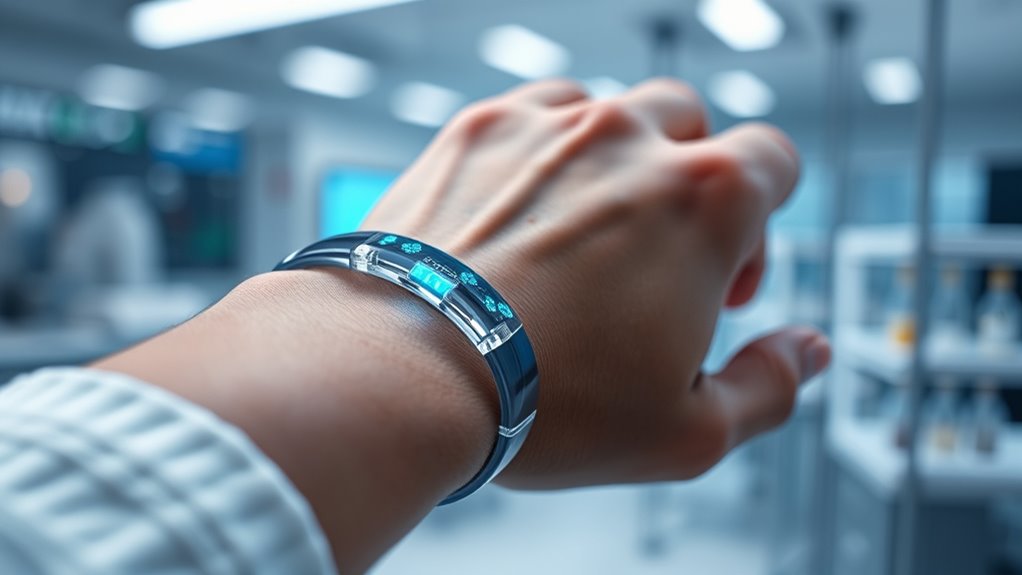

Autonomous biochemical sensing systems enable you to monitor your health continuously in real time, without manual checks. They combine multiple sensors to track essential biomarkers like glucose or electrolytes and environmental toxins accurately and instantly. Your data is protected through advanced security measures, ensuring privacy and confidentiality. These systems can connect seamlessly to smartphones or cloud platforms, giving you instant access anytime. Keep exploring to discover how these innovations are shaping the future of health management.
Key Takeaways
- Autonomous biochemical sensors enable real-time, continuous monitoring of vital health biomarkers for proactive medical management.
- Integration of multiple sensing units allows comprehensive health assessments and early detection of medical issues.
- Advanced data security measures safeguard sensitive health information during wireless transmission and storage.
- Seamless connectivity with smartphones and cloud platforms provides users instant access to health data anytime.
- Ongoing technological improvements enhance sensor accuracy, miniaturization, and affordability for widespread daily use.
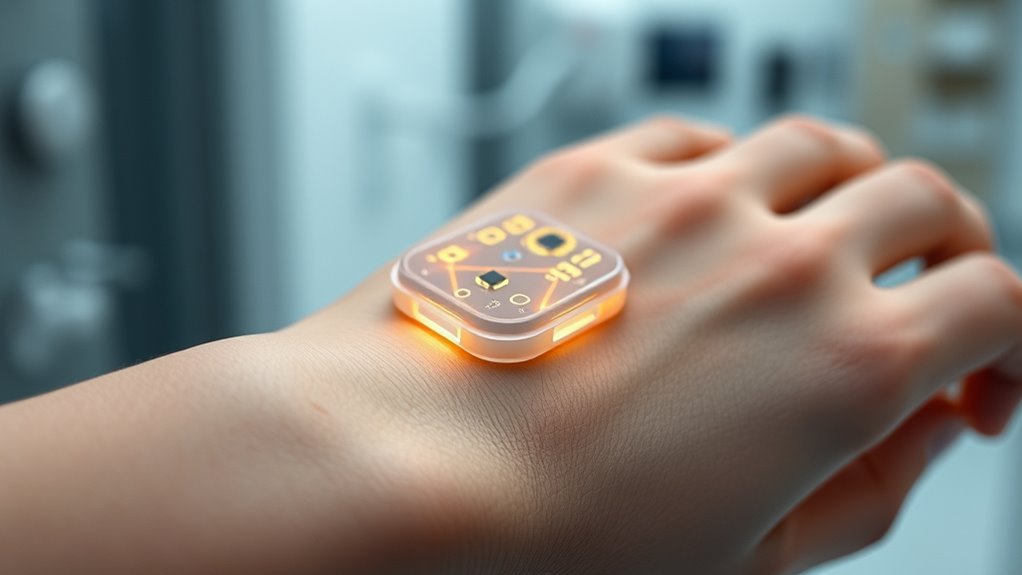
Autonomous biochemical sensing systems are revolutionizing how we monitor the environment, health, and industrial processes. With these systems, you can continuously track vital biomarkers or environmental chemicals without manual intervention. They integrate seamlessly into your daily life, providing real-time data that helps you make informed decisions about your health or surroundings. The core of these systems lies in sensor integration, where multiple sensing units work together to capture accurate, comprehensive information. You might have sensors detecting glucose levels, electrolyte balance, or even toxins in your environment, all working in concert to give a holistic picture of your health or the conditions around you. This integration ensures that data is not only precise but also timely, allowing you to respond quickly to any anomalies.
However, as these systems become more embedded in your routines, data security becomes paramount. You’re handling sensitive health information, and safeguarding it against breaches is critical. Developers of autonomous biochemical sensors prioritize robust encryption methods and secure data transmission protocols to protect your information. This means that your continuous health data is stored and transmitted securely, preventing unauthorized access or tampering. You can trust that your personal health metrics remain confidential, even as the system operates autonomously and transmits data wirelessly.
The beauty of these sensing systems is their autonomy, which reduces the need for frequent manual checks. Once set up, they continuously monitor, analyze, and even alert you to changes that require attention. Whether it’s detecting early signs of a medical condition or identifying harmful chemicals in your environment, these sensors do the heavy lifting, providing you with peace of mind and immediate insights. Their ability to integrate seamlessly with smartphones or cloud platforms means you can access your data anytime and place, making health management more convenient and proactive.
Furthermore, advancements in sensor technology are making these systems more reliable and affordable, encouraging widespread adoption. As they become more sophisticated, you’ll benefit from higher accuracy, faster response times, and enhanced data security measures. This ongoing evolution ensures that autonomous biochemical sensing systems will remain a crucial part of your health and environmental monitoring toolkit, offering a safer, smarter way to stay informed. In the end, your engagement with these systems empowers you to take control of your health and surroundings, all while trusting that your data remains protected through advanced security protocols. Additionally, ongoing research in sensor miniaturization is making these devices less obtrusive and more accessible for everyday use.
Frequently Asked Questions
What Are the Main Challenges in Developing Autonomous Biochemical Sensors?
You face several challenges in developing autonomous biochemical sensors. Ensuring calibration accuracy over time is tough, as biological conditions change and affect readings. Power management is also critical, since sensors need long-lasting, efficient energy sources to operate continuously without frequent replacements. Balancing these factors while maintaining sensor sensitivity and stability makes creating reliable autonomous systems complex, requiring innovative solutions for real-world health monitoring.
How Do These Sensors Ensure Data Privacy and Security?
You guarantee data privacy and security by implementing strong encryption protocols that protect your health data during transmission and storage. Access controls restrict who can view or modify the information, giving you control over your sensitive data. Regular updates and audits help identify vulnerabilities, keeping your data safe. Combining these measures, you can trust that your personal health information remains confidential and protected from unauthorized access.
Can Autonomous Sensors Detect Rare or Unexpected Biomarkers?
Sure, your sensors can surprisingly catch those elusive, rare biomarkers with their impressive sensitivity—like a hawk spotting a needle in a haystack. It’s almost amusing how these tiny devices excel at detecting unexpected signals, turning what used to be a game of chance into a precise science. Thanks to advanced algorithms and high sensor sensitivity, you’ll be alerted to rare biomarkers before they even become a concern.
What Is the Typical Lifespan of These Biochemical Sensing Devices?
You can expect the typical lifespan of biochemical sensing devices to range from several months to a few years, depending on sensor durability and usage conditions. Many devices are designed for reusability, allowing you to reuse them after calibration or cleaning, which extends their lifespan. However, factors like biofouling and sensor degradation can limit longevity, so regular maintenance ensures peak performance and reliable health monitoring over time.
How Do Autonomous Sensors Integrate With Existing Healthcare Systems?
Oh, you thought integrating autonomous sensors was a walk in the park? Well, you’ll need to navigate complex integration protocols and guarantee interoperability standards are met. These sensors sync with healthcare systems through secure data transmission, often via standardized APIs. By doing so, they seamlessly feed real-time data to electronic health records, making your health monitoring more efficient—until, of course, the standards change again, and you’re left playing catch-up.
Conclusion
Imagine your body as a finely tuned symphony, where autonomous biochemical sensing acts as a vigilant conductor, constantly listening and adjusting. With this technology, you become the maestro of your health, catching discordant notes before they escalate. It’s like having a guardian angel whispering secrets of your well-being in real time. Embrace this innovation, and you’ll navigate life’s melodies with confidence, knowing your health’s harmony is preserved—silent, watchful, and always on your side.