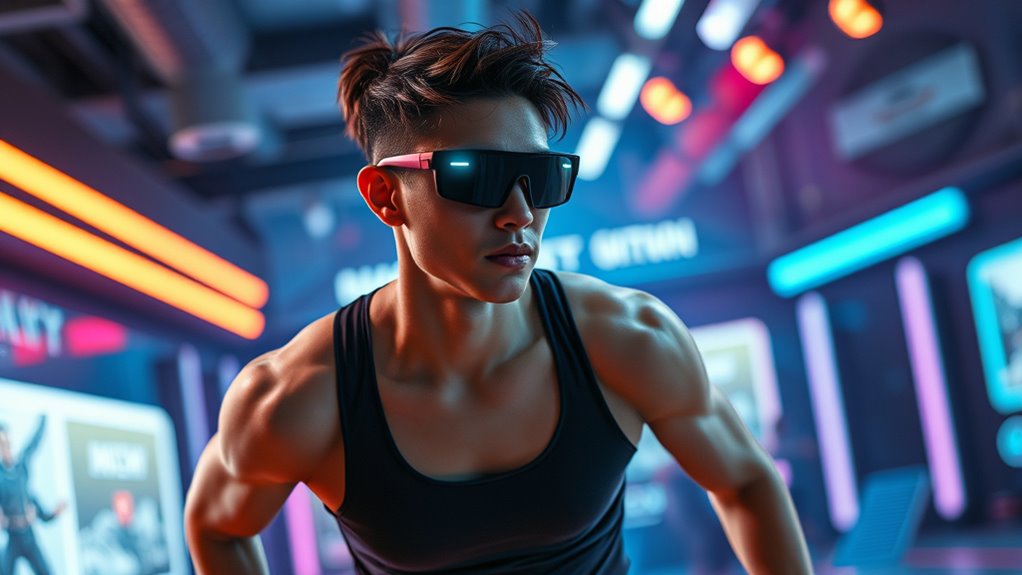

Using AI wearables like the Oakley Meta Vanguard, you can turn fitness into an immersive gaming experience. These devices overlay virtual worlds onto your real environment with AR, making workouts engaging and personalized. They continuously monitor your biometric data—such as heart rate and muscle activity—then adapt challenges to keep you motivated and prevent overexertion. If you want to discover how this cutting-edge tech is transforming exercise into a fun, interactive adventure, there’s more to explore.
Key Takeaways
- AI wearables like Oakley Meta Vanguard overlay AR environments to turn workouts into interactive, game-like experiences.
- Real-time biometric monitoring adjusts game difficulty and provides visual cues, enhancing engagement and safety.
- Personalized data analysis tailors fitness activities to individual performance, promoting continual progress.
- Gamification elements motivate users to stay consistent by turning exercise into immersive challenges.
- AI-driven coding optimizes device responses, creating seamless integration between health metrics and immersive gaming.

As technology continues to evolve, AI wearables are bridging the gap between gaming and fitness, creating engaging experiences that motivate you to stay active. Devices like the Oakley Meta Vanguard leverage augmented reality (AR) to transform your workout into an immersive adventure. Instead of just hitting the gym or running on a treadmill, you can now step into virtual worlds layered over your real environment. This AR integration makes exercise feel less like a chore and more like an exciting game, encouraging you to push further and stay consistent.
One of the key features that enhance this experience is biometric feedback. When you wear these AI-powered devices, they monitor your heart rate, oxygen levels, and even muscle activity in real-time. This data isn’t just stored away; it actively influences your gaming environment. For example, if your heartbeat rises during a sprint, the game can respond by increasing the difficulty or unlocking new challenges, keeping you engaged and motivated. Biometric feedback ensures that your workout is tailored to your current physical state, helping you avoid overexertion while maximizing performance.
Imagine steering through a virtual obstacle course that adapts based on your biometric data. As you move, your wearable captures your effort and adjusts the difficulty, making each session uniquely challenging. This dynamic interaction between your body and the game keeps you invested, blending fitness seamlessly with entertainment. The AR overlays provide visual cues and targets over your surroundings, encouraging you to move in specific ways or reach certain physical goals. It’s like having a personal coach guiding you through a game, but with the added benefit of tracking your health metrics.
What makes these AI wearables truly powerful is their ability to personalize your experience. They analyze your biometric feedback over time, recognizing patterns and adjusting the difficulty or type of activity to suit your fitness level. This personalized approach helps prevent plateaus and keeps you motivated by providing a continuous sense of progress. Plus, the gamification element turns workouts into challenges or missions, making it easier to stay committed over the long term.
Furthermore, Vibe coding offers a way to optimize how these devices interpret and respond to biometric data, making the interaction more intuitive and responsive. In essence, AI wearables like the Oakley Meta Vanguard are revolutionizing how you view exercise. By blending augmented reality with biometric feedback, they create a compelling, interactive environment that transforms fitness from a repetitive task into an exciting adventure. You’re no longer just exercising—you’re gaming, exploring new worlds, and improving your health all at once. This innovative approach makes it easier to stay motivated, track your progress, and enjoy the journey toward better fitness.
AR fitness wearable with biometric monitoring
As an affiliate, we earn on qualifying purchases.
As an affiliate, we earn on qualifying purchases.
Frequently Asked Questions
How Do AI Wearables Improve Gaming Performance?
AI wearables improve your gaming performance by providing real-time data through Virtual Reality, helping you understand your movements and reactions better. They track your physical responses, enabling Skill Enhancement by customizing training routines. With these insights, you can fine-tune your reflexes and coordination, making you more agile and precise in gameplay. Ultimately, AI wearables give you a competitive edge by blending immersive tech and personalized feedback.
Are AI Wearables Suitable for All Fitness Levels?
Think of AI wearables like Oakley Meta Vanguard as a versatile toolkit, adaptable to your fitness journey. They’re designed with accessibility features and beginner-friendly design, making them suitable for all fitness levels. Whether you’re just starting or a seasoned athlete, these wearables adjust to your needs, guiding you smoothly along your path. So, no matter your experience, you can confidently harness their power to enhance your fitness and gaming performance.
What Safety Features Do These Devices Include?
You’ll find that these devices include safety features like real-time health monitoring and alerts to prevent overexertion, helping you stay safe during workouts. They also prioritize privacy concerns by offering data encryption and user control over information sharing. Keep in mind, their battery life is vital—longer-lasting batteries ensure continuous safety tracking without interruptions, giving you peace of mind while focusing on your fitness and gaming goals.
Can AI Wearables Track Mental Health Alongside Physical Activity?
Isn’t it remarkable how technology mirrors a mirror reflecting our inner world? AI wearables like the Oakley Meta Vanguard can indeed track mental health, including emotional well-being. They monitor indicators such as stress levels, heart rate variability, and sleep patterns, providing insights into your mental state. With ongoing emotional well-being tracking, these devices help you stay attuned to both your mental and physical health, fostering a holistic approach to wellness.
How Do AI Wearables Integrate With Existing Gaming Consoles?
You can integrate AI wearables with gaming consoles through virtual reality systems and motion tracking features. These wearables sync seamlessly, providing real-time data that enhances immersion and gameplay. When you wear devices like Oakley Meta Vanguard, they communicate with your console via Bluetooth or Wi-Fi, translating your movements into in-game actions. This integration creates a more interactive experience, making gaming more engaging and physically active.
AI-powered fitness wearable for immersive workouts
As an affiliate, we earn on qualifying purchases.
As an affiliate, we earn on qualifying purchases.
Conclusion
By integrating AI wearables like the Oakley Meta Vanguard, you can elevate your fitness game while enjoying immersive gaming experiences. Notably, a recent study shows that users who combine gaming with fitness routines see a 30% increase in motivation and adherence. So, why not harness this technology to stay active and entertained simultaneously? It’s a smart, engaging way to boost your health without sacrificing your love for gaming. Embrace the future of fitness today.
augmented reality workout device
As an affiliate, we earn on qualifying purchases.
As an affiliate, we earn on qualifying purchases.
personalized fitness wearable with biometric feedback
As an affiliate, we earn on qualifying purchases.
As an affiliate, we earn on qualifying purchases.