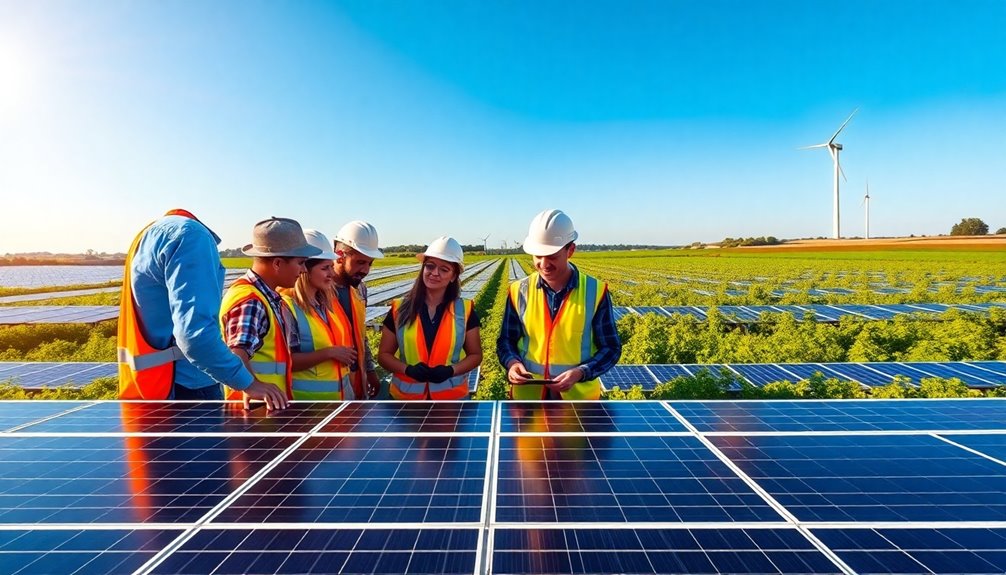

Solar companies are making waves in the energy sector, and it's hard to ignore the rapid growth. With a compound annual growth rate of 22.8%, these companies are reshaping how we generate electricity. As you explore the factors driving this change, you'll see the impact of government incentives and technological advancements. But what does this mean for the future of renewable energy and domestic manufacturing? The answers might surprise you.

Get business pricing on tech for your team
- Business-only prices and quantity discounts
- Tax-exempt purchasing
- Multiple users, one account, clear invoices

As the solar industry rapidly expands, driven by government incentives and technological innovations, it's becoming increasingly crucial for stakeholders to stay informed about the latest trends and challenges. This growth isn't just a flash in the pan; it stems from robust market dynamics, with solar energy now accounting for over 64% of new electricity generation capacity in 2024. Utility-scale solar leads the way, surpassing hydropower and nuclear to become the fourth-largest installed capacity source.
As you consider your position within this market, understanding these shifts will be key to harnessing opportunities. One significant factor fueling this expansion is the push for domestic manufacturing. Thanks to the Inflation Reduction Act, investments are surging, creating a more self-sufficient solar supply chain in the U.S. Over 51.1% of solar equipment used in 2023 was sourced domestically, showcasing the industry's commitment to local production.
While global supply challenges persist, including tariffs and compliance issues, the emphasis on local production is a game changer. It's essential to recognize how these developments can impact your business and the overall landscape. Financially, the solar power industry in the U.S. has seen remarkable revenue growth, with a compound annual growth rate (CAGR) of 22.8% over the past five years.
The market value now exceeds $64 billion, and government incentives like tax credits continue to drive this upward trajectory. However, you should also be aware that rising interest rates have affected residential solar installations in 2024. A potential decrease in these rates could mean a resurgence in adoption next year. Keeping your finger on the pulse of these financial indicators is vital for making informed decisions.
Technological advancements are another cornerstone of the industry's success. Battery storage is on the rise, with record capacity additions expected in 2025, enhancing the viability of solar energy. Photovoltaic (PV) power, known for its ease of installation and cost-effectiveness, remains the dominant segment.
As you look to the future, consider how improvements in interconnection efficiency will help integrate more solar power into the grid, making your operations more efficient and reliable. However, challenges loom on the horizon. Supply chain issues, market competition, and potential manufacturer failures could impact your business and the industry's growth.
Political and regulatory uncertainties can also create a fluctuating environment. It's crucial to remain adaptable, as the industry is projected to face increased consolidation and M&A activity driven by market pressures and private equity investments in 2025.
Fall Picks
fall essentials
As an affiliate, we earn on qualifying purchases.