
📊 Full opportunity report: Best Low-Noise PC Cases for Airflow and Sound Dampening on ThorstenMeyerAI.com — validation score, market gap, and execution plan.
TL;DR
This article reviews the leading PC cases designed for low noise and efficient airflow in 2026. It highlights options for quiet builds and high-performance cooling, explaining the tradeoffs involved.
Several high-performance PC cases in 2026 are now recognized for their ability to balance airflow and noise reduction, crucial for demanding workloads like AI training and content creation. These cases are selected based on their design features, cooling efficiency, and soundproofing capabilities, offering options for different user needs.
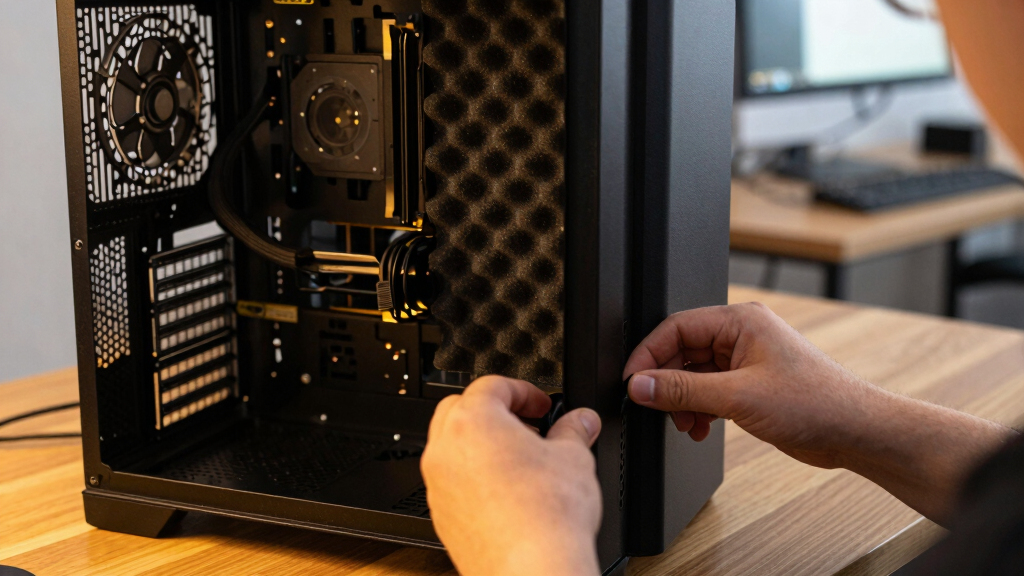
The tradeoff between sound dampening and airflow remains a key consideration when choosing PC cases. Sealed, foam-lined cases effectively reduce noise but tend to trap heat, leading to higher fan speeds and increased noise during sustained high loads. Conversely, open mesh cases facilitate better heat dissipation, often resulting in quieter operation because fans can run at lower speeds. Experts confirm that for high-power, continuous workloads, mesh cases with large, slow-spinning fans generally outperform sealed silent cases in both cooling and noise levels. Notable examples include the Fractal Design North and Meshify 3 for desk-side workstations, and the Fractal Design Torrent for maximum airflow. Sound-dampening cases like the be quiet! Dark Base 802 remain suitable for moderate loads or environments requiring noise suppression, but may struggle with heat under sustained high loads. The choice depends on workload intensity and environmental needs, with airflow-focused cases favored for continuous high-power use.Best low-noise PC cases
for airflow & dampening.
Sound dampening and airflow pull in opposite directions — and for a sustained AI load, the choice lands somewhere most people don’t expect. Flip the toggle in Part 2 to see why a sealed “silent” case can end up louder than an open one.
Implications for High-Power Workstation Builders
Understanding the tradeoff between noise reduction and airflow is vital for users operating demanding workloads, such as AI training or rendering, where heat management directly impacts performance and longevity. Selecting the right case can lead to quieter, more efficient systems, reducing fan noise and preventing thermal throttling. This knowledge helps builders optimize their setups for both acoustics and cooling, potentially extending component lifespan and improving user experience.
As an affiliate, we earn on qualifying purchases.
Current Trends in PC Case Design for 2026
In 2026, the market for PC cases emphasizes high airflow and noise control, driven by the needs of high-performance computing. The traditional approach of sealed, foam-lined silent cases is challenged by the reality of sustained high loads, which require better ventilation. Leading manufacturers now offer cases with large mesh panels, massive fans, and positive pressure setups to enhance cooling. The debate between silent and airflow-optimized cases continues, with expert consensus favoring mesh designs for demanding workloads. Prior to 2026, most quiet cases prioritized soundproofing at the expense of heat dissipation, but recent developments show a shift towards balancing both aspects effectively.
"For high-power, continuous workloads, open mesh cases with large fans often outperform sealed silent cases in both cooling and noise levels."
— Thorsten Meyer, tech reviewer
As an affiliate, we earn on qualifying purchases.
Remaining Questions on Case Performance and User Needs
While current models are well-evaluated, long-term reliability and performance under diverse environmental conditions remain less documented. The impact of specific fan configurations and case materials on noise and heat dissipation also warrants further testing. Additionally, individual preferences for aesthetics and form factor can influence case choice, creating a spectrum of 'best' options that may vary by user.
As an affiliate, we earn on qualifying purchases.
Future Developments in PC Case Technology
Expect ongoing innovations in case design, including hybrid solutions that aim to combine the benefits of sealed and mesh panels. Manufacturers may also develop smarter airflow management systems and noise reduction technologies, further refining the balance between cooling and soundproofing. Monitoring upcoming releases and testing results will be essential for users seeking optimal performance in 2026 and beyond.
silent PC case for high performance
As an affiliate, we earn on qualifying purchases.
As an affiliate, we earn on qualifying purchases.
Key Questions
Can I get a silent case that also provides good airflow?
Yes, but it often involves tradeoffs. Silent cases with foam-lined panels can reduce noise but may struggle with heat dissipation during sustained high loads. For high-performance workloads, cases with large mesh panels and big fans tend to offer better cooling and quieter operation overall.
Are mesh cases suitable for a quiet office environment?
Mesh cases can be quieter under load because they allow fans to run at lower speeds, but they are generally not as silent as foam-lined, soundproofed cases. For ultra-quiet environments, combining a mesh case with additional sound dampening measures can help.
What should I prioritize for a high-power AI workstation?
Prioritize cases with high airflow capacity—large mesh panels, big fans, and positive pressure setups—over silent, sealed cases. Managing heat effectively will reduce fan noise and improve system stability during prolonged high loads.
Do larger fans always mean quieter operation?
Generally, larger fans can move more air at lower RPM, resulting in quieter operation. However, the overall noise level also depends on fan quality, case design, and airflow setup.
Will future cases eliminate the airflow vs. soundproofing tradeoff?
Advances in materials and airflow management may reduce this tradeoff, but currently, a balance must be struck based on workload and environment. Expect ongoing innovations to improve both aspects over time.
Source: ThorstenMeyerAI.com