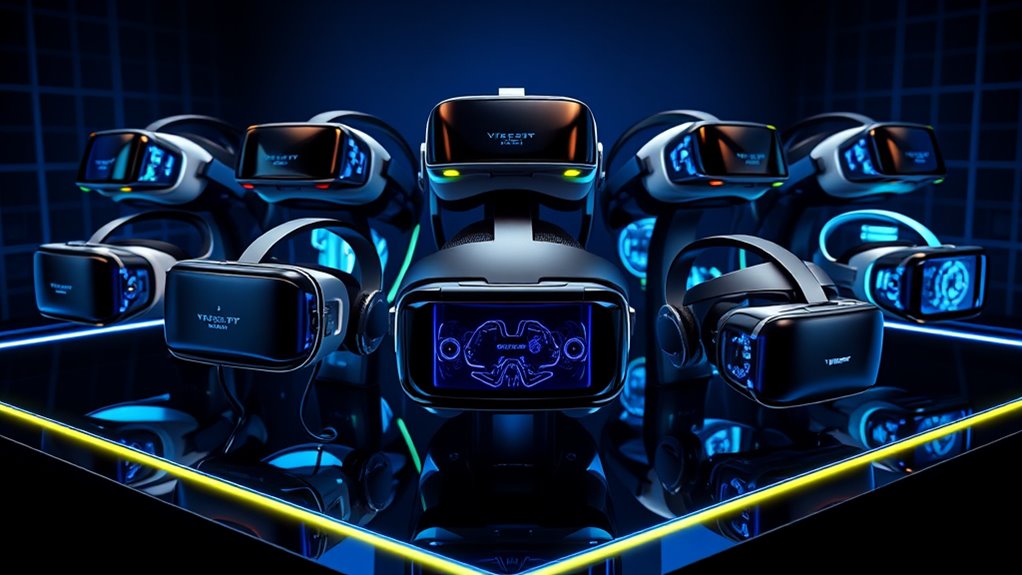

The best VR headset for most buyers is the Meta Quest 3, which balances standalone convenience, sharp color passthrough, and a deep content library without needing a gaming PC. If you want maximum visual fidelity and already own a powerful PC, the Pimax Crystal Super pushes resolution and field of view far beyond anything else in this lineup, at the cost of complexity and price. On a tighter budget, the Meta Quest 3S delivers most of the Quest 3 experience for less. The main tradeoff you will face is between standalone simplicity and PC-tethered performance, plus deciding whether you want a full VR platform or just a phone-based headset for casual 3D viewing. Keep reading for the full breakdown of all 13 options.

Get business pricing on tech for your team
- Business-only prices and quantity discounts
- Tax-exempt purchasing
- Multiple users, one account, clear invoices
Complete the kit

Key Takeaways
- Meta‘s Quest family dominates this roundup for good reason: the Quest 3, Quest 3S, Quest 2, and original Quest all offer standalone play with no PC required, which is why they occupy the top, value, and budget positions.
- The Pimax Crystal Super is the only true enthusiast pick here — its 3840×3840 per-eye resolution and 140° field of view crush every standalone headset, but it demands a high-end gaming PC and careful setup.
- Five of the 13 products are smartphone-based viewers (DESTEK V5, Orzly, Heromask, and generic phone headsets). These are not gaming platforms — they are cheap gateways to 3D video and kids’ content, and should be judged on a completely different scale.
- Renewed and refurbished Quest models (Quest 3S Renewed Premium, Quest 2 256GB Renewed) are the smartest way into VR on a budget, but battery health and controller condition vary, so they suit tolerant buyers rather than gift-givers.
- The older Oculus Quest (64GB, UK import) is the weakest standalone option — limited storage, dated optics, and import caveats make it hard to recommend over a renewed Quest 2 at a similar tier.
| Pimax Crystal Super VR Headset |  | Best Premium Visuals | Display Resolution: 3840×3840 per eye | Field of View: 140 degrees | Display Type: QLED | VIEW ON AMAZON | See Our Full Breakdown |
| DESTEK V5 VR Headset for Smartphones |  | Best Phone VR for Android Users | Compatible Screen Size: 5.5–7.0 inches | Field of View: 110° | Controller: Bluetooth controller included | VIEW ON AMAZON | See Our Full Breakdown |
| Orzly VR Headset for Nintendo Switch & Switch OLED |  | Best for Nintendo Switch Owners | Compatibility: Nintendo Switch & Switch OLED | Color: Black | Adjustable Lens: Yes | VIEW ON AMAZON | See Our Full Breakdown |
| Meta Quest 3S 128GB with Gorilla Tag Bundle |  | Best Overall for Most Buyers | Storage: 128GB | Memory: 8GB RAM | Battery Life: 2+ hours | VIEW ON AMAZON | See Our Full Breakdown |
| VR Headset for Phone with 3D HD Lenses and 120° FOV |  | Best Budget Phone Viewer | Weight: 13oz (368g) | Field of View: 120° | Lens Transmittance: 94% | VIEW ON AMAZON | See Our Full Breakdown |
| Meta Quest 3S 128GB Virtual Reality Headset (Renewed Premium) |  | Best Value Standalone Headset | Storage: 128 GB | Display: 2064 × 2208 pixels, 2.5-inch LCD | Refresh Rate: 90Hz | VIEW ON AMAZON | See Our Full Breakdown |
| Meta Quest 2 — Advanced All-In-One Virtual Reality Headset — 128 GB |  | Best for Casual and Family VR | Storage: 128 GB | Type: All-in-One Wireless VR Headset | Wireless: Yes | VIEW ON AMAZON | See Our Full Breakdown |
| Heromask VR Headset for Kids 5-12 – Geography Educational Virtual Reality Game |  | Best Educational Pick for Kids | Age Range: 5-12 years | Included: VR headset and free educational app | Compatibility: Most Android and iOS smartphones | VIEW ON AMAZON | See Our Full Breakdown |
| Oculus Quest All-in-one VR Gaming Headset – 64GB (UK Import) |  | Best Budget Standalone for Tinkerers | Storage: 64GB | Tracking System: Oculus Insight inside-out tracking | Controllers: Oculus Touch | VIEW ON AMAZON | See Our Full Breakdown |
| DESTEK V5 VR Headset for Smartphones |  | Best Ultra-Cheap VR Taster | Compatible Screen Size: 5.5–7.0 inches | Field of View: 110° | Lenses: Anti-blue-light | VIEW ON AMAZON | See Our Full Breakdown |
| Meta Quest 2 – Advanced All-In-One Virtual Reality Headset – 256 GB (Renewed) |  | Best Budget Entry Point | Storage Capacity: 256 GB | Display Resolution: 1832 x 1920 per eye | Display Type: LCD | VIEW ON AMAZON | See Our Full Breakdown |
| Meta Quest 3 512GB Virtual Reality Headset with Gorilla Tag Bundle |  | Best Premium All-Rounder | Storage: 512GB | Memory: 8GB RAM | Display: 4K+ Infinite Display | VIEW ON AMAZON | See Our Full Breakdown |
| Oculus Quest 2 256GB All-in-One Virtual Reality VR Headset, White |  | Best Complete Starter Kit | Storage Capacity: 256GB | Display Resolution: 1832 x 1920 pixels per eye | Processor: Blazing-fast mobile processor | VIEW ON AMAZON | See Our Full Breakdown |
More Details on Our Top Picks
Pimax Crystal Super VR Headset
Pimax Crystal Super exists for one reason: image fidelity that nothing else in this lineup can touch. At 3840×3840 per eye with a 140° field of view, it makes even the Meta Quest 3’s panels look soft by comparison — flight sim and racing enthusiasts will notice cockpit instruments staying legible at distance rather than blurring into mush. Compared with the wireless Meta Quest 3S, this is a different animal entirely: it’s tethered, demanding, and dependent on a high-end gaming PC. The payoff is immersion; the cost is complexity. Aspherical lenses and eye-tracking help, but casual buyers will find the setup intimidating, and the 90Hz refresh rate trails gaming-focused competitors. This pick makes the most sense for simulation fans who already own serious hardware and want the sharpest possible picture, not for anyone seeking plug-and-play fun.
Pros:- Class-leading 3840×3840 per-eye resolution for razor-sharp visuals
- Expansive 140° field of view for deep immersion in simulators
- Eye-tracking plus inside-out tracking for precise interaction
- Adjustable IPD and ergonomic design suited to long sessions
Cons:- Demands a powerful gaming PC to run at full fidelity
- Tethered DisplayPort connection limits freedom of movement
- Specification depth and setup complexity overwhelm casual users
Best for: PC flight sim and racing sim enthusiasts with powerful gaming rigs who prioritize maximum visual clarity
Not ideal for: Casual or first-time VR users — it requires an expensive PC, a DisplayPort tether, and considerable setup knowledge
- Display Resolution:3840×3840 per eye
- Field of View:140 degrees
- Display Type:QLED
- Lens Technology:Aspherical
- Refresh Rate:90Hz
- Connectivity:DisplayPort, USB
- Tracking:Inside-out with eye-tracking
- Compatible Platform:Windows 10 PC
Our verdict“Buy this only if you’re a simulation enthusiast with a high-end PC who wants the sharpest image money can buy; everyone else should start with a Meta Quest.”
DESTEK V5 VR Headset for Smartphones
Among smartphone viewers in this roundup, the DESTEK V5 stands out because it behaves more like a real headset than a cardboard shell. The bundled Bluetooth controller plus onboard touch buttons gives Android owners actual interactive control — a genuine step up from the generic phone headset with 3D HD Lenses elsewhere in this guide, which relies on a single interactive button. Its 110° field of view is respectable for a phone-based viewer, and the anti-blue-light lenses help with longer video sessions. The catch is platform: on iOS the controller is gutted, limited to YouTube navigation and music playback. Anyone with an iPhone gets a passive 3D viewer and little else. Compared with a standalone option like the Meta Quest 3S, it’s obviously limited — but that’s the tradeoff for a low-commitment entry point.
Pros:- Bluetooth controller and touch buttons enable real interaction on Android
- Wide 110° field of view for a phone-based viewer
- Anti-blue-light lenses reduce eye strain during video sessions
- Fits a broad range of phones from 5.5 to 7.0 inches
Cons:- iOS support is severely limited to media controls only
- Phone-based VR trails standalone headsets in tracking, graphics, and content
Best for: Android phone owners who want an affordable, low-commitment taste of mobile VR videos and games
Not ideal for: iPhone users — the controller only handles YouTube controls and music playback on iOS, stripping out most interactivity
- Compatible Screen Size:5.5–7.0 inches
- Field of View:110°
- Controller:Bluetooth controller included
- Phone Compatibility:iPhone, Samsung, and other smartphones
- Lens Feature:Anti-blue-light
- Warranty:1 year
Our verdict“A sensible budget entry for Android owners curious about VR, as long as they accept it’s a viewer — not a true headset like the Quest lineup.”
Orzly VR Headset for Nintendo Switch & Switch OLED
This Orzly viewer fills a niche nothing else here addresses: turning a Nintendo Switch or Switch OLED into a makeshift VR display. Unlike the DESTEK V5, which cradles a phone, this is purpose-built around the Switch’s footprint, with adjustable lenses and a head strap that let you dial in focus for YouTube viewing and compatible games. That adjustability is what separates it from rigid plastic viewers — but it also means the experience depends heavily on patient setup, and sloppy adjustment leaves you with a blurry image. Compared with the standalone Meta Quest 3S, the library of actual VR content on Switch is thin, so treat this as a novelty accessory for a console you already own rather than a gateway into real VR. It’s ages 8 and up, and the fit reflects that.
Pros:- Purpose-built for Switch and Switch OLED fit
- Adjustable lenses allow per-user focus tuning
- Adjustable head strap improves comfort over rigid viewers
- Lightweight, solid construction for casual sessions
Cons:- Very limited VR content library on the Switch platform
- Requires careful lens adjustment to avoid a blurry image
Best for: Nintendo Switch households who want a low-cost novelty VR accessory for the console they already own
Not ideal for: Anyone seeking a genuine VR experience — Switch VR content is extremely limited next to a standalone headset like the Quest 3S
- Compatibility:Nintendo Switch & Switch OLED
- Color:Black
- Adjustable Lens:Yes
- Adjustable Head Strap:Yes
- Design:Solid, lightweight
- Recommended Age:8 and up
Our verdict“A fun, inexpensive add-on for Switch owners — not a substitute for a real VR headset.”
Meta Quest 3S 128GB with Gorilla Tag Bundle
The Meta Quest 3S is the pick I’d point most people toward, because it removes every barrier that makes other entries in this roundup niche. It’s fully wireless, needs no PC — unlike the Pimax Crystal Super, which is useless without a powerful rig — and it runs a proper VR content library that phone viewers and the Orzly Switch headset can’t touch. The Snapdragon XR2 Gen 2 chipset and dual RGB cameras deliver full-color passthrough and smooth standalone performance, and the Gorilla Tag bundle with a 3-month game trial makes it turnkey for households with kids. The tradeoffs are real: 128GB fills up fast given modern VR game sizes, and the two-hour battery life means mid-session charging for longer play. Serious enthusiasts may prefer the higher-capacity Meta Quest 3 512GB, but for first-time buyers the value equation here is hard to beat.
Pros:- Fully wireless standalone operation with no PC required
- Snapdragon XR2 Gen 2 delivers strong graphics and full-color passthrough
- Gorilla Tag bundle with exclusive items and 3-month trial of 100+ games
- Lightweight design with freedom of movement
Cons:- 128GB storage is tight for large modern VR libraries
- Battery life just over 2 hours requires frequent charging
- Needs clear play space and initial setup effort
Best for: First-time VR buyers and families who want a complete wireless headset with games included out of the box
Not ideal for: Heavy users and game hoarders — 128GB of storage fills quickly, and 2-hour battery life frustrates marathon sessions
- Storage:128GB
- Memory:8GB RAM
- Battery Life:2+ hours
- Processor:Snapdragon XR2 Gen 2
- Cameras:Dual RGB color cameras
- Connectivity:Wireless standalone
- Included Items:Gorilla Tag bundle, exclusive items, 2000 shiny rocks, 3-month trial
Our verdict“The default recommendation for most buyers — a complete, wireless, no-PC-needed VR package, provided you can live with modest storage.”
VR Headset for Phone with 3D HD Lenses and 120° FOV
This unnamed phone viewer wins on comfort where other budget options cut corners. At 13oz (368g) with an adjustable headband and room for glasses up to 5.9×2.3 inches, it’s friendlier to eyeglass wearers and younger users than the DESTEK V5, and its 120° field of view actually edges that model’s 110°. The 94% lens transmittance and anti-reflective coating give video a clean, bright look for a phone-based device. But it’s a viewer, not an interactive headset — a single button is your only control, whereas the DESTEK V5 includes a Bluetooth controller for Android owners who want to play rather than just watch. And no lens coating prevents the eye fatigue that long phone-VR sessions inevitably bring. This model is better suited to passive 3D movies and casual family use than anyone expecting real gaming.
Pros:- Lightweight 368g build comfortable for extended viewing
- Glasses-friendly design fits frames up to 5.9×2.3 inches
- Wide 120° field of view and 94% lens transmittance for bright visuals
- Adjustable headband and focus suit multiple users
Cons:- Single interactive button limits control versus controller-equipped rivals
- Phone-dependent performance and eye fatigue during long sessions
Best for: Eyeglass wearers and families wanting a cheap, comfortable viewer for 3D videos and phone-based VR apps
Not ideal for: Anyone wanting interactive gaming — a single button offers far less control than the DESTEK V5’s Bluetooth controller
- Weight:13oz (368g)
- Field of View:120°
- Lens Transmittance:94%
- Max Glasses Size:5.9×2.3 inches
- Lens Features:Anti-blue light, anti-reflective
- Adjustability:Adjustable headband and focus
- Controls:Interactive button
Our verdict“The most comfortable way to watch 3D content on your phone, but gamers should step up to the DESTEK V5 or a Quest instead.”
Meta Quest 3S 128GB Virtual Reality Headset (Renewed Premium)
The Quest 3S is the smartest entry point into modern VR for most buyers. It shares the same Snapdragon XR2 Gen 2 processor as the pricier Quest 3, which means next-gen graphics and full-color mixed reality passthrough at a much friendlier price. Compared with the Quest 2, the dual RGB passthrough cameras are the biggest leap — mixed reality games stop feeling like a gimmick and become genuinely playable. Compared with the Pimax Crystal Super, it gives up raw visual fidelity but needs no gaming PC and no cables. The 2.5-hour battery is the real compromise; longer sessions mean plugging into a power bank or a wall. As a renewed unit, condition can vary, so buy from a seller with a solid return window.
Pros:- Same Snapdragon XR2 Gen 2 chip as the flagship Quest 3
- Full-color RGB passthrough for genuine mixed reality play
- Wireless standalone design with no PC required
- Bundled game trial gives you content on day one
Cons:- Battery tops out around 2.5 hours per charge
- Renewed stock means variable cosmetic condition
- 128GB fills up fast with modern VR game sizes
Best for: First-time VR buyers who want modern performance and mixed reality without paying flagship prices
Not ideal for: PC VR enthusiasts chasing maximum resolution — the LCD panels trail dedicated PC headsets like the Pimax Crystal Super
- Storage:128 GB
- Display:2064 × 2208 pixels, 2.5-inch LCD
- Refresh Rate:90Hz
- Memory:8GB RAM
- Processor:Snapdragon XR2 Gen 2
- Field of View:96 degrees
- Battery Life:Over 2 hours
- Connectivity:USB Type C, 3.5mm Jack
Our verdict“If you want 90% of the flagship Quest 3 experience at a budget price, this is the pick — just plan around the short battery life.”
Meta Quest 2 — Advanced All-In-One Virtual Reality Headset — 128 GB
The Quest 2 remains the most accessible full VR package on the market, and its 500+ title library is the largest ecosystem of polished, family-friendly content anywhere. Where the Quest 3S wins on processing power and passthrough quality, the Quest 2 counters with a lighter, simpler experience that most households will find perfectly adequate for Beat Saber, fitness apps, and social platforms. Hand tracking works without controllers for casual apps, and 3D positional audio is built in — no headphones required. The tradeoff is real: graphics fall behind the XR2 Gen 2 generation, and the older processor will age faster as new releases demand more. 128GB is workable but tight if you install many large games.
Pros:- Largest established game library with 500+ titles
- Truly all-in-one: no PC, console, or external sensors needed
- Built-in hand tracking and 3D positional audio
- Lighter and more comfortable for long family sessions
Cons:- Older processor shows its age in newer demanding titles
- 128GB storage limits how many large games you can keep installed
- Monochrome passthrough only — mixed reality is basic
Best for: Families and casual players who want a proven, easy headset with the biggest game library
Not ideal for: Graphics-focused gamers — the older chipset and lower passthrough quality trail the Quest 3S noticeably
- Storage:128 GB
- Type:All-in-One Wireless VR Headset
- Wireless:Yes
- Built-in Battery:Yes
- Controllers:Touch controllers included
- PC or Console Required:No
- Tracking:Inside-out with hand tracking support
Our verdict“The safest first headset for households that value content variety and simplicity over cutting-edge visuals.”
Heromask VR Headset for Kids 5-12 – Geography Educational Virtual Reality Game
The Heromask takes a completely different approach from everything else in this roundup: instead of gaming hardware, it’s a phone-based learning tool that teaches countries, capitals, flags, and landmarks through immersive play. Compared with the DESTEK V5, another smartphone headset, the Heromask trades general entertainment for a focused curriculum — there’s no hunting for compatible apps, because the free included app is the product. The no-batteries mechanical button design is a relief for parents tired of charging accessories. The obvious limit is scope: kids who want gaming will outgrow this quickly, and comfort during long sessions is a known weak point of phone-based viewers. But as a screen-time-with-purpose gift, it beats handing a child a full Quest 3S with open access to the store.
Pros:- Purpose-built educational content with free app updates
- No batteries or charging required
- Adjustable lenses fit a wide range of children
- Works with most Android and iOS phones families already own
Cons:- Requires you to dedicate a smartphone to the headset
- Comfort can suffer during longer sessions
- No entertainment content beyond geography
Best for: Parents of 5-12 year olds who want educational screen time instead of open-ended gaming
Not ideal for: Kids seeking games or entertainment — the content is geography-only and narrow by design
- Age Range:5-12 years
- Included:VR headset and free educational app
- Compatibility:Most Android and iOS smartphones
- Content:Countries, capitals, flags, landmarks, cultural facts
- Lens Adjustment:Adjustable lenses
- Power:No batteries needed (mechanical button)
Our verdict“A niche but well-executed choice for learning-focused families — skip it if your child wants gaming VR.”
Oculus Quest All-in-one VR Gaming Headset – 64GB (UK Import)
The original Oculus Quest still delivers the core standalone magic — room-scale tracking and Touch controllers with zero external sensors — and at 64GB it’s usually the cheapest way into proper VR. Against the Quest 2, though, the gap is hard to ignore: lower resolution panels, a slower chipset, and a game library that increasingly targets newer hardware. This UK import status is the deciding factor — regional warranty coverage may not apply, and you should confirm charger and account compatibility in your region before ordering. For a tinkerer or a very budget-limited buyer who accepts those caveats, the Oculus Insight tracking remains genuinely excellent and the Touch controllers still set the standard for precision. Everyone else should spend a little more on the Quest 2.
Pros:- True standalone setup with no external sensors or PC
- Oculus Insight tracking remains precise and reliable
- Touch controllers are among the best ever shipped
- Often the lowest-cost entry into full room-scale VR
Cons:- 64GB storage fills up with just a handful of modern games
- UK import may carry warranty and regional limitations
- First-generation hardware increasingly left behind by new releases
Best for: Extremely budget-conscious buyers or hobbyists comfortable with an import unit and older hardware
Not ideal for: Anyone wanting warranty peace of mind or long-term software support — the Quest 2 costs little more and supports current releases properly
- Storage:64GB
- Tracking System:Oculus Insight inside-out tracking
- Controllers:Oculus Touch
- Setup:All-in-one, no external accessories needed
- Play Modes:Standing and seated supported
- Region:UK import
Our verdict“Only worth it at a steep discount and if you accept import risk — otherwise the Quest 2 is the smarter buy.”
DESTEK V5 VR Headset for Smartphones
The DESTEK V5 is the least expensive way to experience VR at all — you supply the phone, it supplies the lenses, straps, and a Bluetooth remote. Its 110° field of view is respectable for a phone viewer, and the anti-blue-light lenses show real thought for eye strain during video sessions. The platform split matters more than any spec, though: on Android, the controller supports genuine interactive navigation, while on iOS it’s limited to YouTube controls — iPhone owners are effectively buying a 360° video viewer. Compared with the Heromask, which shares the phone-based concept, the V5 is broader but shallower: over 100 apps with no curated purpose. It’s a taster, not a destination — anyone who catches the VR bug here will want a standalone headset like the Quest 2 within months.
Pros:- Fits a wide range of phones from 5.5 to 7 inches
- Wide 110° field of view for the category
- Anti-blue-light lenses reduce eye strain
- Includes Bluetooth controller plus touch buttons
Cons:- iOS controller support restricted to YouTube playback only
- Experience entirely dependent on finding good VR apps
- Phone-based VR cannot match standalone headsets in tracking or comfort
Best for: Curious Android users wanting a low-risk first taste of phone-based VR and 360° video
Not ideal for: iPhone owners expecting interactive VR — iOS support is limited to basic YouTube controls
- Compatible Screen Size:5.5–7.0 inches
- Field of View:110°
- Lenses:Anti-blue-light
- Controls:Touch buttons and Bluetooth controller
- iOS Controller Support:YouTube controls only
- Android Controller Support:Immersive navigation, motion control, virtual interaction
- App Library:100+ apps
- Warranty:1 year
Our verdict“A cheap, fun experiment for Android users — skip it on iPhone or if you already know you want real VR.”
Meta Quest 2 – Advanced All-In-One Virtual Reality Headset – 256 GB (Renewed)
For anyone who wants a genuine standalone VR experience without the premium price of newer hardware, the renewed Meta Quest 2 makes a strong case. It runs the same wireless, no-PC-needed platform as its successors, and the 256GB storage gives plenty of room for a large game library — double what the base 128GB Quest 2 offers. Compared with the smartphone-based options in this roundup like the DESTEK V5, this is a different category entirely: real positional tracking, motion controllers, and full games rather than passive 3D viewers. The tradeoff is the renewed condition — buyers accept some uncertainty about cosmetic wear and warranty coverage, plus a 90Hz LCD display that falls short of the Quest 3’s 4K+ panels. Still, as an affordable doorway into proper VR, this pick makes the most sense for cost-conscious first-timers.
Pros:- Fully wireless standalone VR with no PC or console required
- Generous 256GB storage for a large game library
- High-resolution 1832 x 1920 per-eye display
- Comfortable adjustable straps and anti-slip controller grips
Cons:- Renewed condition means limited or unclear warranty protection
- 90Hz LCD display lags behind newer Quest 3 hardware
- Battery life varies and can cut sessions short
Best for: First-time VR buyers who want true standalone headset performance at the lowest possible entry cost
Not ideal for: Buyers who want a full warranty and pristine hardware — renewed units carry condition and coverage uncertainty
- Storage Capacity:256 GB
- Display Resolution:1832 x 1920 per eye
- Display Type:LCD
- Refresh Rate:90 Hz
- Field Of View:90 degrees
- Connectivity:Bluetooth, wireless
- Controller Type:Motion-sensing controllers
- Condition:Renewed
Our verdict“A smart low-risk purchase for newcomers who prioritize storage and standalone play over cutting-edge visuals.”
Meta Quest 3 512GB Virtual Reality Headset with Gorilla Tag Bundle
This is the most capable standalone headset in the entire lineup. The Quest 3 pairs a Snapdragon XR2 Gen 2 processor with 8GB of RAM and a 4K+ Infinite Display, producing visuals that clearly outclass both the Meta Quest 2 renewed unit and the Quest 3S elsewhere in this roundup — the color passthrough cameras alone make mixed-reality games feel like a generational leap. The 512GB storage is the largest capacity here, easily holding a big library of the 100+ included games plus future downloads. The bundled Gorilla Tag content adds immediate value for younger players or casual social gamers. Compared with the Pimax Crystal Super, it sacrifices raw resolution but demands no gaming PC and no cables, which for most buyers is the more practical everyday package. The honest tradeoff: battery life of just over two hours means long sessions need a break or a power bank.
Pros:- 4K+ Infinite Display with dual RGB color passthrough cameras
- Snapdragon XR2 Gen 2 and 8GB RAM for smooth performance
- Massive 512GB storage for an entire game library
- Fully wireless with 100+ games and exclusive Gorilla Tag bundle items
Cons:- 2+ hour battery life limits marathon gaming sessions
- Premium hardware comes at a premium price point
Best for: Enthusiasts and families who want the best standalone visuals, huge storage, and mixed-reality features in one package
Not ideal for: PC VR purists chasing maximum resolution — a tethered headset like the Pimax Crystal Super delivers sharper panels
- Storage:512GB
- Memory:8GB RAM
- Display:4K+ Infinite Display
- Processor:Snapdragon XR2 Gen 2
- Cameras:Dual RGB color cameras
- Battery Life:2+ hours
- Design:Wireless standalone
Our verdict“The headset to buy if budget allows — it outperforms every standalone option here and stays wire-free.”
Oculus Quest 2 256GB All-in-One Virtual Reality VR Headset, White
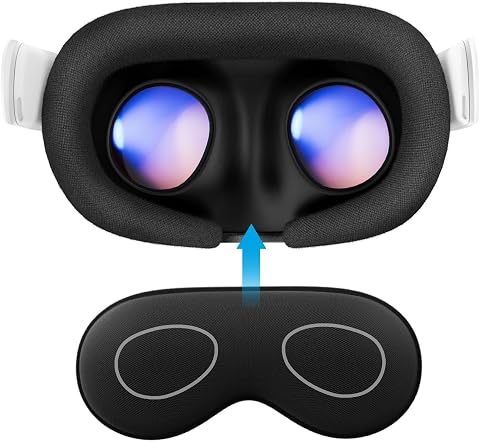
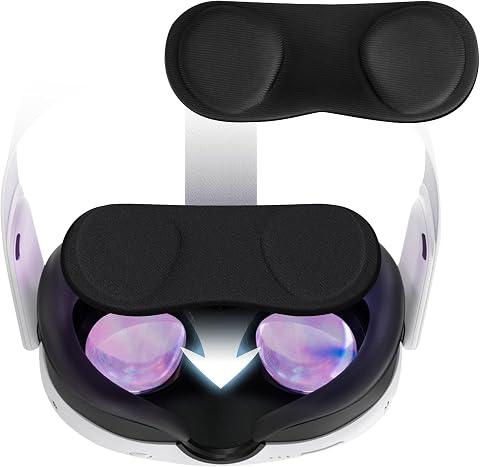
What separates this Quest 2 listing from the renewed Meta Quest 2 in this roundup is condition and completeness: this is a new unit that ships with a genuinely useful accessory package — silicone cover, glasses spacer, charging cable, power adapter, and batteries — so it works for glasses wearers straight out of the box with no extra purchases. The 50% pixel increase over the original Quest still holds up well for casual gaming and media, and the PC VR compatibility via Oculus Link gives it an upgrade path the smartphone headsets like the Orzly or DESTEK can never offer. Compared with the Quest 3 bundle, visuals and processing power are a step behind, but for buyers who mainly want an approachable, complete setup the gap rarely matters. The annoyances are real, though: an account requirement to activate the device, and a Link cable sold separately for anyone wanting PC titles.
Pros:- All-in-one design requiring no PC or console
- Includes silicone cover, glasses spacer, batteries, and charger
- PC VR compatible via Oculus Link for future expansion
- Comfortable Touch controllers with improved ergonomics
Cons:- Account sign-up required before the headset can be used
- Oculus Link cable for PC VR is sold separately
- Battery life varies noticeably with demanding games
Best for: New VR users and glasses wearers who want a complete, ready-to-run kit with an upgrade path to PC VR
Not ideal for: Buyers who want the sharpest visuals or longest battery life — the Quest 3 beats it on both counts
- Storage Capacity:256GB
- Display Resolution:1832 x 1920 pixels per eye
- Processor:Blazing-fast mobile processor
- Controller Type:Touch controllers with improved ergonomics
- Included Accessories:Silicone cover, glasses spacer, charging cable, power adapter, two AA batteries
- PC Compatibility:Oculus Link cable (sold separately)
- Sound:3D cinematic sound with built-in speakers
- Connectivity:Wireless internet required
Our verdict“The easiest plug-and-play entry into real VR, ideal for buyers who value a complete box over flagship specs.”

How We Picked
I ranked these headsets by how well each one serves its intended buyer, not by raw specs alone. For standalone headsets, the criteria were display quality, processing power, content ecosystem access, comfort during long sessions, and whether the included storage is enough for modern VR games. For PC-tethered headsets like the Pimax Crystal Super, I weighed resolution, field of view, tracking fidelity, and how demanding the setup is on your hardware. Phone-based viewers were evaluated on lens quality, phone compatibility, and comfort, since that is all they can realistically deliver.
The ranking logic follows a simple principle: versatility beats specialization at the top, and specialization beats compromise lower down. The Quest 3 earns the top spot because it handles standalone gaming, PC VR, media, and fitness without excelling at just one. The Pimax ranks high for enthusiasts but cannot be a general recommendation. Renewed units slot below their new equivalents because warranty and condition risk are real tradeoffs, and phone viewers rank last because they belong to a different product category entirely — useful, but not comparable gaming machines.
Factors to Consider When Choosing Vr Headsets
Choosing a VR headset in 2026 means picking between three fundamentally different product types, and mixing them up is the most common mistake buyers make. This guide explains the factors that actually determine whether you will be happy with your purchase six months from now.Standalone, PC-Tethered, or Phone-Based: Pick Your Category First
Before comparing specs, decide which of the three VR categories fits your situation. Standalone headsets like the Quest line have built-in processors, batteries, and stores — you put them on and play, anywhere. PC-tethered headsets like the Pimax Crystal Super render through a gaming PC, trading portability for dramatically better visuals. Phone-based viewers use your smartphone screen with simple lenses and cannot run real VR games at all. The mistake I see most often is buyers expecting a $30 phone headset to deliver a Quest-like experience, or assuming a premium PC headset will work without a powerful computer. If you cannot answer the category question, default to standalone — it is the category with the fewest ways to go wrong.
Storage Size Matters More Than You Think
Modern VR games routinely consume 8–20GB each, and standalone headsets rarely support expandable storage. A 64GB headset like the original Oculus Quest fills up after a handful of larger titles, which forces constant deletion and re-downloading. I would treat 128GB as the practical minimum for a standalone headset in 2026, with 256GB or 512GB being the comfortable long-term choice for anyone who buys games regularly. The same logic explains why the 512GB Quest 3 and 256GB Quest 2 variants rank above their smaller siblings — the price gap is usually smaller than the frustration of a full drive. Storage is the upgrade buyers most often regret skipping.
Display Resolution and Field of View Determine Comfort
Resolution affects two things at once: how sharp the image looks and how visible the screen-door effect is between pixels. Lower-resolution headsets like the original Quest or Quest 2 show visible pixel grid, which matters most in text-heavy apps and simulators. Field of view is the other half of immersion — the Pimax Crystal Super’s 140° FOV wraps around your vision, while standard headsets sit closer to 100–110°, which feels more like looking through a window. Neither number tells the whole story alone; a sharp but narrow display feels crisp but boxed in, while a wide but soft display feels immersive but blurry. Balance matters more than any single headline figure.
Renewed Versus New: When the Discount Is Worth It
Two renewed units appear in this roundup because refurbished Quest headsets are genuinely good deals — the platform is identical, the games are identical, and the savings can be substantial. The tradeoffs are condition variance and shorter warranty coverage: a renewed unit may have cosmetic wear, a battery that no longer holds a full charge, or scuffed controllers. I would recommend renewed units for budget-conscious adult buyers who can tolerate imperfection and know how to request a replacement. Avoid renewed units as gifts for kids or impatient users, where a faulty controller means immediate disappointment. Also note import-specific models like the UK-import Oculus Quest carry plug and warranty complications that a domestic renewed unit does not.
Who Will Actually Use It: Kids, Casuals, or Enthusiasts
Match the headset to the user, not the spec sheet. Kids aged 5–12 are better served by simple, durable options like the Heromask educational headset than by a full Quest, which requires accounts, has age policies, and offers content a child will never reach. Casual users who just want to watch 3D videos or show VR to friends are well served by a phone viewer like the DESTEK V5 — spending Quest money on them is waste. Enthusiasts who play flight sims or racing titles are the only group that genuinely benefits from the Pimax’s resolution, and even then only with the PC hardware to back it up. The most expensive headset is not the best headset for your household — the best one is the one that matches how it will actually be used.
Ecosystem Lock-In and Long-Term Content Access
A VR headset is only as good as the games and apps you can run on it, and ecosystems are not interchangeable. Meta’s store has the deepest standalone library, which is a major reason Quest models dominate this roundup — buying into it means years of new releases. PC headsets access SteamVR’s enormous back catalog but depend on your computer staying current. Phone viewers have no real ecosystem at all, just YouTube 3D videos and a handful of apps, which is exactly why they cost so little. Before buying, check whether the specific games you want — Gorilla Tag, fitness apps, flight sims — exist on that platform. Falling for great hardware with a thin library is a classic and expensive mistake.
Frequently Asked Questions
Is the Meta Quest 3 worth the extra cost over the Quest 3S?
For most buyers, yes, but the gap is narrower than the price suggests. The Quest 3 offers sharper pancake lenses, a wider field of view, and a more comfortable fit, while the 3S shares the same processor and runs the exact same games with slightly cheaper fresnel optics. If you plan long sessions or care about visual clarity for media and mixed reality, the Quest 3 justifies itself. If you mainly play fast games like Gorilla Tag, the 3S delivers nearly identical performance and is the smarter spend. Casual players should take the 3S; anyone keeping the headset for years should take the Quest 3.
Can a phone-based VR headset like the DESTEK V5 play real VR games?
No, and this is the single most common misconception in the category. Phone headsets are passive viewers — they hold your smartphone in front of a pair of lenses and display split-screen 3D video or simple apps. They cannot track your position in a room, run standalone games, or connect to a PC, because all the processing happens on a phone that was never designed for it. What they can do is play 360° videos, basic cardboard-style apps, and simple kids’ content, which is enough for casual viewing. If you want actual VR gaming, you need a standalone or PC headset — no phone viewer can substitute.
Is buying a renewed Quest headset risky?
There is real but manageable risk. Renewed units are inspected and resold with a limited warranty, so you are not buying blind, but battery health and controller drift are the two weaknesses that most often slip through. A headset that holds 60% of its original battery life is annoying; a drifting controller can make some games unplayable. My advice is to buy renewed only from sellers with clear return windows, test the headset thoroughly within that window, and budget mentally for a possible controller replacement. For buyers who accept that hassle, the savings over a new unit are often worth it.
Do I need a gaming PC for the Pimax Crystal Super?
Yes, and a powerful one. The Crystal Super’s 3840×3840 per-eye resolution and ultrawide field of view render roughly four times the pixels of a Quest-class display, and that workload lands entirely on your graphics card. A mid-range PC will struggle to hit the frame rates that keep VR comfortable, and low frame rates in VR cause genuine motion sickness rather than just ugly visuals. Before buying, check whether your GPU matches the headset’s recommended spec — it is typically a current-generation high-end card. The Pimax is an enthusiast purchase that includes a PC upgrade in its true cost.
Which headset is safe and appropriate for kids under 12?
For younger children, dedicated options beat full VR platforms. Meta’s own accounts require users to be 13 or older, which means a Quest is not officially intended for a 5-to-12-year-old, and its content library is built for teens and adults. The Heromask in this lineup targets exactly that gap with educational geography games and a simple, durable design. Phone viewers like the DESTEK V5 also work for supervised short sessions of 3D video. If you do buy a full headset for family use, plan on adult account ownership, supervised play, and firm time limits — the hardware is ready for kids before the ecosystem is.
Conclusion
After comparing all 13 options, the right pick depends almost entirely on who is wearing the headset. Best overall goes to the Meta Quest 3 — it is the only model here that does standalone gaming, PC VR, media, and mixed reality well without compromise. Best value is the Meta Quest 3S, which matches the Quest 3’s performance for less, with the renewed 3S as the boldest budget play. Best premium is the Pimax Crystal Super, and it is not close on visual fidelity — but only for buyers with a high-end gaming PC. Best for beginners is the Meta Quest 2 128GB, a forgiving, inexpensive entry into real VR. For specific needs: choose the Heromask for kids aged 5–12, the DESTEK V5 or Orzly for casual phone-based 3D viewing, and skip the original Oculus Quest import unless you find it nearly free. Whatever you choose, buy for the player, not the spec sheet — that single rule separates a headset that gets used weekly from one that gathers dust.
Halloween Picks
halloween
As an affiliate, we earn on qualifying purchases.