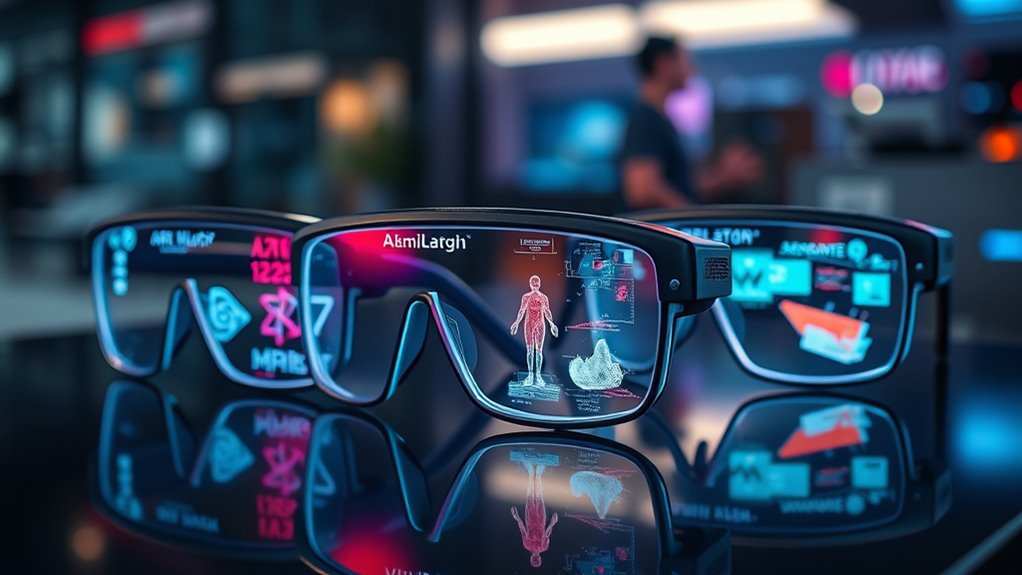

As AR technology continues to advance, finding glasses that deliver truly immersive experiences becomes more exciting—and more complex. For 2026, standout options include the RayNeo Air 4 Pro for its massive 201-inch virtual display and HDR support, the RayNeo Air 3s for its high color accuracy and eye comfort features, and the XREAL 1S for its expansive 500-inch virtual screen with real 3D depth. Each of these models offers unique strengths, but they also involve tradeoffs like device compatibility limitations, bulkiness, or higher costs. This guide will help clarify which AR glasses suit different needs for immersive entertainment and how to choose among them.

Get business pricing on tech for your team
- Business-only prices and quantity discounts
- Tax-exempt purchasing
- Multiple users, one account, clear invoices
Key Takeaways
- The RayNeo Air 4 Pro excels in ultra-large virtual displays and high refresh rates, ideal for gaming and cinematic experiences.
- RayNeo Air 3s emphasizes eye comfort and vivid visuals, making it better suited for prolonged viewing sessions.
- XREAL 1S offers a true 3D spatial experience with a massive virtual screen, perfect for users seeking depth perception.
- All options require device compatibility considerations, often relying on USB-C connections and external power sources.
- Price and portability vary significantly; premium features come with higher costs and more complex setups.
| RayNeo Air 4 Pro AR/XR Glasses HDR10 201″ Display, 120Hz 3D Movie Game |  | Best for Ultra-Large Virtual Displays and High-Impact Gaming | Display: 201-inch virtual screen | HDR: HDR10 | Refresh Rate: 120Hz | VIEW ON AMAZON | See Our Full Breakdown |
| RayNeo Air 3s AR/XR Glasses – 201″ 120Hz FHD HueView Display for Movies & Games |  | Best for Vivid Visuals and Eye Comfort | Display Size: 201 inches | Refresh Rate: 120Hz | Color Accuracy: 98% DCI-P3 | VIEW ON AMAZON | See Our Full Breakdown |
| XREAL 1S AR Glasses, 500-inch Virtual Screen, Powered by X1 Chip, Native 3DoF |  | Best for Lifelike Depth and Advanced Optical Clarity | Display Size: 500 inches | Field of View: 57° | Refresh Rate: 120Hz | VIEW ON AMAZON | See Our Full Breakdown |
| XREAL One Pro AR Glasses with X1 Chip, 171″ 120Hz FHD Display, Native 3DoF |  | Best for Comfort and Versatile Device Compatibility | Display Technology: Sony 0.55′ Micro-OLED | Display Size: 171 inches | Refresh Rate: 120Hz | VIEW ON AMAZON | See Our Full Breakdown |
| RayNeo GT Max AR/XR Glasses with 267″ FOV and Audio by Bang & Olufsen |  | Best for Cinematic Scale and High-End Audio | Display Size: 267 inches (equivalent) | Field of View: 59° | Brightness: 1200 nits | VIEW ON AMAZON | See Our Full Breakdown |
| ar glasses for immersive experience | Refresh Rate | Audio | Display Size | Field of View |
|---|---|---|---|---|
| RayNeo Air 4 Pro AR/XR Glasses | 120Hz | Bang & Olufsen 4 speakers | — | — |
| RayNeo Air 3s AR/XR Glasses | 120Hz | Dual opposing acoustic chambers | 201 inches | — |
| XREAL 1S AR Glasses | 120Hz | Bose-tuned open-ear | 500 inches | 57° |
| XREAL One Pro AR Glasses with | 120Hz | Bose speakers | 171 inches | 57° |
| RayNeo GT Max AR/XR Glasses wi | 120Hz | Bang & Olufsen Quad-Speaker system | 267 inches (equivalent) | 59° |
More Details on Our Top Picks
RayNeo Air 4 Pro AR/XR Glasses HDR10 201″ Display, 120Hz 3D Movie Game
The RayNeo Air 4 Pro stands out for its enormous 201-inch virtual screen, making it ideal for those wanting a portable cinema experience. Its HDR10 support and 120Hz refresh rate deliver smooth, vibrant visuals, perfect for high-quality movies and gaming. The inclusion of Bang & Olufsen spatial sound adds to the immersion, while its external power requirement keeps the device lightweight and instant to set up. Compared with other models, it sacrifices internal battery life and some device compatibility, requiring a USB-C power source and optional sound accessories.
Pros:- Massive 201-inch virtual display for true cinematic immersion
- Smooth 120Hz refresh rate supports fast-paced games
- Premium spatial sound by Bang & Olufsen
- Lightweight with no internal battery for instant setup
Cons:- Requires external power via USB-C
- Limited device compatibility with USB-C connection only
- Optional sound tube sold separately
Best for: users seeking an immersive, cinematic experience on the go, especially for gaming and movie streaming.
Not ideal for: those who prioritize portability without external cables or need full device compatibility without extra accessories.
- Display:201-inch virtual screen
- HDR:HDR10
- Refresh Rate:120Hz
- Audio:Bang & Olufsen 4 speakers
- Connectivity:USB-C
- Compatibility:iPhone 17/16/15, Android, MacBook, iPad, Steam Deck, PlayStation
- Special Features:3D movie support, AI SDR-to-HDR upscaling, whisper mode
Our verdict“This model is perfect for users prioritizing a massive, cinema-like virtual display for immersive entertainment without worrying about internal batteries.”
RayNeo Air 3s AR/XR Glasses – 201″ 120Hz FHD HueView Display for Movies & Games
The RayNeo Air 3s offers a stunning 201-inch display with 98% DCI-P3 color accuracy and a contrast ratio of 200,000:1, making visuals exceptionally vivid and realistic. Its flicker-free, low blue light design helps reduce eye strain during extended use, a major advantage for long viewing or gaming sessions. While these glasses deliver excellent image quality and immersive audio with dual opposing chambers, they are somewhat bulky and less portable due to their design, and detailed information on battery life and connectivity remains limited.
Pros:- Immersive 201-inch mega screen with vivid color and contrast
- Flicker-free and low blue light for eye comfort
- Enhanced audio with deep bass and clarity
- High contrast and color accuracy for realistic visuals
Cons:- Bulky and potentially uncomfortable for some users
- Limited info on battery life and connectivity options
- Higher cost due to premium features
Best for: users who want high-fidelity visuals combined with eye comfort for prolonged immersive experiences.
Not ideal for: people seeking ultra-portable or lightweight AR glasses or those sensitive to bulky glasses.
- Display Size:201 inches
- Refresh Rate:120Hz
- Color Accuracy:98% DCI-P3
- Contrast Ratio:200,000:1
- Blue Light Certification:TÜV SÜD Low Blue Light
- Audio:Dual opposing acoustic chambers
Our verdict“This pick makes the most sense for users who value visual fidelity and eye comfort over portability or minimalism.”
XREAL 1S AR Glasses, 500-inch Virtual Screen, Powered by X1 Chip, Native 3DoF
The XREAL 1S provides a virtual screen up to 500 inches with a 57° FOV, combining high refresh rates, advanced optical alignment, and real 3D spatial technology. Its 3DoF tracking enables a natural, lifelike experience, with Bose-tuned open-ear audio enhancing sound immersion. Although it requires connection to a USB-C DP-enabled device, it offers a comfortable adjustable fit and a clarity boost over previous models. This makes it ideal for users who want a broad, deep AR experience but are willing to manage the connectivity constraints.
Pros:- Largest virtual screen at 500 inches with 57° FOV
- Real 3D spatial technology enhances depth perception
- High-quality Bose audio for immersive sound
- Comfortable, adjustable fit for extended use
Cons:- Requires device with USB-C DP output, limiting mobility
- Potentially high price for advanced features
- Limited to native 3DoF without additional accessories
Best for: users seeking depth, realism, and a true spatial AR experience with detailed visuals.
Not ideal for: those who prefer ultra-portability or need full 6DoF tracking for full spatial interaction.
- Display Size:500 inches
- Field of View:57°
- Refresh Rate:120Hz
- Optical Engine:Redesigned for 9% clarity boost
- Spatial Modes:0DoF follow, 3DoF anchor, Ultrawide, Real 3D, Side-View
- Connectivity:USB-C DP-enabled device
- Audio:Bose-tuned open-ear
- IPD Range:59.5–70.5 mm
Our verdict“This model is best suited for users craving a true spatial AR experience with depth and realism, willing to handle device requirements.”
XREAL One Pro AR Glasses with X1 Chip, 171″ 120Hz FHD Display, Native 3DoF
The XREAL One Pro combines a 171-inch virtual display with a 57° FOV, built on Sony’s Micro-OLED technology for crisp visuals. Its streamlined design and adjustable fit make it comfortable for longer sessions, while the X1 chip powers stable 3DoF tracking. It supports a wide range of devices via USB-C, and its 6DoF optional features add to its versatility. This makes it a good choice for users wanting immersive visuals with good portability and device flexibility, though advanced tracking features may require extra accessories.
Pros:- Large 171-inch screen with immersive 57° FOV
- High-quality Sony Micro-OLED display
- Comfortable adjustable fit
- Supports a broad range of devices via USB-C
Cons:- Requires compatible device with USB-C video output
- Advanced features like 6DoF need additional accessories
- Price may be high for casual, basic use
Best for: users seeking a balanced AR experience with good visual quality and device versatility.
Not ideal for: those who need full 6DoF tracking for spatial interaction or prefer extremely lightweight glasses.
- Display Technology:Sony 0.55′ Micro-OLED
- Display Size:171 inches
- Refresh Rate:120Hz
- Field of View:57°
- Brightness:Up to 700 nits
- Audio:Bose speakers
- Compatibility:USB-C devices including iPhone, Android, Steam Deck, MacBook, Windows
Our verdict“This pick offers a good mix of visual quality, comfort, and device compatibility for users who want immersive AR without sacrificing usability.”
RayNeo GT Max AR/XR Glasses with 267″ FOV and Audio by Bang & Olufsen
The RayNeo GT Max pushes the boundaries with a virtual display equivalent to 267 inches and a broad 59° FOV, making it ideal for cinematic and travel experiences. Its spatial audio system, co-tuned by Bang & Olufsen, adds richness to the immersive environment. Equipped with advanced 3DoF tracking, it supports a wide array of devices, including recent iPhones, Androids, and gaming consoles. However, its broad feature set and high-end audio come at a premium price and require compatible hardware or adapters for some connections.
Pros:- Immersive 267-inch virtual display with broad FOV
- Superior spatial audio by Bang & Olufsen
- Advanced 3DoF tracking for natural movement
- Broad compatibility with modern devices
Cons:- High price point
- Requires compatible device or adapters
- Native 3DoF tracking limits some spatial interactions
Best for: users seeking a premium, cinematic immersive experience with excellent sound and broad device compatibility.
Not ideal for: casual users or those sensitive to high-cost gear and complex setups.
- Display Size:267 inches (equivalent)
- Field of View:59°
- Brightness:1200 nits
- Color Gamut:145% sRGB, 98% DCI-P3
- Contrast Ratio:200,000:1
- Refresh Rate:120Hz
- Tracking:Native 3DoF
- Audio:Bang & Olufsen Quad-Speaker system
Our verdict“This model is best suited for dedicated immersive media enthusiasts willing to invest in premium features and high-quality audio.”

How We Picked
To select these AR glasses, I focused on their immersive display capabilities, including size, resolution, and refresh rate, which directly impact the quality of visual experiences. I also considered device compatibility, ease of use, and comfort, since prolonged use is common for immersive viewing. Features like spatial audio, eye comfort certifications, and advanced optical technology helped differentiate premium options from more accessible models. The goal was to identify products that push the boundaries of immersive AR while maintaining practical usability for different kinds of users.
| ar glasses for immersive experience | Audio |
|---|---|
| RayNeo Air 4 Pro AR/XR Glasses | Bang & Olufsen 4 speakers |
| RayNeo Air 3s AR/XR Glasses | Dual opposing acoustic chambers |
| XREAL 1S AR Glasses | Bose-tuned open-ear |
| XREAL One Pro AR Glasses with | Bose speakers |
| RayNeo GT Max AR/XR Glasses wi | Bang & Olufsen Quad-Speaker system |
Factors to Consider When Choosing Ar Glasses For Immersive Experiences
Choosing the right AR glasses for immersive experiences involves balancing display size, visual fidelity, comfort, device compatibility, and budget. Larger virtual screens provide a more cinematic feel, but often require more powerful hardware and may be bulkier. Features like high refresh rates and advanced optical technology improve smoothness and clarity, essential for gaming or detailed visuals. Comfort and fit are vital for long sessions, especially with heavier or bulkier models. Compatibility with your existing devices, whether smartphones, PCs, or gaming consoles, also determines ease of use. Finally, consider your budget—premium models offer features like real 3D depth and premium audio, but at a higher price. This guide helps clarify these tradeoffs to match your immersive AR needs.Display Size and Resolution
Immersive AR depends heavily on virtual display size; larger screens create a more cinematic experience. However, bigger displays often require higher processing power and more advanced optical systems, which can increase weight and cost. Resolution also matters: higher pixel density ensures sharper images, reducing pixelation at close viewing distances. For gaming and movies, a combination of large size and high resolution delivers the most convincing experience. When choosing, consider whether size or resolution takes priority based on your primary use—massive screens for cinema-like immersion, or high resolution for detailed visuals.
Field of View and Optical Quality
The field of view (FOV) determines how much of your visual field the glasses cover. A broader FOV enhances immersion by creating a more natural, panoramic experience. Many premium AR glasses now aim for at least 50° to 60°, with some reaching over 70°. Optical quality—such as brightness, contrast, and color accuracy—further enhances realism and reduces eye strain. Features like HDR support, low blue light certification, and advanced optical alignment boost visual fidelity and comfort. When evaluating options, look for a balance between a wide FOV and optical clarity to suit your immersive needs.
Comfort, Fit, and Wearability
Extended use demands comfortable, well-fitting glasses. Heavier or bulky designs can cause fatigue, especially if they lack adjustable straps or ergonomic padding. Lightweight materials, adjustable nose pads, and balanced weight distribution improve comfort. Eye safety certifications like TÜV Rheinland low blue light help prevent strain during long sessions. For prolonged viewing, consider models with features like flicker-free displays, adjustable IPD, and breathable materials. Comfort is often a tradeoff with size and weight, so prioritize your typical session length and mobility needs when selecting a model.
Device Compatibility and Connectivity
Immersive AR glasses often depend on external devices such as smartphones, PCs, or gaming consoles. Compatibility with your existing hardware is essential; many models require USB-C connections, sometimes with specific video outputs like DisplayPort. Some glasses need external power sources, which can limit portability. Check whether the glasses support your device’s operating system and output options before purchasing. Additional accessories, such as adapters or batteries, may be necessary, adding to complexity and cost. For seamless experiences, prioritize models with broad compatibility and straightforward connection methods.
Price, Portability, and Additional Features
High-end AR glasses with large displays, 3D depth, and premium audio tend to come with a premium price tag. Consider whether the immersive features justify the investment for your intended use. Portability varies: some models are lightweight and portable, while others require external cables or bulky hardware. Additional features like eye comfort certifications, adjustable dimming, or optional 6DoF tracking add value but can increase costs and complexity. Balance your budget with your needs for mobility, comfort, and visual quality for a satisfying purchase.
Frequently Asked Questions
Can I use AR glasses for extended gaming sessions?
Yes, many AR glasses designed for immersive experiences include features like flicker-free displays, low blue light certification, and ergonomic designs to support longer use. However, comfort varies: bulkier models or those without adjustable straps may cause fatigue over time. It’s important to choose glasses with good ventilation, balanced weight, and eye safety features if you plan on extended gaming or viewing sessions.
Do I need a powerful device to run these AR glasses?
Most high-end AR glasses require a compatible external device such as a smartphone, PC, or gaming console to operate effectively. Larger virtual screens and advanced features like 3D depth or high refresh rates demand significant processing power. Check each model’s device requirements carefully—some need USB-C connections with DisplayPort or external power sources. If portability is key, look for models optimized for your existing hardware to minimize additional accessories.
Are these AR glasses suitable for long-term use?
Many models include eye comfort features like flicker-free displays, low blue light certification, and adjustable IPD, which help reduce eye strain during extended use. Still, comfort varies based on weight, fit, and the design of each pair. For prolonged sessions, select glasses with ergonomic features and consider taking regular breaks to prevent fatigue. Always pay attention to certifications and user comfort features to ensure a positive experience over time.
Can I wear glasses with these AR headsets?
Most AR glasses are designed to accommodate users who wear regular glasses, often with adjustable nose pads and enough internal space. However, some bulkier models may not fit comfortably over prescription glasses or may require custom fittings. Check the product specifications for compatibility with your eyewear or consult with the manufacturer if you have specific needs. Some models also support prescription lenses as an add-on.
How important is device compatibility when choosing AR glasses?
Device compatibility is critical because it determines how easily you can connect and use the glasses with your existing hardware. Many high-end models require specific ports like USB-C with DisplayPort or HDMI and may need external power sources. Incompatibility can mean additional adapters, reduced functionality, or the need for costly upgrades. Always verify that the glasses support your device’s operating system, output ports, and performance requirements before making a purchase.
Conclusion
For users seeking the broadest, cinema-like immersion and high-quality audio, the RayNeo GT Max offers an exceptional high-end experience, but at a premium price. Those prioritizing visual fidelity and eye comfort for extended sessions should consider the RayNeo Air 3s. If deep, lifelike spatial experiences and large virtual screens are your focus, the XREAL 1S delivers impressive depth and clarity, suitable for enthusiasts willing to manage device requirements. Casual users or those on a budget might find the XREAL One Pro a balanced option, offering a good mix of features and device compatibility without the highest price tag. Ultimately, your choice depends on your preferred balance of display size, portability, audio quality, and budget considerations.
Evergreen bestsellers Picks

Ninja CREAMi 7-in-1 Ice Cream Maker, NC301

Vitamix 5200 Professional-Grade Blender, 64 oz. Container, Black

Breville Bambino Espresso Machine, Brushed Stainless Steel
As an affiliate, we earn on qualifying purchases.