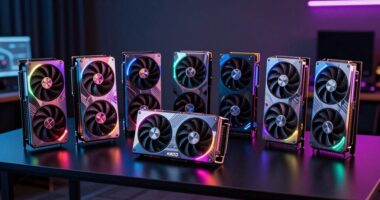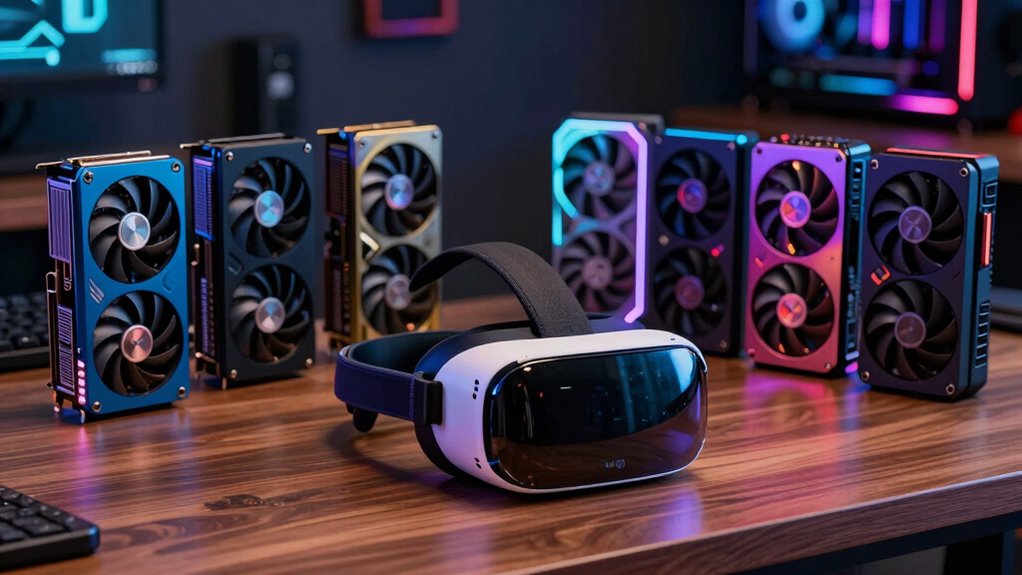
Finding a value GPU for VR can be tricky, as balancing performance and cost is key. The GIGABYTE GeForce RTX 5060 WINDFORCE OC 8G stands out as the overall best choice, offering a solid mix of affordability and capable VR performance. Meanwhile, the MSI Radeon RX 6600 XT MECH 2X 8G OC delivers excellent value for budget-conscious buyers, with decent VR capabilities at a lower price point. Both options highlight common tradeoffs: either pay more for better future-proofing or settle for lower costs with potential performance limitations. Continue reading for a detailed breakdown of these options and what makes each suitable for different types of VR users.

Get business pricing on tech for your team
- Business-only prices and quantity discounts
- Tax-exempt purchasing
- Multiple users, one account, clear invoices
Key Takeaways
- The top-ranked models balance price and VR-ready performance, with the RTX 5060 edging out due to better driver support and future compatibility.
- Many budget options like the Radeon RX 6600 XT provide solid VR experiences but may lack the raw power needed for demanding titles or higher resolutions.
- Memory size varies significantly, with 8GB often being enough for current VR needs, but 16GB cards offer added headroom for future updates.
- Power efficiency and cooling are often overlooked but impact long-term reliability and noise levels during extended VR sessions.
- Brand reputation and driver support can influence long-term usability, with established manufacturers generally offering more consistent updates.
| GIGABYTE GeForce RTX 5060 WINDFORCE OC 8G Graphics Card |  | Best Overall for Value and Performance | Memory: 8GB GDDR7 | Memory Interface: 128-bit | Architecture: NVIDIA Blackwell | VIEW ON AMAZON | See Our Full Breakdown |
| MSI Gaming Radeon RX 6600 XT MECH 2X 8G OC Graphics Card |  | Best for Mid-Range VR Gaming | Memory: 8GB GDDR6 | GPU: Radeon RX 6600 XT | Interface: PCIe | VIEW ON AMAZON | See Our Full Breakdown |
| GIGABYTE Radeon RX 9070 XT Gaming OC 16G Graphics Card |  | Best for High-End VR and Creative Work | Memory: 16GB GDDR6 | Interface: PCIe 5.0 | Cooling System: WINDFORCE | VIEW ON AMAZON | See Our Full Breakdown |
| ASUS GeForce GTX 1060 6GB Dual-Fan OC Edition VR Ready Graphics Card |  | Best for Budget VR Gaming | Boost Clock: 1809 MHz | Memory: 6GB GDDR5 | Cooling: Dual-fan | VIEW ON AMAZON | See Our Full Breakdown |
| ASUS Dual Radeon RX 9060 XT 16GB GDDR6 Gaming Graphics Card |  | Best for Silent, Cooler VR Gaming | Memory: 16GB GDDR6 | Design: 2.5-slot | Fan Technology: Axial-tech with barrier ring | VIEW ON AMAZON | See Our Full Breakdown |
| ASUS Dual NVIDIA GeForce RTX 5060 8GB GDDR7 OC Edition |  | Best Overall for High AI Performance and Future-Proofing | Memory: 8GB GDDR7 | Architecture: NVIDIA Blackwell | AI Performance: 623 AI TOPS | VIEW ON AMAZON | See Our Full Breakdown |
| ASRock Radeon RX 9060 XT Challenger 16GB OC Graphics Card |  | Best for High-Resolution, Large-Scale VR and Creative Work | GPU Architecture: RDNA 4 | Memory: 16GB GDDR6 | Boost Clock: 3290 MHz | VIEW ON AMAZON | See Our Full Breakdown |
| ASUS Dual GeForce RTX 3050 6GB GDDR6 OC Edition Gaming Graphics Card | 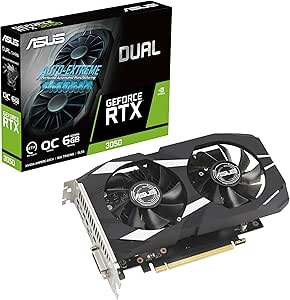 | Best for Compact Builds and Entry-Level VR | GPU Model: GeForce RTX 3050 | Memory: 6GB GDDR6 | Boost Clock: 1500 MHz (OC Mode) | VIEW ON AMAZON | See Our Full Breakdown |
| ASRock Intel Arc B570 Challenger 10GB OC GDDR6 Graphics Card |  | Best for Versatile Content Creation and VR with AI Features | Memory: 10GB GDDR6 | Memory Speed: 19 Gbps | GPU Clock Speed: 2600 MHz | VIEW ON AMAZON | See Our Full Breakdown |
| XFX Radeon RX 580 GTS XXX Edition 8GB GDDR5 |  | Best Budget VR Card with Good Performance and Compatibility | GPU Clock: 1386MHz OC | Memory: 8GB GDDR5 | VR Ready: Yes | VIEW ON AMAZON | See Our Full Breakdown |
| value gpu for vr | Memory |
|---|---|
| GIGABYTE GeForce RTX 5060 WIND | 8GB GDDR7 |
| MSI Gaming Radeon RX 6600 XT M | 8GB GDDR6 |
| GIGABYTE Radeon RX 9070 XT Gam | 16GB GDDR6 |
| ASUS GeForce GTX 1060 6GB Dual | 6GB GDDR5 |
| ASUS Dual Radeon RX 9060 XT 16 | 16GB GDDR6 |
| ASUS Dual NVIDIA GeForce RTX 5 | 8GB GDDR7 |
| ASRock Radeon RX 9060 XT Chall | 16GB GDDR6 |
| ASUS Dual GeForce RTX 3050 6GB | 6GB GDDR6 |
| ASRock Intel Arc B570 Challeng | 10GB GDDR6 |
| XFX Radeon RX 580 GTS XXX Edit | 8GB GDDR5 |
More Details on Our Top Picks
GIGABYTE GeForce RTX 5060 WINDFORCE OC 8G Graphics Card
This GIGABYTE RTX 5060 stands out for combining NVIDIA’s latest Blackwell architecture with DLSS 4, offering a solid balance of price and power for VR. Compared with the Radeon RX 6600 XT, it provides better DLSS support, which can boost frame rates in demanding VR titles, but it lacks detailed specs and real-world reviews, making it a somewhat uncertain choice for budget-conscious buyers seeking proven performance. Its PCIe 5.0 support and effective WINDFORCE cooling make it a future-proof pick, yet limited information on pricing and availability might hinder immediate purchase decisions.
Pros:- Latest NVIDIA Blackwell architecture with DLSS 4 support
- 8GB GDDR7 memory provides ample bandwidth for VR
- PCIe 5.0 support ensures fast data transfer
Cons:- Limited detailed specifications and real-world benchmark data
- No price or user reviews available at launch
Best for: gamers and VR enthusiasts seeking a high-performance, future-ready GPU at a reasonable price
Not ideal for: users who need detailed specs, extensive reviews, or are on a tight budget without current pricing info
- Memory:8GB GDDR7
- Memory Interface:128-bit
- Architecture:NVIDIA Blackwell
- DLSS:Yes
- PCIe:5.0
- Cooling System:WINDFORCE
Our verdict“This card offers strong future-proof features for VR, best suited for those willing to wait for more detailed reviews or pricing clarity.”
MSI Gaming Radeon RX 6600 XT MECH 2X 8G OC Graphics Card
This AMD Radeon RX 6600 XT is well-suited for budget-conscious gamers who want VR capability without overspending. Its 8GB GDDR6 memory and overclocking features make it a capable performer for most VR titles, especially when compared to older models like the XFX RX 580. However, as a renewed product, it might have limited warranty, and it consumes more power, which could be a concern for smaller or less capable power supplies. Its FreeSync support helps smooth gameplay, but it doesn’t match the raw power of higher-end cards like the GIGABYTE RTX 5060.
Pros:- Overclocking capabilities enhance performance in VR
- VR ready ensures compatibility with most headsets
- Supports FreeSync technology for tear-free visuals
Cons:- Renewed product may have limited warranty
- Higher power consumption compared to some alternatives
Best for: mid-range gamers seeking VR-ready performance with overclocking flexibility on a budget
Not ideal for: users with limited power supply capacity or those expecting flagship performance for demanding VR applications
- Memory:8GB GDDR6
- GPU:Radeon RX 6600 XT
- Interface:PCIe
- VR Ready:Yes
- FreeSync:Yes
- Overclocking:Yes
- Dimensions:8.2L x 26.8W x 35.41H cm
Our verdict“This card balances affordability and VR performance, making it suitable for gamers who want decent VR experiences without high costs.”
GIGABYTE Radeon RX 9070 XT Gaming OC 16G Graphics Card
The GIGABYTE RX 9070 XT with 16GB GDDR6 offers a hefty memory advantage over most competitors like the RX 6600 XT, making it ideal for demanding VR applications and creative tasks. Its PCIe 5.0 support and robust cooling system underscore its high-performance profile, but the limited detailed specs and potential power draw mean it’s best suited for users with capable systems. While it outperforms mid-range options, its high price and power requirements might be overkill for casual VR users, and some may find it less cost-effective compared to more balanced choices like the RTX 5060.
Pros:- Massive 16GB GDDR6 memory supports demanding VR apps
- PCIe 5.0 support for fast data transfer
- Effective WINDFORCE cooling system
Cons:- Limited detailed specifications and reviews
- High power consumption and cost
Best for: VR enthusiasts and creators needing large VR datasets or high-fidelity graphics
Not ideal for: budget-conscious buyers or those with constrained power supplies who don’t need such high memory capacity
- Memory:16GB GDDR6
- Interface:PCIe 5.0
- Cooling System:WINDFORCE
- Lighting:RGB
Our verdict“This card excels for high-end VR and creative workloads but may be excessive for casual or budget VR gamers.”
ASUS GeForce GTX 1060 6GB Dual-Fan OC Edition VR Ready Graphics Card
The ASUS GTX 1060 6GB was a popular entry-level option for VR, offering a boost clock of 1809 MHz and dual-fan cooling for quieter operation. While it’s a good choice for those new to VR or with tight budgets, it falls short compared to newer cards like the RTX 5060 or RX 6600 XT, especially in demanding VR environments. Its 6GB GDDR5 memory limits performance in more recent titles, and its age means it might struggle with the latest VR headsets. Still, for light VR use, it remains a reliable, low-cost option.
Pros:- High boost clock speed for smooth gameplay
- VR-ready with dual HDMI ports
- Quiet dual-fan cooling system
Cons:- Limited to older 6GB GDDR5 memory
- Potentially limited lifespan with newer VR titles
Best for: beginner VR users or those on a tight budget who want basic VR compatibility
Not ideal for: sophisticated VR setups or demanding titles requiring higher performance
- Boost Clock:1809 MHz
- Memory:6GB GDDR5
- Cooling:Dual-fan
- VR-Ready:Yes
- Ports:Dual HDMI 2.0
Our verdict“This card suits entry-level VR users needing reliable performance at low cost, but it won’t handle future demanding VR experiences well.”
ASUS Dual Radeon RX 9060 XT 16GB GDDR6 Gaming Graphics Card
The ASUS RX 9060 XT with 16GB GDDR6, axial-tech fans, and 0dB technology targets users who prioritize quiet operation and thermal efficiency in their VR setup. Its 2.5-slot design can pose compatibility issues in smaller cases, and while its high clock speeds up to 3250 MHz (OC mode) promise strong performance, these high speeds may increase power consumption and heat. Compared to the GIGABYTE RX 9070 XT, it offers similar high-end features but with a focus on silent operation and airflow, making it a good choice for quiet gaming environments.
Pros:- Axial-tech fans with barrier ring for improved airflow
- Zero dB technology for silent operation during light gaming
- High clock speeds for excellent performance
Cons:- Potential compatibility issues due to 2.5-slot design
- High clock speeds can increase power use and heat
Best for: VR users who want high performance without noise, especially in smaller or quiet-focused setups
Not ideal for: users with small cases or limited power budgets who need a more compact or energy-efficient card
- Memory:16GB GDDR6
- Design:2.5-slot
- Fan Technology:Axial-tech with barrier ring
- Cooling:Dual ball fan bearings
- Clock Speed:up to 3250 MHz (OC)
Our verdict“This card is ideal for quiet, high-performance VR gaming in larger cases but may be less suitable for small or power-constrained builds.”
ASUS Dual NVIDIA GeForce RTX 5060 8GB GDDR7 OC Edition
The ASUS Dual NVIDIA GeForce RTX 5060 OC Edition distinguishes itself through its impressive AI capabilities, supporting DLSS 4 and delivering up to 623 AI TOPS, making it ideal for VR users who want a versatile card that can handle demanding graphics and AI tasks. Compared to the RX 9060 XT Challenger, which emphasizes raw gaming power with a larger 16GB memory, the RTX 5060 offers a balanced mix of AI-enhanced features and high-performance gaming, though it requires PCIe 5.0 support and can consume more power. Its axial-tech cooling system helps maintain stable performance under load, which is critical for VR. The tradeoff involves a somewhat higher cost and the need for a PCIe 5.0 slot, which not all systems have. This pick makes the most sense for VR enthusiasts seeking longevity, AI features, and cutting-edge gaming performance without overly sacrificing compatibility.
Pros:- High AI performance with 623 AI TOPS for advanced VR experiences
- Effective axial-tech cooling for stable operation
- Supports DLSS 4 for enhanced graphics quality
- 3-year warranty adds peace of mind
Cons:- Limited detailed specifications available, which may concern tech enthusiasts
- Potentially high power consumption requiring a robust PSU
Best for: VR gamers who want a future-proof, AI-capable GPU with solid performance for demanding titles.
Not ideal for: Budget-conscious users with older systems that lack PCIe 5.0 slots or high power supplies.
- Memory:8GB GDDR7
- Architecture:NVIDIA Blackwell
- AI Performance:623 AI TOPS
- Default Clock:2535 MHz
- OC Mode Clock:2565 MHz
- Fan Design:Axial-tech
- Technology:0dB Technology
- Interface:PCIe 5.0
Our verdict“This GPU is a strong choice for VR users seeking AI power and future-ready features, provided their system supports PCIe 5.0.”
ASRock Radeon RX 9060 XT Challenger 16GB OC Graphics Card
The ASRock Radeon RX 9060 XT Challenger offers a substantial 16GB GDDR6 memory and a turbo boost of up to 3290 MHz, making it well-suited for VR at 1440p and beyond, as well as demanding creative applications. It surpasses the RX 580 in memory capacity and speed, enabling smoother experiences with larger textures and complex scenes in VR. The dual fan design ensures effective cooling, maintaining performance during extended VR sessions. However, its length of nearly 25 cm and 550W power requirement mean it’s best suited for larger cases with high-capacity PSUs, limiting its use in smaller setups. Its 16GB VRAM is a notable advantage over the RTX 3050, which is more limited in VR applications. This card is ideal for users who prioritize VR clarity and multitasking over compactness or budget constraints.
Pros:- Large 16GB GDDR6 memory for smooth VR and content creation
- High boost clock of up to 3290 MHz for fast rendering
- Supports latest display standards like DisplayPort 2.1a and HDMI 2.1b
- Silent dual fan cooling system for long VR sessions
Cons:- Requires a sizable case and high-capacity PSU, limiting compatibility
- Limited information on driver support and software features
Best for: High-end VR users with ample space and power supplies, aiming for maximum VR fidelity and creative versatility.
Not ideal for: Small form-factor builders or those with limited PSU capacity, due to its size and power needs.
- GPU Architecture:RDNA 4
- Memory:16GB GDDR6
- Boost Clock:3290 MHz
- Game Clock:2700 MHz
- Display Outputs:DisplayPort 2.1a, HDMI 2.1b
- Dimensions:249 mm x 132 mm x 41 mm
Our verdict“This card delivers exceptional VR performance for those with spacious setups willing to invest in high power and cooling, excelling in demanding VR scenarios.”
ASUS Dual GeForce RTX 3050 6GB GDDR6 OC Edition Gaming Graphics Card
The ASUS Dual GeForce RTX 3050 OC Edition is a solid choice for budget-conscious VR gamers who prefer a smaller form factor, thanks to its dual-slot design and axial-tech cooling. While it offers improved ray tracing and AI features over older models like the GTX 1060, its 6GB VRAM can limit performance in more demanding VR titles or higher resolutions. Compared with the RTX 5060, it’s less future-proof but more affordable and compatible with a wider range of PCs, especially small cases. The stainless steel bracket and dust resistance add durability, but the lower VRAM and less robust architecture mean it’s better suited for casual or entry-level VR setups. It’s a good starting point for newcomers or those with limited space, but not ideal for intensive VR or high-end gaming.
Pros:- Enhanced ray tracing and AI with Ampere architecture
- Effective cooling with axial-tech fan design
- Durable stainless steel bracket and dust resistance
Cons:- Limited to 6GB VRAM, which can bottleneck demanding VR titles
- Requires a compatible small chassis for optimal fit
Best for: Entry-level VR enthusiasts with small cases or limited budgets seeking reliable performance.
Not ideal for: Power users or those planning to run high-demand VR experiences that need more VRAM or raw power.
- GPU Model:GeForce RTX 3050
- Memory:6GB GDDR6
- Boost Clock:1500 MHz (OC Mode)
- Design:Dual-slot
- Cooling:Axial-tech fan
- Dust Resistance:IP5X
Our verdict“This GPU fits budget-conscious VR users with small builds, offering reliable ray tracing and durability but limited VRAM for intensive titles.”
ASRock Intel Arc B570 Challenger 10GB OC GDDR6 Graphics Card
The ASRock Intel Arc B570 Challenger combines 10GB of GDDR6 memory with AI-accelerated features, supporting modern display standards like HDMI 2.1a and DisplayPort 2.1. It excels in both VR and content creation, thanks to its high memory bandwidth and AI upscaling capabilities, surpassing older or lower-spec cards like the RX 580 in multitasking and clarity. Its dual axial fans keep noise levels low, which is advantageous for immersive VR. The requirement for an 8-pin power connector makes it less compatible with low-power systems, and its high clock speeds mean it can draw significant power. Compared to the RTX 3050, it offers more VRAM and AI features, but at a potentially higher power cost. It’s suited for users needing versatile, high-performance VR and creative workflows.
Pros:- High-performance gaming and content creation with 10GB GDDR6
- Supports latest display standards and AI features
- Effective dual fan cooling with silent operation
- Durable metal backplate for added protection
Cons:- Requires an 8-pin power connector, limiting compatibility with some systems
- Higher power consumption due to high clock speeds
Best for: VR users who also engage in content creation or AI-assisted work, with a capable system and high power capacity.
Not ideal for: Users with limited power supply capacity or seeking the cheapest VR-ready options.
- Memory:10GB GDDR6
- Memory Speed:19 Gbps
- GPU Clock Speed:2600 MHz
- Bus Width:160-bit
- Display Outputs:3 x DisplayPort 2.1, 1 x HDMI 2.1a
- Cooling:Dual axial fans with 0dB technology
Our verdict“This GPU offers a compelling mix of VR and creative performance for advanced users with robust systems, though it demands ample power headroom.”
XFX Radeon RX 580 GTS XXX Edition 8GB GDDR5
The XFX Radeon RX 580 GTS XXX Edition stands out as an accessible VR option with factory overclocking that boosts performance over stock models. Its 8GB GDDR5 memory is sufficient for many VR titles at 1080p and some 1440p setups, making it a practical choice for budget-conscious VR users. Its dual BIOS and effective cooling technology help maintain stable performance during VR sessions, while multiple outputs provide flexible setup options. However, it’s less efficient and more power-hungry than newer cards like the RTX 3050, and its size can be cumbersome in smaller cases. While it won’t match the latest architectures in AI or ray tracing, it offers reliable VR performance at a more affordable price point, especially for those upgrading older systems.
Pros:- Factory overclocked for enhanced gaming and VR performance
- VR ready with low latency and minimal stuttering
- Effective cooling with double dissipation technology
- Multiple display outputs for versatile setups
Cons:- Requires a power supply of at least 500W, which might limit older systems
- Bulky size and higher power draw compared to newer models
Best for: Budget-conscious VR gamers with existing systems needing a reliable, VR-ready GPU without breaking the bank.
Not ideal for: Enthusiasts seeking the latest features or planning to run VR at high resolutions or with demanding textures.
- GPU Clock:1386MHz OC
- Memory:8GB GDDR5
- VR Ready:Yes
- Display Outputs:3x DisplayPort, HDMI, DVI
- Cooling Technology:Double dissipation
- Power Requirement:500W minimum
Our verdict“This card offers a practical, budget-friendly VR experience for users upgrading older PCs or seeking basic VR performance without high costs.”

How We Picked
I based these selections on a combination of performance benchmarks, price points, and real-world VR compatibility reports. The rankings emphasize value, meaning a good balance of cost and capability, rather than absolute maximum performance. I also considered build quality, power efficiency, and driver stability, which are critical for a smooth VR experience. The goal was to identify GPUs that offer the best bang for the buck, specifically for VR, where latency and frame rates are vital. Products are ordered primarily by their overall value, considering current market prices and future-proofing potential.Factors to Consider When Choosing Value Gpu For Vr
When choosing a value GPU for VR, several key factors can help ensure you get the best experience without overspending. Beyond raw performance, consider how the GPU’s features align with your VR headset requirements and your gaming habits. Paying attention to these factors can prevent costly mistakes and help you select a model that offers reliable, smooth VR gameplay at a fair price.Performance and Compatibility
VR demands high frame rates and low latency, so selecting a GPU that can consistently deliver above 90 FPS at your preferred resolution is essential. Compatibility with your VR headset’s specifications and supported APIs (like DirectX 12) also matters, as it affects stability and performance. A GPU with slightly higher performance margins provides a buffer for future VR titles and updates, extending its useful life.
Memory Capacity
VR applications benefit from more VRAM, especially at higher resolutions or with graphically intensive titles. While 8GB of VRAM is generally sufficient for current VR needs, opting for a 16GB card can future-proof your setup. Be cautious about models with less than 8GB, as they may struggle with demanding VR content or future software updates.
Power Consumption and Cooling
Efficient power use reduces your energy bill and minimizes heat, which is crucial for maintaining performance during long VR sessions. A well-designed cooling system prevents throttling caused by overheating, ensuring consistent frame rates. Overlooking these aspects can lead to increased noise levels and potential hardware longevity issues.
Price and Resale Value
While sticking to a budget is tempting, sometimes investing a bit more in a slightly higher-tier GPU can yield better longevity and resale value. Consider how long you plan to keep the GPU and whether the added cost aligns with your VR use frequency. Avoid impulse buys of overly cheap models that may lack driver support or reliability.
Brand and Driver Support
Established brands like ASUS, MSI, and Gigabyte tend to offer more stable drivers and comprehensive warranties, which are invaluable for VR stability. Regular driver updates improve compatibility with new VR titles and fix bugs, contributing to a smoother experience. Choosing a reputable manufacturer can save headaches down the line.
Frequently Asked Questions
Is 8GB of VRAM enough for VR gaming in 2026?
For most current VR titles, 8GB of VRAM remains sufficient, especially at standard resolutions like 1080p or 1440p. However, as VR content and headsets evolve, future titles may demand more. If you plan to keep your setup for several years or use higher resolutions, a GPU with 16GB VRAM could provide added longevity and reduce the need for upgrades later.
Should I prioritize raw power or price when choosing a GPU for VR?
Balancing performance and cost is key. A slightly more expensive GPU with better VR capabilities can deliver smoother experiences and longer relevance, but if your budget is tight, lower-cost options still provide playable VR performance. Look for models that meet your current needs without overspending on features you won’t use immediately.
How important is driver support for VR use?
Driver support plays a vital role in VR, where stability and low latency are critical. Reputable brands with regular updates tend to offer better compatibility and fewer crashes. Poor driver support can cause glitches, performance dips, or crashes, disrupting the immersive experience VR is meant to provide.
Can I use a mid-range GPU for high-end VR experiences?
Yes, but with limitations. Mid-range GPUs can handle many VR titles at decent settings, but demanding games or high resolutions might cause frame drops or require lower settings. For the most immersive experience, especially with future titles, investing in a higher-tier GPU offers more headroom and smoother gameplay.
Is it better to buy a new GPU or wait for newer models in 2026?
It depends on your current needs and market conditions. If you want to enjoy VR now, opting for a well-chosen current model can be worthwhile, especially if prices are reasonable. However, if you’re not in a rush and expect newer, more efficient GPUs soon, waiting might pay off in the long run, provided your current hardware can handle your VR headset temporarily.
Conclusion
For most users, the GIGABYTE GeForce RTX 5060 WINDFORCE OC 8G offers the best balance of price and performance, making it ideal as the best overall choice. Budget-conscious buyers should consider the MSI Radeon RX 6600 XT MECH 2X 8G OC for solid VR experiences without overspending. If you’re seeking premium longevity, a step-up to models with 16GB VRAM like the GIGABYTE Radeon RX 9070 XT Gaming OC is worth the investment. Beginners might find the ASUS Dual GeForce RTX 3050 easier to set up, while enthusiasts wanting future-proofing should look at higher-tier options. Carefully weighing your budget, VR needs, and long-term plans will help you pick the right GPU for 2026.
As an affiliate, we earn on qualifying purchases.Fall Picks
fall essentials