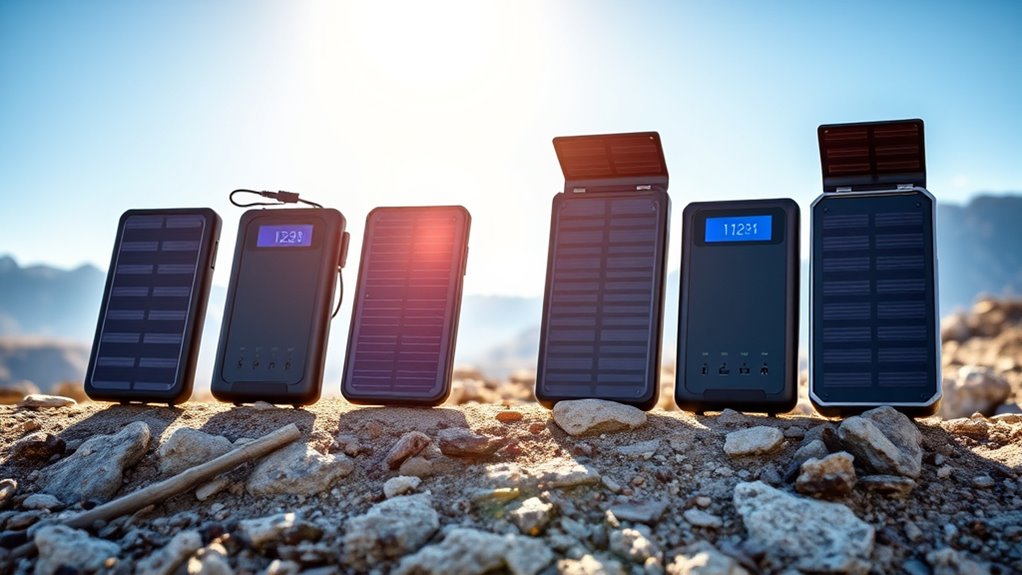

A solar power bank with an AC outlet can run small household or camping devices when wall power is unavailable, but capacity and output vary widely. I’d choose the Jackery Explorer 300 as the best overall pick for its 292Wh capacity, while the Apowking 146Wh offers a middle ground and the ZeroKor pairs a compact battery with a foldable panel. The main tradeoff is portability versus runtime: smaller units are easier to carry but may not power AC devices for long. Solar charging also depends on panel size, sunlight, and the station’s input limits. Read on for how these six options compare and which fits your devices.

Get business pricing on tech for your team
- Business-only prices and quantity discounts
- Tax-exempt purchasing
- Multiple users, one account, clear invoices
Complete the kit


Key Takeaways
- Jackery Explorer 300 leads on listed battery capacity at 292Wh, giving it more room for longer use than the sub-150Wh options.
- Apowking’s 146Wh capacity sits between compact emergency banks and larger stations, though buyers should check its AC output limits against their devices.
- ZeroKor includes a 30W foldable solar panel, a useful bundle for starting solar charging, but its 24,000mAh pack is the smallest listed capacity here.
- Daran and MARBERO M82 are compact picks at 89.6Wh and 88Wh respectively; the M82 lists 120W surge output, which does not mean it can sustain that load.
- Panel wattage and battery capacity answer different questions: a panel affects recharge potential in suitable sun, while watt-hours indicate stored energy available to use.


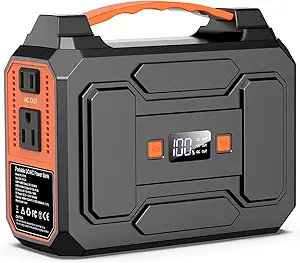


| solar power bank with ac outlet | Capacity | Weight | Battery type | AC output |
|---|---|---|---|---|
| Daran Portable Power Station | 89.6Wh | 2.54 pounds | LiFePO4 | — |
| ZeroKor Portable Solar Power B | — | — | — | 110V, 65W maximum |
| Apowking Portable Power Statio | 146Wh / 39600mAh | 3.3 pounds | Lithium-ion | Two 110V outlets; 100W continuous, 200W peak |
| MARBERO 111Wh Portable Power S | — | — | Lithium-ion | 110V/60Hz, 80W continuous, 120W peak |
| Jackery Explorer 300 Portable | 292Wh | 7.1–7.5 pounds (listed inconsistently) | — | — |
| MARBERO Portable Power Station | 88Wh / 24,000mAh | 3.2 lbs | — | — |
More Details on Our Top Picks
Daran Portable Power Station, 89.6Wh LiFePO4 Battery, 100W
The Daran suits buyers who want a small AC outlet for low-draw gear and value a long cycle-life rating. At 2.54 pounds, it is lighter than the Apowking 146Wh, though its 89.6Wh capacity means less stored energy for longer outages or multiple device recharges. Its 100W AC limit fits small electronics, while the seven ports let me charge several devices without relying on the AC sockets alone. The LiFePO4 battery rated for more than 3,500 cycles is a practical advantage for frequent use. Charging from a wall outlet, USB-C, car, or solar gives it flexible refill options, but the panel and cable are not included. I would skip it for appliances above 100W or for buyers who want a ready-to-use solar kit.
Pros:- Light 2.54-pound design with a carrying handle
- LiFePO4 battery rated for more than 3,500 cycles
- Seven ports support several types of devices
- Can recharge from wall power, USB-C, car, or solar
Cons:- 100W AC output rules out higher-draw appliances
- Solar panel and cable are sold separately
- 89.6Wh capacity is modest for extended backup
Best for: Backpackers and frequent travelers who need a lightweight AC outlet for phones, cameras, and other devices drawing up to 100W.
Not ideal for: Buyers who need to run higher-draw appliances or want a solar panel included in the box.
- Capacity:89.6Wh
- Battery type:LiFePO4
- Continuous AC output:100W
- Peak output:200W
- Ports:7: 2 AC, 2 USB-C, 2 USB-A, and DC5521
- Weight:2.54 pounds
- Charging methods:AC wall outlet, USB-C PD, car, or solar
- Solar panel and cable:Not included
Our verdict“Choose the Daran for a compact, frequently used power source for small devices; choose the Apowking if you need more stored energy.”
ZeroKor Portable Solar Power Bank with AC Outlet, 65W 110V 24000mAh External Battery Pack with 30W Foldable Solar Panel
The ZeroKor is the clearest choice here for someone who wants a solar panel in the same package as a small AC power bank. Its foldable 30W panel and three recharge methods make it more ready for a car-camping trip than the Daran or Apowking, whose panels are optional. The tradeoff is a modest 65W AC ceiling: it can handle compatible small electronics, but not higher-draw gear such as an air compressor. The panel’s USB outputs also let me charge smaller devices directly. The junction box is not waterproof, so the solar setup needs protection from rain. Buyers should also know the AC output must be switched manually, and the unit shuts off quickly when no DC load is connected. I would choose it for bundled solar convenience, not maximum output.
Pros:- Includes a foldable 30W solar panel
- Recharges from wall power, solar, or a 12V car outlet
- Panel has DC, USB-A, and USB-C outputs
- BMS protection covers short circuits, over-current, over-voltage, and overloads
Cons:- 65W AC limit excludes many higher-draw devices
- Solar panel junction box is not waterproof
- AC output requires manual on/off control
Best for: Campers and road trippers who want a bundled panel for topping up a power bank and charging small electronics.
Not ideal for: People who need to run appliances above 65W or leave the solar panel exposed to wet weather.
- Battery capacity:24000mAh
- AC output:110V, 65W maximum
- DC output:9–12.6V, 10A maximum
- Solar panel:30W foldable
- Recharge methods:Wall outlet, solar panel, or 12V car charger
- USB-A outputs:Two ports; QC up to 18W on USB-1
- Power bank dimensions:6.89 × 3.98 × 1.89 inches
- Included:Power bank, adapters, cables, and 30W solar panel kit
Our verdict“Pick the ZeroKor when an included solar panel matters more than AC output above 65W.”
Apowking Portable Power Station, 146Wh/39600mAh Solar Powered Power Bank with AC Outlet
The Apowking lands between the smallest options and the larger Jackery Explorer 300: its 146Wh capacity gives me more room for repeat device charging than the Daran, while its 3.3-pound weight remains manageable for travel. Two AC outlets and five other ports can serve a small group, but the 100W continuous AC limit keeps this firmly in electronics territory rather than appliance backup. Unlike the ZeroKor, it does not include a solar panel, so solar charging adds a separate purchase. Its digital display and three-mode dual LED flashlight are useful for checking status and finding gear after dark. I would choose it when capacity matters more than the lightest carry, but skip it if I need a higher-output station or a complete solar bundle.
Pros:- 146Wh capacity exceeds the Daran’s 89.6Wh
- Seven ports include two AC outlets
- Weighs 3.3 pounds for its capacity
- Can recharge from AC, car, or an optional solar panel
Cons:- 100W continuous AC output limits appliance choices
- Solar panel is not included
- Lithium-ion battery lacks a stated cycle-life rating in the supplied specs
Best for: Small camping groups and travelers who want more capacity than a pocket-size station for phones, cameras, and laptops within the 100W limit.
Not ideal for: Buyers who need to power appliances above 100W or want a solar panel included.
- Capacity:146Wh / 39600mAh
- Battery type:Lithium-ion
- AC output:Two 110V outlets; 100W continuous, 200W peak
- Total ports:7
- Weight:3.3 pounds
- Solar input:13–23V panel; panel not included
- DC output:12V, 9–12.6V and 10A maximum
- Warranty:12 months
Our verdict“Choose the Apowking for a portable step up in capacity over the Daran, provided 100W is enough and you can supply your own solar panel.”
MARBERO 111Wh Portable Power Station with 30W Solar Panel
MARBERO pairs a low-weight 2.3-pound power station with an included 30W folding panel, making this a convenient kit for short trips where carrying gear matters. The ZeroKor also bundles a 30W panel, but MARBERO’s 80W continuous AC output is higher than ZeroKor’s 65W; the Jackery Explorer 300 offers much more capacity and 300W rated output, at a substantial weight increase. MARBERO’s 111Wh battery is still best for small electronics and brief backup, not long outages. Four USB-A ports, USB-C, two AC sockets, and DC give the kit broad device coverage. Its panel helps with off-grid recharging, though actual solar input depends on conditions. I would skip it if the 80W AC ceiling or modest capacity would leave your gear unsupported.
Pros:- Includes a foldable 30W solar panel
- Power station weighs 2.3 pounds
- Four USB-A ports plus USB-C, AC, and DC outputs
- 80W continuous AC output exceeds the ZeroKor’s 65W limit
Cons:- 111Wh capacity is limited for longer outages
- 80W continuous AC output excludes many appliances
- The solar panel weighs another 1.8 pounds
Best for: Light-pack campers who want a station and foldable solar panel together for phones, cameras, and other low-draw devices.
Not ideal for: People who need to run devices above 80W continuously or want enough capacity for extended backup.
- Battery capacity:111Wh (30,000mAh)
- Battery type:Lithium-ion
- AC output:110V/60Hz, 80W continuous, 120W peak
- Solar panel output:30W
- Ports:4 USB-A, 1 USB-C, 2 AC, and 1 DC
- Power station weight:2.3 pounds
- Solar panel weight:1.8 pounds
- Solar panel conversion rate:21.5–23.5%
Our verdict“Choose MARBERO for a light, bundled solar kit for small devices, and move to the Jackery Explorer 300 for more capacity and AC headroom.”
Jackery Explorer 300 Portable Power Station, 292Wh
The Jackery Explorer 300 is the strongest fit here when a small AC outlet is not enough and longer runtime matters more than a light carry. Its 292Wh capacity and 300W rated output give it considerably more headroom than the Daran, Apowking, MARBERO, or ZeroKor for compatible equipment. The 100W USB-C port is also useful for charging a laptop directly, while the two AC outlets and other ports support several devices. That capability comes with a 7.1–7.5-pound listed weight, far above the smaller stations in this lineup. Solar charging is supported, but the panel is sold separately, unlike the bundled MARBERO and ZeroKor kits. I would choose it for longer trips or backup needs, while checking device wattage and the stated weight discrepancy before packing.
Pros:- 292Wh capacity is the largest in this product group
- 300W rated output exceeds the smaller stations’ limits
- 100W USB-C PD port supports direct laptop charging
- Solar charging supported with a compatible panel
Cons:- Listed weight differs between 7.1 and 7.5 pounds
- Solar panel is sold separately
- Heavier than every other power station in this batch
Best for: Campers and home-backup buyers who need more runtime and up to 300W output for compatible devices, and can carry a heavier station.
Not ideal for: Backpackers seeking the lightest setup or buyers who want a solar panel bundled with the station.
- Capacity:292Wh
- Peak surge:600W
- AC outlets:2
- USB-C port:100W PD
- Weight:7.1–7.5 pounds (listed inconsistently)
- Charge cycles:Over 4,000 cycles to 70% capacity
- Solar panel:Not included
Our verdict“Pick the Jackery Explorer 300 when capacity and 300W output matter more than portability or an included solar panel.”
MARBERO Portable Power Station M82, 88Wh Solar Generator with 120W Surge, AC/DC/USB-C Outputs
The MARBERO M82 is the compact choice in this roundup for buyers who want an AC outlet in a lightweight package. At 3.2 pounds, it is easier to carry on a short camping trip than the larger-capacity Jackery Explorer 300, while its two AC outlets and USB-C PD let you charge several small devices at once. Its 80W output suits phones, lights, and other modest loads, but it rules out many appliances and is below the 100W Daran station’s stated output. The 88Wh capacity also leaves less reserve than the 146Wh Apowking or 292Wh Jackery. A built-in SOS flashlight adds useful emergency lighting; the tradeoff is that solar recharging requires a separately purchased compatible MARBERO panel. Choose it for portability and small electronics, not long runtimes or demanding gear.
Pros:- Weighs 3.2 pounds and measures 6.5 x 4.6 x 3.1 inches for easy transport
- Two AC outlets, USB-C PD, USB, and car DC support multiple device types
- Eight output ports can be used simultaneously
- Built-in LED flashlight includes an SOS mode
Cons:- 80W output limits the appliances it can run
- 88Wh capacity offers less reserve than the Apowking and Jackery Explorer 300
- Solar panel is sold separately
Best for: Campers and road-trippers who prioritize a lightweight station for phones, lights, and other small devices
Not ideal for: Buyers who need to run appliances above 80W or want extended power from a larger battery
- Capacity:88Wh / 24,000mAh
- Output wattage:80W
- Surge power:120W
- Total output ports:8
- Weight:3.2 lbs
- Dimensions:6.5 x 4.6 x 3.1 inches
- Charging time:About 2 hours from 0% to 80%
- Power sources:AC, solar, battery
Our verdict“Choose the M82 if you want a particularly portable AC power station for small electronics and can work within its 80W output and 88Wh capacity.”

How We Picked
I ranked these units by how clearly their listed specifications support the promise of portable AC power: battery capacity, stated AC output or surge information, included solar hardware, and portability cues. Higher capacity generally supports longer runtimes, but it does not prove that a station can start or continuously run every appliance. I treated included panels as a convenience advantage, while recognizing that a 30W panel may recharge slowly and sunlight conditions change results.
The Jackery Explorer 300 ranks first for its notably larger 292Wh capacity. The Apowking follows as a capacity step-up from the compact models, while the ZeroKor earns a distinct place for bundling a foldable panel. The remaining models make more sense for lighter loads and shorter outings; their order reflects the listed capacity and output detail, with the M82’s stated surge figure helping distinguish it without treating surge as continuous power. Product names and figures here follow the supplied listings, so buyers should confirm current manufacturer specifications and device compatibility before choosing.
| solar power bank with ac outlet | Battery type |
|---|---|
| Daran Portable Power Station | LiFePO4 |
| ZeroKor Portable Solar Power B | — |
| Apowking Portable Power Statio | Lithium-ion |
| MARBERO 111Wh Portable Power S | Lithium-ion |
| Jackery Explorer 300 Portable | — |
| MARBERO Portable Power Station | — |
Factors to Consider When Choosing Solar Power Bank With Ac Outlet
To choose well, start with the device you need to run and the time you need it to run. A solar panel can help replenish a battery, but it does not make a small battery equivalent to a larger station. These checks help avoid buying around a headline number that does not match your actual use.
Match AC Output to the Device
Check both the station’s continuous AC wattage and the startup demand of the device. Motors, compressors, and some tools can draw a brief surge above their normal running load, while electronics such as a laptop charger tend to be easier loads. A listed surge figure describes a short peak, not a level the unit can sustain. Add up the running watts for anything you plan to plug in at once, then compare that total with the continuous rating. If a listing omits continuous output or surge duration, treat compatibility as unconfirmed and check the maker’s documentation. This step matters more than a large capacity number when deciding whether an AC outlet can power a specific appliance.
Estimate Runtime From Watt-Hours
Battery capacity in watt-hours is a better starting point for estimating runtime than milliamp-hours alone, since milliamp-hours depend on the voltage used in the calculation. Divide watt-hours by the device’s running watts for a rough upper bound, then expect less usable energy because AC conversion and operating conditions add losses. For example, a 50W device will drain a 100Wh station in less than two hours in real use. Leave a reserve if the station also needs to charge phones or run lights. Avoid assuming that the printed capacity translates directly into AC energy at the outlet. If a product only highlights milliamp-hours, look for its watt-hour figure before comparing it with other models.
Treat Solar Recharging as a Variable
Panel wattage describes rated potential under suitable conditions, not a guaranteed charging rate throughout the day. Cloud cover, shade, panel angle, season, and the power station’s solar input limit can all reduce energy going into the battery. A bundled panel may simplify setup, but a smaller panel can take a long time to refill a depleted station. Check the supported input range and connector before buying a separate panel, and confirm whether the station can charge while powering devices. For urgent backup, plan around a full wall charge before the outage rather than relying on sun alone. Solar is most useful when you can leave the panel positioned in good light for extended periods.
Choose Capacity for the Job, Not the Largest Number
For phone charging, lights, and brief laptop use, a smaller station can save space and weight. Longer trips or repeated AC use call for more stored energy, which usually means a larger unit to carry and store. Make a simple list of device wattage and daily use hours to estimate energy needs before comparing models. Remember that a high-wattage appliance can empty even a relatively large battery quickly. Buyers often overestimate how long a compact station will run a heater, kettle, or cooking appliance. If those loads are central to your plan, verify both the output rating and expected runtime instead of relying on the presence of an AC socket.
Check What Comes in the Solar Bundle
A product described as solar powered may include a panel, support one sold separately, or simply accept solar input. Confirm the package contents rather than inferring a panel from the product name. For bundled panels, check rated wattage, cable compatibility, folding dimensions, and whether a stand or kickstand is included. A compact panel is easier to pack but may collect less energy during a short charging window. If you already own a compatible panel, a station without a bundle could be a better fit, provided the input specifications match. The right bundle depends on whether convenience or faster replenishment matters more for your use.
Account for Battery Chemistry and Care
Battery chemistry affects weight, expected cycle life, temperature limits, and how a unit should be stored, so compare the manufacturer’s guidance rather than assuming all compact stations age alike. The Daran listing identifies a LiFePO4 battery, a detail buyers may value when prioritizing cycle life. That chemistry label alone does not establish the quality of the cells, protection systems, or warranty. Store a backup station within its stated temperature range and check its charge periodically if it will sit unused. Keep vents clear during operation and avoid exposing the unit to rain unless its documentation gives an appropriate rating. For emergency use, clear charging and storage instructions can matter as much as capacity.
Frequently Asked Questions
Can these stations run a refrigerator during a power outage?
Possibly, but the product name or AC outlet alone cannot confirm that. Check the refrigerator’s running watts and startup surge, then compare both with the station’s continuous and peak AC ratings. The battery’s watt-hours determine how long it can run before recharging, and compressor cycling makes actual runtime variable. The 292Wh Jackery has the largest listed capacity in this group, but that figure alone does not establish refrigerator compatibility. Confirm the exact appliance and station specifications before relying on one for food storage.
Is a 30W solar panel enough to recharge one of these power banks?
It can contribute energy in suitable sunlight, but a 30W panel is a modest charging source for a station-sized battery. Actual output usually falls below the panel’s rated figure because of sun angle, shade, heat, and conversion losses. Recharging a depleted battery may take many hours of favorable sun, and the station’s own solar input limits may lower the rate further. The ZeroKor bundle offers a convenient starting point, while buyers seeking faster replenishment should compare compatible panels and input ratings. Keep a wall-charging option available when a predictable turnaround matters.
What does 120W surge mean on the MARBERO M82?
Surge refers to a brief peak the station may handle when a device starts, rather than continuous power for normal operation. You still need the M82’s continuous AC output rating to know what it can run over time. Some motor-driven devices need a startup burst, but their steady draw must also remain within the station’s limit. Check the maker’s documentation for the surge duration and device guidance. Do not choose the M82 for a device based only on the 120W surge figure.
Should I choose the largest battery capacity even if I only need phone and laptop charging?
Not automatically. A larger battery gives more stored energy for longer use, but can add size and weight that bring little benefit for brief, low-wattage charging. Estimate your daily energy use from each device’s wattage and hours of operation, then leave some reserve for conversion losses. A compact model such as the Daran or MARBERO M82 may suit occasional charging better if its output meets your needs. Choose a higher-capacity option when longer runtime or several days between recharges matter more than easy carrying.
Does buying a solar power bank with an AC outlet mean I can use it indoors?
The battery station itself can generally supply power indoors if the manufacturer permits indoor operation and the unit has adequate ventilation. Solar panels need access to sunlight, so charging from a panel usually happens outside or near a suitable window, where output may be reduced. Keep the station dry, leave its vents unobstructed, and follow the manual’s operating guidance. Never run a fuel-powered generator indoors; that is a different type of backup equipment. For these battery products, check the specific safety and placement instructions before regular indoor use.
Conclusion
I’d choose the Jackery Explorer 300 as the best overall for buyers who want the largest listed capacity in this group. The Apowking is my value-oriented middle-ground pick for shoppers who need more capacity than the compact units offer, while the ZeroKor is best for beginners who want a foldable panel included to start exploring solar charging. For a premium-capacity choice among these six, the Jackery also stands apart, though buyers should weigh its portability and verify output compatibility. The Daran suits buyers who prioritize its listed LiFePO4 chemistry, and the MARBERO M82 suits lighter loads when its continuous output is sufficient. Choose by matching device watts, runtime, and recharging plan before settling on a model.
Halloween Picks
halloween
As an affiliate, we earn on qualifying purchases.