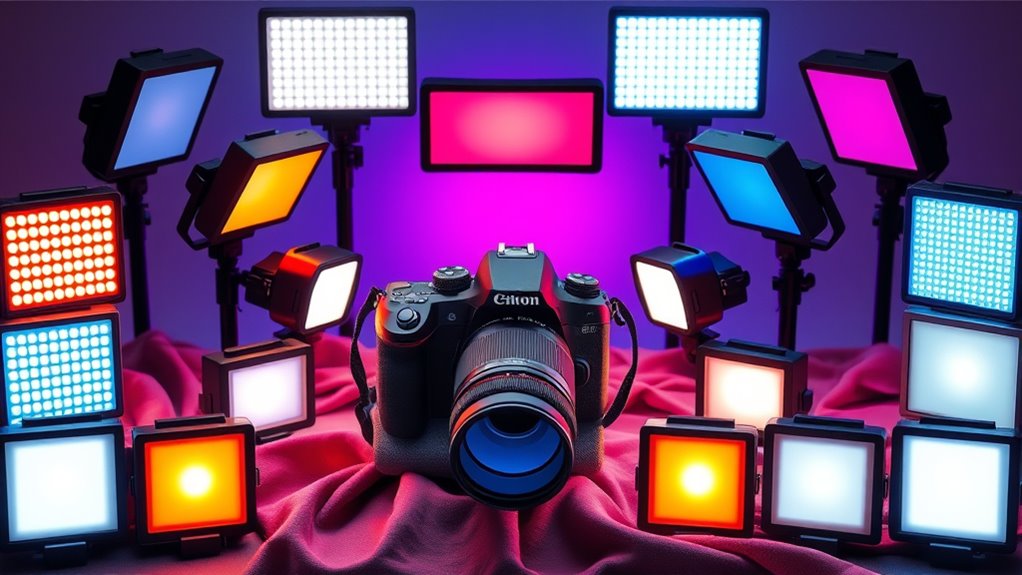

Camera light panels solve one of the biggest quality gaps between amateur and professional-looking footage: inconsistent, flat, or color-shifted lighting. After comparing 15 popular panels across brightness, color accuracy, battery runtime, and mounting flexibility, the SmallRig Vibe P108 Pro RGBWW stands out as the best overall pick thanks to its full-color RGBWW output, rechargeable battery, and pocketable size. The NEEWER NL-116AI 9-inch panel with desk tripod is the stronger choice for streamers and desk-based creators who need a hands-free setup, while the Ci-Fitto 2-pack with mini tripods and color filters wins on sheer value for beginners building a first lighting kit. The main tradeoffs in this category come down to portability versus raw output, bi-color simplicity versus RGB creative effects, and built-in batteries versus replaceable NP-F packs. Keep reading for the full breakdown of every panel and which one fits your specific shooting style.

Get business pricing on tech for your team
- Business-only prices and quantity discounts
- Tax-exempt purchasing
- Multiple users, one account, clear invoices
Key Takeaways
- RGBWW panels like the SmallRig Vibe P108 Pro and Ulanzi VL49 offer creative color effects, but bi-color panels (3300K-5600K or wider) deliver more accurate skin tones for interviews, streaming, and product work — pick based on whether you light scenes or paint them.
- Panels with built-in lithium batteries (SmallRig RM120, Neewer SL90C, ENEGON) are the most convenient for run-and-gun shooting, while NP-F compatible panels like the VILTROX L116T allow near-unlimited runtime by swapping cheap spares — a decisive factor for long studio days.
- Kit value in this lineup was driven by accessories, not panels alone: the NiceVeedi and NEEWER BP66 two-light kits bundle tripods and remotes that would cost far more bought separately, making them better starter investments than standalone premium panels.
- CRI ratings clustered between 95 and 97 across the field, so color accuracy alone rarely separated winners — diffusion quality, dimming smoothness, and flicker performance at low brightness mattered more in practice.
- Larger panels (Neewer 13-inch NL-192AI and 9-inch panels from NEEWER and RALENO) produce noticeably softer, more flattering light without modifiers, but sacrifice the pocketability that makes compact panels like the Ulanzi VL49 and SmallRig RM120 true everyday-carry tools.
| SmallRig Vibe P108 Pro RGBWW LED Video Light |  | Best Overall | Light output: 5W | Illuminance: 1150 lux at 0.3 m / 5600K | Color temperature: 2500K–6500K plus RGB HSI | VIEW ON AMAZON | See Our Full Breakdown |
| Ci-Fotto LED Video Light 2-Pack with Mini Tripods and Color Filters |  | Best Budget Starter Kit | Color temperature: 5600K fixed | Brightness range: 10%-100% | Panel adjustment: 180-degree tilt | VIEW ON AMAZON | See Our Full Breakdown |
| VILTROX VL-162T Dimmable Bi-Color LED Video Light |  | Best Value Bi-Color Panel | LEDs: 162 | Color temperature: 3300K–5600K | Brightness: 20%–100% | VIEW ON AMAZON | See Our Full Breakdown |
| VILTROX L116T 15W LED Video Light Panel with NP-F550 Battery |  | Best On-Camera Key Light | Power: 15W | Color temperature: 3300K–5600K | Brightness range: 20%–100% | VIEW ON AMAZON | See Our Full Breakdown |
| ULANZI VL49 RGB LED Camera Light |  | Best Compact RGB Accent Light | LEDs: 60 | Illumination: Up to 800 lux at 0.5 m | Color temperature: 2500K–9000K | VIEW ON AMAZON | See Our Full Breakdown |
| NEEWER NL-116AI 9-Inch LED Video Light Panel with Desk Tripod |  | Best Starter Panel for Hybrid Use | LEDs: 58 warm + 58 cool | Illuminance: 600 lux at 0.5 m | CRI: 95+ | VIEW ON AMAZON | See Our Full Breakdown |
| RALENO 9″ LED Video Light with Desk Stand, 2500K-6500K Adjustable Camera Light |  | Best Soft Light for Video Calls | Power: 12W | Illuminance: 600 lux at 0.5 m | Color temperature: 2500K–6500K | VIEW ON AMAZON | See Our Full Breakdown |
| NiceVeedi 2-Pack Bi-Color Photography Lighting Kit with Remote and 72-Inch Tripods |  | Best Two-Light Studio Kit | Lights included: 2 LED panels | Power: 36W per panel | Color temperature: 2700–6500K | VIEW ON AMAZON | See Our Full Breakdown |
| NEEWER Basics BP66 Bi-Color LED Video Light Panel Kit, 2 Pack |  | Best Budget Two-Light Value | Lights: 2 LED panels | Power: 10W per panel | LEDs: 66 per panel | VIEW ON AMAZON | See Our Full Breakdown |
| NEEWER Basics SL90C RGB Video Light, 9W Portable LED Camera Panel |  | Best Pocket RGB Creative Light | Power: 9W | Color temperature: 2700K–7500K | CRI: 97 | VIEW ON AMAZON | See Our Full Breakdown |
| SmallRig RM120 RGB LED Video Light Panel |  | Best Pocket-Sized RGB Creative Light | Battery: 5000mAh rechargeable | Runtime: Up to 180 minutes at max brightness | Max Power: 7W | VIEW ON AMAZON | See Our Full Breakdown |
| ENEGON 4000mAh Bicolor LED Video Light |  | Best Battery Life for All-Day Shooting | Battery: 4000mAh rechargeable | Battery Life: Up to 20 hours | Charging: USB-C | VIEW ON AMAZON | See Our Full Breakdown |
| NiceVeedi 2-Pack LED Video Light Kit with Tripod Stand & Phone Holder |  | Best Starter Kit for New Creators | Quantity: 2 panels (356 LEDs each) | Color Temperature: 2800K / 4800K / 6500K presets | Brightness: 10-100% via remote | VIEW ON AMAZON | See Our Full Breakdown |
| Neewer 13″ LED Video Light Panel Kit with Tripod Stands, 2 Pack |  | Best Two-Light Kit for Portraits | Panel Size: 13 inches, 0.4″ thick | LED Count: 192 per panel (96 warm, 96 cool) | Color Temperature: 3200K-5600K continuous | VIEW ON AMAZON | See Our Full Breakdown |
| Neewer NL-192AI LED Video Soft Light Panel, Single |  | Best Single Panel for Camera-Mount Use | Power: 19.5W | LED Count: 192 (96 warm + 96 cool) | Color Temperature: 3200K-5600K | VIEW ON AMAZON | See Our Full Breakdown |
| camera light panel | Color temperature | Battery | CRI | Power |
|---|---|---|---|---|
| SmallRig Vibe P108 Pro RGBWW L | 2500K–6500K plus RGB HSI | 1500mAh, up to 1.2 hours at full power | — | — |
| Ci-Fotto LED Video Light 2-Pac | 5600K fixed | — | — | USB 5V 2A, adapter not included |
| VILTROX VL-162T Dimmable Bi-Co | 3300K–5600K | — | 95+ | Rechargeable battery with charger included |
| VILTROX L116T 15W LED Video Li | 3300K–5600K | NP-F550 | 95+ | 15W |
| ULANZI VL49 RGB LED Camera Lig | 2500K–9000K | 2000 mAh, up to 2 hours at max brightness | 95 | — |
| NEEWER NL-116AI 9-Inch LED Vid | 3200K–5600K | 3.7V, 4000 mAh rechargeable lithium | 95+ | — |
| RALENO 9" LED Video Light with | 2500K–6500K | Built-in 4000 mAh rechargeable | 95+ | 12W |
| NiceVeedi 2-Pack Bi-Color Phot | 2700–6500K | — | 95+ | 36W per panel |
| NEEWER Basics BP66 Bi-Color LE | 3200K and 5600K | — | — | 10W per panel |
| NEEWER Basics SL90C RGB Video | 2700K–7500K | 4000 mAh, up to 113 minutes at full brightness | 97 | 9W |
| SmallRig RM120 RGB LED Video L | 2500-8500K plus full RGB | 5000mAh rechargeable | — | — |
| ENEGON 4000mAh Bicolor LED Vid | 2500K-9900K in 100K increments | 4000mAh rechargeable | — | — |
| NiceVeedi 2-Pack LED Video Lig | 2800K / 4800K / 6500K presets | — | 97+ | — |
| Neewer 13" LED Video Light Pan | 3200K-5600K continuous | 4000mAh, up to 90 minutes runtime | 97+ | — |
| Neewer NL-192AI LED Video Soft | 3200K-5600K | 2x 4000mAh, up to 1.5 hours runtime | 97+ | 19.5W |
More Details on Our Top Picks
SmallRig Vibe P108 Pro RGBWW LED Video Light
The SmallRig Vibe P108 Pro earns the top spot because it balances color flexibility, build quality, and portability better than anything else in this lineup. Its RGBWW output with HSI control and 12 effects gives shooters full creative range, while the aluminum alloy frame feels far more durable than the plastic-bodied Ci-Fotto panels. The LCD screen with stepless controls makes precise adjustments faster than the single-rotary-button approach on the VILTROX L116T, which forces you to cycle through settings. Compared with the ULANZI VL49, the P108 Pro offers a wider effects library and a more refined control experience, though both are similarly sized pocket lights.
The tradeoff is power: 1.2 hours at full output means long streaming sessions require a USB-C top-up mid-shoot, and the 5W output limits distance work.
Pros:- Full RGBWW flexibility with HSI mode and 12 built-in effects in one pocket-sized body
- Aluminum alloy frame and knobs feel more durable than plastic rivals at this size
- LCD screen with stepless controls allows fast, precise adjustments
- High CRI 95+ and TLCI 98+ ratings deliver color-accurate footage
Cons:- Runtime drops to roughly 1.2 hours at full power, limiting long sessions
- 5W output restricts use to close-range fill and accent lighting
Best for: Vloggers and hybrid shooters who want one pocket-sized light covering both accurate white light and creative RGB effects
Not ideal for: Studio streamers lighting a full desk scene — 5W and 1150 lux at 0.3 m is fill light, not key light, territory
- Light output:5W
- Illuminance:1150 lux at 0.3 m / 5600K
- Color temperature:2500K–6500K plus RGB HSI
- Color accuracy:CRI >95, TLCI >98
- Battery:1500mAh, up to 1.2 hours at full power
- Charging:USB-C
- Weight:120 g
- Effects:12 special effects modes
Our verdict“If you want a single versatile light that travels everywhere and does both workmanlike and creative lighting, this is the one to buy.”
Ci-Fotto LED Video Light 2-Pack with Mini Tripods and Color Filters
This Ci-Fatto two-light kit is the cheapest way to get a complete lighting setup — panels, tripods, and filters in one box — which is why it lands here as the budget entry point. Unlike the ULANZI VL49 or SmallRig P108 Pro, which are single fill lights, this pair lets you build an actual two-point lighting setup for face-to-camera work. The foldable mini tripods drop to just 10 cm, enabling low-angle and tabletop shots that taller stands like the ones in the NiceVeedi 72-inch kit can’t reach without fussing.
The compromises are real, though. Fixed 5600K daylight-only panels mean no tungsten matching, and color changes rely on physical gels rather than the dial-based bi-color control of the VILTROX VL-162T. Coverage is also tight — fine for a phone setup, thin for wider scenes.
Pros:- Complete two-light setup with tripods and color filters included at a low entry cost
- 10%-100% dimming and 180-degree tilt allow flexible angles and intensity
- Foldable mini tripods extend from 10 cm to 34 cm for tabletop and low-angle work
- Runs from USB wall power, a PC, or a power bank
Cons:- Daylight-only 5600K panels — color changes require physical filters, not dial control
- Small panels and short tripods limit coverage and stability for larger setups
- USB wall adapter is not included
Best for: Beginners and students setting up a first TikTok, YouTube, or streaming channel on a minimal budget
Not ideal for: Shooters who need adjustable color temperature or bright, even coverage of a larger scene
- Color temperature:5600K fixed
- Brightness range:10%-100%
- Panel adjustment:180-degree tilt
- Tripod height:10 cm (25-34 cm extended)
- Power:USB 5V 2A, adapter not included
- Includes:2 panels, 2 USB cables, 2 mini tripods, 8 color filters
Our verdict“The most affordable way to go from zero lights to a working two-light setup, as long as fixed daylight color is acceptable.”
VILTROX VL-162T Dimmable Bi-Color LED Video Light
The VILTROX VL-162T hits a sweet spot the Ci-Fotto kit misses: true dial-adjustable bi-color control from 3300K to 5600K, so you can match tungsten room light or daylight windows without taping on gels. The included battery and charger also mean it works untethered out of the box — something most budget USB panels can’t claim, since they need a power bank or wall source at all times. Its LCD showing battery, brightness, and color temperature is genuinely useful on set, and the side slots let you link multiple units into a larger soft source, a scaling path the fixed-size Ci-Fotto panels don’t offer.
Its 1250 lux is measured at 1 meter, so expect modest punch at real shooting distances, and the missing AC adapter means wall-powered studio work needs an extra purchase.
Pros:- True bi-color adjustment from 3300K to 5600K without physical filters
- Battery and charger included for fully portable operation
- LCD readout of battery level, brightness, and color temperature
- Side slots allow linking multiple panels into a larger source
Cons:- AC adapter not included, so continuous wall-powered sessions require an extra buy
- Modest output — 1250 lux at 1 m limits effectiveness at longer distances
Best for: Budget-conscious video creators who want untethered bi-color lighting and room to expand by linking panels
Not ideal for: Shooters needing strong output at distance — 162 LEDs and 1070 lm favor close and mid-range work
- LEDs:162
- Color temperature:3300K–5600K
- Brightness:20%–100%
- Max illumination:1250 lux at 1 m
- Luminous flux:1070 lm
- CRI:95+
- Power:Rechargeable battery with charger included
- Filters:4 magnetic filters
Our verdict“The smartest pick if you want adjustable color temperature, battery power, and expandability without moving into premium pricing.”
VILTROX L116T 15W LED Video Light Panel with NP-F550 Battery
Where the ULANZI VL49 and SmallRig P108 Pro are pocket-sized accent lights, the VILTROX L116T is a proper on-camera key light — its 15W output and larger panel area produce noticeably softer, more flattering results on a subject’s face. The honeycomb diffuser surface spreads light gently in a way small RGB wands can’t replicate, making this the better choice for interview work and run-and-gun talking heads. Its settings memory is a small feature with a big daily payoff: power cycle mid-shoot and your brightness and color temperature are exactly where you left them.
The catch is control speed — a single rotary button handles both brightness and color temperature, so quick adjustments mean cycling through menus rather than grabbing separate dials. And 15W, while generous for on-camera use, still trails dedicated studio panels.
Pros:- 15W output and honeycomb diffuser deliver softer, more flattering light than pocket-sized rivals
- Remembers previous brightness and color settings on power-up
- Ultra-thin 2 cm profile at just 260 g keeps camera rigs light
- NP-F550 battery platform is widely available and easy to swap
Cons:- Single rotary button for both brightness and color temperature slows quick changes
- 15W ceiling limits output compared with larger dedicated panels
Best for: Documentary and event shooters who need a lightweight, soft on-camera key light with swappable NP-F550 power
Not ideal for: Fast-paced shooters who tweak settings constantly — the single-button interface slows down adjustments
- Power:15W
- Color temperature:3300K–5600K
- Brightness range:20%–100%
- CRI:95+
- Battery:NP-F550
- Dimensions:192 x 128 x 25 mm
- Weight:260 g
Our verdict“The best pick here for soft, camera-mounted key lighting during interviews and run-and-gun video.”
ULANZI VL49 RGB LED Camera Light
The ULANZI VL49 is the most mount-anywhere light in this batch. Its magnetic back plus three cold shoe mounts and a 1/4-inch thread mean it sticks to metal surfaces, stacks into a rig, or rides on a cage with zero accessories — a flexibility even the SmallRig P108 Pro can’t fully match. With full 0°–359° hue control and a 2500K–9000K range, it beats both VILTROX panels for color range, making it the go-to for background washes, product accents, and atmospheric RGB effects.
But this is an accent light, not a key: 800 lux at 0.5 m is a fraction of what the VILTROX L116T brings to a subject, and unlike VILTROX, no accessories or warranty terms are specified, which is worth weighing before relying on it professionally.
Pros:- Full 0°–359° hue range with 2500K–9000K color temperature, the widest color range in this batch
- Magnetic back plus 3 cold shoe mounts and 1/4-inch thread enable near-universal mounting
- 2000 mAh battery runs up to 10 hours at low brightness and works while charging
- Truly pocketable at roughly 66 x 80 x 30 mm
Cons:- 800 lux at 0.5 m is accent-level output, far below dedicated key panels
- No included accessories and no specified warranty coverage
Best for: Creators building RGB accent and background lighting into small rigs, especially with magnetic mounting tricks
Not ideal for: Anyone needing a primary light source — the output is too low for key lighting a subject
- LEDs:60
- Illumination:Up to 800 lux at 0.5 m
- Color temperature:2500K–9000K
- Hue range:0°–359°
- Beam angle:120°
- Battery:2000 mAh, up to 2 hours at max brightness
- Charging:USB Type-C, usable while charging
- CRI:95
Our verdict“A tiny, mount-anywhere RGB accent light that shines for creative color work — just don’t ask it to light your subject.”
NEEWER NL-116AI 9-Inch LED Video Light Panel with Desk Tripod
This option stands out for straddling two jobs that most budget panels force you to choose between: it works as a desktop streaming light on its included mini tripod and slips onto a camera’s cold shoe when you need portable fill. The 1%-step brightness control matters more than it sounds — you can match ambient lighting precisely instead of jumping between presets, which cheaper panels like the NEEWER Basics BP66 (only 10 fixed levels) can’t do. Compared with the RALENO PLV-S116, the color range is narrower (3200K–5600K versus 2500K–6500K), so extremely warm or cool creative looks are off the table. The tradeoff for the dual mounting flexibility is a 1.5-hour battery ceiling, and NEEWER skips the carry bag, so toss it in your own padded case if you travel with it.
Pros:- Fine 1%-step brightness and color temperature adjustments
- Works as both desktop light and on-camera panel via included cold shoe adapter
- Rechargeable built-in battery for cord-free shooting
- CRI 95+ for accurate skin tones and product colors
Cons:- Battery tops out at 1.5 hours, limiting all-day shoots
- No carry bag included for transport
- Narrower color range than similarly priced edge-lit competitors
Best for: Beginner content creators who want one light for both desk video calls and occasional on-camera use
Not ideal for: Long studio sessions — the 1.5-hour battery means you’ll be tethered to USB for anything longer
- LEDs:58 warm + 58 cool
- Illuminance:600 lux at 0.5 m
- CRI:95+
- Color temperature:3200K–5600K
- Battery:3.7V, 4000 mAh rechargeable lithium
- Battery runtime:Up to 1.5 hours
- Tripod height:Up to 8.6 in (22 cm)
- Included accessories:Mini tripod, cold shoe adapter, USB cable
Our verdict“A sensible first panel for creators who split time between webcam setups and mobile camera work without wanting to buy two lights.”
RALENO 9″ LED Video Light with Desk Stand, 2500K-6500K Adjustable Camera Light
Where the NEEWER NL-116AI gives you raw adjustability, the RALENO PLV-S116 bets everything on light quality. Its edge-lit design with 4-layer diffusion produces the kind of soft, flattering glow that makes webcam shadows disappear — a real advantage if your face is the subject, less so if you’re lighting a product from two meters away. The 2500K–6500K range stretches well beyond the NEEWER’s 3200K–5600K, giving you candlelight-warm options for moodier setups. Dual knobs for brightness and temperature beat menu-diving on smaller RGB panels like the NEEWER SL90C when you need to tweak mid-stream. The honest tradeoff: 80 minutes at full brightness, and RALENO doesn’t include the 5V/3A adapter needed for reliable use-while-charging, so budget for that or keep brightness dialled down.
Pros:- Edge-lit panel with 4-layer diffusers for soft, even light
- Wide 2500K–6500K color range with precise dual-knob control
- Can be used while charging via USB-C
- Thin, lightweight 388 g body with included mini tripod
Cons:- Only about 80 minutes of runtime at full brightness
- Requires a 5V/3A adapter (not included) for best performance
- Stand extends only to 7 inches, limiting positioning flexibility
Best for: Remote workers and streamers who prioritize soft, even facial lighting at a desk
Not ideal for: Mobile shooters — the 80-minute battery and desk-stand design keep it tethered to one spot
- Power:12W
- Illuminance:600 lux at 0.5 m
- Color temperature:2500K–6500K
- CRI:95+
- Battery:Built-in 4000 mAh rechargeable
- Battery life:Up to 80 minutes at full brightness
- Charging:USB Type-C, use while charging
- Stand height:3.74–7.09 in (9.5–18 cm)
Our verdict“The pick for desk-based creators who care more about flattering, diffused light than battery endurance or portability.”
NiceVeedi 2-Pack Bi-Color Photography Lighting Kit with Remote and 72-Inch Tripods
This kit makes the most sense for buyers who have outgrown single-panel setups and want to light a whole scene, not just a face. Two 36W panels on tripods that reach 72 inches let you build a proper key-and-fill arrangement for interviews, product photography, or full-body YouTube shots — something the desktop-oriented RALENO or NEEWER NL-116AI simply cannot do. The built-in four-leaf barn doors are the standout differentiator here: they let you shape light and flag spill off your background, a feature none of the other picks in this batch offer. The tradeoff is power. These are AC-only panels, so forget run-and-gun or battery-powered location work, and the 26-foot remote range means you’ll want line of sight to the lights when adjusting settings from across a room.
Pros:- Two 36W panels with adjustable 2700–6500K color temperature
- Barn doors shape light and control background spill
- Tripods extend from 41 to 72 inches for full-body lighting
- Remote control, AC adapters, and storage bag all included
Cons:- AC-only power eliminates battery-powered location shooting
- Remote works only within 26 ft (8 m)
- Less portable than single-panel battery-powered options
Best for: Home studio creators shooting interviews, tutorials, or product photos who need a complete two-light setup
Not ideal for: Mobile or location videographers — the mandatory AC power rules out shooting anywhere without an outlet
- Lights included:2 LED panels
- Power:36W per panel
- Color temperature:2700–6500K
- CRI:95+
- Barn door angle:90°–150°
- Tripod height:41–72 in (105–183 cm)
- Remote range:26 ft (8 m)
Our verdict“The most complete lighting package here for studio-style work, as long as you always have an outlet nearby.”
NEEWER Basics BP66 Bi-Color LED Video Light Panel Kit, 2 Pack
Compared with the NiceVeedi 2-Pack, this kit trades raw power and barn doors for portability and price accessibility. Two 10W panels on stands that convert into tabletop tripods or selfie sticks make this a flexible starter kit for tight spaces — a bedroom desk, a small product table — where the NiceVeedi’s 72-inch stands would be overkill. The magnetic white and orange filters snap on and off instantly, which is faster than fiddling with removable doors or gels. The compromises are real, though: only two fixed color temperatures (3200K and 5600K) rather than a full dial, just 10 brightness steps instead of stepless dimming, and USB power means you’re never far from a wall plug or power bank. It’s a fill-light tool, not a key-light solution — best results live within about two meters of your subject.
Pros:- Two panels and two stands included at an entry-level price
- Magnetic white and orange filters switch quickly without fasteners
- Stands double as tabletop tripods or selfie sticks
- USB power works with power banks for semi-portable use
Cons:- Only two fixed color temperatures, no adjustable CCT range
- 10 brightness levels instead of stepless dimming
- Phone holders and action camera adapters not included
Best for: Budget-conscious beginners and small-space creators who want two lights for close-range fill work
Not ideal for: Anyone lighting full scenes or distant subjects — 10W panels falter beyond two meters
- Lights:2 LED panels
- Power:10W per panel
- LEDs:66 per panel
- Illuminance:Up to 750 lx at 0.5 m with filter
- Color temperature:3200K and 5600K
- Stand height:19.7–53.2 in (50–135 cm)
- Power supply:5V/2A USB
- Included accessories:2 tripod stands, 4 magnetic filters
Our verdict“A low-cost way to get a two-light setup for close-up work, provided you accept fixed color settings and modest output.”
NEEWER Basics SL90C RGB Video Light, 9W Portable LED Camera Panel
This model plays a completely different role from the white-light panels around it. With CCT, HSI, and 17 FX scene modes, the SL90C is about creative color — police lights, candle flicker, party strobes, and full RGB tinting for music videos or moody B-roll. It’s also the most portable pick in this batch: an aluminum body at 8.3 ounces that genuinely fits in a jacket pocket, unlike the 9-inch RALENO or NEEWER NL-116AI slabs. The built-in 4000mAh battery even doubles as a phone power bank, a genuinely useful backup on long shoots. The flip side: 9W output means this is an accent or fill light, never a key light for a lit interview — for that, the NiceVeedi 36W kit is in a different weight class. And as a Basics-line product, it skips the app control and preset saving you’d find on premium RGB panels like the SmallRig Vibe series.
Pros:- Full RGB control with CCT, HSI, and 17 dynamic FX scene modes
- CRI 97 renders color more accurately than typical budget panels
- Pocketable aluminum body at just 8.3 oz
- Built-in 4000mAh battery can charge your phone via USB output
Cons:- 113-minute maximum runtime at full brightness
- 9W output limits it to fill and accent duty
- Basics line lacks app control and presets of premium RGB panels
Best for: Vloggers and creative shooters who want pocketable RGB accents and effects for B-roll and mood lighting
Not ideal for: Interview or studio shooters who need primary lighting — 9W can’t carry a scene on its own
- Power:9W
- Color temperature:2700K–7500K
- CRI:97
- Max brightness:1090 lux at 0.5 m
- Lighting modes:CCT/HSI/FX with 17 scene effects
- Battery:4000 mAh, up to 113 minutes at full brightness
- Weight:8.3 oz (235 g)
- Mounting:Cold shoe adapter, 1/4″ tripod holes
Our verdict“The creative-effects specialist of this lineup — buy it for RGB accents and portability, not as your main light source.”
SmallRig RM120 RGB LED Video Light Panel
Among the small panels in this roundup, the SmallRig RM120 stands out for creative flexibility rather than raw output. Where the ULANZI VL49 RGB offers similar hue control in a tiny package, the RM120 pairs its full 360° RGB palette with a genuinely useful OLED screen, a 5000mAh battery, and an all-metal body that doubles as a heat sink. That means longer shoots at full brightness without the thermal throttling plastic-bodied lights suffer from. The 98+ CRI/TLCI rating also edges out the NiceVeedi kit’s 97+, which matters for skin tones in interview work.
The tradeoff is output. At 7W, it cannot compete with the Neewer NL-192AI’s 2400Lux punch, so this is a fill, accent, or effects light — not a key light for anything beyond tight close-ups. Buyers wanting battery-driven illumination for a full studio setup should look at the two-panel kits instead.
Pros:- Long 180-minute runtime at max brightness from a 5000mAh battery
- Full RGB control with 360° hue, 100 saturation levels, and 12 effects
- Durable all-metal body that dissipates heat during extended use
- Can charge and discharge simultaneously with overheat protection
Cons:- 7W max output is weak for larger setups or bright environments
- No tripod or stand included — mounting accessories cost extra
Best for: Traveling content creators and run-and-gun videographers who need RGB effects and a fill light that survives a camera bag
Not ideal for: Studio shooters or anyone lighting wide scenes — 7W output is limited to close-range work
- Battery:5000mAh rechargeable
- Runtime:Up to 180 minutes at max brightness
- Max Power:7W
- Brightness:1580Lux
- CRI/TLCI:98+
- Color Temperature:2500-8500K plus full RGB
- Weight:7.2 oz
- Body:All-metal with dual cold shoe and 1/4″-20 mounts
Our verdict“If creative color effects and portability matter more than raw power, this is the most complete pocket panel in the lineup.”
ENEGON 4000mAh Bicolor LED Video Light
What separates the ENEGON bicolor light from the pack is its rated 20-hour battery life, a figure no other panel here approaches — the Neewer NL-192AI manages just 90 minutes. That endurance makes sense only at lower brightness settings, but for interviews, product photography, or desktop streaming where moderate output suffices, this model can run for days between charges. The 2500K-9900K range is also the widest bicolor span in this roundup, extending cooler than the Neewer’s 5600K ceiling for a slightly daylight-plus look.
Compromises exist. Brightness steps in 5% increments rather than a smooth dial, which frustrates fine-tuning, and there is no RGB mode — buyers wanting creative color should step up to the SmallRig RM120. The listed weight is also inconsistent between listings, a small but telling quality-control detail worth noting before purchase.
Pros:- Exceptional rated battery life of up to 20 hours on a 4000mAh cell
- Widest bicolor range in this group at 2500K-9900K
- OLED display shows settings and remaining battery at a glance
- Mounts on cameras, tripods, and lamp holders with included stand
Cons:- Brightness adjusts in 5% jumps, limiting fine dimming control
- Inconsistent listed weight between description and product info
Best for: Streamers, podcasters, and interview shooters who need a set-and-forget light that runs all day away from outlets
Not ideal for: Videographers who need precise brightness control or RGB creative effects
- Battery:4000mAh rechargeable
- Battery Life:Up to 20 hours
- Charging:USB-C
- Color Temperature:2500K-9900K in 100K increments
- Brightness:1%-100% in 5% increments
- LED Beads:180
- Weight:7.65-10.5 oz (listed inconsistently)
Our verdict“This is the pick when runtime outranks everything else — just accept coarser brightness steps in exchange.”
NiceVeedi 2-Pack LED Video Light Kit with Tripod Stand & Phone Holder
For someone setting up a first recording corner, the NiceVeedi 2-pack answers the biggest beginner question: what do I mount the lights on? Unlike the standalone ENEGON or SmallRig RM120, this kit arrives with two 60-inch tripods, phone holders, USB-C adapters, and a storage bag — everything short of a wall charger. The remote-controlled dimming from 10-100% across three color temperatures means no walking back to the camera mid-shoot, a genuine quality-of-life feature the pricier Neewer kits don’t include.
The catch is per-panel output. At 15W each, these panels suit desktop streaming and talking-head work but will struggle to light a full-body shot at distance — the Neewer 13″ kit’s larger panels push more light. Color flexibility is also coarser, with three fixed presets rather than a continuous range, so precision colorists will feel constrained.
Pros:- Complete kit with two tripods, phone holders, adapters, and storage bag
- Remote control for adjusting brightness without leaving your mark
- 97+ CRI delivers accurate color for a beginner-priced kit
- Runs from wall charger, power bank, phone, or laptop
Cons:- USB wall charger not included
- Only three fixed color presets rather than a continuous range
- 15W per panel is underpowered for larger setups
Best for: First-time YouTubers, streamers, and video-callers who want a complete two-light setup out of one box
Not ideal for: Intermediate creators lighting larger scenes — 15W panels and preset color temperatures limit growth
- Quantity:2 panels (356 LEDs each)
- Color Temperature:2800K / 4800K / 6500K presets
- Brightness:10-100% via remote
- Power Output:15W per panel
- CRI:97+
- Tripod Height:Up to 60″, folds to 17″
- Power Input:USB 5V/2A (charger not included)
Our verdict“The most frustration-free entry point into two-point lighting — buy it for the complete package, not the panels alone.”
Neewer 13″ LED Video Light Panel Kit with Tripod Stands, 2 Pack
Compared with the NiceVeedi starter kit, the Neewer 13″ two-pack is the step-up purchase: larger panels, taller 70-inch tripods, and a continuous 3200K-5600K range instead of three presets. That continuous adjustment, plus genuine 0-100% dimming, gives portrait and interview shooters the kind of control beginners don’t realize they need until they try to match ambient light. The ultra-thin 0.4-inch panels at 1.3 lb each also travel far better than their 13-inch footprint suggests.
Two caveats shape the buying decision. The 90-minute runtime at meaningful output is the shortest in this roundup’s battery-powered group — fine for portrait sessions, tight for a long stream. And while 2400Lux beats the smaller NiceVeedi panels, it still falls short of true studio strobes or high-wattage COB lights, so don’t expect to fight midday windows with it.
Pros:- Continuous 3200K-5600K adjustment rather than fixed presets
- Two sturdy 70-inch aluminum tripods with a 4 lb load rating included
- Ultra-thin 0.4-inch panels that pack flat for travel
- Fast 2-hour recharge between sessions
Cons:- 90-minute battery runtime limits longer shoots
- 2400Lux output insufficient for large studio spaces
Best for: Portrait photographers and two-person interview shooters who want continuous, dimmable bi-color lighting with real stands
Not ideal for: Live streamers running multi-hour sessions — the 90-minute battery runtime cuts shoots short
- Panel Size:13 inches, 0.4″ thick
- LED Count:192 per panel (96 warm, 96 cool)
- Color Temperature:3200K-5600K continuous
- Brightness:0-100%, up to 2400Lux
- CRI:97+
- Battery:4000mAh, up to 90 minutes runtime
- Tripods:Two aluminum stands, max 70″
Our verdict“The best value two-light portrait kit here, provided your sessions stay under an hour and a half.”
Neewer NL-192AI LED Video Soft Light Panel, Single
The solo Neewer NL-192AI is effectively one panel from the two-pack kit, and that framing explains who it’s for: shooters who already own stands and want battery-powered on-camera fill. Its 180° tilting cold shoe adapter attaches directly to a DSLR or camcorder — something the ENEGON and NiceVeedi options handle less elegantly — and the 0.4-inch profile means it barely registers on a rig. The 19.5W draw and 2400Lux output comfortably out-punch the 7W SmallRig RM120 when you need actual key-light reach.
But buying single means buying incomplete. No carry bag or tripod is included, and unlike some competitors it cannot run while charging, so a depleted battery ends the shoot. The 1.5-hour runtime at full output also means event videographers should pack a charging routine — or consider the two-pack kit with its spare panel instead.
Pros:- Direct camera mounting via 180° tilting cold shoe adapter
- 19.5W output reaching 2400Lux — far brighter than pocket panels
- CRI 97+ with smooth 3200K-5600K bi-color adjustment
- Built-in dual 4000mAh cells eliminate external battery packs
Cons:- Cannot be used while charging, which strains battery longevity
- Carry bag and tripod not included
- 1.5-hour runtime at full brightness limits extended shoots
Best for: DSLR and camcorder shooters who need powerful, battery-driven on-camera lighting and already own mounting gear
Not ideal for: Event or documentary videographers on long days — no pass-through charging and only 1.5 hours of runtime
- Power:19.5W
- LED Count:192 (96 warm + 96 cool)
- Color Temperature:3200K-5600K
- Brightness:0-100%, up to 2400Lux @ 0.5m
- CRI:97+
- Battery:2x 4000mAh, up to 1.5 hours runtime
- Weight:1.3 lb (580 g), 0.4″ thick
Our verdict“The strongest single on-camera panel in this group — buy it if you have stands, skip it if you’re starting from zero.”

How We Picked
I evaluated each panel against the factors that actually change how footage looks and how a shoot runs. Brightness and beam quality came first — a panel needs enough output to serve as a key light at typical desk or interview distances, not just an accent. Color performance was next: color temperature range, CRI rating, and how smoothly the panel dims without flicker or green shift at low power. Power flexibility separated the field sharply, since built-in batteries favor convenience while NP-F and USB-C options favor marathon sessions. Finally, I weighed build quality, mounting options, and kit value — a metal-body panel that survives a camera bag beats a plasticky one, and bundled tripods, remotes, and filters can double a kit’s usefulness.
The ranking logic favors panels that solve a real problem at their size and price rather than chasing raw specs. A compact panel was judged on portability and battery life; a studio panel was judged on output and diffusion. Products that tried to do everything usually did nothing exceptionally, which is why the top spots went to panels with a clear identity — and why several higher-wattage options rank below smaller, better-executed ones.
Factors to Consider When Choosing Camera Light Panels
Before settling on a specific panel, it helps to understand the category’s broader tradeoffs. The same panel that transforms a desk setup can be useless on a location shoot, and the cheapest kit often costs more once you add the accessories it skipped.Bi-Color vs. RGB: What You Actually Need
Bi-color panels adjust between tungsten and daylight (typically 3300K-5600K, with some extending to 2500K-6500K) and cover 95% of real-world lighting situations: interviews, streaming, product shots, and matching existing room light. RGB and RGBWW panels add saturated color washes, scene effects, and gel simulation — valuable for music videos, creative portraits, and background accents. The common mistake is buying RGB for the novelty and never using it, while paying more for lower maximum brightness in white modes. If your work is people-facing content, prioritize a wide CCT range and high CRI. If you shoot stylized or atmospheric work, RGB effects earn their premium. Some buyers genuinely need both, which is when a two-kit approach — one bi-color key, one RGB accent — beats one compromise panel.
Power Strategy: Built-In Battery vs. Swappable
Built-in lithium batteries make a panel instantly usable and USB-rechargeable anywhere, but when the cell dies mid-shoot, you’re tethered to a wall or paused entirely. Panels running on Sony NP-F style batteries cost more per watt but let you swap packs in seconds and carry cheap spares — the standard workflow for event and wedding videographers. A 4000mAh internal cell roughly translates to 1.5-3 hours at full output, which sounds fine until a multi-hour stream or a full product shoot day. Also check whether the panel can run while charging; some budget models cannot, turning a dead battery into a hard stop. Match the power system to your longest typical session, not your average one.
Size, Softness, and Why Wattage Isn’t Everything
A bigger panel at the same power produces softer, more flattering light because the source is larger relative to your subject — this is why a 13-inch panel at 20W often looks better on faces than a credit-card panel at 10W. Small panels punch harder per inch but create harsher shadows, and they need diffusion or a softbox to look natural on people. Wattage comparisons across brands are unreliable because output depends on LED efficiency, beam angle, and whether the rating describes draw or actual light output. The practical rule: small on-camera panels for fill and eye-lights, 6-9 inch panels as desk key lights, and 12-inch-plus panels for interviews and studio product work. Buying the biggest panel you can transport usually serves you better than stacking small ones.
Color Accuracy and the CRI Trap
CRI 95+ has become table stakes in this price bracket, which means the number on the box tells you very little. What differs is accuracy at specific temperatures — some panels measure well at 5600K but drift green at 3200K — and behavior when dimmed, where cheap units flicker or shift color. If color matters for your work (product photography, brand videos, skin tones), look for panels that also cite TLCI or CRI at multiple temperatures, and read whether low-brightness output stays clean. For streaming and casual content, nearly every panel here is accurate enough. The buyers who should be pickiest are e-commerce sellers, where a color cast on a product means returns and reshoots.
Kits vs. Single Panels: Where the Real Value Sits
Two-light kits consistently deliver the best dollar-for-dollar value because lighting is fundamentally a multi-source craft — a key plus a fill or background light transforms a scene in a way a single panel never can. Kits bundling tripods, remotes, phone holders, or filters eliminate the hidden costs that inflate a piecemeal build. The tradeoff: kit panels are often the manufacturer’s budget line, with lighter plastic bodies and simpler electronics than their standalone flagships. My suggested approach for beginners is a mid-range two-light kit first, then upgrade the key light individually once you know what you lack. Experienced shooters buying a third or fourth source can go straight to premium singles like the SmallRig RM120 or Neewer NL-192AI.
Mounting and Build: The Overlooked Dealbreakers
A panel is only as useful as its mounting options. Check for a standard 1/4-inch thread (nearly universal here, but not guaranteed), a cold shoe for on-camera use, and whether magnetic accessories are supported if you plan to use modifiers. Metal-body panels like the SmallRig RM120 survive bag abuse that cracks plastic housings, which matters if the panel travels. Desk creators should verify the included tripod reaches a useful height — a short mini tripod forces awkward upward angles that create unflattering shadows. Finally, on-panel controls matter more than they seem: physical dials for brightness and temperature are far faster to adjust mid-shoot than button-and-menu systems, especially in a dark room.
Frequently Asked Questions
Is a small on-camera panel enough for streaming or YouTube videos, or do I need a larger panel?
It depends on your framing. For a tight head-and-shoulders shot at a desk, a small panel like the Ulanzi VL49 or SmallRig RM120 positioned close to the lens can produce perfectly good key light, because proximity effectively enlarges the light source. The problem starts with wider framing or any shot where you stand up or move — a pocket panel simply cannot fill that space, and you’ll see hard shadows and rapid falloff. A 9-inch panel like the NEEWER NL-116AI or RALENO on a desk stand hits a sweet spot for most streamers, delivering softer light without studio footprint. If you film full-body content, product walkthroughs, or two-person setups, step up to a 13-inch or larger panel and accept the desk-space cost.
How long do built-in batteries last, and is that a reason to choose NP-F panels instead?
Most built-in batteries in this bracket run 1.5 to 3 hours at moderate brightness, and considerably longer at low output — a panel dimmed to 40% for ambient fill can last most of a day. That covers typical streaming sessions and short shoots comfortably. NP-F compatible panels like the VILTROX L116T make sense when downtime is unacceptable: spare NP-F550 batteries are inexpensive, swap in seconds, and a small pouch of them effectively gives you unlimited runtime. The tradeoff is carrying a charger, managing multiple cells, and usually a bulkier panel body. If you shoot events, weddings, or anything client-facing with hard time limits, swappable power is worth the hassle. For desk-bound creators, built-in USB-rechargeable batteries are simpler and charge between sessions.
Do I really need RGB, or is a bi-color panel the smarter buy?
For most talking-head, tutorial, and product content, bi-color is the smarter buy — you’ll use the tungsten-to-daylight range constantly and never touch saturated color. RGB panels command a price premium and sometimes sacrifice maximum white-mode brightness to fit colored LEDs in the same array, meaning you can pay more for less usable key light. Where RGB genuinely earns its keep: background color washes for gaming or music content, matching neon practicals, creative portraits, and effects like police lights or fire flicker for filmmaking. RGBWW panels like the SmallRig Vibe P108 Pro split the difference by keeping strong white output alongside full color, which is why they rank highly despite the premium. Be honest about your genre before paying for effects you’ll open once.
Are budget two-light kits good enough to start with, or will I outgrow them quickly?
Budget kits like the Ci-Fotto 2-pack, NiceVeedi sets, and NEEWER Basics BP66 are genuinely good starting points because the fundamentals of lighting — a key light, a fill, and the stands to position them — matter far more than panel quality at the beginning. Your first hundred hours of lit content will teach you placement, ratio, and color temperature, and any decent kit lets you learn those skills. The realistic upgrade path is replacing the key light after six to twelve months with a premium single like the Neewer NL-192AI, then demoting a kit panel to fill or background duty — nothing gets wasted. What you shouldn’t do is buy the absolute cheapest kit with non-standard mounts or unavailable replacement parts, since the stands and threads are what you’ll keep longest.
What CRI do I actually need, and does the difference between 95 and 97 matter?
For streaming, vlogging, and general social content, CRI 95 is completely sufficient — your audience cannot perceive the difference, and camera compression erases what little remains. The gap between 95 and 97 starts to matter in product photography and brand work, where subtle color shifts change how a garment or cosmetic reads on screen, and in mixed lighting setups where errors compound across sources. More meaningful than the headline number is how a panel performs when dimmed: some budget units hold their rating at full power but shift or flicker at 20% brightness, which is exactly where you’ll often run a fill light. If precise color is part of your paid work, prioritize panels with stated CRI at multiple color temperatures and consistent low-brightness output over chasing the highest single number on the box.
Conclusion
The right camera light panel depends less on specs and more on how you shoot. For the best overall pick, the SmallRig Vibe P108 Pro RGBWW earns the top spot with its rare combination of full-color creative control, solid white output, and true pocketability — the panel that fits the widest range of shooters. The Ci-Fotto 2-pack with mini tripods and color filters takes best value, bundling everything a first-time buyer needs at a price that leaves room to upgrade later. On the premium end, the Neewer NL-192AI 19.5W ultra-slim panel justifies its cost with studio-grade softness, built-in batteries, and an output level the compact panels can’t touch. Beginners should start with the NEEWER NL-116AI 9-inch desk kit or the NiceVeedi 2-pack with remotes and tripods, both of which teach lighting fundamentals without overwhelming complexity. For specific needs: the Ulanzi VL49 and SmallRig RM120 are the everyday-carry choices for on-camera fill, the VILTROX L116T with NP-F power suits long event shoots with swappable batteries, and the Neewer SL90C covers creators who want RGB effects without the flagship price. Whatever your choice, match the panel to your longest shooting day and your actual framing — those two factors eliminate more wrong purchases than any spec sheet.
Halloween Picks
halloween
As an affiliate, we earn on qualifying purchases.