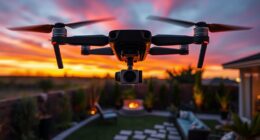
Choosing a professional drone means matching the aircraft to the work: a cinema production has different camera and crew needs than a solo real estate shoot or field survey. I rank the DJI Inspire 3 first for its full-frame 8K cinema workflow, while the DJI Mini 5 Pro models offer a much smaller package with 1-inch sensors, tracking, and obstacle sensing. The Potensic Atom 2 brings a built-in-screen controller and three batteries to a lighter-duty role.

Get business pricing on tech for your team
- Business-only prices and quantity discounts
- Tax-exempt purchasing
- Multiple users, one account, clear invoices
The main tradeoff is capability against portability and operating complexity. The Inspire 3 carries dedicated cinema gear and calls for a trained operator; the Mini models are easier to pack, though their compact cameras and flight platforms cannot replace a production aircraft. I also distinguish the two Mini 5 Pro bundles by the supplied details: one explicitly lists 4K/60 HDR and internal storage, while the other claims 4K/120 and includes ND filters. I treat those as bundle-specific listing claims rather than assuming they are interchangeable.
Key Takeaways
- The DJI Inspire 3 is the clear choice here for cinema work that needs a full-frame camera, 8K capture, and a production-oriented battery and media package.
- The DJI Mini 5 Pro options bring 1-inch sensors, obstacle sensing, and tracking to compact shoots; compare the claimed frame rates and included accessories in each listing.
- The DJI Mini 3 suits simpler 4K travel and social video, but its feature set and sensor details are less production-focused than either Mini 5 Pro bundle.
- The Potensic Atom 2 stands out for an included touchscreen controller, 48MP stills, and three batteries, though its vertical video is limited to 2.7K.
- Sub-249g claims can ease recreational portability, but they do not mean every professional job is exempt from local registration, operating, or remote identification rules.
| DJI Inspire 3 Professional Cinema Drone Combo |  | Best Overall for Cinema Production | Camera: Full-frame Zenmuse X9-8K Air | Video: 8K/75fps ProRes RAW; 8K/25fps CinemaDNG | Dynamic range: 14+ stops | VIEW ON AMAZON | See Our Full Breakdown |
| DJI Mini 5 Pro Drone Fly More Combo with RC 2 and Accessories Kit |  | Best Compact Professional Kit | Sensor: 1-inch CMOS | Stills: 50MP | Video: 4K/60fps HDR | VIEW ON AMAZON | See Our Full Breakdown |
| DJI Mini 5 Pro Fly More Combo Drone with RC 2 and Accessories |  | Best for High-Frame-Rate Compact Video | Camera: 1-inch, 50MP CMOS | Aperture: f/1.8 | Video: Up to 4K/120fps, per listing | VIEW ON AMAZON | See Our Full Breakdown |
| Potensic Atom 2 Fly More Combo with RC PTD 1 |  | Best Value for an Integrated Controller Kit | Weight: Under 249g | Sensor: 1/2-inch Sony CMOS, f/1.8 | Stills: 48MP | VIEW ON AMAZON | See Our Full Breakdown |
| DJI Mini 3 Fly More Combo with DJI RC and 3 Batteries |  | Best for Beginners and Simple Travel Shoots | Weight: Under 249g | Video: 4K HDR | Gimbal: 3-axis mechanical | VIEW ON AMAZON | See Our Full Breakdown |
| professional drone | Video | Gimbal | Batteries | Controller |
|---|---|---|---|---|
| DJI Inspire 3 Professional Cin | 8K/75fps ProRes RAW; 8K/25fps CinemaDNG | — | Six TB51 batteries with charging hub | DJI RC Plus with 7-inch, 1,200-nit display |
| DJI Mini 5 Pro Drone Fly More | 4K/60fps HDR | 225-degree rotation | Four intelligent flight batteries | — |
| DJI Mini 5 Pro Fly More Combo | Up to 4K/120fps, per listing | 225-degree rotation | Four included | — |
| Potensic Atom 2 Fly More Combo | 4K/30fps HDR | 3-axis | — | PTD 1 with 5.5-inch 1920×1080 touchscreen |
| DJI Mini 3 Fly More Combo with | 4K HDR | 3-axis mechanical | — | DJI RC with 5.5-inch HD display |
More Details on Our Top Picks
DJI Inspire 3 Professional Cinema Drone Combo
For a production whose deliverable depends on aerial image quality and grading latitude, the Inspire 3 is in a different class from the compact drones below. Its full-frame Zenmuse X9-8K Air supports 8K/75fps ProRes RAW, 8K/25fps CinemaDNG, dual native ISO, and more than 14 stops of dynamic range. Those recording options give a post-production team more room to shape footage than the Mini 5 Pro listings’ 4K modes or the Mini 3 and Atom 2’s 4K/30-class descriptions.
The included six TB51 batteries, charging hub, 1TB PROSSD, and lens case make the package geared toward planned shoots rather than casual flights. A bright 7-inch RC Plus display helps monitoring on location, while the trolley case acknowledges the reality of moving a larger aircraft and its kit. Compared with the all-in-one convenience of the Mini 5 Pro, this system asks for more transport space, preparation, and operator skill. That burden is justified when the production can use the camera’s image pipeline; it is hard to justify for quick social clips or routine inspection footage.
I would choose this as the roundup’s leading professional system for aerial cinematography, while keeping the compact options in mind for second-unit work, tight locations, or crews without a dedicated drone setup. Its complexity and size are genuine costs of the cinema capability, and the supplied listing does not make it a beginner-friendly purchase.
Pros:- Full-frame camera records 8K ProRes RAW and CinemaDNG
- More than 14 stops of dynamic range and dual native ISO support demanding grading work
- Six batteries, charging hub, and 1TB PROSSD support longer, media-intensive shoots
- RC Plus has a bright 7-inch display, with trolley and lens cases included
Cons:- Large system needs dedicated transport and more production planning than the Mini models
- Complex capabilities and workflow are excessive for casual or beginner flying
Best for: Cinema crews and experienced aerial operators who need full-frame 8K capture, grading latitude, and a production-ready media and battery package.
Not ideal for: Solo hobbyists, travel creators, and teams that prioritize a small carry kit or straightforward setup over cinema recording formats.
- Camera:Full-frame Zenmuse X9-8K Air
- Video:8K/75fps ProRes RAW; 8K/25fps CinemaDNG
- Dynamic range:14+ stops
- Batteries:Six TB51 batteries with charging hub
- Controller:DJI RC Plus with 7-inch, 1,200-nit display
- Storage:1TB DJI PROSSD
- Case:Trolley case and lens case
Our verdict“For professional cinema assignments that can use its full-frame 8K workflow, I rank the Inspire 3 first; its size and complexity make it a poor fit for lighter jobs.”
DJI Mini 5 Pro Drone Fly More Combo with RC 2 and Accessories Kit
The first Mini 5 Pro bundle is the strongest compact all-rounder in this lineup. Its 1-inch CMOS sensor, 50MP stills, 4K/60fps HDR, and 10-bit D-Log M or HLG give a small aircraft more room for polished client work than the Mini 3 or Atom 2 descriptions suggest. It cannot match the Inspire 3’s full-frame sensor or 8K production formats, but it is far easier to carry when access, setup time, or crew size matters.
For location work, the omnidirectional obstacle sensing with front-facing LiDAR and ActiveTrack 360° can support safer tracking shots and moving-subject coverage. The listed 42GB internal storage is useful as a fallback if a memory card is overlooked, and the bundle adds four batteries, a charging hub, backpack, spare propellers, card, and a 26-month CPS protection plan. The package is notably fuller than the standard Mini 3 combo and adds protection and carrying gear beyond the Atom 2’s controller-centered bundle.
The listing gives a drone weight of 10.4 ounces while also describing it as under 249g; those figures are close but worth checking against the exact aircraft and configuration. I would not choose it for a project that needs the Inspire’s RAW cinema workflow, and buyers should verify which recording modes and protection terms apply to this particular package. For compact commercial video, though, its combination of sensor, sensing, and included field gear makes it my preferred small-kit pick.
Pros:- 1-inch sensor supports 50MP stills and 4K/60fps HDR video
- 10-bit D-Log M and HLG provide color workflows beyond basic capture
- Omnidirectional sensing, front LiDAR, and ActiveTrack 360° support complex compact shoots
- Four batteries, internal storage, backpack, memory card, and protection plan are listed
Cons:- Does not offer the Inspire 3’s full-frame 8K recording workflow
- Weight wording and the exact scope of the protection plan need confirmation
Best for: Creators and small production teams who need a compact aircraft for client video, stills, tracking, and frequent travel.
Not ideal for: Cinema crews that need full-frame 8K RAW capture, or buyers who need unambiguous weight and bundle specifications without checking the listing.
- Sensor:1-inch CMOS
- Stills:50MP
- Video:4K/60fps HDR
- Color:10-bit D-Log M/HLG
- Obstacle sensing:Omnidirectional vision sensors and front LiDAR
- Storage:42GB internal storage
- Batteries:Four intelligent flight batteries
- Gimbal:225-degree rotation
Our verdict“This bundle is my compact professional pick when portability and sensor quality matter more than the Inspire 3’s cinema formats.”
DJI Mini 5 Pro Fly More Combo Drone with RC 2 and Accessories
This second Mini 5 Pro listing targets compact filmmakers who value slow motion and camera movement. It describes the same broad 1-inch, 50MP camera class, but specifically claims 4K up to 120fps, alongside a rotating gimbal, ActiveTrack 360°, omnidirectional sensing with LiDAR, and O4+ transmission. Those frame-rate claims distinguish it from the other Mini 5 Pro bundle, whose supplied details specify 4K/60fps HDR and 10-bit color. For a buyer planning high-frame-rate work, the exact listing configuration matters more than the shared model name.
The included RC 2, four batteries, ND filters, memory card, charging hub, backpack, landing pad, and spare propellers form a ready-to-pack field kit. ND filters are particularly relevant when controlling exposure for video, while four batteries give more room for repeated takes than the three-battery Mini 3 combo. Against the Inspire 3, this is a far more portable setup but does not claim the same sensor size, RAW formats, or dedicated cinema storage. It is a compact production tool, not a replacement for a cinema aircraft.
The product description does not state flight time, and the listed 8.8-ounce weight should be checked against the aircraft itself and the full bundle before planning carry limits. I would also confirm the advertised 120fps mode, supported resolution, and color options with the seller or manufacturer before booking a shoot around them, since the other supplied Mini 5 Pro listing describes a different set of recording details. Its accessories and claimed slow-motion mode make it a distinct choice, provided those specifications match the delivered configuration.
Pros:- Listing claims 4K recording up to 120fps for slow-motion capture
- 1-inch 50MP camera, rotating gimbal, and ActiveTrack 360° are specified
- Omnidirectional sensing with LiDAR is listed
- ND filters, four batteries, controller, and field accessories are included
Cons:- Description does not state flight time
- Video details differ from the other Mini 5 Pro listing and merit configuration checks
- Listed weight may not describe the aircraft and complete kit consistently
Best for: Mobile video teams seeking a compact drone kit with claimed 4K/120fps capture, ND filters, and four included batteries.
Not ideal for: Buyers who need clearly stated flight time or a full-frame production camera, or who cannot verify the listing’s recording modes before purchase.
- Camera:1-inch, 50MP CMOS
- Aperture:f/1.8
- Video:Up to 4K/120fps, per listing
- Gimbal:225-degree rotation
- Transmission:O4+, up to 20km claimed range
- Batteries:Four included
- Storage:128GB microSD card in bundle
- Accessories:ND filters, backpack, landing pad, charging hub, spare propellers
Our verdict“Choose this Mini 5 Pro bundle over its sibling when its claimed 4K/120fps mode and included ND filters suit the shoot and are confirmed for the delivered configuration.”
Potensic Atom 2 Fly More Combo with RC PTD 1
The Atom 2 earns a place for a practical reason: its PTD 1 controller has a built-in touchscreen, so the operator does not need to mount a phone just to frame and monitor a shot. The 1/2-inch Sony CMOS sensor, 48MP stills, and 4K/30fps HDR offer a capable lightweight camera kit, while the Mini 5 Pro models bring a larger listed sensor and more advanced obstacle sensing. That makes the Atom 2 a better fit for straightforward aerial content than for demanding client work where low-light latitude, higher frame rates, or omnidirectional sensing matter.
Three batteries provide a stated 96 minutes of total flight time, and the included fast-charging hub helps keep a small crew moving between locations. AI tracking, night-shot modes, vertical shooting, and creative presets broaden its usefulness for solo creators. But vertical capture is limited to 2.7K, and the controller is compatible only with this drone. By comparison, DJI’s compact bundles may suit buyers who prefer an established ecosystem or, in the Mini 5 Pro’s case, a more advanced sensing and camera package.
I would shortlist the Atom 2 for a mobile creator who wants an all-in-one controller and a useful battery bundle without stepping up to a cinema platform. The supplied information does not make it the pick for challenging professional environments: the sensor and 4K/30fps ceiling are more modest, and the controller’s single-model compatibility limits reuse if the fleet changes.
Pros:- Built-in 5.5-inch FHD touchscreen avoids relying on a separate phone
- 1/2-inch Sony sensor captures 48MP stills and 4K/30fps HDR
- Three batteries provide up to 96 minutes of stated combined flight time
- AI tracking, night modes, and creative flight features broaden shot options
Cons:- Vertical shooting is limited to 2.7K
- PTD 1 controller works only with the Atom 2
- Camera and sensing package is less capable on paper than the Mini 5 Pro options
Best for: Independent creators and small teams who want a lightweight 4K drone, a screen-equipped controller, and three batteries in one kit.
Not ideal for: Operators who need high-end grading formats, 4K slow motion, omnidirectional obstacle sensing, or a controller that works across multiple aircraft.
- Weight:Under 249g
- Sensor:1/2-inch Sony CMOS, f/1.8
- Stills:48MP
- Video:4K/30fps HDR
- Gimbal:3-axis
- Controller:PTD 1 with 5.5-inch 1920×1080 touchscreen
- Flight time:Up to 96 minutes combined across three batteries
- Special features:AI tracking, night shot, vertical shooting, Smart RTH
Our verdict“The Atom 2 is a sensible compact kit when an integrated controller and battery bundle matter more than higher-end camera or sensing features.”
DJI Mini 3 Fly More Combo with DJI RC and 3 Batteries
The Mini 3 is the easiest recommendation here for someone learning to fly while still wanting dependable-looking travel footage. It combines a sub-249g aircraft, a 3-axis mechanical gimbal, 4K HDR, and true vertical shooting. The built-in-screen DJI RC removes the phone-mount step that comes with many basic controllers. Compared with the Atom 2, it offers a familiar DJI control setup and states up to 114 minutes of combined flight time across three included batteries; compared with the Mini 5 Pro, it has a simpler camera and no obstacle sensing specified in the description.
Its beginner aids—GPS Return to Home, precise hovering, and automatic takeoff and landing—make it approachable for new pilots. A shoulder bag and two-way charging hub help for day trips, and portrait orientation can simplify social deliverables. However, the stated 51-minute maximum requires an Intelligent Flight Battery Plus sold separately, which pushes the aircraft above 249g. The bundle’s three standard batteries are better understood as multiple sorties, not as a single uninterrupted flight.
For professional use, I would place it below the Mini 5 Pro and Atom 2 when the job demands stronger imaging, tracking, or sensing. It remains a reasonable support aircraft for simple establishing shots, personal travel work, and pilots building basic skills. The lack of specified obstacle avoidance and the need to supply a microSD card are meaningful limits for paid work where reliable capture and repeatable operation matter.
Pros:- Under-249g design with 4K HDR and true vertical shooting
- 3-axis mechanical gimbal stabilizes footage
- Three batteries, charging hub, and shoulder bag support day trips
- DJI RC has an integrated 5.5-inch display and beginner-friendly flight aids
Cons:- No obstacle avoidance sensors are specified in the supplied description
- 51-minute maximum uses a separate Battery Plus that exceeds 249g
- No built-in storage; microSD card is not included
Best for: New pilots and travel creators who need stabilized 4K HDR, vertical framing, and a screen-equipped controller in a compact package.
Not ideal for: Professional operators who need advanced obstacle sensing, specified internal storage, or higher-end color and frame-rate options.
- Weight:Under 249g
- Video:4K HDR
- Gimbal:3-axis mechanical
- Flight time:Up to 51 minutes with Battery Plus, sold separately
- Combo batteries:Three Intelligent Flight Batteries
- Combined flight time:Up to 114 minutes stated for combo
- Controller:DJI RC with 5.5-inch HD display
- Included accessories:Two-way charging hub and shoulder bag
Our verdict“The Mini 3 is the approachable travel and learning pick, but its simpler camera package places it behind the Mini 5 Pro for professional assignments.”
How We Picked
I ranked these options by how well their stated capabilities support professional aerial work, rather than by treating every camera drone as a cinema platform. I gave the most weight to imaging format and sensor, usable flight workflow, control and monitoring, obstacle sensing, and the practical completeness of each bundle. A full-frame camera with high-end recording formats can justify a dedicated production role in a way a lightweight 4K drone cannot.
I also looked at the tradeoffs that affect real assignments: transport burden, dependence on add-on batteries or memory cards, controller compatibility, and unclear or conflicting listing details. The two Mini 5 Pro listings share many headline capabilities, so I differentiate them only where the supplied descriptions do. Their bundle contents and stated video modes should be checked against the exact configuration before a production depends on them. The Mini 3 and Atom 2 rank lower because their supplied specifications point to simpler camera and workflow needs, despite their portability and approachable controls.
These are recommendations based on the provided product descriptions and specifications. I do not treat recreational weight claims as a substitute for checking the rules that apply to a particular commercial operation, location, or assignment.
| professional drone | Batteries | Controller |
|---|---|---|
| DJI Inspire 3 Professional Cin | Six TB51 batteries with charging hub | DJI RC Plus with 7-inch, 1,200-nit display |
| DJI Mini 5 Pro Drone Fly More | Four intelligent flight batteries | — |
| DJI Mini 5 Pro Fly More Combo | Four included | — |
| Potensic Atom 2 Fly More Combo | — | PTD 1 with 5.5-inch 1920×1080 touchscreen |
| DJI Mini 3 Fly More Combo with | — | DJI RC with 5.5-inch HD display |
Factors to Consider When Choosing Professional Drones
I would start with the deliverable and work backward to the aircraft. A drone built for cinema capture makes little sense for routine social content, while a lightweight creator drone may not meet a production team’s recording or safety requirements.
Match the camera to the deliverable
For footage that will be heavily graded or integrated with cinema cameras, the Inspire 3’s full-frame 8K formats and stated dynamic range are the strongest fit in this group. A compact option such as either Mini 5 Pro can reduce transport effort and still offer a 1-inch sensor, but its listed modes are 4K. The Mini 3 and Atom 2 make more sense when stabilized 4K delivery is sufficient. Check resolution, frame rate, color profile, and recording format against the actual brief; headline resolution alone does not describe the entire post-production workflow.
Treat the bundle as part of the aircraft
Included batteries, charging hardware, media, and transport cases determine how ready a kit is for a field day. The Inspire 3’s six batteries and 1TB PROSSD suit a media-heavy shoot, while the Mini 5 Pro bundles list four batteries and different accessories. The Atom 2’s three batteries and hub support repeated sorties, and the Mini 3 includes a charging hub and bag but no memory card. I would verify whether storage and charging accessories meet the assignment instead of assuming the aircraft alone is the complete system.
Weigh portability against production demands
A sub-249g claim can make a compact drone easier to carry, but the exact configuration and local rules still matter. The Inspire 3 is a larger, dedicated production setup that calls for transport planning; the Mini models and Atom 2 prioritize mobility. In many regions, commercial operations have requirements beyond the aircraft’s weight, so confirm the rules for the location and type of work. For a remote job, also plan for spare batteries, charging access, memory management, and safe launch areas.
Choose sensing and control for the assignment
Obstacle sensing can help when framing close passes or tracking subjects, but it does not remove the pilot’s responsibility to maintain safe operation. The Mini 5 Pro listings describe omnidirectional sensing and front LiDAR; the other supplied descriptions do not specify equivalent systems. Controller preference matters too: the Atom 2 includes a touchscreen controller, while DJI’s compact bundles include controllers with screens. Check compatibility before building a fleet around a controller, particularly because the Atom 2 controller is listed as model-specific.
Frequently Asked Questions
Which drone in this list is best for professional cinema work?
I would choose the DJI Inspire 3 when the assignment calls for full-frame capture, 8K ProRes RAW or CinemaDNG, and a production-oriented media package. Its size and complexity are part of the commitment, so it is not the most practical option for every professional shoot. For compact client work, either Mini 5 Pro listing is easier to transport, though it does not claim the Inspire’s cinema recording workflow.
Are the Mini 5 Pro bundles the same?
The supplied descriptions overlap on the 1-inch, 50MP camera, tracking, obstacle sensing, controller, and four batteries, but their stated video details and accessories differ. One listing specifies 4K/60fps HDR, 10-bit color, and 42GB internal storage; the other claims 4K up to 120fps and lists ND filters, among other kit items. I would verify the exact delivered configuration and supported modes before choosing based on frame rate or color workflow.
Does under 249g mean I can fly without registration?
Not in every situation. The product descriptions make claims about recreational registration, but requirements vary by country, purpose, aircraft configuration, and operation. Commercial work may involve rules that are separate from recreational registration, and adding a battery or accessory can change the aircraft’s weight. Check the current aviation authority guidance for the place where the flight will happen.
Which compact drone is easiest for a new pilot?
The DJI Mini 3 is the most explicitly beginner-oriented option in the supplied descriptions, with GPS Return to Home, precise hovering, automatic takeoff and landing, and in-app learning resources. The Potensic Atom 2 also lists GNSS positioning and Smart Return-to-Home, and its built-in touchscreen makes monitoring simple. I would still favor the Mini 5 Pro for jobs where obstacle sensing is a priority, while remembering that sensors do not replace careful piloting.
What should I check before buying one for paid work?
Match the camera modes to the client deliverable, then confirm local operating rules, battery and media needs, controller compatibility, and the exact bundle contents. Pay special attention to listing details that vary or are missing: the Mini 5 Pro descriptions do not match on video modes, and the second listing omits flight time. For the Mini 3, note that Battery Plus is sold separately and that a microSD card is not included.
Conclusion
My recommendation depends on the job. Choose the DJI Inspire 3 for cinema productions built around full-frame 8K capture and a dedicated crew workflow. For frequent travel shoots that need strong imaging in a compact kit, I would shortlist the first DJI Mini 5 Pro bundle; choose the second listing when its claimed 4K/120 mode and ND filters are the priority, after confirming the configuration. The Potensic Atom 2 suits creators who value a built-in-screen controller and three-battery package, while the DJI Mini 3 is the straightforward option for learning, travel, and simple stabilized 4K work. Each fills a distinct role, and the best professional drone is the one whose camera, workflow, and operating requirements match the assignment.
Fall Picks
fall essentials
As an affiliate, we earn on qualifying purchases.