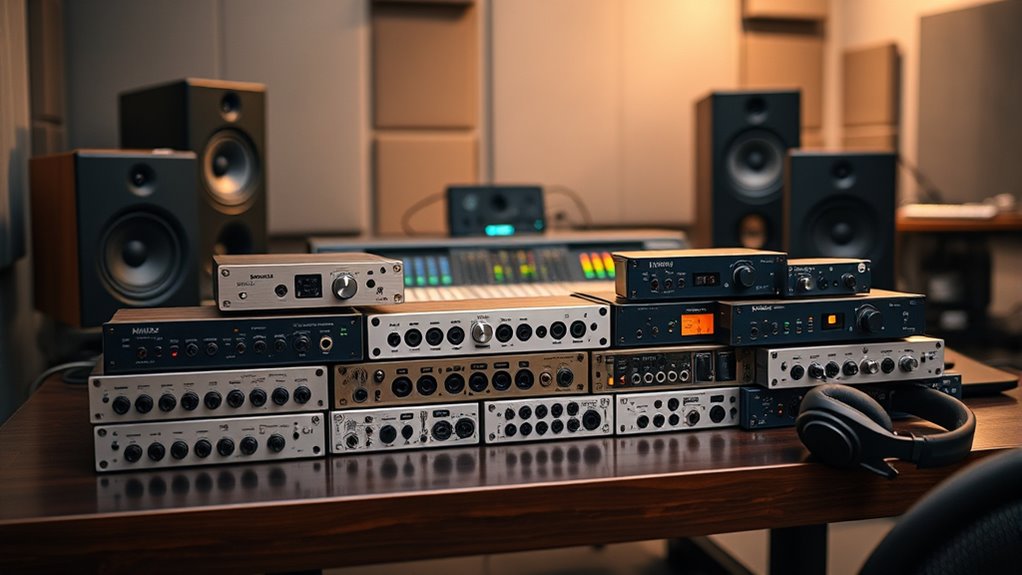

Choosing a professional audio interface involves balancing performance, connectivity, and price. The Universal Audio Apollo Twin X DUO Gen 2 stands out as the best overall for its pristine sound quality and robust build, ideal for serious producers. The Focusrite Scarlett Solo 3rd Gen offers excellent value for beginners or those on a budget, while the Universal Audio Apollo x8p Gen 2 caters to high-end studios with extensive I/O and processing power. The main tradeoffs in this category often involve deciding between top-tier sound fidelity and affordability or compactness. Continue reading for a detailed breakdown of each option to find your perfect match.

Get tech for your team delivered free — and shop member deals
- Fast, free delivery on millions of items
- Access to Prime Big Deal Days deals on October 6–7
- Prime Video, Amazon Music and more included
Key Takeaways
- Top-tier models like the Universal Audio Apollo series deliver exceptional sound quality and build, but come at a higher price point.
- Budget-friendly interfaces such as Focusrite Scarlett Solo provide solid performance for entry-level users, though with fewer inputs and features.
- Connectivity options like Thunderbolt versus USB-C significantly impact compatibility and latency, influencing workflow choices.
- Many premium interfaces include DSP processing; for smaller setups, simplicity and ease of use might outweigh raw power.
- The best interface depends heavily on your specific use case—whether recording vocals, instruments, or producing on the go.
| Universal Audio Apollo Twin X DUO Gen 2 Essentials + Edition Thunderbolt 3 Audio Interface |  | Best Overall for Professional Quality and Versatile Recording | Connectivity: Thunderbolt 3 | Preamp Type: Unison | DSP Processing: 200+ UAD plugins | VIEW ON AMAZON | See Our Full Breakdown |
| Fender Quantum Complete Recording Bundle with Quantum LT2 USB Interface, Mic, Speakers, Headphones & Recording Software |  | Best for Beginners and Guitarists Looking for an All-in-One Solution | Connectivity: USB-C | Preamp: Fender MAX-HD | Included Microphone: M7 MkII condenser | VIEW ON AMAZON | See Our Full Breakdown |
| Solid State Logic SSL 2 MKII – 2×2 USB Audio Interface |  | Best for Musicians and Podcasters Needing Versatile Inputs | Connectivity: USB-C | Sample Rate: 192 kHz | Inputs: 2 XLR/line combo, Hi-Z | VIEW ON AMAZON | See Our Full Breakdown |
| Universal Audio Apollo Solo Heritage Edition, APLS-HE |  | Best for Track-Ready, Vintage-Emulating Recording | Connectivity: Thunderbolt | Preamp: Unison | DSP Processing: UAD SOLO Core | VIEW ON AMAZON | See Our Full Breakdown |
| Universal Audio Volt 876 24×28 USB Audio Interface, Rack-Mount Style |  | Best for Expanding Studio Systems and Vintage Tone Enthusiasts | Connectivity: USB 2.0 | Preamp Type: Vintage UA | Sample Rate: 192 kHz | VIEW ON AMAZON | See Our Full Breakdown |
| Universal Audio Apollo x8p Gen 2 Studio |  | Best Premium Studio-Grade Audio Interface | Dynamic Range: widest among Apollo series | Distortion: lowest of any Apollo model | Inputs/Outputs: 8 Mic/Line, 10 Line, 4 Headphone | VIEW ON AMAZON | See Our Full Breakdown |
| Audio Interface, 2×2 24-bit/192kHz Studio Quality USB C Recording Interface for PC/Mac/iOS |  | Best Compact, High-Resolution USB-C Interface | Resolution: 24-bit/192kHz | Inputs: 2 combo XLR/TRS | Outputs: Headphone 3.5mm | VIEW ON AMAZON | See Our Full Breakdown |
| Universal Audio UAD 2 Satellite QUAD Core Thunderbolt 3 DSP Interface MAC or PC |  | Best DSP Power for Large, Professional Mixes | Processors: Quad Core DSP | Plug-in Support: 100+ UAD plug-ins | Connectivity: Thunderbolt 3 | VIEW ON AMAZON | See Our Full Breakdown |
| Neumann MT 48 U Desktop 12×12 USB-C Audio/MIDI Interface |  | Best High-Channel Count Desktop Interface with Built-in Mixer | Channels: 12×12 | Sample Rate: Up to 192 kHz | Connectivity: USB-C, MIDI, ADAT, S/PDIF, AES67 | VIEW ON AMAZON | See Our Full Breakdown |
| Fender Quantum LT 16 | 16-in 8-out USB-C Audio Interface for Music Production |  | Best Versatile Hybrid Studio Interface | Channels: 16-in, 8-out | Mic Preamps: 8 MAX-HD | Sample Rate: Up to 192 kHz | VIEW ON AMAZON | See Our Full Breakdown |
| Universal Audio Volt 2 USB Audio Interface |  | Best Overall for Versatile Studio-Quality Recording | Preamp Type: UA 610 preamp emulation | Sample Rate: Up to 192 kHz | Bit Depth: 24-bit | VIEW ON AMAZON | See Our Full Breakdown |
| Fender AudioBox GO USB Audio Interface, for Guitarist, Vocalist, or Producer |  | Best Compact for On-the-Go Recording and Guitarists | Sample Rate: 96 kHz | Inputs: 2 (XLR/¼-inch combo, instrument | Outputs: 2 balanced TRS | VIEW ON AMAZON | See Our Full Breakdown |
| Focusrite Scarlett Solo 3rd Gen USB Audio Interface for Guitarists, Vocalists, Podcasters, and Producers |  | Best Budget-Friendly for Beginners and Solo Artists | Sample Rate: 192 kHz | Inputs: 1 XLR, 1 instrument | Outputs: 2 balanced | VIEW ON AMAZON | See Our Full Breakdown |
| Universal Audio Apollo x4 Gen 2 Studio + Edition Thunderbolt 3 Audio Interface |  | Best for Professional Studios and High-End Users | Sample Rate: Up to 192kHz | Preamps: Unison preamp technology | DSP Power: Over 200 UAD plugins | VIEW ON AMAZON | See Our Full Breakdown |
| Yamaha URX22C 2-in/2-out USB-C Audio/MIDI Interface with 32-bit/192kHz Support |  | Best Durable All-Rounder for Live and Studio Use | Sample Rate: 192kHz | Bit Depth: 32-bit | Inputs: 2 combo XLR/TRS | VIEW ON AMAZON | See Our Full Breakdown |
| professional audio interface | Sample Rate | Connectivity |
|---|---|---|
| Universal Audio Apollo Twin X | up to 192 kHz | Thunderbolt 3 |
| Fender Quantum Complete Record | up to 192 kHz | USB-C |
| Solid State Logic SSL 2 MKII | 192 kHz | USB-C |
| Universal Audio Apollo Solo He | up to 192 kHz | Thunderbolt |
| Universal Audio Volt 876 24×28 | 192 kHz | USB 2.0 |
| Universal Audio Apollo x8p Gen | Up to 192 kHz | — |
| Audio Interface | — | USB C |
| Universal Audio UAD 2 Satellit | Up to 192 kHz | Thunderbolt 3 |
| Neumann MT 48 U Desktop 12×12 | Up to 192 kHz | USB-C, MIDI, ADAT, S/PDIF, AES67 |
| Fender Quantum LT 16 | 16-in 8 | Up to 192 kHz | USB-C, MIDI, DC-coupled |
| Universal Audio Volt 2 USB Aud | Up to 192 kHz | USB |
| Fender AudioBox GO USB Audio I | 96 kHz | — |
| Focusrite Scarlett Solo 3rd Ge | 192 kHz | USB |
| Universal Audio Apollo x4 Gen | Up to 192kHz | Thunderbolt 3 |
| Yamaha URX22C 2-in/2-out USB-C | 192kHz | — |
More Details on Our Top Picks
Universal Audio Apollo Twin X DUO Gen 2 Essentials + Edition Thunderbolt 3 Audio Interface
This model stands out for its combination of premium Unison preamps and extensive UAD plugin library, making it ideal for those seeking studio-grade tones in a compact form. Compared to the Universal Audio Volt 876, it offers superior analog emulation and more sophisticated DSP processing, though at a higher cost. The Apollo Twin X excels in real-time tracking with near-zero latency and precise bass management for mixing, but its Thunderbolt connection limits compatibility to certain computers, which could be a drawback for some users. Its built-in monitor correction and auto-gain features streamline workflows, making it a favorite for serious producers and engineers. The tradeoff is that it’s less portable than bus-powered options and requires a compatible Thunderbolt port.
Pros:- Exceptional Unison preamp emulations for authentic analog tones
- Access to over 200 UAD DSP and native plugins for versatile production
- High-quality monitor correction for accurate mixing
Cons:- Expensive compared to entry-level interfaces
- Limited to Thunderbolt connections, reducing compatibility
Best for: Professional producers and advanced home studio owners who need high-fidelity audio and extensive plugin support.
Not ideal for: Mobile musicians or beginners seeking a plug-and-play, budget-friendly interface, due to its cost and system requirements.
- Connectivity:Thunderbolt 3
- Preamp Type:Unison
- DSP Processing:200+ UAD plugins
- Input/Output:2-in / 6-out
- Sample Rate:up to 192 kHz
- Dimensions:7.8 x 6.1 x 3.2 inches
Our verdict“This interface is best suited for professionals who prioritize audio quality and plugin depth over portability and price.”
Fender Quantum Complete Recording Bundle with Quantum LT2 USB Interface, Mic, Speakers, Headphones & Recording Software
This bundle makes the most sense for newcomers or mobile guitarists who want a complete setup without hunting for separate components. Compared with the Universal Audio Volt 876, it offers a more affordable entry point but with fewer high-end features and lower overall audio fidelity. The Fender Quantum LT2’s MAX-HD preamp and Fender-designed instrument input ensure clear guitar and vocal recordings, while the included software and hardware simplify setup. Its integrated monitors and headphones provide accurate listening, making it ideal for practice and small demos. The main tradeoff is that the bundle’s overall audio quality and expandability won’t match dedicated, professional-grade interfaces, which could limit growth for serious producers.
Pros:- Complete studio package for quick setup
- Pristine Fender-designed preamp and instrument input
- Includes software and monitors for an all-in-one experience
Cons:- Lower audio fidelity compared to premium interfaces
- Limited upgrade potential for advanced production work
Best for: Guitarists, vocalists, and podcasters starting out who want a straightforward, all-in-one recording package.
Not ideal for: Experienced producers or those needing high-end studio features, due to its limited expansion options and lower fidelity.
- Connectivity:USB-C
- Preamp:Fender MAX-HD
- Included Microphone:M7 MkII condenser
- Sample Rate:up to 192 kHz
- Outputs:2 monitors, 2 headphones
- Software:Fender Studio app
Our verdict“This bundle is perfect for beginners or mobile musicians seeking an easy-to-use, comprehensive recording kit.”
Solid State Logic SSL 2 MKII – 2×2 USB Audio Interface
The SSL 2 MKII excels in delivering professional sound quality with its 32-bit/192 kHz converters and legacy 4K analog enhancement, making it a strong alternative to the Universal Audio Apollo Solo Heritage Edition for those who need a straightforward yet high-quality interface. Compared to the Apollo Solo, the SSL 2 MKII provides a more flexible I/O setup with two combo inputs and MIDI, making it suitable for musicians with multiple sources or podcasters. Its high-pass filters and zero-latency monitoring improve workflow, but it doesn’t offer the same extensive plugin ecosystem or Unison preamps, meaning it’s less suited for those wanting vintage emulation. Its bus-powered design favors desktop setups but limits portability.
Pros:- High-quality 32-bit/192 kHz conversion
- MIDI I/O with 2 combo inputs and Hi-Z option
- Legacy 4K analog enhancement for subtle tonal coloration
Cons:- Limited plugin ecosystem compared to UAD-based interfaces
- No onboard DSP for real-time plugin processing
Best for: Musicians, podcasters, and producers who need reliable, high-quality inputs with flexible connectivity.
Not ideal for: Travelers or those seeking extensive plugin options, as it lacks onboard DSP and plugin library integration.
- Connectivity:USB-C
- Sample Rate:192 kHz
- Inputs:2 XLR/line combo, Hi-Z
- Outputs:2 line outs
- MIDI I/O:Yes
- Dimensions:6.8 x 4.9 x 2.3 inches
Our verdict“Ideal for versatile studio setups needing high-fidelity recording and flexible I/O, without the emphasis on plugin emulations.”
Universal Audio Apollo Solo Heritage Edition, APLS-HE
This edition of the Apollo Solo is tailored for artists seeking vintage tones and seamless integration with UA’s renowned plugin suite. Compared to the Fender Quantum LT2, it offers near-zero latency UAD plugin processing and premium Unison preamps, making it ideal for tracking with analog-style compression and EQ. Its included suite of five plugins adds immediate value for producers working with vocals, guitars, or drums. The Apollo Solo Heritage Edition shines in producing rich, warm tones, but its limited I/O (only one mic and instrument input) restricts multi-source recording, which could be a constraint for complex sessions. Its Mac-only Luna integration is a bonus for Mac users but limits Windows compatibility.
Pros:- Near-zero latency tracking with UAD plug-ins
- Premium Unison preamp and guitar emulations
- Includes five award-winning UAD plug-ins
Cons:- Limited I/O for multi-mic or multi-instrument recordings
- Mac-only Luna system for full features
Best for: Solo artists, vocalists, and guitarists who want high-quality emulation and integrated plugin support for tracking.
Not ideal for: Producers needing multiple inputs or a versatile studio setup, as its I/O is limited and primarily optimized for tracking.
- Connectivity:Thunderbolt
- Preamp:Unison
- DSP Processing:UAD SOLO Core
- Inputs:1 XLR, 1 instrument
- Sample Rate:up to 192 kHz
- Included Plugins:5 UAD titles
Our verdict“This interface is perfect for artists focused on vintage tones and high-quality tracking, especially on Mac systems.”
Universal Audio Volt 876 24×28 USB Audio Interface, Rack-Mount Style
The Volt 876 combines UA’s iconic vintage preamp and compressor models with a flexible 24×28 I/O configuration, making it suitable for expanding existing studio setups or recording multiple sources simultaneously. Compared to the more compact Universal Audio Apollo Twin X, it offers greater connectivity and the ability to chain multiple units, ideal for multi-mic recordings or complex mixes. Its onboard vintage preamps and compressors deliver warm, characterful tones, but the tradeoff is a larger form factor and a more complex setup process. While it provides professional conversion at 192 kHz, its lack of onboard DSP means less real-time plugin processing, which is a consideration for those wanting to track through effects.
Pros:- Vintage UA preamps and compressors for warm, classic tones
- Expandable with up to three units for larger setups
- High-quality 24-bit/192 kHz conversion
Cons:- Larger rack-mount design reduces portability
- No onboard DSP for real-time effects
Best for: Studio owners needing a rack-mount, expandable interface with classic UA analog tones for multi-source recording.
Not ideal for: Travelers or solo users who prefer compact, bus-powered interfaces with integrated DSP, as this unit is larger and lacks onboard processing.
- Connectivity:USB 2.0
- Preamp Type:Vintage UA
- Sample Rate:192 kHz
- Inputs/Outputs:24-in / 28-out
- Form Factor:Rack-mount
- Expandability:Up to 3 units
Our verdict“This interface is ideal for professional studios needing a robust, expandable system with vintage-inspired sound.”
Universal Audio Apollo x8p Gen 2 Studio
The Universal Audio Apollo x8p Gen 2 stands out for its exceptional audio conversion quality, boasting the widest dynamic range and lowest distortion among Apollo models. Unlike the Apollo Twin X Duo, it offers more inputs and outputs suitable for complex recording setups, but at a higher price point. Its onboard UAD DSP allows real-time processing of over 200 plug-ins, including iconic emulations like Capitol Chambers and Sound City Studios, making it ideal for professional mixing. The Auto-Gain feature simplifies level setting across multiple channels, a significant advantage over more basic interfaces. However, its size and cost might be prohibitive for smaller or budget-conscious studios. This pick is perfect for high-end studios needing top-tier conversion and processing power.
Pros:- Exceptional dynamic range and low distortion for studio-quality sound
- Access to the full library of UAD DSP and Native plug-ins
- Auto-Gain feature speeds up level setting across multiple inputs
- Supports bass management for low-end detail in mixes
Cons:- High price point may be out of reach for smaller studios
- Large footprint makes it less suitable for limited space setups
- Requires a Thunderbolt 3 connection, limiting compatibility with some systems
Best for: Professional recording studios and advanced producers who prioritize pristine audio quality and extensive DSP processing.
Not ideal for: Home musicians or hobbyists seeking a more affordable, compact interface with fewer features.
- Dynamic Range:widest among Apollo series
- Distortion:lowest of any Apollo model
- Inputs/Outputs:8 Mic/Line, 10 Line, 4 Headphone
- Plug-ins:200+ UAD DSP and Native
- Connection:Thunderbolt 3
- Sample Rate:Up to 192 kHz
Our verdict“This is the ideal choice for professional studios that demand ultimate audio fidelity and processing power, despite its premium cost and size.”
Audio Interface, 2×2 24-bit/192kHz Studio Quality USB C Recording Interface for PC/Mac/iOS
This 2×2 USB-C interface offers excellent 24-bit/192kHz audio quality, making it suitable for solo artists and home producers. Compared with the Universal Audio Apollo Twin X DUO, it’s more portable, but lacks the same level of DSP processing power. Its plug-and-play design with no driver installation simplifies setup for Mac, PC, or iOS users, yet its two-channel limit restricts multi-track recording workflows. The illuminated gain knobs enhance usability in dim environments, but the absence of an external power supply may limit certain uses and expandability. Best suited for single-microphone recordings or streaming content creators needing reliable high-res audio in a compact form.
Pros:- High-resolution 24-bit/192kHz audio for professional clarity
- Plug-and-play USB-C connectivity with no drivers needed
- Illuminated gain knobs for easy control in low light
- Versatile combo inputs suitable for microphones and instruments
Cons:- Limited to two channels, not suitable for multi-mic setups
- No external power supply, limiting expansion options
- Requires USB-C port, may need adapters for some devices
Best for: Solo musicians, podcasters, or content creators requiring high-fidelity recording with minimal setup hassle.
Not ideal for: Multi-instrument or multi-mic recording setups that demand more channels and expandability.
- Resolution:24-bit/192kHz
- Inputs:2 combo XLR/TRS
- Outputs:Headphone 3.5mm
- Connectivity:USB C
- Power:Bus-powered
- Phantom Power:48V
Our verdict“This interface makes the most sense for solo performers or streamers looking for reliable, high-res audio in a streamlined, portable package.”
Universal Audio UAD 2 Satellite QUAD Core Thunderbolt 3 DSP Interface MAC or PC
The UAD 2 Satellite QUAD Core excels in providing massive DSP resources for running demanding plug-in-heavy sessions. Compared with the Universal Audio Apollo x8p, it doesn’t offer its own preamps or audio inputs but supplies essential DSP acceleration for large mixes with over 100 high-quality plug-ins from Ampex, Neve, Lexicon, and more. Its compatibility with multiple UAD hardware and daisy-chaining via dual Thunderbolt 3 ports offers unmatched expandability. The downside? It relies entirely on external preamps and audio interfaces, so it’s best paired with a separate high-quality audio interface. It’s ideal for mastering engineers or studios running complex sessions with numerous plug-ins. This makes the most sense for high-end post-production or mixing facilities needing maximum DSP capacity.
Pros:- Massive DSP power with Quad Core processors
- Supports over 100 high-quality UAD plug-ins
- Daisy-chain multiple UAD devices for scalable processing
- Compatible with major DAWs including Pro Tools and Logic
Cons:- Requires a separate audio interface for inputs/outputs
- External hardware adds complexity and space requirements
- Price can be high when factoring in additional UA hardware
Best for: Large professional studios or mastering engineers needing extensive DSP processing for complex projects.
Not ideal for: Home musicians or small projects requiring built-in audio inputs and simple setups.
- Processors:Quad Core DSP
- Plug-in Support:100+ UAD plug-ins
- Connectivity:Thunderbolt 3
- Compatibility:Mac and Windows
- Daisy-Chaining:Yes
- Sample Rate:Up to 192 kHz
Our verdict“This is the go-to for large-scale mixing or mastering environments that need intensive DSP resources, despite requiring a separate audio interface and higher investment.”
Neumann MT 48 U Desktop 12×12 USB-C Audio/MIDI Interface
The Neumann MT 48 U offers a remarkable 12×12 channel configuration, making it unique among desktop interfaces. Its touchscreen UI and integrated DSP-based mixer provide flexible control over routing, monitoring, and effects, a feature not found on simpler models like the Focusrite Scarlett Solo. While the Focusrite Clarett 2Pre or SSL 2 MKII offer quality sound, they lack the extensive I/O and onboard mixer capabilities of the MT 48 U. Its comprehensive connectivity—including MIDI, ADAT, S/PDIF, and AES67—makes it ideal for complex setups involving multiple instruments and digital sources. The tradeoff? Its size and cost are higher, and it’s primarily suited for desktop use rather than portable recording. This is best for creators needing extensive I/O with professional control at their fingertips.
Pros:- 12-in/12-out channel capacity for complex routing
- Touchscreen UI with DSP-based mixer
- Comprehensive digital I/O options including MIDI and AES67
- Built-in effects and monitor control
Cons:- Larger, desktop-focused form factor not suited for portability
- Higher price point compared to simpler interfaces
- Complex setup may be overkill for simple recording tasks
Best for: Producers, engineers, or composers who require many inputs, outputs, and integrated mixing right at their desktop.
Not ideal for: Travelers or hobbyists who need a lightweight, portable interface with fewer channels.
- Channels:12×12
- Sample Rate:Up to 192 kHz
- Connectivity:USB-C, MIDI, ADAT, S/PDIF, AES67
- UI:Touchscreen
- Built-in Mixer:Yes
- DSP Effects:Yes
Our verdict“This interface is perfect for professionals who need a high channel count and integrated control without sacrificing desktop convenience, despite its size and cost.”
Fender Quantum LT 16 | 16-in 8-out USB-C Audio Interface for Music Production
The Fender Quantum LT 16 makes a compelling choice for creators needing extensive connectivity, with 16 inputs and 8 outputs, plus eight MAX-HD mic preamps. Compared with the Yamaha URX22C, it offers more channels and onboard features. Its DC-coupled outputs and MIDI I/O support modular synths and hardware integration, expanding creative possibilities. The included Fender Studio app and DAW license add value for guitarists and bassists who want authentic amp models and effects. While its high channel count and features suit complex setups, the interface’s size and cost could be overkill for solo or minimalist users. The robust preamps and versatile routing make it ideal for multi-instrument or hybrid studios. This is best for producers and musicians with large, hardware-rich setups seeking maximum flexibility.
Pros:- 16-in/8-out I/O for extensive hardware integration
- Eight MAX-HD mic preamps with +75 dB gain
- DC-coupled outputs for modular synths
- Includes Fender Studio app and DAW license
Cons:- Large physical size may be unsuitable for small spaces
- Higher price compared to simpler interfaces
- Complex feature set may be overwhelming for beginners
Best for: Multi-instrument producers, hybrid studios, or guitar/bass players who need a wide array of inputs and onboard effects.
Not ideal for: Solo artists or podcasters with simple recording needs and limited space or budget.
- Channels:16-in, 8-out
- Mic Preamps:8 MAX-HD
- Sample Rate:Up to 192 kHz
- Connectivity:USB-C, MIDI, DC-coupled
- Included Software:Fender Studio app & DAW license
- Form Factor:Desktop
Our verdict“This interface suits creators with large, hardware-centric setups who need high channel count and onboard effects, but it may be too complex or costly for simple home studios.”
Universal Audio Volt 2 USB Audio Interface
The Universal Audio Volt 2 stands out for delivering the classic warmth of UA’s renowned preamps with its Vintage mode, making it ideal for those seeking professional-grade sound in a compact package. Compared with the Focusrite Scarlett Solo 3rd Gen, it offers superior analog emulation and more refined converters, but at a higher price point. Its integration with the LUNA DAW provides an authentic studio workflow, appealing to serious producers wanting both sound and workflow fidelity. The tradeoff is that it requires an external power supply and some setup complexity, which may deter portable users. Nonetheless, for those prioritizing top-tier sound and analog character, this model offers unmatched quality for a versatile studio setup.
Pros:- Rich, album-ready sound with UA’s classic preamp emulation
- Excellent converters supporting up to 24-bit/192kHz
- Seamless integration with the LUNA DAW and UAD plug-ins
- Versatile Vintage mode for tonal shaping
Cons:- Requires external power supply, reducing portability
- Higher price compared to entry-level interfaces
- Limited I/O options might restrict larger setups
Best for: Home studio owners and semi-professional musicians who want high-quality, analog-inspired sound with flexible workflow options
Not ideal for: Beginners seeking a plug-and-play solution or mobile creators needing a fully bus-powered device
- Preamp Type:UA 610 preamp emulation
- Sample Rate:Up to 192 kHz
- Bit Depth:24-bit
- Connectivity:USB
- Platform Compatibility:Mac, Windows, iOS
- Included Software:LUNA DAW, UAD plug-ins
Our verdict“This interface is best suited for serious producers who value studio-quality sound and are comfortable with a more complex setup.”
Fender AudioBox GO USB Audio Interface, for Guitarist, Vocalist, or Producer
The Fender AudioBox GO excels as a portable, easy-to-use interface tailored for guitarists, vocalists, and mobile producers. Its 24-bit/96 kHz converters deliver clear, detailed recordings, though it doesn’t match the higher resolution of models like the Universal Audio Volt 2. The inclusion of Fender’s Amp & FX Pack through the Fender Studio app offers inspiring tones directly out of the box, making it highly appealing for guitarists aiming for authentic amp sounds. Its bus-powered, plug-and-play design simplifies setup, but the limited I/O (only 2 inputs) restricts larger recording sessions. This makes it ideal for quick, studio-quality captures or on-location work, but less suited to complex multi-mic setups.
Pros:- Compact and lightweight, perfect for mobile use
- Includes Fender Amp & FX Pack for immediate sound shaping
- Simple plug-and-play with bus power
- Dedicated instrument input with high headroom
Cons:- Limited to 2 inputs, restricting multi-mic setups
- Maximum 96 kHz resolution, lower than some competitors
- Software options may be complex for beginners
Best for: Guitarists and vocalists seeking a compact, portable interface with built-in amp and effects modeling
Not ideal for: Multi-instrument producers or those needing extensive I/O options for complex recording projects
- Sample Rate:96 kHz
- Inputs:2 (XLR/¼-inch combo, instrument
- Outputs:2 balanced TRS
- Power:Bus-powered
- Included Software:Fender Studio app, Amp & FX Pack
- Platform Compatibility:Mac, Windows
Our verdict“This interface is ideal for guitarists and vocalists who prioritize portability and built-in tone shaping over extensive I/O.”
Focusrite Scarlett Solo 3rd Gen USB Audio Interface for Guitarists, Vocalists, Podcasters, and Producers
The Focusrite Scarlett Solo 3rd Gen makes a compelling case for newcomers and solo musicians with its straightforward setup and reliable performance. Its 24-bit/192kHz converters provide professional-level clarity, rivaling more expensive options like the Universal Audio Volt 2. The addition of the ‘Air’ mode offers a brighter, more open sound, appealing for vocal and acoustic guitar recordings. While the single mic and instrument inputs limit its use for larger sessions, this simplicity benefits beginners who want quality sound without complexity. The bundled software, including Pro Tools and Ableton Live Lite, accelerates initial music production, but some users may find the software overwhelming or limited for advanced projects.
Pros:- High-quality 24-bit/192kHz audio conversion
- Simple, intuitive interface with gain Halo metering
- Includes comprehensive recording software bundle
- Compact and durable design
Cons:- Limited to 1 mic and 1 instrument input, restricting multi-source recordings
- No external power supply, which may limit some features
- Software bundle can be overwhelming for total beginners
Best for: Beginners, podcasters, and solo artists who want an easy, affordable way to produce professional sounding recordings
Not ideal for: Multi-mic recording setups or users needing multiple inputs for complex arrangements
- Sample Rate:192 kHz
- Inputs:1 XLR, 1 instrument
- Outputs:2 balanced
- Connectivity:USB
- Included Software:Pro Tools Lite, Ableton Live Lite
- Platform Compatibility:Mac, Windows
Our verdict“This interface is perfect for beginners and solo performers seeking reliable, high-quality recordings with minimal setup complexity.”
Universal Audio Apollo x4 Gen 2 Studio + Edition Thunderbolt 3 Audio Interface
The Universal Audio Apollo x4 Gen 2 is tailored for professional studios demanding the highest fidelity and flexibility. Its extremely wide dynamic range and low distortion, combined with the Unison preamps, emulate classic analog tones in real time, making it ideal for critical recording sessions. Compared with the Yamaha URX22C, it offers vastly more DSP power and access to UAD’s extensive plugin library, enabling complex mixes with zero-latency processing. The interface’s Thunderbolt 3 connectivity ensures robust data transfer, but it requires a compatible port — limiting use with some older systems. Its higher price and larger footprint mean it’s geared toward serious professionals or well-equipped studios, not casual or mobile setups.
Pros:- Exceptional dynamic range and very low distortion
- Real-time Unison preamp emulations of legendary consoles
- Access to over 200 UAD DSP and native plug-ins
- Thunderbolt 3 connectivity for fast, reliable data transfer
Cons:- High cost limits accessibility for casual users
- Requires Thunderbolt 3 port, not compatible with all systems
- Larger size and complex setup may be overkill for simple needs
Best for: Professional recording studios and audio engineers needing top-tier sound quality and extensive plugin support
Not ideal for: Home hobbyists or mobile users seeking a portable, budget-friendly device
- Sample Rate:Up to 192kHz
- Preamps:Unison preamp technology
- DSP Power:Over 200 UAD plugins
- Connectivity:Thunderbolt 3
- Inputs/Outputs:4 combo, multiple outputs
- Included Software:UAD plug-ins, console software
Our verdict“This interface is best suited for professional studios demanding ultimate fidelity and extensive processing capabilities.”
Yamaha URX22C 2-in/2-out USB-C Audio/MIDI Interface with 32-bit/192kHz Support
The Yamaha URX22C offers a rugged, metal build combined with high-resolution audio support, making it a versatile choice for both live and studio applications. Its 32-bit/192kHz processing ensures crisp, clear recordings, comparable to more expensive interfaces like the Universal Audio Volt 2. With two combo inputs featuring Class-A D-PRE mic preamps, it provides clean gain and quality sound. The integrated DSP effects for monitoring add value, although the limited I/O and reliance on USB-C can restrict use in more complex setups. Its robust build and cross-platform compatibility make it suitable for musicians who need a durable device that can handle rigorous use, but it may be less attractive to those seeking extensive routing or multiple inputs.
Pros:- High-resolution 32-bit/192kHz audio quality
- Full-metal, durable construction
- Built-in DSP effects for monitoring
- Cross-platform compatibility with Windows, macOS, iOS
Cons:- Limited to 2 inputs/outputs, not suitable for complex projects
- Requires USB-C port, which may limit older computers
- Software suite can be complex for beginners
Best for: Musicians and live performers who need a durable, high-quality interface for both studio recording and live scenarios
Not ideal for: Producers requiring many inputs for multi-mic recording or advanced routing features
- Sample Rate:192kHz
- Bit Depth:32-bit
- Inputs:2 combo XLR/TRS
- Outputs:2 TRS
- MIDI I/O:Yes
- Housing:Full-metal
Our verdict“This interface is ideal for mobile musicians and live performers needing a rugged, high-res device with effects for versatile use.”

How We Picked
These products were selected based on a combination of performance, build quality, connectivity versatility, and value. We prioritized interfaces that serve a broad spectrum of professional needs, from home studios to high-end production environments. Our ranking reflects a careful balance: high fidelity and expandability are weighted more heavily than features that are niche or redundant. Price-to-performance ratios also influenced the list, ensuring that each pick offers meaningful benefits relative to its cost. Ultimately, these choices aim to guide both professionals and serious hobbyists toward options that best match their specific workflows and budgets.Factors to Consider When Choosing Professional Audio Interfaces
When selecting a professional audio interface, several key factors impact your overall experience. Understanding these can help you avoid common pitfalls, such as overpaying for unnecessary features or choosing a model incompatible with your setup. A thoughtful approach ensures your investment enhances your workflow, sound quality, and future expandability. Let’s explore the main considerations to keep in mind.Connectivity and Compatibility
Ensure your chosen interface supports your computer’s connection type—USB-C, Thunderbolt, or USB 3.0—since compatibility affects both performance and ease of setup. Thunderbolt interfaces often offer lower latency and higher bandwidth, which is beneficial for real-time processing, but they tend to be pricier and less universal than USB-C or USB options. Compatibility with your DAW and operating system is equally important; some interfaces are optimized for Mac, others for PC, and some work seamlessly across both. Consider future-proofing by selecting an interface with versatile connectivity to avoid needing an upgrade soon.
Number and Type of Inputs/Outputs
Think about your workflow—how many microphones, instruments, or line-level sources you plan to record simultaneously. For solo artists or podcasters, a 2-in/2-out model might suffice, but multi-mic recording or band setups require more inputs, often in the 8- or 16-channel range. Additionally, check for dedicated MIDI I/O if you plan to connect keyboards or controllers. Overestimating your needs can lead to unnecessary expense, while underestimating may limit your creative options later. Flexibility in I/O ensures your setup can grow without requiring a new interface.
Sound Quality and Preamps
High-quality preamps and converters are the backbone of professional audio interfaces. Better preamps provide cleaner, warmer sound, especially important for vocals and acoustic instruments. Some interfaces, like those from Universal Audio or SSL, include premium preamps and AD/DA conversion, which justify higher prices—particularly for critical recording environments. Cheaper models may introduce noise or coloration that affects your recordings. Consider your primary use: if pristine sound is non-negotiable, investing in a model with proven preamp quality is wise.
Build Quality and Portability
Durability matters, especially if you plan to transport your interface frequently or work in various locations. Metal chassis and robust connectors protect against damage, while compact designs save space and make setup easier. However, smaller or lighter models may sacrifice some features or expandability. For permanent studio setups, a sturdier, rack-mountable unit can provide peace of mind. Balance your portability needs with the environment where you’ll primarily use the device.
Additional Features and Software
Many interfaces include bundled software, plugins, or DSP processing, which can add value and streamline your workflow. Some models feature loopback for live streaming, advanced monitoring options, or onboard effects. While these extras are helpful, be wary of paying extra for features you won’t use. Focus on what enhances your core recording needs—reliable drivers, low latency, and stable operation are non-negotiable for professional work. Compatibility with your existing setup is also key when choosing software bundles or onboard processing.
Frequently Asked Questions
Do I need a Thunderbolt interface or is USB-C enough?
Choosing between Thunderbolt and USB-C depends on your specific requirements. Thunderbolt interfaces generally provide lower latency and higher bandwidth, which is beneficial for real-time processing and larger multi-track sessions. However, they tend to be more expensive and less common across different computers. USB-C interfaces are more widely compatible and typically sufficient for most recording needs, including home studios and mobile setups. If your computer supports Thunderbolt and you require maximum performance, it’s worth considering; otherwise, a high-quality USB-C model may be the smarter choice.
How many inputs and outputs do I really need?
The number of inputs and outputs you need depends on your recording setup. Solo creators or podcasters often get by with 2-in/2-out interfaces, which are compact and cost-effective. Bands or producers working with multiple microphones and instruments will benefit from 8 or more inputs, especially if recording live sessions or multiple sources simultaneously. Keep in mind that some interfaces offer additional line outs or digital I/O, which can be useful for complex routing or external processors. Overestimating your needs initially can save money later on, but underestimating may limit your creative options.
Should I prioritize sound quality over features?
Sound quality should always be a primary consideration, especially if your recordings are intended for professional use or release. High-quality preamps, converters, and shielding reduce noise and coloration, resulting in clearer, more accurate recordings. However, features like onboard DSP, multiple inputs, or advanced connectivity can also improve your workflow. Balancing these factors means choosing an interface that offers excellent core audio fidelity while providing the necessary functionalities for your projects. Investing in quality components upfront can prevent costly re-recordings or upgrades later.
Are bundled software and plugins worth paying extra for?
Bundled software and plugins can add significant value, especially for beginners or those seeking an all-in-one solution. They often include DAWs, virtual instruments, or effects that enhance your capabilities without additional cost. However, it’s important to evaluate whether the included software meets your needs or if you already own preferred tools. Sometimes, the software bundles are promotional and may not be as comprehensive or professional as standalone options. Consider your workflow and whether the included packages complement your style before choosing an interface primarily based on bundled software.
What should I know about driver stability and support?
Reliable drivers and ongoing support are essential for a smooth recording experience. Interfaces with well-maintained drivers reduce dropouts, latency issues, and system crashes. Brands like Universal Audio, SSL, and Focusrite have a reputation for stable, regularly updated drivers, making them safer choices for professional environments. Avoid models with poorly supported or infrequently updated drivers, which can cause frustrating technical issues. Checking user reviews and manufacturer support policies can provide insight into long-term reliability, which is critical for studio work or live recording sessions.
Conclusion
For those seeking the best overall performance, the Universal Audio Apollo Twin X DUO Gen 2 offers unmatched sound quality and expandability. Budget-conscious buyers should consider the Focusrite Scarlett Solo 3rd Gen, which delivers solid performance at an accessible price. High-end studio owners will find the Universal Audio Apollo x8p Gen 2 ideal for its extensive I/O and professional-grade preamps. Beginners or home users benefit from models like the Fender Quantum LT for straightforward setup and bundled software. Each choice aligns with specific needs, ensuring you find an interface that supports your creative journey in 2026.
Fall Picks
fall essentials
As an affiliate, we earn on qualifying purchases.