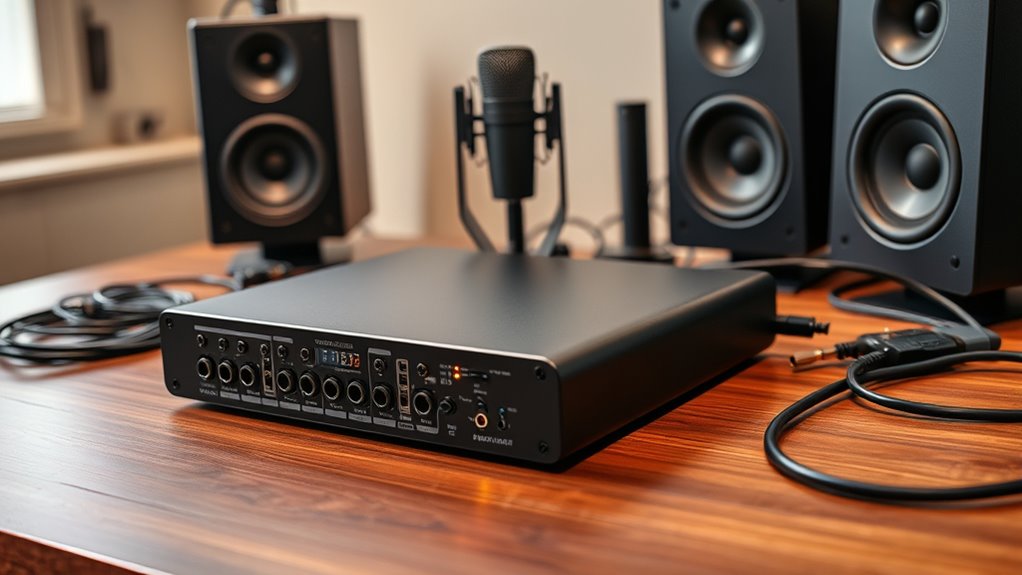

If you’re seeking the best professional audio interfaces for crystal-clear sound in 2025, I’ve found top models like Focusrite Scarlett series, M-Audio M-Track, Mackie Onyx, and Universal Audio Apollo Twin excel with high-resolution recording, low latency, and high-quality preamps. These units support multiple inputs, advanced connectivity options, and studio-grade sound for professionals and enthusiasts alike. Keep exploring to discover which one suits your needs and how they can upgrade your audio setup.
Key Takeaways
- Look for interfaces supporting at least 24-bit/192kHz resolution with 110dB+ dynamic range for pristine audio quality.
- Prioritize models with high-quality converters, premium preamps, and analog enhancements like 4K or RedNet-grade components.
- Choose interfaces with multiple inputs/outputs, balanced connections, and comprehensive MIDI/ digital I/O for versatile professional setups.
- Opt for durable, portable designs with intuitive controls, zero-latency monitoring, and seamless compatibility across DAWs and devices.
- Consider software bundles, expandability, and long-term build quality to ensure sustained, studio-grade performance in 2025.
Focusrite Scarlett 2i2 4th Gen USB Audio Interface

If you’re looking for a versatile and reliable audio interface for professional-quality recording, the Focusrite Scarlett 2i2 4th Gen is an excellent choice. It supports microphones, guitars, and offers essential software for music creation. With a 120dB dynamic range and top-tier converters, it delivers studio-quality sound. The new mic preamps, Auto Gain, and Clip Safe features help achieve ideal levels effortlessly. Plus, the Air mode enhances vocals and guitars for a richer sound. All-in-one, it includes industry-leading software like Pro Tools Intro+ and Ableton Live Lite, making it perfect for musicians, streamers, and podcasters seeking professional results in a compact package.
Best For: musicians, streamers, podcasters, and home studio enthusiasts seeking professional-quality recordings in a compact, user-friendly interface.
Pros:
- Studio-quality sound with 120dB dynamic range and high-grade converters
- Includes essential software like Pro Tools Intro+ and Ableton Live Lite for immediate music creation
- User-friendly features such as Auto Gain, Clip Safe, and Air mode for enhanced recording and sound quality
Cons:
- Limited to two input channels, which may restrict larger recording setups
- Requires USB connection, which might be less flexible for some studio configurations
- Included software may require registration or subscriptions for full features
Focusrite Scarlett Solo 3rd Gen USB Audio Interface
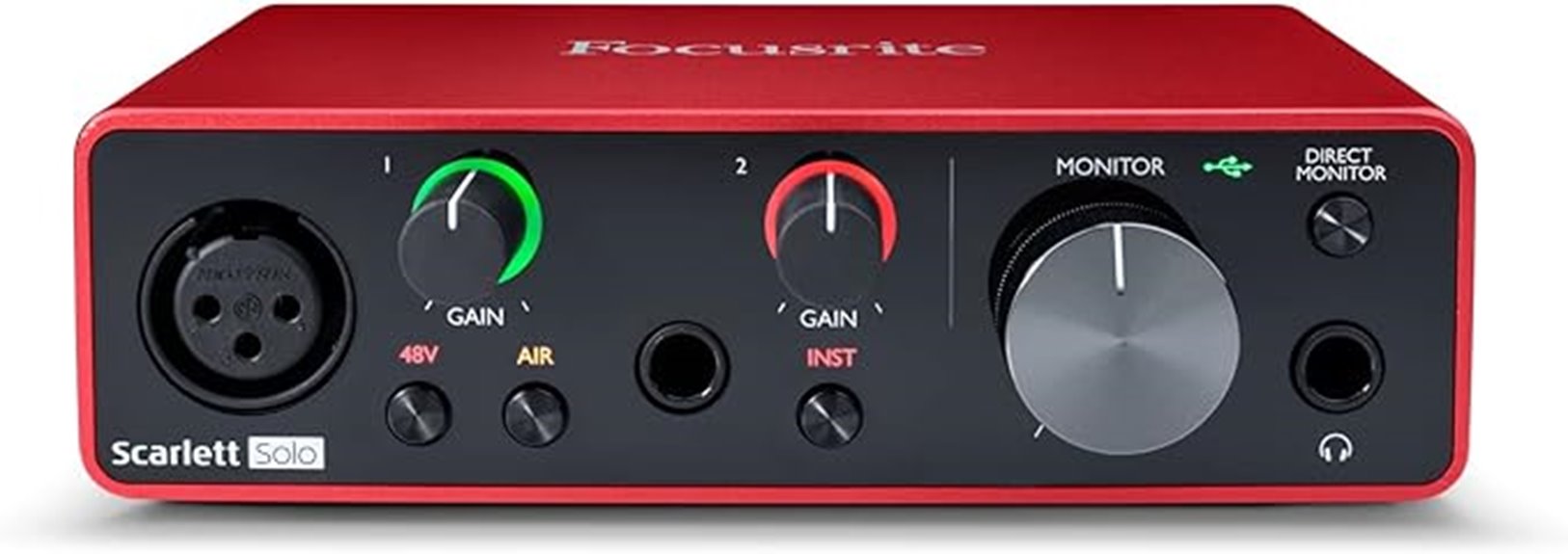
The Focusrite Scarlett Solo 3rd Gen USB Audio Interface is an excellent choice for musicians, podcasters, and home recording enthusiasts seeking professional-level sound quality in a compact package. It delivers studio-quality recordings with high-performing mic pre-amps and switchable Air mode, adding extra clarity to vocals and acoustic instruments. The two high-headroom instrument inputs ensure clean, distortion-free recordings. Supporting up to 24-bit/192kHz, it preserves sonic detail and fidelity. Pristine playback is possible through low-noise balanced outputs and a headphone jack for private listening. Plus, with bundled software like Pro Tools Intro+ and Ableton Live Lite, you can start creating immediately with ease and confidence.
Best For: musicians, podcasters, and home recording enthusiasts seeking professional-quality sound in a compact and user-friendly interface.
Pros:
- High-quality studio-grade recording with 24-bit/192kHz support
- Includes comprehensive software suite for immediate music creation
- Easy to set up and operate, suitable for various recording environments
Cons:
- Limited inputs and outputs may not suit complex recording setups
- No built-in MIDI interface for connecting keyboards or controllers
- Some users may find the bundled software less extensive compared to full DAWs
Focusrite Scarlett Solo 4th Gen USB Audio Interface
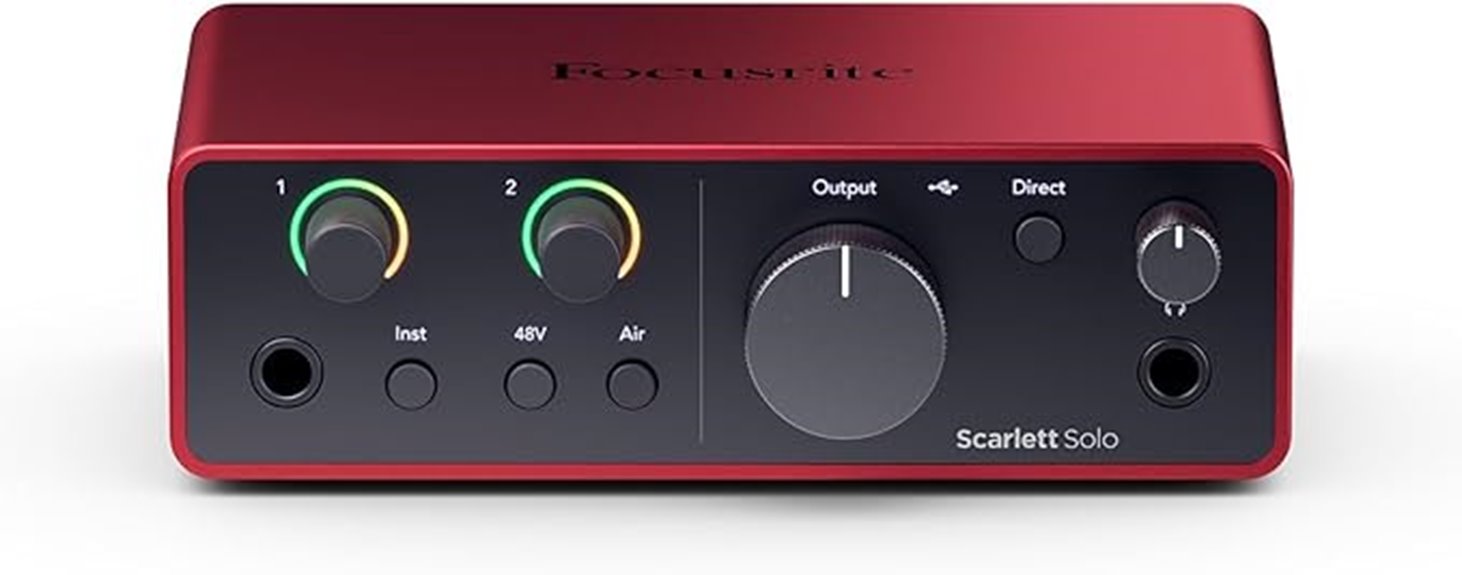
For musicians and producers seeking high-quality recordings without the bulk or complexity of larger interfaces, the Focusrite Scarlett Solo 4th Gen USB Audio Interface stands out. It offers a 120dB dynamic range and uses the same high-end converters as Focusrite’s flagship models, ensuring professional studio sound. The Air mode adds presence and harmonic richness to vocals and guitars, elevating your recordings. Its compact design makes it perfect for on-the-go setups, and it’s compatible with popular software like Pro Tools, Ableton Live Lite, and FL Studio. With everything included—hardware, software, and plugins—it’s an excellent choice for achieving crystal-clear sound at home or in the studio.
Best For: musicians, vocalists, and producers seeking high-quality, portable recording solutions with professional sound in a compact design.
Pros:
- Delivers studio-quality sound with a 120dB dynamic range and high-end converters
- Includes Air mode to enhance vocals and guitars with harmonic richness
- Comes with comprehensive software packages including Pro Tools Intro+, Ableton Live Lite, and FL Studio Producer Edition
Cons:
- Limited input options may not suit multi-instrument or complex recording setups
- May require additional hardware or software for advanced production needs
- Compact design might lack some features found in larger, more versatile interfaces
M-AUDIO M-Track Solo USB Audio Interface for Recording and Streaming

The M-AUDIO M-Track Solo USB Audio Interface stands out as an ideal choice for solo creators and content producers seeking high-quality sound without complexity. It offers a single combo XLR/Line input with phantom power, perfect for microphones and line signals, plus a Line/Instrument input for guitars or bass. The interface supports 48 kHz audio resolution, ensuring crisp, professional sound. Its zero-latency monitoring feature makes live recording seamless, while the crystal preamp guarantees transparent mic quality. Additionally, it includes MPC Beats software from Akai, giving users essential production tools. Compact and versatile, it’s a reliable solution for recording, streaming, and podcasting.
Best For: solo content creators, musicians, and podcasters seeking high-quality, easy-to-use audio recording and streaming solutions.
Pros:
- Compact and portable design for easy setup and transport
- Zero-latency monitoring for real-time audio feedback
- Includes MPC Beats software with essential production tools from Akai
Cons:
- Limited input channels, suitable mainly for single-source recording
- May require additional equipment for advanced audio setups
- No built-in effects or advanced mixing features
M-AUDIO M-Track Duo USB Audio Interface
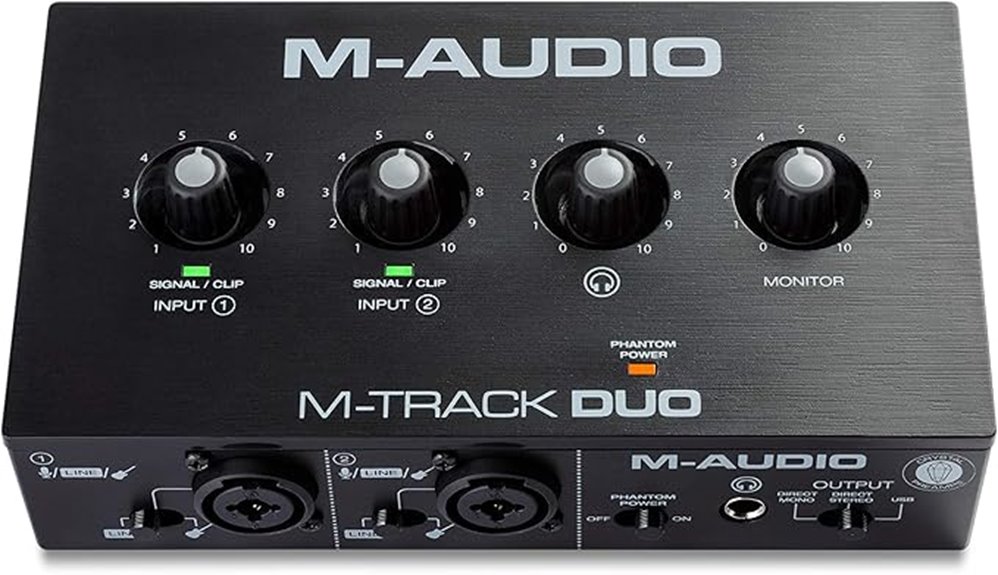
If you’re a musician, podcaster, or streamer seeking high-quality sound in a portable package, the M-AUDIO M-Track Duo USB Audio Interface is an excellent choice. It offers crystal-clear 24-bit/48 kHz audio, perfect for recording, streaming, or live performance. Its compact design includes two combo inputs for microphones, instruments, or line-level devices, with phantom power for vocals and mics. Zero-latency direct monitoring via stereo outputs and a headphone jack ensure smooth recording sessions. USB-powered and compatible with Mac, PC, and iOS devices, it’s versatile and ready to go, making professional-quality audio accessible anywhere you record or stream.
Best For: musicians, podcasters, and streamers who need a portable, high-quality audio interface for recording, streaming, and live performances.
Pros:
- Offers crystal-clear 24-bit/48 kHz audio resolution for professional-quality sound
- Compact, portable design with versatile combo inputs and phantom power for microphones and instruments
- Zero-latency direct monitoring and multiple outputs for seamless recording and monitoring
Cons:
- Discontinued by the manufacturer, which may affect long-term support and warranty options
- May require additional adapters for certain headphones or devices with different connectors
- Limited to 48 kHz sample rate, which might not meet the needs of high-resolution audio professionals
Solid State Logic SSL 2 MKII – 2×2 USB Audio Interface
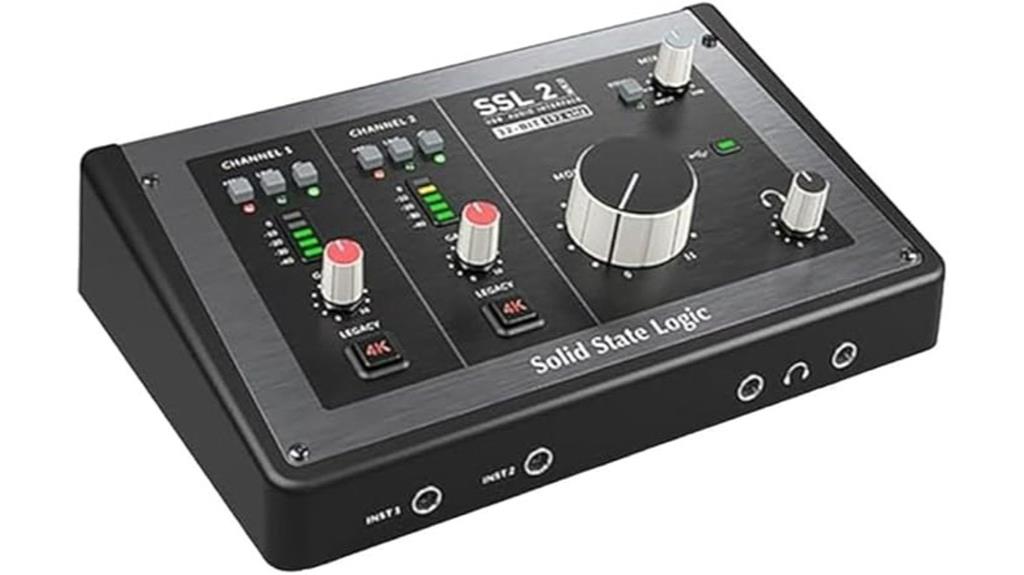
The Solid State Logic SSL 2 MKII stands out as an excellent choice for producers, podcasters, and musicians seeking high-quality audio in a compact, bus-powered interface. It offers two XLR microphone preamps, two line/Hi-Z inputs, and multiple outputs, including headphone and MIDI connections. The 32-bit/192 kHz AD/DA converters guarantee crystal-clear sound, while legacy 4K analog enhancement adds warmth and clarity. Zero-latency monitoring, high-pass filters, and stereo loopback provide versatile control for streaming and recording. Plus, the SSL Production Pack software bundle supplies essential tools for production and editing, making it a versatile, professional-grade interface for any setup.
Best For: musicians, podcasters, and producers seeking high-quality, compact audio recording with versatile connectivity and professional features.
Pros:
- High-resolution 32-bit / 192 kHz AD/DA converters deliver crystal-clear audio quality
- Includes legacy 4K analog enhancement for richer sound and warmth
- Multiple outputs and MIDI I/O provide comprehensive connectivity options
Cons:
- Limited to 2 input channels, which may not suffice for larger recording setups
- No built-in DSP or advanced onboard effects
- Compact design may lack some advanced features found in larger interfaces
Focusrite Scarlett 18i20 4th Gen USB Audio Interface
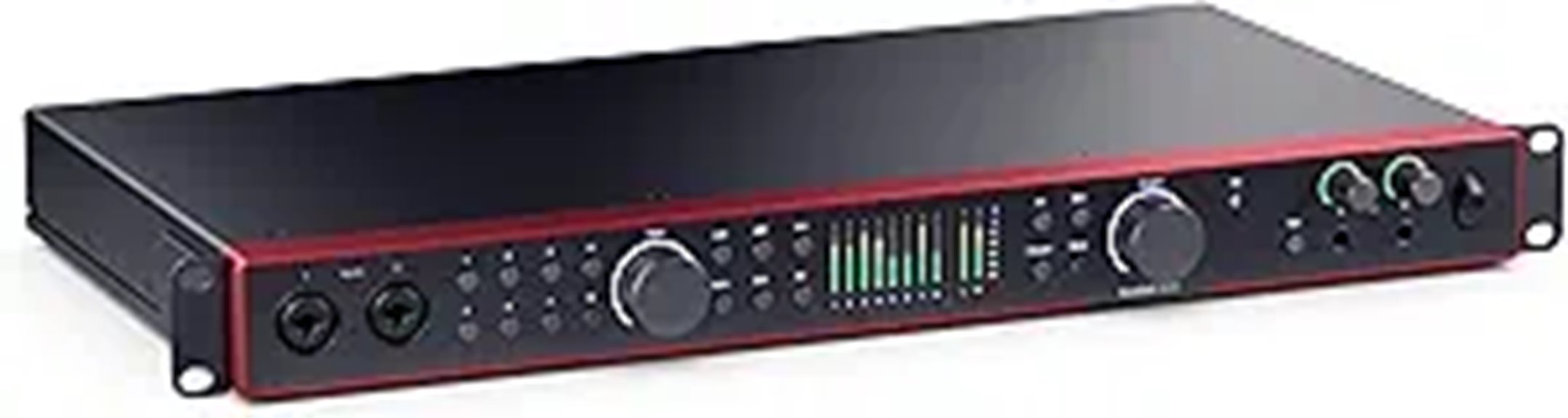
For musicians and producers seeking versatile, high-quality multitrack recording, the Focusrite Scarlett 18i20 4th Gen USB audio interface stands out with its industry-leading 18 inputs and 20 outputs. It features eight 4th Gen mic preamps with 69dB gain, Hi-Z, line inputs, ADAT, S/PDIF, MIDI I/O, and Word Clock, all powered by 24-bit, 192kHz converters from the RedNet range. Designed for detailed recordings, it adds studio character with Air modes that mimic classic console harmonic drive. Its intuitive controls, Auto Gain, and Clip Safe help optimize workflow, making it ideal for project studios and professional setups alike.
Best For: musicians, producers, and project studios seeking versatile, high-quality multitrack recording with professional connectivity and advanced workflow tools.
Pros:
- Industry-leading 18 inputs and 20 outputs for extensive recording options
- High-quality 24-bit, 192kHz converters from RedNet range for detailed sound
- Intuitive controls with Auto Gain, Clip Safe, and Air modes for streamlined workflow
Cons:
- Larger physical size may require ample space in setup
- USB 2.0 interface may limit maximum data transfer speeds compared to newer standards
- Premium price point could be a consideration for budget-conscious users
MAONO USB Audio Interface for PC (PS22 Lite Black)

The MAONO USB Audio Interface for PC (PS22 Lite Black) stands out as an ideal choice for content creators and musicians seeking high-quality, versatile audio solutions in a compact design. It delivers high-resolution recording at 24-bit/192kHz with a dynamic range of 106dB, ensuring clear, realistic sound. Suitable for music production, podcasting, voice-overs, and streaming, it handles both condenser and dynamic microphones, offering up to 56dB preamp gain and 48V phantom power. Its dedicated instrument input and adjustable impedance make guitar and vocal recording seamless. The intuitive, plug-and-play setup works with Mac, Windows, and iPads, making it perfect for beginners and pros alike.
Best For: content creators, musicians, and streamers seeking high-quality, versatile audio recording in a compact, user-friendly device.
Pros:
- High-resolution recording at 24-bit/192kHz with a dynamic range of 106dB for clear, professional sound
- Compatible with multiple platforms including Mac, Windows, and iPads, and works seamlessly with popular DAWs
- Dedicated instrument input with adjustable impedance and phantom power for versatile recording of microphones and instruments
Cons:
- Does not have built-in effects like noise reduction, reverb, or delay; requires VST plugins for such features
- Limited to basic control features; advanced routing options may require additional software setup
- Compact design may lack some advanced features found in larger, more professional audio interfaces
PreSonus Studio 24c 2×2 USB Audio Interface with Studio One Software
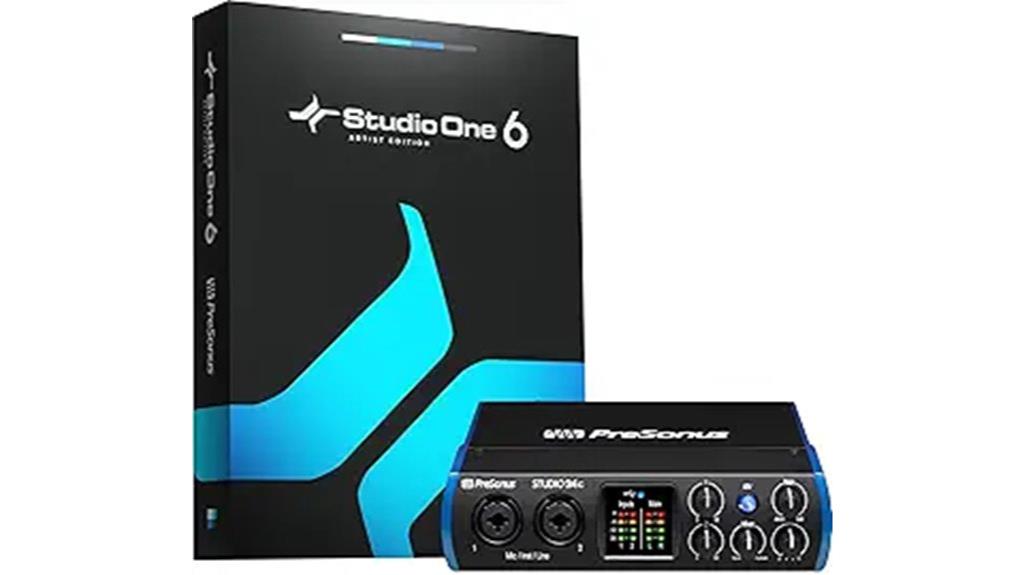
If you’re setting up a home or project studio and need a reliable interface with professional-grade preamps, the PreSonus Studio 24c 2×2 is an excellent choice. It offers two combo inputs with XMAX-L preamps, supporting 24-bit resolution at multiple sample rates up to 192 kHz. The device features balanced main outputs, a high-power headphone output, and MIDI ports, all controlled via easy-to-use knobs and LED meters for precise monitoring. Connectivity is seamless with USB-C and USB-A options. Plus, it includes Studio One 6 Artist Edition, giving you powerful DAW capabilities right out of the box for crystal-clear recordings.
Best For: Home studio owners and project musicians seeking a reliable, high-quality audio interface with professional preamps and seamless DAW integration.
Pros:
- High-quality XMAX-L preamps deliver clear, professional sound.
- Supports a wide range of sample rates up to 192 kHz for versatile recording options.
- Includes Studio One 6 Artist Edition, providing a powerful DAW right out of the box.
Cons:
- Limited to 2 inputs and 2 outputs, which may not suit larger recording setups.
- No built-in DSP or onboard effects for real-time processing.
- May require additional hardware or software for advanced routing or mixing features.
Arturia MiniFuse 2 Compact USB Audio & MIDI Interface
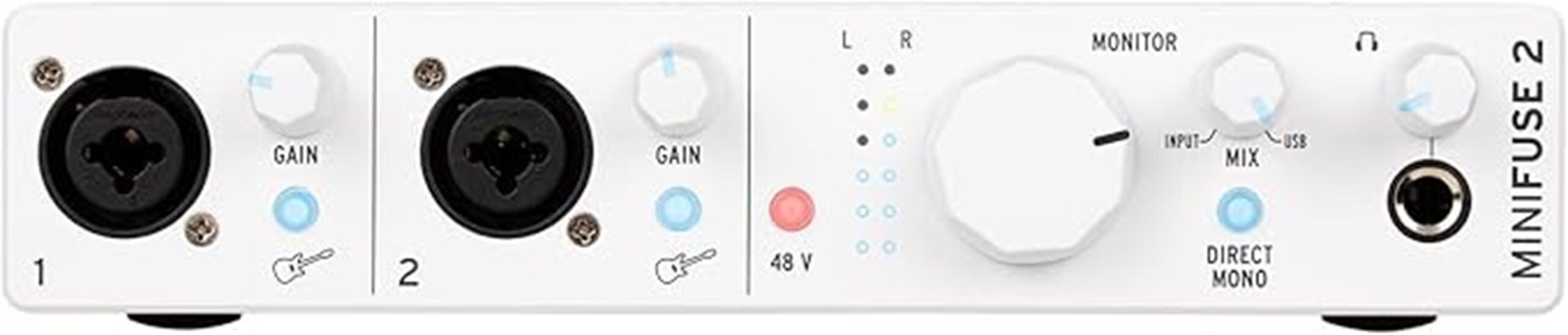
Designed with portability and ease of use in mind, the Arturia MiniFuse 2 is an ideal choice for musicians, content creators, and performers who need reliable, high-quality audio on the go. Its compact design makes it perfect for recording anywhere, from home studios to outdoor sessions, thanks to a quick plug-and-play setup. With top-tier audio specs, it offers clear sound for vocals, guitar, and synths, plus versatile inputs and outputs, including MIDI. Built for durability with a 5-year warranty, MiniFuse 2 also includes helpful software like Ableton Live Lite and Analog Lab Intro, making it a powerful and user-friendly tool for creative professionals.
Best For: musicians, content creators, and performers seeking a portable, high-quality audio and MIDI interface for recording, producing, and performing anywhere.
Pros:
- Compact, lightweight design for easy portability and on-the-go use
- High-quality audio specifications for clear sound across vocals, guitar, and synths
- Includes comprehensive software bundle with Ableton Live Lite, Analog Lab Intro, and more
Cons:
- Limited input channels may not suit larger or more complex studio setups
- No built-in DSP effects or onboard processing for real-time sound shaping
- Requires a computer or compatible device for operation, limiting standalone use
FIFINE Gaming Audio Mixer for Streaming and Recording

For streamers and content creators seeking a versatile and user-friendly audio solution, the FIFINE Gaming Audio Mixer stands out with its four independent channels and dedicated controls. It offers an XLR microphone input with 48V phantom power, perfect for upgrading to higher-quality condenser mics—though it doesn’t support USB mics. The four channels—Microphone, Line In, Headphone, and Line Out—each have volume sliders for precise control. Front-mounted mute and monitor buttons make live adjustments easy, while support for sound effects and voice-changing modes adds creative flexibility. Its RGB lighting enhances streaming visuals, and the plug-and-play design ensures effortless setup across multiple platforms and devices.
Best For: streamers, content creators, and podcasters seeking an easy-to-use, versatile audio mixer with professional-quality controls and customizable features.
Pros:
- Offers four independent channels with individual volume controls for precise audio management.
- Supports XLR condenser microphones with 48V phantom power for higher-quality sound.
- Features customizable sound effects, voice-changing modes, and RGB lighting to enhance creative expression and streaming aesthetics.
Cons:
- Does not include XLR cables; users need to purchase them separately for optimal setup.
- Limited to condenser microphones and incompatible with USB mics.
- The RGB lighting, while visually appealing, may be distracting to some users during live streams.
M-AUDIO AIR 192|14 USB-C Audio Interface for Studio Recording
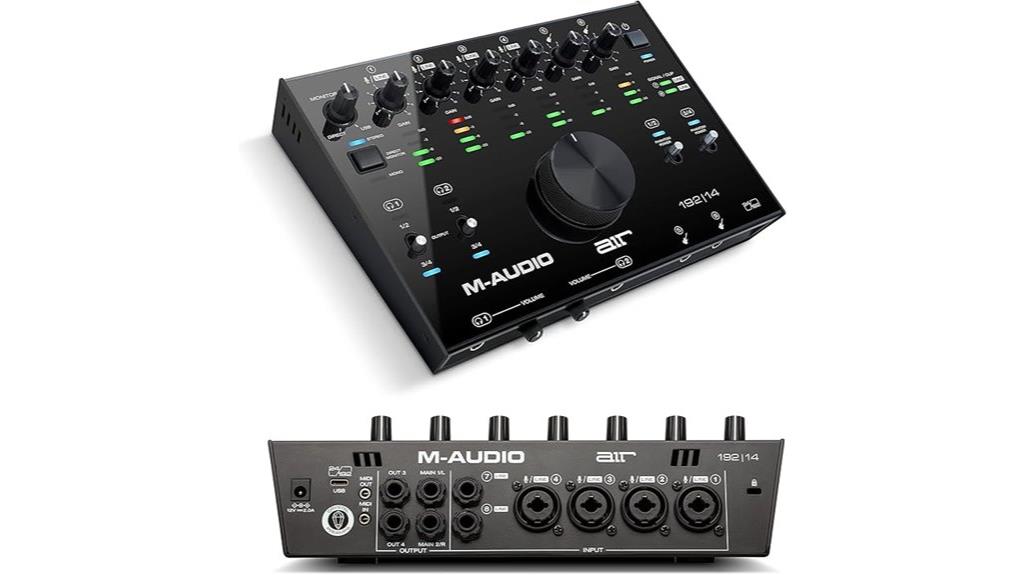
The M-Audio AIR 192|14 USB-C audio interface stands out as an excellent choice for professional studio musicians and producers seeking high-fidelity recording capabilities. It delivers 24-bit/192kHz resolution with crystal preamps and ultra-pristine AD converters, ensuring exceptional sound quality. With four combo inputs, two instrument lines, and versatile outputs, it supports complex setups. The rugged metal chassis includes easy-to-use volume controls, VU meters, and zero-latency direct monitoring. Compatible with both USB-C and USB, it’s designed for durability and seamless integration with major DAWs. Overall, it’s a reliable, feature-rich interface that elevates any professional recording environment.
Best For: professional studio musicians and producers seeking high-quality, versatile audio recording and seamless DAW integration.
Pros:
- 24-bit/192kHz resolution with premium components for exceptional audio clarity
- Multiple input options including 4 combo inputs, 2 instrument, and 2 line inputs for versatile setups
- Durable metal chassis with easy-to-use controls and zero-latency direct monitoring
Cons:
- Slightly bulky design may not be ideal for portable use
- Requires USB-C or USB connection, which might necessitate adapters for some systems
- Higher price point compared to entry-level audio interfaces
Mackie Onyx Producer 2X2 USB Audio Interface

If you’re seeking a reliable and portable audio interface that delivers professional-quality sound, the Mackie Onyx Producer 2×2 USB stands out as an excellent choice. It offers high-resolution 24-bit/192kHz recording with premium Mackie analog circuitry and durable hardware. The two Onyx mic preamps provide exceptional fidelity, with +48V phantom power for studio condensers. It accepts mic, line, and instrument sources via combo inputs, with zero-latency direct monitoring. USB 2.0 guarantees fast data transfer and bus-powered operation. Compact and rugged, it’s perfect for both studio and mobile setups, making it a versatile tool for musicians, producers, and content creators alike.
Best For: musicians, producers, and content creators seeking a portable, high-fidelity audio interface for studio or mobile recording setups.
Pros:
- High-resolution 24-bit/192kHz recording for professional-quality sound
- Durable, portable design ideal for mobile and studio use
- Includes boutique-quality Onyx mic preamps with +48V phantom power
Cons:
- Limited to two inputs, which may not suit larger recording setups
- No built-in DSP or advanced onboard processing features
- Compatibility primarily focused on Windows; Mac support may require additional drivers
Universal Audio Apollo Twin X DUO Gen 2 Thunderbolt 3 Audio Interface

The Universal Audio Apollo Twin X DUO Gen 2 Thunderbolt 3 stands out as an ideal choice for home studio owners and professional producers who demand top-tier sound quality and real-time processing. It features Unison preamps that emulate classic consoles like Neve and API, delivering authentic analog tones. With access to over 200 DSP and Native plug-ins, including iconic reverb and compression effects, it offers unmatched flexibility. Its room correction and monitor calibration ensure accurate mixing, whether through speakers or headphones. The auto-gain feature simplifies level management, helping prevent clipping. Overall, this interface combines professional-grade sound, versatile features, and user-friendly controls for superior music production.
Best For: home studio owners and professional producers seeking high-quality sound, real-time processing, and versatile monitoring options for music production and mixing.
Pros:
- Emulates classic analog consoles with Unison preamps for authentic tones
- Access to over 200 UAD DSP and Native plug-ins for extensive processing
- Equipped with room correction and monitor calibration for accurate mixing
Cons:
- Premium price point may be a barrier for beginners or budget-conscious users
- Limited to Thunderbolt 3 connectivity, requiring compatible hardware and cables
- May require some learning curve to fully utilize all advanced features and plug-ins
Factors to Consider When Choosing Professional Audio Interfaces
When choosing a professional audio interface, I focus on several key factors to guarantee it meets my needs. Things like connectivity options, sound quality standards, and software compatibility are vital, but I also consider portability, size, and the quality of preamps and inputs. Understanding these points helps me find an interface that balances performance and practicality.
Connectivity Options
Choosing the right professional audio interface hinges on understanding its connectivity options, which must match your equipment and workflow. You need to guarantee it has the necessary input and output connections like XLR, TRS, MIDI, and digital I/O to suit your gear. It’s also vital that the interface supports multiple connection types such as USB, Thunderbolt, or USB-C for compatibility with your computer or device. Direct monitoring options are essential to reduce latency during recording, so check if they’re included. Additionally, consider whether the interface offers both analog and digital connections for seamless integration with external gear and studio systems. Finally, your workflow—whether studio recording, live streaming, or mobile use—should inform your choice of connectivity options to keep everything running smoothly.
Sound Quality Standards
High sound quality is essential for professional audio interfaces, and supporting at least 24-bit resolution with a 96kHz sample rate is a baseline requirement to deliver clear, detailed audio. Beyond that, converters with a dynamic range of 110dB or higher are indispensable for capturing nuanced sounds accurately. High-quality preamps ensure clean gain with minimal noise and distortion, especially for microphones and instruments. The quality of analog-to-digital and digital-to-analog converters plays a significant role in the clarity and precision of recordings and playback. Additionally, well-designed circuitry and effective shielding are key to minimize electromagnetic interference, preserving signal integrity and ensuring consistent, professional-level sound performance. These standards collectively define the foundational quality that separates good interfaces from truly professional-grade equipment.
Software Compatibility
Selecting a professional audio interface requires careful attention to software compatibility, as it guarantees smooth operation within your digital environment. First, check that the interface supports your operating system—Windows, macOS, or iOS—to guarantee seamless integration. Next, verify that it works with your preferred DAWs, and that drivers are compatible to prevent latency issues or crashes. Support for standard audio protocols like ASIO, Core Audio, or WASAPI is essential for reliable performance. Additionally, examine whether bundled software, plugins, or virtual instruments will function with your current setup. Finally, consider how well the interface’s control and routing software integrate with your music production or streaming platforms. Ensuring compatibility across these areas minimizes setup headaches and maximizes your workflow efficiency.
Portability & Size
When evaluating an audio interface, considering its size and portability can make a significant difference in how you use it. Smaller, lightweight models are ideal for on-the-go recording, fitting easily into bags or backpacks. They save space in crowded or mobile setups, making quick setup and tear-down effortless. Larger interfaces often provide more inputs and outputs but tend to be bulkier and less convenient for mobile use. Durability also plays a role; compact, rugged units offer better protection during transport. Choosing a portable interface means you can record anywhere without sacrificing sound quality or connectivity. If mobility and space-saving are priorities, a smaller, lightweight design will serve you best, ensuring flexibility and convenience without compromising on professional audio standards.
Preamps & Inputs
Choosing the right preamps and inputs is essential because they directly influence the clarity and fidelity of your recordings. High-quality preamps ensure your sound is detailed, with minimal noise and distortion, which is crucial for professional results. The number and type of inputs—like XLR, TRS, or Hi-Z—determine how many sources you can record simultaneously and the versatility you have. Preamps with higher gain and better headroom provide more dynamic range, reducing the risk of clipping during loud recordings. Additionally, features like phantom power are vital for condenser microphones, guaranteeing they receive enough power for ideal performance. Overall, the quality of inputs and preamps plays a significant role in achieving crystal-clear sound and professional-grade recordings.
Budget Considerations
Budget considerations are a crucial factor when investing in a professional audio interface, as they help you set realistic expectations for features and quality within your financial limits. First, determine your overall budget to understand what’s feasible. Remember to factor in additional costs like microphones, monitors, or plugins that you’ll need to complement the interface. It’s essential to balance your budget with key features such as the number of inputs and outputs, resolution, and device compatibility; this prevents overspending on unnecessary options. Keep in mind that higher-priced models often provide better preamp quality, lower latency, and more durable build, which can be a worthwhile investment. Finally, consider the long-term value and upgrade potential, opting for a device that can grow with your evolving recording needs.
Frequently Asked Questions
How Does Latency Impact Professional Audio Recording Quality?
Latency can considerably impact my recording quality because it causes delays between playing or singing into my interface and hearing the output. High latency makes tracking feel disconnected and can throw off my timing, while low latency ensures I get real-time feedback, keeping my performance tight. To achieve professional results, I always look for audio interfaces with minimal latency, so my recordings sound natural and polished.
What Are the Best Connectivity Options for Live Streaming?
For live streaming, I recommend using a wired Ethernet connection for the most stable and low-latency experience. Wi-Fi can work, but it’s prone to interruptions and delays. If possible, connect directly via Ethernet, and guarantee your internet speed is fast enough for high-quality streams. Additionally, using a dedicated streaming device or PC with a reliable USB or Thunderbolt audio interface can markedly improve sound quality and reduce lag.
How Do Preamp Quality and Gain Affect Sound Clarity?
Preamp quality and gain directly impact my sound clarity by ensuring my signals are clean and well-balanced. High-quality preamps reduce noise and distortion, making my recordings sound professional. Proper gain settings help me avoid clipping or weak signals, maintaining clarity across all frequencies. When I use premium preamps, I notice my voice and instruments come through crisp, detailed, and natural, which is essential for professional-quality audio.
Can Audio Interfaces Handle Multiple Instrument Inputs Simultaneously?
Think of an audio interface as a busy highway, seamlessly handling multiple lanes of traffic. Yes, most modern interfaces can handle multiple instrument inputs at once, acting like skilled traffic controllers. This allows me to record guitars, keyboards, and vocals simultaneously without missing a beat. I look for interfaces with enough inputs and good preamp quality, ensuring every signal flows smoothly and crystal-clear, no matter how many instruments I throw into the mix.
What Maintenance Practices Ensure Long-Term Audio Interface Performance?
To guarantee my audio interface performs well long-term, I regularly keep it clean and dust-free, especially the ports and vents. I also avoid exposing it to extreme temperatures or moisture. I check for software updates and back up settings often. Additionally, I disconnect it when not in use to prevent static or power surges. Proper handling and periodic maintenance keep my setup sounding crisp and reliable over time.
Conclusion
Choosing the right audio interface is like finding the perfect key to access your sound’s full potential. Whether you’re just starting out or aiming for professional clarity, these options are your trusted toolkit. Think of each interface as a different bridge — connecting your creativity to crystal-clear sound. With the right choice, you’ll turn your recordings into a smooth, flowing river of quality that truly resonates. Your perfect sound awaits—just pick the right bridge and start creating.