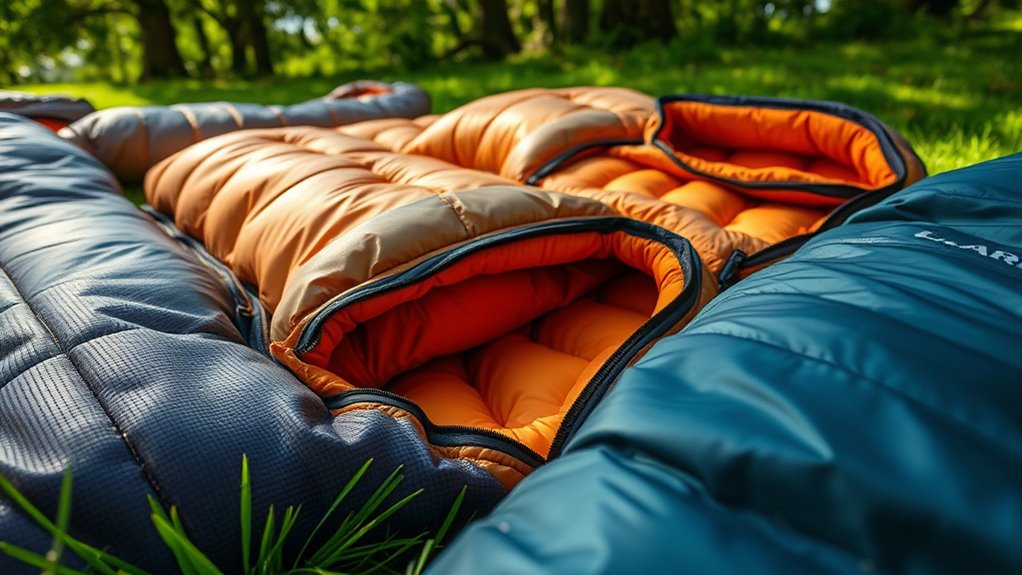

Shopping for premium backpacking sleeping bags means balancing three things that rarely coexist: low packed weight, reliable temperature performance, and a price that doesn’t wreck your gear budget. The Mountain Hardwear Phantom 15 takes the top spot as best overall because its 800-fill down construction delivers serious cold-weather warmth at a weight most competitors can’t match. If ounces matter more than everything else, the Sea to Summit Spark is the ultralight standout, while the Kelty Cosmic 20 Down offers the best entry point into down insulation without the premium price tag. The main tradeoff in this category is down versus synthetic — down wins on warmth-to-weight and compressibility, but synthetic fill like the Kelty Cosmic Synthetic and TETON Celsius handles damp conditions better. Read on for the full breakdown of all 13 bags.

Get business pricing on tech for your team
- Business-only prices and quantity discounts
- Tax-exempt purchasing
- Multiple users, one account, clear invoices
Complete the kit

Key Takeaways
- The Mountain Hardwear Phantom 15 won best overall because its 800-fill down and full-length zipper put it a full tier above mid-fill bags like the Naturehike 650 and Kelty Cosmic 20 in warmth-to-weight.
- The lineup splits cleanly into three tiers: summit-tier ultralights (Sea to Summit Spark, Big Agnes Torchlight EXP), versatile all-rounders (Phantom, Marmot Sawtooth), and budget-friendly starters (TETON LEEF, Celsius, OneTigris) — and paying more mostly buys weight savings, not warmth.
- Adjustable systems proved to be a hidden differentiator: the Big Agnes Torchlight EXP’s expandable girth makes it one of the few premium bags that fits both side sleepers and ultralight minimalists without buying two bags.
- TETON dominates the affordable end with four entries (Celsius, TrailHead, ALTOS, LEEF), but none of them compress as small as the down options — a dealbreaker for anyone with a small pack.
- Synthetic fill bags in this comparison cost meaningfully less and insulate when wet, but every one of them weighs roughly double the equivalent down bag, which is why they rank lower for true backpacking despite strong value.
| Mountain Hardwear Phantom 15 Sleeping Bag |  | Best Premium Pick | Fill: 800-fill goose down | Shell: 10D recycled nylon | Lining: 20D nylon taffeta | VIEW ON AMAZON | See Our Full Breakdown |
| TETON Sports Celsius Sleeping Bag |  | Best for Family Camping Value | Lining: Poly-flannel | Insulation: Innovative fiber fill | Construction: Double-layer with draft tubes | VIEW ON AMAZON | See Our Full Breakdown |
| TETON Sports TrailHead Ultralight 20°F Mummy Sleeping Bag |  | Best for Budget Backpackers | Fill: Synthetic microfiber | Shell: Ripstop polyester | Liner: Soft double-brushed microfiber | VIEW ON AMAZON | See Our Full Breakdown |
| Marmot Men’s Sawtooth Sleeping Bag |  | Best Versatile Down Comfort | Insulation: 650-fill-power down with Down Defender | Fabric: 100% recycled nylon shell and lining | Zippers: Dual side zippers; zippered footbox | VIEW ON AMAZON | See Our Full Breakdown |
| Kelty Cosmic Synthetic Fill 20 Degree Backpacking Sleeping Bag |  | Best Value Synthetic for Damp Trails | Insulation: Cirroloft synthetic | Fill Weight: 30.5 oz | Total Weight: 2 lbs 13 oz | VIEW ON AMAZON | See Our Full Breakdown |
| Naturehike Down Sleeping Bag, 650 Fill Power, RDS-Certified Duck Down |  | Best Value Down Upgrade | Fill Power: 650 | Fill Weight: 700 g | Down Content: 85% duck down | VIEW ON AMAZON | See Our Full Breakdown |
| QEZER 3-Season Down Sleeping Bag for Adults |  | Best for Warm-Weather Thru-Hiking | Insulation: 1.1 lb duck down | Fill Power: 600 | Weight: 1.9 lb | VIEW ON AMAZON | See Our Full Breakdown |
| TETON Sports ALTOS Lightweight Mummy Sleeping Bag for Adults |  | Best for Broad-Shouldered Sleepers | Brand: TETON Sports | Material: Nylon | Shape: Mummy with roomy cut | VIEW ON AMAZON | See Our Full Breakdown |
| TETON Sports LEEF Lightweight Mummy Sleeping Bag |  | Best Temperature Flexibility for the Price | Brand: TETON Sports | Type: Mummy sleeping bag | Material: Polyester | VIEW ON AMAZON | See Our Full Breakdown |
| Kelty Cosmic 20 Down Mummy Sleeping Bag for Backpacking and Camping |  | Best Premium All-Rounder | Fill Power: 550 FP RDS-certified duck down | Weight: 2 lbs 6 oz (regular) | Stuffed Size: 13 × 7 in | VIEW ON AMAZON | See Our Full Breakdown |
| Big Agnes Torchlight EXP Ultralight Sleeping Bag |  | Best for Adaptive Fit | Fill: 650-fill DownTek PFC-free water-resistant down | Shell Material: 20D recycled polyester ripstop, PFAS-free water-repellent finish | Lining: 20D recycled polyester taffeta | VIEW ON AMAZON | See Our Full Breakdown |
| Sea to Summit Spark Ultralight Down Sleeping Bag |  | Best Ultralight Premium Pick | Fill Material: 850+ fill power down, RDS certified, Ultra-Dry treated | Shell Material: 10D nylon with PFC-free DWR | Shape: Mummy | VIEW ON AMAZON | See Our Full Breakdown |
| OneTigris Bushcrafter’s Mummy Sleeping Bag |  | Best Budget Camp Comfort | Season: 3-season (mild conditions) | Temperature Range: 46.4–59°F (8–15°C) | Outer Shell: 300T pongee, water-repellent | VIEW ON AMAZON | See Our Full Breakdown |
| premium backpacking sleeping bag | Shape |
|---|---|
| Mountain Hardwear Phantom 15 S | Mummy |
| TETON Sports Celsius Sleeping | — |
| TETON Sports TrailHead Ultrali | Mummy |
| Marmot Men’s Sawtooth Sleeping | — |
| Kelty Cosmic Synthetic Fill 20 | — |
| Naturehike Down Sleeping Bag | Semi-rectangular |
| QEZER 3-Season Down Sleeping B | Mummy |
| TETON Sports ALTOS Lightweight | Mummy with roomy cut |
| TETON Sports LEEF Lightweight | — |
| Kelty Cosmic 20 Down Mummy Sle | — |
| Big Agnes Torchlight EXP Ultra | Mummy, expandable up to 10 inches of girth |
| Sea to Summit Spark Ultralight | Mummy |
| OneTigris Bushcrafter’s Mummy | — |
More Details on Our Top Picks
Mountain Hardwear Phantom 15 Sleeping Bag
This is the bag that justifies the word premium in this roundup. The 800-fill goose down delivers a warmth-to-weight ratio nothing else in this lineup matches — the Marmot Sawtooth uses 650-fill down, and even the Naturehike 650-fill bag sits a full tier below in loft and compressibility. The four-chamber hood, draft collar, and down-filled face gasket translate directly into retained heat on alpine nights where a 15°F rating actually means something.
The tradeoffs are real, though. That delicate 10D shell demands careful handling around rock and crampons, and down loses its edge in sustained wet weather — the Kelty Cosmic Synthetic handles dampness better for a fraction of the performance pedigree. The mummy cut also punishes restless sleepers.
Pros:- 800-fill down delivers top-tier warmth-to-weight and compressibility
- Serious cold-weather sealing: draft collar, face gasket, four-chamber hood
- Lightweight recycled shell trims packed bulk
- True winter-rated design for mountaineering use
Cons:- Featherweight 10D shell snags and abrades easily
- Down collapses when wet — poor fit for sustained damp climates
- Performance mummy cut restricts movement for side and restless sleepers
Best for: Alpinists and winter backpackers who need genuine 15°F warmth at minimal weight and will treat fragile fabrics with care
Not ideal for: Budget-conscious campers or side sleepers — the premium price buys performance most three-season users never tap, and the trim mummy cut feels restrictive
- Fill:800-fill goose down
- Shell:10D recycled nylon
- Lining:20D nylon taffeta
- Shape:Mummy
- Features:Four-chamber hood, draft collar, down-filled face gasket, contoured footbox
- Size:Regular / Right Zip
Our verdict“If genuine alpine cold is on your itinerary and weight matters most, this is the bag worth stretching the budget for — everyone else should buy down the list.”
TETON Sports Celsius Sleeping Bag
Let me be blunt: the Celsius is not a premium backpacking bag, but it earns a spot as the comfort-first crossover pick for people who carry gear from the car, not up a couloir. The poly-flannel lining feels like bedding rather than technical nylon — a genuine comfort advantage over the TETON TrailHead’s double-brushed liner — and the double-layer construction with draft tubes retains heat without the claustrophobic cut of true mummy bags like the Phantom 15.
Where it falls short of backpacking-grade options is packed size and weight. Compared with the Kelty Cosmic Synthetic, it’s bulkier on the trail and its temperature ratings run optimistic for cold sleepers. Multiple rating options (0F/20F/25F) and adult/kid sizing make it a flexible family purchase rather than a specialist tool.
Pros:- Soft flannel lining feels noticeably cozier than technical nylon
- Double-layer construction with draft tubes holds heat well
- Multiple temperature ratings and sizes cover the whole family
- Durable compression stuff sack included
Cons:- Temperature ratings lean optimistic versus real-world comfort
- Too bulky and heavy for serious backpacking duty
- Fiber fill can’t match the compressibility of down options like the Sawtooth
Best for: Families and car campers who want cozy flannel comfort, flexible temperature options, and kid-friendly sizing without a technical budget
Not ideal for: Distance backpackers — the bulk and weight overwhelm a pack, and the optimistic ratings can leave cold sleepers shivering
- Lining:Poly-flannel
- Insulation:Innovative fiber fill
- Construction:Double-layer with draft tubes
- Hood:Half-circle mummy-style
- Temperature Options:0°F / 20°F / 25°F
- Includes:Durable compression stuff sack
- Users:Adults and kids
Our verdict“Buy it for campsite comfort and family versatility, not for the trail — backpackers should step up to the Kelty or TrailHead instead.”
TETON Sports TrailHead Ultralight 20°F Mummy Sleeping Bag
The TrailHead is the entry point for actual backpacking without the down-bag price. Its microfiber synthetic fill compresses into the included sack well enough for weekend loads, and the full warmth kit — heat-retaining hood, zipper draft tube, vaulted footbox — mirrors what pricier bags offer. It also fits sleepers up to 7 feet tall, a length accommodation few bags in this roundup, including the Kelty Cosmic Synthetic’s 6-foot ceiling, can match.
Read the rating honestly, though: that +20°F figure is a survival rating, with comfort landing 20–30 degrees warmer — a more conservative number than the Kelty’s stated 20-degree spec. Synthetic fill also packs bulkier than the down in the Marmot Sawtooth, so ultralight thru-hikers will feel the difference in pack volume.
Pros:- Fits users up to 7 feet tall — rare in this category
- Lightweight, compressible, and includes a compression sack
- Hood, draft tube, and vaulted footbox deliver real heat retention
- Synthetic fill keeps insulating in damp conditions
Cons:- Comfort rating runs 20–30°F warmer than the survival rating
- Synthetic fill is bulkier in the pack than down alternatives
- Less refined materials than premium options like the Phantom 15
Best for: Tall beginners and weekend backpackers who want a legitimate trail-ready bag at an accessible price, especially in damp climates
Not ideal for: Cold sleepers expecting true 20°F comfort, or ounce-counting ultralight hikers bothered by synthetic bulk
- Fill:Synthetic microfiber
- Shell:Ripstop polyester
- Liner:Soft double-brushed microfiber
- Max User Height:7 feet
- Features:Heat-retaining hood, zipper draft tube, vaulted footbox, compression sack
- Shape:Mummy
Our verdict“A sensible first backpacking bag for tall hikers and damp-weather trips — just size your expectations to the comfort rating, not the marketing number.”
Marmot Men’s Sawtooth Sleeping Bag
The Sawtooth sits in the sweet spot between the fragile alpine precision of the Phantom 15 and the budget synthetic practicality of the Kelty Cosmic. Its 650-fill down with Down Defender gives respectable loft and better damp-weather resilience than untreated down, though it still can’t match synthetic fill for sustained wet trips. What sets it apart is everyday livability: dual side zippers let you ventilate or sit upright camper-style, and the zippered footbox opens for extra wiggle room — a flexibility the TrailHead’s fixed design doesn’t offer.
The honest drawback is that the supplied specs omit a clear temperature rating, so you’ll want to confirm the ISO-tested figure matches your trips before committing. At 650-fill, it also compresses less impressively than the Phantom’s 800-fill.
Pros:- Down Defender treatment improves wet-weather resilience over standard down
- Dual side zippers and zippered footbox offer rare ventilation and fit flexibility
- Recycled nylon shell and lining with PFAS-free construction
- Includes both stuff sack and storage sack for proper long-term loft care
Cons:- Temperature rating not clearly specified in product data — verify before buying
- 650-fill down is heavier and less compressible than the Phantom’s 800-fill
- Still down, so extended saturation remains a risk
Best for: Three-season backpackers who want down warmth with ventilation flexibility and a more durable, less finicky build than ultralight shells
Not ideal for: Wet-climate expeditions where even treated down underperforms — synthetic options like the Kelty Cosmic Synthetic are safer bets there
- Insulation:650-fill-power down with Down Defender
- Fabric:100% recycled nylon shell and lining
- Zippers:Dual side zippers; zippered footbox
- Pocket:Internal stash pocket
- Includes:Stuff sack and storage sack
- PFAS:PFAS-free
Our verdict“The best all-around down choice for backpackers who value zippered flexibility and forgiving fabrics over minimum weight.”
Kelty Cosmic Synthetic Fill 20 Degree Backpacking Sleeping Bag
This is the wet-weather workhorse of the batch. Where every down option here — the Phantom 15, the Sawtooth, even the water-treated Sawtooth — degrades when soaked, the Cosmic Synthetic’s Cirroloft insulation keeps warming in cold and damp conditions without cold spots. At 2 lbs 13 oz with an integrated compression sack, it’s a legitimate backpacking weight, unlike the heavier TETON Celsius, and the spacious footbox with tailored fit plus exterior stash pocket shows trail-focused thinking.
The physics tax is real, though: 30.5 ounces of fill means it packs down larger and weighs more than the Kelty Cosmic 20 Down sibling or the Marmot Sawtooth. It also tops out at 6 feet of user height, leaving taller sleepers to the TETON TrailHead. This is the bag for reliability over refinement.
Pros:- Cirroloft synthetic insulation delivers dependable warmth in cold and damp conditions
- Integrated compression stuff sack simplifies packing
- Thoughtful trail details: spacious footbox, tailored fit, exterior stash pocket
- 2 lbs 13 oz total weight is respectable for a synthetic 20-degree bag
Cons:- Heavier and bulkier than down equivalents like the Cosmic 20 Down or Sawtooth
- Regular size fits only up to 6 feet — tall users are excluded
- 16 x 9 inch stuff size eats pack space on multi-day loads
Best for: Backpackers in the Pacific Northwest or humid climates who need insulation that doesn’t quit when the trip turns soggy
Not ideal for: Ultralight purists and ounce counters — synthetic fill costs roughly a pound and packed volume versus comparable down bags
- Insulation:Cirroloft synthetic
- Fill Weight:30.5 oz
- Total Weight:2 lbs 13 oz
- Face Fabric:380T nylon taffeta
- Stuff Size:16 x 9 in (non-compressed)
- Size:Regular, fits up to 6 ft
Our verdict“If your trips involve rain, river valleys, or humid nights, this is the dependable pick — gram counters in dry climates should choose down instead.”
Naturehike Down Sleeping Bag, 650 Fill Power, RDS-Certified Duck Down
This option stands out for delivering 650-fill-power, RDS-certified down at a price point well below premium bags like the Kelty Cosmic 20, which only manages 550 fill power. That extra loft means better warmth-to-weight: the medium size comes in around 1.07 kg, competitive with bags costing far more. Compared with the semi-rectangular cut here, the QEZER’s mummy shape is more thermally efficient, but the Naturehike trades some warmth for sleeping comfort and versatility — it unfolds into a blanket, something no mummy bag in this lineup can do. The catch is picking the right model: temperature ratings differ between versions, and the comfort rating alone won’t carry you through freezing nights without a quality pad underneath.
Pros:- RDS-certified traceable duck down with solid 650 fill power
- Unfolds into a blanket for flexible camp use
- Two sizes accommodate taller sleepers
- YKK zippers and ripstop nylon shell add durability
Cons:- Temperature ratings vary by model, so buyers must verify which version they’re ordering
- Needs a sleeping pad to reach its full warmth potential
Best for: Backpackers and car campers who want certified down performance and a bag that doubles as a camp blanket
Not ideal for: Winter campers or anyone who doesn’t read the specs carefully — the CW400 and CW700 models have very different warmth levels
- Fill Power:650
- Fill Weight:700 g
- Down Content:85% duck down
- Shell:400T 20D ripstop nylon
- Weight:Medium: 1.07 kg; Large: 1.314 kg
- Sizes:Medium: 210 × 75 cm; Large: 220 × 85 cm
- Shape:Semi-rectangular
- Zipper:YKK
Our verdict“This pick makes the most sense for campers who want near-premium down quality and blanket versatility without paying flagship prices.”
QEZER 3-Season Down Sleeping Bag for Adults
At 1.9 lb packed, this is one of the lightest down options in this batch, and its 10.6 × 6.7 in packed size shrinks smaller than the Kelty Cosmic 20’s 13 × 7 in stuffing footprint — a real difference when every liter of pack space counts. The tradeoff is warmth: with only 1.1 lb of 600-fill down, this model suits mild spring through fall nights, whereas the Cosmic 20 is built to handle near-freezing temperatures. Where the QEZER wins comfort points is the trapezoidal foot box, which lets feet splay naturally instead of being pinned like in the TETON LEEF’s trimmer cut. The ability to zip two compatible bags together is a bonus couples will appreciate, though side sleepers should note the down needs time to fully loft at camp.
Pros:- Featherweight 1.9 lb build with a very compact packed size
- Down fill delivers warmth with minimal bulk
- Roomy trapezoidal foot box for natural foot positioning
- Left and right zip versions can connect into a double bag
Cons:- Not warm enough for cold spring or late fall conditions
- Down requires time to fully loft after unpacking
Best for: Warm-weather thru-hikers and fastpackers who prioritize packed size over cold-weather margin
Not ideal for: Shoulder-season campers expecting near-freezing nights — the insulation simply isn’t rated for it
- Insulation:1.1 lb duck down
- Fill Power:600
- Weight:1.9 lb
- Packed Size:10.63 × 6.69 in
- Shell:400T ripstop nylon
- Shape:Mummy
- Included:Storage sack
Our verdict“This model is better suited to mild-condition backpackers who count grams than to anyone needing a true three-season comfort rating.”
TETON Sports ALTOS Lightweight Mummy Sleeping Bag for Adults
Most mummy bags punish wide frames, but the ALTOS is cut with extra shoulder, leg, and foot room and a built-out footbox — a genuine relief for sleepers who feel straitjacketed in the TETON LEEF or the trimmer QEZER. It’s also water-resistant, a practical edge over down-filled bags like the Naturehike when damp conditions are expected, since synthetic-leaning builds keep insulating when the weather turns. Compared with the Kelty Cosmic 20’s half-length zipper, the ALTOS gives movers and side sleepers more freedom to shift position without opening the bag to cold air. The compression sack makes it backpackable, though it’s not the ultralight choice here — it carries more bulk than the dedicated featherweight options in this guide.
Pros:- Roomy cut with extra shoulder, leg, and foot space
- Water-resistant construction handles damp conditions
- Built-out footbox improves comfort for active sleepers
- Compression sack included for packability
Cons:- Hand-wash-only care adds maintenance effort
- Roomier fit sacrifices some thermal efficiency compared with trimmer mummy cuts
Best for: Larger-framed backpackers and restless side sleepers who find standard mummy cuts too confining
Not ideal for: Ultralight long-distance hikers — the roomier cut and synthetic-oriented build add packed bulk and weight
- Brand:TETON Sports
- Material:Nylon
- Shape:Mummy with roomy cut
- Water Resistance:Water-resistant
- Care:Hand wash
- Included:Compression sack
Our verdict“This pick makes the most sense for bigger sleepers who refuse to trade comfort for backpackability.”
TETON Sports LEEF Lightweight Mummy Sleeping Bag
The LEEF’s biggest strength is choice: with 0, 20, and 30 degree ratings plus three sizes, buyers can match the bag to their actual trips instead of paying for warmth they’ll never use — something the fixed-rating QEZER can’t offer. Its ultralight, compact design competes well against the Kelty Cosmic 20 for packability, and the included compression sack makes load-outs manageable. Compared with its sibling, the TETON ALTOS, the LEEF is trimmer and more thermally efficient, but that same mummy cut can feel restrictive for broader shoulders or restless sleepers. One honest caution: the 0-degree version carries more weight, so warmth-focused buyers should weigh whether the TETON Celsius — with its heavier all-weather build — better fits their needs.
Pros:- Three temperature ratings (0/20/30°F) and three sizes for a precise fit
- Ultralight and compact for backpacking
- Compression sack included
- Responsive product support team
Cons:- Mummy design feels restrictive to some sleepers
- Colder-rated versions add meaningful weight
Best for: Budget-conscious backpackers who want to pick an exact temperature rating and size for their specific climate
Not ideal for: Claustrophobic or wide-shouldered sleepers — the mummy cut is snugger than the ALTOS
- Brand:TETON Sports
- Type:Mummy sleeping bag
- Material:Polyester
- Sizes:Three sizes
- Included:Compression sack
Our verdict“This option stands out for shoppers who value dialing in the right temperature rating over having the highest-end materials.”
Kelty Cosmic 20 Down Mummy Sleeping Bag for Backpacking and Camping
The Cosmic 20 earns its spot through balance and sustainability: RDS-certified down, recycled shell and liner fabrics, and a PFAS-free DWR finish — a materials package none of the other bags in this batch matches. Its 20°F rating with a 32°F ISO comfort rating gives honest three-season coverage that the QEZER and the Naturehike CW400 can’t claim, and features like dual-sliding zippers for venting, a draft tube, and an internal stash pocket reflect real trail-focused design. Compared with the TETON LEEF, the Cosmic offers more refined construction, though the 550 fill power is noticeably lower than the Naturehike’s 650 — meaning more fill weight for equivalent warmth. The half-length zipper also limits ventilation options on warm nights. For most three-season backpackers, though, the total package justifies the premium.
Pros:- Versatile three-season rating with an honest 32°F ISO comfort figure
- Sustainable build: recycled fabrics, PFAS-free DWR, RDS-certified down
- Thoughtful features including dual-sliding zippers, draft tube, and stash pocket
- Three lengths fit sleepers up to 6’6″
Cons:- 550 fill power is less lofty and warm per ounce than higher-end down
- Half-length zipper limits ventilation on mild nights
- Down loses insulation performance when wet
Best for: Three-season backpackers who want certified sustainable materials and genuine near-freezing capability in one bag
Not ideal for: Weight-obsessed ultralighters — 550 fill power and 2 lbs 6 oz trail behind higher-loft competitors like the QEZER
- Fill Power:550 FP RDS-certified duck down
- Weight:2 lbs 6 oz (regular)
- Stuffed Size:13 × 7 in
- Sizes:Short, Regular, Long (up to 6’6″)
- Shell/Liner:Recycled nylon and recycled polyester taffeta
- DWR:PFAS-free
- Zipper:Dual-sliding, half-length
- Included:Stuff sack
Our verdict“This pick makes the most sense for backpackers who want one dependable, responsibly built three-season bag rather than a specialized ultralight or winter solution.”
Big Agnes Torchlight EXP Ultralight Sleeping Bag
Most mummy bags force a choice between thermal efficiency and elbow room, but the Torchlight EXP sidesteps that tradeoff entirely with its expandable side panels — up to 10 inches of adjustable girth. Cinch them down on a frigid night and the 650-fill DownTek down works at peak efficiency; open them up when you sleep warm or sleep on your side. Compared with the fixed-cut Sea to Summit Spark, this bag accommodates broad shoulders, restless sleepers, and layering without a weight penalty that feels punishing. The Padlok pad attachment and Pillow Barn are genuine quality-of-life upgrades the TrailHead and LEEF bags simply don’t offer. The catch: at 3 lbs 16 oz for the 0-degree Long, it’s noticeably heavier than dedicated ultralight options, and the pad is sold separately.
Pros:- Expandable side panels add up to 10 inches of customizable girth
- Water-resistant DownTek down keeps insulating when damp
- Padlok system and Pillow Barn add real sleep-system integration
- PFC-free recycled shell and lining with a 3D draft collar for serious cold
Cons:- Heavier than competing ultralight bags at 3 lbs 16 oz in the 0-degree Long size
- Sleeping pad sold separately, adding to total system cost
Best for: Cold-weather backpackers and side sleepers who need one bag that flexes between warmth and roominess
Not ideal for: Gram-counting thru-hikers who prioritize the lowest possible base weight over comfort features
- Fill:650-fill DownTek PFC-free water-resistant down
- Shell Material:20D recycled polyester ripstop, PFAS-free water-repellent finish
- Lining:20D recycled polyester taffeta
- Shape:Mummy, expandable up to 10 inches of girth
- Weight:3 lbs 16 oz (0-degree Long)
- Packed Size:12″ x 13″
- Dimensions:78″L x 63″W (expanded)
- Seasons:All seasons
- Special Features:Padlok Sleep System, Pillow Barn, insulated zipper, 3D draft collar
Our verdict“If one bag has to handle shoulder-season cold and summer sprawl, this is the most versatile pick in the lineup.”
Sea to Summit Spark Ultralight Down Sleeping Bag
At 13.6 ounces total, the Spark undercuts everything else in this roundup by a wide margin — even the Torchlight EXP, which carries nearly five times the weight in its warmest configuration. The reason it can go this light is the 850+ fill power RDS-certified down, the highest-quality insulation here, paired with a whisper-thin 10D shell. That fill quality also explains the price philosophy: you’re paying for loft-per-ounce, not versatility. Where the Torchlight EXP adapts to any season, the Spark is a fair-weather specialist with a 45°F limit — pair it with a liner or layer up below that. The contoured mummy cut leaves little room to move, which is precisely how it achieves its weight and warmth-to-mass ratio. Treat it as a component of a layered ultralight sleep system, not a do-it-all bag.
Pros:- Featherweight 13.6-ounce build, the lightest in this roundup
- 850+ fill power RDS-certified down with Ultra-Dry moisture treatment
- PFC-free DWR on the 10D shell and snag-free YKK #5 zipper
- Backed by a lifetime manufacturer guarantee
Cons:- 45°F rating restricts use to genuinely warm weather
- Tight contoured mummy cut feels restrictive for side sleepers and broad shoulders
Best for: Ultralight thru-hikers, bikepackers, and fast-and-light summer travelers counting every gram
Not ideal for: Anyone needing a single bag for variable or cool conditions — the 45°F rating leaves no cold-weather margin
- Fill Material:850+ fill power down, RDS certified, Ultra-Dry treated
- Shell Material:10D nylon with PFC-free DWR
- Shape:Mummy
- Weight:13.6 ounces
- Dimensions:77.2″L x 30.5″W
- Max User Height:6 feet
- Closure:YKK #5 zipper
- Warranty:Lifetime manufacturer guarantee
Our verdict“For warm-season gram counters, this is the premium lightweight benchmark — just don’t ask it to do winter’s job.”
OneTigris Bushcrafter’s Mummy Sleeping Bag
The Bushcrafter’s bag plays a different game than everything else here: instead of chasing fill power or gram counts, it prioritizes roominess and durability at an accessible price. Its 2.7-foot width makes it noticeably more comfortable for larger frames and kids than the slim Spark, and the 300T pongee shell shrugs off damp ground and morning condensation better than you’d expect at this tier. It’s a fair step down in insulation seriousness from the Kelty Cosmic 20 or the Sawtooth — the 7 oz polycotton fill caps it at mild 46–59°F conditions — but for summer car-camping-adjacent trips and fair-weather overnights, that’s a tradeoff many buyers will happily make. Cleaning is the weak spot: you’re limited to a delicate-cycle wash, which demands more care than synthetic bags like the TETON Celsius.
Pros:- Roomy 2.7-foot-wide cut fits kids and larger adults comfortably
- Water-repellent, quick-drying shell handles damp conditions
- Compresses into an included stuff sack for easy transport
- Anti-snag YKK zippers and adjustable cord-stopped hood
Cons:- Mild-weather rating of 46.4–59°F rules out cold nights entirely
- Delicate-cycle-only washing makes care fussier than synthetic rivals
Best for: Casual campers, families, and mild-weather adventurers who value space and price over technical performance
Not ideal for: Backpackers covering real mileage or anyone camping below 45°F — the weight and fill won’t support it
- Season:3-season (mild conditions)
- Temperature Range:46.4–59°F (8–15°C)
- Outer Shell:300T pongee, water-repellent
- Lining:190T pongee
- Filling:7 oz polycotton
- Dimensions:6.8 ft × 2.7 ft
- Packed Size:7.8 × 16.5 in stuff sack
- Zippers:YKK, anti-snag
Our verdict“A sensible fair-weather choice when space and budget matter more than fill power and packed weight.”

How We Picked
I ranked these 13 bags against what actually matters on the trail: warmth-to-weight ratio, packed size, fill quality and construction, and fit versatility. Because this is a premium backpacking roundup, weight and compressibility carried the most weight in the rankings — a bag can be warm and cheap, but if it fills half your pack, it doesn’t belong near the top. Down fill power (650 versus 800) became a natural tiering mechanism, with higher-loft bags like the Mountain Hardwear Phantom 15 and Sea to Summit Spark ranking above mid-fill options.
I also factored in real-world usability: zipper quality, hood and draft collar design, zipper side compatibility for couples or quilters, and whether a bag adapts to different sleepers. Synthetic bags like the TETON Celsius and Kelty Cosmic Synthetic weren’t penalized for their fill type — they were judged on whether they make sense for backpacking specifically, where their extra weight and bulk cost them positions. Budget bags earned their spots only when they still delivered a legitimate backpacking experience rather than a car-camping bag with backpacking marketing.
| premium backpacking sleeping bag | Shape |
|---|---|
| Mountain Hardwear Phantom 15 S | Mummy |
| TETON Sports Celsius Sleeping | — |
| TETON Sports TrailHead Ultrali | Mummy |
| Marmot Men’s Sawtooth Sleeping | — |
| Kelty Cosmic Synthetic Fill 20 | — |
| Naturehike Down Sleeping Bag | Semi-rectangular |
| QEZER 3-Season Down Sleeping B | Mummy |
| TETON Sports ALTOS Lightweight | Mummy with roomy cut |
| TETON Sports LEEF Lightweight | — |
| Kelty Cosmic 20 Down Mummy Sle | — |
| Big Agnes Torchlight EXP Ultra | Mummy, expandable up to 10 inches of girth |
| Sea to Summit Spark Ultralight | Mummy |
| OneTigris Bushcrafter’s Mummy | — |
Factors to Consider When Choosing Premium Backpacking Sleeping Bags
Before you commit to any of the 13 bags above, it helps to understand the bigger picture — because most sleeping bag regret comes from buying for the trip you wish you were taking rather than the trips you actually take.Down Fill Power: Where Your Money Actually Goes
Fill power (550, 650, 800) measures how much loft — and therefore trapped warmth — an ounce of down produces. The jump from 650 to 800 fill doesn’t make a bag warmer at the same temperature rating; it makes the same warmth lighter and more compressible. That’s why the Phantom 15 and Sea to Summit Spark command premium prices while the Naturehike 650 and Kelty Cosmic 20 remain solid value picks. The mistake I see most often is buyers paying for 800-fill when their trips are weekend miles with a 55-liter pack — the weight savings are real but wasted on that use case. Where high fill power genuinely pays off is long-distance thru-hiking, alpine objectives, or anyone carrying a sub-40-liter pack. If you’re between ratings, remember that a 650-fill bag with a slightly lower temperature rating often outperforms a lighter 800-fill bag pushed past its limit.
Temperature Ratings: Read Them With Skepticism
Most manufacturers quote an ISO/EN lower limit rating, which describes survival comfort for a cold-tolerant sleeper — not the temperature at which you’ll sleep cozily. A common rule is to pick a bag rated 10 to 15 degrees colder than the coldest night you expect, especially if you run cold or sleep in a minimalist shelter. The bigger trap is that the rating assumes a proper sleeping pad underneath; a bag’s bottom insulation does nothing if your pad has a low R-value. Notice how the bags in this roundup cluster around 15–20°F — that’s the sweet spot for three-season backpacking across most climates. Bags like the TETON Celsius 0F only make sense if you genuinely camp in freezing conditions, otherwise you’re hauling extra weight nine months a year. And remember that women’s and kids’ ratings often need an even bigger cushion because the standard was calibrated on average male physiology.
Down vs. Synthetic: The Honest Tradeoff
Down dominates premium backpacking because nothing else matches its warmth-to-weight and packability — but it loses nearly all insulating ability when soaked and dries slowly. Synthetic fill (Kelty Cosmic Synthetic, TETON lineup) keeps working when damp, dries fast, and costs far less, but carries roughly double the weight for equivalent warmth. The realistic question isn’t which is better — it’s where you camp. Pacific Northwest, UK, or humid Appalachian trips justify synthetic more than desert or high-altitude-dry environments. A growing middle path is hydrophobic-treated down, which most premium bags in this list now use; it resists light moisture but is not waterproof and shouldn’t change your decision much. One more factor: down bags last 10+ years with care, while synthetic fill loses loft irreversibly over 4–6 seasons, which shifts the long-term value math toward down despite the higher upfront cost.
Weight, Packed Size, and Your Pack’s Reality
A bag’s packed volume matters as much as its weight, because bulk is what forces you into a bigger, heavier backpack. Ultralight down bags like the Sea to Summit Spark compress to the size of a water bottle, letting you carry a 40-liter pack where a synthetic bag would demand 60 liters. When comparing specs, look at both the stated packed size and the fill type — synthetic bags often list deceptively light weights but refuse to compress. A useful benchmark: dedicated backpacking bags should land under 3 pounds for most users, and under 2 pounds if you’re counting ounces. The bags toward the bottom of this roundup aren’t bad products; they simply cross the threshold where a bear canister, tent, and bag won’t fit in a reasonable backpacking pack together. Also check whether the included stuff sack is actually a compression sack — several budget bags ship with a sack that barely reduces volume, and buying a proper compression sack adds cost the sticker price hides.
Fit, Zipper Configuration, and Sleep Style
A mummy bag only performs if it fits — too loose and you heat dead air, too tight and you compress the down and feel claustrophobic. Side sleepers and broad-shouldered hikers suffer most in standard mummy cuts, which is why the Big Agnes Torchlight EXP’s expandable panels stand out so much in this category. Zipper side matters if you want to mate two bags, and zipper length affects both weight and ventilation: a full-length zip like the Phantom’s allows better temperature control on warmer nights, while half-zips save ounces but trap you in a warm bag. Hood and draft collar design separate premium bags from budget ones on cold nights — a well-designed collar is often the difference between a bag performing to its rating or falling 10 degrees short. Length options (regular vs. long) matter more than most buyers think; a bag that’s too short compresses the footbox down and creates cold spots at your feet.
Certifications and Ethical Down Sourcing
At premium prices, Responsible Down Standard (RDS) certification is becoming the baseline rather than a bonus — it verifies down comes from animals that weren’t live-plucked or force-fed. The Naturehike 650’s explicit RDS certification pushed it up my rankings despite mid-tier specs, because at its price point certified down is unusual. Established brands like Mountain Hardwear, Marmot, Sea to Summit, and Big Agnes maintain certified supply chains across their lines, which is partly what you’re paying for beyond raw performance. Lesser-known brands may not document sourcing at all, and that ambiguity is worth weighing even when the specs look identical on paper. Downtraceability also correlates with fill quality consistency — certified supply chains tend to deliver the fill power claimed on the label, while unverified down sometimes falls short after a season of compression. If ethics matter to your purchase, check for RDS or Track My Down documentation before anything else.
Frequently Asked Questions
Is an 800-fill down bag worth the extra cost over a 650-fill bag like the Kelty Cosmic 20?
It depends entirely on how weight-sensitive your trips are. An 800-fill bag like the Mountain Hardwear Phantom saves roughly a pound and compresses dramatically smaller than a 650-fill bag at the same temperature rating — a meaningful difference on multi-day trips where every ounce compounds. For weekend backpacking with a 50–60 liter pack, the 650-fill bag delivers 90% of the performance at a fraction of the cost, and that money might be better spent on a lighter tent or pad. Where I’d say 800-fill genuinely justifies itself: thru-hiking, alpine climbing, or any trip where your total base weight target is under 15 pounds. Also consider longevity — higher fill power down tends to retain its loft better over a decade of use, so the cost gap narrows when amortized over the bag’s lifespan.
Can I use a 20°F bag for summer backpacking, or will I overheat?
Yes, with the right strategy, and this flexibility is one reason 20°F bags dominate this roundup. A full-length zipper lets you vent the bag or sleep with it draped open like a quilt on warm nights, effectively turning a 20°F bag into a 45°F sleep system. Bags with full-length zippers like the Phantom handle this better than half-zip ultralights like the Sea to Summit Spark, which are optimized for cold nights and can feel stuffy above 50°F. If your trips skew mostly summer, a lighter 35–40°F bag makes more sense than buying a 20°F bag and suffering through vents. But if you backpack spring through fall, a 20°F bag with good venting covers more nights per year than any other single purchase — which is exactly why it’s the most common rating in this lineup.
What’s the actual difference between the four TETON bags in this roundup?
They serve distinct niches despite the shared brand. The Celsius is the budget workhorse — available in 0°F, 20°F, and 25°F ratings, synthetic fill, and best for car camping or occasional backpacking where weight isn’t critical. The TrailHead Ultralight is TETON’s lightest synthetic option, targeting weight-conscious beginners who aren’t ready to pay for down. The ALTOS sits in the middle as a lightweight mummy with better materials than the Celsius but more bulk than the TrailHead. The LEEF is the entry-level price leader, fine for fair-weather trips but the heaviest and least compressible of the four. None of them compete with the down bags on packed size, so the honest choice among them comes down to how much weight you’re willing to carry to save money — and whether your trips justify the Celsius 0F’s winter-oriented warmth at all.
How do I know if I need an expandable bag like the Big Agnes Torchlight EXP?
Expandable bags solve a specific problem: you move around at night, sleep on your side, or share a bag across users with different body types. The Torchlight EXP’s zippered panels add up to 10 inches of girth, which transforms the bag from a heat-efficient mummy into something closer to a semi-rectangular bag when you need room to shift positions. This matters because a standard mummy that’s too snug compresses down and creates pressure-point cold spots — you wake up colder and less rested. If you sleep perfectly still on your back, skip the feature and save the weight, since expandable bags carry a modest penalty versus fixed-cut ultralights like the Spark. It’s also worth considering if you and a partner have very different builds but want one bag style, or if you plan winter use where you’ll sleep wearing insulated layers and need the extra interior space.
How should I store a down sleeping bag to protect a premium investment?
Never store a down bag compressed — that’s the single fastest way to destroy the loft you paid a premium for. Keep it in the large, breathable storage sack most premium brands include (the Phantom and Spark both ship with one), loosely stuffed in a closet, and only compress it in the stuff sack when you’re actually packing for a trip. Long-term compression breaks down the down clusters’ ability to re-loft, and after a few seasons of closet compression, a $500 bag can perform like a $150 one. After trips, air the bag out fully before storage, since body oils and residual moisture degrade both down and shell fabrics. Wash rarely and only with dedicated down cleaner, then dry thoroughly with tennis balls to break up clumps. Treated this way, a quality down bag holds its temperature rating for a decade or more, which is what makes the premium price defensible over time.
Conclusion
The right pick depends on what kind of backpacker you are, and the rankings reflect that. For the best overall balance of warmth, weight, and build, the Mountain Hardwear Phantom 15 is the clear choice — its 800-fill down puts it in a different class from the mid-tier bags. If maximum weight savings is your priority, the Sea to Summit Spark and Big Agnes Torchlight EXP (for those who need adjustable room) are the premium ultralight plays. The Kelty Cosmic 20 Down takes best value — it’s the cheapest legitimate down backpacking bag in the lineup. For beginners testing whether backpacking is for them, the TETON TrailHead or Naturehike 650 offer enough performance to learn on without a big financial commitment. Cold-weather campers on a budget should look at the TETON Celsius 0F, while the Marmot Sawtooth suits all-season hikers who want proven reliability. Whatever you choose, match the bag to your actual trips — not your aspirational ones — and the premium options here will reward you with years of warm, light nights on the trail.
Fall Picks
fall essentials
As an affiliate, we earn on qualifying purchases.