
If you’re looking for the best mirrorless cameras for creators in 2025, I recommend the Sony Alpha 7 IV with its stunning full-frame sensor and powerful 4K video capabilities, the compact Sony ZV-E10 perfect for vlogging, and the versatile Canon EOS R10 with its fast autofocus and APS-C sensor. These models combine top image quality, robust features, and expandability. Stay with me to find out how each one can elevate your creative work.
Key Takeaways
- The Sony Alpha 7 IV offers unmatched image quality with its 33MP full-frame sensor and advanced processing for professional-grade results.
- Both the Sony Alpha ZV-E10 and Canon R10 deliver versatile 24MP APS-C sensors, ideal for high-quality content creation and portability.
- These cameras support 4K 60p 10-bit video with in-body stabilization, perfect for creators demanding cinematic footage.
- Compact, lightweight designs and extensive lens options enhance mobility and creative flexibility for creators on the go.
- Built-in wireless and wired connectivity streamline workflows, file transfer, and remote control, future-proofing content production.
Sony Alpha 7 IV Full-frame Mirrorless Camera with 28-70mm Lens Kit
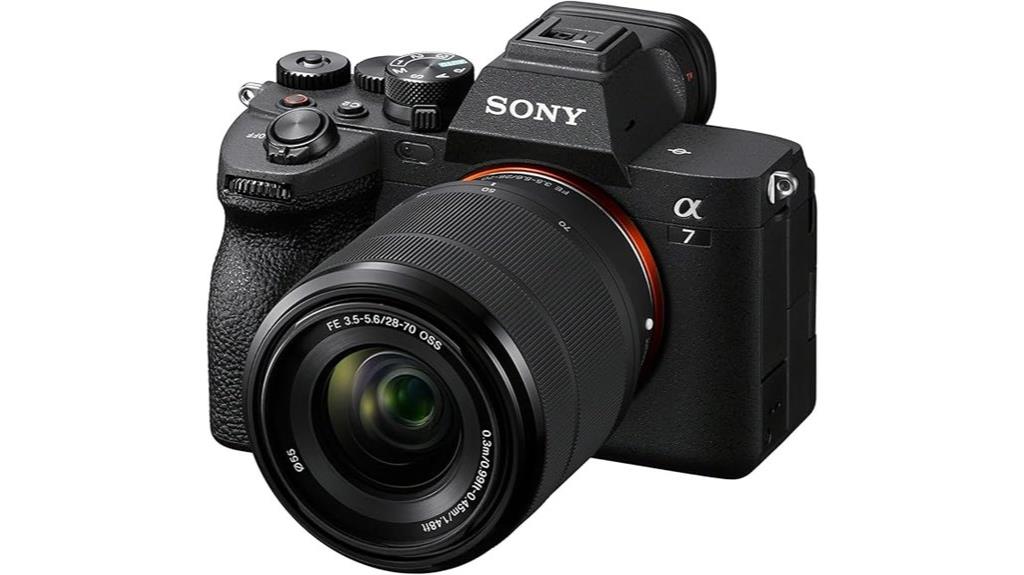
If you’re a creator looking for a versatile and high-performance camera, the Sony Alpha 7 IV with its 28-70mm lens kit is an excellent choice. It boasts a 33MP full-frame Exmor R sensor that delivers stunning high-resolution images and excels in low-light conditions. Powered by the advanced BIONZ XR processor, it offers fast autofocus and minimal lag. Its video capabilities are impressive, supporting 4K 60p 10-bit recording with crisp detail and smooth motion. The included zoom lens is perfect for a range of shooting styles, from portraits to landscapes. Overall, the Alpha 7 IV combines exceptional image quality with professional-level features, making it a versatile tool for creators.
Best For: Creators and professionals seeking a versatile, high-resolution full-frame mirrorless camera with advanced video capabilities for photography and filmmaking.
Pros:
- High-resolution 33MP full-frame sensor delivers stunning image quality and excellent low-light performance
- Advanced BIONZ XR processor ensures fast autofocus, minimal lag, and smooth operation
- Supports professional-grade 4K 60p 10-bit recording with 7K oversampling for sharp, detailed videos
Cons:
- The camera and lens kit may be relatively expensive for hobbyists on a tight budget
- Larger size compared to compact cameras may be less convenient for casual or travel use
- The extensive feature set might require a learning curve for beginners unfamiliar with advanced camera systems
Sony Alpha ZV-E10 Mirrorless Vlog Camera Kit

For content creators seeking a compact yet powerful camera, the Sony Alpha ZV-E10 stands out with its advanced 24.2MP APS-C sensor and versatile interchangeable lens system. Weighing only 1.55 pounds, it’s ideal for vlogging and on-the-go shooting. It offers stunning 4K video oversampled from 6K, 120p slow motion, and reliable autofocus with real-time Eye AF and face detection. The 3-inch articulating LCD makes framing easy, while built-in stereo mics and digital connectivity simplify streaming and content sharing. With Wi-Fi, Bluetooth, and a single USB cable, it’s designed for seamless workflow, making it a top choice for creators in 2025.
Best For: content creators and vloggers seeking a lightweight, versatile, and high-quality camera for professional-grade video and photography on the go.
Pros:
- Compact and lightweight design (1.55 pounds) ideal for portable vlogging and travel.
- 24.2 MP APS-C CMOS sensor delivers high-resolution images and oversampled 4K video.
- Advanced autofocus features including real-time Eye AF and face detection ensure sharp focus during dynamic shooting.
Cons:
- No built-in electronic viewfinder, which may be a drawback for some professional shooters.
- Limited to SD UHS-I cards, potentially affecting high-speed data transfer for large files.
- Water resistance not rated, requiring careful handling in adverse weather conditions.
Canon EOS R10 Mirrorless Camera with RF-S 18-45mm Lens Kit
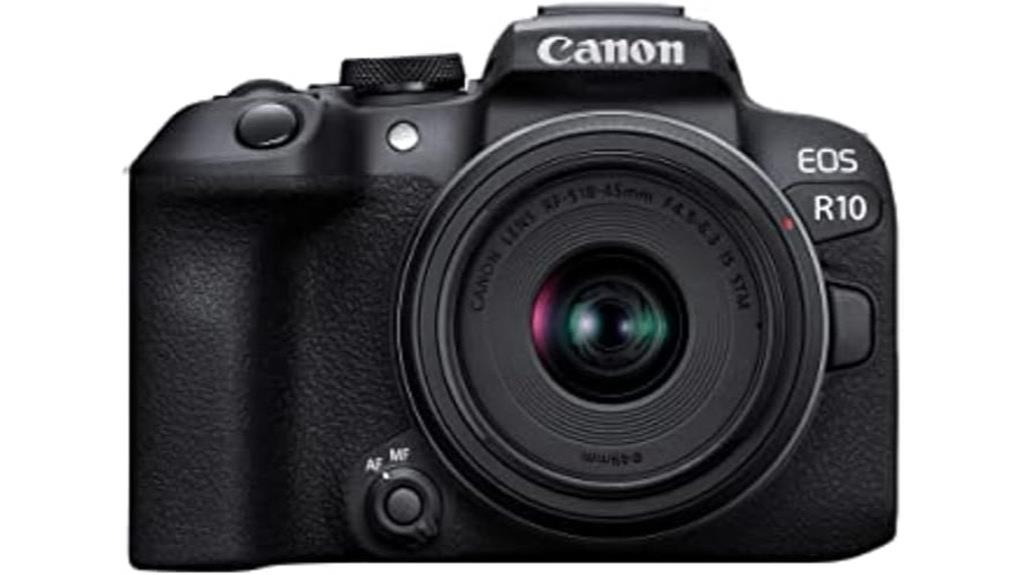
The Canon EOS R10 Mirrorless Camera with RF-S 18-45mm Lens Kit stands out as an excellent choice for creators who need fast, high-quality content capture. Its DIGIC X processor and 24.2 MP APS-C sensor deliver crisp images, while 4K video support meets demanding video needs. With 15 fps continuous shooting and advanced autofocus featuring 651 points, capturing fast-moving subjects is effortless. The tilting touchscreen, electronic viewfinder, and versatile connectivity options make it easy to shoot and share on the go. Lightweight at just 13.5 ounces, this kit is perfect for travel, vlogging, and dynamic content creation, offering professional features in a portable package.
Best For: content creators, vloggers, and travelers seeking a lightweight, high-performance mirrorless camera with advanced autofocus and 4K video capabilities.
Pros:
- Fast autofocus with 651 detection points for sharp, accurate subject tracking
- Compact and lightweight design ideal for travel and on-the-go shooting
- Supports high-quality 4K video recording and versatile connectivity options
Cons:
- Maximum aperture of F6.3 at 45mm may limit low-light performance and depth of field control
- Limited to the included RF-S 18-45mm lens unless using adapters for other lenses
- Battery life may be shorter with extensive video recording and high-speed shooting
Factors to Consider When Choosing Mirrorless Cameras for Creators
When selecting a mirrorless camera, I focus on image quality, video features, and how portable it is for my needs. I also consider lens options and how easily I can connect to other devices to streamline my workflow. These factors help me find a camera that suits both my creative style and practical requirements.
Image Quality and Resolution
Choosing a mirrorless camera with the right image quality and resolution is essential for creators aiming for sharp, detailed photos and videos. Higher resolution sensors, like 33MP full-frame models, deliver exceptional detail, perfect for large prints and cropping. The megapixel count directly impacts your ability to capture fine details, with professional cameras offering 24MP or more. Sensor size also matters—full-frame sensors improve image quality, low-light performance, and depth of field control compared to APS-C sensors. An advanced image processing engine enhances clarity, color accuracy, and noise reduction, especially at higher ISO levels. Keep in mind, lens quality and optical characteristics work alongside sensor resolution to influence overall image quality, so investing in good optics is equally important for achieving the best results.
Video Capabilities and Features
Capturing stunning videos with a mirrorless camera requires more than just high resolution; advanced video features can make a significant difference in your final product. Look for cameras that support 4K or higher resolution recording with at least 10-bit 4:2:2 color depth, ensuring professional-grade footage with rich color and detail. An advanced autofocus system, like real-time Eye AF and face detection, keeps your subjects sharp even during movement. Built-in image stabilization—either in-body or lens-based—helps produce smooth, steady videos without extra gear. Check if the camera offers slow-motion at high frame rates, such as 120 fps, for creative effects. Finally, versatile video formats and frame rate options, including oversampling and full pixel readout, maximize video quality across various shooting scenarios.
Portability and Size
A lightweight and compact mirrorless camera makes it easier to carry your gear throughout the day or on trips, so you can focus more on creating and less on lugging heavy equipment. Smaller, lighter designs are especially convenient for long shoots or travel, reducing fatigue and making spontaneous captures more feasible. Their compact size allows for easier handheld shooting and discreet filming in crowded or sensitive settings. Fewer external accessories mean a less cumbersome setup, which helps streamline your workflow. Plus, portability encourages spontaneous creativity, letting you seize moments without the burden of heavy gear. Overall, a smaller, lighter camera boosts comfort, flexibility, and efficiency—key factors for creators who need to stay mobile and agile while capturing high-quality content.
Lens Compatibility Options
When evaluating mirrorless cameras, lens compatibility plays a vital role in ensuring your gear meets your creative needs. I look for cameras that support interchangeable lenses compatible with my preferred focal lengths and shooting styles. It’s important to check if the system offers a wide range of native lenses or if I’ll need adapters for third-party or legacy lenses. I also verify the mount type, such as Sony E-mount or Canon RF, to confirm compatibility within my system. Additionally, I consider the availability of lenses for specific genres like portraits, landscapes, or macro. Being aware of any limitations on lens compatibility helps me plan for future expandability and avoid unexpected obstacles, ensuring my investment aligns with my evolving creative vision.
Connectivity and Workflow
Have you ever experienced frustration trying to transfer files or control your camera remotely? Reliable wireless options like Wi-Fi and Bluetooth are essential for seamless file transfers and remote shooting. Make sure your camera can connect directly to devices via USB or HDMI, especially for live streaming or quick setups. Built-in multi-device support simplifies integration into multi-camera systems or external monitors. Features like automatic file organization and dedicated transfer apps save time during editing and sharing. Versatility in video and photo formats is also vital, ensuring smooth post-production workflows. Prioritizing these connectivity features means you can work more efficiently, stay flexible, and focus on your creative process without technical hiccups. The right connectivity options truly streamline your entire workflow.
Frequently Asked Questions
How Do Mirrorless Cameras Compare to DSLRS for Video Quality?
Mirrorless cameras generally offer better video quality than DSLRs because they have newer sensors and advanced features like better autofocus and in-body stabilization. I find that they’re more compact, making them easier to handle for long shoots. Plus, many mirrorless models support higher resolutions and frame rates, giving me more flexibility in my videos. Overall, I think they’re a smarter choice for creators focused on video quality.
What Are the Best Lenses for Low-Light Filming?
Think of low-light filming like chasing fireflies at dusk—I need lenses that can catch that faint glow. I recommend fast primes like the Sigma 35mm f/1.4 or Sony 50mm f/1.2, which have wide apertures to gather maximum light. These lenses perform like a beacon in darkness, helping me capture clear, detailed footage even when the scene’s dim. They’re my go-to tools for those magical nighttime shots.
How Does Autofocus Performance Vary Across Different Brands?
Autofocus performance varies quite a bit across brands. I’ve found Sony’s Eye AF to be incredibly reliable, especially for portraits, while Canon’s Dual Pixel AF offers smooth, accurate tracking that’s great for video. Fuji’s autofocus is improving rapidly, but it still lags slightly behind Sony and Canon. Overall, I recommend testing different brands to see which autofocus system aligns best with your shooting style and needs.
What Storage Options Are Recommended for High-Resolution Footage?
For high-resolution footage, I recommend using fast SD cards like UHS-II for reliable, quick data transfer, especially for 4K or higher video. If your camera supports it, consider CFexpress Type B cards for even faster speeds and better handling of large files. Always opt for reputable brands to guarantee durability and performance, and keep multiple cards on hand to prevent data loss during lengthy shoots.
How Long Do Mirrorless Camera Batteries Typically Last During Continuous Shooting?
During continuous shooting, I find most mirrorless camera batteries last between 300 to 600 shots, depending on the model and usage. If I’m recording 4K videos or using features like Wi-Fi, the battery drains faster. I always carry a spare or two to stay prepared. Using power-saving modes and turning off unnecessary functions helps extend battery life, ensuring I don’t miss important moments during long shoots.
Conclusion
Choosing the right mirrorless camera is like finding the perfect brush for your artistry—each one opens a new palette of creativity. Whether it’s Sony’s full-frame depth, Canon’s versatility, or the vlog-ready ZV-E10, these tools become extensions of your vision. Remember, your camera isn’t just equipment; it’s the key to unlocking your creative universe. Embrace the one that resonates most, and let it be the compass guiding your storytelling journey.