Choosing the right microphone is essential for any podcaster aiming for clear, professional-quality sound. The best options include versatile USB models like the Logitech Blue Yeti for ease of use and the RØDE NT-USB Mini for studio-quality recordings. More advanced options, such as the Shure MV6, offer balanced features for serious creators, while XLR microphones like the RØDE PodMic cater to those wanting a more customizable setup. The main tradeoffs often involve balancing cost, complexity, and sound quality. Keep reading for a detailed breakdown of the top picks, their strengths, and who they suit best.

Get business pricing on tech for your team
- Business-only prices and quantity discounts
- Tax-exempt purchasing
- Multiple users, one account, clear invoices
Complete the kit

Key Takeaways
- The best microphones for podcasters balance ease of use with sound quality, with USB mics dominating for simplicity.
- XLR microphones like the RØDE PodMic offer more customization but require additional equipment and setup knowledge.
- Microphones with built-in features such as noise cancellation and gain control simplify recording in less controlled environments.
- Entry-level options provide good quality at lower prices, but investing in a slightly more expensive mic can greatly improve sound clarity.
- Podcasters should consider their recording environment; dynamic microphones are better for noisy spaces, condenser mics excel in quiet settings.
| RØDE NT-USB Mini Studio-Quality Condenser USB Microphone |  | Best Overall for Compact, High-Quality Podcasting | Type: Condenser USB Microphone | Color: Black | Features: Digital signal processing, noise gate, compressor, Aural Exciter, Big Bottom, headphone amplifier | VIEW ON AMAZON | See Our Full Breakdown |
| Logitech Blue Yeti USB Microphone for PC, Mac, Gaming, Recording, Streaming, Podcasting, Studio and Computer – Blackout | 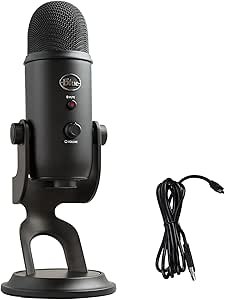 | Best for Versatile Recording with Multiple Pickup Patterns | Pickup Patterns: Cardioid, Omni, Bidirectional, Stereo | Connectivity: USB | Software: Blue VO!CE effects | VIEW ON AMAZON | See Our Full Breakdown |
| FIFINE AmpliTank K688CT Podcast Microphone Kit, USB/XLR Dynamic Vocal Mic |  | Best for Flexibility and Professional-Quality Sound | Microphone Type: Dynamic | Connectivity: USB and XLR | Polar Pattern: Cardioid | VIEW ON AMAZON | See Our Full Breakdown |
| Shure MV6 USB Gaming Microphone for Streaming & Recording |  | Best for Clarity and User-Friendly Streaming | Connectivity: USB-C | Microphone Type: Dynamic cardioid | Features: Voice Isolation, Auto Level Mode, Real-Time Denoiser | VIEW ON AMAZON | See Our Full Breakdown |
| Maono PD200W Hybrid Wireless Podcast Microphone for PC, Dynamic XLR USB Mic |  | Best for Wireless Freedom and Dual Microphone Use | Connectivity: Wireless, USB, XLR | Microphone Type: Dynamic | Pickup Pattern: Cardioid | VIEW ON AMAZON | See Our Full Breakdown |
| Zoom ZDM-1 Podcast Mic Pack for Podcasters with Dynamic Microphone & Headphones |  | Best Starter Kit for On-the-Go Podcasters | Microphone Type: Dynamic | Includes: Microphone, headphones, tripod, windscreen, XLR cable | Headphone Type: Closed-back | VIEW ON AMAZON | See Our Full Breakdown |
| RØDE NT1 Signature Series Studio Condenser Microphone, Black |  | Best for Studio-Quality Vocal Recordings | Type: Condenser Microphone | Diaphragm Size: 1 inch | Polar Pattern: Cardioid | VIEW ON AMAZON | See Our Full Breakdown |
| FIFINE T669 Studio Condenser USB Microphone for Recording and Podcasting |  | Best for Easy, No-Fuss Podcasting and Voice Recording | Connection: USB | Frequency Response: Wide | Polar Pattern: Cardioid | VIEW ON AMAZON | See Our Full Breakdown |
| FIFINE AmpliGame A6T USB Gaming Microphone Kit, Condenser Mic for Streaming |  | Best for Streamers and Gamers Looking for Style and Function | Compatibility: Windows, Mac, PS4, PS5 | Cable Length: 8.2 ft (2.5 m) | Interface: USB-C to USB-A/C | VIEW ON AMAZON | See Our Full Breakdown |
| RØDE PodMic Cardioid Dynamic Broadcast Microphone, XLR | 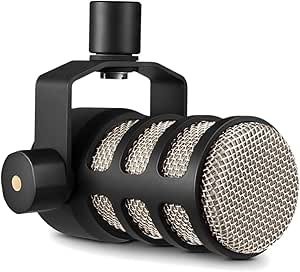 | Best for Broadcast-Quality Podcasting & Streaming | Connection: XLR | Requires: Audio interface | Type: Dynamic microphone | VIEW ON AMAZON | See Our Full Breakdown |
| FIFINE K669B USB Microphone, Condenser Recording Mic for Vocals, Meetings |  | Best Overall for Simplicity and Versatility | Connectivity: USB-A | Cable Length: 5.9 feet | Design: Metal | VIEW ON AMAZON | See Our Full Breakdown |
| ZealSound Podcast Microphone for PC, Noise Cancellation USB Mic with Gain, Volume Adjustment & Mute Button, Monitoring & Echo, for YouTube, TikTok, Podcasting, Streaming, iPhone, iPad, Android, Mac |  | Best for Studio-Quality Sound with Device Versatility | Frequency Response: 40Hz–18kHz | Sampling Rate: 46kHz | Sensitivity: –45dB ±3dB | VIEW ON AMAZON | See Our Full Breakdown |
| FIFINE AmpliTank K688 Dynamic Microphone, XLR/USB Podcast Recording PC Mic |  | Best for Versatile Recording with Dual Connectivity | Type: Dynamic Microphone | Connectivity: XLR and USB | SPL: 130dB | VIEW ON AMAZON | See Our Full Breakdown |
| TONOR Gaming Microphone Set with Boom Arm, USB Condenser Mic for Content Creators, RGB Lighting, Tap Mute, Gain Control, Streaming Equipment | 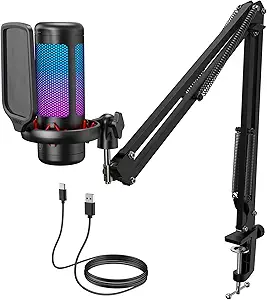 | Best for Streamers Seeking Style and Functionality | Microphone Type: Vocal Condenser | Connectivity: USB 2.0/3.0 | Lighting Modes: 4 RGB modes | VIEW ON AMAZON | See Our Full Breakdown |
| FIFINE AmpliGame AM8 USB/XLR Dynamic Microphone for Gaming and Streaming |  | Best for Dual-Mode Versatility and Gaming | Frequency Response: 50Hz-16KHz | Connection Types: USB, XLR | RGB Lighting: Yes | VIEW ON AMAZON | See Our Full Breakdown |
| microphones for podcaster | Connectivity |
|---|---|
| RØDE NT-USB Mini Studio-Qualit | — |
| Logitech Blue Yeti USB Microph | USB |
| FIFINE AmpliTank K688CT Podcas | USB and XLR |
| Shure MV6 USB Gaming Microphon | USB-C |
| Maono PD200W Hybrid Wireless P | Wireless, USB, XLR |
| Zoom ZDM-1 Podcast Mic Pack fo | XLR |
| RØDE NT1 Signature Series Stud | — |
| FIFINE T669 Studio Condenser U | — |
| FIFINE AmpliGame A6T USB Gamin | — |
| RØDE PodMic Cardioid Dynamic B | — |
| FIFINE K669B USB Microphone | USB-A |
| ZealSound Podcast Microphone f | USB-C, Lightning adapters |
| FIFINE AmpliTank K688 Dynamic | XLR and USB |
| TONOR Gaming Microphone Set wi | USB 2.0/3.0 |
| FIFINE AmpliGame AM8 USB/XLR D | — |
More Details on Our Top Picks
RØDE NT-USB Mini Studio-Quality Condenser USB Microphone
The RØDE NT-USB Mini stands out for delivering studio-quality sound in a compact form, making it ideal for podcasters who need excellent audio without occupying much space. Compared with the Blue Yeti, it offers a less bulky design but lacks multiple pickup patterns, limiting versatility for multi-source recording. Its integrated digital signal processing enhances warmth and presence, providing a polished sound that makes it suitable for solo creators and streamers. However, being USB-only means it can’t scale into more complex studio setups like the FIFINE AmpliTank K688CT with XLR options, and some features require software tweaks. This makes it perfect for those prioritizing simplicity and quality over expandability.
Pros:- Compact and easy to set up
- Studio-grade sound with tailored warmth
- Built-in digital signal processing for enhanced audio clarity
Cons:- Limited to USB connection, no XLR option
- Requires software for some advanced features
Best for: Podcasters, streamers, and musicians seeking studio-quality sound in a small, portable package
Not ideal for: Professional studios or users needing XLR connectivity for advanced mixing and multi-mic setups
- Type:Condenser USB Microphone
- Color:Black
- Features:Digital signal processing, noise gate, compressor, Aural Exciter, Big Bottom, headphone amplifier
- Suitable for:Podcasting, streaming, gaming, music production, vocals, instruments
Our verdict“This mic is best for solo creators who want high-quality audio in a compact form factor without complex setup.”
Logitech Blue Yeti USB Microphone for PC, Mac, Gaming, Recording, Streaming, Podcasting, Studio and Computer – Blackout
The Blue Yeti is favored for its versatility, offering four distinct pickup patterns—cardioid, omni, bidirectional, and stereo—which makes it adaptable for various recording scenarios, from solo podcasts to multi-person interviews. Unlike the RØDE NT-USB Mini, its multiple pattern options provide greater flexibility for creators who want to record different sound sources with a single mic. The onboard controls and Blue VO!CE effects make real-time adjustments straightforward, though its larger size could be a drawback for tight desk setups. Its plug-and-play design suits beginners but might feel bulky for users with limited space or those seeking a more minimal setup. This makes the Blue Yeti a strong pick for creators needing variety and customization.
Pros:- Multiple pickup patterns for diverse recording needs
- Onboard controls for quick adjustments
- Blue VO!CE effects enhance vocal quality
Cons:- Bulky for small desks
- Limited mobility due to USB cable dependency
Best for: Streamers and podcasters who value flexibility and onboard controls for varied recording setups
Not ideal for: Users with small desks or those who prefer a more discreet microphone for simple, single-source recording
- Pickup Patterns:Cardioid, Omni, Bidirectional, Stereo
- Connectivity:USB
- Software:Blue VO!CE effects
- Controls:Headphone volume, pattern selection, mute, mic gain
Our verdict“This mic is perfect for creators who need a versatile, feature-rich solution that adapts to different recording situations.”
FIFINE AmpliTank K688CT Podcast Microphone Kit, USB/XLR Dynamic Vocal Mic
The FIFINE AmpliTank K688CT excels through its dual USB and XLR connectivity, making it suitable for both beginners and more advanced users who want to upgrade without changing mics. Unlike the RØDE NT-USB Mini or Blue Yeti, this model offers the flexibility of professional XLR connections, which is essential for those who want to expand their setup or use external mixers. Its high SPL rating ensures distortion-free recordings even with loud sources. The included accessories like a boom arm and shock mount add value, but when using XLR, some features like controls are disabled, and proper adjustment is required for optimal sound. This makes it a strong choice for creators looking for versatility and quality in one package.
Pros:- Dual USB and XLR connections for maximum flexibility
- High SPL for clear, distortion-free sound
- Includes professional accessories like boom arm and shock mount
Cons:- Function keys are disabled when using XLR
- Requires proper input volume adjustment for best results
Best for: Podcasters and streamers who want a versatile microphone that can grow with their setup and prefer flexible connectivity options
Not ideal for: Beginners with limited audio knowledge or those who only need a simple USB mic, as setup can be more involved
- Microphone Type:Dynamic
- Connectivity:USB and XLR
- Polar Pattern:Cardioid
- Maximum SPL:130dB
- Included Accessories:Boom arm, shock mount, windscreen
Our verdict“This microphone suits creators seeking a professional-grade, adaptable setup that can accommodate future upgrades.”
Shure MV6 USB Gaming Microphone for Streaming & Recording
The Shure MV6 is tailored for streamers and podcasters who prioritize voice clarity and ease of use. Its focus on voice isolation technology rivals the Blue Yeti in clarity but offers a more streamlined control interface. Real-time DSP processing enhances audio without complex editing, and zero-latency monitoring simplifies live recording. The USB-C connection guarantees fast, reliable setup, but limits compatibility to USB-C devices or requires adapters. While controls can initially seem complex, they ultimately provide precise adjustment for various environments. For creators seeking straightforward, high-quality voice capture, the MV6 offers a compelling balance of features and simplicity.
Pros:- Excellent voice clarity with noise reduction
- Real-time DSP for polished sound
- Zero-latency monitoring for live recording
Cons:- Limited to USB-C devices, may need adapters
- Complex initial controls for some users
Best for: Podcasters and streamers using USB-C devices who need clear, professional-sounding voice recordings
Not ideal for: Users on older computers or with non-USB-C ports who might need adapters or other connection types
- Connectivity:USB-C
- Microphone Type:Dynamic cardioid
- Features:Voice Isolation, Auto Level Mode, Real-Time Denoiser
- Compatibility:PC and Mac, Shure MOTIV app
Our verdict“This mic is well-suited for creators who want high-quality voice capture with minimal fuss and reliable connectivity.”
Maono PD200W Hybrid Wireless Podcast Microphone for PC, Dynamic XLR USB Mic
The Maono PD200W introduces remarkable flexibility with wireless, USB, and XLR options, making it suitable for mobile creators and those who need freedom of movement. Its studio-quality sound and noise cancellation are competitive with traditional wired mics like the FIFINE AmpliTank K688CT, but the wireless feature sets it apart for live interviews or multi-room setups. The long battery life and 60-meter range support extended use without interruptions. However, setup can be complex, especially for beginners, and some accessories like video sync tools are missing. RGB lighting might be unnecessary for many, but overall, this model offers impressive versatility for creators who want mobility without sacrificing quality.
Pros:- Supports wireless, USB, and XLR connections
- Long battery life and stable wireless range
- Studio-quality sound with noise cancellation
Cons:- Requires additional video or camera accessories
- Setup can be complex for beginners
Best for: Podcasters, streamers, and interviewers who need wireless freedom and multi-connection options
Not ideal for: Users primarily recording in fixed studio environments or those unfamiliar with wireless setup complexities
- Connectivity:Wireless, USB, XLR
- Microphone Type:Dynamic
- Pickup Pattern:Cardioid
- Signal-to-Noise Ratio:82dB
- Wireless Range:60 meters
- Battery Life:up to 60 hours
Our verdict“This microphone excels for creators who value mobility and connection versatility in their recording setup.”
Zoom ZDM-1 Podcast Mic Pack for Podcasters with Dynamic Microphone & Headphones
This all-in-one kit stands out for its portability and quick setup, making it ideal for those starting out or recording outside a studio environment. The dynamic microphone is tailored for voice, providing clear audio without the need for complex equipment, unlike the more sensitive condenser options like the RØDE NT1. It’s a great choice for podcasters who prioritize ease of use and mobility, but it’s limited to voice recordings and isn’t suitable for capturing music or detailed studio sounds. The included headphones and accessories make it a comprehensive package, yet the reliance on XLR means additional gear might be necessary to achieve professional levels. Overall, this kit offers excellent value for newcomers who want quality without hassle.
Pros:- Complete starter kit with everything needed to begin podcasting
- Optimized for voice clarity and noise rejection
- Portable and easy to set up for on-the-go recording
Cons:- Limited to voice recording, not suitable for music or detailed studio work
- Requires additional equipment for certain professional setups
Best for: Beginners or mobile podcasters needing a portable, all-in-one solution
Not ideal for: Studio professionals or musicians requiring multi-instrument recording
- Microphone Type:Dynamic
- Includes:Microphone, headphones, tripod, windscreen, XLR cable
- Headphone Type:Closed-back
- Tripod:Tabletop, foldable
- Windscreen:Yes
- Connectivity:XLR
Our verdict“This kit is perfect for newcomers seeking a straightforward, portable podcasting setup.”
RØDE NT1 Signature Series Studio Condenser Microphone, Black
Compared with the dynamic options like the RØDE PodMic, the NT1 excels in capturing detailed vocals thanks to its large 1-inch diaphragm and high sensitivity, making it a favorite for professional studio environments. Its ultra-low noise profile (4dBA) ensures pristine recordings, though it demands phantom power and an XLR interface, adding complexity and cost for beginners. The included shock mount and pop filter elevate its studio-grade quality, but these components make it less portable and more suited for dedicated home setups. If you’re after studio-level sound quality and are willing to invest in additional gear, the NT1 is a top-tier choice, though less practical for casual or mobile use.
Pros:- Exceptional low noise for high-fidelity recordings
- Includes studio-grade shock mount and pop filter
- Wide frequency response enhances vocal detail
Cons:- Requires phantom power and XLR interface, adding cost
- Premium components may be overwhelming for beginners
Best for: Experienced podcasters or home studio owners seeking professional sound quality
Not ideal for: Beginners or mobile recorders who lack an XLR interface or phantom power
- Type:Condenser Microphone
- Diaphragm Size:1 inch
- Polar Pattern:Cardioid
- Noise Level:4dBA
- Included Accessories:Shock mount, pop filter, XLR cable
- Warranty:10 years
Our verdict“Ideal for users with a dedicated studio setup aiming for broadcast-quality vocal recordings.”
FIFINE T669 Studio Condenser USB Microphone for Recording and Podcasting
This USB condenser mic makes recording straightforward, especially for those who prefer plug-and-play solutions. It’s a step up from basic mics like the FIFINE K669B, offering a wider feature set with included accessories like a boom arm and pop filter, which help create a professional-looking setup quickly. Its cardioid capsule delivers clear sound, making it suitable for beginners and intermediate podcasters, though it may pick up ambient noise if not well-positioned. Unlike XLR microphones, it doesn’t need additional equipment, making it perfect for home studios or remote recording. However, its reliance on a USB connection limits flexibility for those seeking pro-level control or multi-mic setups.
Pros:- Plug-and-play USB connection for quick setup
- Includes adjustable arm and accessories for versatility
- Produces clear, high-quality audio suitable for podcasts
Cons:- Limited to USB compatibility, not suitable for professional XLR setups
- May pick up ambient noise if not carefully positioned
Best for: Podcasters and voice creators seeking simple, high-quality USB recording
Not ideal for: Advanced users wanting multi-mic setups or studio-grade sound engineering
- Connection:USB
- Frequency Response:Wide
- Polar Pattern:Cardioid
- Includes:Boom arm, pop filter, shock mount, USB cable
- Compatibility:PC and laptop
- Not Compatible With:Xbox
Our verdict“A strong choice for beginners or hobbyists who want hassle-free, quality audio recording.”
FIFINE AmpliGame A6T USB Gaming Microphone Kit, Condenser Mic for Streaming
The AmpliGame A6T combines style with function, offering RGB lighting and a flexible setup for streamers who want a visually engaging microphone. Its plug-and-play USB-C connection simplifies setup compared to traditional XLR mics like the PodMic, and the included accessories provide versatile positioning for gaming or streaming sessions. The condenser capsule ensures warm, clear sound, but its sensitivity can lead to background noise pickup if not properly configured. While RGB lighting adds flair, it’s a feature that might be unnecessary for non-gamers or those preferring a minimal look. This mic is ideal for streamers who prioritize visual appeal and easy setup but less so for those seeking studio-level audio quality.
Pros:- Simple USB-C plug-and-play setup
- Vivid RGB lighting enhances streaming atmosphere
- Adjustable boom arm and accessories for flexible positioning
Cons:- Requires USB-C to USB-A/C cable, possibly needing adapters
- Background noise can be an issue if not positioned carefully
Best for: Streamers and gamers who want a visually striking, easy-to-use microphone
Not ideal for: Podcasters seeking studio-grade audio or users wanting XLR connectivity
- Compatibility:Windows, Mac, PS4, PS5
- Cable Length:8.2 ft (2.5 m)
- Interface:USB-C to USB-A/C
- Lighting:RGB gradient
- Polar Pattern:Cardioid
- Included Accessories:Shock mount, pop filter, boom arm stand, C-clamp
Our verdict“Great for visually-oriented streamers who want an easy, stylish microphone with warm sound.”
RØDE PodMic Cardioid Dynamic Broadcast Microphone, XLR
Compared to the condenser options, the RØDE PodMic excels in rejecting room noise and background sounds, making it a reliable choice for podcasting in less-than-ideal environments. Its built-in swing-mount and pop filter simplify setup and reduce clutter, and the broadcast-grade build quality ensures durability. However, its XLR-only connection means you’ll need an audio interface, adding complexity and cost for those just starting out. It’s less versatile for casual users or those who prefer USB plug-and-play, but for dedicated broadcasters or serious podcasters, this mic offers professional sound with robust noise rejection. The PodMic’s rugged design and integrated features make it a good investment for long-term use.
Pros:- Rejects room noise and background sounds effectively
- Built-in swing-mount and pop filter for quick setup
- Broadcast-grade durability and sound quality
Cons:- Requires an audio interface with XLR input
- Not compatible with USB or direct computer connection
Best for: Experienced podcasters or broadcasters with an audio interface seeking broadcast-grade sound
Not ideal for: Beginners or mobile users without XLR equipment or audio interfaces
- Connection:XLR
- Requires:Audio interface
- Type:Dynamic microphone
- Polar Pattern:Cardioid
- Use Case:Podcasting, broadcasting, streaming
Our verdict“A solid choice for seasoned podcasters or broadcasters investing in a professional XLR setup.”
FIFINE K669B USB Microphone, Condenser Recording Mic for Vocals, Meetings
The FIFINE K669B stands out for its straightforward plug-and-play setup, making it an excellent choice for those new to podcasting who want reliable sound without a steep learning curve. Compared to the ZealSound K66, it lacks advanced noise cancellation but offers a more durable build and a familiar USB-A connection. The cardioid pattern helps reduce background noise, which benefits casual streamers and content creators working in less controlled environments. The main tradeoff is its limited compatibility—it’s not suitable for Xbox or mobile phones, unlike the ZealSound, which supports a wider array of devices. Its simple volume control and metal construction make it a durable, user-friendly option for home studios or on-the-go setups. However, it requires disabling sound activation in some apps for best results, which could be a hassle for some users.
Pros:- Plug-and-play with minimal setup required
- Durable metal construction for longevity
- Adjustable volume knob for precise control
- Reduces background noise effectively
Cons:- Limited compatibility—no support for Xbox or smartphones
- Requires disabling sound activation in some apps
Best for: Beginners or casual podcasters seeking a reliable, easy-to-use microphone with decent noise control
Not ideal for: Advanced professionals or gamers needing XLR connectivity and more customizable features
- Connectivity:USB-A
- Cable Length:5.9 feet
- Design:Metal
- Compatibility:PC, Mac, PS4, PS5
- Power Supply:USB-powered
- Pickup Pattern:Cardioid
Our verdict“This mic makes the most sense for newcomers or casual podcasters who prioritize ease of use and durability over advanced features.”
The ZealSound K66 delivers broadcast-level audio, making it ideal for podcasters who need high sound fidelity across multiple platforms. Compared with the simpler FIFINE K669B, it offers superior noise reduction, wider frequency response, and physical controls for gain, volume, and echo, which help in fine-tuning your sound. Its compatibility spans smartphones, tablets, and computers, providing flexibility that the FIFINE lacks. The downside is that it’s limited to USB connections, with no XLR option for future expansion, and some users find the physical controls less precise than software adjustments. The real-time monitoring ensures accurate audio feedback, which is beneficial for serious content creators. However, the need for manual adjustments in varying environments can be inconvenient for those seeking a more automatic setup.
Pros:- Studio-quality sound with noise reduction
- Wide compatibility including mobile and gaming devices
- Physical controls for gain, volume, and echo
- Real-time zero-latency monitoring
Cons:- Limited to USB connection only
- Physical controls may be less precise than software
Best for: Producers and streamers who want studio-quality audio with multi-device compatibility and physical control features
Not ideal for: Beginners or casual users who prefer simple plug-and-play operation without manual sound tweaking
- Frequency Response:40Hz–18kHz
- Sampling Rate:46kHz
- Sensitivity:–45dB ±3dB
- Connectivity:USB-C, Lightning adapters
- Monitoring:3.5mm headphone jack
- Controls:Gain, volume, echo, mute
Our verdict“This microphone suits content creators who value professional sound quality and versatile device compatibility over simplicity.”
FIFINE AmpliTank K688 Dynamic Microphone, XLR/USB Podcast Recording PC Mic
The FIFINE AmpliTank K688 offers flexibility with both XLR and USB connections, making it suitable for podcasters who want to upgrade from entry-level gear or need dual formats for different recording contexts. Compared to the ZealSound, it provides a more adaptable setup, especially if you already have or plan to use XLR mixers. Its noise reduction, mute, and gain controls support cleaner audio, while real-time monitoring enhances recording precision. The main drawback is that the arm stand, mic stand, and XLR cable are not included, which can add to the initial setup cost. It performs best when used close to the mouth, and some functions only work via USB, limiting its full feature set when connected through XLR.
Pros:- Dual XLR and USB connectivity
- Built-in mute and gain controls
- Effective noise reduction features
- Includes accessories like windscreen and shock mount
Cons:- XLR cable and stand are not included
- Requires close proximity for best sound quality
Best for: Intermediate podcasters or streamers who want a flexible microphone that supports both USB and XLR setups
Not ideal for: Beginners or those seeking a simple, all-in-one USB solution without extra equipment
- Type:Dynamic Microphone
- Connectivity:XLR and USB
- SPL:130dB
- S/N Ratio:80dB+
- Cable Length:8.2ft
- Included Accessories:Windscreen, shock mount, cables
Our verdict“This mic is a smart choice for podcasters aiming for flexibility and upgradeability in their setup.”
TONOR Gaming Microphone Set with Boom Arm, USB Condenser Mic for Content Creators, RGB Lighting, Tap Mute, Gain Control, Streaming Equipment
The TONOR TC310+ combines sound quality with aesthetic appeal, making it a favorite for streamers who want vibrant visuals alongside clear audio. Its USB condenser design is comparable to the FIFINE K669B but with the added flair of customizable RGB lighting and an adjustable boom arm, which simplifies positioning. The tap mute and gain control provide quick adjustments during live sessions, and the sturdy build supports long-term use. Nonetheless, the setup requires the proper connection of the Type-C cable, and its limited desk thickness compatibility (up to 2.36 inches) can restrict placement options. For those prioritizing visual impact or streaming, this kit offers a compelling all-in-one package, but it might be overkill for purely audio-focused podcasters.
Pros:- High-fidelity sound with professional tuning
- Vibrant RGB lighting with multiple modes
- Easy mute and gain control for live use
- Complete kit with boom arm and sturdy clamp
Cons:- Requires proper Type-C connection setup
- Limited desk thickness compatibility
Best for: Content creators and streamers who value style, quick control, and integrated equipment in their setup
Not ideal for: Podcasters seeking minimalistic or purely audio-centric microphones without RGB lighting or boom arms
- Microphone Type:Vocal Condenser
- Connectivity:USB 2.0/3.0
- Lighting Modes:4 RGB modes
- Brightness Control:Yes
- Mute Function:Tap to mute
- Gain Adjustment:Rotating top
- Clamp Compatibility:Desk up to 2.36 inches
Our verdict“This microphone set makes the most sense for streamers who want a visually striking, all-in-one setup with reliable sound quality.”
FIFINE AmpliGame AM8 USB/XLR Dynamic Microphone for Gaming and Streaming
The FIFINE AmpliGame AM8 caters to gamers and streamers who need a microphone that seamlessly switches between USB and XLR. Compared with the XLR-only Shure PodMic, this model provides greater flexibility for different setups, especially for those starting with USB and later upgrading to XLR. Its noise reduction and built-in mute with LED indicators support professional-grade streaming and gaming. The RGB lighting adds an aesthetic touch, although it’s inactive when using XLR mode, which may disappoint users who want constant visual effects. The included windscreen helps improve sound clarity, but additional cables are needed for XLR operation, increasing setup costs. This mic is ideal for versatile use but may fall short for those who want fully active lighting during XLR use.
Pros:- Dual USB and XLR connectivity
- Built-in mute with LED indicator
- RGB lighting with memory function
- Includes noise-canceling windscreen
Cons:- RGB lighting inactive on XLR mode
- XLR cable not included
Best for: Gamers and streamers who want a dual-mode microphone with a focus on aesthetic appeal and flexible connectivity
Not ideal for: Purely studio-focused podcasters or users who prefer XLR-only equipment with no lighting features
- Frequency Response:50Hz-16KHz
- Connection Types:USB, XLR
- RGB Lighting:Yes
- Mute Control:Yes
- Built-in Headphone Jack:Yes
- Thread Size:3/8” and 5/8”
Our verdict“This microphone offers excellent versatility for gamers and streamers who want both convenience and style in their setup.”

How We Picked
Our evaluation focused on core factors that influence a podcaster’s experience: sound quality, ease of setup, build durability, versatility, and value. We prioritized microphones that cater to different skill levels and recording environments, ensuring a range of options from beginner-friendly USB models to professional XLR setups. Each product was assessed based on its inherent strengths and tradeoffs, such as whether it offers plug-and-play convenience or requires additional accessories. The ranking reflects a balance between performance and practicality, aiming to guide both newcomers and seasoned creators alike.Factors to Consider When Choosing Microphones For Podcasters
When choosing a microphone for podcasting, understanding key factors can help you make a smart investment. Consider how much technical setup you’re comfortable with, the environment you’ll record in, and your budget. Different microphones serve different needs—some prioritize simplicity, others focus on sound quality or durability. Being aware of these aspects helps avoid common pitfalls like overpaying for features you don’t need or selecting a mic unsuitable for your space.Connection Type: USB vs. XLR
USB microphones are ideal for beginners or those who want quick setup and minimal equipment. They connect directly to your computer, making them perfect for home studios or on-the-go recordings. XLR microphones, however, require an audio interface, offering more flexibility and potential for higher sound quality. If you aim for professional-grade recordings, an XLR setup is worth the extra effort, but if simplicity is key, USB models are more practical.
Sound Quality and Polar Patterns
Sound clarity is crucial for engaging podcasts. Condenser mics generally deliver richer detail but are more sensitive to background noise, making them suitable for quiet spaces. Dynamic microphones excel at rejecting ambient noise and are better in less controlled environments. Additionally, understanding polar patterns—such as cardioid or omnidirectional—helps you select a mic that captures your voice best while minimizing unwanted sounds.
Build Quality and Durability
Podcasts often involve frequent setup and teardown, so a sturdy microphone is beneficial. Metal construction and quality components reduce the risk of damage over time. Cheaper plastic models may save money initially but can break more easily. Consider whether the microphone has features like shock mounts or durable stands that can extend its lifespan and improve recording stability.
Additional Features and Accessories
Extras such as gain control, headphone monitoring, mute buttons, and built-in noise reduction can significantly enhance your recording experience. Some microphones come as kits with pop filters, shock mounts, and boom arms, which are valuable for creating a professional setup. Be mindful of whether these features align with your needs or if they add unnecessary complexity and cost.
Budget and Value
While premium microphones often deliver superior sound, they come at a higher price. Entry-level models can suffice for new podcasters, especially if paired with good recording habits. However, investing a bit more can make a noticeable difference in sound quality and future-proof your setup. Weighing initial cost against long-term benefits helps ensure your purchase is both affordable and effective.
Frequently Asked Questions
Should I choose a USB or XLR microphone for podcasting?
Choosing between USB and XLR depends on your current setup and future plans. USB microphones are straightforward, plug-and-play devices suitable for beginners and those who want quick setup without extra gear. XLR microphones provide higher audio quality and greater flexibility, ideal for podcasters who plan to upgrade their equipment or want a more professional sound. Keep in mind that XLR setups require an audio interface, which adds complexity and cost, but also offers upgrade paths for your studio.
Can I use a gaming or streaming microphone for podcasting?
Many gaming and streaming microphones are technically capable of recording podcasts, especially if they feature good cardioid patterns and decent sound quality. However, these mics often focus on features like RGB lighting or enhanced noise cancellation for live streaming, which may not translate into the best podcast audio. For serious podcasting, models designed specifically for voice clarity tend to offer better consistency and less background noise. Still, for casual or starting podcasters, they can be a cost-effective solution.
How much should I spend on a good podcasting microphone?
Budget options around $50-$100 can deliver surprisingly good audio quality for new podcasters, especially with proper placement and environment control. Mid-range microphones in the $100-$200 range often strike a good balance between cost and performance, offering clearer sound and more features. For professional-quality recordings, investing over $200 gets you higher fidelity, durability, and advanced features—valuable if you’re committed to a serious podcasting career or producing high-end content.
Are condenser microphones better than dynamic mics for podcasting?
Condenser microphones typically provide richer, more detailed audio, making them ideal for quiet, controlled environments. Dynamic microphones are better suited to noisy settings because they reject background noise effectively. For most home studio setups, a condenser mic works well if your environment is quiet, but if you record in a noisy space or need more durability, a dynamic mic like the RØDE PodMic might be the better option. The choice ultimately depends on your recording environment and sound quality needs.
What additional equipment do I need with an XLR microphone?
An XLR microphone requires an audio interface to connect to your computer, which converts analog signals to digital. You’ll also need XLR cables, and possibly a boom arm or mic stand for proper positioning. Investing in a good audio interface can improve sound quality and provide additional controls like gain adjustment. While this setup offers greater flexibility and potential for higher-quality recordings, it does add complexity and cost compared to simple USB microphones.
Conclusion
For those just starting out or seeking quick, easy solutions, a quality USB microphone like the Logitech Blue Yeti makes the most sense. If you want professional sound and are willing to handle a more complex setup, the RØDE PodMic paired with an audio interface offers excellent value for serious creators. Budget-conscious beginners should consider the FIFINE T669 for decent performance without a hefty price tag, while premium buyers aiming for studio-quality recordings will appreciate models like the RØDE NT1. Your choice ultimately depends on your experience level, environment, and long-term goals, but this roundup provides solid options for every type of podcaster.
As an affiliate, we earn on qualifying purchases.Fall Picks
fall essentials