
Based on what I’ve researched, I believe the best equatorial mount with a belt drive system for precision astrophotography is one that offers smooth operation, minimal backlash, and accurate tracking. I look for features like compatibility with remote controls, lightweight portability, and easy alignment tools. Durability and build quality are also essential for long-term performance. Stick with me, and I’ll share more details so you can choose the right system for your astrophotography needs.
Key Takeaways
- Belt drive mounts provide smoother, quieter tracking with minimal backlash, essential for high-precision astrophotography.
- Compatibility with remote control options like WiFi, Bluetooth, or USB enhances flexibility and ease of use.
- Lightweight and portable designs facilitate outdoor setup and travel without sacrificing stability.
- Intuitive alignment tools and automatic calibration streamline initial setup for accurate object tracking.
- Built with durable materials and reinforced components to ensure longevity and consistent performance in various conditions.
iEXOS-100-2 PMC-Eight Astrophotography Tracker System with WiFi & Bluetooth
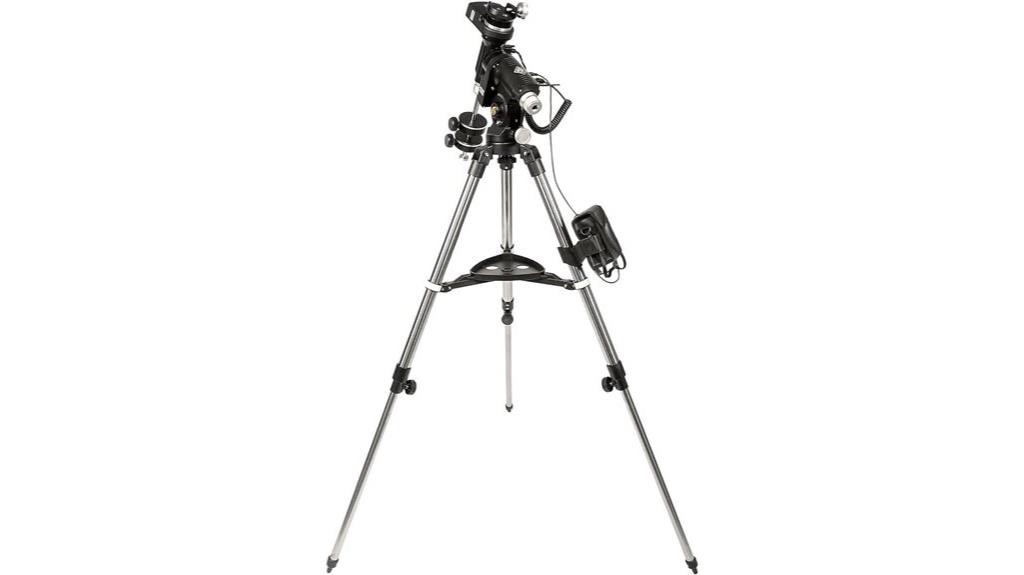
If you’re serious about astrophotography and want a reliable, responsive mount, the iEXOS-100-2 PMC-Eight system stands out with its advanced belt drive and integrated control system. It features eight independent CPUs, ensuring superior responsiveness and efficiency. The quiet, precise belt drives, combined with clutched dual-axis worm gears, deliver smooth tracking. The intuitive ExploreStars app makes star alignment, celestial navigation, and object identification straightforward on Apple, Android, and Windows tablets. Its balanced RA and Declination axes, polar alignment sight hole, and fast altitude control make setup quick and accurate, perfect for capturing clear, detailed images without hassle.
Best For: astrophotographers seeking a high-performance, reliable, and responsive equatorial tracking system with advanced control features.
Pros:
- Features eight independent CPUs for superior responsiveness and efficiency.
- Quiet, precise belt drives and clutched dual-axis worm gears for smooth tracking.
- Compatible with ExploreStars app on multiple devices for easy star alignment and celestial navigation.
Cons:
- The system’s complexity may require a learning curve for beginners.
- Slightly heavier weight (20 pounds) could impact portability.
- Price point might be higher compared to more basic trackers for casual users.
Factors to Consider When Choosing Equatorial Mounts With Belt Drive Systems

When selecting an equatorial mount with a belt drive system, I consider factors like drive precision and smoothness to guarantee steady tracking. Compatibility and connectivity options are also important for seamless integration with my equipment, while weight and portability affect setup convenience. Additionally, I look at ease of alignment, durability, and build quality to guarantee reliable performance over time.
Drive Precision and Smoothness
Drive precision and smoothness are crucial factors in selecting an equatorial mount with a belt drive system, as they directly impact tracking stability and image quality. Belt drives generally provide smoother operation than gear drives, thanks to reduced backlash and less gear meshing noise. Using high-quality, tensioned belts minimizes slippage and guarantees consistent motion, which is indispensable for long exposures. An accurate drive system exhibits minimal periodic error, keeping objects precisely tracked over extended periods. The elasticity of belts helps absorb small shocks and vibrations, leading to steadier images with fewer distortions. When properly calibrated, belt drives offer high responsiveness and fine control, enabling astrophotographers to capture detailed, sharp images. Drive precision and smoothness are non-negotiable for achieving professional-level astrophotography results.
Compatibility and Connectivity Options
Choosing an equatorial mount with belt drive systems requires careful consideration of its compatibility and connectivity options, as these features directly influence ease of use and integration with your existing equipment. Many mounts support WiFi, Bluetooth, or USB, allowing remote control and easier alignment through dedicated apps. It’s essential to verify that these protocols work with your operating system—whether iOS, Android, or Windows—to ensure seamless operation. Some mounts come with built-in WiFi or Bluetooth, removing the need for extra adapters or cables. Compatibility also extends to accessories like cameras, guiding systems, and focusers through standard connection ports or wireless options. These features help streamline your setup, improve flexibility, and make remote operation more reliable and convenient.
Weight and Portability
Are you looking for an equatorial mount that’s easy to take on the go? Lightweight belt drive mounts are perfect for portable astrophotography. They’re easier to transport and set up, making outdoor sessions more convenient. The mount’s weight influences stability—heavier models dampen vibrations better but are less portable. Many compact belt drive mounts feature foldable or detachable parts, enhancing their portability without sacrificing performance. Some models weigh under 20 pounds, specifically designed for travelers and outdoor observers. However, striking the right balance is vital; overly lightweight mounts might lack the durability needed for long imaging sessions. Ultimately, choosing a mount that combines manageable weight with solid construction guarantees you can enjoy stable, precise astrophotography wherever your adventures take you.
Ease of Alignment Setup
When setting up an equatorial mount, ease of alignment can make or break your observing session. A mount with intuitive polar alignment tools, like a polar scope or alignment aids, considerably reduces setup time. Belt drive systems often feature precise calibration procedures that simplify initial alignment compared to older gear systems. Many models include automated or semi-automated routines, allowing quick setup with minimal manual adjustments. Clear adjustment mechanisms, such as tensioners and alignment marks, also help streamline the process. Proper initial alignment is vital because belt drives provide stable tracking once aligned. Choosing a mount with straightforward, accessible alignment features ensures you spend less time fussing with setup and more time enjoying clear skies, making your astrophotography sessions both efficient and enjoyable.
Durability and Build Quality
Durability and build quality are vital factors when selecting an equatorial mount with a belt drive system, as they directly impact the mount’s longevity and performance. High-strength metals like aluminum or steel are commonly used, guaranteeing the mount can withstand regular use and adverse environmental conditions. Quality materials help maintain stability and minimize vibrations, which are essential for sharp astrophotography images. Reinforced belts and robust gear components extend the system’s lifespan and reliability. Additionally, weather-resistant coatings and sealed parts protect against dust, moisture, and corrosion. Well-crafted mounts with tight manufacturing tolerances deliver consistent performance and require less maintenance over time. Prioritizing durability and build quality ensures your investment remains dependable and effective for many observing sessions.
Power Supply and Battery Life
Making certain a reliable power supply is crucial for belt drive equatorial mounts to keep them running smoothly during long astrophotography sessions. The battery life depends on the power source’s type and capacity; rechargeable lithium-ion batteries are popular for their longer usage times. Some mounts support external power options like AC adapters or even solar panels, allowing extended field operation. Power consumption varies based on the motor type, control system, and accessories like WiFi or Bluetooth modules. To avoid unexpected shutdowns, it’s essential to monitor battery levels regularly, especially during critical imaging periods. Choosing a mount with a robust, easily rechargeable power setup ensures uninterrupted tracking and better imaging results, making power management a key factor in selecting the right equatorial mount.
Frequently Asked Questions
How Do Belt Drive Systems Improve Tracking Accuracy?
Belt drive systems improve tracking accuracy by reducing gear backlash and minimizing vibrations, which are common issues with traditional gear systems. I’ve found that belts provide smoother, quieter, and more consistent movement, helping me capture sharper images. They also maintain precise alignment over long exposure times, making them ideal for astrophotography where even tiny deviations can blur the star trails. Overall, belts give me greater confidence in my tracking precision.
Are Belt Drive Mounts Suitable for Beginner Astrophotographers?
Did you know that over 60% of beginner astrophotographers find belt drive mounts easier to learn? Yes, they’re totally suitable! I’ve found that belt drive systems offer smoother tracking and less gear backlash, making astrophotography less frustrating for newcomers. They’re a great choice because they’re user-friendly, quieter, and help you capture clearer images. So, if you’re just starting out, a belt drive mount could really boost your confidence and results.
What Maintenance Is Required for Belt Drive Equatorial Mounts?
I regularly check my belt drive mount for any signs of wear or slack, as loose belts can affect accuracy. I clean the belts and gears gently with a soft cloth to remove dust and debris, ensuring smooth operation. Periodically, I inspect the motor and bearings, lubricating if necessary. Keeping the mount in a dry, dust-free environment also helps prevent corrosion and prolongs its lifespan.
Can Belt Drive Systems Handle Heavy Astrophotography Setups?
Sure, belt drive systems can handle heavy astrophotography setups—if you enjoy living on the edge. They’re designed with sturdy materials and high-torque motors to support substantial loads, but don’t forget, pushing them past their limits might turn your celestial adventure into a cosmic comedy. Always check the manufacturer’s weight recommendations, and consider upgrading components if you plan to go truly heavy. It’s all about balance, literally and figuratively.
How Does Belt Drive Noise Compare to Gear Drives During Operation?
Belt drive systems are generally quieter than gear drives during operation, and I find them to produce a smoother, almost whisper-like sound. Gears can be noisy, especially when under load or over time as they wear. With belt drives, I notice less vibration and noise, which really helps when capturing long exposures. Overall, if quiet operation is important to you, belt drives are a clear advantage.
Conclusion
Choosing the right equatorial mount with a belt drive system is like finding the perfect partner for your astrophotography journey. With the right balance of precision, compatibility, and portability, you’ll gain access to stunning celestial images. Remember, the right mount isn’t just about gear—it’s about empowering your passion and curiosity. So, don’t settle for less; reach for the stars with confidence, knowing your mount is ready to follow your dreams into the cosmos.