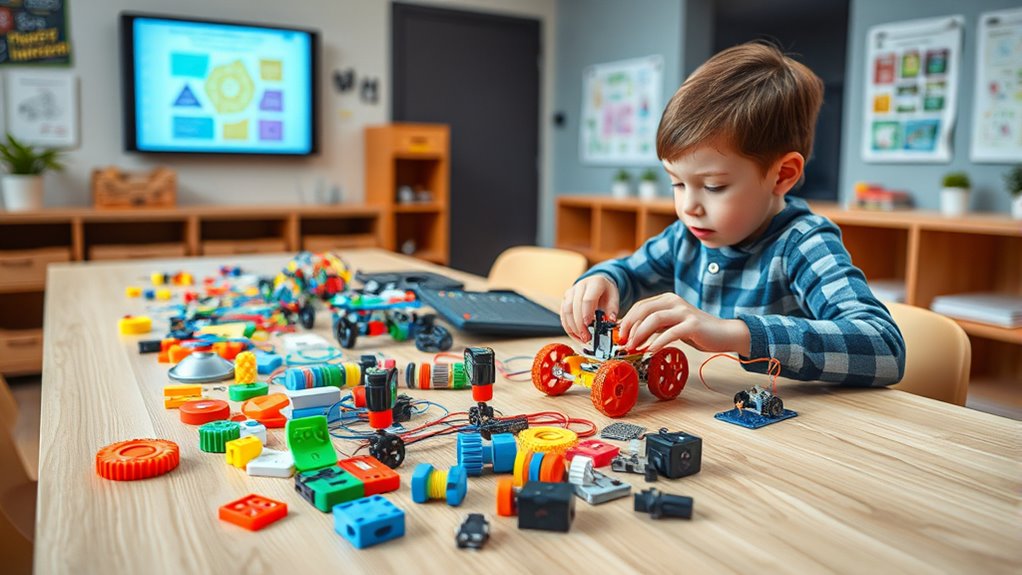

Choosing the right educational stem kit for kids involves balancing engagement, complexity, and value. The National Geographic Science Magic Kit stands out as the best overall, thanks to its wide range of experiments that keep kids learning and having fun. For those interested in chemistry, the National Geographic Amazing Chemistry Set offers extensive hands-on activities. Meanwhile, the Doctor Jupiter My First Science Experiments Kit is ideal for younger kids just starting out. These kits all come with tradeoffs: more complex sets may be overwhelming for beginners, while simpler kits might lack enough challenge for older children. Keep reading for a detailed breakdown to help you find the perfect fit for your child’s interests and age.

Get business pricing on tech for your team
- Business-only prices and quantity discounts
- Tax-exempt purchasing
- Multiple users, one account, clear invoices
Key Takeaways
- The most versatile kits combine multiple STEM disciplines, offering a well-rounded experience.
- Price and complexity often trade off; more advanced kits tend to cost more and may require adult supervision.
- Starter kits for younger kids focus on safety and simplicity, while advanced kits emphasize detailed experiments.
- Build quality and included materials vary greatly, impacting durability and the learning experience.
- The best kits align with the child’s age and interests, balancing challenge and fun.
| National Geographic Science Magic Kit with 100+ Experiments for Kids 8-12 |  | Best Overall | Number of Experiments: 100+ | Age Range: 8-12 years | Brand: Blue Marble / National Geographic | VIEW ON AMAZON | See Our Full Breakdown |
| National Geographic Amazing Chemistry Set with 100+ Experiments for Ages 8-12 |  | Best for Real Lab-Style Chemistry | Number of Experiments: 100+ (plus 85 bonus experiments) | Age Range: 8 years and up | Brand: Blue Marble / National Geographic | VIEW ON AMAZON | See Our Full Breakdown |
| Doctor Jupiter My First Science Experiments Kit for Kids Ages 4+ (50+ Experiments) |  | Best Starter Kit for Preschoolers | Number of Experiments: 50+ | Age Range: 4 years and up | Safety Standards: ASTM F963-17 | VIEW ON AMAZON | See Our Full Breakdown |
| Doctor Jupiter My First Science Experiments Kit for Kids Ages 4+ (100+ Experiments) |  | Best Value for Young Kids | Number of Experiments: 100+ | Age Range: 4 years and up | Safety Standards: ASTM F963-17 | VIEW ON AMAZON | See Our Full Breakdown |
| UNGLINGA 150 Experiments Science Kits for Kids Chemistry Lab STEM Toys |  | Best Variety Pick | Number of Experiments: 150 | Topics Covered: Earth, surface tension, chemistry, physics | Tools Included: Lab tools and safety goggles | VIEW ON AMAZON | See Our Full Breakdown |
| Snap Circuits Jr. SC-100 STEM Electronics Kit, 100+ Projects, Ages 8+ |  | Best Overall for Introductory Electronics | Number of Projects: 100+ | Age Range: 8+ | Parts Included: 29 Snap Circuits parts | VIEW ON AMAZON | See Our Full Breakdown |
| National Geographic Earth Science Kit with 100+ Activities for Kids 8-12 |  | Best for In-Depth STEM Exploration | Brand: Blue Marble | Age Range: 8 years and up | Objective: STEM | VIEW ON AMAZON | See Our Full Breakdown |
| Thames & Kosmos Mega Cyborg Hand STEM Experiment Kit |  | Best for Mechanical and Hydraulic Systems | Configuration Options: Right hand, left hand, claw-like | Adjustable: Yes, for finger angles and hand size | Power Source: Air pressure and water | VIEW ON AMAZON | See Our Full Breakdown |
| JOVA Klever Kits 36-in-1 Motor Robotic Kits for Kids |  | Best for Versatile Robotics and Problem Solving | Number of models: 36 | Motorized models: 14 | Recommended age: 8-13 years | VIEW ON AMAZON | See Our Full Breakdown |
| Klutz LEGO Gear Bots Science/STEM Activity Kit for 8-12 years |  | Best for Creative Mechanical Building with LEGO | Brand: Klutz | Model Number: 9781338603453 | Age Range: 8-12 years | VIEW ON AMAZON | See Our Full Breakdown |
| educational stem kits for kid | Age Range | Brand | Number of Experiments |
|---|---|---|---|
| National Geographic Science Ma | 8-12 years | Blue Marble / National Geographic | 100+ |
| National Geographic Amazing Ch | 8 years and up | Blue Marble / National Geographic | 100+ (plus 85 bonus experiments) |
| Doctor Jupiter My First Scienc | 4 years and up | Doctor Jupiter | 50+ |
| Doctor Jupiter My First Scienc | 4 years and up | Doctor Jupiter | 100+ |
| UNGLINGA 150 Experiments Scien | — | UNGLINGA | 150 |
| Snap Circuits Jr. SC-100 STEM | 8+ | — | — |
| National Geographic Earth Scie | 8 years and up | Blue Marble | — |
| Thames & Kosmos Mega Cyborg Ha | — | — | — |
| JOVA Klever Kits 36-in-1 Motor | — | — | — |
| Klutz LEGO Gear Bots Science/S | 8-12 years | Klutz | — |
More Details on Our Top Picks
National Geographic Science Magic Kit with 100+ Experiments for Kids 8-12
This kit earns the top spot because it frames science as performance, not homework. The magic angle gives kids a reason to repeat experiments for an audience, which is where actual learning sticks — explaining a trick to a sibling requires understanding the reaction behind it. Compared with the National Geographic Amazing Chemistry Set, which leans into lab-style chemistry with test tubes and beakers, this option is better at holding the attention of kids who tire of straightforward experiments. The award-winning Blue Marble pedigree also shows in the instruction quality. The tradeoff: fewer specifics are available about what’s actually inside the box, so parents who want a detailed materials list and safety notes before buying may prefer the chemistry set’s clearer documentation.
Pros:- Magic framing makes kids want to repeat and explain experiments
- Over 100 experiments provides lasting value
- Award-winning Blue Marble design and instruction quality
- Balances education with imagination and creativity
Cons:- Sparse documentation on included materials and safety features
- Less structured than lab-style chemistry kits for methodical learners
Best for: Parents of 8-12 year olds who want a kit that doubles as entertainment and repeatedly gets pulled off the shelf
Not ideal for: Buyers who need to know exactly which chemicals and materials are included before purchasing
- Number of Experiments:100+
- Age Range:8-12 years
- Brand:Blue Marble / National Geographic
- Focus:Science magic tricks and demonstrations
- Awards:Award-winning toy design
- Educational Objective:STEM, imagination, creativity
Our verdict“If you want one kit that keeps an 8-12 year old engaged past the first week, this is the pick.”
National Geographic Amazing Chemistry Set with 100+ Experiments for Ages 8-12
Where the Science Magic Kit sells science through showmanship, this set earns its place by delivering the closest thing to a genuine lab experience — real test tubes, beakers, crystal growing, and color-changing reactions. The bonus guide with 85 extra experiments using household items effectively stretches this well past the base 100 activities, giving it the longest realistic shelf life in this batch. Compared with the UNGLINGA 150-experiment kit, the chemistry here is deeper rather than broader: fewer scattered topics, but proper reactions with proper tools. The catch is commitment — some experiments take time to complete and younger kids will need active adult supervision, so this makes most sense for families who plan to do science together rather than hand it off.
Pros:- Includes real lab tools like test tubes and beakers
- Bonus guide adds 85 household-item experiments
- Genuinely instructive chemistry including crystal growing and reactions
- Everything needed arrives in the box
Cons:- Requires adult supervision for younger children
- Some experiments are time-consuming rather than instant
- Age-capped appeal — too advanced for preschoolers, too basic for teens
Best for: Families ready to do supervised, multi-session chemistry projects with kids who like methodical experiments
Not ideal for: Parents wanting a self-directed activity — supervision and time investment are required
- Number of Experiments:100+ (plus 85 bonus experiments)
- Age Range:8 years and up
- Brand:Blue Marble / National Geographic
- Model Number:NGMEGACHEMAR
- Key Activities:Crystal growing, chemical reactions, glowing test tubes
- Included Components:Test tubes, beakers, and all experiment materials
- Educational Objective:STEM / Chemistry
Our verdict“The closest thing to a real chemistry lab for the 8+ crowd, provided a grown-up is willing to participate.”
Doctor Jupiter My First Science Experiments Kit for Kids Ages 4+ (50+ Experiments)
This is the gentlest on-ramp to science in the lineup. With 50+ experiments built around volcanoes, slime, and perfume-making, it trades depth for approachability — exactly what a four-year-old needs. The illustrated, step-by-step instructions are genuinely usable by early readers, and the ASTM F963-17 safety certification matters more here than with any other pick because the target user may still put things in their mouth. Compared with the larger Doctor Jupiter 100+ experiment version, this smaller set is the smarter first purchase: half the experiments at a lower price lets you test whether your child’s interest holds before committing to the bigger box. The tradeoff is scope — kids past kindergarten will outgrow these concepts quickly, and some activities still need pantry items you supply yourself.
Pros:- Certified to ASTM F963-17 safety standards
- Illustrated instructions young kids can follow
- Screen-free, hands-on activities like volcanoes and slime
- Low-commitment entry point to STEM
Cons:- Smaller experiment count than sibling kits
- Requires adult supervision and some household items
- Content is quickly outgrown
Best for: Parents of 4-6 year olds testing whether their child is ready to love science before buying a bigger kit
Not ideal for: Kids 7 and up who will find the basic concepts too simple too fast
- Number of Experiments:50+
- Age Range:4 years and up
- Safety Standards:ASTM F963-17
- Brand:Doctor Jupiter
- Key Activities:Volcanoes, slime, perfume making
- Instructions:Illustrated, easy-to-follow steps
Our verdict“A sensible, safety-certified first science kit for preschoolers — buy it before the big boxes.”
Doctor Jupiter My First Science Experiments Kit for Kids Ages 4+ (100+ Experiments)
Think of this as the confirmed-enthusiast version of Doctor Jupiter’s starter kit. It doubles the experiment count to 100+ while keeping the same ASTM F963-17 safety certification and picture-heavy instruction style that make the brand work for pre-readers. Against the National Geographic kits, it wins on accessibility: those target 8+, while this is built for children as young as four, prioritizing observation and problem-solving over real chemistry. The per-experiment cost here is the lowest in this batch, which is why it takes the value slot rather than the starter slot — it only makes sense once you know your child wants volume. The compromise is ceiling: concepts stay basic by design, so an eight-year-old with any science background will find it underwhelming next to a Snap Circuits or chemistry set.
Pros:- 100+ experiments at a low per-activity cost
- Safety certified to ASTM F963-17
- Well-illustrated instructions build independence
- Promotes critical thinking and observation skills
Cons:- Concepts stay basic and are outgrown within a couple of years
- Some experiments require additional household items
- Adult supervision still needed for younger children
Best for: Budget-minded parents of 4-7 year olds who already know their kid loves experiments and want maximum activities per dollar
Not ideal for: Older or science-experienced kids who need more sophisticated content
- Number of Experiments:100+
- Age Range:4 years and up
- Safety Standards:ASTM F963-17
- Brand:Doctor Jupiter
- Educational Focus:Critical thinking, observation, problem-solving
- Format:Screen-free hands-on activities
Our verdict“The best price-to-activity ratio for young children — once their interest in science is already proven.”
UNGLINGA 150 Experiments Science Kits for Kids Chemistry Lab STEM Toys
No other kit in this roundup spreads this wide — 150 experiments across chemistry, physics, earth science, and surface tension. That breadth is the whole point: where the National Geographic Amazing Chemistry Set goes deep on reactions, UNGLINGA functions more like a survey course, ideal for a kid whose interests change weekly or for splitting across classroom stations. The included goggles and quality lab tools are a nice touch that most budget kits skip. The tradeoff is polish — instructions are serviceable but not as refined as Blue Marble’s, some experiments require household items not in the box, and the vague age guidance means parents of younger children should vet activities themselves. It rewards buyers who value quantity and topic range over curated depth.
Pros:- Broadest topic coverage in the roundup — chemistry, physics, earth science
- 150 experiments offers weeks of activities
- Includes goggles and quality lab tools
- Works well split across multiple kids or classroom groups
Cons:- Some experiments need household items not included
- Unclear age-range labeling requires parental judgment
- Instructions less polished than premium brands
Best for: Families and teachers who want the widest topic coverage and don’t mind curating experiments themselves
Not ideal for: Buyers who want a clearly defined age rating and every material included in the box
- Number of Experiments:150
- Topics Covered:Earth, surface tension, chemistry, physics
- Tools Included:Lab tools and safety goggles
- Brand:UNGLINGA
- Materials:Kid-friendly materials
- Instructions:Illustrated, easy-to-follow guide
- Setting:Home or school use
Our verdict“The pick for breadth over depth — best for varied interests or group settings, not for a focused chemistry curriculum.”
Snap Circuits Jr. SC-100 STEM Electronics Kit, 100+ Projects, Ages 8+
This kit stands out for its broad range of over 100 projects, making it ideal for kids beginning to explore electrical engineering. Compared with the Thames & Kosmos Mega Cyborg Hand, it offers a much wider variety of simple, snap-together experiments, which is perfect for sustained engagement. However, the limited parts (29) mean that more complex projects may require additional kits or parts. Its tool-free design ensures safety and ease of use, especially for younger children, but the need for batteries (not included) can be a minor inconvenience. Overall, this kit makes the most sense for beginners who want a comprehensive, safe introduction to electronics without complexity or electronics assembly skills.
Pros:- Over 100 engaging, beginner-friendly projects
- Safe, no soldering or tools needed
- Includes all necessary components and instructions
Cons:- Requires batteries (not included), which adds to cost
- Limited to 29 parts, restricting project complexity without extra kits
Best for: Children aged 8+ new to electronics and STEM projects who want variety and ease of use
Not ideal for: Parents seeking advanced, expandable electronic projects or detailed electronic assembly experience
- Number of Projects:100+
- Age Range:8+
- Parts Included:29 Snap Circuits parts
- Batteries Required:Yes
Our verdict“This kit is perfect for young beginners seeking a broad, safe, and straightforward electronics experience.”
National Geographic Earth Science Kit with 100+ Activities for Kids 8-12
This kit excels in providing a broad spectrum of over 100 hands-on science activities, making it ideal for children eager to explore geology, volcanology, and crystals, much like the Klutz LEGO Gear Bots but with a stronger focus on earth sciences. Its detailed, colorful learning guide enhances understanding, though some experiments require adult supervision, which may limit independent exploration. For very young children, especially those under age 8, the complexity might be overwhelming, but for curious, older kids, it offers deep engagement. Compared to electronic kits like Snap Circuits, this kit emphasizes natural sciences and experimentation, making it a versatile choice for family activities or classroom use.
Pros:- Over 100 science activities to foster curiosity
- Includes a full-color, detailed learning guide
- Great for sharing with friends and family
Cons:- Requires adult supervision for some experiments
- May be too complex for very young children
- No specific price info makes value harder to gauge
Best for: Parents and educators seeking comprehensive, science-rich activities for children aged 8-12
Not ideal for: Young children under 8 or families looking for electronic or mechanical building projects
- Brand:Blue Marble
- Age Range:8 years and up
- Objective:STEM
- Number of Items:1
- Included Components:100+ Science Experiments & Activities
- Model Number:NGMEGAEARTH
Our verdict“This kit is ideal for children who love natural sciences and hands-on experiments with guided learning.”
Thames & Kosmos Mega Cyborg Hand STEM Experiment Kit
This kit offers a focused exploration of pneumatics and hydraulics by allowing kids to build and operate a mechanical hand driven by water and air pressure. It stands out for its adjustable design and realistic hydraulic pistons, providing a tactile understanding of industrial robotic mechanisms. Unlike electronic kits such as Snap Circuits, it emphasizes mechanical and fluid systems, which can be more challenging for younger children but invaluable for learning about engineering principles. The assembly process might be complex for some, especially those unfamiliar with hydraulic concepts, but this tradeoff results in a highly educational experience for those interested in robotics and pneumatics. It’s best suited for older children or those with some prior STEM experience.
Pros:- Demonstrates pneumatic and hydraulic systems effectively
- Adjustable for different configurations and sizes
- No batteries or motors needed, encouraging manual understanding
Cons:- Requires understanding of hydraulic concepts, possibly challenging for some
- Limited to mechanical and hydraulic components, not electronic
Best for: Kids aged 10-13 with an interest in robotics, hydraulics, and mechanical engineering
Not ideal for: Younger children or beginners seeking electronic projects with less complexity
- Configuration Options:Right hand, left hand, claw-like
- Adjustable:Yes, for finger angles and hand size
- Power Source:Air pressure and water
- Included Components:Hydraulic pistons, mechanical fingers
Our verdict“This kit is well-suited for mechanically inclined kids interested in hydraulic robotics and engineering principles.”
JOVA Klever Kits 36-in-1 Motor Robotic Kits for Kids
This kit provides a variety of 36 different robot models, including walking machines and racing cars, making it an excellent choice for kids who enjoy diverse projects. Compared to the Klutz LEGO Gear Bots, it offers motorized, moving robots that require active problem-solving and mechanical assembly, which can be more engaging for older or more experienced children. The inclusion of video tutorials and organized parts helps streamline the building process, though the challenge level might be high for younger or less experienced builders. Its versatility makes it a good long-term investment, but the limited number of models means it might not sustain interest indefinitely.
Pros:- Encourages STEM learning through diverse robot designs
- Includes detailed instructions and video tutorials
- Organized parts tray simplifies assembly and storage
Cons:- Assembly may be difficult for some users, especially beginners
- Limited to 36 models, which could limit long-term variety
Best for: Children aged 8-13 who enjoy motorized robotics and varied building challenges
Not ideal for: Younger children under 8 or those seeking simple, non-motorized projects
- Number of models:36
- Motorized models:14
- Recommended age:8-13 years
- Includes:Parts tray, instruction booklet, video tutorials
- Materials:Safe, durable
Our verdict“This kit is perfect for aspiring roboticists who want a wide range of motorized models and hands-on problem-solving.”
Klutz LEGO Gear Bots Science/STEM Activity Kit for 8-12 years
This kit makes a strong case for fostering creativity alongside mechanical skills by combining LEGO Technic bricks with papercraft components. It excels in helping kids aged 8-12 develop engineering skills through building kinetic creatures and models, much like the JOVA Klever Kits, but with a focus on building and designing with LEGO elements. Its 64-page instruction book guides users through various projects, promoting manual dexterity and problem-solving. The limitation to children aged 8-12 and the time-consuming assembly could be drawbacks for younger or impatient kids, but for those interested in mechanical design, it offers a rewarding experience. The focus on creativity and fine motor skills complements more electronic-focused kits well.
Pros:- Encourages STEM skills through hands-on LEGO building
- Includes a variety of models to build and explore
- Promotes creativity and mechanical understanding
Cons:- Limited to children aged 8-12, less suitable for older or younger kids
- Assembly can be time-consuming and challenging for some
Best for: Kids who enjoy building with LEGO and want to explore engineering principles through creative projects
Not ideal for: Younger children or those seeking quick, electronic, or motorized builds
- Brand:Klutz
- Model Number:9781338603453
- Age Range:8-12 years
- Included Components:64-page book, 62 LEGO elements, 10 sheets of papercraft
- Set Name:Klutz LEGO Gear Bots
Our verdict“This kit is best for creative kids eager to develop engineering skills through LEGO-based projects.”
How We Picked
This lineup of educational stem kits was chosen based on several key criteria. First, I evaluated the breadth and depth of experiments included, prioritizing kits that offer diverse and engaging activities across different STEM fields. I also considered the quality of materials and safety features, ensuring they meet safety standards for their target age groups. Usability was a factor—kits should be easy to set up and use, even for younger kids, but still challenging enough for older children. Additionally, value for money and the inclusion of comprehensive instructions or guides influenced the rankings. Kits that struck a good balance between affordability and educational depth ranked higher, with more complex or premium kits positioned as premium options for serious learners.| educational stem kits for kid | Brand |
|---|---|
| National Geographic Science Ma | Blue Marble / National Geographic |
| National Geographic Amazing Ch | Blue Marble / National Geographic |
| Doctor Jupiter My First Scienc | Doctor Jupiter |
| Doctor Jupiter My First Scienc | Doctor Jupiter |
| UNGLINGA 150 Experiments Scien | UNGLINGA |
| Snap Circuits Jr. SC-100 STEM | — |
| National Geographic Earth Scie | Blue Marble |
| Thames & Kosmos Mega Cyborg Ha | — |
| JOVA Klever Kits 36-in-1 Motor | — |
| Klutz LEGO Gear Bots Science/S | Klutz |
Factors to Consider When Choosing Educational Stem Kits For Kids
When selecting an educational STEM kit for kids, it’s essential to consider several factors to ensure the kit matches the child’s age, interests, and skill level. Beyond just the number of experiments, think about the quality of components, safety features, and whether the kit offers a broad or focused STEM experience. A well-chosen kit can spark lasting curiosity, but a mismatched one may lead to frustration or boredom. Here are some key considerations to guide your choice:Age Appropriateness
Ensure the kit’s recommended age aligns with your child’s development level. Younger kids need simple, safe experiments that foster foundational skills, while older children can handle more complex, detailed projects. Picking a kit that’s too advanced can be overwhelming, whereas one that’s too simple might not hold their interest. Always check the manufacturer’s age guidelines to avoid disappointment or safety issues.
Experiment Variety and Depth
Look for kits that offer a range of experiments across different STEM fields—chemistry, physics, electronics, and engineering—to provide a comprehensive learning experience. Some kits focus narrowly on one area, which can be great for deep dives, but may limit overall exposure. Consider how the variety aligns with your child’s interests and whether the kit can grow with them as they develop new skills.
Safety and Material Quality
High-quality, non-toxic materials and safety features like secure containers and age-appropriate tools are vital. Cheaper kits often cut corners on safety, which can pose risks or lead to quick wear and tear. Investing in well-made kits can reduce replacement costs and ensure a safer, more satisfying experience for your child.
Ease of Use and Instructions
Clear, detailed instructions are essential, especially for kits intended for independent use. Kits that are intuitive and come with visual guides reduce frustration and encourage confidence. Conversely, overly complicated instructions can hinder learning and turn kids off from STEM activities.
Price and Long-Term Value
While budget-friendly options are tempting, they may lack durability or depth. More expensive kits often include higher-quality components and more comprehensive activities, offering better value over time. Consider whether the kit provides enough educational and entertainment value to justify its price, especially if you plan to use it multiple times or expand the collection.
Frequently Asked Questions
Are STEM kits safe for young children?
Most STEM kits designed for children include safety features like non-toxic materials, rounded edges, and age-appropriate components. Always check the manufacturer’s recommended age and supervise younger children during experiments. Choosing kits with clear instructions and safety warnings ensures a safe and enjoyable experience, especially for kids just starting with STEM activities.
How do I choose a kit that keeps my child engaged over time?
Look for kits that offer a variety of experiments and can expand into additional projects or kits. Versatile kits that cover multiple STEM disciplines tend to maintain interest longer. Additionally, selecting age-appropriate complexity and including projects that align with your child’s specific interests—like robotics or chemistry—can help sustain their curiosity over months or years.
Are more expensive kits worth the extra cost?
Generally, higher-priced kits tend to include better materials, more experiments, and longer-lasting components. They often provide a richer learning experience and can be more durable, making them a worthwhile investment if your child shows strong interest in STEM. However, it’s important to balance cost with the child’s age and interest to ensure the kit truly matches their needs.
Can these kits help prepare my child for future STEM education?
Yes, quality STEM kits introduce foundational concepts and foster critical thinking, problem-solving, and hands-on skills that are essential in STEM fields. They can ignite a passion for science and engineering early on, giving children a head start in understanding complex topics later in school. Consistent, engaging activities with these kits can build confidence and curiosity that support future learning.
Should I buy multiple kits or a comprehensive one?
It depends on your child’s interests and your budget. Multiple focused kits can offer in-depth experiences in specific areas like robotics or chemistry, while a comprehensive kit provides a broader overview of STEM disciplines. Combining both approaches can be effective, allowing your child to explore different fields and discover their passions without feeling overwhelmed by too many simultaneous projects.
Conclusion
For parents seeking a well-rounded, engaging experience that offers great value, the National Geographic Science Magic Kit makes an excellent choice as the best overall pick. Those looking for a budget-friendly, beginner-friendly option might prefer the Doctor Jupiter My First Science Experiments Kit. If you want a premium, feature-rich kit for serious young scientists, the UNGLINGA 150 Experiments Science Kit or the Thames & Kosmos Mega Cyborg Hand are compelling options. For specific interests like robotics or electronics, the JOVA Klever Kits and Snap Circuits Jr. excel. Your choice should align with your child’s age, curiosity, and your long-term STEM goals.
As an affiliate, we earn on qualifying purchases.Halloween Picks
halloween