For most DJs, the Sennheiser HD 25 is the strongest all-around pick thanks to its on-ear fit, practical handling, and reputation as a purpose-built DJ design. The Pioneer DJ HDJ-X7-S is a more substantial over-ear option, while the Pioneer DJ HDJ-CUE1 makes sense for a simpler, foldable starter set. The main tradeoff is between compact headphones that are easy to cue with and larger designs that cover the ears and may suit longer listening sessions. Studio monitor models can also work for DJing, though their fit and handling may differ from gear built for booth use. Read on for how the 13 options compare and which one fits your setup.

Get business pricing on tech for your team
- Business-only prices and quantity discounts
- Tax-exempt purchasing
- Multiple users, one account, clear invoices
Complete the kit


Key Takeaways
- The Sennheiser HD 25 leads for booth practicality: its compact on-ear format gives it a distinct role among a list heavy with over-ear studio designs.
- Pioneer’s lineup spans different needs: the HDJ-X7-S targets DJs seeking a more substantial build, while the HDJ-X5 and foldable HDJ-CUE1 offer more approachable alternatives.
- Studio headphones are not automatic DJ bargains: models such as the Audio-Technica ATH-M50x and ATH-M20x bring monitor-oriented designs, so buyers should weigh isolation, fit, and cue handling.
- Several low-cost wired options emphasize flexibility: the PUPGSIS M20, OneOdio A71, and OneOdio Pro-10 include DJ or studio use in their positioning, but buyers should check connector and fit needs before choosing.
- The Rockville package serves a different setup: its two semi-open headphones and four-channel amplifier are aimed at shared listening, rather than a compact single-DJ booth kit.


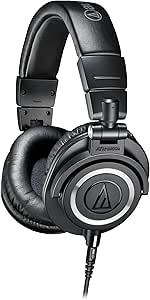


| dj headphone | Color | Driver size |
|---|---|---|
| Sennheiser HD 25 On-Ear DJ Hea | Black | — |
| TASCAM TH-02 Professional Stud | — | — |
| PUPGSIS M20 Wired DJ & Studio | — | 50mm |
| Pioneer DJ HDJ-X5 Professional | Black | 40mm |
| Pioneer HDJ-X7-S Over-Ear DJ H | Silver | 50mm |
| Audio-Technica ATH-M50x Profes | Black | 45mm |
| Audio-Technica ATH-M20x Profes | Black | 40mm |
| Pioneer DJ HDJ-CUE1 On-Ear Wir | Dark silver | — |
| OneOdio A71 Hi-Res Wired Over- | Black | 40mm |
| Audio-Technica ATH-M50x Closed | Black | 45mm |
| Rockville PRO-E90 250 Ohm Semi | — | — |
| Syndesmos CM7005 Wired Over-Ea | — | 50mm |
| OneOdio Pro-10 Wired DJ Hi-Res | Black | 50mm |
More Details on Our Top Picks
Sennheiser HD 25 On-Ear DJ Headphones, Black
The Sennheiser HD 25 suits DJs who need a light on-ear pair that can keep cue details audible at high sound pressure levels. Its aluminium voice coils support high sensitivity, while the detachable, single-sided cable is easier to manage and replace than a fixed lead. Compared with the over-ear Pioneer DJ HDJ-X5, the HD 25 has a lighter, more compact on-ear design; the Pioneer’s swiveling cups are the clearer fit for DJs who prioritize one-ear monitoring. That compact fit comes with a tradeoff: on-ear pads can feel less accommodating over long sessions than over-ear designs such as the TASCAM TH-02. Choose this Sennheiser for portable, high-level cueing; skip it if you prefer over-ear coverage or need listed swivel-cup monitoring.
Pros:- High sensitivity supports cueing without requiring a bulky headphone design.
- Handles very high sound pressure levels.
- Lightweight on-ear construction is suited to extended wear.
- Detachable, single-sided cable is practical to manage and replace.
Cons:- On-ear fit may be less comfortable for buyers who prefer over-ear pads.
- Swivel earcups are not listed for one-ear monitoring.
Best for: DJs who want a lightweight on-ear headphone for high-level cueing and extended sets.
Not ideal for: DJs who prefer over-ear coverage or need swivel-cup one-ear monitoring explicitly listed.
- Brand:Sennheiser
- Model:HD 25
- Type:On-ear DJ headphones
- Color:Black
- Voice coils:Lightweight aluminium
- Cable:Detachable, single-sided
Our verdict“Choose the HD 25 for a lightweight, high-sensitivity on-ear DJ headphone; pick the HDJ-X5 if swivel-cup monitoring matters more.”
TASCAM TH-02 Professional Studio Monitor Headphones, Wired, Over-Ear
The TASCAM TH-02 is a practical choice for DJs splitting time between cueing, recording, and guitar or podcast monitoring. Its closed-back, over-ear design and padded headband make it a more enveloping option than the on-ear Sennheiser HD 25, while folding cups help it pack away between sessions. A supplied 3.5mm-to-6.3mm adapter covers common consumer and studio connections, though the snap-on fit may loosen with repeated handling. Unlike the Pioneer DJ HDJ-X5, the TH-02 is not described with swivel cups for one-ear monitoring or sound insulation for loud venues, so it is less purpose-built for booth work. Its strength is versatility and transport, not specialized DJ ergonomics; choose it for mixed studio tasks and skip it if your priority is fast one-ear cueing.
Pros:- Closed-back over-ear construction suits monitoring across several studio tasks.
- Foldable design makes transport and storage easier.
- Padded headband and ear pads support extended wear.
- Includes a 6.3mm adapter for professional audio connections.
Cons:- Wired-only connectivity offers no wireless option.
- The snap-on adapter may loosen with repeated use.
- No swivel-cup one-ear monitoring feature is listed.
Best for: Home DJs and creators who need foldable wired headphones for DJ practice plus recording or guitar monitoring.
Not ideal for: Club DJs who need listed swivel-cup monitoring and insulation tailored to loud venues.
- Type:Closed-back dynamic studio monitor headphones
- Wearing style:Over-ear
- Connectivity:Wired, 3.5mm
- Adapter:3.5mm to 6.3mm
- Design:Foldable
- Ear pads:Padded, tightly stitched
Our verdict“Choose the TH-02 for foldable, wired over-ear versatility across studio tasks; choose the HDJ-X5 for more explicit booth-focused monitoring features.”
PUPGSIS M20 Wired DJ & Studio Monitor Headphones, 50mm Drivers, 3.5mm/6.35mm
The PUPGSIS M20 stands apart for a Share Port that lets a second pair of headphones connect without a splitter, a useful extra when a DJ and collaborator need to hear the same mix. Its 50mm drivers and stated 20Hz–20kHz response describe broad-range playback, while the 270g weight, folding build, and included case make it easy to carry. Compared with the Pioneer HDJ-X7-S, this model emphasizes shared listening and bundled portability; the Pioneer is more clearly specified for loud-venue monitoring, with swivel cups and sound insulation. The M20’s wired setup and lack of listed swivel-cup monitoring make it less tailored to booth routines. Pick it for collaborative practice or podcast sessions; choose a Pioneer if one-ear cueing is central.
Pros:- Share Port connects a second headphone without a splitter.
- 50mm drivers and a stated 20Hz–20kHz frequency range.
- 270g weight and floating headband are designed for long-session comfort.
- Folds for transport and includes two AUX cables, an adapter, and a case.
Cons:- Wired-only connectivity limits listening to cable-connected sources.
- Swivel earcups for one-ear cueing are not listed.
- Push-button controls may offer fewer options than touch controls.
Best for: DJs, podcasters, and collaborators who want to share wired audio and carry a foldable headphone kit.
Not ideal for: Gigging DJs who prioritize documented sound insulation and swivel-cup one-ear monitoring.
- Brand:PUPGSIS
- Model:PG-M20PRO
- Driver size:50mm
- Frequency response:20Hz–20kHz
- Connectivity:Wired, 3.5mm and 6.35mm
- Ear placement:Over-ear
- Weight:270g
- Folding:Yes
- Included accessories:Two AUX cables, 6.35mm adapter, protective case, user manual
Our verdict“Choose the M20 for shared listening and a portable accessory bundle; choose the HDJ-X7-S for more explicitly specified gig-monitoring features.”
Pioneer DJ HDJ-X5 Professional DJ Headphones – Black
The Pioneer DJ HDJ-X5 puts booth tasks first: its 40mm drivers are described for clear cueing and beatmatching, while sound insulation helps keep monitoring usable in loud settings. Swiveling earcups support one-ear listening, a practical advantage over the studio-focused TASCAM TH-02, whose swivel feature is not listed. The HDJ-X5 is the more straightforward DJ-specific pick here, though its 40mm drivers place it below the Pioneer HDJ-X7-S in driver size, and the supplied description says it may lack the refinement of higher-end Pioneer models. That makes it a sensible fit for practice and regular DJ use when the X7-S’s 50mm drivers and detachable cable are not priorities. Choose it for core booth features; skip it if you want the more fully specified gig-oriented Pioneer.
Pros:- 40mm drivers are specified for clear cueing and beatmatching.
- Sound insulation is intended for loud monitoring environments.
- Swiveling earcups support one-ear monitoring.
- Durable design is described for regular practice and use.
Cons:- The description notes less detail and refinement than higher-end Pioneer DJ headphones.
- Driver size is smaller than the HDJ-X7-S’s 50mm drivers.
Best for: New and intermediate DJs who want booth-oriented cueing, sound insulation, and one-ear monitoring.
Not ideal for: DJs seeking the listed 50mm drivers and detachable cable of the HDJ-X7-S.
- Driver size:40mm
- Color:Black
- Earcup design:Swivel for one-ear monitoring
- Intended use:DJ monitoring
- Sound insulation:Designed for loud environments
- Earpads:Ergonomic
Our verdict“Choose the HDJ-X5 for core booth features in a DJ-focused design; move up to the HDJ-X7-S if its larger drivers and detachable cable matter.”
Pioneer HDJ-X7-S Over-Ear DJ Headphones, Silver
The Pioneer HDJ-X7-S is the lineup’s most clearly equipped choice for regular booth use. Its 50mm drivers are described for clear monitoring at high volume, and sound insulation helps in noisy venues. Swivel earcups allow one-ear cueing, while a flexible headband and detachable four-core cable make the setup suited to repeated handling. Compared with the HDJ-X5, the X7-S offers larger drivers and a specified detachable cable, giving frequent gigging DJs more of the features called out for demanding use. It is less versatile for shared listening than the PUPGSIS M20, which adds a Share Port and travel accessories. The X7-S has no listed microphone or wireless connection, so it is a focused wired monitor rather than an all-purpose headset.
Pros:- 50mm drivers are specified for clear monitoring at high volumes.
- Sound insulation is suited to noisy venues.
- Swivel earcups support one-ear monitoring.
- Detachable four-core cable and flexible headband suit regular handling.
Cons:- No microphone is listed.
- No wireless connectivity is listed.
Best for: DJs who regularly play loud venues and want wired monitoring with one-ear cueing and a detachable cable.
Not ideal for: Buyers who need wireless listening, a microphone, or a shared-audio port.
- Brand:Pioneer DJ
- Model:HDJ-X7-S
- Type:Professional over-ear DJ headphones
- Color:Silver
- Driver size:50mm
- Cable:Detachable, four-core twisted structure with independent ground wire
- Monitoring:Swivel earcups for one-ear monitoring
- Warranty:1-year limited
Our verdict“Choose the HDJ-X7-S for wired gig monitoring with larger drivers and a detachable cable; pick the M20 if shared listening is more useful.”
Audio-Technica ATH-M50x Professional Studio Monitor Headphones, Black
The ATH-M50x is a flexible pick for DJs who also want a headphone suited to studio work. Its 90-degree swiveling earcups make single-ear cueing straightforward, while the circumaural fit helps keep outside sound from masking the mix. Compared with the entry-level ATH-M20x, its 45mm drivers and detachable cable give it a more adaptable setup for booth monitoring and listening between sets. That flexibility comes with a fit tradeoff: the clamping force can feel tiring during long sessions, and the swivel mechanism may wear with heavy use. I’d favor it over the Pioneer DJ HDJ-CUE1 when studio versatility and a removable cable matter more than a lightweight, entry-focused design.
Pros:- 90-degree swiveling earcups support one-ear cueing
- Circumaural design helps isolate sound in loud environments
- Detachable cable can be replaced or changed
- 45mm drivers and durable earpads suit studio use
Cons:- Tight fit may become fatiguing during extended sessions
- Swiveling mechanism may wear with heavy use
Best for: DJs who want one wired, isolating headphone for booth cueing and studio monitoring
Not ideal for: DJs who need a very light fit for long sets or want a model built specifically around DJ use
- Brand:Audio-Technica
- Model:ATH-M50x
- Driver size:45mm
- Design:Circumaural
- Earcup movement:90-degree swiveling
- Cable:Detachable
- Color:Black
- Warranty:2 years on parts and labor
Our verdict“Choose the ATH-M50x if you want isolating one-ear monitoring with studio flexibility and can tolerate a firm fit.”
Audio-Technica ATH-M20x Professional Studio Monitor Headphones, Black
The ATH-M20x makes sense for a new DJ building basic monitoring skills alongside studio tracking. Its circumaural cups help block surrounding sound, and the low-frequency tuning can make kick and bass parts easier to follow while cueing. Unlike the ATH-M50x, this model does not list swiveling earcups, so it is less convenient for quick one-ear booth checks. The single-side cable exit keeps the lead from coming from both sides, but this remains a wired studio design rather than a purpose-built DJ headphone. Compared with the more DJ-focused Pioneer DJ HDJ-CUE1, the M20x prioritizes tracking and mixing; choose it when that studio role is central, and skip it if frequent one-ear monitoring is your main need.
Pros:- Circumaural fit helps isolate sound
- Low-frequency tuning supports listening to bass-heavy material
- Single-side cable exit keeps the lead on one side
- 40mm drivers use rare earth magnets and copper-clad aluminum wire voice coils
Cons:- Studio-focused design may be less suited to casual listening
- No swiveling earcup feature is listed for one-ear monitoring
Best for: New DJs who also need closed, over-ear headphones for home tracking and basic mixing
Not ideal for: Club DJs who rely on swiveling cups for fast one-ear cueing or want headphones tuned specifically for DJ use
- Brand:Audio-Technica
- Model:ATH-M20x
- Driver size:40mm
- Driver type:Rare earth magnets with copper-clad aluminum wire voice coils
- Design:Circumaural over-ear
- Cable exit:Single side
- Intended use:Studio tracking and mixing
- Color:Black
Our verdict“Pick the ATH-M20x for straightforward studio tracking and mixing, but choose the HDJ-CUE1 if booth cueing is the priority.”
Pioneer DJ HDJ-CUE1 On-Ear Wired DJ Headphones, Foldable, Dark Silver
The HDJ-CUE1 is the most directly DJ-oriented choice here for someone starting out: it is built around cueing and beatmatching, with swivel cups for checking a track in one ear. Its on-ear, lightweight design and foldable frame are easier to carry than the over-ear OneOdio A71, whose coiled cable can feel cumbersome outside a booth. The tradeoff is a simpler entry-level build, which may not stand up as well to heavy professional use, and the wired connection keeps you tethered to the mixer. I’d choose this over the studio-focused ATH-M20x when hands-on DJ monitoring matters more than studio tracking features. It is a practical starting point, but frequent gigging may call for a sturdier professional model.
Pros:- Tuning is aimed at clear cueing in loud environments
- Swivel earcups support one-ear monitoring
- Lightweight design and soft earpads suit everyday use
- Foldable construction is easy to pack
Cons:- Wired connection limits movement away from the mixer
- Entry-level construction may be less durable under heavy professional use
Best for: Beginner DJs who want portable wired headphones with swivel cups for learning cueing and beatmatching
Not ideal for: Touring or frequent gigging DJs who need a more robust build, or anyone who wants wireless listening
- Type:On-ear wired DJ headphones
- Color:Dark silver
- Earcups:Swivel for one-ear monitoring
- Design:Foldable and lightweight
- Connection:Wired
- Intended use:Cueing and beatmatching
- Earpads:Soft
Our verdict“Choose the HDJ-CUE1 to learn booth cueing with a light, foldable DJ-focused design, and look to a sturdier model for frequent gigs.”
OneOdio A71 Hi-Res Wired Over-Ear Studio Headphones for DJ and Mixing, Black
The OneOdio A71 is a practical option for DJs who move between mixer outputs and want useful connection choices in the box. Its 6.35mm and 3.5mm plugs cover common studio and portable connections, while the shared audio port allows another pair of headphones to connect without a splitter. That makes it more accommodating for shared listening than the ATH-M50x, whose listed advantage is a detachable cable rather than a second headphone port. The 90-degree swiveling cups also support single-ear monitoring. The cost of that flexibility is a long, coiled lead that can snag or feel bulky when packed, and it remains wired. Choose it for adaptable studio and DJ setups; skip it if compact cable management is a priority.
Pros:- Includes both 6.35mm and 3.5mm plugs
- 90-degree swiveling earcups support single-ear monitoring
- Shared audio port can connect a second pair without a splitter
- Padded ear cushions and adjustable headband support a fitted over-ear setup
Cons:- Coiled cord can be bulky and cumbersome for portable use
- Wired-only connection limits mobility
Best for: DJs and home mixers who need both common plug sizes and a way to share audio with another listener
Not ideal for: Mobile DJs who prefer a short, straight lead or need a wireless option for moving around
- Driver size:40mm
- Type:Wired over-ear
- Cord length:6.6–9.8 ft coiled
- Plugs:6.35mm and 3.5mm
- Earcups:90-degree swiveling
- Shared audio port:Connects a second pair of headphones
- Color:Black
Our verdict“Choose the A71 if plug flexibility and shared listening matter more than a compact cable setup.”
Audio-Technica ATH-M50x Closed-Back Monitor Headphones, Black Bundle
This ATH-M50x bundle suits DJs who want the familiar 45mm, swiveling-cup monitoring setup with cables and storage for more than one listening context. It includes three detachable cables plus a USB-C adapter with a built-in DAC, so moving between a mixer and a compatible USB-C device takes fewer extra accessories. The core headphone shares the same isolation-focused, circumaural approach as the standalone ATH-M50x; the bundle’s distinction is convenience, not a different DJ fit. Compared with the simpler HDJ-CUE1, it offers more connection and carry accessories but may be more kit than a beginner needs. Its closed-back construction also rules it out for listeners specifically seeking an open-back sound.
Pros:- 45mm drivers and circumaural cups support isolated monitoring
- 90-degree swiveling earcups allow one-ear cueing
- Three detachable cables cover different setups and cable lengths
- Includes USB-C DAC adapter, stand, pouch, and full-sized case
Cons:- Closed-back design will not suit listeners seeking open-back headphones
- Bundle accessories may be unnecessary for DJs who only need a single mixer cable
Best for: DJs who want one 45mm monitor headphone with multiple cable options, USB-C connectivity, and dedicated storage
Not ideal for: Buyers who need only a basic booth headphone or prefer an open-back design
- Driver size:45mm
- Design:Closed-back, circumaural
- Earcups:90-degree swiveling
- Cable:Detachable
- Included cables:Coiled 3.9–9.8 ft; straight 9.8 ft and 3.9 ft
- USB-C accessory:Headphone adapter with built-in DAC
- Other accessories:Headphone stand, carrying pouch, full-sized case, 1/4-inch screw-on adapter
- Color:Black
Our verdict“Pick this bundle if you want ATH-M50x monitoring with ready-to-use cables and storage for several setups.”
Rockville PRO-E90 250 Ohm Semi-Open Studio Headphones 2-Pack with RHPA4 4-Channel Headphone Amplifier
This bundle suits DJs who also need to monitor a recording or podcast session with someone else. It includes two 250-ohm headphones and an amplifier with individual level controls, so each listener can adjust their volume without relying on a splitter. Compared with the more DJ-focused OneOdio Pro-10, the Rockville package is built around shared, amplified monitoring rather than convenient single-ear cueing; it lacks the Pro-10’s swiveling earcups. The semi-open design and stated 10Hz–25kHz response support detailed listening, while the low clamp force may help during longer sessions. The tradeoff is practical for DJ booths: sound can leak through the semi-open cups, and the 250-ohm impedance calls for amplification. Its included amp addresses the latter, but adds another device to power and carry.
Pros:- Two headphones and a multi-output amplifier are included
- Individual channel volume controls support shared listening
- Light 272g headphones with a stated 2.6N clamp force
- Amplifier offers USB power and both 1/4-inch and 3.5mm outputs
Cons:- 250-ohm headphones benefit from the included amp and may be too quiet from some portable sources
- Semi-open cups allow sound leakage and provide less isolation for DJ cueing
- Amplifier adds bulk and requires a USB power source
Best for: DJs, podcasters, or small studio teams who need two listeners to monitor through one source with separate volume controls
Not ideal for: Mobile DJs who need closed-back isolation, wireless freedom, or headphones for quiet vocal tracking
- Headphone impedance:250 ohms
- Drivers:45mm dynamic
- Headphone frequency response:10Hz–25kHz
- Headphone weight:272g
- Clamp force:2.6N
- Amplifier channels:4, supporting up to 8 headphone outputs
- Amplifier outputs:Four 1/4-inch TRS and four 3.5mm, parallel
- Amplifier power:5V USB
Our verdict“Choose the Rockville bundle when shared, amplified monitoring matters more than a compact, isolated DJ headphone setup.”
Syndesmos CM7005 Wired Over-Ear DJ and Studio Headphones
The CM7005 centers on a useful DJ movement: its 90-degree swiveling earcups let a wearer monitor one side while keeping the other ear open. That gives it a more direct cueing fit than the Rockville PRO-E90 bundle, whose semi-open design and high-impedance drivers lean toward amplified studio monitoring. The Syndesmos also includes a detachable coiled cable with both 3.5mm and 6.35mm plugs, reducing connector juggling between a controller and other audio gear. Its 50mm drivers and over-ear cushions suit general monitoring, but the supplied information does not specify isolation performance or sound tuning, so I would not choose it on those claims. It remains wired and relies on passive isolation; DJs seeking cable-free movement or strong noise blocking should look elsewhere.
Pros:- 90-degree earcup rotation supports single-ear monitoring
- Detachable coiled cable includes 3.5mm and 6.35mm plugs
- 50mm drivers cover a stated 20Hz–20kHz range
- Output connection allows another pair to be connected for shared listening
Cons:- Wired cable limits movement around a booth
- Passive isolation may be inadequate in very loud environments
- No supplied detail on sound isolation or driver tuning
Best for: Beginner and home DJs who want a straightforward wired pair with swiveling cups for one-ear cueing
Not ideal for: Performers who need wireless movement, active noise cancellation, or documented isolation for loud booths
- Driver size:50mm
- Frequency response:20Hz–20kHz
- Weight:260g
- Fit:Over-ear
- Earcup rotation:90 degrees
- Cable:Detachable coiled cable, 5.7–6ft
- Connectors:3.5mm and 6.35mm
- Warranty:1 year
Our verdict“Pick the CM7005 for accessible wired cueing and flexible connectors, provided passive isolation meets your booth needs.”
OneOdio Pro-10 Wired DJ Hi-Res Over-Ear Studio Monitor Headphones – Black
The Pro-10 pairs familiar DJ essentials: 90-degree swiveling earcups for one-ear monitoring and a share port for connecting a second pair. That makes it more practical for booth cueing than the Rockville PRO-E90, which includes two headphones but has semi-open cups and is aimed more at amplified studio monitoring. The Pro-10’s 50mm neodymium drivers are described as bass-rich with clear vocals and crisp highs, a sound profile that can help a DJ follow a mix, though it may not suit someone seeking strictly neutral monitoring. Padded cups and an adjustable headband support longer sessions, while wired 3.5mm and 6.35mm connections keep it compatible with common audio gear. The tradeoff is no Bluetooth, and some modern devices may need an adapter.
Pros:- 90-degree swiveling cups support single-ear DJ monitoring
- Share audio port connects a second pair without a splitter
- 50mm neodymium drivers are described as bass-rich with clear vocals
- Includes both 3.5mm and 6.35mm wired connection options
Cons:- Wired-only connection limits freedom of movement
- May require an adapter for devices without a headphone jack
- No frequency response or weight figure is provided in the supplied specs
Best for: DJs who want a wired, swiveling headphone with a simple way to share cue audio with another listener
Not ideal for: DJs who need Bluetooth, a stated frequency response, or a strictly neutral sound profile for critical studio work
- Model:Pro-10
- Driver size:50mm
- Magnet type:Neodymium
- Connection:Wired, 3.5mm and 6.35mm
- Earcup rotation:90-degree swiveling
- Share audio port:Yes
- Color:Black
Our verdict“Choose the Pro-10 if swiveling cue cups and splitter-free shared listening matter more than wireless convenience or specified tuning data.”

How We Picked
I compared these headphones as tools for cueing and mixing, giving the most weight to secure fit, useful isolation, comfortable wear, practical handling, and build features that suit regular setup and pack-down. I also considered cable and connector flexibility, whether the design is on-ear or over-ear, and whether the product is purpose-built for DJ work or primarily a studio monitor. Those distinctions matter because a headphone that works well for seated monitoring may be less convenient when a DJ needs to check a cue quickly in a loud booth.
The ranking favors options whose format and stated design align closely with DJ use, then accounts for versatility and setup needs. That puts the HD 25 first for its compact DJ-oriented approach, with Pioneer’s dedicated DJ models following according to their intended use and feature set. Studio monitor models remain useful alternatives, but their placement reflects the need to match studio-focused designs to booth conditions. The Rockville bundle ranks for a distinct multi-listener use case rather than individual portability.
Factors to Consider When Choosing Dj Headphones
Before choosing DJ headphones, match the design to how you cue, where you play, and how you carry your equipment. A familiar driver size or a studio label alone does not tell you whether a pair will stay comfortable in a booth or help you hear a cue over room sound.
Choose the fit for your cueing style
On-ear and over-ear designs change how quickly you can check a cue and how much of the room you hear. On-ear headphones are often easier to shift or wear on one side, which can help when you alternate between a cue and the main mix. Over-ear cups cover the ears and may feel more settled during extended listening, though their size can make fast repositioning less convenient. Try to think through your actual monitoring habits rather than assuming one format is universally better. If you mix in a loud booth, a secure seal matters because leaking room sound can make quiet cue details harder to catch. If you rely on one-ear monitoring, check that the headband and swivel arrangement support that use.
Treat isolation as part of hearing protection
Good isolation helps you monitor at a lower level by reducing how much booth sound competes with the cue. Closed-back designs are commonly used for this reason, but the label alone does not tell you how effectively a particular pair seals on your ears. Glasses, hair, and head shape can change the fit and the amount of sound that leaks in. Semi-open headphones, such as the Rockville pair in this roundup, let more sound pass through and are better suited to controlled listening spaces than noisy DJ booths. Do not compensate for a poor seal by turning the headphone level up without limit. When possible, choose a comfortable fit that lets you hear detail without forcing high volume.
Check cable and connector needs before buying
A cable that reaches your mixer without pulling can matter more during a set than a feature that looks impressive on a product page. Some models include a 3.5 mm plug with a 6.35 mm adapter, which can suit devices with different headphone outputs. Also check whether the cable detaches, how it routes, and whether its length fits your booth layout. A long cable may give you room to move but can snag on controls or other gear. If you use a portable controller, a bulky connector or excess cable can become a nuisance. Match the connector and cable arrangement to your mixer first, then consider extra flexibility.
Balance comfort against a secure seal
Headphones that feel comfortable for a few minutes may become tiring across a long event. Clamping force, ear pad material, cup depth, and total weight all shape how the fit feels over time. A looser fit can reduce pressure but may shift when you move or weaken isolation. A tighter fit may stay in place yet become uncomfortable during extended wear. Replacement pads can extend the useful life of a frequently used pair, so check whether replacements are available before buying. If you have a chance to try a design, wear it for a while and move your head as you would while mixing.
Pay for durability where your routine demands it
Regular gigging puts more strain on hinges, swivels, cables, and earpads than occasional home practice does. Foldable headphones take up less room in a bag, but folding parts add moving joints that deserve a close look. A replaceable cable or pad can make maintenance simpler if a component wears out before the drivers do. Studio use at a desk may place less demand on these parts, so a rugged DJ construction may not be worth prioritizing for every buyer. Consider how often the headphones will travel and whether you can protect them between sets. Spend attention on the parts your routine will repeatedly bend, pull, or pack away.
Separate single-DJ use from shared monitoring
A two-headphone bundle with a multi-channel amplifier solves a different problem from a single portable pair. It can support a small studio or shared listening setup, where multiple people need headphone outputs at once. That package also adds equipment and cabling, so it is less convenient to carry to a gig than a standalone DJ headphone. Before choosing a bundle, count the listeners and confirm that the amplifier fits your signal chain. For one DJ working from a mixer headphone output, the extra channels may go unused. Buy for the setup you actually need to serve.
Frequently Asked Questions
Are studio monitor headphones suitable for DJing?
They can work, especially for practice or a home setup, but studio monitoring and booth cueing place different demands on fit and handling. Check how well the headphones isolate outside sound and whether you can shift a cup or wear one ear as you mix. A studio-focused model may be comfortable for seated sessions yet feel bulky or awkward during a live set. Also confirm that its cable and connector work with your mixer. If you play in loud venues often, prioritize a secure seal and easy cue access over a studio label.
Should I choose on-ear or over-ear headphones for DJ sets?
Choose based on how you monitor, not on a general claim that one style sounds better. On-ear designs can be easier to move aside for one-ear cueing and are often less bulky to carry. Over-ear models cover the ears and may suit DJs who prefer a stable fit for longer listening, though they can take longer to reposition. The cup seal and comfort of the individual model matter as much as the category. If possible, try the headphones with the sort of one-ear monitoring you use during a set.
Do I need a headphone amplifier for DJ headphones?
Most DJs can connect a single pair directly to a mixer or controller that has a headphone output. An external amplifier is useful when the source output does not provide enough level or when several people need separate headphone connections. The Rockville bundle is built around that shared-monitoring scenario, rather than the usual one-DJ setup. Check the impedance and output guidance for both the headphones and your equipment before adding an amp. Extra amplification cannot make a poor fit or weak isolation more suitable for a noisy booth.
Is a detachable cable worth prioritizing?
A detachable cable can be useful if your headphones travel often or the cable is the part most likely to wear out. Replacing a cable is usually simpler than replacing the whole headphone, provided compatible spares are available. A fixed cable can be perfectly workable for home practice and avoids an extra connection point. Either way, check that the cable length and plug suit your mixer and booth layout. Cable management also matters: excess slack can catch on equipment while you move.
Can semi-open headphones work in a club booth?
They are usually a poor match for loud booths because their construction allows more sound to pass between the headphones and the room. That can make cue monitoring harder and tempt you to raise the headphone volume. Semi-open designs make more sense in quieter rooms where airflow and shared listening are priorities. For club use, look for a model with a secure seal and enough isolation for your venue. The Rockville pair in this roundup is better matched to its included multi-listener amplifier and controlled listening setup.
Conclusion
For the best overall DJ fit, choose the Sennheiser HD 25 if you want a compact, purpose-oriented option for cueing. For a premium over-ear direction, consider the Pioneer HDJ-X7-S; the HDJ-X5 offers a more straightforward alternative within Pioneer’s DJ range. Beginners can start with the foldable Pioneer HDJ-CUE1, while buyers comparing feature-rich studio monitoring should look at the Audio-Technica ATH-M50x. For flexible wired listening, compare the OneOdio A71 and Pro-10 against your connector and fit needs. The Rockville package suits shared monitoring with multiple listeners. Pick the design that matches your booth, cueing habits, and setup first.
Fall Picks
fall essentials
As an affiliate, we earn on qualifying purchases.