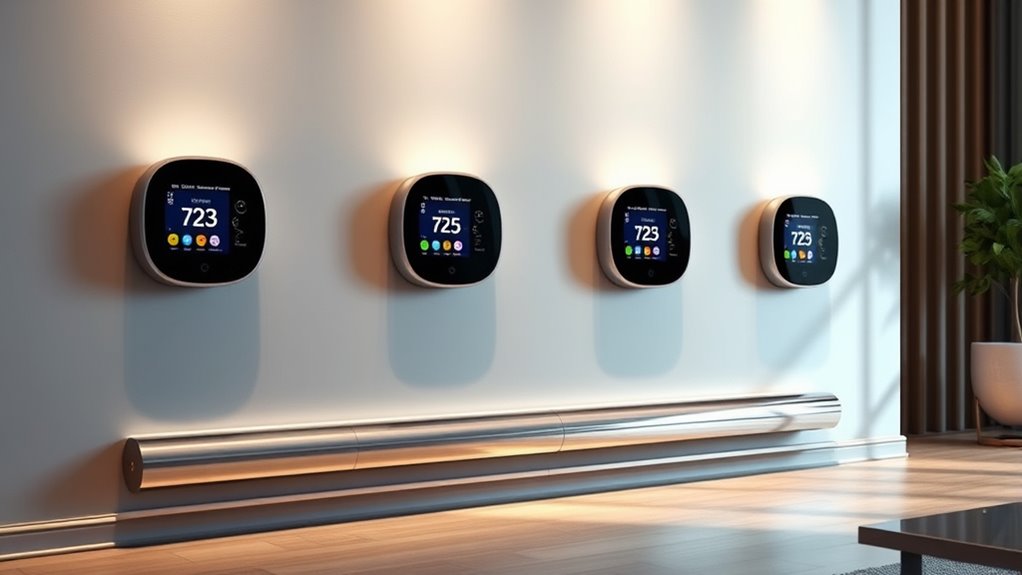

A baseboard heater thermostat smart control replaces the basic dial on your electric baseboard heaters with app, voice, and scheduling control — but not every smart thermostat works with line-voltage heating, and picking the wrong one can be an expensive mistake. The Mysa Smart Thermostat V2 stands out as the best overall pick thanks to its polished app, HomeKit/Alexa/Google support, and precise temperature control across 120V–240V systems. If you want a lower-cost entry point, the Mysa Lite and the meross Matter Smart Thermostat deliver core smart features for less, while the Honeywell 5-2 Day Programmable remains the go-to for anyone who wants reliable scheduling without Wi-Fi at all. The main tradeoffs in this category come down to ecosystem compatibility, voltage compatibility with your existing wiring, and whether Matter support or energy reporting matters to you. Keep reading for the full breakdown of all eight options.

Get business pricing on tech for your team
- Business-only prices and quantity discounts
- Tax-exempt purchasing
- Multiple users, one account, clear invoices
Key Takeaways
- Mysa V2 earned the top spot because it is the only option in this lineup combining HomeKit, Alexa, and Google support with strong energy reporting and a proven track record on line-voltage baseboard systems.
- The meross Matter thermostats (white and black) are the best value for buyers building a multi-platform smart home, since Matter support means they work with Apple, Google, Alexa, and Samsung without brand-specific hubs.
- The Honeywell 5-2 Day model is the only non-Wi-Fi pick here — the right call for rental units, guest rooms, or homes with unreliable internet where a dumb-but-solid programmable schedule beats app control.
- Two products in this list share the generic ‘Wi-Fi Smart Thermostat for Electric Baseboard Heaters’ name — compatibility varies between them, so verifying your heater’s voltage (120V vs. 240V) and total amperage before buying matters more than brand here.
- Mysa Lite sacrifices energy reporting and some ecosystem integrations compared to the V2, making it a smart buy for secondary rooms but a compromise as a whole-home solution.
| Mysa Smart Thermostat V2 for Electric Baseboard Heaters |  | Best Overall | Voltage: 120V–240V | Maximum load: 1900W at 120V, 3800W at 240V | Compatible systems: Baseboard, convector, fan-forced, radiant ceiling | VIEW ON AMAZON | See Our Full Breakdown |
| meross Smart Thermostat for Electric Baseboard and In-Wall Heaters |  | Best Smart Home Integration | Voltage: 120V–240V | Maximum load: 16A (1920W at 120V, 3840W at 240V) | Compatible systems: Electric baseboard, convector, fan-forced, in-ceiling radiant | VIEW ON AMAZON | See Our Full Breakdown |
| Mysa Smart Thermostat Lite for Electric Baseboard Heaters |  | Best Value Smart Pick | Voltage: 120V, 208V, 240V | Configurations: Single-pole and double-pole | Compatible heaters: Electric baseboard, fan-forced, wall, convector | VIEW ON AMAZON | See Our Full Breakdown |
| Wi-Fi Smart Thermostat for Electric Baseboard Heaters (120–240V) |  | Best for Budget App Control | Product type: Programmable Wi-Fi thermostat | Compatible systems: 120–240V electric baseboard heaters | Display: LCD with temperature, time, Wi-Fi status | VIEW ON AMAZON | See Our Full Breakdown |
| Wi-Fi Smart Thermostat for Electric Baseboard Heaters, 120–240V |  | Best Simple Replacement | Compatible systems: 120–240V electric baseboard heaters | Display: Fahrenheit LCD | Apps: Smart Life, Tuya | VIEW ON AMAZON | See Our Full Breakdown |
| Meross Matter Smart Thermostat for Electric Baseboard Heaters |  | Best Smart Home Flexibility | Voltage: 120-240 VAC | Smart Home Standard: Matter | Connectivity: Wi-Fi | VIEW ON AMAZON | See Our Full Breakdown |
| Honeywell Home 5-2 Day Programmable Thermostat for Electric Baseboard Heaters |  | Best No-Wi-Fi Reliability Pick | Thermostat Type: Digital 5-2 day programmable line-volt | Voltage: 240V line volt | Maximum Load: 3500W @ 240V, 14.6 A resistive | VIEW ON AMAZON | See Our Full Breakdown |
| Meross Matter Smart Thermostat for Electric Baseboard Heaters (Black) |  | Best Style-Conscious Smart Upgrade | Voltage: 120-240 VAC | Connectivity: Wi-Fi, Matter | Compatibility: Alexa, Apple HomeKit, Google Home, SmartThings | VIEW ON AMAZON | See Our Full Breakdown |
| baseboard heater thermostat smart control | Voltage | Compatible systems | Display | Special features |
|---|---|---|---|---|
| Mysa Smart Thermostat V2 for E | 120V–240V | Baseboard, convector, fan-forced, radiant ceiling | 3.5-inch LED, adaptive | Geofencing, energy insights, NFC, scheduling |
| meross Smart Thermostat for El | 120V–240V | Electric baseboard, convector, fan-forced, in-ceiling radiant | — | Energy monitoring, open-window detection, summer mode, power-off memory |
| Mysa Smart Thermostat Lite for | 120V, 208V, 240V | — | LCD | Weekly schedules, geofencing, vacation mode, runtime reports |
| Wi-Fi Smart Thermostat for Ele | — | 120–240V electric baseboard heaters | LCD with temperature, time, Wi-Fi status | Child lock, IFTTT support |
| Wi-Fi Smart Thermostat for Ele | — | 120–240V electric baseboard heaters | Fahrenheit LCD | — |
| Meross Matter Smart Thermostat | 120-240 VAC | Electric baseboard, convector, fan-forced heaters | — | — |
| Honeywell Home 5-2 Day Program | 240V line volt | — | — | — |
| Meross Matter Smart Thermostat | 120-240 VAC | Electric baseboard, convector, fan-forced heaters | — | — |
More Details on Our Top Picks
Mysa Smart Thermostat V2 for Electric Baseboard Heaters
Mysa V2 earns the top spot because it treats a high-voltage baseboard heater like a first-class citizen rather than an afterthought. The adaptive display dims intelligently, the geofencing warms the room before you walk in, and the energy insights turn an opaque electric bill into something you can actually manage. Compared with the Wi-Fi Smart Thermostat from the same category, which leans on the generic Smart Life app, Mysa’s own app feels purpose-built for electric heating, and it is the only option here adding Apple HomeKit alongside Alexa and Google. The tradeoff is real, though: it demands at least four wires, so older two-wire baseboard circuits rule it out entirely, and its premium positioning is wasted on a rental or cabin you barely visit.
Pros:- Broadest smart home support including Apple HomeKit, Alexa, and Google Assistant
- Geofencing, scheduling, and energy insights built into a dedicated app
- Handles demanding loads up to 3800W at 240V across multiple heater types
- Adaptive display and touch feedback make daily interaction feel premium
Cons:- Requires at least four wires including a neutral or second live wire
- Not compatible with low-voltage (24V) central heating systems
- Premium price for a single-room device if you need several units
Best for: Homeowners with four-wire high-voltage baseboard or radiant ceiling systems who want polished app control and HomeKit support
Not ideal for: Owners of older two-wire baseboard installations — the neutral requirement makes it a non-starter without rewiring
- Voltage:120V–240V
- Maximum load:1900W at 120V, 3800W at 240V
- Compatible systems:Baseboard, convector, fan-forced, radiant ceiling
- Smart home:Apple HomeKit, Alexa, Google Assistant
- Display:3.5-inch LED, adaptive
- Required wiring:Four wires minimum, including neutral or second live
- Special features:Geofencing, energy insights, NFC, scheduling
Our verdict“If your wiring qualifies and you want the most refined smart baseboard experience available, this is the one to buy.”
meross Smart Thermostat for Electric Baseboard and In-Wall Heaters
This meross unit stands out for platform reach: it talks to Apple Home, Alexa, Google Home, and SmartThings, a wider net than either generic Smart Life thermostat in this roundup. Its open-window detection is genuinely useful — it pauses heating when it senses a sudden temperature drop instead of fighting an open window all afternoon, something the Mysa Lite does not offer. Energy monitoring and power-off memory round out a feature set that punches above its station. The wiring story matches Mysa’s: four or more wires are mandatory, and its 16A ceiling means very large 240V loads need checking before purchase. It is a smarter buy than the Mysa V2 for SmartThings users, and a frustrating one for anyone with an older three-wire box.
Pros:- Works with Apple Home, Alexa, Google Home, and SmartThings
- Open-window detection avoids wasting heat during ventilation
- Energy monitoring plus power-off memory after outages
- Wide 41°F–95°F range with 1°F accuracy for precise comfort
Cons:- Requires at least four wires in the electrical box
- Heater is not included — this is control hardware only
- 16A maximum load may not cover stacked high-wattage heaters
Best for: Smart-home enthusiasts, especially SmartThings users, who want automation triggers and open-window detection
Not ideal for: Homes with fewer than four wires in the electrical box, or anyone assuming the heater itself is included
- Voltage:120V–240V
- Maximum load:16A (1920W at 120V, 3840W at 240V)
- Compatible systems:Electric baseboard, convector, fan-forced, in-ceiling radiant
- Smart home:Apple Home, Alexa, Google Home, SmartThings
- Temperature range:41°F–95°F, 1°F accuracy
- Special features:Energy monitoring, open-window detection, summer mode, power-off memory
- Required wiring:Four or more wires
Our verdict“The strongest pick for multi-platform smart homes that want automation logic, not just remote temperature control.”
Mysa Smart Thermostat Lite for Electric Baseboard Heaters
The Mysa Lite keeps the essentials of the V2 — weekly scheduling, geofencing, vacation mode, runtime reports — while trimming the adaptive display and some polish. For a single room, garage, or bedroom heater, that trade is easy to accept, especially with no monthly subscription and a five-year warranty backing it up. Compared with the meross thermostat, it loses open-window detection but supports single-pole and double-pole configurations at 120V, 208V, and 240V, which covers a broader slice of North American installs. The four-wire requirement is still the gatekeeper, exactly as with the full Mysa. If you are outfitting three or four rooms, choosing the Lite over the V2 multiplies real savings without giving up the app experience that matters day to day.
Pros:- No monthly subscription for scheduling, geofencing, and vacation mode
- Five-year warranty and room runtime energy reports
- Supports single-pole and double-pole setups at 120/208/240V
- Bluetooth plus Wi-Fi makes initial setup more reliable
Cons:- Requires four-wire electrical connections not present in every home
- Skips the V2’s adaptive display and richer energy insights
- Electric-heater-only compatibility limits future system changes
Best for: Buyers outfitting multiple rooms who want Mysa’s app and scheduling without paying for the V2’s extras
Not ideal for: Anyone needing HomeKit-style automations beyond basics, or homes lacking four-wire connections
- Voltage:120V, 208V, 240V
- Configurations:Single-pole and double-pole
- Compatible heaters:Electric baseboard, fan-forced, wall, convector
- Connectivity:Wi-Fi and Bluetooth
- Display:LCD
- Special features:Weekly schedules, geofencing, vacation mode, runtime reports
- Warranty:5 years
Our verdict“The smart choice for multi-room electric heat on a budget — most of Mysa’s strengths at a friendlier price.”
Wi-Fi Smart Thermostat for Electric Baseboard Heaters (120–240V)
This Smart Life / Tuya thermostat is the pragmatic pick when the goal is simply remote control and schedules on a 120–240V baseboard circuit without brand-name pricing. The LCD showing temperature, time, and Wi-Fi status covers the basics, Alexa and Google Assistant handle voice duty, and the child lock is a thoughtful touch the Mysa Lite does not advertise. Compared with the meross model, you give up energy monitoring and open-window detection, and you inherit the 2.4 GHz-only setup hurdle that trips up anyone running a mesh network that hides the 2.4 GHz band. The IFTTT support partially compensates, letting tinkerers wire it into broader automations. It is a solid no-frills entry — just verify your system is a line-voltage baseboard, not 24V or single-pole, before ordering.
Pros:- Remote app control with programmable schedules at an accessible price
- Works with Alexa, Google Assistant, and IFTTT automations
- Child lock prevents tampering with settings
- Includes wall plate, screws, and pigtail wires for installation
Cons:- Not compatible with 24V central heating or single-pole systems
- Requires access to a 2.4 GHz Wi-Fi network during setup
- No energy monitoring or open-window detection unlike meross
Best for: Budget-minded owners of line-voltage baseboard heaters who want app and voice control at low cost
Not ideal for: Smart-home power users wanting energy data, or anyone with 24V central or single-pole systems
- Product type:Programmable Wi-Fi thermostat
- Compatible systems:120–240V electric baseboard heaters
- Display:LCD with temperature, time, Wi-Fi status
- Voice assistants:Alexa, Google Assistant
- Apps:Smart Life, Tuya
- Wi-Fi requirement:2.4 GHz
- Special features:Child lock, IFTTT support
Our verdict“A dependable low-cost way to add remote control to electric baseboard heat, provided your wiring and Wi-Fi cooperate.”
Wi-Fi Smart Thermostat for Electric Baseboard Heaters, 120–240V
Functionally a sibling of the other Smart Life thermostat in this lineup, this model earns its place as the straightforward swap-in: Fahrenheit LCD, current and target temperature at a glance, wall plate and pigtails in the box, done. Where the Mysa Lite asks you to live inside its app ecosystem, this one keeps things deliberately basic — schedule the heat, ask Alexa to bump it, walk away. That simplicity is also its ceiling: no energy monitoring, no geofencing, no HomeKit, and the same 2.4 GHz setup requirement and incompatibility with 24V and single-pole systems. For a workshop, guest room, or seasonal property where you mostly want to pre-heat before arrival and protect pipes from freezing, the missing extras never get missed.
Pros:- Clear Fahrenheit LCD showing current and target temperatures
- Remote control via Smart Life or Tuya app with schedules
- Alexa and Google Assistant voice control
- Wall plate and installation hardware included
Cons:- Not compatible with 24V central heating or single-pole systems
- Requires a 2.4 GHz Wi-Fi network for setup
- No energy monitoring, geofencing, or HomeKit support
Best for: Owners of cabins, workshops, or guest rooms wanting a basic set-and-forget smart upgrade
Not ideal for: Main living areas where geofencing and energy tracking would earn their keep — step up to Mysa or meross instead
- Compatible systems:120–240V electric baseboard heaters
- Display:Fahrenheit LCD
- Apps:Smart Life, Tuya
- Voice assistants:Alexa, Google Assistant
- Wi-Fi requirement:2.4 GHz
- Included:Wall plate, screws, pigtail wires
Our verdict“The right pick when you want honest, low-cost remote control of a baseboard heater and nothing more.”
Meross Matter Smart Thermostat for Electric Baseboard Heaters
What sets this model apart in a crowded field of line-voltage smart thermostats is its native Matter support, which means it talks to Alexa, Apple Home, Google Home, and SmartThings at the same time — no choosing one ecosystem and being locked in. Compared with the Mysa Smart Thermostat V2, which is polished but leans heavily on its own app, this option gives multi-platform households a cleaner path. The real-time energy monitoring is a genuine money-saver for electric baseboard owners, since line-volt heating is often the most expensive way to warm a room. Open window detection adds an extra layer of savings the Honeywell programmable model simply can’t match. The tradeoff: it’s heating only — no heat pump or central HVAC support — and remote features die without Wi-Fi.
Pros:- Works with Alexa, Apple Home, Google Home, and SmartThings simultaneously via Matter
- Real-time and historical energy monitoring helps track expensive line-volt heating costs
- Open window detection pauses heating automatically to cut waste
- 24/7 visual scheduling automates comfort without manual fiddling
Cons:- Not compatible with 24V HVAC systems, heat pumps, or conventional air conditioning
- Wi-Fi is required for remote control, scheduling, and app features
Best for: Multi-platform smart home households with electric baseboard or fan-forced heaters who want cross-ecosystem voice control plus energy tracking
Not ideal for: Homes with heat pumps, 24V HVAC, or central air — this thermostat only handles line-volt electric heating
- Voltage:120-240 VAC
- Smart Home Standard:Matter
- Connectivity:Wi-Fi
- Compatible Systems:Electric baseboard, convector, fan-forced heaters
- App Support:Alexa, Apple Home, Google Home, SmartThings, Meross app
- Energy Features:Real-time energy monitoring, open window detection
- Not Compatible With:24V HVAC, heat pumps, conventional air conditioning
Our verdict“Buy this if you live in an Apple, Google, and Alexa mixed household and want one thermostat that plays nicely with all of them while tracking every kilowatt.”
Honeywell Home 5-2 Day Programmable Thermostat for Electric Baseboard Heaters
If your priority is a thermostat that just works for a decade without an app, a hub, or an internet connection, this Honeywell is the strongest argument in the lineup. Unlike the Meross Matter model, which goes dumb the moment Wi-Fi drops, this one keeps its full 5-2 day program running no matter what. The TRIAC switching is the hidden gem here — it eliminates the audible clicking that cheaper mechanical line-volt thermostats produce, and the ±0.27°F accuracy prevents the temperature swings that make baseboard rooms feel stuffy. You give up remote control, energy dashboards, and voice commands entirely, and you’re capped at 3500W — fine for most rooms, limiting for large multi-heater zones.
Pros:- Works completely offline with no app, account, or Wi-Fi dependency
- TRIAC switching delivers genuinely silent operation
- ±0.27°F accuracy far tighter than typical mechanical line-volt thermostats
- Simple 2-wire non-polarized installation with a backlit display
Cons:- Maximum load of 3500W and minimum 2A limit which rooms it can serve
- No remote access, voice control, or energy monitoring whatsoever
- 5-2 day schedule can’t differentiate individual days like 7-day models
Best for: Owners of electric baseboard, convector, or radiant ceiling heating who want set-it-and-forget-it programming with zero dependence on Wi-Fi or apps
Not ideal for: Anyone wanting remote control, voice commands, or energy usage tracking — this is local programming only
- Thermostat Type:Digital 5-2 day programmable line-volt
- Voltage:240V line volt
- Maximum Load:3500W @ 240V, 14.6 A resistive
- Minimum Load:2 A resistive
- Accuracy:±0.27°F
- Switching Type:TRIAC (silent)
- Connection:2-wire non-polarized
- Programming:5-2 day with wake, leave, arrive, sleep periods
Our verdict“This is the pick when you value bulletproof, offline reliability over smart features — a landlord’s favorite for good reason.”
Meross Matter Smart Thermostat for Electric Baseboard Heaters (Black)
This black variant of the Meross Matter thermostat delivers the same feature set as its white sibling — Matter multi-ecosystem support, energy monitoring, open window detection, and 120-240 VAC compatibility — but earns its own slot as the pick for design-conscious rooms. The dark ABS housing reads far better against charcoal, slate, or deep-toned walls where a white unit would glare, a distinction that matters more than you’d think since thermostats sit at eye level. Compared with the Mysa Smart Thermostat Lite, which also offers a sleek look, this option counters with native Matter support across four ecosystems rather than direct integrations. Functionally, the compromises are identical to the white Meross: heating-only compatibility, no heat pump support, and a Wi-Fi dependency for anything beyond basic wall control.
Pros:- Matte black finish suits dark walls and modern interiors where white units look out of place
- Native Matter support across Alexa, Apple HomeKit, Google Home, and SmartThings
- Real-time energy monitoring with historical usage in the Meross app
- Smart scheduling and open window detection cut heating costs automatically
Cons:- No compatibility with 24V HVAC, heat pumps, or conventional air conditioning
- Remote control and smart features stop working without Wi-Fi
- Feature-identical to the white Meross model, so you’re paying a premium purely for the finish
Best for: Design-minded owners of electric baseboard heaters in dark or moody interiors who want full smart home integration and energy tracking
Not ideal for: Renters or buyers who might add a heat pump or central AC later — this is line-volt electric heating only
- Voltage:120-240 VAC
- Connectivity:Wi-Fi, Matter
- Compatibility:Alexa, Apple HomeKit, Google Home, SmartThings
- Control Type:Voice + app remote control
- Compatible Systems:Electric baseboard, convector, fan-forced heaters
- Housing:ABS, matte black, wall mount
- Key Features:Auto-scheduling, energy monitoring, open window detection
Our verdict“Choose this over the white Meross or Mysa Lite when aesthetics matter as much as automation — same brains, sharper look.”

How We Picked
I ranked these eight thermostats on four factors that actually decide whether a line-voltage smart thermostat succeeds or gets returned. First, voltage and load compatibility: electric baseboard heaters run on 120V or 240V circuits with high amperage, and a thermostat rated below your system’s load is a safety hazard, not just a limitation. Every pick here had to clearly support 120–240V line-voltage heating. Second, smart ecosystem fit — Wi-Fi alone isn’t enough in 2026, so I prioritized options with Matter support or native HomeKit/Alexa/Google integration over app-only models.
Third, I weighed usability and scheduling depth: how easy the app is to set up, whether schedules adapt to your routine, and how accurate the temperature control is (cheap line-voltage controls often overshoot by 2–3 degrees). Fourth, value relative to features — the Mysa V2 sits at the premium end, so it had to clearly outperform the meross and Mysa Lite options to justify the ranking, while the Honeywell earned its place by being the best non-connected option rather than competing on smart features. This lens is why the lineup is ordered the way it is: ecosystem breadth and control precision at the top, value picks in the middle, and the no-Wi-Fi choice last for a specific buyer type.
| baseboard heater thermostat smart control | Special features |
|---|---|
| Mysa Smart Thermostat V2 for E | Geofencing, energy insights, NFC, scheduling |
| meross Smart Thermostat for El | Energy monitoring, open-window detection, summer mode, power-off memory |
| Mysa Smart Thermostat Lite for | Weekly schedules, geofencing, vacation mode, runtime reports |
| Wi-Fi Smart Thermostat for Ele | Child lock, IFTTT support |
| Wi-Fi Smart Thermostat for Ele | — |
| Meross Matter Smart Thermostat | — |
| Honeywell Home 5-2 Day Program | — |
| Meross Matter Smart Thermostat | — |
Factors to Consider When Choosing Baseboard Heater Thermostat Smart Control
Before clicking buy on any of the eight thermostats above, there are a few category-wide realities about line-voltage smart control that trip up buyers. These are the factors that determine whether your installation works on day one — and whether you’re still happy with it a year later.Confirm Your Voltage and Total Load First
This is the single most common mistake in this category, and it applies to every product in the roundup equally. Electric baseboard heaters are line-voltage devices — typically 120V or 240V — unlike the low-voltage (24V) furnaces and heat pumps that most mainstream smart thermostats (Nest, Ecobee) are built for. A standard smart thermostat will not work and can be damaged or dangerous if wired into a baseboard circuit. Beyond voltage, add up the total amperage of every heater on the circuit the thermostat will control: two 1500W baseboards on a 240V circuit pull 12.5 amps combined, and many thermostats cap out at 15 or 16 amps. If you’re at or near the limit, you either need a thermostat with a higher rating or relay control. Check the spec plate on your baseboard units before you shop, not after the package arrives.
Wi-Fi vs. Programmable: Do You Actually Need an App?
The smart-home assumption is that app control is always better, but for some rooms it genuinely isn’t. A guest room or rental unit often benefits more from a locked-in programmable schedule (like the Honeywell 5-2 Day) that can’t be fiddled with, disconnected, or hacked around — and it keeps working when the internet drops. Wi-Fi models shine in rooms where you want remote monitoring and geofencing: turning the heat down when you leave and pre-warming before you get home is where the real energy savings come from. If your motivation is purely lower heating bills, a well-configured schedule on any of these thermostats — smart or not — captures most of the benefit. The app is a convenience layer; the schedule does the work. Buyers who skip this distinction often overpay for connectivity they never use.
Ecosystem Lock-In and Matter Support
In 2026, Matter compatibility has quietly become the deciding factor for multi-platform households. A Matter-certified thermostat (like the meross models) works with Apple Home, Google Home, Alexa, and SmartThings without depending on the manufacturer’s cloud — meaning the app and automations keep functioning even if the company changes its subscription model or shuts down servers. Brand-tied ecosystems like Mysa’s offer richer native features (energy dashboards, zoned control) but route everything through that company’s cloud. Ask yourself honestly: are you an Apple household, a Google household, or mixed? Mixed households should weight Matter heavily. Single-ecosystem buyers, especially HomeKit users, get a smoother experience from Mysa’s native integration than from generic Wi-Fi thermostats that only connect through their own apps.
One Thermostat Per Zone — Budget Accordingly
Unlike central heating, baseboard systems are zoned by circuit, which means most homes need one thermostat per room or zone. A three-bedroom home with baseboard heat might need three to five units, and that changes the value math completely. This is where the price gap between the premium Mysa V2 and value options like the meross or Mysa Lite compounds fast. A sensible strategy many buyers land on: put the feature-rich thermostat in the main living area where you spend the most time and want the best control, then use cheaper units in bedrooms and hallways where a simple schedule suffices. All the Mysa units coordinate in one app, and the meross units do too, so mixing tiers within a brand keeps management simple — but mixing brands means juggling two apps.
Installation: DIY Reality Check
Line-voltage installation is more involved than swapping a low-voltage thermostat, and it’s where enthusiasm meets 240 volts of reality. You’ll be shutting off a breaker, connecting heavy-gauge wires in a wall box, and in many cases enlarging the existing single-gang box to fit the new thermostat — some models are noticeably deeper than the old dial they replace. If your current thermostat is a simple two-wire dial, the swap is straightforward for a confident DIYer with a voltage tester. If you find four wires, multiple heaters on one thermostat, or aluminum wiring, call an electrician; the service call is cheap compared to a fire risk. Also note that hardwired line-voltage thermostats have no batteries, so a tripped breaker takes down your schedule — worth knowing before you rely on heat in a vacant vacation property in winter.
Energy Reporting and Real Savings
The headline selling point of smart baseboard control is savings, and the honesty here varies. Models with energy usage dashboards (Mysa V2 being the strongest in this lineup) show you exactly when and where heat is being consumed, which is what lets you actually change behavior — spotting that a basement zone runs all night, for instance. Cheaper smart thermostats often control temperature without measuring consumption, so you get convenience but no visibility. Since electric baseboard heat is typically the most expensive way to heat a room per BTU, even a 10–15% reduction from smarter scheduling is meaningful over a winter. If savings are your primary motivation, prioritize models with usage reporting over ones with only scheduling — you can’t optimize what you can’t see.
Frequently Asked Questions
Can I use a Nest or Ecobee thermostat with my electric baseboard heaters?
No — standard Nest and Ecobee models are designed for low-voltage (24V) systems like furnaces and heat pumps, and they cannot directly switch the 120V or 240V line-voltage circuits that baseboard heaters use. Connecting one to a baseboard circuit will destroy the thermostat and creates a genuine safety hazard. Every product in this roundup is specifically built for line-voltage heating, which is exactly why the category exists separately. If you’re deeply attached to a specific smart platform, the workaround is a relay or contactor installed by an electrician, but that adds cost and complexity that usually makes a purpose-built line-voltage thermostat the better path.
What’s the difference between the Mysa V2 and the Mysa Lite?
Both control electric baseboard heaters on 120–240V circuits and share the same app, but the V2 is the fuller product: it includes energy usage reporting, broader smart-home integrations, and more refined control logic for maintaining tight temperatures. The Lite drops energy dashboards and some secondary integrations while keeping core scheduling, app control, and voice assistant support. Practically, the Lite makes sense for bedrooms, hallways, and other secondary zones where you just want a reliable schedule, while the V2 earns its premium in the main living space where you actually monitor and optimize usage. If you’re heating a whole home with multiple zones, a common setup is one V2 paired with several Lites — everything still coordinates in the same Mysa app.
Do I need Matter support, or is regular Wi-Fi fine?
Why is the Honeywell included if it isn’t a smart thermostat?
Because a meaningful group of buyers searching for baseboard thermostat control shouldn’t buy a Wi-Fi model at all. The Honeywell 5-2 Day Programmable handles the most valuable feature — automated scheduling that cuts heating when rooms are empty or you’re asleep — without any internet dependency, app setup, or account creation. That makes it ideal for rental properties, vacation homes, guest rooms, and homes with unreliable Wi-Fi, where a smart thermostat becomes a liability rather than a convenience. It also can’t be remotely adjusted by guests or tenants, which is either a bug or a feature depending on your situation. Including it gives buyers a deliberate no-connectivity choice instead of pretending everyone wants an app.
Can one smart thermostat control multiple baseboard heaters?
Yes, as long as the total load stays within the thermostat’s amperage rating. Baseboard heaters on the same circuit are already wired in parallel, so a single line-voltage thermostat can switch all of them — a typical 240V thermostat handles around 15 amps, or roughly 3600 watts of heating. Two 1500W baseboards (12.5 amps combined) fit comfortably; three or more may exceed the limit depending on their wattage. Before buying, check the wattage printed on each heater’s spec plate, add them up, and divide by your voltage to get the amperage. If your total load exceeds the rating, you’ll need to split the heaters across two thermostats or use a relay — running a thermostat over its rated load risks overheating at the connection points, which is a fire concern, not just a performance issue.
Conclusion
After comparing all eight options, the right pick depends less on specs and more on which buyer you are. For the best overall choice, the Mysa Smart Thermostat V2 justifies its premium with the strongest combination of ecosystem support, energy reporting, and precise control — the pick for a main living area or whole-home setup. The best value goes to the meross Matter Smart Thermostat (white or black), which delivers multi-platform Matter compatibility and solid scheduling at a lower per-unit cost, making it the smart choice for multi-zone homes on a budget. Beginners should start with the Mysa Lite: same friendly app as the V2, simpler feature set, and a forgiving setup process. For premium buyers who want the richest experience, the V2 again leads, with the meross Matter models as the strong runner-up if Matter-first compatibility outranks energy dashboards for you. And for specific needs — rentals, guest rooms, or no-Wi-Fi properties — the Honeywell 5-2 Day Programmable is the deliberate choice that trades connectivity for dependability. Whatever you choose, confirm your voltage and total heater load before ordering; that one step prevents the most common and most expensive mistake in this category.
Fall Picks
fall essentials
As an affiliate, we earn on qualifying purchases.