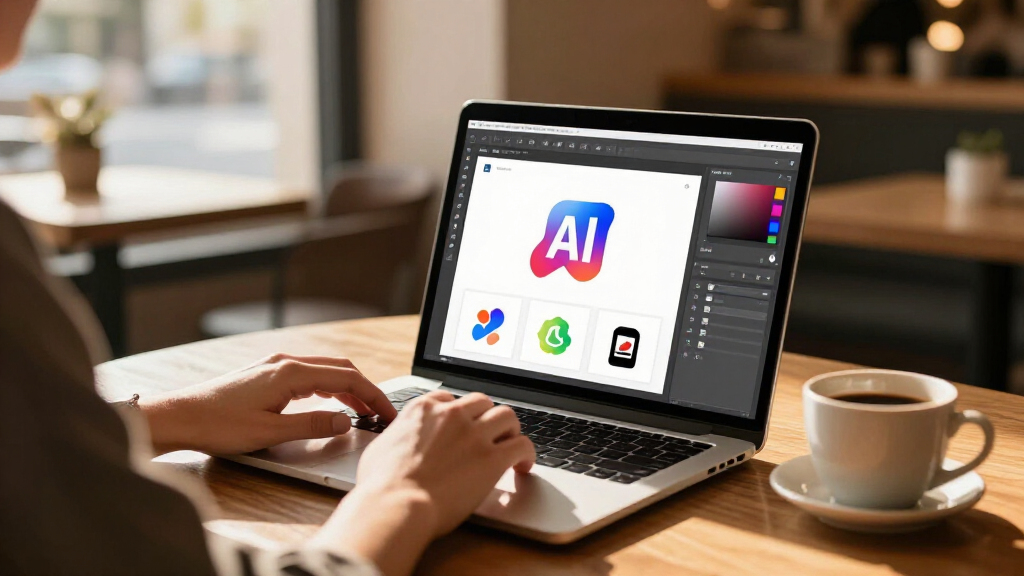

AI logo design software can speed up early concepts, but the six options here are books and practical guides rather than standalone logo-making apps. I’d choose Canva for Beginners as the most accessible starting point because it covers logos alongside broader brand and AI workflows; Adobe Illustrator Zero to Pro is the stronger path for precise vector finishing, while AI for Branding and Logo Design focuses on a more coherent brand system. The main tradeoff is between quick, guided creation and the skill needed to refine an AI concept into a distinctive, reusable mark. Read on for how each guide fits a different stage of that process and where its limitations matter.

Get business pricing on tech for your team
- Business-only prices and quantity discounts
- Tax-exempt purchasing
- Multiple users, one account, clear invoices
Key Takeaways
- Canva for Beginners has the broadest entry-level scope, pairing logo work with social content, video, branding, and AI tools; that breadth may be less useful if you only want to master logo craft.
- Adobe Illustrator Zero to Pro is the clearest choice here for learning vector design skills that help refine and prepare a logo for different uses, though it is not centered on AI prompting.
- AI for Branding and Logo Design stands apart by connecting prompts with brand systems, a better fit for readers who need a consistent identity rather than a lone symbol.
- The prompt-focused titles teach different parts of ideation: AI Prompt Engineering for Graphic Designers spans several named AI tools, while 500 ChatGPT Prompts offers a large prompt collection with a narrower tool focus.
- Creating High-Quality Brand Logos Using AI Tools is framed as a practical logo-design guide, but buyers should check its specific tool coverage and production workflow before choosing it over broader instruction.
| AI Prompt Engineering for Graphic Designers: Master Prompting for Midjourney, ChatGPT, Adobe Firefly, and Ideogram |  | Best for Multi-Tool Exploration | Content type: Graphic design prompt engineering guide | Named AI tools: Midjourney, ChatGPT, Adobe Firefly, Ideogram | Logo coverage: Professional logo creation | VIEW LATEST PRICE | See Our Full Breakdown |
| AI for Branding and Logo Design: Practical Prompts and Brand Systems |  | Best for Brand System Thinking | Content type: Practical AI branding and logo design guide | Prompt coverage: Practical prompts | Identity coverage: Identity concepts | VIEW LATEST PRICE | See Our Full Breakdown |
| Creating High-Quality Brand Logos Using AI Tools: A Practical Guide to AI-Assisted Logo Design |  | Best for Prompt-to-Vector Workflow | Content type: Practical AI-assisted logo design guide | Prompt workflow: Writing prompts | Artwork workflow: Producing vector artwork | VIEW LATEST PRICE | See Our Full Breakdown |
| 500 ChatGPT Prompts for Logo Design and Branding |  | Best for a Large ChatGPT Prompt Library | Content type: ChatGPT prompt collection | Prompt count: 500 | Prompt format: Copy-and-paste prompts | VIEW LATEST PRICE | See Our Full Breakdown |
| Adobe Illustrator Zero to Pro: A Step-by-Step Guide to Vector Design |  | Best for Illustrator-Based Logo Finishing | Content type: Step-by-step vector design guide | Software: Adobe Illustrator | Design coverage: Vector design | VIEW LATEST PRICE | See Our Full Breakdown |
| Canva for Beginners: Graphic Design, Social Media Content, Videos, Logos, Branding, and AI Tools |  | Best for Beginners | Format: Beginner’s guide | Primary platform: Canva | Logo design coverage: Yes | VIEW LATEST PRICE | See Our Full Breakdown |
| AI logo design software | Content type | Product identifier | Logo coverage |
|---|---|---|---|
| AI Prompt Engineering for Grap | Graphic design prompt engineering guide | ASIN B0HD13255N | Professional logo creation |
| AI for Branding and Logo Desig | Practical AI branding and logo design guide | ASIN B0HGQB9Z5Q | — |
| Creating High-Quality Brand Lo | Practical AI-assisted logo design guide | ASIN B0H9JBN8FP | — |
| 500 ChatGPT Prompts for Logo D | ChatGPT prompt collection | ASIN B0GX3164Y4 | Logo design |
| Adobe Illustrator Zero to Pro: | Step-by-step vector design guide | ASIN B0H4W4Y3V5 | Logo creation |
| Canva for Beginners: Graphic D | — | — | — |
More Details on Our Top Picks
AI Prompt Engineering for Graphic Designers: Master Prompting for Midjourney, ChatGPT, Adobe Firefly, and Ideogram
Best for Multi-Tool Exploration, this guide connects logo and branding prompts with several named AI platforms: Midjourney, ChatGPT, Adobe Firefly, and Ideogram. That breadth suits designers who want to compare ways to generate concepts instead of building a workflow around one prompt library. Compared with 500 ChatGPT Prompts for Logo Design and Branding, its stated focus is broader than copy-and-paste ChatGPT prompts, while the 500-prompt title signals more volume for that single tool. The tradeoff is that the description does not specify a step-by-step path from generated logo concepts to finished vector files; Creating High-Quality Brand Logos Using AI Tools makes that production path more explicit. Its coverage of social graphics also reaches beyond logo work, which may be useful for a wider identity package but less focused for buyers seeking logo-only instruction.
Pros:- Covers four named AI tools, giving readers multiple platforms to explore.
- Applies prompting to practical graphic design tasks.
- Includes logo and branding topics alongside social media graphics.
Cons:- The supplied description does not explain how to turn AI concepts into finished vector artwork.
- Its coverage across social graphics and branding may feel broad for readers focused only on logo production.
Best for: Graphic designers who want to explore logo and brand prompts across Midjourney, ChatGPT, Adobe Firefly, and Ideogram.
Not ideal for: Buyers who need a clearly specified prompt-to-vector production workflow or a tightly focused guide to one AI platform.
- Content type:Graphic design prompt engineering guide
- Named AI tools:Midjourney, ChatGPT, Adobe Firefly, Ideogram
- Logo coverage:Professional logo creation
- Branding coverage:Branding
- Additional design coverage:Social media graphics
- Product identifier:ASIN B0HD13255N
Our verdict“Choose this guide if you want to explore logo prompts across several AI tools, and choose Creating High-Quality Brand Logos Using AI Tools if vector production is your priority.”
AI for Branding and Logo Design: Practical Prompts and Brand Systems
Best for Brand System Thinking, this guide pairs practical AI prompts with identity concepts, creative strategy, and consistency. That makes it a stronger fit for readers who need to shape a coherent brand direction around a logo, rather than collect isolated logo ideas. Compared with 500 ChatGPT Prompts for Logo Design and Branding, it foregrounds brand systems and strategy, while that book emphasizes a large set of copy-and-paste prompts. The tradeoff is that the supplied information does not identify specific AI platforms or explain a technical route from a prompt to vector artwork; Creating High-Quality Brand Logos Using AI Tools explicitly covers that production step. Its place in the AI for Freelance Designers series may suit independent designers, though the listing gives no further details about its format or depth.
Pros:- Connects AI prompts with brand systems and identity concepts.
- Addresses creative strategy as part of logo exploration.
- Focuses on consistency across a brand identity.
Cons:- The supplied description does not name the AI tools covered.
- No prompt count or prompt-to-vector workflow details are provided.
Best for: Freelance designers and small brand teams who want AI-assisted logo concepts to connect with a consistent identity and creative strategy.
Not ideal for: Readers who want named platform tutorials, a stated prompt count, or detailed instruction for converting concepts into vector files.
- Content type:Practical AI branding and logo design guide
- Prompt coverage:Practical prompts
- Identity coverage:Identity concepts
- Brand system coverage:Brand systems and consistency
- Creative strategy coverage:Clarifying creative strategy
- Series:AI for Freelance Designers
- Series number:7
- Product identifier:ASIN B0HGQB9Z5Q
Our verdict“Choose this guide for strategy and brand consistency; choose 500 ChatGPT Prompts for Logo Design and Branding for a clearly stated copy-and-paste prompt collection.”
Creating High-Quality Brand Logos Using AI Tools: A Practical Guide to AI-Assisted Logo Design
Best for Prompt-to-Vector Workflow, this guide stands out for describing a path from writing prompts to producing vector artwork. That emphasis matters to buyers who need logo files suited to practical design work, rather than concepts that remain images from an AI tool. It also addresses paid client work, setting it apart from AI Prompt Engineering for Graphic Designers, whose listed scope spans several AI tools and social graphics. Compared with Adobe Illustrator Zero to Pro, this title centers AI-assisted logo creation, while Illustrator Zero to Pro covers wider vector design topics and AI tools. The tradeoff is that the supplied description does not name specific AI platforms or detail the vector methods covered, so readers seeking software-specific instruction may prefer a guide with those tools identified.
Pros:- Describes a workflow from prompts through vector artwork.
- Keeps its focus on AI-assisted brand logo design.
- Addresses use of AI logo design in paid client work.
Cons:- The supplied description does not name the AI tools used.
- It does not specify the vector software or explain how much technical instruction is included.
Best for: Logo designers and freelancers who want guidance connecting AI prompt development with vector artwork and paid client projects.
Not ideal for: Beginners who need named software tutorials, detailed tool requirements, or broad instruction in Illustrator and typography.
- Content type:Practical AI-assisted logo design guide
- Prompt workflow:Writing prompts
- Artwork workflow:Producing vector artwork
- Primary focus:Brand logo creation with AI tools
- Client work coverage:AI-assisted logo design for paid client work
- Product identifier:ASIN B0H9JBN8FP
Our verdict“Choose this guide if moving from AI-generated logo ideas toward vector artwork is your main need, and choose Adobe Illustrator Zero to Pro for broader vector design instruction.”
500 ChatGPT Prompts for Logo Design and Branding
Best for a Large ChatGPT Prompt Library, this title promises 500 copy-and-paste prompts across logos, brand identities, color palettes, and business names. The defined quantity and ready-to-use format make its role clear for buyers who want starting points they can adapt in ChatGPT. It differs from AI for Branding and Logo Design: Practical Prompts and Brand Systems, which emphasizes creative strategy and consistency instead of a stated prompt count. The tradeoff is its narrower platform focus: it is specifically a ChatGPT collection, while AI Prompt Engineering for Graphic Designers names several AI tools. A library can speed up early exploration, but the supplied details do not describe a prompt-to-vector workflow or how to evaluate generated marks for practical logo use.
Pros:- Provides 500 copy-and-paste prompts according to the product data.
- Covers logo design and broader brand identity tasks.
- Includes prompts for color palettes and business names.
Cons:- Its stated prompt focus is ChatGPT rather than multiple AI platforms.
- The supplied details do not describe a process for turning generated concepts into vector artwork.
Best for: Small business owners and designers who already use ChatGPT and want a substantial set of prompts for names, logos, palettes, and identity ideas.
Not ideal for: Buyers who need cross-platform AI instruction, brand strategy guidance, or explicit help preparing vector-ready logo artwork.
- Content type:ChatGPT prompt collection
- Prompt count:500
- Prompt format:Copy-and-paste prompts
- Logo coverage:Logo design
- Brand identity coverage:Brand identities
- Additional prompt topics:Color palettes and business names
- Series:The 500 ChatGPT Prompts Series
- Product identifier:ASIN B0GX3164Y4
Our verdict“Choose this collection for a high-volume ChatGPT starting point, and choose AI Prompt Engineering for Graphic Designers if you want prompts across several named tools.”
Adobe Illustrator Zero to Pro: A Step-by-Step Guide to Vector Design
Best for Illustrator-Based Logo Finishing, this guide teaches vector design alongside logos, typography, branding, AI tools, and freelance work. Its broader software focus makes it useful for readers who want to build design skills around a logo, rather than rely mainly on prompt collections such as 500 ChatGPT Prompts for Logo Design and Branding. It also complements Creating High-Quality Brand Logos Using AI Tools: the latter describes a prompt-to-vector logo workflow, while this title names Adobe Illustrator and frames its instruction as step by step. The tradeoff is that AI logo generation is only one part of a wider vector design guide. Buyers seeking prompt engineering across Midjourney, ChatGPT, Firefly, and Ideogram may find AI Prompt Engineering for Graphic Designers more directly aligned with that need.
Pros:- Presents a step-by-step approach to vector design in Adobe Illustrator.
- Covers logo creation, typography, and branding together.
- Includes AI tools and freelance work among its topics.
Cons:- Its scope includes general vector design, so AI logo prompting is not the sole focus.
- The supplied details do not identify which AI tools or prompt workflows it covers.
Best for: Newer designers and freelancers who want to learn Illustrator-based vector work for logos, typography, and branding, with AI tools included in the subject matter.
Not ideal for: Readers who want a focused AI logo prompt collection or a guide centered on comparing multiple AI logo platforms.
- Content type:Step-by-step vector design guide
- Software:Adobe Illustrator
- Design coverage:Vector design
- Logo coverage:Logo creation
- Additional design topics:Typography and branding
- AI coverage:AI tools
- Work coverage:Freelance work
- Product identifier:ASIN B0H4W4Y3V5
Our verdict“Choose this guide to build Illustrator and vector skills around logo work, and choose AI Prompt Engineering for Graphic Designers for broader named-platform prompting.”
Canva for Beginners: Graphic Design, Social Media Content, Videos, Logos, Branding, and AI Tools
This beginner-focused guide is the broadest starting point here for someone who wants to make a logo in Canva and also learn how it fits into everyday graphics, social posts, and video. Its coverage of Canva AI tools adds a practical route into AI-assisted design without requiring prior experience. Compared with Adobe Illustrator Zero to Pro: A Step-by-Step Guide to Vector Design, this book is positioned around accessible, multi-format creation rather than building vector-design skills. It also takes a wider scope than AI for Branding and Logo Design: Practical Prompts and Brand Systems, which is more directly focused on logo and brand systems. That breadth is useful for a solo creator who needs a consistent set of assets, but it may leave less room for in-depth logo strategy or advanced vector workflows. Choose it for a gentle Canva-led introduction, not as a substitute for specialized brand guidance.
Pros:- Covers logos alongside social media, video, and other design projects, helping beginners build a broader set of brand materials.
- Includes Canva AI tools, giving readers an introduction to AI-assisted creation within the Canva workflow.
- Designed for readers with no prior design experience, making it a more approachable starting point than a vector-focused guide.
- Connects logo creation with branding and content needs rather than treating a logo as a standalone deliverable.
Cons:- Its broad coverage may provide less depth on logo strategy and brand systems than a dedicated branding guide.
- Canva-centered instruction is less suited to readers who want advanced vector control or a workflow based on Adobe Illustrator.
- The supplied product information does not specify particular AI features, project exercises, or export formats.
Best for: Canva newcomers, solo creators, and small-business owners who want beginner-level guidance for making logos alongside social content and other brand assets.
Not ideal for: Designers seeking advanced vector techniques, detailed brand-system strategy, or a logo-only guide centered on prompt development.
- Format:Beginner’s guide
- Primary platform:Canva
- Logo design coverage:Yes
- AI coverage:Canva AI tools
- Additional topics:Graphic design, social media content, videos, and branding
- Intended audience:Readers with no prior design experience
Our verdict“Choose this guide if you are new to Canva and want one accessible starting point for AI-assisted logos and the surrounding brand content.”

How We Picked
I ranked these six titles by how directly they help a reader move from AI-assisted ideas toward a usable logo. I considered the stated focus of each book, the breadth of its workflow, whether it addresses brand consistency or vector refinement, and how approachable its scope appears for different skill levels. Since these are guides rather than software products, the ranking reflects their described subject matter; it does not assume particular outcomes, exercises, or tool capabilities beyond those in each title.
Canva for Beginners leads for broad accessibility, while Adobe Illustrator Zero to Pro earns a distinct place for vector skills that support production-ready artwork. The branding-system and multi-tool prompting titles rank well for readers with focused needs; narrower prompt collections and practical guides can be useful, but their value depends more heavily on a buyer’s preferred tools and starting skill. I treat breadth as useful only when it serves the logo task, rather than as a substitute for focused design instruction.
| AI logo design software | Content type | Logo coverage | Product identifier |
|---|---|---|---|
| AI Prompt Engineering for Grap | Graphic design prompt engineering guide | Professional logo creation | ASIN B0HD13255N |
| AI for Branding and Logo Desig | Practical AI branding and logo design guide | — | ASIN B0HGQB9Z5Q |
| Creating High-Quality Brand Lo | Practical AI-assisted logo design guide | — | ASIN B0H9JBN8FP |
| 500 ChatGPT Prompts for Logo D | ChatGPT prompt collection | Logo design | ASIN B0GX3164Y4 |
| Adobe Illustrator Zero to Pro: | Step-by-step vector design guide | Logo creation | ASIN B0H4W4Y3V5 |
| Canva for Beginners: Graphic D | — | — | — |
Factors to Consider When Choosing AI Logo Design Software
Before choosing a guide, decide what you need to learn after the first AI concept appears. The best fit depends on whether your main gap is prompting, visual judgment, brand consistency, or preparing artwork for real-world use.
Decide Which Part of the Workflow You Need
Logo creation has several stages: defining a brief, generating directions, selecting a concept, refining its shapes, and preparing files for use. A prompt collection may help with early exploration but leave refinement largely to you. A vector-design guide can address control over curves and scalable artwork, while offering less instruction on generating ideas with AI. Before choosing, identify the stage where you tend to get stuck. Buying for the wrong stage can leave you with more concepts but no finished identity, or technical skills without a clear direction.
Match the Guide to Your Tool Commitment
Some titles span multiple named AI tools, while others concentrate on ChatGPT, Canva, or Illustrator. Cross-tool instruction can help if you expect to change platforms, but examples may be less specific to your current interface. A narrow tool focus can make practice more direct when you already know what you plan to use. Check whether a guide’s named tools match the services and versions available to you. Avoid choosing based only on a long tool list; the key question is whether the book teaches a repeatable process you can apply in your setup.
Look for Brand Thinking Beyond the Symbol
A logo rarely works alone: it needs to remain recognizable alongside type, color, and other brand elements. If you are building an identity for a business, favor learning that addresses consistency across applications rather than just producing attractive marks. This can save time later, when a logo must work on a website, packaging, or social posts. Solo creators making a temporary project graphic may not need that full system. The tradeoff is scope: broader brand instruction can take longer to apply, but it helps prevent a collection of disconnected visuals.
Plan for Human Refinement and Vector Output
AI-generated concepts may contain awkward lettering, uneven geometry, or details that fail at small sizes. A buyer should plan for a review and cleanup stage, even when the initial image looks polished. Vector skills matter when the mark needs to scale across formats or be adjusted precisely; they are less pressing for a quick internal mockup. Consider whether you are willing to learn a design application or would rather keep the process in a simpler tool. A guide that teaches ideation alone may not cover the technical handoff your project eventually needs.
Choose the Right Level of Structure
Beginners often benefit from a guided sequence that explains what to do next, while experienced designers may prefer prompt references they can adapt quickly. A large collection can provide starting points, but volume does not guarantee that prompts fit a particular audience or brief. Practical instruction may be easier to follow, though its examples may not match your industry. Look for a learning format that suits how you work: step-by-step lessons for building a process, or modular prompts for targeted experimentation. Make room for your own brief and judgment rather than treating any generated result as a finished decision.
Separate a Learning Resource From a Finished Logo Service
These six titles are educational resources, not a direct comparison of software subscriptions or done-for-you design services. A book can teach a workflow, but you still need access to the tools it discusses and time to make decisions. If you need a logo quickly for a launch, first check whether you can complete the exercises and revisions within your schedule. If you want lasting control over a brand identity, investing time in prompting and vector refinement may be worthwhile. Be clear about whether you are buying instruction, software access, or a completed asset; those solve different problems.
Frequently Asked Questions
Are these six options AI logo design software?
No. The lineup consists of books and practical guides about AI-assisted design, branding, prompting, or graphic tools. They may help you learn a workflow, but they do not by themselves provide the software access needed to generate or edit a logo. Check each title’s stated tool focus and confirm that you can use the relevant applications. If you want a service that directly generates logo files, this roundup is not a software shortlist.
Which guide makes sense if I have never designed a logo?
Canva for Beginners has the broadest beginner-oriented scope in its title, including logos, branding, and AI tools. That can suit someone who wants to learn visual content creation alongside logo work. If your main goal is understanding brand decisions rather than using a broad design platform, a guide focused on branding systems may be a closer match. Check the contents or sample pages before buying, since the title alone cannot confirm how much step-by-step logo instruction it contains.
Do I need to learn vector design if AI generates my logo?
Not for every use. A quick concept or small online graphic may not require advanced vector editing, but scalable, crisp artwork is useful across print, signage, and changing layouts. AI output can also need cleanup before it works at different sizes or in a single-color version. A vector-design guide is most relevant if you want control over those refinements. If you only need an early direction, prompting instruction may be a more immediate learning priority.
Is a collection of ChatGPT prompts enough to create a distinct brand logo?
Prompts can help generate directions, but they do not replace a clear brief or decisions about audience, legibility, and brand fit. A large prompt collection may give you useful starting language, yet the results still depend on how you adapt it to your project. You may also need separate work to refine the mark and make it consistent with other brand elements. Choose a prompt guide when ideation is your main bottleneck, and pair it with design or branding instruction if you need a complete identity.
Which type of guide should I choose if I need a logo for a business launch?
Start by deciding whether you need a fast placeholder or a brand asset you can keep using. For a lasting identity, look for guidance that connects logo concepts to a consistent brand system and gives you a path to refine the final artwork. If the launch date is close, a book may not provide a finished logo in time, since you still have to practice, generate options, and review them. Confirm that the guide’s tools match what you can access and allow time for revisions. A generated concept should not be treated as launch-ready until it works across the formats you need.
Conclusion
For the best overall starting point, I’d pick Canva for Beginners for its accessible, broad coverage of logos and related brand content. For value in focused learning, AI Prompt Engineering for Graphic Designers is the stronger fit if you want prompting ideas across several named tools; readers who mainly use ChatGPT may prefer the dedicated prompt collection. For a premium skill investment, Adobe Illustrator Zero to Pro makes the most sense when precise vector refinement matters to your work. Beginners who want one approachable design environment should start with Canva, while readers building a cohesive business identity should look closely at AI for Branding and Logo Design. Choose Creating High-Quality Brand Logos Using AI Tools when its practical logo workflow matches your tools and skill goals, and remember that all six are guides rather than logo-generation software.