

For readers comparing AI automation tools for workflow, this roundup ranks 15 practical guides by how effectively they help turn repetitive work into reliable systems. OpenCode Custom Workflows is my best overall pick because its agent-based approach offers more room for adaptable, multi-step automation than narrower guides. n8n Workflow Automation for Beginners is the stronger value choice for visual, no-code business workflows, while The Complete Microsoft 365 and Copilot Handbook – Volume II is better for organizations already committed to Microsoft tools. The main tradeoffs are flexibility versus simplicity, broad platform knowledge versus role-specific instruction, and quick setup versus deeper technical control. Continue reading for the full breakdown of which guide fits each buyer, workflow, and skill level.
Prime for Young Adults — start your free trial
Fast free delivery, streaming and member deals for eligible 18–24 year olds.
Try it freeAs an affiliate, we earn on qualifying purchases.
Key Takeaways
- OpenCode Custom Workflows ranks first because it addresses adaptable AI agents and custom automation rather than limiting readers to one department or routine.
- n8n Workflow Automation for Beginners offers the clearest value path for buyers who want visual workflow building without starting with agent engineering.
- The Microsoft 365 and Copilot Handbook makes the most sense inside Microsoft-heavy organizations, but its ecosystem focus limits portability compared with OpenCode or n8n.
- The role-specific books for bookkeeping, law firms, bloggers, AutoCAD users, and project managers trade broad reuse for faster application within a defined job.
- Beginner titles vary sharply: Agentic AI Engineering teaches how agents are built, while the Claude and office-automation guides focus more on applying existing AI capabilities to daily work.
| OpenCode Custom Workflows: Building Intelligent Automation with AI Agents (AI Agent Tools Book 1) |  | Best for Custom AI-Agent Workflows | Content type: Instructional book | Primary topic: AI-agent workflow automation | Core focus: Building custom intelligent workflows | VIEW LATEST PRICE | See Our Full Breakdown |
| Workflow Automation with ServiceNow: AI Meets Workflow, from Strategy to Operations |  | Best for ServiceNow Teams | Content type: Instructional strategy book | Primary platform: ServiceNow | Primary topic: AI-enabled workflow automation | VIEW LATEST PRICE | See Our Full Breakdown |
| The Claude AI Bible: The Complete Guide to Mastering Claude for Workflow Automation and Productivity |  | Best Claude Starting Guide | Content type: Instructional guide | Primary AI platform: Claude | Primary topic: Workflow automation and productivity | VIEW LATEST PRICE | See Our Full Breakdown |
| AI for Bookkeeping Automation and Workflows: Automate Data Entry, Receipts, Categorization, Reconciliation, and Month-End Reporting Using AI and No-Code Tools |  | Best for Bookkeeping Workflows | Content type: Instructional book | Business function: Bookkeeping | Automation methods: AI and no-code tools | VIEW LATEST PRICE | See Our Full Breakdown |
| The Complete Microsoft 365 and Copilot Handbook – Volume II: Advanced Automations, Power Platform Tools, and Expert AI Workflows |  | Best for Microsoft 365 Power Users | Content type: Advanced instructional handbook | Primary ecosystem: Microsoft 365 | AI platform: Microsoft Copilot | VIEW LATEST PRICE | See Our Full Breakdown |
| AI Workflow Automation for Bloggers |  | Best for Content Creators | Product type: Instructional book | Primary audience: Bloggers and content creators | Workflow stages: Research, writing, optimization, and repurposing | VIEW LATEST PRICE | See Our Full Breakdown |
| Agentic AI Engineering: Building AI Agents for Beginners |  | Best Introduction to Agentic Workflows | Product type: Beginner instructional book | Primary audience: Aspiring AI agent builders | Skill level: Beginner | VIEW LATEST PRICE | See Our Full Breakdown |
| AI Systems and Workflow Automation for Law Firms |  | Best for Legal Risk Management | Product type: Professional guidance book | Primary sector: Legal services | Firm size: Solo, small, and mid-size practices | VIEW LATEST PRICE | See Our Full Breakdown |
| n8n Workflow Automation for Beginners |  | Best n8n Starter Guide | Product type: Practical instructional book | Primary platform: n8n | Skill level: Beginner | VIEW LATEST PRICE | See Our Full Breakdown |
| Using AI For AutoCAD |  | Best for AutoCAD Workflows | Product type: Specialist instructional book | Primary platform: AutoCAD | Primary audience: Drafting and design professionals | VIEW LATEST PRICE | See Our Full Breakdown |
| OpenClaw Crash Course: Build AI Automations, Workflows, Skills, MCP Integrations, Content Creation and Apps with OpenClaw |  | Best for Hands-On AI Builders | Content type: Crash course | Primary platform: OpenClaw | Automation focus: AI automations and workflows | VIEW LATEST PRICE | See Our Full Breakdown |
| AI for Project Managers: A Desk Reference & Field Guide |  | Best for Project Management Leaders | Content type: Desk reference and field guide | Primary audience: Project managers | Workflow focus: Streamlining work and automating tasks | VIEW LATEST PRICE | See Our Full Breakdown |
| Agentic AI Business & Automation Bible 2026: 4 Books in 1 |  | Best Broad Business Playbook | Content format: 4 books in 1 | Edition framing: 2026 | Agent coverage: AI agents | VIEW LATEST PRICE | See Our Full Breakdown |
| AI Workflow Systems: AI Prompts for Freelance Consultants |  | Best for Freelance Consultants | Content type: Prompt and workflow guide | Primary audience: Freelance consultants | Core resource: Practical AI workflow prompts | VIEW LATEST PRICE | See Our Full Breakdown |
| Easy Office Automation with AI and Claude Skills: Design Smart AI Workflows for Documents, Data & Business Processes | 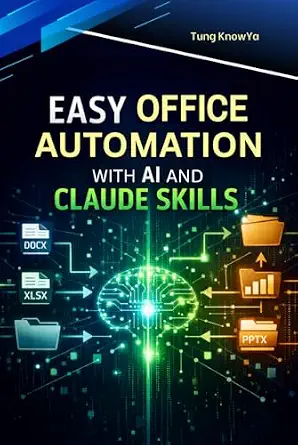 | Best for Everyday Office Workflows | Content type: Office automation guide | Primary AI platform: Claude | Skill focus: Claude skills | VIEW LATEST PRICE | See Our Full Breakdown |
| AI automation tools for workflow | Content type |
|---|---|
| OpenCode Custom Workflows: Bui | Instructional book |
| Workflow Automation with Servi | Instructional strategy book |
| The Claude AI Bible: The Compl | Instructional guide |
| AI for Bookkeeping Automation | Instructional book |
| The Complete Microsoft 365 and | Advanced instructional handbook |
| AI Workflow Automation for Blo | — |
| Agentic AI Engineering: Buildi | — |
| AI Systems and Workflow Automa | — |
| n8n Workflow Automation for Be | — |
| Using AI For AutoCAD | — |
| OpenClaw Crash Course: Build A | Crash course |
| AI for Project Managers: A Des | Desk reference and field guide |
| Agentic AI Business & Automati | — |
| AI Workflow Systems: AI Prompt | Prompt and workflow guide |
| Easy Office Automation with AI | Office automation guide |
More Details on Our Top Picks
OpenCode Custom Workflows: Building Intelligent Automation with AI Agents (AI Agent Tools Book 1)
OpenCode Custom Workflows earns my Best for Custom AI-Agent Workflows slot because it centers on designing tailored automations rather than operating one fixed business platform. That makes it more flexible than Workflow Automation with ServiceNow, which ties its guidance to a specific enterprise ecosystem, and more builder-focused than The Claude AI Bible. I see the payoff for readers who want agents to coordinate multi-step work across varied applications: the guidance connects agent concepts with workflow construction instead of stopping at productivity prompts. The tradeoff is a steeper learning curve. Beginners seeking visual, no-code recipes may get a faster start from n8n Workflow Automation for Beginners, while readers expecting a code-level reference may find the available technical detail thin. I rank it as a specialist pick because its value rises with a reader’s ability to turn concepts into an implementation.
Pros:- Connects AI-agent concepts directly to custom workflow design
- Supports thinking beyond a single vendor ecosystem
- Addresses automation across varied applications
- Useful foundation for readers planning tailored agent systems
Cons:- May be difficult for readers without prior automation knowledge
- The supplied product information does not confirm code-level depth
- Less immediately accessible than a platform-specific beginner guide
Best for: Technically confident automation builders who want to design custom, multi-step workflows around AI agents
Not ideal for: First-time no-code users who need highly detailed, screen-by-screen setup instructions
- Content type:Instructional book
- Primary topic:AI-agent workflow automation
- Core focus:Building custom intelligent workflows
- Platform scope:Multiple applications
- Implementation approach:Practical guidance
- Intended level:Intermediate or technically confident readers
- Series:AI Agent Tools
- Series position:Book 1
Our verdict“I recommend this to capable builders who value workflow flexibility more than beginner-friendly recipes.”
Workflow Automation with ServiceNow: AI Meets Workflow, from Strategy to Operations
I give Workflow Automation with ServiceNow the Best for ServiceNow Teams role because it connects AI planning with operational workflow deployment inside one enterprise platform. Compared with OpenCode Custom Workflows, this is narrower but better aligned with teams that already organize service processes in ServiceNow. Its strategy-to-operations scope can help architects, process owners, and delivery teams form a shared automation plan rather than treating AI as a collection of isolated experiments. That organizational angle is its main advantage, yet it also defines the limitation: readers outside the ServiceNow ecosystem will gain less usable value than they would from a platform-neutral guide. I would not choose it as a first technical manual either, since the product data points to limited step-by-step instruction. The Microsoft 365 and Copilot Handbook is the stronger match for organizations centered on Power Platform tools.
Pros:- Links AI workflow strategy with operational implementation
- Tailored to ServiceNow-based process automation
- Relevant to both planning and delivery stakeholders
- Helps teams connect automation projects with business operations
Cons:- Offers limited value outside the ServiceNow ecosystem
- Does not appear to provide detailed, sequential technical tutorials
- May overwhelm readers new to enterprise workflow platforms
Best for: ServiceNow architects, process owners, and operations teams planning AI-supported enterprise workflows
Not ideal for: Independent builders or small businesses that do not already use ServiceNow, since much of the guidance is platform-specific
- Content type:Instructional strategy book
- Primary platform:ServiceNow
- Primary topic:AI-enabled workflow automation
- Coverage:Strategy through operations
- Audience:Strategists and operational teams
- Platform scope:ServiceNow ecosystem
- Instruction style:Conceptual and implementation-oriented
- Technical depth:Limited step-by-step detail stated
Our verdict“I recommend this for established ServiceNow teams that need strategic direction more than a beginner configuration manual.”
The Claude AI Bible: The Complete Guide to Mastering Claude for Workflow Automation and Productivity
The Claude AI Bible takes my Best Claude Starting Guide position by pairing approachable instruction with workflows aimed at repetitive work and everyday productivity. It is a friendlier entry point than OpenCode Custom Workflows, whose custom-agent focus is better suited to readers ready to design more involved systems. Claude users who want practical routines without committing to ServiceNow or Microsoft’s Power Platform are the clearest audience. I also place it ahead of a broad agent-engineering book for people whose immediate goal is getting useful work done with one AI assistant. The compromise is uncertain depth: the supplied information does not show how far the book moves beyond basic workflow patterns, and the lack of customer reviews removes one source of outside validation. Easy Office Automation with AI and Claude Skills may be a closer fit for readers focused specifically on documents, data, and office processes.
Pros:- Uses an approachable structure for learning Claude
- Focuses on practical workflows rather than abstract AI theory
- Targets repetitive-task automation and productivity gains
- Does not require commitment to a large enterprise platform
Cons:- The available data does not establish the depth of advanced material
- No customer reviews are available for outside validation
- Claude-specific coverage may not transfer directly to other AI assistants
Best for: New and developing Claude users who want practical automation routines for repetitive knowledge work
Not ideal for: Experienced agent developers who need confirmed coverage of APIs, orchestration, or complex technical architecture
- Content type:Instructional guide
- Primary AI platform:Claude
- Primary topic:Workflow automation and productivity
- Workflow focus:Repetitive-task automation
- Teaching style:Easy-to-follow guidance
- Intended level:Beginner to developing user
- Customer review status:No reviews available in supplied data
- Content depth:Not specified in supplied data
Our verdict“I recommend this as a practical Claude entry point, but advanced builders should seek a guide with confirmed technical depth.”
AI for Bookkeeping Automation and Workflows: Automate Data Entry, Receipts, Categorization, Reconciliation, and Month-End Reporting Using AI and No-Code Tools
I chose AI for Bookkeeping Automation and Workflows as the Best for Bookkeeping Workflows because its scope follows a real accounting cycle: data entry, receipts, categorization, reconciliation, and month-end reporting. That job-specific sequence makes it more actionable for bookkeepers than The Claude AI Bible, which addresses productivity across a wider range of work. It is also more accessible than Workflow Automation with ServiceNow because the emphasis on AI and no-code tools avoids tying the reader to an enterprise service platform. The narrow focus is both the reason to buy and the reason to skip it. Marketing teams, developers, and general operations leaders will find little coverage of their workflows. I would also want more detailed technical instruction before relying on it for sensitive financial processes; readers may need prior platform knowledge and separate controls for review, access, and error handling.
Pros:- Covers the bookkeeping process from intake through month-end reporting
- Targets repetitive tasks with clear time-saving potential
- Uses AI and no-code methods rather than developer-only tooling
- More role-specific than a general productivity guide
Cons:- Does not provide detailed technical instructions in the supplied data
- May assume prior familiarity with AI or no-code platforms
- Narrow bookkeeping scope offers limited value to other business functions
Best for: Bookkeepers and small accounting teams seeking no-code methods for reducing repetitive monthly processing
Not ideal for: Teams needing software-specific accounting controls, detailed configuration steps, or workflows outside bookkeeping
- Content type:Instructional book
- Business function:Bookkeeping
- Automation methods:AI and no-code tools
- Input workflows:Data entry and receipt processing
- Accounting workflows:Categorization and reconciliation
- Reporting workflow:Month-end reporting
- Primary outcome:Reduced repetitive processing
- Prior knowledge:AI or no-code familiarity may be needed
Our verdict“I recommend this for bookkeepers who want a workflow map for automation and can supply their own platform-specific setup and controls.”
The Complete Microsoft 365 and Copilot Handbook – Volume II: Advanced Automations, Power Platform Tools, and Expert AI Workflows
The Complete Microsoft 365 and Copilot Handbook – Volume II is my Best for Microsoft 365 Power Users choice because it combines Copilot, advanced automation, and Power Platform tooling within software many organizations already use. Compared with Workflow Automation with ServiceNow, it targets office productivity and business-app building rather than service-management operations. It also offers a broader toolset than The Claude AI Bible, giving experienced Microsoft users more routes for connecting documents, data, apps, and AI-assisted work. That breadth carries two costs. The material is positioned above beginner level, and its value drops sharply for companies based on Google Workspace, standalone Claude, or vendor-neutral automation tools. The supplied description also leaves individual features and tutorial depth unclear. I rank it highly for committed Microsoft environments, but I would direct newcomers toward a simpler Claude or n8n guide before this advanced second volume.
Pros:- Brings Microsoft 365, Copilot, and Power Platform automation together
- Aims at advanced workflows rather than basic prompt instruction
- Supports productivity and business-process use cases
- Fits organizations already invested in Microsoft tools
Cons:- Likely too complex for automation beginners
- Provides limited value outside the Microsoft ecosystem
- The supplied data does not clarify feature-level or tutorial depth
Best for: Experienced Microsoft 365 users and Power Platform teams building advanced AI-assisted office and business workflows
Not ideal for: Beginners and organizations outside the Microsoft ecosystem, since the material is advanced and platform-dependent
- Content type:Advanced instructional handbook
- Primary ecosystem:Microsoft 365
- AI platform:Microsoft Copilot
- Automation platform:Microsoft Power Platform
- Workflow level:Advanced and expert
- Primary goal:Productivity through automation and AI integration
- Intended audience:Experienced Microsoft 365 users
- Volume:Volume II
Our verdict“I recommend this for seasoned Microsoft users who want deeper Power Platform and Copilot workflows, not for first-time automation learners.”
AI Workflow Automation for Bloggers
I place AI Workflow Automation for Bloggers in a specialist role because it organizes research, writing, optimization, and repurposing into one editorial pipeline. For a solo publisher, that focus can reduce repetitive work across the full life of a post. Compared with n8n Workflow Automation for Beginners, this guide covers more content stages but provides less direction around a named platform; buyers seeking repeatable, platform-based builds may prefer the n8n book. Its no-code approach suits writers who do not want to program, while the repurposing guidance can extend one researched article across several formats. The main weakness is limited tool detail: the supplied information identifies no integrations, templates, software list, or case studies. I rank it for content workflow planning, not for building a documented automation stack.
Pros:- Connects four major blogging stages within one workflow
- Uses a no-code approach suited to nontechnical creators
- Treats repurposing as part of the production system
- Targets repetitive content work rather than generic productivity
Cons:- Does not identify the specific AI or no-code products covered
- No technical setup details are supplied
- Available information does not describe templates or practical case studies
Best for: Solo bloggers and small editorial teams that want to automate research, drafting, optimization, and content repurposing without programming
Not ideal for: Technical automation builders who need named integrations, configuration instructions, or advanced workflow architecture
- Product type:Instructional book
- Primary audience:Bloggers and content creators
- Workflow stages:Research, writing, optimization, and repurposing
- Automation approach:AI-assisted and no-code
- Primary outcome:Faster content production
- Coding orientation:No-code tools emphasized
- Named platforms:Not specified
- Technical detail:Not described in the supplied data
Our verdict“I recommend this guide to bloggers who need a content-system framework, while platform-focused builders should choose a more technical book.”
Agentic AI Engineering: Building AI Agents for Beginners
I assign Agentic AI Engineering the agent-building role because it links no-code workflows with language models, retrieval-augmented generation, automation, and multi-agent systems. That range gives newcomers a useful map of how modern agents fit into business workflows. Compared with n8n Workflow Automation for Beginners, it reaches beyond one automation platform into agent design, while the n8n guide offers a narrower and more actionable path for routine business tasks. Breadth is also the compromise: the supplied data points to limited technical depth and no included code samples or tutorials, so readers may learn the concepts without gaining a complete implementation path. No-code material makes the opening steps approachable, but RAG and multi-agent designs may require outside practice. I rank it for conceptual range, not deployment-level engineering.
Pros:- Introduces several major agent-building concepts in one guide
- Combines no-code workflows with broader AI engineering topics
- Uses a hands-on orientation designed for beginners
- Provides wider conceptual coverage than a single-platform guide
Cons:- Technical treatment may be too shallow for experienced developers
- No included code samples are identified
- Advanced subjects may require added learning resources
Best for: Beginners who want to understand agent architecture, RAG, no-code workflows, and multi-agent concepts before choosing a technical platform
Not ideal for: Developers seeking production code, detailed tutorials, testing methods, or deployment guidance for reliable AI agents
- Product type:Beginner instructional book
- Primary audience:Aspiring AI agent builders
- Skill level:Beginner
- Workflow approach:No-code automation
- AI topics:Large language models and AI agents
- Retrieval method:Retrieval-augmented generation
- Agent scope:Single-agent and multi-agent systems
- Code samples:None identified in the supplied data
Our verdict“I recommend this book as an entry point to agentic workflow concepts, but not as a sole engineering reference for production systems.”
AI Systems and Workflow Automation for Law Firms
I give AI Systems and Workflow Automation for Law Firms the legal-practice slot because it pairs workflow improvement with ethical and risk-aware implementation. That framing is more relevant to attorneys and compliance teams than a generic promise of faster task completion. Compared with Agentic AI Engineering, this book sacrifices broad coverage of RAG and multi-agent design in favor of decisions facing solo attorneys and small to mid-size firms. The specialist scope helps readers connect automation choices with professional obligations, internal review, and risk management. Its limitation is execution detail: the supplied information names no software, integrations, technical procedures, or substantial case studies. I would choose it for governance-led planning, but firms already ready to configure systems will need platform documentation or technical support alongside it.
Pros:- Addresses workflow automation through a legal-practice lens
- Places ethics and risk management alongside productivity
- Targets solo practices and smaller firms rather than only large enterprises
- Also speaks to compliance-focused buyers
Cons:- Does not identify particular automation platforms or legal software
- Technical implementation guidance is not described
- Available information indicates limited practical case-study detail
Best for: Solo attorneys, small to mid-size law firms, and compliance teams developing a risk-aware plan for adopting AI workflows
Not ideal for: Legal IT teams that already have governance policies and now need software selection, integration diagrams, or configuration procedures
- Product type:Professional guidance book
- Primary sector:Legal services
- Firm size:Solo, small, and mid-size practices
- Additional audience:Compliance teams
- Core subject:AI systems and workflow automation
- Governance coverage:Ethics and risk management
- Named software:Not specified
- Case-study detail:Limited information supplied
Our verdict“I recommend this guide for legal teams shaping responsible AI policy, while implementation-ready firms will need a more technical companion.”
n8n Workflow Automation for Beginners
I rank n8n Workflow Automation for Beginners as the clearest platform-specific starting point in this group. Its no-code business workflows give novices a defined environment for turning repetitive tasks into connected processes, and the practical examples should make the ideas easier to apply. Unlike Agentic AI Engineering, which spans language models, RAG, and multi-agent systems, this guide keeps its attention on n8n and everyday business automation. That narrower scope makes the learning path easier to follow, but it also limits portability for readers comparing several platforms. Compared with AI Workflow Automation for Bloggers, it suits cross-functional operations better but offers less guidance on the content lifecycle. I place it first for beginner n8n adoption; advanced users may find the technical depth too basic.
Pros:- Centers the learning path on a specific automation platform
- Uses beginner-friendly no-code workflows
- Includes practical examples for business tasks
- Offers a more focused route than broad agent-engineering books
Cons:- Content may be too basic for experienced n8n users
- Limited technical depth restricts advanced workflow design
- Single-platform focus provides little help comparing alternatives
Best for: Small-business operators and nontechnical team members who have chosen n8n and need a practical introduction to automating routine tasks
Not ideal for: Experienced automation engineers or buyers who want a platform-neutral comparison before committing to n8n
- Product type:Practical instructional book
- Primary platform:n8n
- Skill level:Beginner
- Primary audience:Business workflow beginners
- Automation style:No-code workflows
- Task scope:Business process automation
- Learning format:Practical examples
- Technical depth:Introductory
Our verdict“I recommend this guide to first-time n8n builders who value a focused starting point over advanced or platform-neutral instruction.”
Using AI For AutoCAD
I give Using AI For AutoCAD the most specialized production role because it connects artificial intelligence with drafting, design, and AutoCAD workflow automation. Compared with AI Workflow Automation for Bloggers, which maps an editorial process, this guide targets CAD users whose repetitive work sits inside design projects. It is also more focused than The Complete Microsoft 365 and Copilot Handbook, making it easier for AutoCAD users to find relevant ideas without sorting through office-wide automation material. The tradeoff is accessibility: prior AutoCAD knowledge may be needed, and the supplied information does not name the AI products, integrations, commands, or project examples covered. I rank it for CAD-specific modernization, while general operations teams and complete beginners will gain more from a broader workflow guide.
Pros:- Applies AI automation directly to drafting and design work
- Maintains a tighter professional focus than general office guides
- Offers practical techniques for modernizing AutoCAD projects
- Connects automation benefits with design-workflow efficiency
Cons:- May assume existing AutoCAD knowledge
- Does not identify the AI products or integrations covered
- No detailed commands, specifications, or project examples are described
Best for: AutoCAD users and design teams seeking practical ideas for adding AI and automation to established drafting workflows
Not ideal for: AutoCAD beginners or general business teams that need platform-neutral automation guidance and clearly identified software integrations
- Product type:Specialist instructional book
- Primary platform:AutoCAD
- Primary audience:Drafting and design professionals
- Workflow areas:Drafting, design, and project workflows
- Technology focus:Artificial intelligence and automation tools
- Instruction style:Practical insights and techniques
- Prior knowledge:AutoCAD familiarity may be required
- Named AI tools:Not specified
Our verdict“I recommend this book to established AutoCAD users exploring AI-assisted efficiency, but newcomers need stronger software fundamentals first.”
OpenClaw Crash Course: Build AI Automations, Workflows, Skills, MCP Integrations, Content Creation and Apps with OpenClaw
I rank OpenClaw Crash Course as the builder-focused choice because it connects workflow automation with skills, apps, content systems, and MCP integrations. That scope makes it more technically ambitious than AI Workflow Systems for freelance consultants, which centers on reusable prompts, and more platform-specific than Agentic AI Business & Automation Bible 2026. The practical projects should help readers turn concepts into working systems rather than stop at strategy. The tradeoff is a steeper entry point: prerequisites, lesson depth, and setup requirements are not disclosed, so a newcomer may encounter unfamiliar concepts quickly. It also concentrates on OpenClaw, while n8n Workflow Automation for Beginners offers a more conventional no-code path. This is my pick for readers who value build-oriented learning over broad business guidance.
Pros:- Connects workflow automation with skills, apps, content creation, and MCP integrations
- Uses practical projects to support applied learning
- Builds platform-specific capabilities that can lead to working automation systems
- Covers both automation design and integration work
Cons:- Prerequisites and expected technical knowledge are not disclosed
- The wide subject range may move too quickly for beginners
- OpenClaw-specific instruction offers less value to readers committed to other platforms
Best for: Developers, technical creators, and automation enthusiasts who want project-based instruction for building OpenClaw workflows, skills, apps, and MCP connections
Not ideal for: First-time AI users seeking a gentle no-code introduction, since prerequisites are unclear and the subject range may become technical quickly
- Content type:Crash course
- Primary platform:OpenClaw
- Automation focus:AI automations and workflows
- Integration coverage:MCP integrations
- Build topics:Skills, content creation, and apps
- Learning approach:Practical projects
- Prerequisites:Not specified
Our verdict“I recommend this course to technically confident readers who want to build with OpenClaw rather than merely learn general AI automation concepts.”
AI for Project Managers: A Desk Reference & Field Guide
AI for Project Managers earns its place through role-specific decision support rather than platform instruction. I would choose it over Agentic AI Business & Automation Bible 2026 for PMs who need a reference tied to task automation, smarter decisions, and ethical AI use. It also has a broader management remit than AI Workflow Systems, which is aimed at freelance consulting work. The desk-reference format should suit readers who want guidance they can revisit during planning and delivery instead of following a single build sequence. Its weakness is technical depth: the supplied information does not identify concrete examples, integrations, or implementation exercises. Advanced AI practitioners may find the material too general, while readers seeking executable automations may prefer the OpenClaw or n8n guides. This is my management-first recommendation, not my engineering pick.
Pros:- Frames AI automation around project-management responsibilities
- Includes ethical guidance alongside productivity methods
- Works as a reference that can be revisited during active projects
- Addresses both workflow efficiency and decision support
Cons:- No specific technical integrations or implementation examples are identified
- May be too general for experienced AI practitioners
- Less suitable for readers seeking a step-by-step automation build
Best for: Project managers, PMO leads, and delivery managers who need practical AI guidance alongside ethical and decision-making frameworks
Not ideal for: Automation engineers and advanced AI practitioners who need detailed integrations, code, or platform-specific implementation examples
- Content type:Desk reference and field guide
- Primary audience:Project managers
- Workflow focus:Streamlining work and automating tasks
- Decision support:AI-assisted decision-making
- Governance coverage:Ethical AI use
- Technical examples:Not specified
- Platform focus:Platform-agnostic
Our verdict“I recommend this guide to project leaders who want a practical and ethically aware reference without needing an engineering manual.”
Agentic AI Business & Automation Bible 2026: 4 Books in 1
I place Agentic AI Business & Automation Bible 2026 highest for breadth among these five selections. Its four-part scope combines agents, ChatGPT prompts, no-code workflows, automation systems, and business growth tactics, giving entrepreneurs more routes to apply AI than the narrowly focused AI Workflow Systems. Compared with OpenClaw Crash Course, this guide appears less tied to one technical ecosystem and better suited to readers still choosing their automation stack. The included prompts and workflows add immediate starting points, but breadth is also the drawback: beginners may struggle to decide which methods deserve attention, and the supplied description does not establish technical depth. Specialists may get more from a focused guide such as AI for Bookkeeping Automation and Workflows. I see this as the strategy-and-ideas pick for business operators, not the clearest route to mastery of one platform.
Pros:- Combines AI agents, prompts, no-code workflows, and automation systems
- Provides prompts and workflow ideas that can be applied quickly
- Connects automation choices to time savings and business growth
- Offers broader coverage than the role-specific guides in the lineup
Cons:- The large scope may overwhelm readers without prior AI knowledge
- Technical depth and implementation detail are not established
- Broad coverage may leave specialists wanting a more focused resource
Best for: Entrepreneurs, small-business owners, and operations professionals who want a wide survey of agents, prompts, no-code workflows, and automation systems
Not ideal for: Beginners who want one guided learning path or specialists who need deep instruction for a single platform or business function
- Content format:4 books in 1
- Edition framing:2026
- Agent coverage:AI agents
- Prompt platform:ChatGPT
- Workflow approach:No-code automation
- Included resources:Practical prompts and workflows
- Primary audience:Entrepreneurs and professionals
- Business goals:Save time, build smarter, and grow faster
Our verdict“I recommend this four-in-one guide to business operators who want breadth and reusable ideas before committing to a single automation platform.”
AI Workflow Systems: AI Prompts for Freelance Consultants
AI Workflow Systems has the narrowest audience here, and that focus is why I rank it as the strongest consultant-specific choice. Its prompts and frameworks target client delivery, personal productivity, and practice growth, while AI for Project Managers is built around organizational project leadership. Compared with Agentic AI Business & Automation Bible 2026, it sacrifices breadth for a clearer freelance use case; readers should spend less time translating generic business advice into client-facing routines. The limitation is that prompts are not the same as fully configured automation. Detailed technical instructions are absent, and readers may need prior AI knowledge to connect the frameworks with their chosen tools. Agencies requiring governed, multi-user systems may also outgrow its solo-practice orientation. This is my most targeted workflow pick for independent consultants who need repeatable client processes more than platform engineering.
Pros:- Tailors prompts and workflows to freelance consulting work
- Links automation directly to client delivery and productivity
- Provides frameworks for making a consulting practice more repeatable
- Has a clearer audience and use case than broad business AI guides
Cons:- Does not provide detailed technical setup instructions
- May require prior AI knowledge to turn prompts into connected workflows
- Solo-consultant framing may not scale well to larger agencies
Best for: Independent consultants who want reusable AI prompts and workflow frameworks for client work, productivity, and scaling a solo practice
Not ideal for: Larger agencies or technical teams that need governed multi-user automations, detailed integrations, and implementation instructions
- Content type:Prompt and workflow guide
- Primary audience:Freelance consultants
- Core resource:Practical AI workflow prompts
- Client-work focus:Automation of consulting tasks
- Productivity goal:Faster and more efficient workflows
- Business goal:Scaling a consulting practice
- Technical instructions:Limited detail
- Prior AI knowledge:May be required
Our verdict“I recommend this guide to freelance consultants who need repeatable AI-assisted client workflows without seeking a full automation engineering course.”
Easy Office Automation with AI and Claude Skills: Design Smart AI Workflows for Documents, Data & Business Processes
I choose Easy Office Automation with AI and Claude Skills for readers whose automation needs live in documents, data, and recurring business processes. That practical office scope is tighter than The Claude AI Bible, which covers Claude productivity more broadly, yet less ecosystem-heavy than The Complete Microsoft 365 and Copilot Handbook – Volume II. Its value lies in teaching workflow design around repetitive work, so the outcome is a better process rather than a loose collection of prompts. Personal and business applications also make it more flexible than the consultant-only AI Workflow Systems. The tradeoff is platform fit: Claude-centered instruction is less useful for organizations standardized on Copilot or another assistant. Technical features, setup depth, and prerequisites are not disclosed, making the learning curve hard to gauge. This is my office-process pick for readers already interested in Claude.
Pros:- Targets common document, data, and business-process workflows
- Teaches workflow design rather than offering prompts alone
- Applies to both personal productivity and business operations
- Focuses on reducing repetitive office work
Cons:- Claude-centered coverage may not fit organizations using other AI ecosystems
- Technical features and setup depth are not specified
- The lack of disclosed prerequisites makes difficulty hard to judge
Best for: Claude users, office administrators, and small-business operators who want to automate document, data, and recurring back-office processes
Not ideal for: Teams standardized on Microsoft Copilot or buyers who need documented integrations and advanced technical implementation details
- Content type:Office automation guide
- Primary AI platform:Claude
- Skill focus:Claude skills
- Workflow areas:Documents, data, and business processes
- Primary goal:Reduce repetitive work
- Usage settings:Personal and business
- Learning focus:Smart AI workflow design
- Technical depth:Not specified
Our verdict“I recommend this guide to Claude-oriented office users who want to redesign repetitive processes across documents, data, and routine operations.”

How We Picked
I ranked these titles by how well they support the real work behind AI workflow automation: identifying repeatable tasks, connecting steps, handling exceptions, and producing outputs people can review. My main criteria were workflow depth, practical usability, audience fit, platform flexibility, and the gap between a book’s promise and the workflows it actually targets. Guides that connect strategy with implementation ranked above titles centered mainly on prompts or general productivity.
I also weighed learning curve, portability, governance guidance, and the likelihood that readers could apply the material beyond one example. OpenCode took the top position for its adaptable agent focus, while n8n scored highly for accessible no-code execution and Microsoft 365 earned the premium ecosystem slot for organizational depth. Specialized books ranked according to how directly they solve a defined buyer’s problems; they may be the better purchase for that audience even when they sit below broader picks.
Factors to Consider When Choosing AI Automation Tools For Workflow
The right guide depends less on how many AI products it mentions and more on the kind of system I want to build. I would start with the workflow’s scope, the tools already in place, and the amount of technical control the team can support. The factors below help separate a useful operating resource from a book that adds ideas without producing a workable process.
Choose the Right Automation Layer
Some buyers need task automation, while others need agents that can select actions across several systems. A visual n8n flow is often enough for moving form data, generating a draft, and sending it for approval. OpenCode or an agent-engineering guide becomes more relevant when the system must interpret changing inputs and choose among tools. The mistake is treating every repetitive job as an agent problem, which adds cost, monitoring work, and failure paths. I would use fixed rules for predictable steps and reserve model-driven decisions for messy text, classification, or planning. A guide that explains this boundary will produce more dependable workflows than one that adds AI to every stage.
Match the Guide to Your Existing Software Stack
A platform-specific guide can shorten setup when a company already pays for Microsoft 365, ServiceNow, Claude, or AutoCAD. It can also create lock-in by teaching workflows that are difficult to reproduce elsewhere. Before choosing one, I would map the systems that hold source data, the applications that receive outputs, and the approval tools employees already use. If those systems may change, a platform-neutral or n8n-focused resource offers better portability. If the stack is settled, ecosystem depth may matter more than flexibility. The best match minimizes duplicate tools and manual handoffs, not merely the purchase price of the guide.
Balance Breadth Against Job-Specific Detail
Broad automation books help readers create a reusable mental model, but they often leave the final process design to the buyer. A bookkeeping or legal workflow guide can move faster because it already understands recurring documents, review points, and domain risks. That specialization loses value when the reader needs to automate several departments. I would pick a role-specific title when at least half of the planned workflows fall inside its stated profession. For mixed operations, a broad guide paired with internal process documentation is usually more versatile. Buyers should also check whether examples address exceptions and approvals rather than presenting only clean, linear demonstrations.
Plan for Human Review and Failure Handling
AI output is variable, so a workflow needs more than a trigger and a destination. I would look for guidance on confidence checks, approval gates, retry rules, and records showing what the system changed. These controls matter most in bookkeeping, law, reporting, and customer-facing work, where a plausible mistake can travel quickly. Fully autonomous examples may appear efficient but can shift time into investigation and cleanup. A safer design gives AI freedom inside a defined step while keeping high-impact actions behind human approval. Paying more for a guide with governance and exception handling can be worthwhile when errors carry financial, legal, or reputational costs.
Account for Maintenance, Not Just Setup
An automation is an operating asset that needs attention when APIs, model behavior, permissions, or business rules change. Buyers often compare setup speed while overlooking monitoring and maintenance effort. I would favor guides that teach modular workflow design, clear naming, versioning, and ways to replace one service without rebuilding the whole system. Prompt collections can deliver early gains, but they age poorly when they lack a stable process around them. Technical teams may gain more from agent engineering or OpenCode material, while small teams may prefer visible no-code logic they can repair themselves. The right choice is the one whose ongoing care matches the team’s available skills and time.
Frequently Asked Questions
Are these products AI automation tools or guides to using them?
These products are books and implementation guides rather than software subscriptions. They help readers choose, configure, or combine tools such as n8n, Claude, Copilot, ServiceNow, and agent frameworks. That distinction matters because buying a guide does not include access to the platforms, models, connectors, or paid accounts it discusses. I would check the software requirements before purchase and include those costs in the budget. Buyers seeking a ready-to-run service should select the platform first, then use this roundup to find the best supporting guide.
Should I start with n8n or an AI agent guide?
n8n is the better starting point when the workflow has known steps, clear triggers, and predictable destinations. An agent guide is more suitable when automation must interpret open-ended requests, plan actions, or choose different tools based on context. Beginners often learn faster from visual flows because each data movement remains visible and easier to troubleshoot. Agent-based systems offer greater adaptability but demand stronger evaluation, permissions, and monitoring. I would begin with n8n unless flexible decision-making is a core requirement rather than an attractive extra.
Is a Microsoft 365 or ServiceNow guide worthwhile outside those ecosystems?
Usually not, unless I plan to adopt that platform soon or need its ideas for comparison. Much of the practical value comes from native connectors, permissions, data structures, and administration patterns that do not transfer cleanly to unrelated software. The Microsoft guide suits teams working across Copilot, Power Platform, and Office applications, while the ServiceNow title targets larger operational environments. A platform-neutral guide offers better value for mixed stacks or undecided buyers. Ecosystem-specific depth pays off when the organization already has licenses, administrators, and established processes.
When is a role-specific workflow book better than the top overall pick?
A specialized title is better when the reader needs usable process patterns for one profession more than a flexible automation framework. The bookkeeping guide addresses transaction-heavy routines, the law-firm book centers risk-aware legal operations, and the blogging title focuses on repeatable content production. These books reduce the work of translating general concepts into familiar tasks. Their weakness is limited reuse outside the named field. I would choose one when domain fit saves more time than the broader capabilities of OpenCode or n8n.
How can I avoid buying an AI workflow guide that becomes dated quickly?
I would favor books that teach workflow architecture, exception handling, data mapping, and evaluation methods rather than relying mainly on screenshots or fixed prompts. Interfaces and model names change faster than sound process design. A useful guide should help readers replace a connector, model, or application without discarding the entire workflow. Publication year still matters for platform-specific instructions, especially around permissions and integrations. The safest purchase combines durable methods with recent examples and access to update notes or companion resources where available.
Conclusion
OpenCode Custom Workflows is my best overall recommendation for readers who want flexible, agent-driven automation that can extend across different business processes. n8n Workflow Automation for Beginners is the best value choice for visual workflows, while Agentic AI Engineering is the better beginner pick for readers who specifically want to understand how AI agents work. For a premium, organization-wide ecosystem approach, I would choose The Complete Microsoft 365 and Copilot Handbook – Volume II; ServiceNow-centered enterprises should choose Workflow Automation with ServiceNow instead. Buyers with narrow needs will get faster value from the bookkeeping, legal, blogging, AutoCAD, project-management, or freelance-consulting titles tied to their daily work. Claude users focused on documents and office processes should favor Easy Office Automation with AI and Claude Skills, while integration-minded builders may prefer the OpenClaw crash course. The right choice comes down to whether I need a reusable automation framework, a simpler no-code path, or guidance already shaped around my profession.
Fall Picks
fall essentials
As an affiliate, we earn on qualifying purchases.