📊 Full opportunity report: The Memory Squeeze: Why Your RAM Bill Doubled on ThorstenMeyerAI.com — validation score, market gap, and execution plan.

Get business pricing on tech for your team
- Business-only prices and quantity discounts
- Tax-exempt purchasing
- Multiple users, one account, clear invoices
TL;DR
RAM prices have doubled or more in 2026, driven by a shift in chip manufacturing toward AI hardware like HBM. This is causing shortages, high costs, and industry restructuring, with no immediate fix expected.
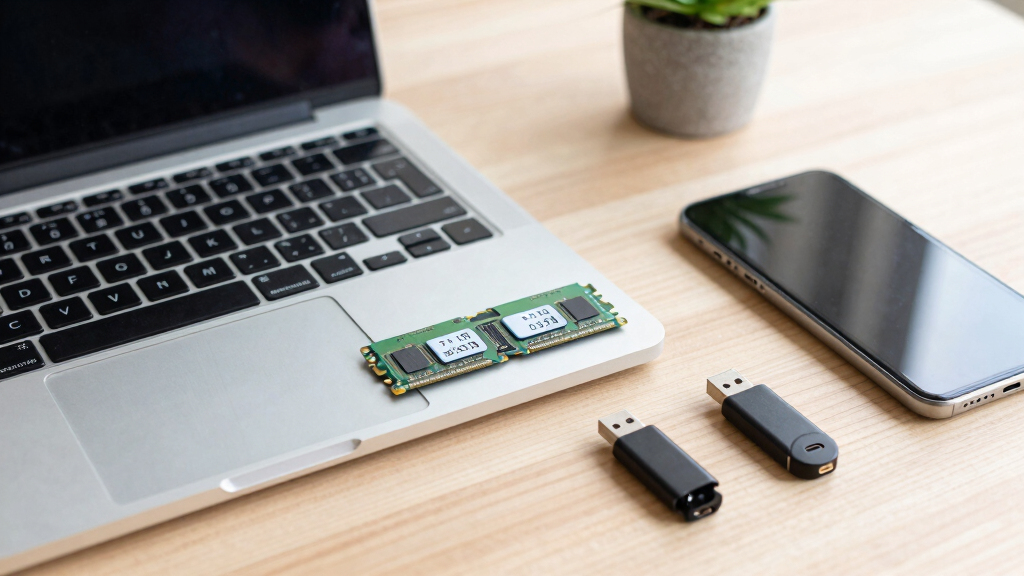
Memory prices have surged by 90% in a single quarter in 2026, with 32GB DDR5 kits now costing over $370, up from about $120 a year earlier, according to industry trackers. This sharp increase makes RAM the most expensive component in many PC builds, affecting consumers and manufacturers alike.
The primary driver behind this surge is a deliberate reallocation of chip-making capacity by Samsung, SK Hynix, and Micron, which now prioritize manufacturing High Bandwidth Memory (HBM) for AI applications. HBM modules, which are significantly more profitable per wafer, now account for roughly 23% of total DRAM wafer output, up from 19% in 2025, and AI is expected to absorb about 20% of DRAM capacity in 2026.
This shift is driven by economic incentives: HBM sells for $60–$100 per module, compared to $5–$10 for standard DDR5, making it a far more lucrative use of wafer space. However, HBM’s physical and yield inefficiencies mean that every wafer dedicated to HBM effectively replaces three or four wafers of consumer DRAM, constraining supply and causing shortages.
Unlike past shortages, which eased when manufacturers built more fabs, this crisis is rooted in strategic choices to maximize margins on AI hardware. New capacity expansions are not expected to significantly impact supply until 2027–2028, and current industry practices favor maintaining high margins over increasing supply, further prolonging the shortage.
Why your RAM bill doubled
“Doubled” is the polite version — consumer DRAM is running 3–6× its 2024 lows. The boom-bust cycle that always brought cheap RAM back isn’t coming this time, because the factories that make your RAM now make something far more profitable instead.
HBM
This is the quiet tax on the whole AI era. Relief isn’t forecast before 2028, and even then prices may settle 30–50% above pre-crisis levels. Buy what you genuinely need now; don’t panic-buy capacity you won’t use. You can’t out-wait the fab math — but, as this series will show, you can shrink what you need. Next: HBM Ate the Fab.
Why the Memory Shortage Will Persist in 2026
This situation impacts consumers and industry players by driving up PC component costs, causing delays, and reshaping the supply chain. The shift toward AI hardware is a long-term, structural change that limits the availability of affordable RAM, potentially slowing PC upgrades and affecting the broader tech ecosystem.
Manufacturers’ focus on high-margin AI memory products means the traditional supply-demand cycle is disrupted, with prices unlikely to fall soon. The shortage also raises concerns about market concentration, past collusion, and the influence of large buyers like hyperscalers who have committed to long-term contracts, further reducing supply flexibility.
As an affiliate, we earn on qualifying purchases.
The Evolution of DRAM Market Dynamics in 2026
Historically, memory shortages have been temporary, resolved by increased capacity and market correction. However, since 2024, the industry has shifted its focus toward AI hardware, notably HBM, which is more profitable but less efficient physically. This strategic reallocation has been driven by the booming AI sector and the high margins associated with specialized memory modules.
Major manufacturers—Samsung, SK Hynix, and Micron—dominate the DRAM market, controlling around 95%, and have historically coordinated or responded to market changes. Recent antitrust investigations from the 2000s are not ongoing, but the high market concentration remains a concern. Large buyers, including hyperscalers, have placed open-ended orders and signed multi-year contracts, further tightening supply for consumer markets.
“Our focus is on serving enterprise AI markets, which are more profitable, and this naturally reduces supply to the consumer memory segment.”
— Micron spokesperson
High Bandwidth Memory (HBM) modules
As an affiliate, we earn on qualifying purchases.
As an affiliate, we earn on qualifying purchases.
Unresolved Questions About Future Supply and Pricing
It remains unclear whether additional capacity expansions planned for 2027–2028 will sufficiently alleviate the shortage or if further industry shifts toward high-margin AI memory will continue to constrain consumer DRAM supply. The long-term impact of market concentration and potential antitrust actions also remains uncertain.
As an affiliate, we earn on qualifying purchases.
What to Expect in the Coming Months and Years
Manufacturers are unlikely to significantly increase consumer DRAM supply before 2027, as capacity expansions are years away and current strategies favor high-margin AI memory. Buyers should prepare for continued high prices and potential shortages. Industry analysts will closely monitor new fab developments, capacity investments, and AI hardware demand to gauge when supply might normalize.
As an affiliate, we earn on qualifying purchases.
Key Questions
Will RAM prices ever return to 2024 levels?
It is uncertain. The current industry strategy prioritizes high-margin AI memory, and capacity expansions are not expected until 2027–2028, making a quick return unlikely.
Why are HBM modules so much more profitable than DDR5?
HBM modules sell for $60–$100 each, compared to $5–$10 for DDR5, and their physical and yield inefficiencies mean they consume more wafer area per module, increasing profitability.
Are consumers and PC builders responsible for the shortage?
No, the shortage is driven by strategic industry decisions to prioritize AI hardware, not consumer demand or purchasing patterns.
Could government intervention or antitrust actions change the market?
While past antitrust cases have targeted collusion, current market concentration and strategic choices are less likely to be affected unless new regulations or investigations are initiated.
Source: ThorstenMeyerAI.com
Fall Picks
fall essentials
As an affiliate, we earn on qualifying purchases.