
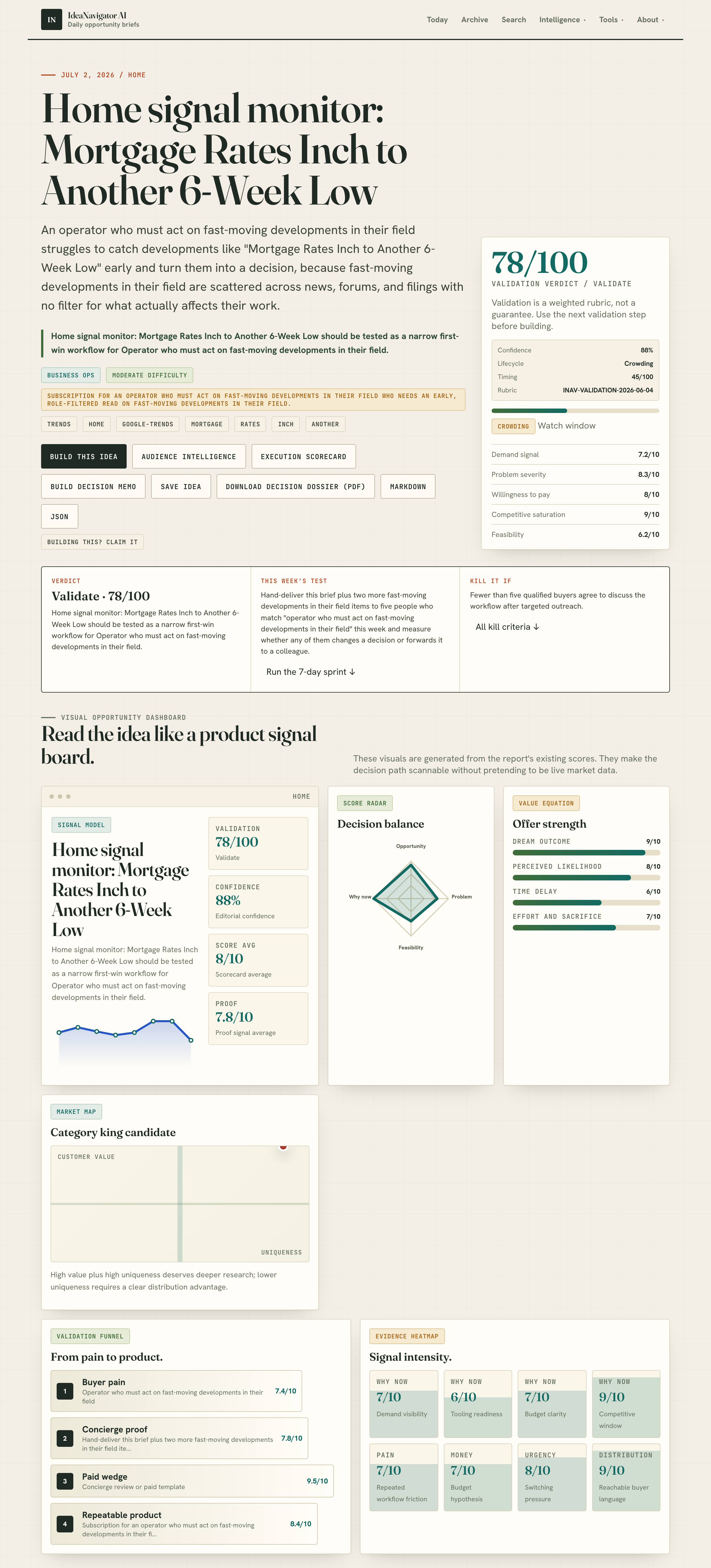
📊 Full opportunity report: Home signal monitor: Mortgage Rates Inch to Another 6-Week Low on IdeaNavigator AI — validation score, market gap, and execution plan.

Get business pricing on tech for your team
- Business-only prices and quantity discounts
- Tax-exempt purchasing
- Multiple users, one account, clear invoices
TL;DR
Mortgage rates have fallen to a six-week low, marking a potential turning point in the housing market. This development is confirmed by recent market data and could influence borrowing costs.
Mortgage rates have decreased to their lowest level in six weeks, according to recent market data, signaling a potential shift in borrowing conditions for homebuyers and lenders. This decline is confirmed by industry sources and could influence housing market activity in the near term.
Financial data released this week shows that the average 30-year fixed mortgage rate has fallen to approximately 6.1%, the lowest since early March. Experts attribute this decline to recent movements in bond markets and easing inflation concerns, which have prompted lenders to lower borrowing costs.
Market analysts note that this is the third consecutive week of declining mortgage rates, suggesting a possible trend reversal after months of upward movement. The decline was confirmed by data from the Mortgage Bankers Association and major financial news outlets.
Mortgage lenders and homebuyers are closely watching these developments, as lower rates could make home financing more affordable and stimulate activity in the housing sector. However, some analysts caution that rates remain elevated compared to pre-pandemic levels, and other factors such as housing supply and economic outlook continue to influence market dynamics.
Implications of the 6-Week Low for Housing Market and Borrowers
The decline in mortgage rates to a six-week low could lead to increased homebuying activity, as borrowing costs become more attractive for prospective buyers. This shift may support home sales and stabilize housing prices after months of volatility. For lenders, lower rates might impact profit margins but could also attract more mortgage applications, balancing the market. Overall, this development signals a potential easing of borrowing conditions, which could influence the broader economic outlook related to housing and consumer spending.
As an affiliate, we earn on qualifying purchases.
Recent Trends and Market Factors Influencing Mortgage Rates
Mortgage rates have been on an upward trajectory since late 2022, driven by inflation fears and Federal Reserve rate hikes. However, recent economic indicators, including softer inflation data and bond market movements, suggest a possible pause or reversal. The recent decline to a six-week low aligns with broader market expectations that the Fed may slow or pause rate increases in the coming months, impacting mortgage lending conditions.
Prior to this decline, rates reached levels not seen since early 2023, causing some homebuyers to delay purchases. The current movement reflects ongoing market adjustments and investor sentiment shifts, with analysts monitoring upcoming economic reports for further direction.
“Lower rates may encourage more applications, but we’re still cautious given the overall economic uncertainties and housing supply constraints.”
— a mortgage lender
As an affiliate, we earn on qualifying purchases.
Factors That Could Influence Future Mortgage Rate Movements
While current data confirms a decline to a six-week low, it remains uncertain whether this trend will continue or reverse. Economic factors such as inflation, Federal Reserve policies, and geopolitical developments could impact future mortgage rates. Analysts caution that external shocks or new economic data could alter the trajectory, making it difficult to predict long-term movements with certainty.
As an affiliate, we earn on qualifying purchases.
Upcoming Economic Data and Market Indicators to Watch
Market participants will closely monitor upcoming economic reports, including inflation figures, employment data, and Federal Reserve statements, to gauge the future direction of mortgage rates. Additionally, housing market indicators such as home sales and construction activity will provide context for how the rate movement influences real estate activity. Analysts expect continued volatility but will look for signs of stabilization or further declines in the coming weeks.
As an affiliate, we earn on qualifying purchases.
Key Questions
What caused mortgage rates to decline this week?
The decline is attributed to recent movements in bond markets and easing inflation concerns, which have prompted lenders to lower borrowing costs.
How might the rate decrease affect homebuyers?
Lower mortgage rates could reduce monthly payments, making home financing more affordable and potentially increasing homebuying activity.
Are mortgage rates expected to fall further?
It is uncertain; future movements depend on economic data, Federal Reserve policies, and global market conditions. Analysts are watching upcoming reports for signs of continued decline or stabilization.
Does this rate movement impact existing mortgage holders?
No, existing fixed-rate mortgage holders are unaffected by current rate changes. The movement primarily influences new loan applications and refinancing activity.
What should homebuyers and lenders do next?
They should monitor economic indicators and market trends to time their decisions accordingly, considering potential further rate changes in the near future.
Source: IdeaNavigator AI
Fall Picks
fall essentials
As an affiliate, we earn on qualifying purchases.