
TL;DR
Listen free for 30 days with Audible
Thousands of audiobooks and originals — cancel anytime.
Start your free trialAs an affiliate, we earn on qualifying purchases.
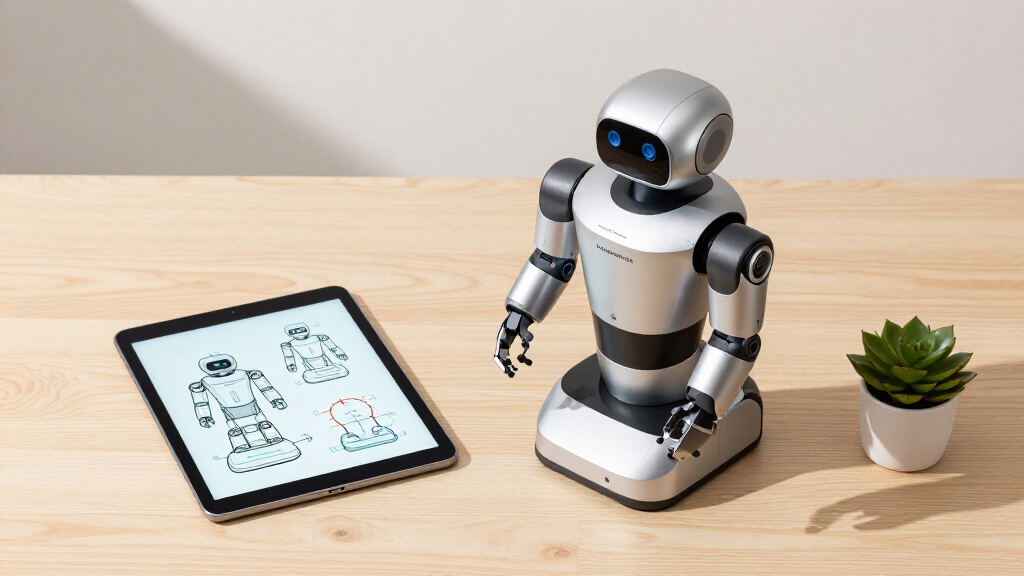
ACE ROBOTICS, a spinoff of SenseTime, claims to have launched a robot that can change its grip during failed attempts in a commercial setting. However, specific product details, customer deployments, and independent verification are still unavailable.
SenseTime’s spinoff ACE ROBOTICS has announced its entry into the commercial market, highlighting a robot that can switch its grip during a failed attempt. This development could signal progress toward more reliable robotic manipulation in real-world applications, but specific product details and deployment information remain undisclosed. For an overview of recent advances, see the original analysis.
The report from SenseTime states that ACE ROBOTICS has moved beyond research and demonstration phases to a commercial status. For more on the current state of humanoid robotics, see the latest industry report. The key feature highlighted is the robot’s ability to detect a failed grasp and switch its grip mid-task to recover from errors. For technical details on robotic manipulation, see Mistral’s Robostral navigation model. However, the report does not specify which robot model performed this behavior, nor does it detail the objects handled or the environmental conditions under which the tests occurred.
Furthermore, the report does not include performance metrics such as success rates, or independent testing results. It remains unclear whether the behavior has been validated across multiple scenarios or if it is limited to controlled demonstrations. There are no publicly available customer contracts, sales figures, or deployment sites, leaving the scope of the commercial rollout uncertain.
Implications of Adaptive Grip Technology in Robotics
This announcement suggests a potential shift toward more resilient robotic systems capable of handling unpredictable real-world conditions with minimal human intervention. If proven reliable, such systems could reduce downtime, improve efficiency, and expand robotic applications in sectors like manufacturing, logistics, and service industries.
However, without independent verification or detailed performance data, it is too early to assess how this technology compares with existing adaptive manipulation systems. The move from demonstration to commercial deployment also raises questions about system reliability, safety, and integration in operational environments.
robotic gripper with adaptive grip
As an affiliate, we earn on qualifying purchases.
As an affiliate, we earn on qualifying purchases.
Background on Adaptive Manipulation in Robotics
Robotic manipulation has long relied on fixed motion sequences, with limited ability to recover from errors in dynamic environments. Recent advances have focused on adaptive control systems that recognize failures and adjust actions accordingly. SenseTime has been active in AI and robotics research, and ACE ROBOTICS was established as a spinoff to commercialize these innovations.
Prior to this announcement, most adaptive manipulation systems were confined to research labs or limited pilot projects. The transition to a commercial product capable of real-time grip switching marks a notable development, but details about its readiness and scalability remain sparse.
“The ability to switch grips mid-fail could significantly enhance robotic reliability, but independent testing is essential to validate these claims.”
— an anonymous researcher
industrial robotic arm for manufacturing
As an affiliate, we earn on qualifying purchases.
As an affiliate, we earn on qualifying purchases.
Unverified Aspects of ACE ROBOTICS’ Claims
It is not yet clear which specific robot model demonstrated the grip-switching behavior, whether the system operates autonomously or with remote assistance, or how robust and repeatable the recovery process is across different objects and conditions. The lack of independent testing, performance metrics, and detailed deployment data leaves the true extent of the technology’s readiness uncertain.
robotic manipulation system for logistics
As an affiliate, we earn on qualifying purchases.
As an affiliate, we earn on qualifying purchases.
Next Steps for Confirming Commercial Viability
Future developments should include the release of detailed product specifications, performance data, and customer deployment announcements. Independent evaluations or third-party testing could help verify the system’s reliability and scalability. Monitoring ACE ROBOTICS’ customer contracts and sales figures will also clarify the scope of its commercial operations.
humanoid robot with error recovery
As an affiliate, we earn on qualifying purchases.
As an affiliate, we earn on qualifying purchases.
Key Questions
What exactly did ACE ROBOTICS announce?
They announced that their robot has entered the commercial market and features the ability to switch grips during a failed attempt. However, specific product details, sales channels, and deployment information have not been disclosed.
Does ‘gone commercial’ mean the robot is now for sale?
Not necessarily. The phrase could refer to pilot projects, customer orders, or broader availability, but no sales channels, pricing, or delivery timelines have been announced.
Has the grip-switching behavior been independently tested?
No, the report does not include independent testing results or detailed performance metrics. Verification by third parties is still pending.
Is ACE ROBOTICS part of SenseTime?
Yes, ACE ROBOTICS is described as a SenseTime spinoff. The current ownership structure or operational relationship has not been detailed in the announcement.
What should we look for next to confirm this technology’s effectiveness?
Look for announced customer deployments, technical specifications, independent testing results, and performance data showing reliability across different scenarios.
Source: ThorstenMeyerAI.com
NFL season / tailgating Picks
team gear
As an affiliate, we earn on qualifying purchases.