
Exoskeletons and wearable robotics, like Hypershell and beyond, are revolutionizing how you enhance strength, mobility, and safety in both industry and healthcare. These devices mimic natural movements, reducing fatigue and injury while helping you lift heavier loads or regain independence. As technology advances, expect lighter, smarter, and more comfortable options that seamlessly integrate into various roles. Keep exploring to discover how these innovations are shaping a more inclusive and efficient future for everyone.
Key Takeaways
- Hypershell is a wearable robotic system designed to augment human strength and endurance in industrial settings.
- Exoskeletons are evolving from assistive devices to tools enhancing productivity and safety across diverse sectors.
- Advances focus on lightweight, comfortable designs with smart, adaptive features for seamless integration into daily tasks.
- Future trends include expanded applications beyond rehabilitation, supporting heavy lifting, repetitive motions, and complex movements.
- Innovations like Hypershell exemplify how wearable robotics are redefining human capabilities and workplace safety.
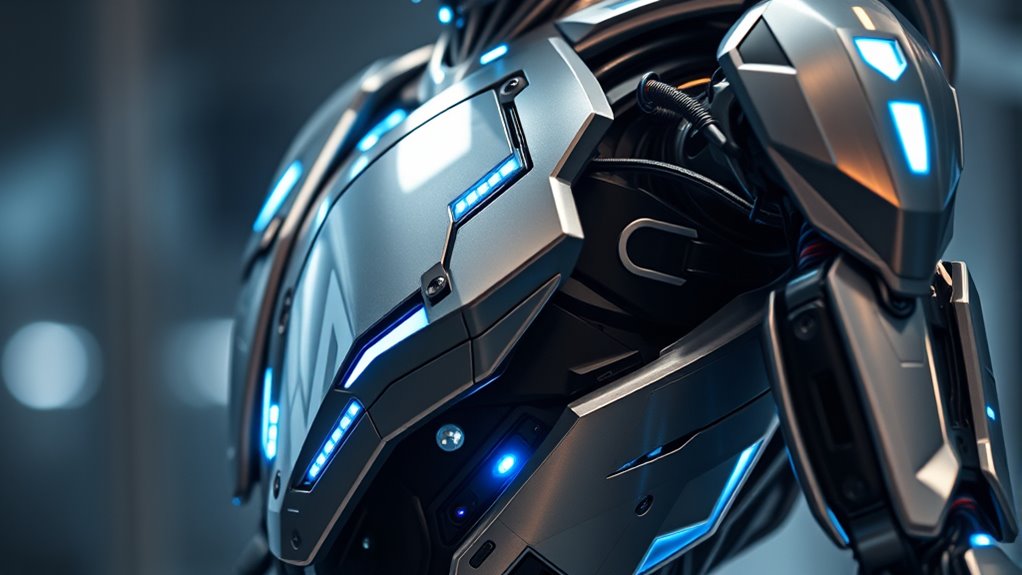
Exoskeletons and wearable robotics are transforming the way humans enhance their strength, mobility, and endurance. These advanced devices are no longer just concepts—they’re practical tools that are reshaping industries and daily life. One of the most significant impacts is in assistive technology, where exoskeletons help individuals with mobility impairments regain independence. Whether it’s helping someone stand or walk again, these devices support users by mimicking natural movements, reducing fatigue, and minimizing injury risk. Their ability to augment human capabilities makes them invaluable in rehabilitation centers, nursing homes, and home care settings. You might find yourself using an exoskeleton to assist with daily activities, feeling empowered to perform tasks that once seemed impossible.
Exoskeletons empower mobility and independence, transforming assistive care and daily living.
In industrial applications, wearable robotics serve as game-changers for workers performing physically demanding tasks. Heavy lifting, repetitive motions, and prolonged standing become less taxing when integrated with exoskeleton support. Instead of risking injury or fatigue, you can rely on these systems to boost your strength and endurance. They’re designed to distribute loads evenly across your body, reducing strain on muscles and joints. This not only enhances productivity but also minimizes workplace injuries, making industrial environments safer for everyone. Imagine working longer hours without the usual exhaustion or pain—exoskeletons make that possible. They also help reduce downtime caused by musculoskeletal disorders, ultimately saving companies money and improving worker well-being.
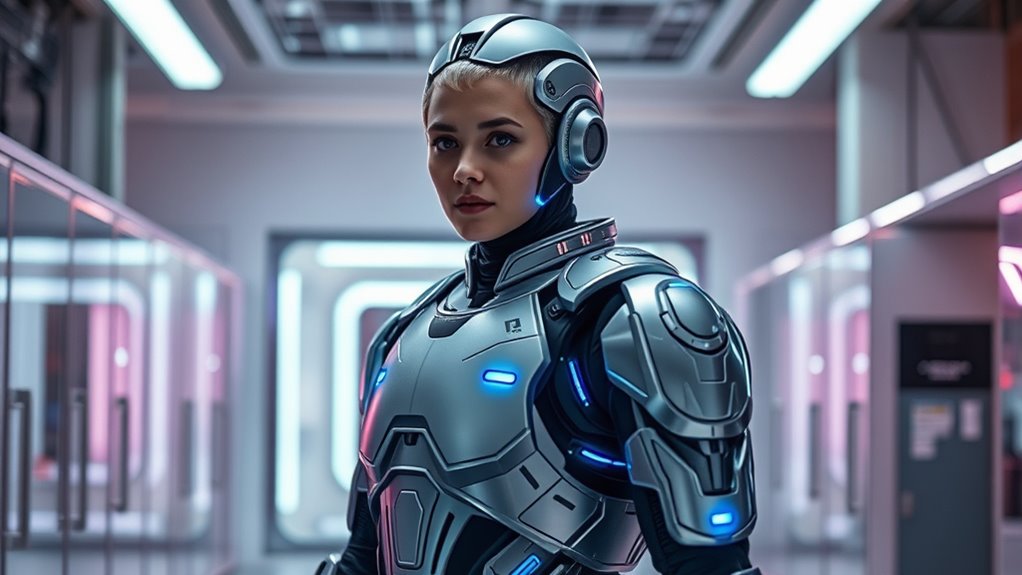
Beyond the factory floor, exoskeletons are increasingly integrated into construction, logistics, and maintenance sectors. They enable you to lift heavier loads with less effort and perform tasks with greater precision. Such applications highlight the versatility of wearable robotics; they’re not just assistive devices for the disabled but also tools to optimize performance in physically intensive roles. As technology advances, these systems are becoming more lightweight, comfortable, and intuitive, making them accessible for wider use. You might notice yourself wearing a suit-like exoskeleton that seamlessly assists your movements, boosting your efficiency and safety.
Ultimately, the evolution of exoskeletons and wearable robotics signals a future where human potential is expanded through smart, assistive technology. Whether aiding those with mobility challenges or empowering workers on the job, these devices are redefining what’s possible. As they become more integrated into daily life and industrial workflows, they promise a safer, more productive, and inclusive environment for everyone. The integration of air fryer technology concepts and innovations demonstrates how technological advancements can improve efficiency and safety across different fields.
Top picks for "exoskeleton wearable robotic"
Open Amazon search results for this keyword.
As an affiliate, we earn on qualifying purchases.
Frequently Asked Questions
How Do Exoskeletons Impact Long-Term User Health?
Exoskeletons can positively impact your long-term health by reducing muscle fatigue and supporting joint health. When used properly, they help prevent overexertion and strain, allowing you to perform tasks more efficiently and safely. However, prolonged or improper use might cause discomfort or joint issues over time. It’s essential to follow guidelines, take breaks, and guarantee proper fit to maximize benefits and minimize potential health risks.
What Are the Current Limitations of Hypershell Technology?
You might find that hypershell technology still has its hands full with limitations. Its power supply can be bulky and drain quickly, making it less practical for long-term use. User comfort remains a challenge, as the design can cause discomfort or restrict movement during extended wear. Until these issues are addressed, hypershells won’t fully realize their potential, and you’ll need to keep an eye out for future innovations.
How Affordable Are Wearable Robotic Systems for Consumers?
Wearable robotic systems are becoming more affordable as cost reduction efforts increase and market availability expands. You’ll find that prices are dropping, making these devices more accessible for everyday use. While they still vary in cost depending on features, ongoing innovation and increased production are driving prices down, so you’re more likely to find options that fit your budget soon. Keep an eye on market trends for the best deals and innovations.
Can Exoskeletons Be Customized for Individual Needs?
You can definitely customize exoskeletons for your needs, offering a truly personalized fit that feels just right. With modular design, manufacturers can adapt the system to your unique requirements, making it more comfortable and effective. This flexibility means your exoskeleton can evolve with you, enhancing your experience and confidence. Personalized fit and modular components work together to make certain your wearable robotics serve you perfectly, kindling hope for a more accessible future.
What Is the Future Potential of Exoskeletons in Everyday Life?
You’ll see exoskeletons becoming a essential part of everyday life, enhancing your augmented mobility and serving as advanced assistive technology. They’ll help you move more easily, whether for work, recreation, or recovery, by adapting to your needs. As innovation grows, expect personalized designs that seamlessly integrate into daily routines, making mobility more accessible and empowering you to stay active and independent longer.
Conclusion
You can enhance mobility, restore strength, and improve independence with exoskeletons and wearable robotics. You can empower yourself, embrace innovation, and push human limits. You can transform your daily life, redefine your capabilities, and open new possibilities. As technology advances, you can stay at the forefront of this revolution, shaping a future where humans and robots work together seamlessly. Embrace the potential, harness the power, and step confidently into a smarter, more capable tomorrow.