Ultrasonic data transfer is revolutionizing retail by allowing you to exchange information seamlessly without scanning QR codes or physical contact. Using inaudible sound waves, your devices can share data through walls and obstacles, making interactions faster, more secure, and contactless. This technology enhances personalized offers, smooth payments, and inventory tracking—saving time and improving your shopping experience. Keep exploring, and you’ll discover how ultrasonic transfer is shaping the future of retail interactions.

Get business pricing on tech for your team
- Business-only prices and quantity discounts
- Tax-exempt purchasing
- Multiple users, one account, clear invoices
Key Takeaways
- Ultrasonic data transfer enables contactless, secure communication between devices without visual alignment or internet reliance.
- It supports richer data payloads and simultaneous multi-device interactions, surpassing QR code limitations.
- Widely adopted in retail for personalized marketing, contactless payments, and inventory management.
- Enhances hygiene and user experience by allowing seamless, invisible interactions beyond line-of-sight.
- Growing industry adoption driven by health safety concerns, technological advancements, and demand for immersive retail experiences.

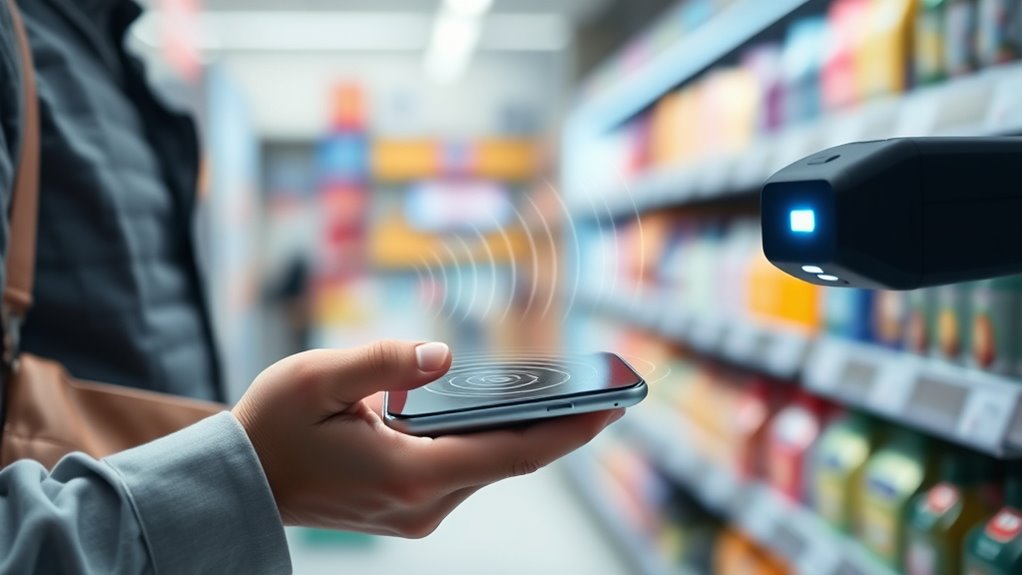
As retail evolves, ultrasonic data transfer is emerging as a powerful alternative to traditional QR codes, offering a seamless and contactless way to connect with customers. This technology uses sound waves that are inaudible or barely audible to transmit digital data between devices, enabling proximity-based interactions without requiring visual cues. For example, LISNR’s Radius® 3.0 SDK exemplifies this advanced ultrasonic proximity data transmission, specifically designed for retail and mobility sectors, enhancing omni-channel experiences. Unlike QR codes, ultrasonic data transfer facilitates automatic, hands-free exchanges of information, making the shopping experience more convenient and engaging. It also operates independently of network connectivity, providing secure and personalized messaging directly between devices.
Ultrasonic data transfer offers seamless, contactless interactions—enhancing retail experiences beyond QR codes.
One of the key advantages of ultrasonic technology over QR codes is its ability to work beyond the line-of-sight requirement. You don’t need to scan or physically align your device with a code; instead, the ultrasonic signals can be transmitted and received through walls or obstacles, creating more flexible interactions. Because the signals are inaudible to humans, they avoid noise pollution and user distraction often associated with audible sound-based methods. This capability makes ultrasonic transfer ideal for environments where seamless, discreet engagement is essential, like busy retail stores or events. Radius SDK supports complex data payloads, allowing for richer interactions and secure transactions, which can include personalized offers, product information, or payment data, all in real-time. Ultrasonic data transfer is also highly scalable, supporting multiple devices simultaneously, which enhances its application in crowded retail spaces.
In practical retail settings, ultrasonic data transfer opens the door to numerous use cases. You can receive tailored promotions or content when you’re near specific products or sections within a store. Contactless payments become safer and more intuitive, reducing the risks associated with visual scanning or manual input. Inventory management benefits too, as ultrasonic proximity data can precisely locate items on the shelf without visual tags, streamlining stock control. Additionally, stores can analyze customer movement and visit duration by capturing ultrasonic signals, helping optimize store layouts and marketing strategies. Ultrasonic triggers can activate digital signage or interactive kiosks as customers approach, heightening engagement without physical contact.
The ultrasonic technology market is expanding rapidly, driven by retail’s push for contactless solutions amid health and safety concerns, especially accelerated during the COVID-19 pandemic. Growth is further supported by increasing demand for improved consumer experiences, government initiatives, and strategic partnerships that incorporate artificial intelligence. As the industry continues to evolve, ultrasonic data transfer is poised to become a standard feature, transforming retail interactions from static to dynamic, contactless, and highly personalized. This shift not only enhances customer convenience but also offers retailers a competitive edge in delivering innovative, hygienic, and engaging shopping experiences.
Frequently Asked Questions
How Secure Is Ultrasonic Data Transfer Compared to QR Codes?
You might wonder how secure ultrasonic data transfer is compared to QR codes. Ultrasonic signals are inaudible, limited in range, and harder for attackers to intercept, especially with encryption and proximity controls. Unlike QR codes, which can be visually copied or tampered with, ultrasonic transfer requires close physical access to inject malicious signals. Overall, ultrasonic offers a more secure, hands-free method, reducing risks of remote eavesdropping and unauthorized data capture.
What Devices Are Compatible With Ultrasonic Data Transfer Technology?
You’ll find that ultrasonic data transfer works with most of your devices, including smartphones, tablets, and laptops, as long as they have a speaker and microphone. No special hardware or NFC chip is needed, making it compatible across all major operating systems like iOS, Android, and Windows. Even older or entry-level devices can participate, thanks to their existing audio components, broadening the reach of this technology.
Can Ultrasonic Data Transfer Work in Noisy Retail Environments?
You might think noisy retail environments would block ultrasonic data transfer, but they actually don’t. Ultrasonic signals operate above human hearing and are designed to withstand ambient noise. With careful frequency selection and software tuning, your devices can reliably communicate even amid loud crowds. As long as the hardware is calibrated properly, ultrasonic transfer remains effective, making it a practical solution for secure, contactless transactions in bustling retail spaces.
What Are the Privacy Implications of Ultrasonic Data Sharing?
The privacy implications of ultrasonic data sharing are significant. You may not realize that ultrasonic signals can collect sensitive info like your device ID, location, and habits without your consent. These signals work invisibly, bypassing typical privacy controls, and can link your activities across devices. This raises concerns about surveillance, data security, and the potential for misuse, making it harder for you to control or even be aware of your personal data being tracked.
How Does Ultrasonic Transfer Impact Customer Experience and Engagement?
You’ll notice that ultrasonic transfer makes your shopping experience smoother and more personalized. It enables real-time, contactless interactions, so you get tailored offers and instant assistance without scanning or touching anything. This technology speeds up transactions, enhances engagement through interactive promos, and creates seamless omnichannel experiences. As a result, you feel more valued, spend more confidently, and enjoy a hygienic, frictionless store visit that meets your expectations for quick, personalized service.
Conclusion
As you embrace ultrasonic data transfer, you step into a future where retail becomes more seamless and personal. Think of it as revealing a secret language between you and technology—silent, invisible, yet incredibly powerful. By adopting this innovative approach, you’re not just keeping up with trends; you’re shaping the next chapter of retail experiences. Don’t just watch the revolution happen—be the one who makes it resonate.
Halloween Picks
halloween
As an affiliate, we earn on qualifying purchases.