Choosing the right FPV drone depends entirely on your flying style, as the gap between a cinematic cruiser and a high-speed racer is vast. My top recommendation for most pilots is the DJI Avata 2, which offers the best balance of safety, image quality, and ease of use for those new to first-person view flying. For competitive racers seeking raw speed and agility, the BetaFPV Meteor75 Pro stands out with its specialized tuning and lightweight frame. Meanwhile, the CADDXFPV Curve Micro 16 serves indoor pilots who need durability without sacrificing agility in tight spaces. The core tradeoff in this category is between ease of use and raw performance; simpler drones limit speed and customization, while high-performance quads demand significant piloting skill. Continue reading to see how these ten models stack up against each other in specific flying scenarios.

Get business pricing on tech for your team
- Business-only prices and quantity discounts
- Tax-exempt purchasing
- Multiple users, one account, clear invoices
Key Takeaways
- DJI dominates the ‘cinematic FPV’ niche with integrated safety features like prop guards, making them safer for beginners than traditional open-frame quads.
- Whoop-class drones (under 250g) like the CADDXFPV Curve and BetaFPV Air65 II are ideal for indoor flying but suffer from poor wind resistance outdoors.
- ELRS (ExpressLRS) has become the standard radio protocol for competitive FPV, offering better range and reliability than older protocols found on budget models.
- The DJI Neo series introduces a hybrid model that works without goggles, bridging the gap between standard camera drones and true FPV systems.
- Budget ‘toy’ FPV drones often lack critical repairability, meaning a single crash can render the unit unusable, unlike modular racing quads.
| CADDXFPV Curve Micro 16 1S White FPV Whoop Drone |  | Best for Indoor Racing Enthusiasts | Video Resolution: 1080p at 120fps | Weight: 32g | Motor Type: 1102 22000KV | VIEW ON AMAZON | See Our Full Breakdown |
| DJI Avata 2 FPV Drone with Goggles 3, 3-Battery Fly More Combo |  | Best Premium All-in-One FPV System | Video Capture Resolution: 4K | Item Weight: 6.9 pounds (Bundle) | Included Batteries: 3 Intelligent Flight Batteries | VIEW ON AMAZON | See Our Full Breakdown |
| DJI Neo 2 Motion Fly More Combo With RC Motion 3 & Goggles N3 |  | Best for Beginners and Travel | Video Capture Resolution: 4K | Item Weight: 151 g | Control Options: Palm, Gesture, Voice, RC Motion 3 | VIEW ON AMAZON | See Our Full Breakdown |
| BETAFPV Air65 II Brushless FPV Whoop Quadcopter |  | Best Budget DIY Whoop | Brand: BETAFPV | Model: Air65 II | Motor: 0702 25000KV | VIEW ON AMAZON | See Our Full Breakdown |
| DJI Neo Motion Fly More Combo, Mini Drone With 4K UHD Camera | 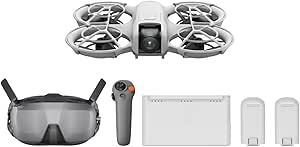 | Best for Self-Flying Convenience | Video Capture Resolution: 4K UHD | Item Weight: 135 g | Special Features: QuickShots, Palm Takeoff, Voice Control | VIEW ON AMAZON | See Our Full Breakdown |
| BETAFPV Meteor75 Pro Brushless Drone |  | Best for Aspiring Racers | Flight Controller: Matrix 5IN1 with G473 processor | Motors: 1102 22000KV Brushless | Battery: LAVA II 1S 580mAh | VIEW ON AMAZON | See Our Full Breakdown |
| Camera Drone with Screen on Controller |  | Best for Young Beginners | Controller Display: 2.8-inch integrated FPV screen | Camera Resolution: 1080p HD | Flight Time: Up to 30 mins total (2 batteries) | VIEW ON AMAZON | See Our Full Breakdown |
| DJI Mini 5 Pro Fly More Combo |  | Best for Aerial Photography | Sensor: 1-inch CMOS | Video: 4K/60fps HDR | Flight Time: Up to 52 minutes | VIEW ON AMAZON | See Our Full Breakdown |
| DJI Avata 2 Fly Smart Combo |  | Best Premium FPV Experience | Camera: 1/1.3-inch CMOS, 4K/60fps | FOV: 155° Ultra-Wide | Transmission: DJI O4 System | VIEW ON AMAZON | See Our Full Breakdown |
| Pallton Drone with Camera for Adults |  | Best Budget Casual Flyer | Camera: 1080p FPV | Battery: 2x 1000mAh Li-Ion | Range: 500 Meters | VIEW ON AMAZON | See Our Full Breakdown |
| fpv drone | Weight |
|---|---|
| CADDXFPV Curve Micro 16 1S Whi | 32g |
| DJI Avata 2 FPV Drone with Gog | — |
| DJI Neo 2 Motion Fly More Comb | — |
| BETAFPV Air65 II Brushless FPV | — |
| DJI Neo Motion Fly More Combo | — |
| BETAFPV Meteor75 Pro Brushless | Approx. 25-30g (depending on battery) |
| Camera Drone with Screen on Co | Under 249g |
| DJI Mini 5 Pro Fly More Combo | 249.9 g |
| DJI Avata 2 Fly Smart Combo | 377 g |
| Pallton Drone with Camera for | — |
More Details on Our Top Picks
CADDXFPV Curve Micro 16 1S White FPV Whoop Drone
The CADDXFPV Curve Micro 16 stands out as a dedicated tool for pilots who prioritize agility and video fidelity in tight spaces. Unlike the heavier DJI Avata 2, this 75mm whoop is built for speed and precision rather than long-range cinematic capture. Its 1080p 120fps video provides incredibly smooth footage, which is critical for analyzing flight lines during practice. The one-piece frame offers robust protection, making it forgiving for indoor crashes. However, the 500mW power output limits its range outdoors, and the short battery life means frequent swaps. This drone is not a ‘fly-and-forget’ device; it demands an ELRS radio and compatible goggles, excluding those who want a plug-and-play experience. It is for the racer who wants a lightweight, durable machine to sharpen their skills.
Pros:- High refresh rate (120fps) reduces motion blur for precise flying
- Durable one-piece frame withstands frequent indoor impacts
- Ultra-lightweight 32g design allows for agile maneuvering
Cons:- Very short flight time (~6 minutes) requires constant battery management
- Requires separate ELRS radio and goggles to operate
- Limited power output restricts outdoor performance in wind
Best for: Experienced FPV pilots looking for a durable, high-refresh-rate micro drone for indoor racing and freestyle practice.
Not ideal for: Beginners or casual flyers who lack an ELRS transmitter and want a ready-to-fly package with long battery life.
- Video Resolution:1080p at 120fps
- Weight:32g
- Motor Type:1102 22000KV
- Frame Size:75mm
- Connectivity:ELRS 2.4GHz
- Battery Support:1S 580mAh/680mAh
- Output Power:500mW
Our verdict“This is the pick for serious micro racers who value smooth video and durability over flight time and ease of use.”
DJI Avata 2 FPV Drone with Goggles 3, 3-Battery Fly More Combo
The DJI Avata 2 bundle represents the most complete ‘ready-to-fly’ FPV experience in this lineup. Compared to the CADDXFPV Curve, which requires sourcing separate electronics, the Avata 2 includes everything needed: Goggles 3, a motion controller, and three batteries. This makes it superior for users who want immediate immersion without technical setup. The 4K video capture rivals dedicated camera drones, offering a balance between cinematic quality and FPV agility. However, this convenience comes with bulk; the bundle is heavy and complex to pack. While the DJI Neo 2 is lighter, the Avata 2 offers significantly better wind resistance and flight dynamics. It is the definitive choice for those who want high-end performance and safety features like prop guards without building their own rig.
Pros:- Includes goggles, controller, and batteries in one package
- Superior 4K video quality compared to micro whoops
- Built-in propeller guards enhance safety for indoor/outdoor use
Cons:- Bulky bundle is difficult to transport casually
- Higher cost compared to building a custom micro rig
- Prop guards can limit extreme freestyle maneuvers
Best for: Pilots who want a premium, complete FPV kit with high-quality 4K video and minimal setup hassle.
Not ideal for: Budget-conscious buyers or those who prefer a lightweight, pocketable drone for casual travel.
- Video Capture Resolution:4K
- Item Weight:6.9 pounds (Bundle)
- Included Batteries:3 Intelligent Flight Batteries
- Controller:RC Motion 3
- Goggles:DJI Goggles 3
- Storage:64GB Memory Card Included
- Accessories:Sling bag, landing pad, cleaning kit
Our verdict“The definitive choice for pilots seeking a premium, all-inclusive FPV system with top-tier video quality.”
DJI Neo 2 Motion Fly More Combo With RC Motion 3 & Goggles N3
The DJI Neo 2 redefines accessibility in FPV flying. Weighing just 151g, it is significantly lighter than the Avata 2 and fits easily in a pocket. Its palm takeoff and landing feature removes the intimidation factor of traditional drone launches, making it ideal for novices. While the CADDXFPV Curve offers raw racing speed, the Neo 2 prioritizes ease of use with features like ActiveTrack and gesture control. The inclusion of Goggles N3 provides a genuine FPV experience without the steep learning curve of manual control modes. However, its small size and light weight make it less stable in strong winds compared to heavier models. This is for the traveler who wants a safe, simple way to capture 4K footage from a first-person perspective.
Pros:- Ultra-lightweight 151g design requires no FAA registration
- Palm takeoff and landing simplify operation for novices
- Full-coverage propeller guards ensure safe indoor flying
Cons:- Lower wind resistance due to light frame
- Video quality is good but not as detailed as the Avata 2
- Limited manual control depth for advanced freestyle
Best for: Beginners and travelers who want a ultra-lightweight, safe, and easy-to-use FPV drone with no FAA registration requirements.
Not ideal for: Pilots looking for high-speed racing performance or long-range outdoor capability in windy conditions.
- Video Capture Resolution:4K
- Item Weight:151 g
- Control Options:Palm, Gesture, Voice, RC Motion 3
- Safety Features:Omnidirectional Obstacle Sensing
- Tracking:ActiveTrack
- Goggles:DJI Goggles N3
- Battery Capacity:1606 mAh
Our verdict“The perfect entry point for casual flyers who want safe, portable, and simple FPV experiences.”
BETAFPV Air65 II Brushless FPV Whoop Quadcopter
The BETAFPV Air65 II is a bare-bones machine for those who want to build their own ecosystem. Unlike the CADDXFPV Curve, which ships with specific video specs, the Air65 II focuses on mechanical resilience and motor performance. Its 0702 25000KV motors and reinforced frame are designed to survive hard crashes, a necessity for learning freestyle. However, this is a DIY-oriented product; it lacks the integrated camera and video transmitter found in the DJI Neo 2. You must source your own battery, radio, and goggles. This makes it less appealing for instant gratification but ideal for pilots who want to understand every component of their drone. It is the most cost-effective way to enter the world of brushless micro FPV, provided you already own the necessary peripherals.
Pros:- Reinforced frame and canopy offer high crash resilience
- Powerful 0702 motors provide good thrust for a 65mm class
- Cost-effective entry into brushless micro FPV
Cons:- No camera or video transmitter included
- Battery is not included in the box
- Requires separate ELRS radio and goggles to fly
Best for: DIY enthusiasts and budget-conscious pilots who already own FPV goggles and radios and want a durable, customizable platform.
Not ideal for: Users who want a ready-to-fly solution with an integrated camera and video transmission system.
- Brand:BETAFPV
- Model:Air65 II
- Motor:0702 25000KV
- Flight Controller:Matrix 1S 5IN1 II
- ESC:12A continuous, 18A peak
- Dimensions:4.5 x 4.5 x 2.2 in
- Propellers:GF 1219S 3-blade
Our verdict“A durable, customizable chassis for pilots who want to build their own micro FPV rig from the ground up.”
DJI Neo Motion Fly More Combo, Mini Drone With 4K UHD Camera
The original DJI Neo combo emphasizes autonomy over manual FPV control. While the Neo 2 refines the experience, this version remains a solid choice for those who prefer automated flight modes. Its 135g weight makes it even lighter than its successor, enhancing portability. The inclusion of RC Motion 3 and Goggles N3 allows for FPV flying, but the drone’s primary strength lies in its QuickShots and subject tracking for social media content. Compared to the Avata 2, the Neo lacks the power and stability for aggressive outdoor freestyle. It is best suited for users who want to capture dynamic angles at parties or hikes without mastering complex piloting skills. It bridges the gap between a selfie drone and an FPV trainer.
Pros:- Lightest drone in the lineup at 135g for maximum portability
- Automated QuickShots simplify creative video capture
- No FAA registration required due to sub-250g weight
Cons:- Limited manual flight performance compared to the Avata 2
- Shorter battery life per charge
- Less robust wind resistance for outdoor use
Best for: Casual content creators who want easy, automated 4K video capture with optional FPV immersion.
Not ideal for: Pilots seeking high-performance racing capabilities or manual control precision in windy conditions.
- Video Capture Resolution:4K UHD
- Item Weight:135 g
- Special Features:QuickShots, Palm Takeoff, Voice Control
- Control Type:Remote Control, Voice, App
- Goggles:DJI Goggles N3
- Controller:RC Motion 3
- Battery Capacity:1435 mAh
Our verdict“Ideal for casual creators who prioritize automated convenience and portability over manual FPV performance.”
BETAFPV Meteor75 Pro Brushless Drone
This model stands out for pilots who want to learn the mechanics of brushless FPV flight without breaking the bank. Unlike the toy-like features of the Pallton Drone, the Meteor75 Pro focuses on raw performance with its 22000KV motors and lightweight frame. The Matrix 5IN1 flight controller provides precise handling, making it an excellent trainer for those eyeing larger 5-inch quadcopters. However, this precision comes at a cost: it lacks the autopilot safety nets found in the DJI Avata 2. If you crash, you fix it yourself. It is strictly for those willing to learn manual control rather than relying on automated stability.
Pros:- Highly responsive brushless motors for agile acrobatics
- Durable frame design withstands typical beginner crashes
- Lightweight build allows for longer indoor flight sessions
Cons:- Requires assembly and technical setup knowledge
- No GPS or return-to-home features for lost drones
- Limited flight time due to small 1S battery capacity
Best for: Pilots who want to learn manual FPV control and repair skills before moving to larger freestyle quads.
Not ideal for: Users seeking a plug-and-play camera drone with automated flight modes or obstacle avoidance.
- Flight Controller:Matrix 5IN1 with G473 processor
- Motors:1102 22000KV Brushless
- Battery:LAVA II 1S 580mAh
- VTX Power:400mW 5.8GHz
- Weight:Approx. 25-30g (depending on battery)
- Camera:1.45g Ultralight FPV
Our verdict“Choose this if you want to learn real piloting skills, but skip it if you just want to take photos.”
Camera Drone with Screen on Controller
This drone is designed for families who want immediate fun without the complexity of connecting to smartphones. The built-in 2.8-inch screen on the remote eliminates the frustration of laggy app connections, offering a direct view of the flight. Compared to the Pallton Drone, this unit offers slightly more engaging features like gesture control and 360-degree flips, which keep younger pilots entertained. However, the video quality is basic. While the DJI Avata 2 captures cinematic 4K footage, this drone produces 1080p video suitable only for casual memories. It is a toy-first device, not a camera-first tool.
Pros:- Integrated screen removes need for smartphone pairing
- Lightweight design avoids FAA registration requirements
- Simple one-key takeoff and landing for stress-free flying
Cons:- 1080p camera quality is basic and lacks stabilization
- Short individual battery life limits continuous play
- Plastic construction feels less durable than metal-frame quads
Best for: Parents buying a first drone for children aged 8-12 who struggle with smartphone apps.
Not ideal for: Adults or enthusiasts who care about image quality, range, or professional-grade flight dynamics.
- Controller Display:2.8-inch integrated FPV screen
- Camera Resolution:1080p HD
- Flight Time:Up to 30 mins total (2 batteries)
- Weight:Under 249g
- Special Features:Gesture Control, 360° Flip, Trajectory Flight
- Storage:Supports up to 32GB SD Card
Our verdict“A solid starter for kids who want to fly immediately, but not for serious content creation.”
DJI Mini 5 Pro Fly More Combo
While not a traditional racing FPV drone, the Mini 5 Pro dominates when the goal is high-quality aerial imagery. Its 1-inch CMOS sensor delivers 4K HDR video that dwarfs the footage from the BETAFPV Meteor75 Pro or the Pallton Drone. The ActiveTrack 360° feature allows for complex cinematic shots without manual piloting skill. However, this is a GPS-dependent drone. If you lose signal or GPS lock, it flies itself home. This safety net makes it less exciting for adrenaline seekers who prefer the raw, manual control of the DJI Avata 2. It is a camera tool first, a drone second.
Pros:- Superior 4K HDR video quality with 1-inch sensor
- Omnidirectional obstacle sensing for safe autonomous flights
- Long flight time of up to 52 minutes per battery
Cons:- Heavier weight may require registration in some regions
- Slower top speed compared to dedicated FPV quads
- Complex app ecosystem requires initial setup time
Best for: Travelers and creators who prioritize image quality and portability over flight agility.
Not ideal for: Pilots who want to learn manual FPV flying or perform acrobatic maneuvers through obstacles.
- Sensor:1-inch CMOS
- Video:4K/60fps HDR
- Flight Time:Up to 52 minutes
- Weight:249.9 g
- Obstacle Sensing:Omnidirectional (LiDAR + Vision)
- Storage:42GB Internal
Our verdict“The clear choice for stunning photos and videos, but too automated for those seeking flight thrills.”
DJI Avata 2 Fly Smart Combo
This is the most accessible way to experience immersive FPV flight without building a quad from scratch. Unlike the BETAFPV Meteor75 Pro, which requires technical knowledge to tune, the Avata 2 offers motion control and built-in propeller guards for safe indoor and outdoor use. The Goggles N3 provide a true first-person perspective, making it feel like flying inside the cockpit. However, the single-battery combo limits flight time significantly compared to the Mini 5 Pro. You will need to land frequently to swap batteries. It is a premium toy for those who want the thrill of FPV without the maintenance headaches of traditional racing drones.
Pros:- Immersive first-person view via included goggles
- Built-in propeller guards allow safe collision with obstacles
- Motion controller makes acrobatics easy for beginners
Cons:- Single battery kit limits total flight duration
- Higher price point compared to standalone quads
- Requires goggles for full experience, which can be cumbersome
Best for: Users who want an easy, immersive FPV experience with high-quality video and safety features.
Not ideal for: Budget-conscious buyers or those who dislike the bulk of wearing VR goggles during flight.
- Camera:1/1.3-inch CMOS, 4K/60fps
- FOV:155° Ultra-Wide
- Transmission:DJI O4 System
- Weight:377 g
- Included Gear:RC Motion 3, Goggles N3
- Safety:Integrated Propeller Guards
Our verdict“The best entry into high-end FPV for those who value convenience and immersion over raw speed.”
Pallton Drone with Camera for Adults
This drone serves as a low-cost entry point for adults who are curious about drones but hesitant to spend heavily. It offers basic features like altitude hold and one-key landing, which make flying manageable for novices. Compared to the Camera Drone with Screen, the Pallton requires a smartphone connection, which can introduce latency, but it folds down for easier storage. The 1080p camera is functional for social media clips but lacks the stabilization and clarity of the DJI Mini 5 Pro. It is a disposable-feeling device; if you crash it hard, you might not get it flying again. It is best for casual park flying, not serious piloting.
Pros:- Foldable design with carrying case for easy transport
- Two batteries extend total playtime to 24 minutes
- Gesture control for hands-free photo taking
Cons:- Short 500-meter range limits exploration
- Wi-Fi connection can be unstable in crowded areas
- No obstacle avoidance increases crash risk
Best for: Budget-conscious adults wanting a simple, foldable drone for occasional casual flights.
Not ideal for: Users who need reliable long-range control or high-definition video stabilization.
- Camera:1080p FPV
- Battery:2x 1000mAh Li-Ion
- Range:500 Meters
- Design:Foldable Plastic Body
- Connectivity:Wi-Fi / Bluetooth
- Features:Altitude Hold, Headless Mode
Our verdict“A cheap way to test your interest in drones, but don’t expect professional results or durability.”

How We Picked
I evaluated these ten FPV drones based on flight characteristics, durability, camera quality, and system integration. For racing and freestyle models, I prioritized agility, weight-to-power ratio, and ease of repair, as crashes are inevitable in these disciplines. For cinematic and beginner-focused models, I looked at flight stability, obstacle avoidance, and the learning curve required to achieve smooth footage. I also assessed the ecosystem compatibility, specifically whether the drone uses widely supported protocols like ELRS or proprietary systems that limit component upgrades.
Ranking was determined by a balance of versatility and specific use-case excellence. A drone that excels at one thing (like indoor racing) ranks higher than a mediocre all-rounder, provided the user knows its niche. I excluded models that rely on outdated video transmission standards or lack community support for parts, ensuring that every pick remains viable for long-term hobbyist use in 2027.
Factors to Consider When Choosing Fpv Drones
Selecting an FPV drone is not just about picking the fastest quad; it is about matching the aircraft to your piloting skill level and intended environment. The following factors will help you avoid common pitfalls and choose a model that fits your specific goals.
Frame Size and Weight Class
Frame size dictates where you can fly and how the drone handles wind. Whoop frames (65mm to 75mm) are small, lightweight, and often include ducted propellers, making them safe for indoor flight and minor collisions. However, they struggle outdoors in even light breezes. 5-inch freestyle frames are the industry standard for outdoor acrobatics and cinematic shots, offering power to punch through wind but requiring open spaces to avoid damaging neighbors’ property. If you are a beginner, starting with a Whoop reduces the fear of crashing, but you must be prepared to upgrade to a larger frame once your skills outgrow the limited range and speed of micro quads.
Video Transmission Systems
The video link is the most critical component for an FPV pilot, as poor signal quality ruins the immersion and makes flying difficult. Analog video is low-latency and maintains visibility even when the signal breaks up, which is preferred by racers and freestyle pilots who prioritize reaction time. Digital HD systems (like DJI O3 or HDZero) offer crystal-clear 1080p or 4K footage but can suffer from latency spikes or total signal loss if the connection drops. Beginners often prefer digital systems for their clarity, but racers must weigh the visual quality against the split-second latency advantage of analog.
Proprietary vs. Open-Source Ecosystems
DJI offers a closed ecosystem where drones, goggles, and controllers work seamlessly together but cannot be easily repaired or upgraded with third-party parts. In contrast, open-source builds using Betaflight firmware allow you to replace any broken part with generic components from various manufacturers. If you plan to repair your own crashes, an open-source frame is significantly more cost-effective in the long run. However, if you value plug-and-play simplicity and integrated safety features like obstacle avoidance, the proprietary DJI ecosystem offers a smoother initial experience, albeit with higher repair costs and less customization.
Radio Control Protocol and Range
The protocol your drone uses determines its range and reliability. ELRS (ExpressLRS) has emerged as the gold standard for open-source FPV, offering exceptional range and low latency for a fraction of the cost of older proprietary protocols. DJI uses its own encrypted protocol, which works well within its ecosystem but limits you to DJI-compatible hardware. When buying a kit, check if the receiver is soldered directly to the flight controller or if it uses a plug-and-play socket; soldered receivers make future upgrades or replacements difficult, locking you into the original manufacturer’s hardware specifications.
Battery Management and Flight Time
FPV flight times are notoriously short, typically ranging from 4 to 10 minutes depending on the drone’s weight and how aggressively you fly. 1S batteries are common in Whoops for their light weight, while 4S or 6S LiPo packs power larger freestyle and racing quads. You must budget for multiple batteries and a quality charger, as LiPo batteries degrade quickly if mishandled. Consider the charging infrastructure required: larger packs need higher-amperage chargers, and flying with depleted batteries can cause sudden power loss and crashes. Always verify that the drone’s power delivery system can handle the voltage and current demands of the batteries you intend to use.
Frequently Asked Questions
Is it better to start with a simulator or a real drone?
Starting with a simulator is highly recommended because it allows you to build muscle memory without the financial risk of crashing a physical drone. Most crashes happen in the first few weeks of learning, and replacing broken frames, motors, and propellers adds up quickly. Simulators like VelociDrone or Liftoff replicate the physics of real quads accurately, so your skills transfer directly once you move to hardware. I suggest spending at least 10 to 20 hours in a simulator before purchasing your first real FPV drone to ensure you can maintain basic line-of-sight control.
Can I fly FPV drones without goggles?
While some hybrid drones like the DJI Neo can fly in line-of-sight mode, true FPV flying requires goggles for the immersive, first-person perspective that defines the hobby. Flying without goggles limits you to standard camera drone maneuvers and prevents you from performing acrobatic flips or racing through gates. Additionally, many FPV drones do not have built-in obstacle avoidance or GPS hover modes, making them unstable and dangerous to fly without the direct feedback provided by a goggle feed. If you do not want to wear goggles, you are likely looking for a standard camera drone rather than an FPV system.
What is the legal weight limit for FPV drones in the US?
In the United States, drones weighing under 250 grams generally do not require registration with the FAA for recreational flying, provided you fly below 400 feet and within visual line of sight (or with a spotter for FPV). This is why Whoop drones are so popular for beginners; they are small, safe, and often exempt from registration requirements. However, if you fly a 5-inch freestyle drone, which typically weighs 600 to 800 grams, you must register it and follow stricter regulations, including maintaining a visual observer when flying FPV. Always check local laws, as regulations vary significantly by country and can change rapidly.
How much does it cost to start FPV flying?
A complete starter kit, including the drone, goggles, controller, and batteries, typically ranges from $300 for a basic Whoop setup to $1,000 or more for a high-end digital FPV system. You must also budget for accessories like propellers, spare parts, and a LiPo charger, which can add another $100 to $200. While cheaper ‘toy’ drones exist, they often lack the durability and repairability of dedicated FPV gear, leading to higher long-term costs due to frequent replacements. Investing in a mid-range system with ELRS and Betaflight provides the best balance of performance and upgrade path for new pilots.
Do I need to learn to solder for FPV?
While you can buy ready-to-fly (RTF) drones that require no soldering, learning the basics is highly beneficial for long-term hobbyists. Crashes are inevitable in FPV, and being able to replace a motor, ESC, or receiver yourself saves significant money and downtime compared to sending units out for repair. Basic soldering skills also allow you to upgrade components, such as installing a better camera or swapping out a broken flight controller. If you are unwilling to learn soldering, stick to proprietary systems like DJI where repairs are handled by the manufacturer, but be prepared for higher service fees and longer turnaround times.
Conclusion
Choosing the right FPV drone comes down to identifying your primary flying style and budget. For those seeking the best overall experience with minimal friction, the DJI Avata 2 remains the standout choice, offering unmatched safety features and image quality for cinematic FPV. Pilots focused on competitive racing or freestyle should look to the BetaFPV Meteor75 Pro or CADDXFPV Curve Micro 16, which prioritize agility and repairability over ease of use. Beginners who want to dip their toes into the hobby without a steep learning curve will find the DJI Neo series an excellent entry point due to its hybrid flight modes. Finally, for value-conscious buyers, the BetaFPV Air65 II provides a durable, modular platform that teaches real piloting skills without the high cost of premium digital systems. Match your choice to your intended environment—indoor versus outdoor—and your willingness to learn repair skills, and you will find the drone that keeps you flying in 2027.