
Building sustainable AI data centers involves innovative designs and renewable energy use. Meta’s $1.5 billion facility incorporates a closed-loop cooling system that recycles water to cut down on waste and environmental impact. By integrating renewable energy sources, they reduce reliance on fossil fuels and lower emissions. These efforts guarantee operational efficiency and eco-friendliness. If you keep exploring, you’ll find more ways these cutting-edge strategies are shaping a greener tech future.
Key Takeaways
- Meta’s $1.5 billion data center emphasizes sustainability through advanced design and eco-friendly infrastructure.
- The facility utilizes a closed-loop cooling system that recycles water to significantly reduce consumption.
- Integration of renewable energy sources like solar and wind minimizes reliance on fossil fuels.
- Site planning prioritizes locations with abundant water and renewable energy resources for long-term efficiency.
- Innovative cooling and water conservation technologies help lower environmental impact and operational costs.
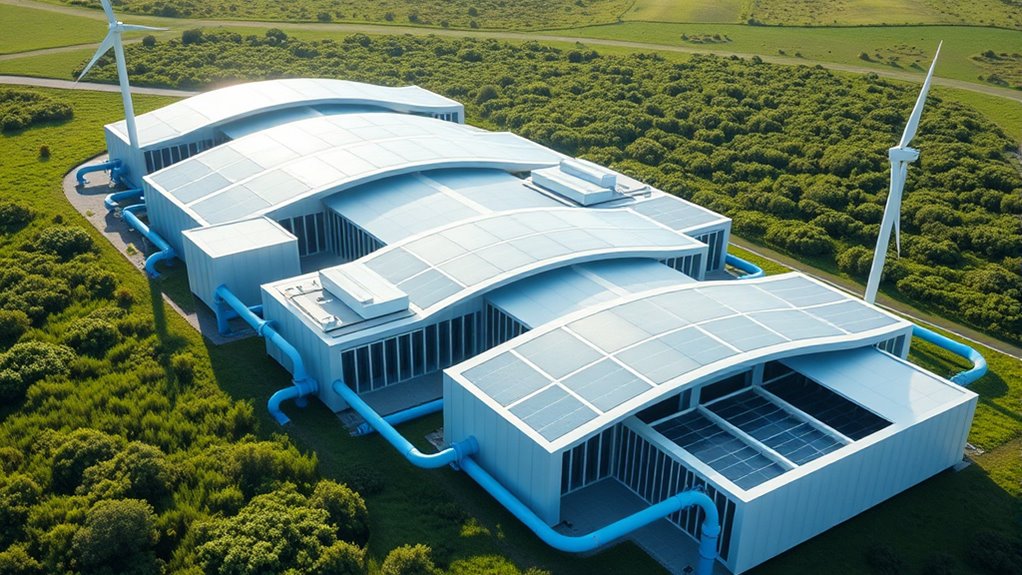
As artificial intelligence continues to advance rapidly, the demand for powerful data centers grows exponentially. You need facilities that can handle massive processing loads while minimizing environmental impact. That’s where building sustainable AI data centers becomes essential. Companies like Meta are leading the way with innovative designs, such as their $1.5 billion facility featuring a closed-loop cooling system. This approach significantly reduces water consumption, demonstrating a commitment to water conservation. Instead of relying on traditional water-intensive cooling methods, this design recycles water within the system, limiting waste and conserving resources. By doing so, it not only lowers operational costs but also minimizes the ecological footprint of the facility.
Building sustainable AI data centers like Meta’s reduces water use and environmental impact through innovative closed-loop cooling systems.
You’ll find that integrating renewable energy sources is central to these sustainable efforts. Renewable energy—like solar, wind, or hydro—powers the data center, reducing dependency on fossil fuels and cutting greenhouse gas emissions. When you choose to operate a data center with renewable energy, you’re actively contributing to a cleaner environment. This shift is essential because data centers are energy-intensive, and their carbon footprint can be substantial. By harnessing renewable sources, you ensure that your operations are more sustainable, aligning with global goals to combat climate change.
Water conservation plays a critical role in making data centers eco-friendly. Traditional cooling methods often use vast amounts of water, which can strain local resources, especially in arid regions. Meta’s closed-loop cooling system addresses this issue by recycling water continuously, dramatically reducing overall consumption. When you adopt such innovative cooling techniques, you’re not only saving water but also decreasing the risk of environmental harm caused by over-extraction. This approach also enhances the resilience of your data center, making it less vulnerable to water shortages or droughts.
Building sustainable AI data centers also involves thoughtful site selection and infrastructure planning. Choosing locations with abundant renewable energy potential and water resources helps optimize efficiency. Moreover, designing facilities that integrate renewable energy and water-saving technologies from the start guarantees long-term sustainability. When you prioritize these elements, you’re investing not just in the immediate functionality of your data center but in its future-proofing, making sure it can operate sustainably amid changing climate conditions.
Top picks for "build sustainable data"
Open Amazon search results for this keyword.
As an affiliate, we earn on qualifying purchases.
Frequently Asked Questions
How Does Closed-Loop Cooling Improve Energy Efficiency?
Closed-loop cooling boosts your energy efficiency by recirculating coolant, reducing waste and reliance on external water sources. It enhances thermal management, keeping equipment at ideal temperatures with less energy. By integrating renewable energy sources, you further lower environmental impact. This system minimizes heat loss, conserves resources, and helps your data center run more sustainably, ultimately saving you energy and costs while supporting eco-friendly operations.
What Are the Main Challenges of Sustainable Data Center Design?
Think of designing sustainable data centers as balancing a tightrope. You face challenges like integrating renewable energy sources seamlessly and managing waste effectively. You need to optimize energy use while reducing environmental impact, all without losing stability. Ensuring renewable integration and waste management are carefully coordinated becomes your tightrope walk, demanding innovation and precision to keep the system sustainable and resilient in the long run.
How Does Meta Ensure Data Security in Green Data Centers?
You can trust Meta to guarantee data security in green data centers by implementing robust access controls and data encryption. They restrict physical and digital access to authorized personnel and use advanced encryption methods to protect data in transit and at rest. These measures, combined with continuous monitoring and regular security audits, help safeguard your information while maintaining eco-friendly operations.
What Is the Expected Lifespan of the Cooling Infrastructure?
The cooling system lifespan typically ranges from 10 to 15 years, depending on usage and maintenance. You should follow a strict maintenance schedule to maximize its longevity, including regular inspections and part replacements. Proper upkeep guarantees peak performance and prevents costly failures. By staying proactive with maintenance, you help extend the cooling system’s lifespan and maintain the overall efficiency of your data center.
How Scalable Is Meta’s Sustainable Data Center Technology?
You’ll find Meta’s sustainable data center technology highly scalable, thanks to its integration of renewable energy sources and water conservation strategies. As you expand capacity, the closed-loop cooling system adapts easily, reducing water use and energy consumption. This flexibility allows you to grow your infrastructure sustainably, ensuring efficient performance while maintaining a focus on eco-friendly practices that support long-term environmental goals.
Conclusion
So, imagine stepping into a data center so green and efficient, it could power an entire city of superheroes! Meta’s $1.5 billion facility with closed-loop cooling isn’t just sustainable—it’s practically a living, breathing eco-hero saving the planet one server at a time. This isn’t just a step forward; it’s a giant leap toward a future where AI and Mother Earth become best friends. Get ready, because the sustainable revolution is here, and it’s mind-blowingly awesome!