
Osmotic power systems generate clean electricity by harnessing the salinity differences between freshwater and seawater, typically found near estuaries. You use specialized membranes to allow water to pass while blocking salt ions, creating pressure differences that can be converted into electricity with turbines. Advances in membrane technology boost system efficiency and durability. If you’re curious how these natural gradients can sustainably power our world, there’s much more to uncover below.
Key Takeaways
- Osmotic power systems generate electricity by exploiting salinity differences between freshwater and seawater.
- Membrane technologies allow water to pass while blocking salt ions, creating pressure for energy conversion.
- Natural locations like estuaries provide continuous salinity gradients for sustainable power generation.
- System efficiency relies on durable, high-performance membranes resistant to fouling and degradation.
- Advances in membrane design and system scaling are key to making osmotic power a viable renewable energy source.
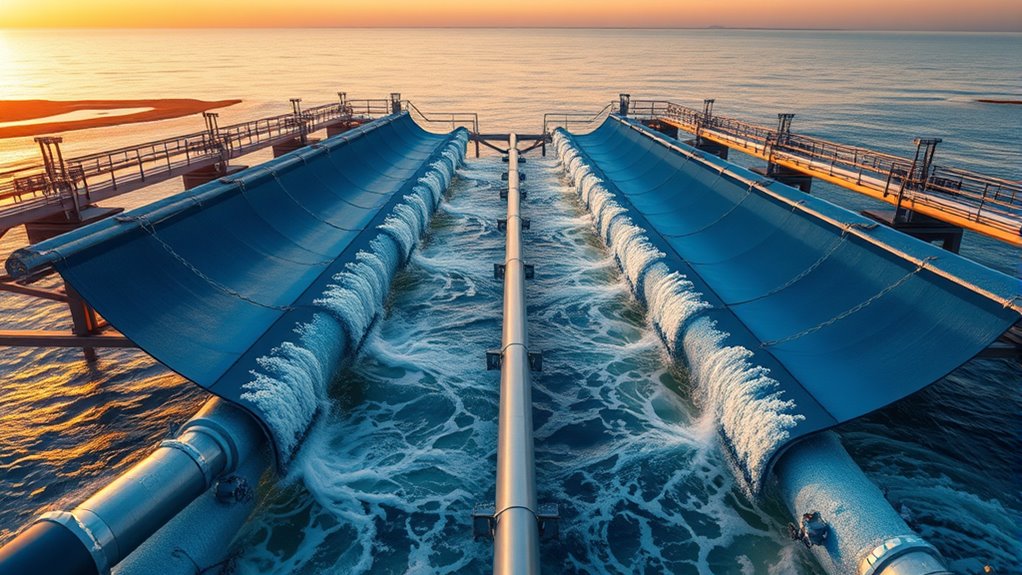
Osmotic power systems harness the natural process of osmosis to generate electricity by exploiting the difference in salt concentration between two water sources. At the core of this technology are membrane technologies, which are vital for separating freshwater from saltwater efficiently. These specialized membranes allow water molecules to pass through while blocking salt ions, creating a controlled environment where salinity gradients drive the flow of water and, consequently, produce energy. When you set up an osmotic power system, you’re fundamentally harnessing the energy stored in the salinity gradients—the difference in salt concentration between the two water sources. These gradients contain a significant amount of potential energy, waiting to be converted into usable electricity. Membrane technology plays a crucial role in determining system efficiency and sustainability.
Membrane technologies are the backbone of osmotic power systems because they determine the system’s efficiency and sustainability. Modern membranes are designed to maximize water permeability while minimizing the passage of salt ions, ensuring that the osmotic pressure difference is harnessed effectively. As water moves across these membranes from the low-salinity side to the high-salinity side, it creates a pressure differential. This pressure can then be converted into electrical energy using turbines or other conversion devices. The better your membranes perform, the more energy you can extract from the salinity gradients, making membrane technology a pivotal focus for advancing osmotic power. Additionally, ongoing research aims to develop membranes that are more resistant to fouling and degradation to enhance long-term performance.
Membrane efficiency is key to maximizing energy in osmotic power systems.
The salinity gradients themselves are abundant, especially near estuaries where freshwater from rivers mixes with seawater. These natural locations provide a continuous, renewable source of salinity differences, which means you can generate power consistently without depleting resources. The challenge lies in optimizing the system to handle large volumes of water efficiently and developing membranes that withstand harsh conditions over time. When you utilize salinity gradients, you tap into an energy source that’s both clean and sustainable, producing no greenhouse gases or air pollutants. It’s a form of renewable energy that complements other sustainable technologies, helping reduce reliance on fossil fuels.
As you explore osmotic power systems, understanding the importance of membrane technologies and salinity gradients will help you appreciate the potential of this renewable energy source. Advances in membrane design and material durability are key to scaling up these systems, making osmotic power a viable and environmentally friendly option for future energy needs. By harnessing the natural salinity gradients found in nature and leveraging cutting-edge membrane technologies, you’re contributing to a cleaner, more sustainable energy landscape—one that turns the simple process of osmosis into a powerful tool for generating electricity.

Membrane Technology for Osmotic Power Generation by Pressure Retarded Osmosis
As an affiliate, we earn on qualifying purchases.
As an affiliate, we earn on qualifying purchases.
Frequently Asked Questions
What Are the Environmental Impacts of Osmotic Power Plants?
You might be concerned about the environmental impacts of osmotic power plants. They can affect marine biodiversity by altering local ecosystems and potentially harming aquatic species. Additionally, these plants could lead to chemical pollution if maintenance chemicals or byproducts leak into the water. While they offer clean energy, it is crucial to carefully monitor and manage these systems to minimize ecological disruptions and protect marine environments.
How Does Osmotic Power Compare Cost-Wise to Other Renewable Sources?
Did you know osmotic power could be cost-competitive, with estimates suggesting it might reach $0.05 per kWh? Compared to solar and wind, osmotic power currently faces higher costs, but advancements could improve its economic viability. You’ll find that while it’s promising, the cost comparison still favors established renewables, making osmotic power an interesting but developing option for sustainable energy portfolios.
What Are the Safety Concerns Associated With Osmotic Power Technology?
You should be aware that osmotic power technology raises safety concerns like chemical leakage and equipment failure. Chemical leakage from the membranes or other components could harm the environment or nearby communities. Equipment failure might cause spills or disrupt power generation. To minimize these risks, regular maintenance and robust safety protocols are essential, ensuring the system operates safely and efficiently without endangering people or ecosystems.
Can Osmotic Power Be Integrated Into Existing Energy Grids?
You can definitely integrate osmotic power into existing energy grids, but it demands diligent planning for grid compatibility and infrastructure integration. By designing adaptable interfaces and upgrading current systems, you guarantee seamless synchronization with salinity-driven energy sources. This integration improves power portability, promotes sustainable sourcing, and pushes progress toward greener grids. With thoughtful planning, osmotic power can become a reliable, renewable addition to your energy ecosystem, energizing your efforts for a cleaner future.
What Are the Future Research Directions for Osmotic Power Systems?
You should focus on developing innovative membranes that increase efficiency and durability for osmotic power systems. Exploring hybrid systems combining osmotic power with other renewable sources can optimize energy output and reliability. Future research also needs to address scaling challenges, environmental impacts, and cost reduction. By advancing membrane technology and integrating hybrid approaches, you’ll pave the way for more sustainable and practical osmotic power solutions in the energy landscape.

Salinity Gradient Heat Engines (Woodhead Publishing Series in Energy)
As an affiliate, we earn on qualifying purchases.
As an affiliate, we earn on qualifying purchases.
Conclusion
Imagine unfastening the Earth’s natural bounty with osmotic power—truly a modern marvel. By harnessing salinity gradients, you tap into a renewable energy source as vast as the oceans themselves. This technology isn’t just a possibility; it’s a promise of a cleaner, sustainable future. Don’t let this opportunity slip away like salt in the sea. Embrace osmotic power, and watch as nature’s own energy becomes your greatest ally in powering tomorrow.
Membrane Technology for Osmotic Power Generation by Pressure Retarded Osmosis
As an affiliate, we earn on qualifying purchases.
As an affiliate, we earn on qualifying purchases.

iSpring 25659 Reverse Osmosis Pressure Regulator APR70 70 psi White RO Accessory
Designed to be used in installations with high feed pressure
As an affiliate, we earn on qualifying purchases.
As an affiliate, we earn on qualifying purchases.