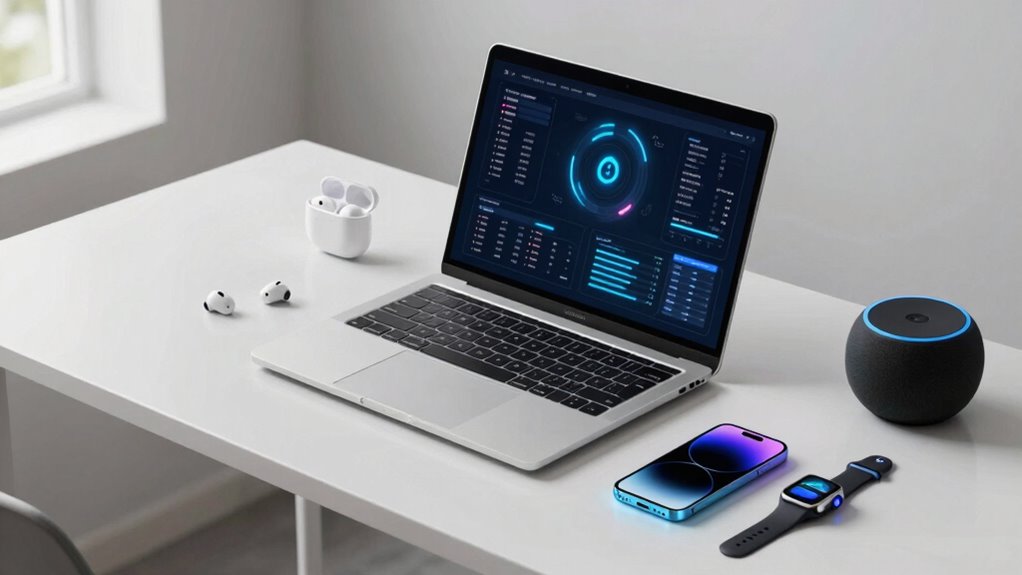

Today, new devices feel like AI because they seamlessly integrate advanced features that make them smarter and more intuitive. Voice recognition is now standard, allowing natural, hands-free communication that adapts to your speech style. Visual calibration and predictive algorithms enhance performance, creating a lifelike experience. These technologies constantly learn from your interactions, improving over time. If you want to understand how these innovations work together to make devices seem truly intelligent, keep exploring further.
Key Takeaways
- AI features are seamlessly integrated into devices, making their intelligence feel natural and intuitive without explicit labels.
- Voice recognition technology adapts to individual speech patterns, enabling more human-like and personalized interactions.
- Visual calibration and high-quality displays enhance immersion, reinforcing the perception of advanced, perceptive devices.
- Adaptive algorithms and predictive analytics allow devices to anticipate user needs, creating proactive and responsive experiences.
- Continuous learning and data analysis improve device capabilities over time, fostering the illusion of human-like understanding.

In today’s tech landscape, it often feels like every new device is infused with AI capabilities, even when that’s not explicitly the case. This perception stems from how seamlessly AI features are integrated into our daily gadgets, making them seem smarter and more intuitive than ever before. For instance, voice recognition has become a standard feature in smartphones, smart speakers, and even appliances. You speak, and the device responds naturally, almost as if it understands you on a human level. This isn’t just about converting speech to text; it’s about creating a smooth, hands-free interaction that feels effortless. The advancement in voice recognition technology means these devices can learn your voice, adapt to your speech patterns, and improve their responses over time, making the experience feel personalized and intelligent. Additionally, the use of calibration and color accuracy adjustments in projectors and screens further enhances the visual experience, making it feel more immersive and lifelike. As these technologies evolve, they contribute to the perception of intelligence that makes devices seem more capable and human-like. Furthermore, the integration of adaptive algorithms allows devices to refine their functionalities based on user feedback, blurring the line even more between human and machine interaction. The increasing use of predictive analytics also helps in creating more proactive and intuitive device responses, reinforcing the idea that these gadgets possess a form of ‘smartness’. These advancements are often powered by complex machine learning models that enable continuous improvement and personalization. What makes these features so compelling is how they blur the line between human and machine intelligence. Instead of performing isolated tasks, your devices are constantly learning from your interactions. Voice recognition becomes more accurate, and predictive analytics become more precise, allowing your devices to feel more personalized and responsive. As a result, you don’t just see these devices as tools—they seem to understand you on a deeper level. The sophistication of these AI-driven functionalities creates an illusion that every device is alive with artificial intelligence, even when the core technology is rooted in complex algorithms and data analysis.
Ultimately, it’s the seamless integration of voice recognition and predictive analytics into everyday devices that fuels this perception. These features work behind the scenes to make your interactions more natural and intuitive, leading you to believe that your device is smarter than it actually is. This evolution is shaping a future where AI seems ubiquitous, embedded into every device you use, making technology feel smarter, more helpful, and increasingly human-like.

Comidox 1Pcs VC-02-Kit Voice Control Module Intelligent Offline Speech Module for Smart Home Devices & Lighting Voice Recognition Development Board
Unleash Creativity with VC-02 Kit: Elevate your smart home and gadgets to the next level with the VC-02-Kit…
As an affiliate, we earn on qualifying purchases.
As an affiliate, we earn on qualifying purchases.
Frequently Asked Questions
How Does AI Influence Modern Device Design?
AI influences modern device design by integrating personalization algorithms that adapt to your habits and preferences. You notice this through smarter interfaces, tailored recommendations, and intuitive features that enhance your user experience. Designers now prioritize seamless interactions, making devices feel more responsive and intuitive. This AI-driven approach guarantees your device feels uniquely suited to you, creating a more engaging and efficient experience every time you use it.
Are All New Devices Genuinely Ai-Powered or Just Marketing?
Think of new devices as actors in a play, sometimes wearing AI masks just for show. Not all are genuinely AI-powered; many use marketing tricks to seem smarter. You should consider AI ethics and user privacy, as some devices collect data behind the scenes, raising concerns. So, while some devices truly harness AI, others merely mimic its appearance, making it essential for you to stay informed and cautious.
What AI Features Are Most Common in Everyday Devices?
You’ll notice that AI features like voice assistants, personalized recommendations, and smart automation are most common in your devices. These enhance personalization benefits, making your experience smoother and more tailored. However, you should also consider privacy concerns, as these AI features often collect and analyze your data. Balancing convenience with privacy is key, so stay informed about how your devices use your information and manage settings accordingly.
How Can I Tell if a Device Truly Uses AI?
You can tell a device truly uses AI if it employs personalization algorithms that adapt to your habits, preferences, or usage patterns. Additionally, voice recognition features that understand natural language and improve over time indicate AI integration. Look for smart responses or predictive capabilities, which signal the device’s ability to learn and adapt. These signs show the device isn’t just programmed but actively uses AI to enhance your experience.
Will AI Integration Make Devices More Secure or Vulnerable?
AI integration is a double-edged sword—like a sword that can protect or harm. It can make devices more secure by detecting threats faster, but it also raises privacy concerns and ethical implications. You must stay vigilant, as vulnerabilities may emerge from AI’s complexity. Ultimately, AI can enhance security, but only if developers prioritize ethical standards and safeguard your privacy against potential misuse or malicious attacks.

TOZO PM1 AI Smart Speaker with AI Assistants, Wearable Speaker for Hands-Free, 20 Hour Playtime Clip-On Wireless Portable Bluetooth Speaker Built-in Mic, Mini Gifts for Working, Sports
【AI Smart Speaker】 You can use tozo pm1 speaker to AI Chat by connect with TOZO APP, you…
As an affiliate, we earn on qualifying purchases.
As an affiliate, we earn on qualifying purchases.
Conclusion
Today’s devices are so smart, they almost seem alive, making it hard to tell where technology ends and AI begins. As you explore new gadgets, remember they’re designed to feel intuitive and almost human. But don’t fall for the hype — behind the scenes, it’s all about clever programming and data. In this fast-paced tech world, you’ve got to keep your eyes open and not let the shiny new toys distract you from the reality underneath.

FUDONI Projector with WiFi and Bluetooth 4K Support, 300ANSI Outdoor Indoor Projector FHD 1080P Max 300" Display, Movie Video Home Theater Projector Compatible w/HDMI/USB/Phone/Laptop/TV Stick
【CLEAR and BRIGHT IMAGE PROJECTOR】With a 1920 x 1080 resolution and a true brightness of up to 300…
As an affiliate, we earn on qualifying purchases.
As an affiliate, we earn on qualifying purchases.

KWANWA Recordable Picture Frame – 20-Second Voice Recording, 3.9×3.9 Heart Shape Photo Frame, Personalized Keepsake for Loved Ones, Memorial, Long Distance, Birthday, Christmas, Mother's Day, Wedding – Tabletop Display for Home Office Desk
💝 CAPTURE A VOICE, PRESERVE A MEMORY FOREVER – More than just a photo frame, this heart-shaped keepsake…
As an affiliate, we earn on qualifying purchases.
As an affiliate, we earn on qualifying purchases.