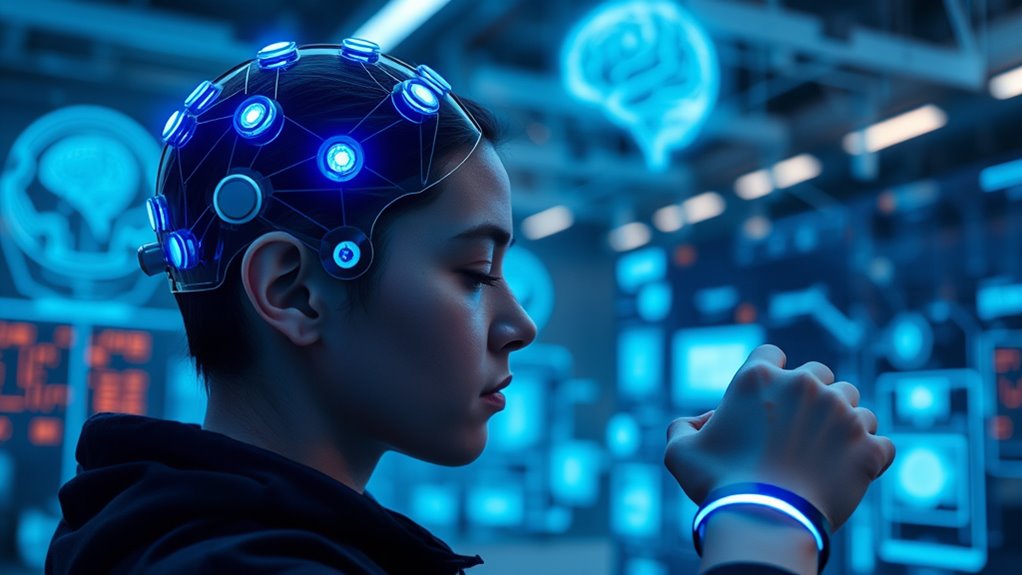

Non-invasive wearable brain-computer interfaces are transforming how you connect with technology by translating your brain signals into commands without surgery. These devices, embedded in headbands, caps, or glasses, capture electrical patterns and interpret them in real-time, providing a seamless, safe experience. As technology advances, these wearables become more accurate, comfortable, and integrated into daily life. If you stay tuned, you’ll discover how this exciting frontier can change your interaction with tech forever.
Key Takeaways
- Non-invasive wearable BCIs enable real-time brain signal detection without surgery, enhancing safety and accessibility.
- Advances in sensor technology and neural decoding algorithms improve accuracy and user comfort.
- These devices facilitate control of digital systems, communication, and health monitoring for diverse users.
- Continuous technological progress is integrating wearable BCIs seamlessly into daily life and applications.
- Future developments will expand brain signal interpretation for broader, practical, and innovative uses.
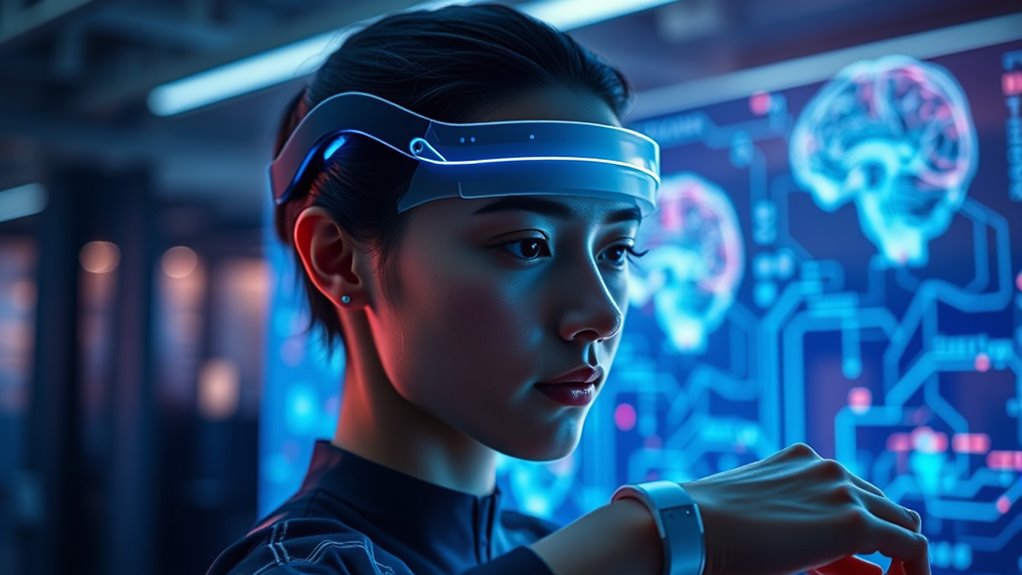
Brain-computer interfaces (BCIs) are transforming the way we interact with technology, especially through non-invasive wearables that detect and interpret brain signals without surgical procedures. These devices rely on advanced neural decoding techniques, which translate complex brain activity into actionable commands. With wearable sensors embedded in headbands, caps, or even glasses, you can now access a new level of connectivity that feels seamless and intuitive. Instead of invasive implants, these sensors pick up electrical signals generated by your brain’s neurons, allowing you to control devices simply by thinking.
Non-invasive wearable BCIs decode your brain signals for seamless, intuitive device control—no surgery needed.
When you wear these sensors, they work by capturing subtle electrical patterns across your scalp. The process involves neural decoding algorithms that analyze these signals in real-time, identifying specific neural signatures associated with your intentions or emotions. This means that your thoughts, whether related to moving a cursor or selecting an option, can be translated almost instantaneously into digital commands. The beauty of non-invasive wearables is that they eliminate the risks associated with surgery while offering a practical, user-friendly experience. You don’t need to worry about infections or long recovery times—just put on the device, and it’s ready to go.
The effectiveness of neural decoding heavily depends on the quality of wearable sensors. These sensors are designed to be sensitive enough to detect faint electrical signals while remaining comfortable enough for extended wear. Advances in materials and signal processing have improved their accuracy, making it possible for you to perform complex tasks with minimal lag. Whether you’re controlling a computer, steering a virtual environment, or communicating with others, these wearables serve as a direct bridge between your brain and the digital world. This opens up exciting possibilities, especially for individuals with mobility impairments or neurological conditions, giving you a new sense of independence.
Furthermore, as technology progresses, wearable sensors are becoming more compact, affordable, and accessible. You might soon find yourself using a sleek headband or glasses that seamlessly integrate into your daily life. The neural decoding process is becoming more sophisticated, capable of interpreting a broader range of brain signals with higher precision. This evolution ensures that non-invasive BCIs won’t just be a novelty but a practical tool for communication, entertainment, and even health monitoring. The integration of advanced neural decoding techniques and improved sensor design continues to push the boundaries of what you can achieve with these devices, making them increasingly reliable and user-friendly. Ultimately, these innovations empower you to harness the full potential of your brain’s signals in ways that were once thought impossible—all without invasive procedures.
Frequently Asked Questions
How Secure Are Brain-Computer Interfaces Against Hacking?
Brain-computer interfaces aren’t fully secure against hacking yet, but encrypted communication helps protect your data. Developers are actively working on vulnerability mitigation strategies to prevent unauthorized access. You should remain cautious, as new threats can emerge, but advancements in security protocols aim to make these systems safer. Staying informed and using updated devices can also help reduce the risk of hacking, ensuring your brain data stays private.
What Are the Privacy Concerns With Wearable Neurotechnology?
Imagine your thoughts being gently shared—while that’s exciting, it raises real data privacy concerns. With wearable neurotechnology, personal neural data could be vulnerable to misuse or unauthorized access. You should consider the ethical implications of how your brain data is stored and shared, and stay informed about protections. Ensuring your privacy isn’t compromised is vital as this technology advances, so you remain in control of your most intimate information.
Can Non-Invasive Devices Detect Subconscious Thoughts?
Non-invasive devices can’t truly detect subconscious thoughts or perform mind reading. They analyze brain activity patterns that may relate to feelings or intentions, but they don’t access the deep, subconscious mind directly. While subconscious detection is a tempting idea, current technology only provides indirect clues. So, you shouldn’t expect these wearables to give you a window into someone’s subconscious or enable genuine mind reading anytime soon.
How Affordable Are These Advanced Wearable Systems?
Cost reduction is making advanced wearable systems more affordable than ever, bringing them within reach for many. As technology improves, accessibility improvements mean you won’t need to break the bank to access these devices. While prices still vary, the gap is closing, and you can expect more budget-friendly options soon. The dream of widespread use is becoming a reality, and you’ll likely see these tools becoming a common part of everyday life.
What Are the Long-Term Health Impacts of Continuous Use?
You might wonder about the long-term health impacts of continuous use, and while research is ongoing, you should be aware of potential long-term cognitive and neurological risks. Prolonged exposure to these devices could affect brain function, memory, or neural pathways. It’s important to stay informed, regularly consult health professionals, and use these wearables responsibly to minimize any possible adverse effects on your brain health over time.
Conclusion
As you explore the future of brain-computer interfaces and non-invasive wearables, think of them as bridges connecting your mind to technology—like a seamless dance between thought and action. This frontier promises to uncover new possibilities, transforming how you communicate, learn, and heal. Embracing these innovations now means stepping into a world where your mind’s potential is limited only by your imagination. The journey ahead is exciting, and you’re at the forefront of this incredible leap forward.