
AI-driven drug discovery speeds up therapeutic development by quickly analyzing large datasets, predicting drug effectiveness, and screening millions of chemical structures. It helps identify promising compounds faster, reducing development time and costs. By ensuring reliable data sources and addressing ethical concerns, AI can improve accuracy and fairness. Collaborations among researchers, regulators, and ethics experts are essential for responsible use. Stay with us to explore how these innovations are shaping the future of medicine.
Key Takeaways
- AI accelerates drug discovery by rapidly analyzing large datasets to identify promising compounds and predict their effectiveness.
- High-quality, vetted biological and clinical data improve AI model accuracy and reliability in therapeutic development.
- Incorporating diverse datasets and ethical practices reduces bias, ensuring fair and equitable treatment recommendations.
- Collaboration with regulators and stakeholders promotes responsible AI use, fostering trust and transparency in drug development.
- AI reduces development time and costs, enabling faster delivery of effective therapies to patients.
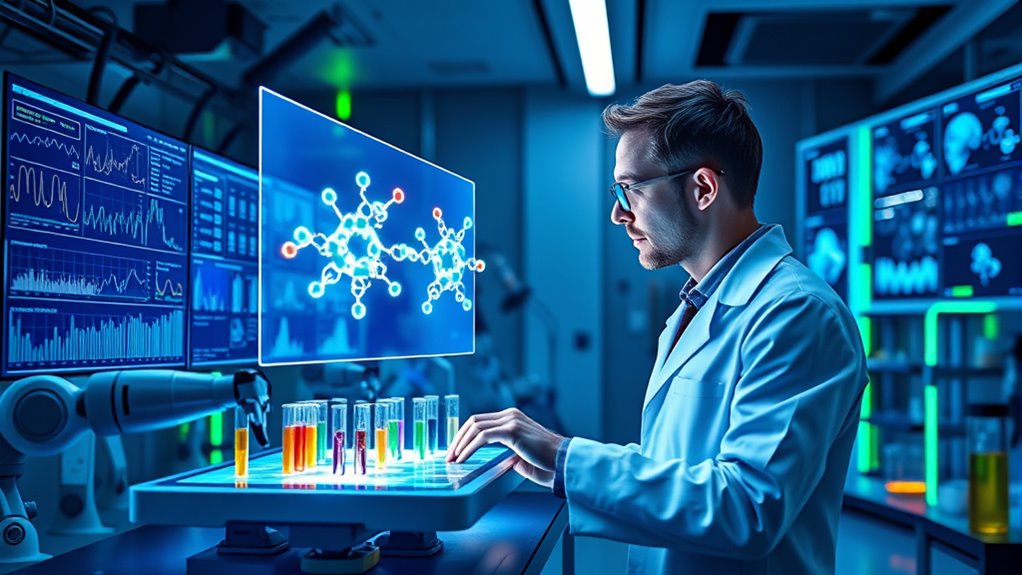
Artificial intelligence is transforming drug discovery by rapidly analyzing vast datasets to identify potential compounds and predict their effectiveness. This technological leap allows you to accelerate the development process, bringing promising treatments to patients faster than ever before. By leveraging machine learning algorithms, you can sift through millions of chemical structures, biological data, and clinical trial results in a fraction of the time traditional methods require. This efficiency not only shortens the timeline for bringing new drugs to market but also enhances the precision of your predictions, reducing costly failures along the way. Additionally, staying informed about vetted wave and wind data sources can improve the reliability of your AI models and ensure safer, more effective outcomes. However, as you integrate AI into drug discovery, you need to stay mindful of AI ethics and data privacy concerns. The power of AI depends on access to large, sensitive datasets, often containing personal health information. Protecting this data is paramount; breaches could compromise patient confidentiality and erode public trust. Ensuring data privacy isn’t just about compliance; it’s about maintaining integrity and ethical standards in your research. You must implement robust security measures, anonymize data where possible, and be transparent about how data is collected, stored, and used. These practices help you balance innovation with responsibility, fostering an environment where data sharing can support AI advancements without risking individual privacy. Moreover, AI ethics extends beyond data privacy. You should consider the biases embedded within training data that can lead to skewed or unfair outcomes. For example, if datasets lack diversity, AI models might underperform for certain populations, which could result in less effective treatments or overlooked side effects. Addressing these biases requires you to critically evaluate your sources and ensure your models are trained on diverse, representative data. This not only improves the fairness and reliability of your AI-driven insights but also aligns with ethical standards in healthcare. As you navigate these challenges, collaboration with ethicists, regulatory bodies, and patient advocacy groups becomes essential. Their insights can guide you in developing AI systems that are not only innovative but also transparent, fair, and respectful of individual rights. Emphasizing responsible AI use helps you build trust among stakeholders and ensures that technological progress benefits all populations equitably. Ultimately, integrating AI in drug discovery offers tremendous potential—if you approach it thoughtfully, prioritizing AI ethics and data privacy, you can revolutionize therapeutics while honoring your ethical obligations.
Frequently Asked Questions
How Does AI Improve Accuracy in Predicting Drug Efficacy?
AI improves accuracy in predicting drug efficacy by using advanced predictive modeling that analyzes vast datasets quickly and precisely. You can trust that AI continuously refines its predictions through rigorous data validation, ensuring reliable results. This process helps identify promising drug candidates faster, reducing trial-and-error, and increasing the chances of success. With AI, you gain a powerful tool for making more informed, data-driven decisions in the drug development process.
What Are the Ethical Considerations in Ai-Driven Drug Discovery?
You should consider that, with AI-driven drug discovery, 62% of researchers worry about ethical issues like data privacy and algorithm bias. You need to guarantee patient data remains confidential and that algorithms are fair, unbiased, and transparent. Ethical concerns also include informed consent and equitable access. By addressing these, you help build trust in AI innovations, ensuring they benefit everyone without compromising moral standards.
How Cost-Effective Is AI Compared to Traditional Methods?
You’ll find AI is more cost-effective than traditional methods because it offers significant cost savings and boosts your budget efficiency. By automating complex tasks, AI reduces research and development expenses, shortens timelines, and minimizes the need for extensive lab work. This streamlined approach helps you allocate resources better, ultimately accelerating drug discovery while saving money, making AI a smart investment for your pharmaceutical projects.
What Are the Main Challenges in Integrating AI Into Existing Labs?
You might face challenges like data integration, where merging new AI systems with existing lab data can be complex. Staff training is also essential, as your team needs to learn new tools and workflows. Resistance to change can slow progress, and technical issues may arise. To succeed, you should invest in proper training and guarantee your data systems are compatible, making integration smoother and more effective.
How Does AI Influence Personalized Medicine Development?
AI revolutionizes personalized medicine by transforming how you approach treatment. It analyzes genomic profiling data at lightning speed, uncovering intricate patient differences that were previously hidden. This enables precise patient stratification, ensuring therapies target the right individuals. With AI’s power, you can develop tailored treatments faster, increasing success rates and reducing side effects. It’s a game-changer, making personalized medicine more accurate, efficient, and accessible than ever before.
Conclusion
You now see how AI-driven drug discovery is like a rocket propelling us toward faster, smarter breakthroughs. By harnessing advanced algorithms and data analysis, you can accelerate therapeutic development and bring life-saving medicines to patients more quickly. It’s a powerful tool that transforms the challenge into an opportunity, making the journey of discovery feel like riding a wave of innovation. Embrace this technology, and watch how it reshapes the future of medicine with speed and precision.