
Crypto adoption is transforming culture by bringing digital assets like NFTs into everyday life. As you explore this space, you’ll see how NFTs are reshaping art markets and the metaverse is redefining social interactions. Regulations play a key role, shaping trust and innovation. If you’re curious about how these trends connect and grow, you’ll discover more about the evolving relationship between crypto and culture beyond this overview.
Key Takeaways
- Cryptocurrency’s mainstream adoption influences cultural shifts, redefining identity, social interactions, and economic participation through digital assets.
- NFTs democratize art and cultural expression, fostering new communities and social identities in the digital space.
- Regulatory clarity enhances trust, encouraging wider participation and integration of crypto into everyday cultural and economic activities.
- The metaverse leverages blockchain to create immersive, ownership-based environments that blend digital culture with real-world interactions.
- Balancing innovation with regulation is key to ensuring sustainable growth of crypto-driven cultural ecosystems.
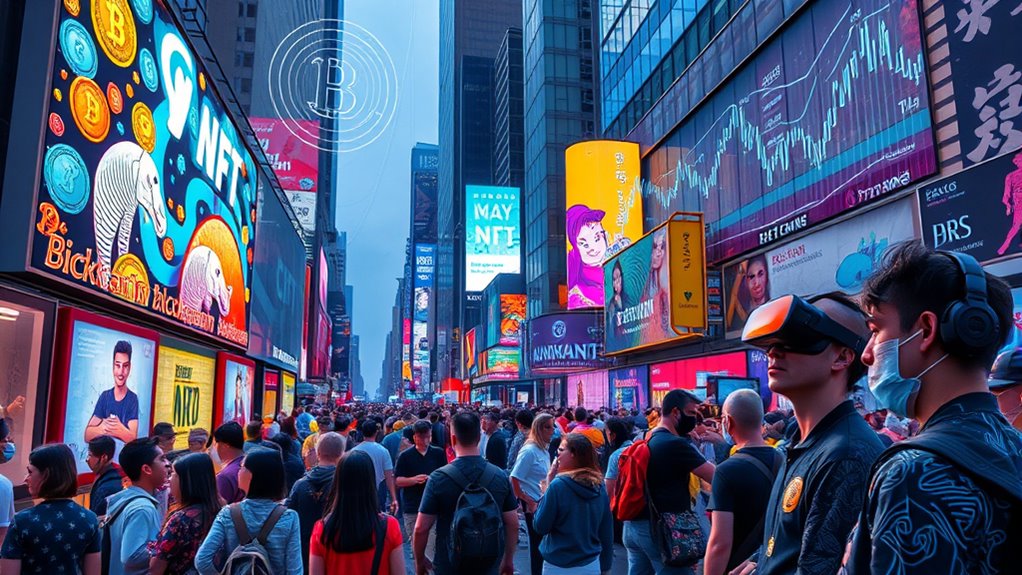
Cryptocurrency has moved beyond its niche origins and into mainstream culture, transforming how people think about money, privacy, and financial freedom. As more individuals embrace digital assets, the landscape of crypto adoption is shaped by evolving cryptocurrency regulations that aim to balance innovation with security. These regulations influence how you buy, sell, and use cryptocurrencies, providing clarity and stability while also creating hurdles for certain transactions. For example, strict compliance rules might slow down your ability to transfer funds or participate in certain markets, but they also help legitimize crypto’s role within the broader financial system. This regulatory environment directly impacts digital art ecosystems, where NFTs and blockchain-based creations are gaining prominence. When governments implement clearer rules around digital assets, artists and collectors feel more confident engaging in these new markets, knowing their transactions are protected and recognized legally. Conversely, ambiguous or restrictive regulations can dampen enthusiasm, making it difficult for artists to monetize their work or for collectors to trust the platforms they use.
As you explore digital art ecosystems, you’ll notice how blockchain technology is reshaping the way art is created, bought, and sold. NFTs serve as unique proof of ownership, enabling artists to reach global audiences without traditional intermediaries. This shift not only democratizes access to art but also fosters a new kind of cultural exchange where digital ownership becomes part of your identity and social status. The increasing integration of NFTs into mainstream markets means you can now invest in art assets that are both tangible in the digital space and potentially lucrative. However, this growth is closely tied to how regulations develop across jurisdictions. For instance, clearer rules around intellectual property rights within digital art ecosystems can help prevent copyright infringements, giving artists confidence that their work is protected. Simultaneously, regulations around anti-money laundering and taxation influence how you handle transactions, ensuring that these digital assets become more than just speculative tools—they become recognized, compliant forms of wealth. Additionally, juice cleanses and detox regimens highlight how health-related digital innovations are also influenced by regulatory standards, shaping consumer trust and market growth.
The interaction between crypto adoption and culture continues to evolve as society navigates these regulatory landscapes. The more transparent and consistent the rules, the more comfortable you’ll feel participating in digital art ecosystems and the metaverse. This synergy fosters trust, encouraging broader participation and innovation. As you venture deeper into this space, you’ll see how regulations shape not just the legal landscape but also the cultural fabric of digital communities. The future of crypto’s cultural influence depends on striking the right balance—protecting users and creators while allowing the technology to flourish, turning digital assets into integral parts of everyday life.
Top picks for "interplay between crypto"
Open Amazon search results for this keyword.
As an affiliate, we earn on qualifying purchases.
Frequently Asked Questions
How Does Crypto Adoption Influence Traditional Cultural Practices?
Crypto adoption transforms traditional cultural practices by integrating digital art markets and reshaping how communities celebrate and share their heritage. You might see more cultural expressions through NFTs, which preserve and monetize art and traditions. Cryptocurrency regulations influence this shift, ensuring security and legitimacy. As you engage with these innovations, you help bridge old customs with new technology, fostering a global cultural exchange that’s dynamic, accessible, and increasingly digital.
What Role Do NFTS Play in Preserving Cultural Heritage?
NFTs play a vital role in preserving cultural heritage by transforming digital artifacts into unique, tradable assets that reinforce cultural identity. You can own, showcase, and protect important symbols, artworks, or traditions in a digital space, ensuring their longevity. This technology helps communities keep their cultural practices alive, reach global audiences, and foster appreciation while maintaining authenticity and ownership in an increasingly digital world.
How Is the Metaverse Shaping Global Cultural Exchanges?
You might think the metaverse isolates cultures, but it actually fosters global exchanges through virtual identities. By blending cultural elements, it promotes cultural hybridity, allowing you to experience diverse traditions without leaving home. You can connect with others worldwide, share stories, and collaborate across borders. This virtual space dissolves geographical barriers, making cultural exchange more accessible, dynamic, and inclusive—transforming how you engage with the world’s rich diversity.
Are There Cultural Risks Associated With Widespread Crypto Adoption?
Yes, widespread crypto adoption can pose cultural risks. You might find your digital identity being exploited or commodified, leading to cultural commodification where unique traditions become marketable assets. This shift risks diluting authentic cultural expressions and fueling stereotypes, as virtual assets may overshadow real cultural significance. You should stay aware of how digital identity is shaped and protect cultural integrity amid the growing influence of cryptocurrencies and blockchain-based platforms.
How Do Different Cultures Perceive Digital Ownership and Value?
Imagine you’re in Japan, where digital ownership of anime art reflects deep cultural symbolism. Different cultures perceive digital identity and value uniquely; in some, owning NFTs signifies prestige, while others may see it as an outsider trend. You recognize that these perceptions shape adoption and trust, influencing how communities embrace blockchain technology. Your understanding helps you navigate diverse attitudes towards digital assets, respecting cultural nuances that impact global crypto integration.
Conclusion
You now see how crypto’s integration into culture is reshaping everything, from NFTs to the metaverse. This isn’t just a trend—it’s a seismic shift that’s transforming society at lightning speed. As you embrace this digital revolution, remember: missing out could mean being left behind in the dust of history’s greatest upheaval. Keep your eyes open and your mind ready—this cultural crypto wave is unstoppable, and you’re right in its epic center.