
TL;DR

Get business pricing on tech for your team
- Business-only prices and quantity discounts
- Tax-exempt purchasing
- Multiple users, one account, clear invoices
OpenAI announced a global launch of ChatGPT shopping features that let users visualize clothing and accessories on a photo of themselves and save products to a Favorites area. The tools use the company’s ChatGPT Images 2.5 model; their accuracy, availability across users, and effect on shopping behavior have not been detailed.
OpenAI has launched two shopping features worldwide that let ChatGPT users preview clothing and accessories on a photo of themselves and save products they find for later. The update adds visual try-on to ChatGPT’s shopping results and expands the assistant’s role in product discovery, though OpenAI has not provided figures on how accurately the previews represent fit or appearance.
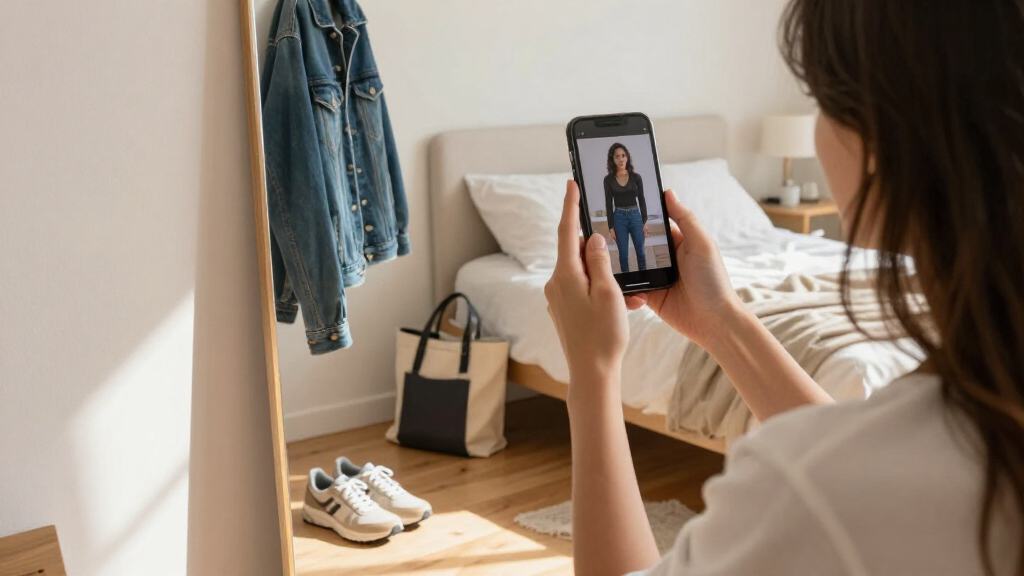
The virtual try-on feature lets users upload a selfie or full-body photo, then select a new Try On button in ChatGPT shopping results to visualize an item. Users can also upload an image of a product, such as a screenshot from a website, and ask ChatGPT to show how it might look on them. The feature is presented as a visual preview, not a guarantee of how a garment will fit in real life.
A separate Favorites function allows users to save products they discover to a Library in the app. OpenAI says saved products sit alongside users’ try-on images, giving them a place to return to items they are considering. The company also describes broader shopping prompts: users can request pieces to match a style or upload a celebrity outfit photo and ask ChatGPT to find purchasable items.
OpenAI says the features use its newly launched ChatGPT Images 2.5 model. The company claims the model produces more natural lighting and richer textures, follows editing directions more reliably, and reduces image-generation latency. Those are OpenAI’s descriptions of the model; the announcement did not include independent performance testing or measurements specific to clothing try-on.
ChatGPT Moves Into Visual Shopping
The launch gives ChatGPT a more direct place in the fashion discovery process: users can move from asking for recommendations to seeing a generated preview and saving items within the same app. That could make the assistant more useful to people who are comparing products or assembling an outfit, while giving retailers another route through which shoppers may encounter products.
The feature also puts OpenAI into a field where established services already connect visual inspiration with shopping. Pinterest and Google have built tools around finding products from images, and Google launched a virtual try-on feature the previous year, according to TechCrunch. Whether users will choose ChatGPT for these tasks, or whether generated previews will help them make purchase decisions, is not yet known.
The distinction between an AI-generated visualization and a reliable representation of fit matters to shoppers. A preview may help someone imagine a color or style, but the announcement does not establish that it can predict sizing, fabric behavior, or how an item will look under different conditions. The tool should not be treated as a substitute for product measurements or a retailer’s return policy.
As an affiliate, we earn on qualifying purchases.
OpenAI’s Earlier Shopping Experiments
The new tools continue OpenAI’s effort to develop consumer shopping uses for ChatGPT. TechCrunch reported that the company previously tried an instant-checkout feature, but that approach did not perform well and was later changed. The current launch focuses on discovery and visualization rather than announcing a new checkout system.
Other AI services have also tested shopping recommendations. TechCrunch cited the startup Instinct’s proactive product suggestions and reported that some users viewed them as intrusive or more like advertising than assistance. That response points to a broader challenge for AI shopping tools: recommendations must feel relevant and useful to users, rather than unsolicited promotion.
Visual try-on and favorites address different stages of browsing. One offers a generated view of a product on the user’s image; the other stores products for later reference. The announcement describes these functions, but it does not specify retailer participation, whether product links or saved items work uniformly across merchants, or how shopping results are selected.
“Whether ChatGPT will become people’s first choice for this type of activity remains to be seen.”
— TechCrunch’s report
As an affiliate, we earn on qualifying purchases.
Accuracy, Access and Retailer Coverage
Several practical details remain undisclosed. OpenAI’s announcement, as reported by TechCrunch, does not explain how closely a generated image represents an item’s actual fit, how the system handles different body types or poses, or whether it can show fabric drape and sizing accurately. It also does not report testing results that would let users judge those limits.
The company described the launch as global, but did not specify whether every user, account type, or region receives the features at the same time. Details about supported retailers, product availability, how results are ranked, and whether saved products remain available if a listing changes were not provided. The report also does not state how uploaded photos and try-on images are retained or used, so users should consult ChatGPT’s current privacy information before uploading personal images.
There is also no evidence in the announcement about whether the features will improve shopping outcomes, such as reducing returns or increasing purchases. Claims about image quality and speed come from OpenAI, and real-world performance may vary by image, product, and prompt.
As an affiliate, we earn on qualifying purchases.
User Uptake Will Test the Tools
The immediate next step is the global rollout of Try On and Favorites in ChatGPT. OpenAI has not announced a separate release date, rollout schedule by region, or a timetable for additional shopping functions. Users can check the app’s shopping results and Library to see whether the tools are available to them.
More evidence will be needed to judge the feature’s usefulness: how the previews compare with real garments, which merchants and products appear, and whether people return to saved items or use ChatGPT to find complete outfits. Those details will help show whether the assistant becomes a meaningful shopping destination or remains one option among established visual search and retail services.
As an affiliate, we earn on qualifying purchases.
Key Questions
How does ChatGPT’s virtual try-on work?
Users can upload a selfie or full-body photo and select Try On in shopping results, or upload an image of an item and ask ChatGPT to visualize it on them. The result is a generated preview, not confirmation of real-world fit.
What does the Favorites feature do?
Favorites lets users save products they find to a Library in the app. OpenAI says saved products appear alongside try-on images so users can return to them later.
Which AI model powers the features?
OpenAI says the shopping features use ChatGPT Images 2.5. The company claims it improves lighting, texture, instruction-following, and generation speed, but the announcement did not provide independent testing.
Does the preview show exactly how clothes will fit?
That has not been established. OpenAI has not provided measurements or validation showing that generated previews predict size, fit, or fabric behavior accurately. Shoppers should still check product details and sizing information.
Is the feature available everywhere?
OpenAI announced a global launch, but did not give details on account eligibility, regional timing, or whether all users receive the tools at once. Availability may need to be checked in the app.
Source: rss
Halloween Picks
halloween
As an affiliate, we earn on qualifying purchases.