📊 Full opportunity report: Try Speech Practice To Strengthen Your On-Camera Confidence on IdeaNavigator AI — validation score, market gap, and execution plan.

Get business pricing on tech for your team
- Business-only prices and quantity discounts
- Tax-exempt purchasing
- Multiple users, one account, clear invoices
TL;DR
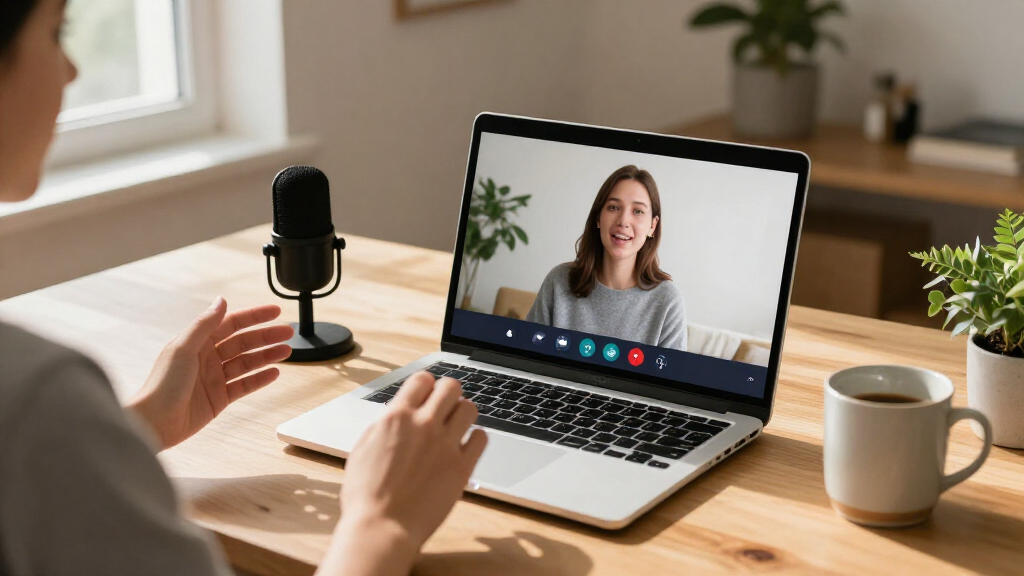
IdeaNavigator AI has outlined a proposed practice app for business owners who struggle to record themselves. The concept includes short daily exercises and automated feedback, but it is a product proposal, not a launched service or evidence of proven results.
IdeaNavigator AI has outlined a proposed app to help business owners practice speaking on camera, targeting people who know video could support their business but freeze when they try to record. The plan describes short daily exercises and automated delivery feedback, but does not report that an app has launched or that the approach has been tested.
The proposed product is aimed at a specific user: a business owner who avoids recording despite seeing video as useful. The concept identifies stumbling, self-criticism and repeated takes as barriers that can prevent owners from publishing at all. It argues that conventional public-speaking training may not address the particular experience of recording alone and reviewing one’s own performance.
The suggested minimum version would offer two-minute daily prompts, starting with reading prepared material and gradually moving toward speaking more spontaneously. The app would assess pace, filler words, eye line and energy, then show changes over time. A further goal would be to help users move from practice exercises to publishing actual business videos, with streaks to track continued use.
The commercial model described is a consumer subscription, with a possible team tier for agencies that coach clients. These are proposed features and business assumptions, not confirmed offerings, pricing or commitments from a provider.
Product concept · IdeaNavigator AI
Try Speech Practice To Strengthen Your On-Camera Confidence
A proposed practice app for business owners who freeze when recording. The idea pairs short daily exercises with automated feedback, then aims to help users move from rehearsal to publishing.
TL;DR: This is a product proposal, not a launched service or a proven approach. No trial results, release date, or confirmed pricing are reported.
01 / The proposed product
Practice built around the recording moment
The concept targets a specific gap: knowing video could support a business, yet struggling to press record and finish a take.
01 · Intended user
Business owners who hesitate
Designed for people who see potential value in video but are held back by stumbling, self-criticism, or repeated takes.
02 · Practice routine
Short prompts, gradual steps
The suggested minimum version starts with reading prepared material, then builds toward more spontaneous speaking.
03 · Automated feedback
Notice speaking habits
Proposed feedback covers pace, filler words, eye line, and energy, with progress displayed over time.
Read
Begin with prepared material.
Speak
Move toward more spontaneous prompts.
Review
See feedback on selected delivery measures.
Publish
Work toward sharing real business videos.
02 / The evidence gap
Practice measures are not business outcomes
The proposal identifies a possible use for feedback, but does not show that its scores improve confidence, video quality, or customer response.
What it could track
Delivery signals
Pace, filler words, eye line, and energy are listed as possible assessment areas. The measurement method and accuracy are unspecified.
What remains unproven
Clear, useful communication
A score on delivery alone does not establish whether a video is clear, persuasive, or effective with customers.
The outcome that matters
Publishing behavior
The key test is whether users become more willing and able to publish useful material—not simply whether they keep practicing.
03 / Suggested validation
A cohort test with a behavioral measure
The outline proposes comparing practice participants with a waitlist control group. It gives a measurable question, while leaving several study details open.
Suggested next step
100 ownersA 30-day practice cohort, with publication behavior checked by day 45 against a waitlist control group.
Proposed prompts and automated delivery feedback.
A comparison group is suggested; assignment procedures are not specified.
Count how many participants publish a real video by day 45.
Recruitment, qualifying videos, recording data, and feedback privacy need detail.
04 / Availability & business model
A concept, with open product questions
Potential commercial paths are described, but no functioning app, launch plan, provider commitments, or price is confirmed.
Status
No launch reported
No developer, release schedule, or available service is identified in the proposal.
Possible model
Subscription or team tier
A consumer subscription and a possible agency tier are business assumptions, not confirmed offers or pricing.
Open questions
Measurement and privacy
How eye line and energy would be assessed, what data users share, and how accuracy is handled remain unclear.
05 / Key questions
What readers should know
The proposal offers a direction to investigate, not evidence that the product is available or effective.
Is the app available now?
No launch is reported. The description presents a proposed app and possible minimum version.
Who is it intended for?
Business owners who believe video matters but struggle to record, including those affected by stumbling, self-criticism, or repeated takes.
What would users do?
Try two-minute daily exercises, progressing from reading to more spontaneous speaking, with feedback on selected delivery measures.
Has it been shown to help people publish?
No results are provided. A 30-day cohort and day-45 publication check are suggested as a way to test that question.
A Test of Video Practice
The concept addresses a practical gap between knowing video may be useful and being able to produce it consistently. For a business owner who repeatedly abandons recordings, private, structured practice could offer a lower-pressure step before publishing. The proposal’s focus on solo recording also distinguishes it from general presentation training, at least in its stated target use.
Whether that solves a meaningful business problem remains unproven. Feedback on pace, filler words, eye line and energy could help users notice habits, but those measures alone do not establish that a video is clear, persuasive or effective with customers. The key outcome is not a score or a streak: it is whether users become more willing and able to publish useful material.
That distinction matters to potential customers and agencies considering the idea. A product can make practice easier without changing publishing behavior. A controlled test that tracks actual publication would provide a more relevant signal than usage or satisfaction alone.
Products Worth Considering

Bose SoundLink Plus Portable Bluetooth Speaker, Wireless Outdoor Speaker, Up to 20 Hours Battery Life, Waterproof and Dustproof, Black

Bose SoundLink Flex Bluetooth Speaker (2nd Gen), Waterproof, Dustproof, USB‑C, Up to 12 hr Battery, Black

Bose QuietComfort Wireless Noise-Cancelling Over-Ear Headphones, Black
As an affiliate, we earn on qualifying purchases.
From Camera Anxiety to Publishing
The proposal frames the timing around video-first marketing pressure reaching businesses of different sizes and the availability of multimodal AI tools that can analyze aspects of speech and presentation. It does not provide market figures, identify a particular technology provider or document demand from prospective users, so those points should be read as the rationale for the idea rather than independently established findings.
Its suggested validation plan is a 30-day cohort of 100 business owners, compared with a waitlist control group. The proposed measure is how many participants publish their first real video by day 45. This gives the concept a concrete behavioral test, while leaving important design choices—such as recruitment, assignment to groups and what qualifies as a published video—unspecified.
Evidence and Product Plans
No launch, pricing or completed trial is reported. The proposal does not name a developer, give a release schedule or describe a functioning app. Its subscription and agency-team tiers are possible business models, not confirmed products.
It is also unclear how the app would measure eye line or energy, what data users would need to share, and how feedback accuracy and privacy would be handled. No evidence is provided that the proposed scoring improves confidence or leads to more published videos. The cohort plan is a recommendation; no participant results or comparison with a waitlist group are available.
The Proposed Cohort Test
The next concrete step in the outlined plan would be to recruit 100 business owners for a 30-day practice cohort and compare their publication behavior with a waitlist control group by day 45. Results would help establish whether participants move from exercises to posting real videos, though the proposal gives no date for starting the test.
Before that evaluation, organizers would need to define the cohort procedures and measurement rules, including how a qualifying video is counted and how participants’ recordings and feedback data are handled. Until a trial is run and results are shared, the app remains a concept with a suggested validation method, rather than a demonstrated solution.
Source: IdeaNavigator AI
Key Questions
Is the on-camera practice app available now?
No launch is reported. The description presents a proposed app and a possible minimum version, not an available service.
Who is the proposed app for?
It is aimed at business owners who believe video matters but struggle to record themselves, including those affected by stumbling, self-criticism or repeated takes.
What would users do in the app?
The proposed routine uses two-minute daily speaking exercises, progressing from reading to more spontaneous speaking, with feedback on pace, filler words, eye line and energy.
Has the app been shown to help people publish videos?
No results are provided. A 30-day cohort of 100 owners, measured against a waitlist control by day 45, is suggested as a way to test whether users publish a first real video.
Source: IdeaNavigator AI