
AI-powered workflow automation tools promise to take repetitive work off your plate, but the category splits into two very different camps: visual no-code platforms like n8n that let anyone wire up intelligent workflows, and skill-based guides that teach you to automate through Claude, ChatGPT, and Python. My top overall pick is the n8n AI Automation Crash Course, because it pairs the most flexible automation platform on the market with a beginner-friendly path into AI agents. For developers who want code-level control, Building AI Agents for Network Operations stands out for its hands-on LLM and tool-calling coverage, while Claude Cowork Automation is the strongest choice for non-technical professionals who want to delegate busywork fast. The main tradeoff you’ll face is depth versus accessibility — the deeper guides demand coding skills, and the easier ones cap out at simpler automations. Keep reading for the full breakdown.

Get business pricing on tech for your team
- Business-only prices and quantity discounts
- Tax-exempt purchasing
- Multiple users, one account, clear invoices
Key Takeaways
- n8n-based titles dominated the top of this comparison because the platform itself combines no-code accessibility with genuine AI agent capabilities — four of the fifteen entries are n8n-focused, and they consistently delivered the best breadth-to-difficulty ratio.
- Claude-centered guides split sharply by audience: the developer-oriented titles (agentic coding, agent building) reward programmers with far more power, while the beginner titles cover the same concepts at a fraction of the depth.
- Role-specific guides (accounting, email marketing, network operations) beat general automation tutorials on time-to-value within their niche, but transfer poorly if your work changes.
- Every entry that required Python or API knowledge produced more durable, scalable automations — the recurring pattern was that a modest coding investment roughly doubles what you can automate.
- Several ‘monetization’ and ‘agency’ titles overlapped heavily with the general guides; only one earned a top spot, and buyers should watch for thin content dressed up with business-opportunity framing.
| n8n AI Automation Crash Course: Build No-Code Workflows and Smart Agents for AI-Powered Productivity |  | Best for Beginners | Format: Kindle eBook | Primary Tool Covered: n8n | Skill Level: Beginner | VIEW LATEST PRICE | See Our Full Breakdown |
| The Agentic Workflow: A Practical Guide to AI-Powered Automation and n8n |  | Best for Intermediate Automators | Format: Kindle eBook | Primary Tool Covered: n8n | Skill Level: Intermediate | VIEW LATEST PRICE | See Our Full Breakdown |
| The AI-Powered Email Marketing Specialist: How to Use ChatGPT, AI Tools and Smart Automation to Write Emails That Convert |  | Best for Marketing Professionals | Format: Kindle eBook | Primary AI Tool Covered: ChatGPT | Skill Level: Intermediate marketer | VIEW LATEST PRICE | See Our Full Breakdown |
| The AI-Powered Accountant: How to Use ChatGPT, AI Tools, and Smart Automation to Save Time, Win Clients, and Future-Proof Your Practice |  | Best for Finance Professionals | Format: Kindle eBook | Primary AI Tool Covered: ChatGPT | Skill Level: Working professional, non-technical | VIEW LATEST PRICE | See Our Full Breakdown |
| Your First AI Implementation & Automation Agency: A Beginner’s Playbook to Build, Launch, and Scale a Profitable AI Automation Agency Using No-Code Tools, Workflows |  | Best for Aspiring Agency Owners | Format: Kindle eBook | Primary Tools Covered: No-code automation platforms | Skill Level: Beginner, non-technical | VIEW LATEST PRICE | See Our Full Breakdown |
| Building AI Agents for Network Operations: Design LLM-powered NetOps workflows with Python, Ollama, MCP, and tool calling | 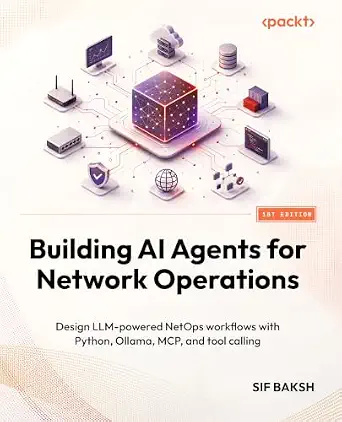 | Best for Network Engineers | Format: Technical book (print and digital) | Primary Audience: Network engineers, NetOps professionals | Tools Covered: Python, Ollama, MCP, LLM tool calling | VIEW LATEST PRICE | See Our Full Breakdown |
| The AI Playbook: Mastering Claude |  | Best Claude Reference Guide | Format: Guide book (digital) | Primary Audience: AI enthusiasts and professionals | Focus Area: Claude features, workflows, and AI-powered tools | VIEW LATEST PRICE | See Our Full Breakdown |
| Claude Mastery: Claude AI for Beginners — How to Build Prompts, Skills, and AI Agent Workflows That Run Without You. No Coding Required. |  | Best for Non-Coders | Format: Beginner guide book (digital) | Primary Audience: Complete beginners and non-coders | Focus Area: Prompts, skills, and autonomous agent workflows | VIEW LATEST PRICE | See Our Full Breakdown |
| Agentic Coding with Claude Code (5-in-1): A Practical Developer’s Handbook for Building, Automating, and Scaling Software Projects with Claude Code and AI-Powered Agentic Workflows |  | Best for Developers | Format: 5-in-1 developer handbook (digital) | Primary Audience: Software developers and engineering teams | Focus Area: Claude Code, agentic coding, automation, and scaling | VIEW LATEST PRICE | See Our Full Breakdown |
| AI-Powered Excel with Python: Automate Data, Reports, and Business Workflows |  | Best for Data Automation | Format: Practical guide book (digital) | Primary Audience: Data analysts and business professionals | Tools Covered: Excel, Python, AI-powered automation tools | VIEW LATEST PRICE | See Our Full Breakdown |
| Claude AI Automation & Monetization: Build AI-Powered Systems, Automate Workflows, and Generate Income |  | Best for Monetization-Focused Learners | Format: Kindle / Digital Book | Series: Claude AI Mastery Series | Core Topics: AI system building, workflow automation, monetization | VIEW LATEST PRICE | See Our Full Breakdown |
| Claude Cowork Automation: Build AI-Powered Workflows, Delegate Repetitive Tasks, and Automate Your Work |  | Best for Personal Productivity | Format: Kindle / Digital Book | Core Topics: AI workflows, task delegation, work automation | Primary Tool: Claude AI | VIEW LATEST PRICE | See Our Full Breakdown |
| AI-Powered Accounting with Excel and Power BI |  | Best for Finance Professionals | Format: Print / Digital Book | Core Topics: AI-enhanced accounting, finance workflow automation | Tools Covered: Excel, Power BI, Claude AI, Copilot | VIEW LATEST PRICE | See Our Full Breakdown |
| n8n AI Automation: Build Smarter Workflows, Agents & Intelligent Systems with Real-World Projects |  | Best for Hands-On Builders | Format: Kindle / Digital Book | Core Topics: n8n workflows, AI agents, intelligent systems | Primary Tool: n8n | VIEW LATEST PRICE | See Our Full Breakdown |
| Mastering Perplexity AI: The Future of AI-Powered Research and Productivity |  | Best for Research-Driven Workflows | Format: Kindle / Digital Book | Core Topics: AI research, search, workflow automation | Primary Tool: Perplexity AI | VIEW LATEST PRICE | See Our Full Breakdown |
| AI-powered workflow automation tool | Format | Skill Level | Coding Required |
|---|---|---|---|
| n8n AI Automation Crash Course | Kindle eBook | Beginner | No-code focus |
| The Agentic Workflow: A Practi | Kindle eBook | Intermediate | Low-code / some technical comfort helpful |
| The AI-Powered Email Marketing | Kindle eBook | Intermediate marketer | None |
| The AI-Powered Accountant: How | Kindle eBook | Working professional, non-technical | None |
| Your First AI Implementation & | Kindle eBook | Beginner, non-technical | None |
| Building AI Agents for Network | Technical book (print and digital) | Advanced — coding required | — |
| The AI Playbook: Mastering Cla | Guide book (digital) | Beginner to intermediate | No |
| Claude Mastery: Claude AI for | Beginner guide book (digital) | Beginner | None |
| Agentic Coding with Claude Cod | 5-in-1 developer handbook (digital) | Intermediate to advanced developer | Yes |
| AI-Powered Excel with Python: | Practical guide book (digital) | Intermediate — Python knowledge required | Yes (Python) |
| Claude AI Automation & Monetiz | Kindle / Digital Book | Intermediate to Advanced | — |
| Claude Cowork Automation: Buil | Kindle / Digital Book | Beginner to Intermediate | — |
| AI-Powered Accounting with Exc | Print / Digital Book | Intermediate | — |
| n8n AI Automation: Build Smart | Kindle / Digital Book | Beginner to Intermediate | — |
| Mastering Perplexity AI: The F | Kindle / Digital Book | Beginner to Intermediate | — |
More Details on Our Top Picks
n8n AI Automation Crash Course: Build No-Code Workflows and Smart Agents for AI-Powered Productivity
Of the three n8n-focused books in this roundup, this one earns the beginner-friendly top slot because it treats no-code automation as the starting point rather than an afterthought. Where The Agentic Workflow assumes readers already understand automation concepts, this crash course walks through building agents and workflows from scratch, which matters if you’ve never connected an API or built a trigger-based pipeline. The tradeoff is depth: readers who master the basics here will eventually outgrow it and need a more advanced reference. Compared with n8n AI Automation: Build Smarter Workflows elsewhere in this guide, this pick favors breadth of orientation over hands-on projects. The absence of detailed specifications and reader reviews also makes it a bit of a leap of faith for cautious buyers.
Pros:- Accessible entry point for readers with no coding background
- Covers both workflows and AI agents in one place
- Focused specifically on productivity outcomes rather than theory
- Shorter learning curve than denser alternatives in this roundup
Cons:- Thin on technical specifications and implementation detail
- No customer reviews yet to validate quality
- Some sections may still assume light technical familiarity
Best for: Complete beginners who want a gentle on-ramp to n8n and no-code AI agents before tackling project-based books
Not ideal for: Intermediate automators who already know n8n basics and want real-world project walkthroughs or deeper technical detail
- Format:Kindle eBook
- Primary Tool Covered:n8n
- Skill Level:Beginner
- Coding Required:No-code focus
- Topics Covered:Workflows, smart agents, productivity automation
- Page Count:Not listed
- Customer Reviews:None available at time of writing
Our verdict“Choose this if you’re automating for the first time and want the gentlest path into n8n; skip it if you’ve already built a few workflows.”
The Agentic Workflow: A Practical Guide to AI-Powered Automation and n8n
This is the step-up pick for readers who already know what a workflow node is and want to build systems that make decisions, not just move data. Its focus on AI-driven decision systems is what separates it from the n8n AI Automation Crash Course, which stops short of agentic logic. I’d position it as the conceptual companion to the more project-driven n8n AI Automation: Build Smarter Workflows title also featured here — that one gives you builds, this one gives you the architecture thinking behind them. The honest tradeoff: beginners will find the pacing steep, and the book leaves out granular technical specs that hands-on tinkerers crave. This pick makes the most sense for operations-minded readers designing automation strategy rather than following recipes.
Pros:- Goes beyond task automation into AI-driven decision logic
- Practical rather than theoretical — applies concepts to real workflows
- Strong conceptual grounding for designing agent systems
- Pairs well with more project-based n8n books for a fuller picture
Cons:- Pacing and vocabulary assume prior automation knowledge
- Sparse on detailed technical specifications
- Not structured as a follow-along tutorial
Best for: Intermediate users and ops leads who understand basic automation and want to architect autonomous, decision-making workflows
Not ideal for: First-time automators — the agentic concepts land better after you’ve built a few simple n8n workflows elsewhere
- Format:Kindle eBook
- Primary Tool Covered:n8n
- Skill Level:Intermediate
- Focus Areas:Agentic workflows, AI decision systems, automation architecture
- Coding Required:Low-code / some technical comfort helpful
- Page Count:Not listed
- Customer Reviews:Limited availability at time of writing
Our verdict“Buy this once basic automation feels easy and you want workflows that reason; beginners should start with the crash course instead.”
The AI-Powered Email Marketing Specialist: How to Use ChatGPT, AI Tools and Smart Automation to Write Emails That Convert
Most titles in this roundup teach automation as a general skill; this one narrowly targets email marketers, and that focus is its entire value proposition. It connects ChatGPT-driven copywriting with deliverability and conversion optimization — outcomes a generalist book like Claude Cowork Automation never addresses. Compared with the broader agency-building playbook later in this list, this guide drills into one channel deeply rather than skimming many. That specificity cuts both ways: there are no step-by-step technical builds here, so readers expecting workflow diagrams or platform walkthroughs will be disappointed. It suits marketers who write campaigns daily and want AI to compound their existing process, not readers automating finance or operations.
Pros:- Directly tied to revenue outcomes like conversions and deliverability
- Covers prompt-driven copywriting with ChatGPT in a marketing context
- Includes automation strategies specific to campaign workflows
- More actionable for marketers than generalist AI titles
Cons:- Light on technical implementation detail
- Some material assumes existing marketing fluency
- Narrow scope limits reuse outside email campaigns
Best for: Email marketers and campaign managers who want AI-assisted copy, automation, and deliverability gains in one channel
Not ideal for: Readers seeking general workflow automation skills or technical build guides — this stays firmly inside the email marketing lane
- Format:Kindle eBook
- Primary AI Tool Covered:ChatGPT
- Skill Level:Intermediate marketer
- Focus Areas:AI copywriting, email automation, deliverability, conversion
- Coding Required:None
- Page Count:Not listed
- Target Profession:Email and digital marketers
Our verdict“The right buy if email is your job and you want AI sharpening that one skill; everyone else should pick a broader automation title.”
The AI-Powered Accountant: How to Use ChatGPT, AI Tools, and Smart Automation to Save Time, Win Clients, and Future-Proof Your Practice
Where most entries here serve builders and marketers, this one speaks to practicing accountants — a buyer type almost every other title in this roundup ignores. Its strength is framing AI as both an efficiency tool and a client-acquisition strategy, which matches how firm owners actually think about technology spending. Readers wanting hands-on spreadsheet automation should note the companion pick AI-Powered Accounting with Excel and Power BI covers the technical build side; this book handles strategy, adoption, and positioning instead. The tradeoffs are real: it presumes some comfort with AI tools, offers little in the way of hard technical instruction, and lacks the review history that would help hesitant buyers. It fits best as the why-and-what book before a how-to manual.
Pros:- Speaks directly to accounting workflows and client relationships
- Balances time-saving tactics with practice-growth strategy
- Strong future-proofing angle for firms facing AI disruption
- Requires no coding or technical background
Cons:- Sparse on concrete technical instructions
- Assumes baseline familiarity with ChatGPT and AI tools
- No ratings or pricing signals available yet
Best for: Accountants and small-firm owners who want a strategic roadmap for adopting AI without becoming technical experts
Not ideal for: Accounting professionals who want tool-by-tool technical builds — pair it with an Excel/Power BI title instead
- Format:Kindle eBook
- Primary AI Tool Covered:ChatGPT
- Skill Level:Working professional, non-technical
- Focus Areas:Practice efficiency, client acquisition, AI adoption strategy
- Coding Required:None
- Page Count:Not listed
- Target Profession:Accountants and firm owners
Our verdict“A strategic AI-adoption guide for accountants; buy it for direction, and buy a technical companion for execution.”
Your First AI Implementation & Automation Agency: A Beginner’s Playbook to Build, Launch, and Scale a Profitable AI Automation Agency Using No-Code Tools, Workflows
This is the business-building pick of the batch — it’s less about automating your own work and more about selling automation to others. Its no-code-first approach makes it genuinely accessible to non-technical founders, and its launch-to-scale arc gives it more commercial framing than Claude AI Automation & Monetization, which leans heavier on building systems than running a business. Compared with the n8n AI Automation Crash Course, you’ll learn less about any single tool and more about packaging, pricing, and scaling an automation service. The flip side: experienced practitioners will find the content basic, and it deliberately avoids the deep technical detail that would let you troubleshoot a client’s broken workflow at 2 a.m. Think of it as the playbook for the business layer on top of skills learned elsewhere.
Pros:- Complete launch-to-scale business roadmap in one book
- No-code orientation removes the technical barrier to entry
- Includes ready-to-adapt workflows and client strategies
- Unique focus on the agency business model, not just tools
Cons:- Too basic for readers already running technical automation work
- Little depth on individual tools or troubleshooting
- Business advice may feel generic to experienced entrepreneurs
Best for: Non-technical aspiring founders who want a step-by-step path to launching and scaling a no-code AI automation agency
Not ideal for: Experienced developers or agency owners — the material skews foundational and repeats familiar business basics
- Format:Kindle eBook
- Primary Tools Covered:No-code automation platforms
- Skill Level:Beginner, non-technical
- Focus Areas:Agency launch, client acquisition, scaling, no-code workflows
- Coding Required:None
- Page Count:Not listed
- Target Reader:Aspiring agency founders
Our verdict“Buy this to start an automation agency from zero; skip it if you already have clients and need technical depth instead.”
Building AI Agents for Network Operations: Design LLM-powered NetOps workflows with Python, Ollama, MCP, and tool calling
Most books in this roundup aim at marketers, accountants, or general productivity seekers — this one stands apart by targeting infrastructure and network operations teams who want AI agents doing real technical work. Where a title like The AI Playbook: Mastering Claude stays at the application level, this guide goes under the hood with Python, Ollama, and the MCP protocol, meaning you can run models locally and wire agents directly into NetOps tooling. That depth is the tradeoff: unlike Claude Mastery, which promises no coding, this assumes you can already write Python and understand network fundamentals. The payoff is agents that can actually execute operational tasks rather than just chat about them.
Pros:- Covers local model deployment via Ollama for privacy-sensitive network environments
- Hands-on Python examples rather than abstract concepts
- Addresses MCP and tool calling, which most general AI books skip entirely
- Focused on a high-value niche where AI automation has measurable ROI
Cons:- Steep learning curve with no on-ramp for coding newcomers
- No clear technical prerequisites listed, so gauging fit before buying is difficult
Best for: Network engineers and NetOps teams with Python experience who want self-hosted LLM agents automating real infrastructure workflows
Not ideal for: Non-technical readers or beginners — the tool-calling and Ollama content assumes programming and networking background
- Format:Technical book (print and digital)
- Primary Audience:Network engineers, NetOps professionals
- Tools Covered:Python, Ollama, MCP, LLM tool calling
- Focus Area:AI agents for network operations workflows
- Skill Level:Advanced — coding required
- Hands-on Content:Practical design and implementation examples
Our verdict“Buy this if you’re an engineer who wants production-grade AI agents in a network operations environment and already has the coding chops to build them.”
The AI Playbook: Mastering Claude
Think of this as the owner’s manual most Claude users never got — a systematic tour of features, workflows, and companion tools rather than a narrow tutorial. Compared with Claude Mastery, which is deliberately beginner-oriented and skips code, this playbook pushes further into intermediate and professional territory, making it the stronger second book once you’ve grasped the basics. It also covers more of Claude’s ecosystem than niche titles like AI-Powered Excel with Python, which stays locked to one use case. The honest caveat: with no detailed technical specifications and sparse reader feedback, you’re betting on the breadth of coverage alone, and developers wanting API-level depth will still outgrow it.
Pros:- Broad coverage across Claude’s full feature set in one place
- Practical workflows rather than feature lists without context
- Suits both enthusiasts and working professionals
- Scales beyond beginner material into intermediate techniques
Cons:- Thin on technical specifications for developers
- Few or no reader reviews to validate quality before purchase
Best for: Professionals and serious Claude users who want one broad reference covering features, workflows, and AI tool integrations
Not ideal for: Absolute beginners who need hand-holding (Claude Mastery fits better) or developers needing code-level API documentation
- Format:Guide book (digital)
- Primary Audience:AI enthusiasts and professionals
- Focus Area:Claude features, workflows, and AI-powered tools
- Skill Level:Beginner to intermediate
- Coding Required:No
- Scope:Broad — full Claude ecosystem
Our verdict“This pick makes the most sense for readers who already use Claude and want a single, wide-ranging guide to squeezing more out of it.”
Claude Mastery: Claude AI for Beginners — How to Build Prompts, Skills, and AI Agent Workflows That Run Without You. No Coding Required.
The promise here is blunt and appealing: autonomous AI agent workflows without writing a single line of code. That positioning puts it in direct contrast with Building AI Agents for Network Operations, which demands Python fluency — here, the entire path runs through prompt construction and skill-building inside Claude itself. Compared with The AI Playbook: Mastering Claude, this book is narrower but more instructional, walking newcomers from first prompt to workflows that operate unattended. The tradeoff is real, though: once you’ve internalized the prompting fundamentals, there’s little left for advanced users, and anyone wanting developer-grade automation will need to graduate to a code-based resource afterward.
Pros:- Genuinely code-free approach that removes the biggest barrier to entry
- Step-by-step progression from basic prompts to autonomous agent workflows
- Practical skills readers can apply immediately
- Focused on set-and-forget automation, the outcome beginners actually want
Cons:- Ceiling arrives quickly for anyone past beginner level
- No developer-oriented content, so it can’t grow with technical readers
Best for: Non-technical professionals, small business owners, and complete beginners who want automated Claude workflows without learning to code
Not ideal for: Developers and advanced users — no technical depth, and the pacing will feel slow for anyone already fluent in prompting
- Format:Beginner guide book (digital)
- Primary Audience:Complete beginners and non-coders
- Focus Area:Prompts, skills, and autonomous agent workflows
- Skill Level:Beginner
- Coding Required:None
- Platform:Claude AI
Our verdict“If the phrase ‘no coding required’ is the deciding factor in your purchase, this is the entry point the rest of the roundup builds on.”
Agentic Coding with Claude Code (5-in-1): A Practical Developer’s Handbook for Building, Automating, and Scaling Software Projects with Claude Code and AI-Powered Agentic Workflows
This is the most technically ambitious Claude title in the lineup — a five-part handbook aimed squarely at software developers using Claude Code to build, automate, and scale real projects. Where Claude Mastery stops at no-code workflows, this one treats agentic coding as an engineering discipline, covering automation pipelines and project scaling that only make sense if you write software for a living. The 5-in-1 bundling means substantial page count and broad topical coverage, but that density cuts both ways: compared with the Excel-focused or beginner titles here, the material is heavy going, prerequisites are left unstated, and the absence of pricing or ratings information makes it harder to evaluate sight unseen.
Pros:- Five books in one, covering building, automating, and scaling with unusual topical breadth
- Practical, code-level techniques rather than conceptual AI overview
- Directly addresses productivity and efficiency in real development processes
- Focused on Claude Code specifically, filling a gap most AI books ignore
Cons:- Dense material with no stated prerequisites, so self-assessing readiness is guesswork
- No pricing or rating data available to compare value against alternatives
Best for: Working developers and engineering teams who want to integrate Claude Code into build, automation, and scaling workflows
Not ideal for: Beginners and non-coders — the density and developer assumptions make titles like Claude Mastery or The AI Playbook far better starting points
- Format:5-in-1 developer handbook (digital)
- Primary Audience:Software developers and engineering teams
- Focus Area:Claude Code, agentic coding, automation, and scaling
- Skill Level:Intermediate to advanced developer
- Coding Required:Yes
- Scope:Wide — building through scaling software projects
Our verdict“This is the developer’s pick in the roundup — buy it if you already code and want agentic workflows inside your software lifecycle, not your inbox.”
AI-Powered Excel with Python: Automate Data, Reports, and Business Workflows
Spreadsheet drudgery is where workflow automation pays off fastest, and this book attacks it with a Python-plus-AI combination aimed at reporting and data pipelines. Compared with AI-Powered Accounting with Excel and Power BI, which leans on BI tooling, this one teaches you to script the automation directly — a more transferable skill if your work moves beyond Excel. It’s also more specialized than Agentic Coding with Claude Code, trading breadth for immediately applicable office workflows. The catch mirrors the NetOps book: working Python knowledge is assumed, so non-coders should start with Claude Mastery instead. There’s also little detail on specific tools or setup, leaving readers to fill hardware and environment gaps themselves.
Pros:- Targets a universally felt pain point: repetitive reporting and data cleanup
- Teaches Python-based automation, a skill that transfers beyond Excel
- Practical focus on reports, data management, and business workflows
- Combines AI tooling with spreadsheet automation in a single learning path
Cons:- Requires existing Python and AI-concept knowledge with no beginner scaffolding
- Sparse on specific tools, versions, or setup details
Best for: Analysts, operations staff, and Excel-heavy professionals with basic Python skills who want to eliminate repetitive reporting work
Not ideal for: Non-coders and casual Excel users — the Python requirement and AI concepts make this inaccessible without prior scripting experience
- Format:Practical guide book (digital)
- Primary Audience:Data analysts and business professionals
- Tools Covered:Excel, Python, AI-powered automation tools
- Focus Area:Automating data, reports, and business workflows
- Skill Level:Intermediate — Python knowledge required
- Coding Required:Yes (Python)
Our verdict“If your week disappears into Excel reports and you can write basic Python, this is the most immediately useful automation investment on this list.”
Claude AI Automation & Monetization: Build AI-Powered Systems, Automate Workflows, and Generate Income
Most workflow automation books stop at teaching you how to build systems — this one pushes further into turning those systems into revenue. Compared with Claude Cowork Automation, which focuses purely on personal productivity, this volume frames every automation as a potential income stream, whether that’s client services, productized workflows, or scaled AI systems. That business lens makes it the standout pick for readers whose end goal is monetization rather than efficiency alone.
The tradeoff is steepness. Unlike Claude Mastery: Claude AI for Beginners, this book assumes you already understand the fundamentals, and it doesn’t spell out technical prerequisites. Readers who want step-by-step scaffolding will feel dropped in the deep end, while those ready to scale will find the systems-thinking approach rewards the effort.
Pros:- Frames automation around income generation, not just time savings
- Teaches scalable, system-level thinking rather than one-off workflows
- Part of a coherent series, so it builds on related Claude titles
- Covers multiple monetization paths instead of a single business model
Cons:- No stated prerequisites, making it hard to gauge the required skill level before buying
- Too advanced for readers with no prior Claude or automation experience
- Monetization advice may age faster than the technical content as the AI market shifts
Best for: Freelancers and solo entrepreneurs who already know basic AI tooling and want to convert automation skills into client income or productized services
Not ideal for: Complete beginners who need foundational prompting and setup instruction before monetization strategies make sense
- Format:Kindle / Digital Book
- Series:Claude AI Mastery Series
- Core Topics:AI system building, workflow automation, monetization
- Primary Tool:Claude AI
- Skill Level:Intermediate to Advanced
- Focus:Income generation and scaling intelligent systems
Our verdict“Buy this if you already have automation fundamentals and want a business-oriented playbook for profiting from Claude systems; skip it if you’re still learning the basics.”
Claude Cowork Automation: Build AI-Powered Workflows, Delegate Repetitive Tasks, and Automate Your Work
Where Claude AI Automation & Monetization treats automation as a business asset, this book treats it as a personal delegation engine. The core promise — turning Claude into a coworker that absorbs your repetitive tasks — is a distinctly different value proposition, and it’s the strongest pick in this batch for readers who simply want their own workload to shrink. Its framing around task delegation rather than system architecture keeps the material grounded in everyday office work.
The gap, compared with something like n8n AI Automation, is execution detail. There’s little hand-holding on setup, and new users face a real learning curve bridging the concept of an AI coworker with an actual working workflow. Still, for the professional drowning in repetitive work, the payoff justifies the friction.
Pros:- Directly targets time loss from repetitive work, the most common automation pain point
- Reframes Claude as a personal AI worker, an intuitive mental model for non-engineers
- Productivity-first approach that doesn’t require monetization ambitions
- Lighter conceptual lift than architecture-heavy alternatives
Cons:- Lacks detailed specifications and setup instructions, leaving implementation gaps
- Noticeable learning curve for users new to AI workflows
- Narrower scope than fuller automation titles in this roundup
Best for: Office professionals and knowledge workers who want to offload repetitive daily tasks to an AI assistant without building a business around it
Not ideal for: Readers who need detailed setup walkthroughs or technical specifications before they can implement anything
- Format:Kindle / Digital Book
- Core Topics:AI workflows, task delegation, work automation
- Primary Tool:Claude AI
- Skill Level:Beginner to Intermediate
- Focus:Personal productivity and efficiency
- Use Case:Automating individual work processes
Our verdict“This makes the most sense for professionals who want immediate relief from repetitive tasks; readers wanting technical depth should look at the n8n titles instead.”
AI-Powered Accounting with Excel and Power BI
This is the only title in the batch aimed squarely at a single profession, and that specificity is its strength. Rather than generic automation theory, it walks through finance workflows enhanced with Excel, Power BI, Claude, and Copilot, grounded in real-world case studies. Compared with The AI-Powered Accountant, which leans on ChatGPT-centric guidance, this book’s tool diversity — spreadsheets, dashboards, and AI assistants together — gives finance teams a more complete picture of how modern accounting stacks actually fit.
The specialization cuts both ways. If you don’t live in ledgers and financial reporting, almost none of this transfers, and the case-study-heavy material can overwhelm beginners expecting a gentle intro. There’s also no pricing or rating visibility, so you’re buying on trust. For accountants serious about modernizing their workflows, though, that bet is reasonable.
Pros:- Real-world case studies anchor abstract AI concepts in familiar finance tasks
- Covers a genuinely useful tool stack: Excel, Power BI, Claude, and Copilot
- Profession-specific depth that general automation books can’t match
- Bridges traditional finance tools with AI rather than replacing them
Cons:- Content complexity can alienate beginners in both AI and BI tooling
- Limited technical depth beneath the case-study framing
- No customer ratings or transparent pricing to evaluate before purchase
Best for: Accountants and finance analysts who already use Excel and Power BI and want AI layered into existing reporting processes
Not ideal for: General readers or automation hobbyists outside finance — the accounting case studies won’t apply
- Format:Print / Digital Book
- Core Topics:AI-enhanced accounting, finance workflow automation
- Tools Covered:Excel, Power BI, Claude AI, Copilot
- Teaching Style:Real-world case studies
- Target Industry:Accounting and Finance
- Skill Level:Intermediate
Our verdict“A focused pick worth it for finance professionals modernizing Excel- and Power BI-based workflows; everyone else should choose a general automation title.”
n8n AI Automation: Build Smarter Workflows, Agents & Intelligent Systems with Real-World Projects
Of the three n8n-focused books in this roundup, this one earns its slot through project-based learning. Where The Agentic Workflow leans conceptual and the n8n AI Automation Crash Course prioritizes speed, this title sits in the middle: real builds that teach agents and intelligent systems through completion rather than explanation. That makes it the best fit for readers who learn by making — and who want AI agents, not just simple automations, as the end product.
Two honest caveats. There are no customer reviews yet, so quality signals are thin compared with established Claude titles like Claude Cowork Automation. And readers who just want quick no-code wins will find the project pace slower than the crash course alternative. But for building durable automation skills, this depth is the point.
Pros:- Project-based structure means you finish with working builds, not just theory
- Goes beyond workflows into AI agents and intelligent systems
- n8n’s open, extensible model avoids vendor lock-in compared with single-LLM books
- Real-world projects translate directly to portfolio or client work
Cons:- No customer reviews or ratings available to validate quality
- No detailed specifications on prerequisites or tooling versions
- Slower pace than quick-start alternatives for casual automators
Best for: Self-directed learners who want to build genuine AI agents and intelligent systems in n8n through guided real-world projects
Not ideal for: Readers wanting the fastest possible no-code setup — the crash course format elsewhere in this roundup serves that better
- Format:Kindle / Digital Book
- Core Topics:n8n workflows, AI agents, intelligent systems
- Primary Tool:n8n
- Teaching Style:Real-world projects
- Skill Level:Beginner to Intermediate
- Code Requirement:Low-code / no-code friendly
Our verdict“Pick this if you learn best by building complete projects with n8n and want agent-level depth; choose the crash course instead if speed matters more.”
Mastering Perplexity AI: The Future of AI-Powered Research and Productivity
This pick fills a gap none of the other titles address: automation built on research and information retrieval rather than task execution. While Claude Cowork Automation and the n8n books focus on doing work faster, this book shows how Perplexity’s search-grounded AI can feed research workflows — gathering, synthesizing, and acting on information. For analysts, writers, and academics, that’s often the actual bottleneck, not repetitive admin tasks.
The limitations are real. Compared with the multi-tool breadth of AI-Powered Accounting with Excel and Power BI, this is a single-platform book tied to one product’s evolving feature set, with no reviews yet to confirm how well it tracks Perplexity’s current capabilities. And casual users who occasionally search will find it overspecialized. But research-heavy professionals will find the practical framing earns its place.
Pros:- Covers the only research-first AI platform in this roundup
- Practical applications connect research output to productivity workflows
- Search-grounded AI approach suits fact-heavy professional work
- Serves a role no task-execution automation book fills
Cons:- No customer reviews or ratings to gauge reliability
- Single-platform focus risks dating quickly as Perplexity evolves
- Too specialized for general automation or casual productivity seekers
Best for: Researchers, analysts, and content professionals whose productivity bottleneck is finding and synthesizing information
Not ideal for: Casual users who only occasionally search — the depth won’t justify the purchase
- Format:Kindle / Digital Book
- Core Topics:AI research, search, workflow automation
- Primary Tool:Perplexity AI
- Focus:Research and productivity enhancement
- Target Audience:Researchers and professionals
- Skill Level:Beginner to Intermediate
Our verdict“Buy this if your work depends on fast, credible research synthesis; skip it if your automation needs center on task execution rather than information gathering.”

How We Picked
I evaluated each option against four buyer-relevant criteria. Practical depth came first: does the material walk through real automations you can actually deploy, with working examples, or does it stay at the concept level? Accessibility was second — some of these assume you can write Python and configure local LLMs, while others require nothing more than a browser, and I weighted each against its intended audience rather than penalizing difficulty across the board. Third, I scored breadth of applicability: general-purpose workflow skills that survive a job change ranked above niche material, unless that niche material was exceptional within its lane. Finally, I weighed value and honesty of framing, which mattered more than you might expect in a category crowded with repackaged prompt lists.
The ranking logic follows from those scores. n8n titles clustered at the top because the platform hits a rare sweet spot between no-code usability and genuine agentic capability. Claude guides ranked by how well they matched their stated audience — a beginner guide that stays honest about its limits beat a bloated intermediate one. Niche titles earned mid-table placement on depth within their specialty, and the monetization-flavored entries landed lower unless they delivered standalone technical substance.
| AI-powered workflow automation tool | Coding Required |
|---|---|
| n8n AI Automation Crash Course | No-code focus |
| The Agentic Workflow: A Practi | Low-code / some technical comfort helpful |
| The AI-Powered Email Marketing | None |
| The AI-Powered Accountant: How | None |
| Your First AI Implementation & | None |
| Building AI Agents for Network | — |
| The AI Playbook: Mastering Cla | No |
| Claude Mastery: Claude AI for | None |
| Agentic Coding with Claude Cod | Yes |
| AI-Powered Excel with Python: | Yes (Python) |
| Claude AI Automation & Monetiz | — |
| Claude Cowork Automation: Buil | — |
| AI-Powered Accounting with Exc | — |
| n8n AI Automation: Build Smart | — |
| Mastering Perplexity AI: The F | — |
Factors to Consider When Choosing AI-powered Workflow Automation Tools
Before choosing from the lineup above, it helps to understand the shape of this category. The biggest mistake buyers make is treating all automation resources as interchangeable — the gap between a no-code workflow course and a Python-based agent guide is closer to the gap between spreadsheets and software engineering.No-Code Versus Code-First: Match the Tool to Your Skill Ceiling
The single biggest decision is whether you’re willing to write code. No-code platforms like n8n let you build surprisingly sophisticated automations through a visual canvas, and for most business users that ceiling is plenty. But if your automations need custom logic, local model hosting, or unusual API integrations, you’ll eventually hit a wall that only Python or JavaScript can climb over. My advice: start no-code even if you can code, because you’ll prototype faster and only drop into code where it actually earns its complexity. Buyers who overestimate their coding appetite are the ones who abandon these resources halfway through.
General-Purpose Skills Versus Niche Playbooks
A general workflow-automation skill set transfers across jobs, industries, and tools — that’s why generalist titles dominate my ranking. Niche guides win on speed: an accountant following an accounting-specific automation playbook will see results in days rather than weeks. The tradeoff is shelf life. If you switch roles or your industry shifts, a niche guide loses most of its value while a general one keeps paying out. A reasonable rule is to buy one strong general resource first, then add a niche one only once you’ve confirmed automation actually sticks in your routine.
Platform Lock-In and Tool Longevity
Several of these options teach a specific platform — n8n, Claude, Excel with Python, Power BI — and your investment partially rides on that platform’s future. Claude-focused guides carry model-specific risk because AI assistants change fast and prompt techniques age quickly. n8n and Python-based skills age better because the underlying platforms are open-source or foundational. That doesn’t mean Claude guides are a bad buy; it means you should expect to refresh your knowledge every year or two rather than learning once and forgetting it. Open, exportable skills are the safer long-term bet.
Watch for Monetization Framing
A noticeable share of AI automation content is sold on the dream of launching an automation agency or generating passive income. Some of it is genuinely useful; a lot of it repackages beginner material with business-opportunity packaging. The tell is whether the technical content stands on its own — would this still be worth reading if you never charged a client? In my comparison, only one agency-focused entry cleared that bar. If your actual goal is automating your own work, the monetization angle adds cost and noise without adding capability.
Agent Complexity: Know What You Actually Need
There’s a real difference between a workflow (a fixed sequence that runs the same way every time) and an agent (an AI that decides what to do next). Agent-based material is exciting but harder to debug, more expensive to run, and often overkill for tasks a simple rule-based workflow handles fine. Beginners frequently buy agent-heavy guides when ninety percent of their tasks need plain automation. Audit your actual repetitive work first: if it’s mostly moving data between apps and sending notifications, start with workflow fundamentals. Save the agent-building material for genuinely judgment-heavy tasks.
Budget and Refresh Cycles
Prices in this category range from cheap e-books to substantial bundled courses, but price correlated weakly with quality in my comparison — several mid-priced single-topic guides beat pricier multi-book bundles. What matters more is your refresh budget: AI tooling changes enough that a resource bought today may need replacing within eighteen months. Budget accordingly — treat these as recurring subscriptions to knowledge rather than one-time purchases. Spending less per item but updating more often will serve you better than one large purchase you cling to as it goes stale.
Frequently Asked Questions
Do I need to know how to code to benefit from AI workflow automation tools?
Not for the majority of what’s in this lineup. Visual platforms like n8n are built specifically for people who think in steps rather than syntax, and several of the top-ranked guides assume zero programming background. That said, coding multiplies your results — the Python-backed titles in this comparison could automate tasks the no-code ones simply couldn’t touch, like processing spreadsheet data at scale or running local models. A sensible path is to start no-code, build a few working automations, and only then decide whether learning basic Python is worth it for your specific bottleneck. Most people find that no-code covers more than they expected before that point arrives.
Is n8n actually better than just using ChatGPT or Claude directly?
They solve different problems, which is why both types of guides appear in this lineup. ChatGPT and Claude are conversational — great for one-off tasks where you describe what you want each time. n8n is infrastructure: your automation runs on a schedule or a trigger whether you’re at your desk or not. If you find yourself pasting the same kind of prompt every morning, that’s a workflow, and a platform like n8n will handle it better than any chat window. The strongest setups combine both, with an LLM doing the judgment-heavy steps inside a scheduled workflow. That combination is exactly what the top n8n titles teach.
Are the Claude-focused guides still useful if I use a different AI assistant?
Partially. The underlying concepts — prompt structure, agent design, task decomposition — transfer well between models, so you’ll still learn transferable skills. What doesn’t transfer is anything model-specific: Claude’s particular strengths, its Skills feature, and its quirks of phrasing. In my comparison, the Claude guides that taught durable agent-design principles held their value regardless of your tool, while ones that leaned heavily on Claude-specific features lost value if you switched. If you’re committed to another assistant, prioritize the platform-agnostic workflow titles instead and treat the Claude material as conceptually useful but practically mismatched.
Which option is best if I want to automate work for clients and charge for it?
If monetization is the goal, you need breadth first — clients bring wildly different problems, and a narrow skill set limits what you can sell. The general n8n titles are the strongest foundation because n8n is what most small businesses actually want implemented. From there, the beginner’s agency playbook in this lineup is the only monetization-flavored entry that earns its place, because it covers the business side (pricing, scoping, client management) that technical guides skip. One caution: don’t buy monetization material before you can build a working automation end to end. The technical skill is the scarce part; the business packaging is comparatively easy to learn later.
How quickly will I see actual time savings from these tools?
Faster than most people expect, but not instantly. Simple automations — email triage, data entry between two apps, report generation — can be running within a weekend of starting the beginner-friendly n8n guides, and those alone often recover several hours a week. More sophisticated agent-based systems take weeks to build and longer to trust, because you need to watch them run and catch their failure modes. The realistic pattern is a quick early win that buys you patience for the bigger builds. If a guide can’t get you to a working automation within your first week of effort, it’s either too advanced for you or too conceptually written — both showed up in this comparison.
Conclusion
The right pick depends entirely on where you’re starting from. For best overall, the n8n AI Automation Crash Course earns the top spot because it balances accessibility, platform power, and long-term relevance better than anything else in the lineup. For best value, The Agentic Workflow delivers nearly the same n8n foundation with a more practical, project-driven structure at a modest price. Best for beginners goes to Claude Cowork Automation, which requires no code and no platform setup — ideal for professionals who want to delegate busywork this week, not next quarter. For the premium/developer buyer, Building AI Agents for Network Operations and the Agentic Coding with Claude Code bundle offer the deepest technical payoff, assuming Python and CLI comfort. Specific needs round it out: accountants should grab the AI-Powered Accountant, spreadsheet-heavy analysts will get more from AI-Powered Excel with Python, and aspiring agency owners should pair the general n8n skills with the beginner’s agency playbook. Whatever you choose, start with one working automation before buying anything else — the second purchase should always be driven by a real bottleneck, not by curiosity.
Fall Picks
fall essentials
As an affiliate, we earn on qualifying purchases.