📊 Full opportunity report: The Benefits Of Replacing Clipboard Rounds With Phone Photos In Industry on IdeaNavigator AI — validation score, market gap, and execution plan.

Get business pricing on tech for your team
- Business-only prices and quantity discounts
- Tax-exempt purchasing
- Multiple users, one account, clear invoices
TL;DR
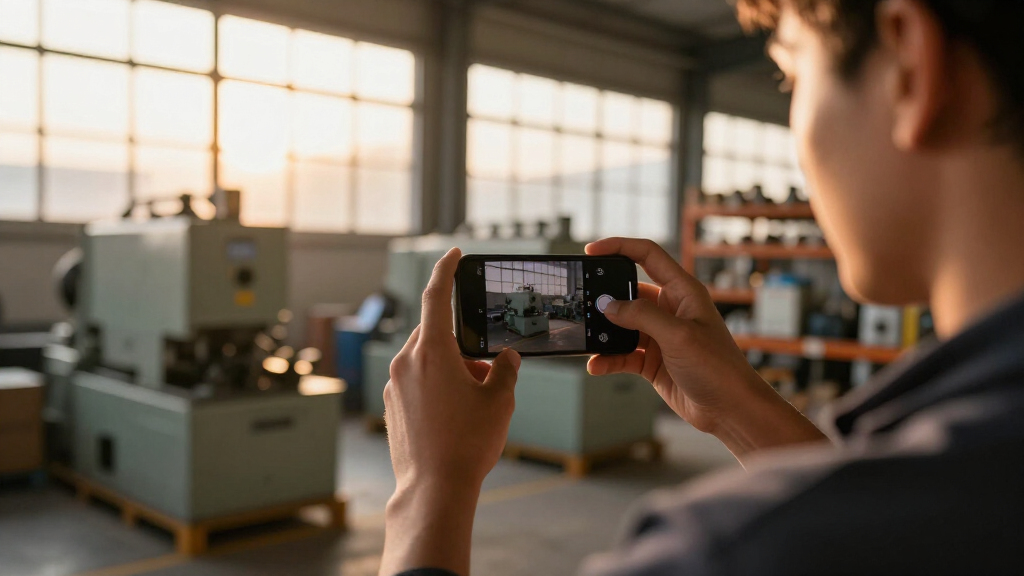
Industrial facilities are testing a new workflow where technicians photograph gauges instead of recording readings on paper. Early trials suggest this method reduces errors, speeds data collection, and enhances maintenance insights, offering a cost-effective alternative to sensor upgrades.
Industrial facilities are beginning to replace traditional clipboard-based gauge readings with a smartphone photo approach, a shift driven by advances in sight recognition technology. This change aims to reduce transcription errors, improve data accuracy, and enable real-time trend analysis without costly sensor retrofits. The pilot program, conducted across three facilities, indicates promising results for this workflow enhancement, which could reshape routine maintenance practices.
The initiative targets facilities where technicians routinely walk past analog gauges, manually transcribing readings onto paper, which are then filed and rarely analyzed for trends. This process introduces errors, delays, and often prevents early detection of equipment failures. The new workflow involves technicians photographing gauges during their rounds using a dedicated app that automatically reads the dial or counter, logs the data with timestamp and location, and flags anomalies immediately. This process leverages recent advances in sight models capable of reliably reading analog dials from standard phone photos, eliminating the need for retrofitting legacy equipment with sensors.
Initial testing at three facilities over a month has shown that the photo-based system reduces transcription errors and enables early detection of potential issues by building trend histories. The app’s ability to automatically check readings against expected ranges and flag anomalies allows maintenance teams to prioritize repairs before failures occur. The approach is designed as a cost-effective alternative to expensive IoT sensor installations, making it particularly attractive for facilities with extensive legacy equipment.
Potential Impact on Maintenance Data Accuracy
This development could significantly improve the accuracy and timeliness of maintenance data, leading to better decision-making and reduced downtime. By capturing gauge readings via phone photos, facilities can avoid errors inherent in manual transcription and gain a continuous, real-time view of equipment health. This method also enables trend analysis over time, which is difficult with traditional paper logs, potentially extending equipment lifespan and optimizing maintenance schedules.
industrial gauge photo reading app
As an affiliate, we earn on qualifying purchases.
As an affiliate, we earn on qualifying purchases.
Legacy Equipment and the Cost of Sensor Retrofits
Many industrial facilities operate with legacy equipment that uses analog gauges, sight glasses, and counters. Upgrading these systems with IoT sensors is often cost-prohibitive, especially across large or dispersed sites. As a result, manual transcription remains standard, despite its flaws. Recent advances in sight recognition models now allow accurate reading of analog gauges from standard phone photos, creating an opportunity to digitize data collection without hardware upgrades. This approach aligns with industry trends toward digital transformation and data-driven maintenance.
smartphone gauge reader for industrial equipment
As an affiliate, we earn on qualifying purchases.
As an affiliate, we earn on qualifying purchases.
Unanswered Questions About Workflow Scalability
It is not yet clear how well this approach will scale across different facility types or gauge configurations. The pilot’s duration is limited, and long-term reliability, user acceptance, and integration with existing maintenance systems remain to be tested. Additionally, the impact on overall maintenance efficiency and cost savings needs further validation through extended trials.
As an affiliate, we earn on qualifying purchases.
Next Steps for Broader Adoption and Validation
The next phase involves running parallel photo-and-clipboard rounds at additional facilities to compare error rates, anomaly detection, and maintenance outcomes over several months. If results continue to be positive, vendors may develop more comprehensive apps and tools to facilitate widespread adoption. Industry stakeholders will also monitor cost-benefit analyses to determine if this approach can replace or complement existing sensor-based systems.
maintenance trend analysis software
As an affiliate, we earn on qualifying purchases.
As an affiliate, we earn on qualifying purchases.
Key Questions
How accurate are phone photos for reading gauges?
Recent sight recognition models have demonstrated high reliability in reading analog gauges from standard phone photos, with accuracy rates suitable for maintenance decision-making, according to initial pilot results.
Will this replace all manual gauge readings?
Initially, the approach is expected to supplement, not fully replace, manual readings, especially in critical or complex systems. Broader adoption will depend on further validation of its reliability and cost-effectiveness.
What are the main advantages over traditional clipboard methods?
The method reduces transcription errors, speeds data collection, enables real-time anomaly detection, and creates a continuous trend record without costly sensor installation.
Are there limitations to using phone photos for gauge readings?
Potential limitations include poor lighting conditions, obstructed views, or gauge types not compatible with sight models. Further testing is needed to assess performance across diverse environments.
How much does the software cost per facility?
The current model proposes a tiered monthly subscription based on gauge count, but exact pricing will depend on vendor offerings and facility size.
Source: IdeaNavigator AI
Halloween Picks
halloween
As an affiliate, we earn on qualifying purchases.