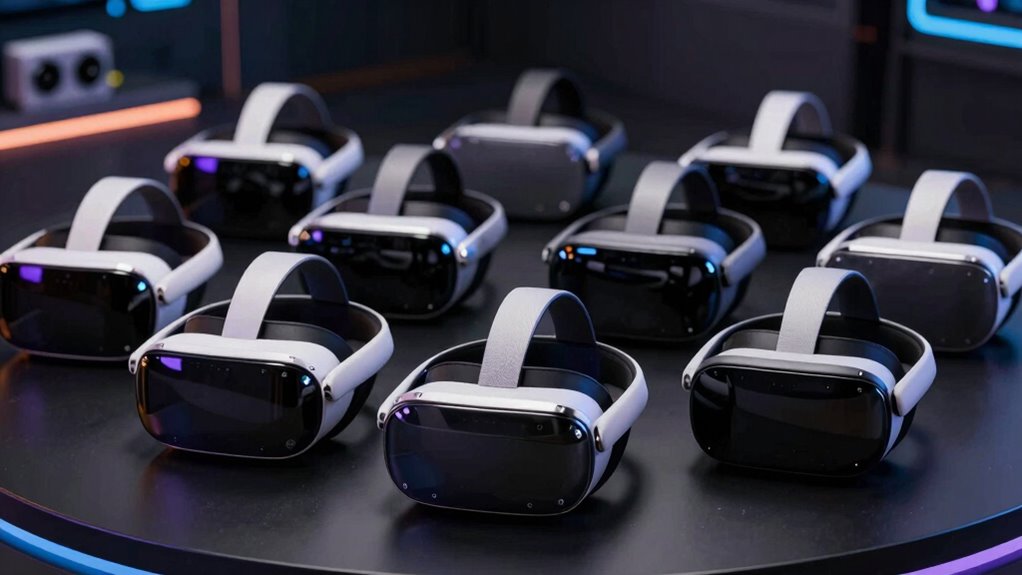

When searching for VR headsets with the best tracking, you’re looking for precision and responsiveness that make virtual worlds feel real. The Meta Quest 3S 128GB stands out for its inside-out tracking that requires no external sensors, offering ease of setup. The Pimax Crystal Super delivers ultra-wide FOV and eye-tracking for immersive experiences, though it demands more from your PC. The main tradeoffs in this category often involve balancing tracking accuracy with user convenience, compatibility, and cost. Continue reading to see how these options compare across key features and which one best fits your needs.

Get business pricing on tech for your team
- Business-only prices and quantity discounts
- Tax-exempt purchasing
- Multiple users, one account, clear invoices
Complete the kit

Key Takeaways
- The Pimax Crystal models offer the widest FOV and advanced eye-tracking but require powerful PCs and come at a higher price.
- Meta Quest 3S excels in ease of use with inside-out tracking, making it ideal for casual and new users.
- Tracking performance varies significantly between PC-tethered headsets and standalone models, impacting setup and mobility.
- Premium models like the Pimax Crystal provide superior immersion, but at a cost, while more affordable options often sacrifice some tracking precision.
- Compatibility and ecosystem support are critical; some headsets work better with existing VR setups or content libraries.
| Pimax Crystal Super VR Headset, 3840×3840 per Eye, Ultrawide, 140° FOV, Eye-Tracking, PC Compatible |  | Best Overall for Immersive Visuals and Wide FOV | Resolution: 3840×3840 per eye | Field of View: 140° | Display Technology: QLED & Mini-LED with Local Dimming | VIEW ON AMAZON | See Our Full Breakdown |
| Meta Quest 3S 128GB VR Headset |  | Best for Wireless Freedom and Convenience | Storage: 128GB | Memory: 8GB RAM | Battery Life: 2+ hours | VIEW ON AMAZON | See Our Full Breakdown |
| Pimax Crystal Light VR Headset for PC, 2880×2880 per Eye, 8K QLED Display with Local Dimming, Inside-Out Tracking |  | Best for High-Resolution Visuals in PC VR | Resolution: 2880×2880 per eye | Display Technology: QLED with local dimming and HDR | Refresh Rate: Up to 120Hz | VIEW ON AMAZON | See Our Full Breakdown |
| HTC Vive XR Elite with Deluxe Pack – Mixed Reality and PC VR Headset + Controllers | 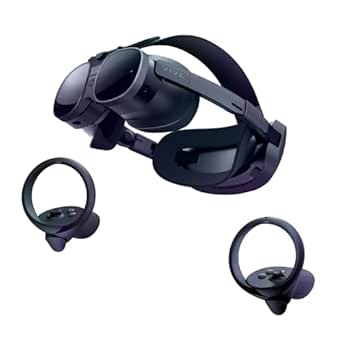 | Best for Versatile Mixed Reality and PC VR | Resolution: 3840 x 1920 | Field of View: 110° | Refresh Rate: 90Hz | VIEW ON AMAZON | See Our Full Breakdown |
| Meta Quest 3S 512GB Virtual Reality Headset with Gorilla Tag Bundle |  | Best for High-Storage and Wireless Freedom | Storage: 512GB | Display: 4K+ Infinite Display | Processor: Snapdragon XR2 Gen 2 | VIEW ON AMAZON | See Our Full Breakdown |
| Pimax Crystal Super VR Headset & VR Glasses with Micro-OLED, 53 PPD, 3840×3552 Per Eye, 116° Field of View, Eye Tracking |  | Best for Ultimate Visual Fidelity and Precise Tracking | Display Resolution: 3840×3552 pixels per eye | Field of View: 116° | Refresh Rate: 90Hz | VIEW ON AMAZON | See Our Full Breakdown |
| Meta Quest 3S 128GB Virtual Reality Headset with Gorilla Tag Bundle |  | Best for Wireless Freedom and Versatile Gaming | Storage: 128GB | RAM: 8GB | Battery Life: 2+ hours | VIEW ON AMAZON | See Our Full Breakdown |
| vr headsets with best tracking | Refresh Rate | Battery Life |
|---|---|---|
| Pimax Crystal Super VR Headset | 90Hz and beyond | — |
| Meta Quest 3S 128GB VR Headset | — | 2+ hours |
| Pimax Crystal Light VR Headset | Up to 120Hz | — |
| HTC Vive XR Elite with Deluxe | 90Hz | Up to 2 hours |
| Meta Quest 3S 512GB Virtual Re | — | 2+ hours |
| Pimax Crystal Super VR Headset | 90Hz | — |
| Meta Quest 3S 128GB Virtual Re | — | 2+ hours |
More Details on Our Top Picks
Pimax Crystal Super VR Headset, 3840×3840 per Eye, Ultrawide, 140° FOV, Eye-Tracking, PC Compatible
This headset stands out for its ultra-sharp resolution of 3840×3840 per eye combined with an expansive 140° field of view, delivering visuals that surpass most competitors like the Meta Quest 3S, which uses a lower resolution and narrower FOV. Its QLED display with local dimming offers vivid colors and deep contrast, ideal for flight and racing simulators where peripheral awareness enhances realism. The inclusion of eye-tracking and high refresh rates supports precise interaction and smooth motion, but this comes with potentially high hardware demands and a complex setup that might challenge beginners. While the premium price reflects its advanced tech, this headset is best suited for users seeking top-tier visual fidelity and wide-angle immersion.
Pros:- Ultra-sharp resolution minimizes screen-door effect
- Extensive 140° FOV enhances peripheral immersion
- High-fidelity spatial audio improves overall experience
- Comfortable ergonomic design for long sessions
Cons:- Requires high-end PC hardware to run smoothly
- Setup process can be complex for first-time users
Best for: VR enthusiasts and professional gamers prioritizing the highest visual quality and peripheral awareness
Not ideal for: Casual users or newcomers who prefer a simpler setup and lower hardware requirements
- Resolution:3840×3840 per eye
- Field of View:140°
- Display Technology:QLED & Mini-LED with Local Dimming
- Refresh Rate:90Hz and beyond
- Eye-Tracking:Yes
- Connectivity:DisplayPort
Our verdict“This headset is ideal for experienced VR users who demand exceptional visuals and immersive wide-angle tracking.”
Meta Quest 3S 128GB VR Headset
Compared with the Pimax Crystal, the Meta Quest 3S offers a completely untethered experience, removing the need for cables and external sensors. Its Snapdragon XR2 Gen 2 processor and 8GB RAM provide smooth graphics, but the battery life of just over 2 hours makes it less suitable for extended sessions. The Quest’s wireless design and access to a large library of over 40 games, plus a 3-month Horizon+ trial, make it appealing for casual gamers and VR newcomers. However, this convenience comes with compromises—particularly in tracking precision and latency—making it less ideal for fast-paced, precision-dependent activities like flight simulators. Its portability and ease of use make it a popular choice for those prioritizing simplicity over ultimate tracking accuracy.
Pros:- Wireless and completely untethered for freedom of movement
- Easy setup with no external sensors required
- Access to a broad library of games and experiences
- Enhanced graphics with the Snapdragon XR2 Gen 2
Cons:- Limited battery life may interrupt longer gaming sessions
- Tracking can be less precise compared to PC tethered headsets
Best for: Casual gamers and VR newcomers who want a hassle-free, wireless experience
Not ideal for: Hardcore VR users seeking the most precise tracking for simulation or competitive gaming
- Storage:128GB
- Memory:8GB RAM
- Battery Life:2+ hours
- Processor:Snapdragon XR2 Gen 2
- Cameras:Dual RGB color cameras
Our verdict“This headset excels for casual use and ease of setup but falls short for precision tracking needs.”
Pimax Crystal Light VR Headset for PC, 2880×2880 per Eye, 8K QLED Display with Local Dimming, Inside-Out Tracking
This model offers a compelling balance between high resolution and user comfort, with 2880×2880 pixels per eye and a 120Hz refresh rate, making it a sharp step up from the Meta Quest 3S for PC VR users. Its inside-out tracking simplifies setup compared to the Pimax Crystal Super, which relies on external sensors, but it still provides precise enough tracking for most immersive experiences. The lightweight design (around 815 grams) makes extended sessions more feasible, although it remains heavier than some standalone headsets. Its premium price and PC dependency mean it’s best suited for users who want vivid, detailed visuals without the bulk of external sensors, but those seeking ultimate tracking precision for fast-paced titles might find it somewhat limited compared to the Super version.
Pros:- High-resolution 8K display for stunning visuals
- Vivid colors with HDR and local dimming
- Lightweight and ergonomic for longer play sessions
- High refresh rate ensures smooth motion
Cons:- Heavier than some standalone headsets, potentially less comfortable for long sessions
- Limited to PC VR ecosystem, requiring powerful hardware
Best for: High-end PC VR users seeking vivid visuals and reliable inside-out tracking
Not ideal for: Beginners or casual users who prefer wireless or standalone setups
- Resolution:2880×2880 per eye
- Display Technology:QLED with local dimming and HDR
- Refresh Rate:Up to 120Hz
- Weight:815 grams
- Tracking:Inside-Out Camera Tracking
Our verdict“Ideal for PC VR enthusiasts who prioritize visual detail and inside-out tracking over portability.”
HTC Vive XR Elite with Deluxe Pack – Mixed Reality and PC VR Headset + Controllers
The HTC Vive XR Elite offers a high-resolution display of 3840×1920 pixels and a 110° FOV, making it a versatile option for both mixed reality and PC VR. Its inside-out tracking provides reliable movement detection without external sensors, comparable to the Pimax Crystal Light but with a more compact form factor. The inclusion of a swappable battery extends usage and supports longer sessions, though the battery life caps at around 2 hours, similar to the Quest 3S. Its full-color passthrough and mixed reality features add a layer of versatility not available in other dedicated PC VR headsets, but the higher cost and dependency on external setup for some features may deter budget-conscious users. This headset is well-suited for users who want a flexible, all-in-one VR experience.
Pros:- High-resolution graphics with immersive audio
- Standalone design with no external base stations needed
- Swappable battery for extended playtime
- Full-color passthrough for mixed reality applications
Cons:- Battery life limited to about 2 hours
- Hand-tracking features depend on specific titles and software
Best for: Mixed reality enthusiasts and VR users wanting a standalone device with PC compatibility
Not ideal for: Budget-conscious newcomers or those seeking the simplest setup
- Resolution:3840 x 1920
- Field of View:110°
- Refresh Rate:90Hz
- Battery Life:Up to 2 hours
- Connectivity:Standalone with PC VR compatibility
Our verdict“This headset suits users seeking a flexible, mixed reality-capable device with reliable inside-out tracking and standalone convenience.”
Meta Quest 3S 512GB Virtual Reality Headset with Gorilla Tag Bundle
Compared to the PC-based Pimax or HTC Vive models, the Meta Quest 3S shines in portability and ease of use, offering a wireless experience with a 512GB high-resolution display and a powerful Snapdragon XR2 Gen 2 processor. Its full-color Passthrough and over 100 available games, including the Gorilla Tag bundle, make it appealing for casual players and those with limited space. However, while its tracking is accurate enough for most casual activities, it lags behind high-end wired headsets like the Pimax Crystal Super when it comes to precision and low latency, especially in fast-paced titles. Still, for users prioritizing untethered freedom and high storage, it provides a straightforward, immersive experience without complex setup.
Pros:- High-resolution 4K+ display with sharp graphics
- Wireless, untethered VR experience for freedom of movement
- Large 512GB storage capacity for extensive game library
- Includes exclusive bundle items and a wide game selection
Cons:- Battery life may limit longer sessions
- Tracking accuracy is good but not as precise as wired high-end models
Best for: Casual players and VR users who want a high-capacity, wireless headset with a large game library
Not ideal for: Professional or competitive VR users requiring ultra-precise tracking and minimal latency
- Storage:512GB
- Display:4K+ Infinite Display
- Processor:Snapdragon XR2 Gen 2
- Battery Life:2+ hours
- Cameras:Dual RGB color cameras
Our verdict“This headset offers a great balance of high-resolution graphics and wireless convenience for casual and storage-heavy users.”
Pimax Crystal Super VR Headset & VR Glasses with Micro-OLED, 53 PPD, 3840×3552 Per Eye, 116° Field of View, Eye Tracking
This model stands out for its stunning visual clarity thanks to ultra-HD Micro-OLED displays, delivering 3840×3552 pixels per eye—far surpassing the resolution of the Meta Quest 3S, which focuses more on convenience than pixel density. The 116° field of view makes it ideal for immersive flight and racing sims where peripheral vision enhances realism. Its precise 6DOF tracking ensures smooth, accurate movement translation, comparable to the Pimax Crystal’s high-end tracking capabilities. However, this headset comes with a higher price tag and may demand powerful hardware to run effectively, which could be a barrier for some users. Compared to lighter and more portable headsets, it emphasizes visual quality and tracking precision over ease of use and affordability. This pick makes the most sense for users prioritizing graphical fidelity and detailed tracking for simulation or high-end gaming, willing to invest in a premium experience.
Pros:- Exceptional visual clarity with ultra-HD Micro-OLED displays
- Wide 116° field of view enhances immersive experience
- High refresh rate reduces ghosting and eye strain
- Precise 6DOF tracking for accurate movement translation
Cons:- Potentially high cost due to advanced features
- Requires powerful hardware for optimal performance
Best for: VR enthusiasts seeking the highest possible visual quality and pinpoint tracking accuracy, especially for simulation and immersive experiences.
Not ideal for: Casual users or those with limited hardware, as the setup complexity and cost can be prohibitive.
- Display Resolution:3840×3552 pixels per eye
- Field of View:116°
- Refresh Rate:90Hz
- Tracking:6DOF
- Includes:Studioform Face Cushion, Face Pad Kit
Our verdict“This headset is perfect for high-end users demanding top-tier visuals and tracking precision for simulation and detailed VR applications.”
Meta Quest 3S 128GB Virtual Reality Headset with Gorilla Tag Bundle
This pick excels in untethered convenience, offering a fully wireless experience that surpasses wired options like the Pimax Crystal in ease of use. Its Snapdragon XR2 Gen 2 processor enhances graphics and responsiveness, making it suitable for casual and mid-core gamers who value mobility and simplicity. The 128GB storage limits how many titles can be installed, especially compared to the larger storage options like the 512GB Quest 3S, but it still provides access to over 100 games, including the included Gorilla Tag bundle. Full-color Passthrough and mixed reality capabilities add versatility, unlike the more specialized Pimax headset, which focuses primarily on immersive visuals. The battery life of around two hours can be restrictive during long sessions, and setup still requires some space and initial configuration. This headset is ideal for users wanting a lightweight, portable VR experience with decent tracking and a rich game library without needing a powerful PC.
Pros:- Wireless, untethered VR experience for maximum mobility
- Enhanced graphics with Snapdragon XR2 Gen 2 processor
- Includes exclusive Gorilla Tag bundle and 3-month game trial
- Full-color Passthrough for mixed reality applications
Cons:- Limited 128GB storage for extensive game libraries
- Battery life may be insufficient for prolonged use
Best for: Casual gamers and VR newcomers seeking a wireless, easy-to-setup device with a broad game selection and mixed reality features.
Not ideal for: Hardcore simulation enthusiasts or users with extensive game libraries who need more storage or higher-end hardware capabilities.
- Storage:128GB
- RAM:8GB
- Battery Life:2+ hours
- Processor:Snapdragon XR2 Gen 2
- Cameras:Dual RGB color cameras
Our verdict“This headset suits casual and mobile VR users who prioritize freedom of movement and quick setup over raw graphical fidelity or storage capacity.”

How We Picked
The products in this roundup were evaluated based on tracking accuracy, ease of setup, compatibility across platforms, build quality, and value for the price. I prioritized headsets that offer advanced tracking features like eye-tracking, inside-out sensors, or external sensors, depending on the scenario. Devices were also assessed on user-friendly aspects such as comfort and software stability, as well as how well they integrate into current VR ecosystems. The ranking reflects a balance between performance, versatility, and price, ensuring options for different types of users—from newcomers to enthusiasts.Factors to Consider When Choosing Vr Headsets With Best Tracking
Choosing a VR headset with the best tracking involves more than just specs; it requires understanding how tracking technology affects your experience and what tradeoffs exist. Here are key factors to consider when making your decision, each offering insights beyond the specifications listed in product reviews.Tracking Technology and Accuracy
Look closely at whether the headset uses inside-out cameras, external sensors, or eye-tracking. Inside-out systems are easier to set up and more portable, but may have limitations in tracking speed or precision in complex movements. External sensor setups often provide superior accuracy, especially for fast-paced or precise tasks, but require more space and effort to install. Understanding your primary use case—be it gaming, professional work, or social VR—helps determine the right technology balance.
Ease of Setup and Use
Standalone headsets like the Meta Quest 3S offer plug-and-play convenience, making them ideal for casual users or those with limited space. PC-tethered options, such as the Pimax or HTC Vive, generally demand more setup time due to external tracking bases or calibration, but they often deliver higher fidelity. Consider how much time you’re willing to spend on initial setup versus ongoing ease of use. Also, think about how much mobility you need—wireless headsets are more flexible, but sometimes at the expense of tracking precision.
Compatibility and Ecosystem Support
Check whether the headset integrates seamlessly with your existing devices, PC specs, or content library. Some headsets are optimized for specific platforms like SteamVR or Oculus/Meta ecosystem, influencing your access to games and apps. External sensors or more advanced tracking might require specific hardware or software setups, which can be a barrier for less tech-savvy users. Balancing ecosystem support with your content preferences will help ensure a more satisfying experience.
Build Quality and Comfort
Even the best tracking won’t matter if the headset is uncomfortable for long sessions. Look for adjustable straps, breathable padding, and lightweight materials. High-end models often have superior ergonomics but may be bulkier or more expensive. Consider your typical session length and whether the headset’s weight distribution suits your head shape. A well-made device can significantly enhance your immersion and reduce fatigue.
Price and Value
High-precision tracking features tend to come with a higher price tag, but they often deliver a noticeably better experience for serious users. Conversely, more affordable models may suffice if your VR use is casual or social. Compare the tracking capabilities relative to cost, and be wary of sacrificing essential features just to save money. Sometimes investing in a slightly pricier headset provides long-term satisfaction and fewer frustrations.
Frequently Asked Questions
Does inside-out tracking work well in all room sizes?
Inside-out tracking systems are designed to work in a variety of room sizes, but their accuracy can diminish in very small or cluttered spaces. They rely on cameras mounted on the headset to map the environment, which means they perform best in well-lit, open areas. If your space is limited or has many reflective surfaces, tracking might be less stable, leading to occasional jitter or loss of position. For most users, inside-out tracking offers a good balance of convenience and performance, but understanding your environment helps optimize results.
Are external sensors necessary for high-precision tracking?
External sensors or base stations typically provide the most accurate and responsive tracking, especially for fast or precise movements. They create a comprehensive tracking grid that minimizes blind spots and latency. However, they require more setup effort and space, which can be a barrier for casual users or those with limited room. For serious VR gaming or professional applications where precision is critical, investing in external sensors can deliver a noticeable upgrade in tracking fidelity.
Can eye-tracking improve my VR experience?
Eye-tracking adds a layer of realism and interaction, allowing for foveated rendering—where the system prioritizes detail where you’re looking—improving performance and immersion. It can also enable more natural interactions, like gaze-based selection or social presence enhancements. However, not all eye-tracking systems are equally advanced or reliable, and they often come at a higher cost. If your focus is on immersive experiences or professional development, eye-tracking can be a valuable addition, but for casual use, it may be a secondary consideration.
How does tracking latency affect gameplay?
Tracking latency—the delay between a movement and its reflection in the virtual environment—directly impacts immersion and comfort. High latency can cause motion sickness or break the sense of presence, especially in fast-paced games. Modern headsets aim for latency below 20 milliseconds, but actual performance varies based on hardware and software. Choosing a headset with low tracking latency is vital if you prioritize responsiveness, particularly for competitive gaming or precise simulations.
Is wireless connectivity a good tradeoff for tracking quality?
Wireless VR headsets offer greater freedom of movement, which can enhance immersion and reduce clutter. However, wireless connections often introduce additional latency and potential signal dropouts, which can compromise tracking accuracy. High-end wireless systems tend to have dedicated tech to minimize these issues, but they still may not match the reliability of wired or external sensor setups. Consider your primary use—if mobility outweighs absolute precision, a wireless headset with good tracking is a solid choice.
Conclusion
For most users, the Meta Quest 3S provides a compelling mix of ease of use and reliable inside-out tracking, making it ideal for beginners or casual gamers. The Pimax Crystal Super stands out for enthusiasts seeking expansive FOV and advanced eye-tracking, though it requires a powerful PC and higher investment. Those demanding top-tier accuracy for professional or competitive VR should consider external sensor setups or premium models like the Pimax, despite the added complexity and cost. Ultimately, your choice depends on your budget, space, and how much you value setup simplicity versus tracking precision. Balance these factors to find the best fit for your VR adventures.
As an affiliate, we earn on qualifying purchases.Fall Picks
fall essentials