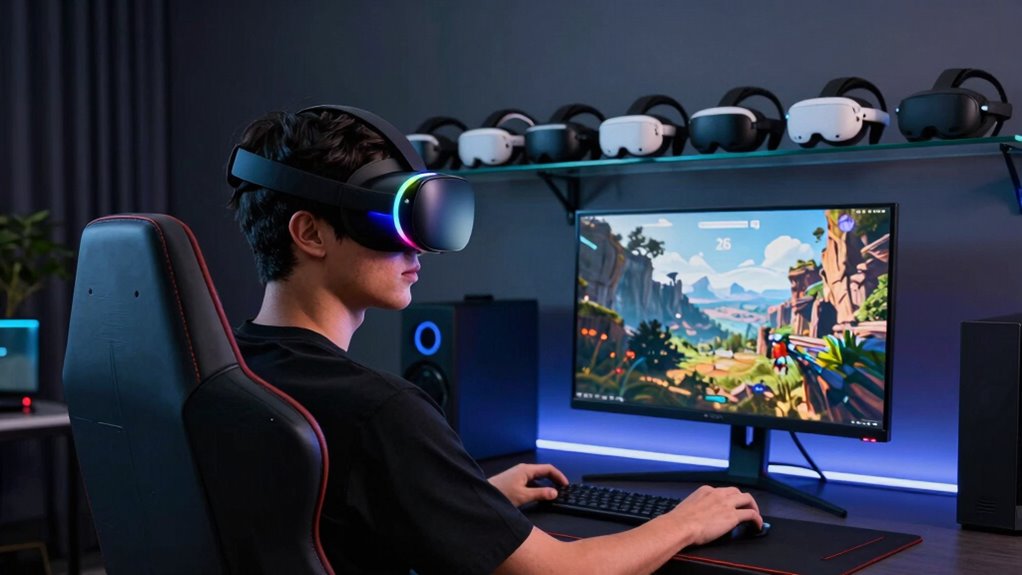

For most seated VR players, I recommend the Meta Quest 3 512GB for its sharper optics and standalone convenience; the Quest 3S is a more accessible pick, while the Oculus Rift S suits players with a compatible gaming PC. The main tradeoff is whether you want a modern, cable-free headset or prefer PC-connected play and its larger game library. Fit, front weight, storage, and the condition of older or renewed models also matter during long sessions. This roundup compares seven options, including standard and Gorilla Tag bundle versions, for seated comfort and practical setup. Read on for the full breakdown and guidance on which tradeoffs make sense for your setup.

Get business pricing on tech for your team
- Business-only prices and quantity discounts
- Tax-exempt purchasing
- Multiple users, one account, clear invoices
Complete the kit


Key Takeaways
- Quest 3 leads for most seated players: its pancake lenses offer a clearer view across more of the lens than the fresnel lenses on Quest 3S.
- Quest 3S is the standout value-oriented newer model: it shares a newer generation platform with Quest 3, but its lenses and display are a step down.
- Quest 2 choices hinge on storage and condition: the 256 GB versions provide more room than the 128 GB model, while the renewed listing adds condition variability.
- The Rift S is the specialist pick: it can suit a seated player with a compatible gaming PC who prefers a wired PC VR setup, but it is less convenient than standalone Quest headsets.
- Gorilla Tag bundles do not change headset fit or optics: compare each bundle with its standard headset counterpart based on the included game offer and the headset itself.
| Meta Quest 2 All-In-One Virtual Reality Headset (256 GB) |  | Best Overall for Seated Play | Storage: 256 GB | Type: All-in-one VR headset | Connectivity: Wireless | VIEW ON AMAZON | See Our Full Breakdown |
| Meta Quest 2 All-In-One Virtual Reality Headset (256 GB, Renewed) |  | Best Renewed Pick for Controller Grip | Storage: 256 GB | Display resolution: 1832 x 1920 pixels per eye | Refresh rate: 90 Hz | VIEW ON AMAZON | See Our Full Breakdown |
| Meta Quest 2 Advanced All-In-One Virtual Reality Headset (128 GB) |  | Best Starter Pick for Seated VR | Storage: 128 GB | Type: All-in-one VR headset | Connectivity: Wireless; no PC or console required | VIEW ON AMAZON | See Our Full Breakdown |
| Meta Quest 3 512GB VR Headset with Gorilla Tag Bundle |  | Best Premium Visuals | Storage: 512 GB | RAM: 8 GB | Processor: Snapdragon XR2 Gen 2 | VIEW ON AMAZON | See Our Full Breakdown |
| Oculus Rift S PC-Powered VR Gaming Headset |  | Best for PC Seated Gaming | Type: PC-powered VR headset | Tracking: Oculus Insight, inside-out with no external sensors | Controllers: Oculus Touch | VIEW ON AMAZON | See Our Full Breakdown |
| Meta Quest 3S 128GB VR Headset |  | Best Overall for Seated Wireless Play | Storage: 128 GB | Memory: 8 GB RAM | Processor: Snapdragon XR2 Gen 2 | VIEW ON AMAZON | See Our Full Breakdown |
| Meta Quest 3S 128GB VR Headset – Gorilla Tag Bundle |  | Best for Gorilla Tag Fans | Storage: 128 GB | Memory: 8 GB RAM | Processor: Qualcomm Snapdragon XR2 Gen 2 | VIEW ON AMAZON | See Our Full Breakdown |
| vr headset for seated play | Storage | Connectivity |
|---|---|---|
| Meta Quest 2 All-In-One Virtua | 256 GB | Wireless |
| Meta Quest 2 All-In-One Virtua | 256 GB | Bluetooth |
| Meta Quest 2 Advanced All-In-O | 128 GB | Wireless; no PC or console required |
| Meta Quest 3 512GB VR Headset | 512 GB | Wireless |
| Oculus Rift S PC-Powered VR Ga | — | — |
| Meta Quest 3S 128GB VR Headset | 128 GB | — |
| Meta Quest 3S 128GB VR Headset | 128 GB | Wireless / tetherless |
More Details on Our Top Picks
Meta Quest 2 All-In-One Virtual Reality Headset (256 GB)
The 256 GB Meta Quest 2 is my most balanced pick for seated play: it runs wirelessly without a PC or console, so setup can stay simple while you play games, watch entertainment, or use social apps from a chair. Its hand tracking, positional audio, and haptic feedback add useful interaction without requiring room-scale movement. Compared with the 128 GB Meta Quest 2, this version leaves more room for a varied library; the newer Meta Quest 3 offers a stronger visual proposition, but this headset keeps the experience straightforward. The tradeoff is that it is an older model, and the listed age guidance is 13+. I would choose it for general seated use, but skip it if you specifically want newer-generation visuals or need a headset for a younger child.
Pros:- Wireless standalone operation avoids a PC or console setup
- 256 GB storage offers room for a larger installed library
- Hand tracking provides an input option beyond controllers
- Positional audio and haptic feedback add sensory cues during seated play
Cons:- Older-generation model compared with the Meta Quest 3
- Listed age recommendation is 13+
Best for: Seated players who want a standalone headset with ample space for a mix of games and entertainment apps
Not ideal for: Buyers seeking newer-generation visuals or a headset for children under the listed 13+ age recommendation
- Storage:256 GB
- Type:All-in-one VR headset
- Connectivity:Wireless
- Features:Hand tracking, 3D positional audio, haptic feedback
- Age recommendation:13+
- Content library:Over 250 titles
Our verdict“Choose this Quest 2 for versatile, cable-free seated VR with generous storage, but look to the Quest 3 if newer visuals matter more.”
Meta Quest 2 All-In-One Virtual Reality Headset (256 GB, Renewed)
This renewed 256 GB Quest 2 suits seated players who want a standalone headset and appreciate extra controller security. Its included silicone grip covers and adjustable knuckle straps can help keep controllers in hand during repeated inputs, a practical advantage over the standard 256 GB Quest 2 package as described here. The listed 1832 x 1920-pixel-per-eye resolution and 90 Hz refresh rate provide concrete display details, while the 90-degree field of view describes its viewing window. Unlike the PC-powered Rift S, it does not require a compatible computer to run. The main compromise is condition: renewed means prior use is possible, and the 90 Hz refresh rate is below that of some newer headsets. I’d choose it for a more secure controller hold, not for buyers who require a new unit.
Pros:- Standalone operation does not require a PC connection
- 256 GB storage accommodates an extensive game library
- Silicone controller covers and adjustable knuckle straps are included
- Resolution, refresh rate, and field of view are specified
Cons:- Renewed condition may include prior use or cosmetic wear
- 90 Hz refresh rate is lower than newer headset options
Best for: Seated players comfortable buying a renewed headset who want included grips and straps for steadier controller handling
Not ideal for: Buyers who want a new-condition product or prioritize a newer headset’s refresh rate
- Storage:256 GB
- Display resolution:1832 x 1920 pixels per eye
- Refresh rate:90 Hz
- Field of view:90 degrees
- Connectivity:Bluetooth
- Operating system:Quest 2
- Condition:Renewed
- Sensors:Accelerometer, gyroscope, proximity, magnetometer
Our verdict“Pick this renewed Quest 2 if included controller grips matter more to you than new condition or a newer display specification.”
Meta Quest 2 Advanced All-In-One Virtual Reality Headset (128 GB)
For someone starting with seated VR, the 128 GB Meta Quest 2 keeps the hardware simple: it is wireless, has a built-in battery, and does not need a PC or console. That makes it easier to start with a chair-friendly game or social app than the PC-dependent Oculus Rift S, which needs a compatible computer. Hand tracking and intuitive controllers give new users more than one way to interact, while 3D positional audio helps place sounds around the player. Its smaller storage capacity is the clear compromise beside the 256 GB Quest 2 models, especially for anyone who wants many titles installed at once. The product description also notes a designated play-space alert, so seated play still calls for awareness of the surrounding area. I’d pick this for a modest first library, not a large collection.
Pros:- Wireless operation with no PC or console required
- Hand tracking and controllers give new users input choices
- 3D positional audio supports immersive seated sessions
- Portable design suits use in different rooms or while traveling
Cons:- 128 GB storage is less than the 256 GB Quest 2 options
- A safe play area is still needed, even for seated sessions
- Listed age guidance is 10+, and some content may not suit younger users
Best for: First-time VR buyers who want easy standalone setup and expect to keep a modest number of titles installed
Not ideal for: Players building a large installed library or anyone who cannot set aside a safe play area
- Storage:128 GB
- Type:All-in-one VR headset
- Connectivity:Wireless; no PC or console required
- Audio:3D positional audio
- Input:Hand tracking and controllers
- Age recommendation:10+
Our verdict“Choose the 128 GB Quest 2 as a straightforward first headset if you do not need the larger storage of its 256 GB counterparts.”
Meta Quest 3 512GB VR Headset with Gorilla Tag Bundle
The Meta Quest 3 with 512 GB is the visual-upgrade choice for seated players who want newer hardware without giving up standalone operation. Its 4K+ Infinite Display and Snapdragon XR2 Gen 2 processor mark a step up from the Quest 2 models in this roundup, while color passthrough cameras let the physical room remain visible when needed. That can be useful when playing from a chair near a table or other surroundings. The bundle adds Gorilla Tag cosmetics and in-game currency, making it more tailored than the standard Quest 2 options. There are tradeoffs: battery life is listed at just over two hours, and the bundle’s extras mainly matter to Gorilla Tag players. I’d favor this over the Quest 2 for visual capability, but not if long sessions or unrelated games are the priority.
Pros:- 4K+ Infinite Display offers a higher-end visual specification than the Quest 2 models
- Snapdragon XR2 Gen 2 processor and 8 GB RAM provide newer hardware
- Color passthrough cameras show the physical room
- 512 GB storage provides substantial capacity for installed content
Cons:- Listed battery life is just over two hours
- Bundle cosmetics and currency have limited value to non-Gorilla Tag players
Best for: Seated players who want a newer standalone headset, higher-end display hardware, and already enjoy Gorilla Tag
Not ideal for: Players who need long sessions between charges or have no interest in the included Gorilla Tag items
- Storage:512 GB
- RAM:8 GB
- Processor:Snapdragon XR2 Gen 2
- Display:4K+ Infinite Display
- Battery life:2+ hours
- Cameras:Dual RGB color cameras
- Connectivity:Wireless
- Bundle contents:Gorilla Space Program Suit, Helmet, 2,000 SHINY ROCKS
Our verdict“Choose this Quest 3 bundle for newer visual hardware and standalone seated play if its short listed battery life fits your sessions.”
Oculus Rift S PC-Powered VR Gaming Headset
The Oculus Rift S is the pick here for seated players whose VR library and gaming setup already center on a compatible PC. Its improved optics are designed to reduce the screen-door effect, while Oculus Insight tracking avoids the need for external sensors—helpful when you want to keep a seated area less cluttered. The halo headband and fit wheel offer an adjustable way to secure the headset. Compared with the standalone Quest 2 and Quest 3, though, the Rift S cannot operate independently: it depends on a high-performance PC and a Facebook account. That added setup is a meaningful tradeoff for someone who simply wants to put on a headset and play. I’d choose it for PC VR access from a chair, but skip it if wireless convenience is your main goal.
Pros:- PC-powered access suits players with an existing compatible gaming computer
- Inside-out Insight tracking needs no external sensors
- Improved optics are designed to reduce the screen-door effect
- Halo headband includes a fit wheel for adjustment
Cons:- Requires a compatible high-performance PC
- Facebook account is required to log in and use the headset
- Lacks the standalone wireless operation of the Quest models
Best for: PC gamers who want to play compatible VR titles while seated and already have a high-performance computer
Not ideal for: Buyers seeking standalone or wireless play, or those unwilling to meet the Facebook account requirement
- Type:PC-powered VR headset
- Tracking:Oculus Insight, inside-out with no external sensors
- Controllers:Oculus Touch
- Display:Next-generation lenses with improved optics
- Fit:Halo headband with fit wheel
- Account requirement:Facebook account required
Our verdict“Choose the Rift S if you already have a suitable PC and want seated access to PC VR, but favor a Quest model for standalone simplicity.”
Meta Quest 3S 128GB VR Headset
For seated VR, I rank the Meta Quest 3S 128GB ahead of the Gorilla Tag bundle because it keeps the choice centered on the headset rather than game-specific extras. Its wireless design avoids a cable running from your chair to a PC, while the Snapdragon XR2 Gen 2 chip and 8GB of RAM support responsive standalone play. The listed 90Hz refresh rate and 96-degree field of view suit longer sessions, though comfort still depends on fit. Compared with the Meta Quest 3 512GB VR Headset with Gorilla Tag Bundle, this 3S has less storage, so it better fits buyers with a focused library. Its roughly three-hour battery and Meta account requirement are real limits; it is not a pick for marathon sessions or players avoiding Meta’s ecosystem.
Pros:- Wireless setup avoids a tether from the headset to a PC while seated.
- Snapdragon XR2 Gen 2 processor and 8GB RAM support responsive standalone use.
- 90Hz refresh rate and 96-degree field of view support an engaging view.
- Dual RGB passthrough cameras add mixed-reality options.
Cons:- Battery life is around three hours, limiting uninterrupted sessions.
- Requires a Meta account and access to the Quest ecosystem.
- 128GB storage is less suited to players who keep a large library installed.
Best for: Seated VR players who want a wireless standalone headset for a focused library of games and apps.
Not ideal for: People planning long sessions without charging breaks, or buyers who do not want to use a Meta account and Quest content ecosystem.
- Storage:128 GB
- Memory:8 GB RAM
- Processor:Snapdragon XR2 Gen 2
- Display resolution:2064 × 2208 pixels
- Refresh rate:90 Hz
- Field of view:96 degrees
- Battery life:Around 3 hours
- Operating system:Meta Horizon OS
Our verdict“Choose this Quest 3S if you want wireless seated VR and a capable standalone headset without paying for bundle-specific extras.”
Meta Quest 3S 128GB VR Headset – Gorilla Tag Bundle
This bundle pairs the Meta Quest 3S 128GB with Gorilla Tag extras: a Space Program outfit and 2,000 Shiny Rocks. I’d choose it over the standard Quest 3S only if those in-game items matter to you; for seated players who want a general VR library, the standard version is the more focused option. The headset shares the Snapdragon XR2 Gen 2 processor, 8GB of RAM, wireless operation, and dual RGB cameras, so it can run seated apps without a PC tether. The catch is that Gorilla Tag is built around active movement, making the bundle’s headline extras less relevant to a chair-based setup. Its battery is listed at 2+ hours, shorter than the standard 3S’s roughly three hours, and the included trial has auto-renewal terms to check.
Pros:- Includes Gorilla Tag Space Program outfit items and 2,000 Shiny Rocks.
- Wireless headset works without a PC cable while seated.
- Snapdragon XR2 Gen 2 processor and 8GB RAM support standalone VR.
- Dual RGB cameras provide color passthrough for mixed-reality features.
Cons:- Gorilla Tag’s movement-focused content is a poor match for strictly seated play.
- Battery life is listed as 2+ hours, shorter than the standard Quest 3S listing.
- The included game trial has auto-renewal terms to review.
Best for: Quest buyers who already play Gorilla Tag and want its included Space Program cosmetics and Shiny Rocks alongside a wireless headset.
Not ideal for: Seated-only players uninterested in Gorilla Tag, or anyone seeking longer sessions and no trial subscription renewal terms.
- Storage:128 GB
- Memory:8 GB RAM
- Processor:Qualcomm Snapdragon XR2 Gen 2
- Battery life:2+ hours
- Cameras:Dual RGB color cameras
- Connectivity:Wireless / tetherless
- Bundle contents:Gorilla Space Program Suit, Helmet, 2,000 Shiny Rocks
Our verdict“Pick this bundle if you actively want Gorilla Tag’s exclusive items; otherwise, the standard Quest 3S is a better fit for seated-focused VR.”
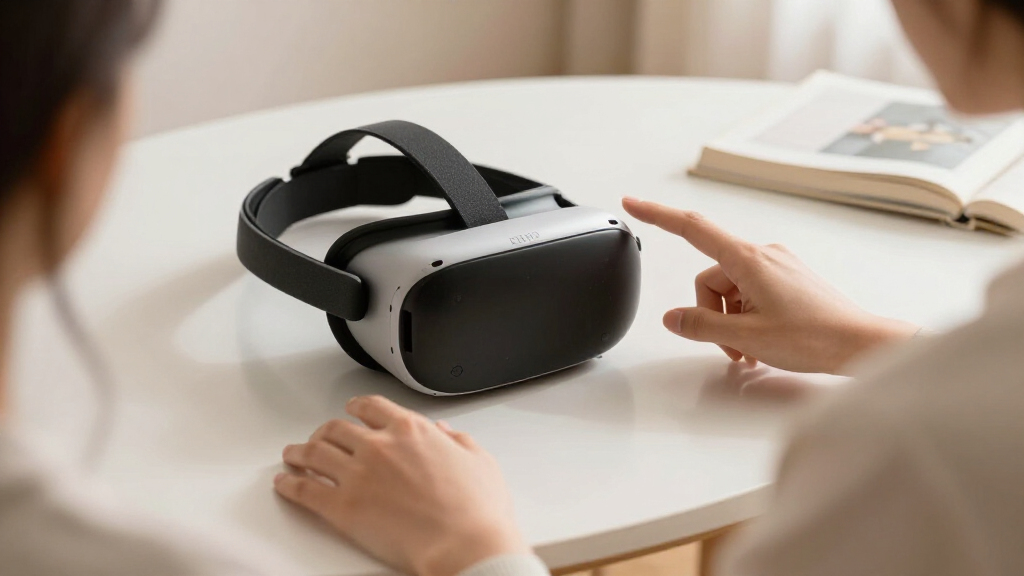
How We Picked
I ranked these headsets around the needs of someone who expects to play while seated: clear optics from a stable position, dependable controller tracking in a smaller play area, manageable fit for longer sessions, and a setup that works without frequent adjustment. I also weighed whether the headset is standalone or PC-dependent, since cables and room setup can matter more when playing from a chair or cockpit.
The order favors newer standalone hardware for its ease of use and seated flexibility, with Quest 3 ahead of Quest 3S for its sharper optical experience. Quest 3S ranks above the older Quest 2 options as a newer-generation entry point, while the Quest 2 models remain practical for buyers who prioritize storage or a renewed listing. Rift S ranks as a targeted PC option rather than a general recommendation, and the Gorilla Tag bundles are judged by their headset differences—not by the bundle name alone.
| vr headset for seated play | Connectivity |
|---|---|
| Meta Quest 2 All-In-One Virtua | Wireless |
| Meta Quest 2 All-In-One Virtua | Bluetooth |
| Meta Quest 2 Advanced All-In-O | Wireless; no PC or console required |
| Meta Quest 3 512GB VR Headset | Wireless |
| Oculus Rift S PC-Powered VR Ga | — |
| Meta Quest 3S 128GB VR Headset | — |
| Meta Quest 3S 128GB VR Headset | Wireless / tetherless |
Factors to Consider When Choosing Vr Headset For Seated Play
Seated play can make room-scale tracking less central, but it does not make every headset equally comfortable or simple to use. I would match the headset to your chair, game library, and tolerance for cables before focusing on storage or bundle extras.
Choose Standalone or PC-Connected Play
Standalone headsets such as the Quest models run without a gaming PC, which keeps setup simple and avoids a cable crossing your chair area. A PC headset can offer access to PC VR titles, but your computer must meet the game’s requirements and the headset’s connection needs. For seated flight or racing games, a cable may be manageable if your chair and ports stay in fixed positions. It can become irritating if you turn often or need to move away from the seat. I would choose Rift S only if PC VR is a priority and you are comfortable relying on a compatible computer. Do not assume a PC connection automatically means better comfort; the cable and setup can offset that benefit.
Look Beyond Play-Area Size for Seated Tracking
Seated play usually asks less of room-scale tracking, but controllers still need to remain visible to the headset cameras. A wheel, desk, blanket, or armrest can block a controller when your hands rest low or close to your body. Before buying, check whether your main games use controllers, a gamepad, or a steering wheel, since the best tracking setup depends on that choice. Keep enough clear space to move your hands naturally even if you do not plan to stand. A smaller play area can work well, but a dark or visually blank room may make tracking less reliable. I would prioritize the input method used by your favorite games over the assumption that all seated titles track the same way.
Treat Fit and Front Weight as Session-Limiting Factors
A headset that feels fine for a short session can press on the face or nose during longer play, especially when the headset’s weight sits forward. Seated posture can reduce body movement, but it does not remove pressure from the headset or the need for a stable fit. If possible, check strap adjustability and whether alternate facial interfaces or straps are available for the model. A loose fit can shift the lenses and make the image harder to keep clear, while overtightening can add discomfort. Glasses wearers should check the headset’s fit guidance and allow enough clearance rather than assuming every frame will fit. Prioritize a secure, adjustable fit over small differences in storage if you expect long sessions.
Match Storage to Your Game Habits
Standalone headsets store games and apps locally, so storage capacity matters more if you keep a large library installed at once. The Quest 2 listings here include both 128 GB and 256 GB versions, while the Quest 3 and Quest 3S options listed have different capacities. Installed games can vary in size, and system software also uses some of the available space. If you tend to finish a game and remove it, a smaller capacity may be workable; frequent switching makes extra space more useful. Do not choose a headset solely by its capacity without checking whether the library and features fit your plans. On a PC-connected headset, game storage is mainly tied to the computer rather than the headset.
Weigh Older and Renewed Models Carefully
An older headset can still fit a seated setup, but age may affect software support, replacement parts, and access to newer features. Renewed products add another variable: the headset’s condition, included accessories, and return or warranty terms depend on the seller and listing. Read the exact listing details rather than assuming a renewed unit includes the same accessories or condition as a new one. A larger storage figure does not make up for a worn facial interface or missing charger. I would compare the full contents and support terms before choosing between standard and renewed Quest 2 versions. For a first headset, a newer model may be easier to live with if you want current hardware and fewer condition questions.
Frequently Asked Questions
Is the Meta Quest 3 worth choosing over the Quest 3S for seated play?
I would favor Quest 3 if clear optics and a more refined view matter during long sessions, since its pancake lenses provide a larger clear area than Quest 3S’s fresnel lenses. Quest 3S remains a sensible pick if you want newer standalone hardware and can accept the optical compromise. Seated play does not remove the difference, because you still move your eyes and head while viewing menus and game scenes. Check the storage capacity you need as well, since the listed Quest 3 has 512 GB and the Quest 3S has 128 GB. Choose based on how much you value the optical upgrade and library space, not on the bundle name alone.
Can I use the Oculus Rift S without a gaming PC?
No, Rift S is a PC-powered headset, so it depends on a compatible gaming computer to run VR experiences. That makes it a poor fit if you want a self-contained headset that you can set up quickly from a chair. It may appeal to someone who already owns a suitable PC and wants access to PC VR titles. Check the game’s PC requirements and headset compatibility before committing, as the headset alone is not a complete system. If you want to avoid cables and computer setup, I would choose a Quest model instead.
Should I buy the renewed Quest 2 or a newer Quest 3S?
I would lean toward Quest 3S if you want a newer-generation standalone headset and prefer fewer uncertainties about the unit’s condition. The renewed Quest 2 may make sense if its listing details, included accessories, and return terms meet your needs, but condition can vary. Quest 2’s 256 GB versions offer more storage than the 128 GB models listed here, which can help if you keep many games installed. Quest 3S brings newer-generation hardware, though its fresnel lenses are less refined than Quest 3’s pancake optics. Compare the specific listing terms and the games you plan to use before prioritizing storage over age.
Do the Gorilla Tag bundles make a headset better for seated play?
The bundle label does not change the headset’s fit, tracking, display, or seated comfort. It may be useful if you want the included Gorilla Tag offer and would use it, but the headset should still be chosen for its hardware and setup. Compare the Quest 3 bundle with the standard Quest 3 on the headset features you care about, then do the same for the Quest 3S versions. Also check the listing for exactly what the bundle includes and any redemption requirements. If the game offer is not relevant to you, the standard headset listing may be the simpler comparison.
What should I check before using a VR headset in a desk chair or racing seat?
Check that your hands can move freely without hitting a desk, wheel, armrests, or nearby furniture, because obstacles can interfere with controller tracking and safe movement. Confirm whether your games support the controller, gamepad, or wheel you plan to use. For PC-connected play, map where the cable will run so it does not snag when you turn or adjust your seat. Set the headset so the image stays clear without excessive strap pressure, and plan breaks if sessions are long. A seated setup can reduce the space you need, but it still benefits from clear hand movement and a stable play position.
Conclusion
For most seated players, I recommend the Meta Quest 3 512GB as the best overall choice because its standalone design pairs with the sharper optics. The Quest 3S 128GB is my best value and best beginner pick for someone who wants a newer standalone headset and can accept its simpler lenses. For a premium choice, I would also choose Quest 3, especially if optical clarity and more storage matter more than keeping the setup minimal. The best pick for a PC VR enthusiast with a compatible gaming computer is the Oculus Rift S, though its wired setup makes it less versatile. If you want an older Quest option, compare the Quest 2 256GB models for storage and inspect the renewed listing’s condition and terms before choosing.
Fall Picks
fall essentials
As an affiliate, we earn on qualifying purchases.