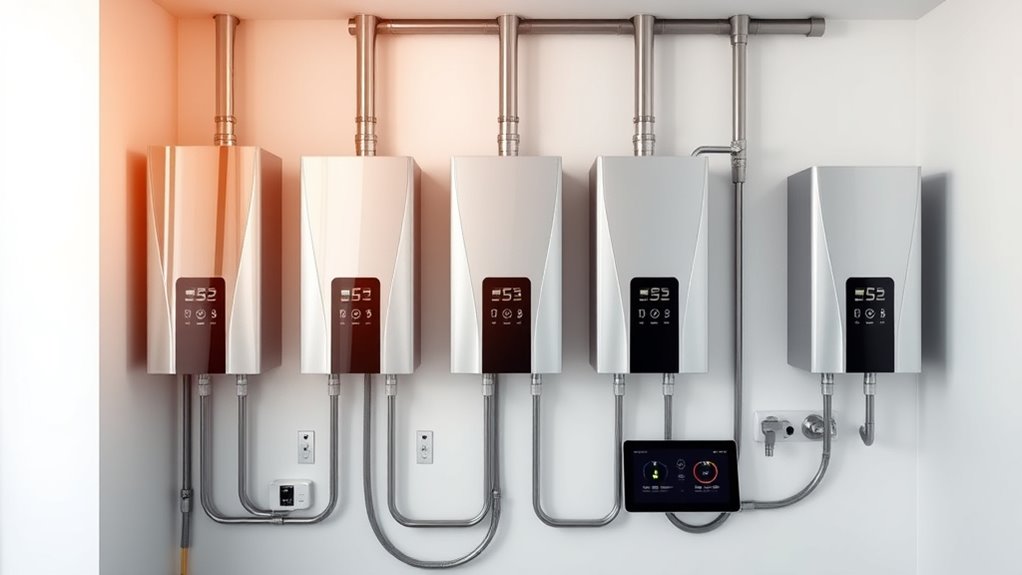

Smart water heaters are transforming how we manage hot water, offering remote control, energy savings, and better efficiency through connected features. The Rinnai RX199iN stands out as the best overall pick for its advanced condensing technology and reliable smart integration. For those on a budget, the Westinghouse 11kW Tankless Water Heater provides essential smart features at a lower cost. Meanwhile, the Electrolux 14kW WiFi Tankless Water Heater offers a compact design with user-friendly controls. Buyers often face a tradeoff between higher upfront costs and long-term savings, as well as choosing between tankless or tank-based models. Keep reading for a detailed breakdown of each option to find the best fit for your home and needs.

Get business pricing on tech for your team
- Business-only prices and quantity discounts
- Tax-exempt purchasing
- Multiple users, one account, clear invoices
Key Takeaways
- The top models combine reliable WiFi connectivity with proven durability and performance.
- High upfront costs often correlate with better energy efficiency and smarter features over time.
- Tankless models dominate the lineup, but some cheaper tank-based options still include smart controls.
- Ease of installation and compatibility with existing systems vary, impacting setup complexity.
- Choosing the right capacity and power rating is critical to meet household hot water demands without overspending.


| smart water heater | Power | Voltage | Flow Rate |
|---|---|---|---|
| Westinghouse Wifi Tankless Wat | 18kW | 240V | 0.5-4.2 GPM |
| Electrolux 14kW WiFi Tankless | 14kW | 240V | 3.4 GPM |
| Westinghouse WiFi Tankless Wat | 14kW | 240V | 3.38 GPM |
| Westinghouse 14kW Tankless Ele | 14kW | 240V | — |
| ThermoMate 14kW Tankless Water | 14kW | 240V | Up to 3.4 GPM |
| Rinnai RX199iN Condensing Smar | — | — | 11.1 GPM |
| Westinghouse 11kW Tankless Wat | 11kW | 240V | 2.6 GPM at 105°F |
More Details on Our Top Picks
Westinghouse Wifi Tankless Water Heater Electric 18kW 240V Copper Element
This model stands out for supporting multiple fixtures simultaneously, delivering consistent hot water for 2-3 outlets. Its smart WiFi control and voice compatibility make remote management straightforward, while copper heating elements ensure durability and faster heating compared to models with standard elements. The self-modulating technology optimizes energy use, reducing costs over time. Compared with the smaller Westinghouse 14kW unit, this 18kW version can handle higher flow rates but demands professional installation due to its high amperage. The main tradeoff is its need for a dedicated 75A circuit, which may complicate setup for some homes. However, its ability to serve larger households effectively makes it a versatile choice.
Pros:- Supports multiple fixtures with steady hot water
- Smart WiFi control and voice compatibility for remote operation
- Copper heating elements for durability and faster heating
- Energy-efficient with self-modulating technology
Cons:- Requires professional installation due to high amperage
- Limited temperature range may not suit all preferences
Best for: Homeowners seeking a reliable, high-capacity smart water heater for entire-house use
Not ideal for: Small apartments or single fixtures — its power requirements and size are overkill for minimal use
- Power:18kW
- Voltage:240V
- Amperage:75A
- Flow Rate:0.5-4.2 GPM
- Connections:3/4″ NPT
- Temperature Range:86-140℉
- Dimensions:18.7″×3.94″×14.17″
Our verdict“This unit suits larger households needing consistent hot water with smart control, provided the electrical setup can support its demands.”
Electrolux 14kW WiFi Tankless Electric Water Heater 240V, Max 3.4 GPM
This compact heater excels at providing instant hot water for 1-2 fixtures, making it ideal for small apartments or secondary bathrooms. Its smart WiFi and Alexa compatibility enable remote control, and its energy efficiency promises significant savings compared to older, non-smart models. Unlike the Westinghouse 18kW unit, it’s limited in flow rate but easier to install in tight spaces, thanks to its small footprint. The main tradeoff is the electrical requirement of a 240V/60A breaker, which could be restrictive in some homes. While it delivers hot water rapidly—within 3 seconds—its capacity might fall short for larger households or simultaneous high-demand fixtures.
Pros:- Instant hot water delivery in just 3 seconds
- Smart WiFi and Alexa control for remote management
- Compact size fits in small spaces
- Energy-efficient with potential water heating savings
Cons:- Requires specific electrical setup (240V/60A breaker)
- Limited to 1-2 fixtures, not suitable for large households
Best for: Singles or couples in small homes seeking convenient, remote-controlled hot water
Not ideal for: Larger families or homes with multiple bathrooms, due to its limited flow rate
- Power:14kW
- Voltage:240V
- Flow Rate:3.4 GPM
- Dimensions:8.9″W x 12.8″H x 3.3″D
- Warranty:1 year
Our verdict“This heater offers quick, smart hot water for small-scale use, with electrical setup considerations to keep in mind.”
Westinghouse WiFi Tankless Water Heater Electric 14kW 240V
This model is tailored for homes needing reliable on-demand hot water without taking up much space. Its high flow rate of 3.38 GPM supports simultaneous use of a shower and sink, comparable to the Electrolux 14kW but with a slightly larger physical footprint. The smart Wi-Fi system and voice control compatibility make it convenient to operate remotely. Compared to the 18kW Westinghouse, it’s less powerful but easier to install, requiring a 60A circuit instead of a higher amperage setup. The main drawback is its limited flow rate, which might not serve larger households or peak usage times well. Still, its safety certifications and compact design make it an attractive choice for smaller homes.
Pros:- Instant hot water with high flow rate
- Smart Wi-Fi control and voice compatibility
- Compact and space-saving design
- ETL safety certification
Cons:- Requires a 60A circuit breaker and proper wiring
- Limited flow rate may not meet high demand
Best for: Residents needing space-efficient, remotely controllable hot water for small households
Not ideal for: Large families or homes with multiple simultaneous fixtures, due to flow limitations
- Power:14kW
- Voltage:240V
- Flow Rate:3.38 GPM
- Starting Flow Rate:0.5 GPM
- Current:59A
- Water Resistance:IPX4
Our verdict“Ideal for small households seeking reliable, remote-controlled hot water with a compact footprint.”
Westinghouse 14kW Tankless Electric Water Heater, 240V, WiFi, ETL Certified, Gray
This model combines reliability with smart control, and its ETL certification underscores its safety credentials. Its flow rate of up to 3.4 GPM makes it suitable for small to medium households, similar to the Electrolux unit but with added safety features. Its compact design and WiFi compatibility allow easy installation in various home settings, with voice control for added convenience. Compared with the Westinghouse 18kW model, it’s less powerful but easier to wire and install. The main tradeoff is that it’s limited to residential use and requires a dedicated 60A breaker. Maintenance includes inlet filter cleaning and rotor checks, which might be a consideration for less experienced DIYers.
Pros:- Instant hot water delivery in 3 seconds
- Smart WiFi and voice control compatibility
- ETL certified with multiple safety features
- Easy to install and maintain
Cons:- Requires a dedicated 60A double-pole breaker
- Limited to residential applications
Best for: Homeowners wanting a reliable, safe, and remotely controllable water heater for household use
Not ideal for: High-demand households or those needing extensive flow capacity, due to its 3.4 GPM limit
- Power:14kW
- Voltage:240V
- Connections:1/2″ NPT
- Dimensions:12.59″H x 9.56″W x 3.28″D
- Certifications:ETL
Our verdict“A versatile, safety-conscious choice for small to medium households seeking smart hot water management.”
ThermoMate 14kW Tankless Water Heater Electric Up to 3.4 GPM ETL Certified
The ThermoMate offers on-demand hot water with a focus on energy savings and safety, making it suitable for cost-conscious households. Its self-modulating technology reduces energy waste, similar to the Westinghouse models, but at a lower price point. The leak-proof design and ETL, UL-499, and CSA certifications add peace of mind. Its flow rate of 3.4 GPM matches other 14kW units like Electrolux and Westinghouse, but its slightly lower temperature range (86-131°F) might limit its use in colder climates or for users with specific temperature preferences. Installation requires a 60A double pole breaker, which is common but still a consideration for electrical setup.
Pros:- Provides continuous hot water on demand
- Energy-efficient self-modulating technology
- Leak-proof, maintenance-free construction
- Cost-effective choice with multiple safety certifications
Cons:- Requires a double pole 60A breaker for installation
- Flow rate may be insufficient for larger households
Best for: Cost-conscious households needing reliable, energy-efficient hot water in small to medium setups
Not ideal for: Large households or those with high simultaneous hot water demand, due to limited flow capacity
- Power:14kW
- Flow Rate:Up to 3.4 GPM
- Temperature Range:86-131°F
- Voltage:240V
- Amperage:58A
- Connections:1/2″ NPT
Our verdict“A dependable, budget-friendly smart water heater suited for small homes with moderate hot water needs.”
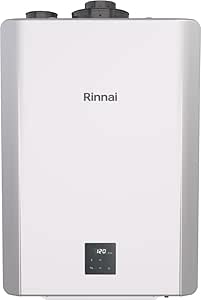
Rinnai RX199iN Condensing Smart Sense Tankless Water Heater
The Rinnai RX199iN stands out for its impressive flow rate of 11.1 GPM, making it capable of supporting multiple fixtures simultaneously, which is a step up from smaller units like the Westinghouse 11kW electric model. Its high energy factor of 0.98 ensures efficient operation, especially for households with high hot water demand. The unit’s compact design allows flexible installation options, whether indoors or outdoors, but it requires professional setup, adding to initial costs. Its WiFi control compatibility adds convenience for remote management, although the control module is sold separately. Compared to electric options, this gas-powered model offers greater capacity and efficiency, but the installation complexity and venting needs can be drawbacks for some homeowners. This pick makes the most sense for larger households or those needing a reliable, high-capacity tankless system with smart features.
Pros:- Supports multiple fixtures simultaneously with a high flow rate of 11.1 GPM
- Compact size suitable for indoor or outdoor placement
- Exceptional energy efficiency with UEF of 0.98
- WiFi control for remote monitoring and adjustment
Cons:- Requires professional installation, which can add to overall costs
- Needs a vent cap for outdoor use, adding complexity to setup
- WiFi control module sold separately, increasing initial expense
Best for: Families with multiple bathrooms and high hot water demand who want a reliable, efficient system with remote control capability
Not ideal for: Homeowners seeking a simple DIY install or with limited venting space, as professional installation and venting requirements can increase costs
- Flow Rate:11.1 GPM
- Fuel Type:Propane or Natural Gas
- Installation Options:Indoor or Outdoor
- Energy Factor:UEF 0.98
- Warranty:15-year on heat exchanger, 5-year on parts and labor
Our verdict“This model is ideal for larger households seeking a high-capacity, energy-efficient, and remotely controllable tankless heater, despite the higher installation complexity.”
Westinghouse 11kW Tankless Water Heater Electric 240V, WiFi, ETL, Gray
The Westinghouse 11kW Electric Tankless Water Heater delivers hot water within just three seconds, making it a compelling choice for quick, small-scale applications. Its 2.6 GPM flow rate at 105°F is suitable for a single sink or small wash station, but falls short for larger households or simultaneous multiple fixtures, unlike the Rinnai model. Its smart WiFi and voice control integration provide added convenience, yet it demands a dedicated 60A double-pole breaker and specific wiring, which could be a barrier for DIYers. The unit’s compact, wall-mountable design maximizes space, though maintenance—such as cleaning inlet filters—every six months is necessary to keep performance optimal. Compared to larger gas models, this electric heater excels in small spaces but isn’t designed for whole-house use. This is best suited for individuals or small apartments where space-saving and instant hot water at a single point are priorities.
Pros:- Delivers hot water in just 3 seconds for quick use
- WiFi and voice control for convenient operation
- Compact, wall-mountable design saves space
- Durable with anti-corrosion and scale reduction features
Cons:- Requires a dedicated 60A double-pole breaker and specific wiring, complicating installation
- Limited flow rate of 2.6 GPM makes it unsuitable for multiple fixtures
- Regular maintenance needed every six months for inlet filters
Best for: Singles, small apartments, or small utility sinks needing instant hot water with smart features, and where space is limited
Not ideal for: Large families or homes requiring multiple outlets simultaneously, due to its limited flow capacity and single-point focus
- Power:11kW
- Voltage:240V
- Flow Rate:2.6 GPM at 105°F
- Minimum Flow:0.53 GPM
- Certifications:ETL
- Protection Features:Leakage, overheat, dry-fire, over-voltage
Our verdict“This electric model fits small-scale, space-constrained applications where instant hot water and smart controls are desired, but it’s not suitable for larger household demands.”

How We Picked
These water heaters were evaluated based on a combination of performance metrics, smart feature integration, build quality, and user reviews. Priority was given to models that offer reliable WiFi connectivity, intuitive app controls, and proven durability. Cost-to-value ratio played a key role, alongside energy efficiency and ease of installation. The ranking reflects a balance between premium features and affordability, ensuring options for different budgets and household sizes. Our selection aims to highlight products that truly enhance convenience and efficiency while maintaining quality and longevity.Factors to Consider When Choosing Smart Water Heaters
When selecting a smart water heater, it’s important to consider several factors beyond just smart features. These include capacity, energy efficiency, installation requirements, and compatibility with your existing plumbing. Making the right choice means balancing upfront costs with long-term savings, as well as ensuring the unit matches your household’s hot water needs. Below, I cover the key considerations that can help you avoid common pitfalls and find a model that truly fits your lifestyle.Performance and Capacity
Understanding your household’s hot water demand is essential. Overestimating capacity can lead to unnecessary expenses, while underestimating can result in insufficient hot water. Tankless models are rated by flow rate (GPM), so choosing one that matches your peak usage is key. Also, look for models with good temperature stability and quick recovery times to avoid delays and fluctuations during busy mornings.
Smart Features and Connectivity
Not all smart water heaters offer the same level of connectivity. Some provide basic remote control via mobile apps, while others include advanced diagnostics, usage monitoring, and integration with home automation systems. Consider how intuitive and reliable the app is, as well as whether the product supports voice commands or smart home ecosystems like Alexa or Google Home. Cheaper options may lack seamless connectivity, limiting their convenience.
Energy Efficiency and Costs
Energy-efficient units help reduce ongoing utility bills, which can offset a higher initial investment over time. Look for features like condensing technology, high Energy Factor ratings, and programmable settings. Remember that installing a more efficient model might also require upgrades to your home’s electrical system or venting, which should be factored into your budget.
Installation and Maintenance
Proper installation is critical for optimal performance and safety. Some models are designed for easy DIY setup, while others require professional help. Check the unit’s size and mounting options to ensure compatibility with your space. Maintenance needs, such as flushing out mineral buildup, should also be considered, especially in hard water areas where scale can reduce efficiency and lifespan.
Cost and Long-Term Value
Smart water heaters vary widely in price. While premium models offer better features and efficiency, they might not be necessary for smaller households or those with limited budgets. Assess the total cost of ownership, including installation, maintenance, and energy savings. Sometimes, a less expensive unit with basic smart features can meet your needs without overspending.
Frequently Asked Questions
Can I install a smart water heater myself?
While some models are designed for simple DIY installation, most smart water heaters—especially tankless or high-capacity units—should be installed by a licensed professional. Proper setup ensures safety, compliance with local codes, and optimal performance. Incorrect installation can lead to issues like leaks, electrical problems, or reduced efficiency, so it’s worth investing in expert help if you’re unsure.
Do smart water heaters really save energy and money?
Yes, smart water heaters can reduce energy consumption by allowing precise temperature control, scheduling, and real-time usage monitoring. These features prevent unnecessary heating and help optimize operation based on your household schedule. Although they often cost more initially, the savings on utility bills can make up for the investment over time, especially in larger households or energy-conscious homes.
Are tankless smart water heaters suitable for large families?
Tankless models with higher flow rates (GPM) are suitable for larger households, as they provide continuous hot water without running out. However, sizing is critical; a unit that’s too small won’t meet peak demand, leading to cold water moments. For very large families, multiple units or models with higher capacity may be necessary, which could increase installation costs but ensure reliable hot water supply.
What should I consider regarding compatibility with my smart home system?
Before purchasing, verify whether the smart water heater supports your existing smart home ecosystem, such as Amazon Alexa, Google Home, or Apple HomeKit. Compatibility ensures you can control the unit via voice commands or automation routines. Also, check if the app integrates with other smart devices in your home for a seamless experience, which can significantly enhance convenience.
Is a higher-priced smart water heater worth the investment?
Higher-priced models often feature advanced technology, better build quality, and more comprehensive smart capabilities. If you prioritize energy savings, remote management, and long-term durability, investing in a premium unit can be worthwhile. However, for smaller households or those new to smart home devices, a more affordable model with essential features might provide better value without unnecessary extras.
Conclusion
For general households seeking a reliable, energy-efficient solution, the Rinnai RX199iN offers the best overall experience with its advanced diagnostics and smart integration. Budget-conscious buyers should consider the Westinghouse 11kW Tankless Water Heater for solid smart features at a lower price. Those new to smart water heaters or with small hot water needs may find the Electrolux 14kW WiFi Tankless Water Heater simple to set up and use. For larger homes or energy-focused users, investing in premium models with condensing technology provides long-term savings. Your ideal choice depends on your household size, budget, and desire for automation features.
As an affiliate, we earn on qualifying purchases.Columbus Day / Indigenous Peoples' Day Picks
long weekend sales