Smart thermostats with learning features go beyond simple scheduling — they study your routines, detect when you leave home, and adjust heating and cooling automatically to trim energy bills without constant tinkering. In this category, the Google Nest Learning Thermostat (4th Gen) stands out as the best overall pick because its onboard learning is genuinely automatic, and its bundled temperature sensor solves the hot-and-cold-room problem that trips up cheaper models. The ecobee Smart Thermostat Premium is the strongest alternative thanks to its remote sensor ecosystem and built-in air quality monitoring, while the ecobee Smart Thermostat Enhanced hits a sweet spot for buyers who want smart scheduling and geofencing at a lower price. The main tradeoff you’ll face is true hands-free learning versus affordability: most budget models, like the Sensi and Amazon options here, rely on manual schedules and app control rather than actually learning your habits. Read on for the full breakdown of all 15 models.

Get business pricing on tech for your team
- Business-only prices and quantity discounts
- Tax-exempt purchasing
- Multiple users, one account, clear invoices
Key Takeaways
- Only the Nest Learning Thermostat (4th Gen) and Aqara W200 offer true autonomous learning; every amazon.com/dp/B0BXZ6KXGG?tag=technocapture-20&ascsubtag=dc-617743″ target=”_blank” rel=”nofollow sponsored noopener”>Sensi, Amazon, and Honeywell model in this lineup depends on manual 7-day schedules you program yourself.
- The ecobee family wins on whole-home comfort because remote SmartSensors balance temperatures across rooms — something the standard Google Nest Thermostat cannot do without buying add-ons.
- Color variants (Fog, Snow, Charcoal, Obsidian, Polished Gold) of the same Nest models are identical in function, so choose based on decor, not on any assumed feature differences.
- C-wire requirements are the biggest installation hurdle in this category: ecobee models include a power-extender kit, while Sensi Lite and Amazon’s thermostat are the most forgiving for older HVAC systems without one.
- Apple Home users have exactly one strong option here — the Aqara W200 with Adaptive Temperature support — because no Nest or ecobee model works natively with Apple’s ecosystem.
| Google Nest Thermostat – Smart Programmable WiFi Thermostat (Charcoal) |  | Best Budget Nest for Google Homes | Color: Charcoal | Certification: ENERGY STAR | Connectivity: Wi-Fi 802.11 b/g/n 2.4GHz, 802.11 a/n 5GHz | VIEW ON AMAZON | See Our Full Breakdown |
| ecobee Smart Thermostat Enhanced – Programmable WiFi Thermostat |  | Best Value | Connectivity: WiFi | HVAC Compatibility: 90% of HVAC systems | Smart Home Compatibility: Alexa, Google Assistant, Apple HomeKit, SmartThings | VIEW ON AMAZON | See Our Full Breakdown |
| ecobee Smart Thermostat Premium with SmartSensor |  | Best Premium | Voice Assistants: Siri and Alexa built-in | Included Sensor: SmartSensor | Energy Certification: ENERGY STAR | VIEW ON AMAZON | See Our Full Breakdown |
| Google Nest Learning Thermostat (4th Gen) with Nest Temperature Sensor (2nd Gen) – Silver |  | Best Overall | Model: Nest Learning Thermostat (4th Gen) | Color: Silver | Display: 60% larger display with Dynamic Farsight | VIEW ON AMAZON | See Our Full Breakdown |
| Sensi Lite Smart Thermostat ST25 – WiFi, Alexa & Google Compatible, DIY Installation, Energy Star Certified | 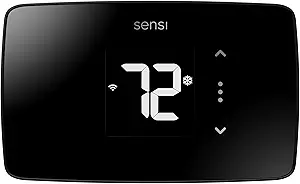 | Best for Beginners | Model: ST25 | Connectivity: Wi-Fi (2.4GHz only) | Power Source: Battery (2 AAA included) or C-wire | VIEW ON AMAZON | See Our Full Breakdown |
| Sensi Touch 2 Wi-Fi Smart Thermostat (ST76) |  | Best Touchscreen Value | Model: ST76 | Connectivity: Wi-Fi | Voice Assistant Compatibility: Alexa | VIEW ON AMAZON | See Our Full Breakdown |
| Google Nest Thermostat – Smart Programmable WiFi Thermostat (Fog) |  | Best for Google Homes | Color: Fog | Certification: ENERGY STAR certified | Connectivity: WiFi | VIEW ON AMAZON | See Our Full Breakdown |
| Sensi ST55 Wi-Fi Smart Thermostat |  | Best Budget Entry Point | Model: ST55 | Connectivity: Wi-Fi | Compatibility: Works with HVAC equipment found in most homes | VIEW ON AMAZON | See Our Full Breakdown |
| Google Nest Thermostat – Smart Programmable Wi-Fi Thermostat (Snow) |  | Best Minimalist Design | Color: Snow | Certification: ENERGY STAR Certified | Connectivity: Wi-Fi | VIEW ON AMAZON | See Our Full Breakdown |
| ecobee Smart Thermostat Essential – WiFi Smart Thermostat, Energy Star Certified |  | Best Ecosystem Flexibility | Connectivity: WiFi | Certification: Energy Star Certified | System Compatibility: 85% of systems (gas, oil, electric, dual fuel, forced air, heat pump, boilers) | VIEW ON AMAZON | See Our Full Breakdown |
| Google Nest Learning Thermostat (4th Gen) with Nest Temperature Sensor (2nd Gen), Obsidian |  | Best Overall Learning Thermostat | Thermostat generation: 4th gen | Included sensor: Nest Temperature Sensor (2nd gen) | Color: Obsidian | VIEW ON AMAZON | See Our Full Breakdown |
| Amazon Smart Thermostat with Alexa and Ring Compatibility |  | Best Budget-Friendly Smart Pick | Compatibility: Alexa and Ring | Wiring requirement: C-wire required | Control: Alexa app, voice routines, programmable schedules | VIEW ON AMAZON | See Our Full Breakdown |
| Aqara Smart Thermostat W200 with Apple Adaptive Temperature |  | Best Premium Smart Home Hub | Controller type: Apple HomeKit | HVAC compatibility: ~85% of systems (furnaces, AC, heat pumps, boilers, PTAC) | Display: 4-inch full-color touchscreen | VIEW ON AMAZON | See Our Full Breakdown |
| Google Nest Learning Thermostat (4th Gen, 2024) with Nest Temperature Sensor – Polished Gold |  | Best Statement Design | Model: Nest Learning Thermostat (4th Gen, 2024) | Color: Polished Gold | Compatibility: Alexa, Apple HomeKit, Google Home, Siri, Matter | VIEW ON AMAZON | See Our Full Breakdown |
| Honeywell Home RTH9585WF Wi-Fi Smart Color Thermostat, 7-Day Programmable, Touchscreen, Gray |  | Best for Hands-On Schedulers | Model: RTH9585WF | Connectivity: Wi-Fi | Programming: 7-day programmable | VIEW ON AMAZON | See Our Full Breakdown |
| smart thermostats with learning feature | Connectivity | Certification |
|---|---|---|
| Google Nest Thermostat | Wi-Fi 802.11 b/g/n 2.4GHz, 802.11 a/n 5GHz | ENERGY STAR |
| ecobee Smart Thermostat Enhanc | WiFi | — |
| ecobee Smart Thermostat Premiu | — | — |
| Google Nest Learning Thermosta | — | — |
| Sensi Lite Smart Thermostat ST | Wi-Fi (2.4GHz only) | Energy Star |
| Sensi Touch 2 Wi-Fi Smart Ther | Wi-Fi | ENERGY STAR |
| Google Nest Thermostat | WiFi | ENERGY STAR certified |
| Sensi ST55 Wi-Fi Smart Thermos | Wi-Fi | — |
| Google Nest Thermostat | Wi-Fi | ENERGY STAR Certified |
| ecobee Smart Thermostat Essent | WiFi | Energy Star Certified |
| Google Nest Learning Thermosta | — | — |
| Amazon Smart Thermostat with A | — | Energy Star |
| Aqara Smart Thermostat W200 wi | Matter 1.4, dual-band Wi-Fi (2.4/5GHz), Zigbee hub, Thread border router | — |
| Google Nest Learning Thermosta | — | — |
| Honeywell Home RTH9585WF Wi-Fi | Wi-Fi | Energy Star |
More Details on Our Top Picks
Google Nest Thermostat – Smart Programmable WiFi Thermostat (Charcoal)
The entry-level Google Nest Thermostat delivers core smart features at an accessible price, making it the sensible entry point for anyone already living in the Google ecosystem. Compared with the Nest Learning Thermostat (4th Gen), it skips true self-programming in favor of the Savings Finder, which suggests schedule tweaks you approve manually — a real tradeoff if hands-off automation is the goal.
What this model does well is the fundamentals: remote control from any device, automatic setback when you leave, and HVAC monitoring alerts that catch maintenance issues early. Like the ecobee Smart Thermostat Enhanced, it usually installs without a C wire, though heat pump and heating-only systems still need one. Voice control also assumes you own a compatible smart speaker, which the ecobee Premium builds in.
Pros:- ENERGY STAR certified with automatic home/away setback
- HVAC monitoring sends alerts and maintenance reminders
- Remote control from phone, laptop, or tablet via Google Home app
- Works without a C wire in most homes
Cons:- C wire or power accessory required for heat pumps and heating/cooling-only systems
- No schedule lock feature, and voice control requires a separate smart speaker
Best for: Google-centric households that want remote control and energy alerts without paying for full learning automation
Not ideal for: Buyers who want the thermostat to truly learn and adapt on its own — the 4th Gen Nest Learning Thermostat does that far better
- Color:Charcoal
- Certification:ENERGY STAR
- Connectivity:Wi-Fi 802.11 b/g/n 2.4GHz, 802.11 a/n 5GHz
- Bluetooth:Bluetooth Low Energy
- App:Google Home (Android and iPhone)
- Voice Control:Google Assistant and Matter-certified assistants (requires separate device)
- C Wire:Not required in most homes; needed for some systems
Our verdict“A solid pick for Google households that want smart basics at a lower price, as long as manual schedule approval doesn’t bother you.”
ecobee Smart Thermostat Enhanced – Programmable WiFi Thermostat
Of everything in this lineup, the ecobee Smart Thermostat Enhanced hits the sweet spot between price and capability. Its built-in occupancy sensing means it learns your comings and goings without extra hardware — something the Google Nest Thermostat (Charcoal) handles less gracefully with phone-based location. The included Power Extender Kit solves the C-wire problem for most homes, matching the DIY-friendliness of the pricier ecobee Premium.
Where it earns its value badge is ecosystem breadth: Alexa, Google Assistant, HomeKit, and SmartThings all work out of the box, so you’re not locked into one platform the way Nest devices lean toward Google. The compromise? No included remote room sensor — the ecobee Premium and the Nest Learning Thermostat (4th Gen) both bundle one, and room-by-room balancing is where real comfort gains live.
Pros:- Cuts heating and cooling costs by up to 26% per year
- Built-in occupancy sensing learns your schedule automatically
- Works with Alexa, Google Assistant, HomeKit, and SmartThings
- Includes Power Extender Kit and 3-year warranty
Cons:- Room-level SmartSensors are sold separately
- HVAC compatibility should be verified before purchase
Best for: Budget-conscious buyers who want genuine learning behavior and multi-platform compatibility without paying premium prices
Not ideal for: Homes with stubborn hot and cold rooms, since SmartSensors for room-by-room comfort cost extra
- Connectivity:WiFi
- HVAC Compatibility:90% of HVAC systems
- Smart Home Compatibility:Alexa, Google Assistant, Apple HomeKit, SmartThings
- Sensors:Built-in occupancy sensing
- Included Accessories:Power Extender Kit (PEK), Trim Kit
- Energy Savings:Up to 26% per year on heating and cooling
- Warranty:3 years
Our verdict“The smartest money in this roundup for most homes — real learning, broad compatibility, and easy install at a mid-tier price.”
ecobee Smart Thermostat Premium with SmartSensor
This is the most feature-dense thermostat in the roundup. The ecobee Premium doesn’t just heat and cool — its radar occupancy sensor learns your routine to preheat or precool before you walk in, and the bundled SmartSensor handles the hot-and-cold-room problem that the ecobee Enhanced leaves as a paid add-on. Compared with the Nest Learning Thermostat (4th Gen), it goes further by doubling as an air quality monitor and a smart speaker with Siri or Alexa built in — no separate hub required.
Those extras explain the premium price, and for many buyers a speaker in the hallway thermostat is genuinely useful. The catches are real, though: smoke alarm detection sits behind a subscription, Siri needs an Apple home hub, and doorbell viewing requires buying ecobee’s camera separately. If those extras sound like bloat, the Enhanced model delivers the core experience for less.
Pros:- Radar occupancy sensor learns routines to preheat and precool automatically
- Includes SmartSensor for room-by-room temperature balancing
- Built-in air quality monitor with filter change reminders
- Integrated smart speaker with Siri or Alexa, plus 95% HVAC compatibility
Cons:- Features like smoke alarm detection require an ecobee Smart Security subscription
- Siri requires an Apple home hub; doorbell viewing needs a separate camera purchase
Best for: Smart home enthusiasts who want thermostat, air quality monitor, and voice speaker in a single wall device
Not ideal for: Minimalists who just want heating control — the extra features inflate the price and some sit behind a subscription
- Voice Assistants:Siri and Alexa built-in
- Included Sensor:SmartSensor
- Energy Certification:ENERGY STAR
- HVAC Compatibility:95% of HVAC systems
- Installation:DIY with included Power Extender Kit and Trim Kit
- Air Quality Monitoring:Built-in
- Smart Speaker:Built-in (Spotify, podcasts)
- Warranty:3 years
Our verdict“The ceiling of this category — worth it only if you’ll actually use the speaker, sensor, and air quality features.”
Google Nest Learning Thermostat (4th Gen) with Nest Temperature Sensor (2nd Gen) – Silver
The 4th Gen Nest Learning Thermostat is the pick I’d point most homeowners toward, because it does the one thing this roundup exists for better than anyone: it learns your schedule and preferences on its own, then saves up to 31% on heating and cooling — the highest savings figure here. Where the ecobee Premium spreads its budget across speakers and air quality sensors, Nest concentrates everything on comfort intelligence, and it shows.
The 60% larger display with Dynamic Farsight makes glanceable info readable across the room, and the bundled Nest Temperature Sensor matches ecobee’s room-balancing trick without a subscription. Ecosystem flexibility is also better than older Nests: Matter support means Alexa and Siri play along, not just Google Assistant. The gripes are minor but real — deep configuration lives in the Google Home app, and some learned schedule changes wait for your manual approval via notification rather than acting fully on their own.
Pros:- Genuine self-learning automation with savings up to 31% on heating and cooling
- Included Nest Temperature Sensor evens out hot and cold rooms
- 60% larger display with Dynamic Farsight readable from across the room
- Works with Matter, Alexa, Siri, and Google Assistant without a C wire in most homes
Cons:- Advanced features depend heavily on the Google Home app
- Some learned schedule changes require manual approval via notifications
Best for: Homeowners who want maximum automated savings and true set-it-and-forget-it learning with minimal fuss
Not ideal for: Apple-first users who expect deep HomeKit integration and dislike approving schedule changes through Google’s app
- Model:Nest Learning Thermostat (4th Gen)
- Color:Silver
- Display:60% larger display with Dynamic Farsight
- Compatibility:Most 24V systems (gas, electric, oil, forced air, heat pump, radiant)
- C Wire Required:No (in most homes)
- Smart Home Compatibility:Matter, Alexa, Siri, Google Assistant
- Included Accessories:Nest Temperature Sensor (2nd Gen)
Our verdict“The best all-around learning thermostat for most homes — highest savings potential plus a bundled sensor, at a price below the ecobee Premium.”
Sensi Lite Smart Thermostat ST25 – WiFi, Alexa & Google Compatible, DIY Installation, Energy Star Certified
For a first smart thermostat, the Sensi Lite ST25 removes nearly every barrier that scares people off. Installation is the friendliest in this lineup: a built-in level and step-by-step app instructions mean most buyers finish in under an hour, and battery power means most systems skip the C wire entirely. Compare that with the ecobee Enhanced, which needs its Power Extender Kit wired in on C-wire-less systems — a slightly bigger job for nervous first-timers.
The tradeoff is intelligence. Sensi Lite’s geofencing and flexible scheduling save a respectable ~23% on HVAC energy, but there’s no true self-learning like the Nest Learning Thermostat delivers — you set the schedule, it follows it. A privacy policy that never sells your data is a genuine differentiator in this category, though the LCD-only display and 2.4GHz-only WiFi feel dated next to the vibrant touchscreens elsewhere here.
Pros:- Easiest installation in the roundup with built-in level and guided instructions
- Energy Star certified scheduling, geofencing, and usage reports save about 23% on HVAC energy
- Voice control via Alexa, Google Assistant, and SmartThings
- Personal data is never sold or used for ad targeting
Cons:- C wire required for heat pumps and heat-only/cool-only systems
- Only supports 2.4GHz WiFi and has a basic LCD display with no self-learning
Best for: First-time smart thermostat buyers and privacy-conscious users who want simple DIY setup without subscription pressure
Not ideal for: Heat pump owners (C wire required) and anyone wanting the thermostat to learn schedules automatically
- Model:ST25
- Connectivity:Wi-Fi (2.4GHz only)
- Power Source:Battery (2 AAA included) or C-wire
- Voltage:24 volts
- Display:LCD
- Works With:Air conditioner, boiler, furnace, heat pump
- Voice Assistants:Alexa, Google Assistant, SmartThings
- Certification:Energy Star
Our verdict“The least intimidating way into smart climate control — ideal for renters and first-timers, as long as automatic learning isn’t on your wish list.”
Sensi Touch 2 Wi-Fi Smart Thermostat (ST76)
The Sensi Touch 2 stands out for pairing a responsive color touchscreen with the practical energy management Sensi is known for, including usage reports, equipment alerts, and maintenance reminders that translate into fewer surprise HVAC repairs. Compared with its sibling the Sensi ST55, this model adds touch control and support for Sensi Room Sensors, which fix hot and cold spots by averaging temperatures across rooms — something the ST55 simply cannot do. The tradeoff is real, though: sensors cost extra, and the C-wire requirement is stricter than the ST55, which often works without one. Unlike the Google Nest Thermostat, it leans on Alexa only for voice control and its scheduling is manual rather than adaptive, so buyers chasing true auto-learning should look at Nest or ecobee instead. For hands-on schedulers who want touch convenience, this pick makes the most sense.
Pros:- Color touchscreen with app-guided installation
- Room sensor support balances temperatures across the house
- Usage reports, equipment alerts, and maintenance reminders
- ENERGY STAR certified with claimed savings of about 23% on HVAC energy
Cons:- C-wire required, period
- Room sensors sold separately, adding to total cost
Best for: Homeowners who want touchscreen control and room-by-room temperature balancing without paying premium-brand prices
Not ideal for: Buyers wanting automatic learning — every schedule here is set manually, and skipping a C-wire isn’t an option
- Model:ST76
- Connectivity:Wi-Fi
- Voice Assistant Compatibility:Alexa
- Certification:ENERGY STAR
- Room Sensor Compatibility:Sensi Room Sensors (sold separately)
- Installation Requirement:C-wire required
- Energy Savings Claim:About 23% on HVAC energy
Our verdict“A strong middle-ground pick for schedulers who want touch control and optional room sensing, provided a C-wire is already in place.”
Google Nest Thermostat – Smart Programmable WiFi Thermostat (Fog)
This is the thermostat to buy if your household already runs on Google gear. The Google Nest Thermostat in Fog folds neatly into the Google Home app, responds to Google Assistant, Alexa, and Matter-certified assistants, and uses automatic Eco mode to dial itself down when you leave — a genuine energy-saving behavior rather than a marketing line. Installation typically takes under 30 minutes without a C-wire in most homes, putting it ahead of the Sensi Touch 2 on wiring flexibility. The catch versus the ecobee Smart Thermostat Essential: there’s no HomeKit support and no Power Extender Kit option, so heat-pump and zone-controlled systems may still need extra wiring work. Offline behavior is another limitation — lose internet and you’re down to manual control only. Still, for Android-centric households, the integration here is the smoothest of the budget tier.
Pros:- Automatic Eco mode and Savings Finder actively cut energy use
- Broad voice support including Google Assistant, Alexa, and Matter
- Installs in about 30 minutes, usually without a C-wire
- HVAC monitoring sends alerts and maintenance reminders
Cons:- C-wire or power accessory required for some systems
- Loses smart functionality without internet — manual control only
Best for: Google Assistant households that want set-and-forget energy savings with minimal installation fuss
Not ideal for: Apple HomeKit users and homes with heat pumps or zone systems, which may require a C-wire or accessory Google doesn’t include
- Color:Fog
- Certification:ENERGY STAR certified
- Connectivity:WiFi
- System Compatibility:85% of heating and cooling systems
- Voice Assistants:Google Assistant, Alexa, Matter-certified assistants
- Installation Time:30 minutes or less
- C-Wire:Works without in most homes; required for some systems
Our verdict“The natural choice for Google-first homes that want adaptive energy savings cheaply, as long as their wiring cooperates.”
Sensi ST55 Wi-Fi Smart Thermostat
The Sensi ST55 is the least demanding way into smart climate control in this lineup. It usually works without a C-wire, fits in the footprint of a standard thermostat, and includes app-guided installation with a built-in level — a detail that saves a lot of fussing on the wall. Where the Sensi Touch 2 adds a touchscreen and room sensors, the ST55 keeps things deliberately simple, which is exactly why it earns the budget slot. Compared with the Google Nest Thermostat, you give up automatic Eco mode and Google ecosystem polish, and voice control is Alexa-only — but you gain wiring flexibility that the ST55’s Touch sibling can’t match. The honest tradeoff: there’s no adaptive learning at all here, so your schedule is only as smart as the one you program. For straightforward setups, that’s a fair exchange for the price.
Pros:- Usually installs without a C-wire
- App-guided installation with built-in level
- Remote access, flexible scheduling, and usage reports
- Fits the space of a traditional thermostat
Cons:- C-wire may still be required for some installations
- No touchscreen and no room sensor support
Best for: First-time smart thermostat buyers with basic HVAC systems who want remote access without wiring headaches
Not ideal for: Anyone expecting automatic learning or room-sensing — this is a programmable thermostat with Wi-Fi, not an adaptive one
- Model:ST55
- Connectivity:Wi-Fi
- Compatibility:Works with HVAC equipment found in most homes
- C-Wire Requirement:Not required in most applications
- Certifications:ENERGY STAR certified
- Smart Home Compatibility:Alexa
Our verdict“The safest low-risk upgrade for basic systems where wiring is uncertain and learning features aren’t the priority.”
Google Nest Thermostat – Smart Programmable Wi-Fi Thermostat (Snow)
Functionally, the Snow edition mirrors the Fog model — same automatic Eco mode, same Google Home integration, same typical C-wire-free installation — so the choice between them is aesthetic. The Snow finish suits lighter, modern interiors where the Charcoal and Obsidian variants of the Nest Learning Thermostat (4th Gen) would feel heavy, at a fraction of that flagship’s cost. What separates this from the pricier Learning model is autonomy: here, Nest’s learning is limited to features like Savings Finder suggestions rather than the full self-programming behavior, and there’s no temperature-lock feature, which matters if you’re mounting it in a rental or a kid-accessible hallway. Compared with the ecobee Essential, you also lose HomeKit and the Power Extender Kit fallback. Renters and design-conscious buyers get the best fit; spec-driven power users should step up to the Learning line.
Pros:- Automatic Eco mode turns heating and cooling down when you leave
- Remote control from phone, laptop, or tablet
- Works without a C-wire in most homes
- Fresh Snow finish suits modern interiors
Cons:- No lock feature to prevent manual tampering
- C-wire or power accessory required for some systems
- Voice control requires a separate compatible smart device
Best for: Renters and design-conscious buyers who want Nest’s energy-saving intelligence in a clean white finish
Not ideal for: Landlords and parents who need a lock feature, or households needing deep HomeKit and sensor ecosystem support
- Color:Snow
- Certification:ENERGY STAR Certified
- Connectivity:Wi-Fi
- Voice Control:Google Assistant, Alexa, Matter-certified assistants
- App:Google Home (Android and iOS)
- C-Wire:Works without in most homes; required for some systems
- Lock Feature:No
Our verdict“Buy it if the lighter finish and Google integration fit your space; skip it if you need a lock or full self-programming.”
ecobee Smart Thermostat Essential – WiFi Smart Thermostat, Energy Star Certified
The ecobee Smart Thermostat Essential is the one budget-tier thermostat here that refuses to pick sides: Apple HomeKit, Google Assistant, and Alexa all work out of the box, something neither the Google Nest Thermostat nor the Sensi line can claim. Its eco+ features go beyond basic scheduling — humidity detection, time-of-use optimization, and a schedule assistant that adapts to your routine, which puts it closer to true learning behavior than the manual Sensi models. An optional Power Extender Kit handles C-wire-less homes, though unlike the pricier ecobee Smart Thermostat Enhanced, neither the PEK nor a trim kit is bundled, and room-level SmartSensors cost extra. Compatibility with 85% of HVAC systems, including dual fuel and heat pumps, makes it a safer bet than the Nest for complex setups. Mixed-ecosystem households get the most from this pick.
Pros:- Works with Apple HomeKit, Google Assistant, and Alexa
- eco+ features adapt schedules and optimize for time-of-use rates
- Optional Power Extender Kit solves missing C-wires
- Broad compatibility covering 85% of systems including heat pumps
Cons:- Power Extender Kit and trim kit sold separately
- SmartSensor room monitoring requires additional purchases
Best for: Households mixing Apple, Google, and Alexa devices, or owners of complex systems like dual fuel and heat pumps
Not ideal for: Buyers wanting everything in the box — the Power Extender Kit, trim kit, and room sensors are all separate purchases
- Connectivity:WiFi
- Certification:Energy Star Certified
- System Compatibility:85% of systems (gas, oil, electric, dual fuel, forced air, heat pump, boilers)
- HVAC Voltage:24 VAC
- Conventional Support:2H/1C or 1H/2C
- Heat Pump Support:2H/1C
- Smart Home Ecosystems:Apple HomeKit, Google Assistant, Alexa
- Key Features:Color touchscreen, eco+, humidity detection, schedule assistant, time-of-use optimization
Our verdict“The most ecosystem-agnostic pick of the affordable tier, best for mixed smart homes that want adaptive features without brand lock-in.”
Google Nest Learning Thermostat (4th Gen) with Nest Temperature Sensor (2nd Gen), Obsidian
This is the option that most purely delivers on the promise of a thermostat that actually learns. After a week or two of ordinary use, it builds a schedule on its own, so buyers who never want to touch a programming menu get automation for free. Compared with the Honeywell Home RTH9585WF, which makes you build a 7-day schedule manually, the Nest removes that chore entirely. The included Nest Temperature Sensor also addresses hot and cold spots — something the Amazon Smart Thermostat can only approximate by pairing with separate Alexa devices.
The tradeoffs are real, though. Learning takes time to settle in, and a small subset of HVAC setups still needs a C wire or compatibility check before buying. Some features lean on the Google Home app ecosystem, which matters if your household runs on Alexa-first hardware like the Amazon model does.
Pros:- Genuinely learns temperatures and routines without manual programming
- Included remote temperature sensor manages hot and cold spots
- Broad compatibility with gas, electric, oil, forced air, heat pump, and radiant 24V systems
- Matter support means it plays well with Google, Alexa, and Siri households
Cons:- Compatibility and C-wire needs vary by home and should be verified first
- Core features depend on the Google Home app and compatible smart devices
Best for: Homeowners who want genuine set-and-forget learning with room-by-room temperature balancing
Not ideal for: Alexa-centric households or homes with unusual HVAC wiring that hasn’t been verified with the Nest Compatibility Checker
- Thermostat generation:4th gen
- Included sensor:Nest Temperature Sensor (2nd gen)
- Color:Obsidian
- System compatibility:Most 24V systems (gas, electric, oil, forced air, heat pump, radiant)
- C wire:Not required in most homes
- Smart home compatibility:Matter, Google Assistant, Alexa, Siri
- Display:60% larger display with Dynamic Farsight
Our verdict“If automatic schedule learning and whole-home comfort are the priorities, this is the most complete package in the lineup.”
Amazon Smart Thermostat with Alexa and Ring Compatibility
Not everyone needs a thermostat that learns — some just need one that follows schedules and voice commands reliably, and that’s exactly this model’s lane. Built on Honeywell Home technology, it covers the fundamentals: app control away from home, programmable schedules, and Alexa routines. The learning is rudimentary compared with the Nest Learning Thermostat (4th Gen) — instead of adapting on its own, it leans on hysteresis-style adjustments and optional presence detection through select Alexa devices like an Echo speaker.
Its appeal is straightforwardness and price positioning; its biggest constraint is the mandatory C wire, which knocks it out of contention for older homes lacking one. The Aqara W200 makes its adapter optional, so wiring-challenged buyers may find that model easier despite its higher complexity. Still, for an Alexa household with modern wiring, this covers heating and cooling basics without paying for learning intelligence you might not use.
Pros:- App-guided installation makes DIY setup realistic for most users
- Remote control and scheduling through the familiar Alexa app
- ENERGY STAR certified, with EPA-estimated average yearly savings of around $90
- Temperature and presence-based adjustments when paired with select Alexa devices
Cons:- C wire required with no adapter included
- The most useful automation features depend on owning additional Alexa hardware
Best for: Alexa and Ring households that want affordable app and voice control with simple schedules
Not ideal for: Homes without a C wire, or buyers who want the thermostat itself to learn and adapt automatically
- Compatibility:Alexa and Ring
- Wiring requirement:C-wire required
- Control:Alexa app, voice routines, programmable schedules
- Features:Heating/cooling control; temperature or presence-based adjustments with select Alexa devices
- Technology:Honeywell Home
- Certification:Energy Star
Our verdict“A sensible low-cost choice for Alexa-centric homes with a C wire — just don’t expect true learning intelligence.”
Aqara Smart Thermostat W200 with Apple Adaptive Temperature
This is the most ambitious device in the batch — less a thermostat and more a climate controller doubling as a smart home hub. The built-in Zigbee hub, Matter controller, and Thread border router mean it can anchor an entire accessory ecosystem, something no other pick here attempts. Its adaptive behavior is closer to the Nest Learning Thermostat’s approach than to the manual scheduling of the Honeywell RTH9585WF, using mmWave presence radar to heat and cool based on whether people are actually in the room — arguably smarter than calendar-based learning alone.
But the intelligence has strings attached. Apple Adaptive Temperature requires an Apple TV or HomePod plus current-generation iPhone or Apple Watch, which excludes Android and budget-Apple households from its headline feature. The C-wire adapter and the W100 wireless sensor are sold separately, so the true cost of a complete setup runs higher than the box suggests.
Pros:- mmWave presence detection enables genuinely occupancy-aware climate control
- Built-in Zigbee hub, Matter controller, and Thread border router replace separate hub hardware
- Local Matter control keeps responses fast and independent of cloud services
- Roughly 85% HVAC compatibility with an included trim kit for easier installs
Cons:- Adaptive Temperature requires Apple TV or HomePod plus iPhone/Apple Watch on version 26 or later
- C-Wire Adapter and W100 wireless sensor are sold separately
- Clean Energy Guidance is limited to the contiguous U.S.
Best for: Apple Home power users who want a thermostat that also consolidates their smart home hub hardware
Not ideal for: Android households or anyone without a HomePod or Apple TV, since the flagship adaptive features won’t function
- Controller type:Apple HomeKit
- HVAC compatibility:~85% of systems (furnaces, AC, heat pumps, boilers, PTAC)
- Display:4-inch full-color touchscreen
- Connectivity:Matter 1.4, dual-band Wi-Fi (2.4/5GHz), Zigbee hub, Thread border router
- Presence detection:Built-in mmWave radar
- C-wire:Optional (adapter sold separately)
- Doorbell compatibility:Aqara G410/G400 (G4 excluded)
Our verdict“A premium, hub-first thermostat that rewards deep Apple Home investment and punishes half-committed ecosystems.”
Google Nest Learning Thermostat (4th Gen, 2024) with Nest Temperature Sensor – Polished Gold
Functionally, this is the same learning engine as the Obsidian Nest 4th Gen — same schedule adaptation, same bundled temperature sensor, same Matter-wide voice assistant support. What separates it is the Polished Gold finish, which turns a wall fixture into a deliberate design choice. For buyers whose thermostat sits in a visible hallway or open-plan living area, that difference justifies choosing this variant over its darker sibling.
The case for it over the Aqara W200 comes down to philosophy: Nest learns passively from your habits, while Aqara’s adaptivity demands Apple hardware you may not own. The honest tradeoff is that you’re paying a design premium for identical internals — value-focused buyers will be better served by the plain Amazon Smart Thermostat. And as with all Nests, learning isn’t instant; expect a week or two of imperfect temperatures while it calibrates, and verify compatibility on systems outside the common 24V range.
Pros:- Full learning capability with reported savings of up to 31% on heating and cooling bills
- Polished Gold finish and large Farsight display make it a visible design element
- Works with most 24V systems without a C wire in most homes
- Broad ecosystem support across Alexa, Siri, Google Assistant, Apple HomeKit, and Matter
Cons:- Compatibility should be confirmed via the Nest Compatibility Checker for some systems
- Advanced learning features take time to adapt to your schedule
Best for: Design-conscious homeowners who want the full Nest learning experience in a finish that complements warm-toned interiors
Not ideal for: Budget-focused buyers or anyone who’d be mounting it in a low-visibility spot where the premium finish goes unnoticed
- Model:Nest Learning Thermostat (4th Gen, 2024)
- Color:Polished Gold
- Compatibility:Alexa, Apple HomeKit, Google Home, Siri, Matter
- Power:24V systems (gas, electric, oil, forced air, heat pump, radiant)
- C wire required:No (in most homes)
- Includes:Nest Temperature Sensor (2nd Gen)
- Display:60% larger display with Dynamic Farsight
Our verdict“The same best-in-class learning as the standard Nest, chosen when appearance on the wall matters as much as automation.”
Honeywell Home RTH9585WF Wi-Fi Smart Color Thermostat, 7-Day Programmable, Touchscreen, Gray
Some buyers don’t want a thermostat making decisions for them — they want to write the schedule themselves and trust it to run. This Honeywell is built for that mindset, with full 7-day flexible programming, a customizable color touchscreen that can match wall paint or decor, and monthly energy reports that show exactly what your settings cost. Where the Nest Learning Thermostat adapts behind the scenes, this one hands you the controls and keeps them there.
The tradeoffs are mostly about wiring and scope. The C wire is required, and it won’t work with 120–240V electric baseboard heat at all — a real limitation the Nest and Aqara don’t share. There’s no learning, no presence detection, and no remote sensors, so multi-room comfort is out of reach. But for a single-zone home with predictable routines, the scheduling approach can match a learning thermostat’s savings with less mystery.
Pros:- Full 7-day flexible programming gives complete control over every time block
- Customizable color touchscreen blends with home decor
- Monthly energy reports, weather forecasts, and maintenance alerts in the free app
- Energy Star certification opens potential utility rebates and demand response rewards
Cons:- C wire required with no workarounds included
- Not compatible with 120–240V electric baseboard heating
- No learning or remote-sensor capability, so comfort is single-room only
Best for: DIY-minded homeowners who prefer explicit 7-day schedules over algorithmic learning
Not ideal for: Homes without a C wire or with electric baseboard heating, and anyone who wants automatic adaptation
- Model:RTH9585WF
- Connectivity:Wi-Fi
- Programming:7-day programmable
- Display:Customizable color touchscreen
- Works with:Alexa, Google Home
- System compatibility:Forced air (gas, oil, electric), hot water, steam, heat pumps with electric backup
- Not compatible with:Electric baseboard heat (120–240V)
- C-wire:Required
- Certification:Energy Star
Our verdict“The right pick when you’d rather program a precise weekly schedule yourself than let an algorithm figure it out.”

How We Picked
I evaluated these 15 thermostats through the lens that defines this category: how well each one actually learns and automates temperature control. Models earned top placement for autonomous scheduling, presence detection, and sensor-driven adjustments — features that reduce how often you touch the thermostat at all. I then weighed ecosystem compatibility (Alexa, Google Home, Apple Home, and Matter), installation complexity including C-wire demands, HVAC system support, and the quality of the companion app, since a learning thermostat is only as good as the software behind it.
Because this roundup spans flagship and budget models, the ranking logic reflects tiers rather than a single ladder. Full learning models like the Nest Learning Thermostat (4th Gen) sit at the top, adaptive mid-tier options from ecobee follow, and programmable-only thermostats from Sensi, Amazon, and Honeywell rank lower on learning capability but remain for buyers whose priority is price and simplicity. Color variants of identical models are grouped together in the ranking rather than counted as separate products.
| smart thermostats with learning feature | Certification | Connectivity |
|---|---|---|
| Google Nest Thermostat | ENERGY STAR | Wi-Fi 802.11 b/g/n 2.4GHz, 802.11 a/n 5GHz |
| ecobee Smart Thermostat Enhanc | — | WiFi |
| ecobee Smart Thermostat Premiu | — | — |
| Google Nest Learning Thermosta | — | — |
| Sensi Lite Smart Thermostat ST | Energy Star | Wi-Fi (2.4GHz only) |
| Sensi Touch 2 Wi-Fi Smart Ther | ENERGY STAR | Wi-Fi |
| Google Nest Thermostat | ENERGY STAR certified | WiFi |
| Sensi ST55 Wi-Fi Smart Thermos | — | Wi-Fi |
| Google Nest Thermostat | ENERGY STAR Certified | Wi-Fi |
| ecobee Smart Thermostat Essent | Energy Star Certified | WiFi |
| Google Nest Learning Thermosta | — | — |
| Amazon Smart Thermostat with A | Energy Star | — |
| Aqara Smart Thermostat W200 wi | — | Matter 1.4, dual-band Wi-Fi (2.4/5GHz), Zigbee hub, Thread border router |
| Google Nest Learning Thermosta | — | — |
| Honeywell Home RTH9585WF Wi-Fi | Energy Star | Wi-Fi |
Factors to Consider When Choosing Smart Thermostats With Learning Features
Before choosing a learning thermostat, it helps to understand what separates real learning from clever marketing, and which practical constraints — your wiring, your ecosystem, your home’s layout — will shape your experience more than any feature list.True Learning Versus Programmable Convenience
The phrase “learning thermostat” gets applied loosely, and that gap matters when you’re comparing prices. A genuine learning model, like the Nest Learning Thermostat, builds its own schedule by observing when you raise and lower temperatures, then keeps refining it over weeks. Programmable models such as the Sensi lineup or the Honeywell RTH9585WF require you to build a 7-day schedule yourself — which can deliver similar savings, but only if you’re disciplined about setting it up. My advice: if you travel often or keep irregular hours, true learning pays for itself; if your household runs on a predictable routine, a programmable model captures most of the benefit at a lower cost. Don’t pay a premium for automation you won’t use.
Wiring and Compatibility: Check Before You Buy
The single most common mistake in this category is ordering a thermostat without checking the HVAC wiring behind the wall. Most smart thermostats need a C-wire (common wire) for constant power, and many homes built before the mid-2000s don’t have one. Some models include a solution in the box — ecobee ships a power-extender kit, and Sensi models are known for running without a C-wire in many conventional systems. Heat pumps, multi-stage systems, and proprietary dealer-installed thermostats add further wrinkles, so use each manufacturer’s online compatibility checker before committing. A $20 wiring adapter or a $150 electrician visit can erase the savings that motivated the upgrade in the first place.
Remote Sensors and Whole-Home Comfort
A thermostat only knows the temperature in the hallway where it hangs, which is why remote sensors are the most underrated feature in this category. The Nest Learning Thermostat (4th Gen) and ecobee Premium both ship with sensors that let the system average readings across rooms — a real fix for bedrooms that freeze while the living room stays comfortable. ecobee’s sensor ecosystem goes further, with occupancy detection that directs air to rooms people are actually using. If your home has a chronically uncomfortable room, budget for a model with sensor support rather than assuming any thermostat will solve it. Buyers in small apartments can safely skip sensors entirely and save money.
Ecosystem Lock-In and Voice Assistant Choice
Whichever thermostat you pick will live inside your smart home ecosystem for years, so choose with your voice assistant in mind rather than treating compatibility as an afterthought. Nest models integrate deepest with Google Home, Amazon’s thermostat pairs naturally with Alexa and Ring, and the Aqara W200 is the only option here built for Apple Home’s Adaptive Temperature. Matter support is spreading but still patchy, and cross-ecosystem features often arrive late or in reduced form. A common regret I hear about is buyers deep in one ecosystem purchasing a thermostat optimized for another, then fighting with workarounds. Match the thermostat to the assistant you already use daily, not the one you think you might adopt someday.
Energy Savings Reality Check
Manufacturers advertise meaningful annual savings, and those claims are broadly plausible — but the actual number depends on your baseline behavior. If you currently never adjust your thermostat, automation of any kind will cut usage; if you’re already frugal with heating and cooling, gains will be modest. Energy Star certification, held by several models here including the Sensi Lite and ecobee Essential, indicates verified efficient defaults like schedule assist and eco modes. Utility rebates are worth investigating too, since many power companies subsidize smart thermostat purchases, sometimes heavily. Check your provider’s rebate page before paying full price.
Display, Design, and Placement
Because a thermostat sits prominently on your wall, its appearance is a legitimate buying factor — which explains why Google sells the same Nest hardware in Charcoal, Fog, Snow, Obsidian, and Polished Gold finishes. Touchscreen models like the Sensi Touch 2 and Honeywell RTH9585WF offer color customization on screen, while the Nest Learning Thermostat’s reflective metal ring reads as furniture rather than gadget. Also think about sunlight: a thermostat placed in direct sun will register falsely high readings and skew learning algorithms, sensors or no sensors. If your current unit sits in a tricky spot, some models let you rely on remote sensors for control decisions instead of the wall unit itself.
Frequently Asked Questions
Does the regular Google Nest Thermostat learn like the Nest Learning Thermostat?
No, and the naming is genuinely confusing. The standard Google Nest Thermostat (available in Charcoal, Fog, and Snow) offers a feature called scheduling suggestions in the app, but you have to accept and maintain the schedule yourself — it does not build one autonomously. The Nest Learning Thermostat (4th Gen) is the model that studies your adjustments and programs itself, and it also adds remote sensor support and radar-based presence detection. If self-programming behavior is the reason you’re shopping, the Learning model is the one to buy despite the higher cost. The standard Nest remains a solid choice for buyers happy to set a schedule manually through a polished app.
Can I install one of these thermostats myself without a C-wire?
It depends on the model and your HVAC system, and this is worth verifying before ordering anything. Sensi models are the most forgiving — Sensi explicitly designs its thermostats to work without a C-wire in many gas-fired forced-air systems, making them popular DIY picks. ecobee thermostats include a power-extender kit in the box that lets most 4-wire setups work without running new cable. Nest models are less forgiving on older systems and may need the Nest Power Connector sold separately. If you have a heat pump, a multi-stage system, or only two wires at the wall, check the manufacturer’s compatibility tool first or plan on a professional installer.
Is it worth paying more for the ecobee Premium over the ecobee Enhanced?
The premium step-up makes sense if whole-home comfort and air quality matter to you. The Premium includes a SmartSensor and supports additional sensors with occupancy detection, so the system can prioritize rooms people are actually in, and it adds built-in air quality monitoring plus Siri and Spotify integration. The Enhanced skips the sensor and air quality hardware but keeps the core scheduling, geofencing, and app experience, which covers what most single-thermostat homes need. If you live in an apartment or a small house with even temperatures, the Enhanced is the smarter buy and the savings can go toward your energy bill. Larger homes with cold bedrooms or hot upstairs rooms will get real value from the Premium’s sensor ecosystem.
Which of these thermostats works best with Apple HomeKit?
The Aqara Smart Thermostat W200 is the clear choice, because it’s built around Apple Home and supports Adaptive Temperature, Apple’s native learning-style automation that adjusts based on presence and sensors. None of the Nest models work with Apple Home at all, and ecobee’s HomeKit support has become inconsistent since its acquisition by Generac, with newer hardware dropping native integration. If Apple Home is your daily ecosystem, the Aqara is essentially the only full-featured option in this lineup. Buyers heavily invested elsewhere should note the W200 leans Apple-first, so Alexa and Google users may find the experience less polished than the native-first alternatives.
How long does it take for a learning thermostat to actually learn my habits?
Expect a settling-in period of roughly one to two weeks before the learning feels useful, with continued refinement over the first month. Early on, the Nest Learning Thermostat will ask you to set target temperatures and turn the dial when you’re uncomfortable — that feedback is the raw data it learns from, so consistent input early speeds up the process. One practical tip from HVAC installers: resist overriding the system constantly after week two, because frequent manual adjustments teach the algorithm confusing patterns. Geofencing and presence detection kick in almost immediately, so you’ll see basic away-savings right away even before the schedule matures. Homes with wildly inconsistent routines may find learning takes longer and never fully settles.
Conclusion
Mapping these 15 models to buyer types makes the decision straightforward. For best overall, the Google Nest Learning Thermostat (4th Gen) — in Silver, Obsidian, or Polished Gold depending on your decor — is the pick because its self-programming behavior is the entire point of this category, and the bundled sensor rounds out whole-home comfort. The best premium choice is the ecobee Smart Thermostat Premium for buyers who want the strongest sensor ecosystem, air quality monitoring, and the widest platform flexibility. For best value, the ecobee Smart Thermostat Enhanced delivers smart scheduling and geofencing at a mid-tier price, while best for beginners goes to the Sensi Lite or the Amazon Smart Thermostat, both forgiving to install and refreshingly simple to operate.
Specific needs narrow it further: Apple Home users should choose the Aqara W200 without hesitation, since nothing else here supports Adaptive Temperature. Renters and DIY-first buyers with older wiring will appreciate Sensi’s C-wire flexibility, and anyone who wants a big color touchscreen with full manual control should look at the Honeywell RTH9585WF or Sensi Touch 2. Whatever you choose, verify your wiring first, match the thermostat to your existing voice assistant, and be honest about whether you’ll actually benefit from autonomous learning — that single question separates the smart purchase from the overpriced one.
Halloween Picks
halloween
As an affiliate, we earn on qualifying purchases.