DIY smart home starter kits split into two very different worlds: ready-to-run hub kits you set up in an afternoon, and tinkerer kits built around ESP32 boards, sensors, and code you write yourself. After comparing 13 options across both worlds, the Echo Hub starter kit from Amazon stands out as the best overall pick for most buyers, pairing a central control panel with a plug and four bulbs for genuinely usable day-one automation. If you’d rather learn by building, the KEYESTUDIO ESP32 Smart Home Kit is the strongest educational route, while the YoLink security kit is the pick for anyone whose real goal is protecting a home rather than dimming lights. The main tradeoff throughout this category is convenience versus control: plug-and-play kits lock you into an ecosystem, while DIY kits demand time, soldering patience, and a willingness to troubleshoot. Keep reading for the full breakdown of which kit fits your situation.

Get tech for your team delivered free — and shop member deals
- Fast, free delivery on millions of items
- Access to Prime Big Deal Days deals on October 6–7
- Prime Video, Amazon Music and more included
Key Takeaways
- Ecosystem choice matters more than hardware: the Tapo and Amazon kits lock you into Matter/Alexa convenience, while the ESPHome and KEYESTUDIO kits keep you vendor-independent but demand configuration work.
- The ESP32-based kits (ELEGOO, LAFVIN, KEYESTUDIO) overlap heavily in components; tutorial quality and software support — not sensor counts — are what actually separate them.
- Three of the thirteen kits are really security kits in disguise (YoLink, THIRDREALITY alarm, the 24-piece alarm system); buyers wanting lighting and automation should not buy these first.
- The LAFVIN Ultimate and ELEGOO Super kits are nearly interchangeable for beginners — pick based on which tutorial format you prefer, not on marginal component differences.
- Range requirements quietly decided several rankings: YoLink‘s LoRa-based sensors outperform standard Zigbee/Wi-Fi sensors in large homes and outbuildings, which justified its premium placement.
| ELEGOO ESP32 Super Starter Kit with Tutorial |  | Best for Broad DIY Exploration | Processor: Espressif dual-core | Installed RAM: 520 KB SRAM | Connectivity: Wi-Fi, Bluetooth 4.2, GPIO, I2C, USB | VIEW ON AMAZON | See Our Full Breakdown |
| 16-in-1 Smart Home Sensor Module Kit for Arduino and Raspberry Pi | 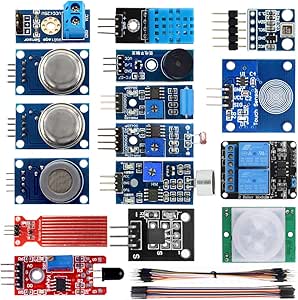 | Best for Sensor Experiments | Number of modules: 16 | Compatible platforms: Arduino UNO R3, Mega2560, Mega328, Nano, Raspberry Pi | Sensor types: Temperature, humidity, sound, light, infrared, motion, flame, vibration, digital touch, air pressure, and others | VIEW ON AMAZON | See Our Full Breakdown |
| THIRDREALITY Smart Switch Starter Kit with Bridge |  | Best for No-Wire Switch Automation | Switch type: Toggle/Rocker | Installation: Surface mount; no wiring required | Neutral wire required: No | VIEW ON AMAZON | See Our Full Breakdown |
| 24-Piece DIY Wireless Home Security Alarm System |  | Best for DIY Alarm Coverage | Kit size: 24 pieces | Connectivity: 2.4 GHz Wi-Fi or 4G SIM card | Voice assistant: Alexa | VIEW ON AMAZON | See Our Full Breakdown |
| LAFVIN ESP32 IoT Smart Home Kit with Sensors and App/Voice Control |  | Best for Guided Home Automation | Processor: ESP32-DevKit | Processor model: ARM Cortex A5 | Processor brand: Espressif | VIEW ON AMAZON | See Our Full Breakdown |
| Tapo T31 Matter-Compatible Door and Window Sensor Starter Kit with Hub |  | Best for Expanding Contact Sensor Coverage | Included: 3 Tapo T110 contact sensors and 1 Tapo H100 smart hub | Connectivity: Sub-G protocol; 2.4 GHz Wi-Fi required | Alarm: Customizable 90 dB alarm | VIEW ON AMAZON | See Our Full Breakdown |
| LAFVIN ESP32 Ultimate Starter Kit with Tutorials |  | Best for Broad Electronics Exploration | Microcontroller: ESP32 | Connectivity: Wi-Fi | Included components: Ultrasonic sensor, RFID module, servo motor, MPU6050 angle sensor, OLED display, temperature and humidity sensor, PIR motion sensor, and other modules | VIEW ON AMAZON | See Our Full Breakdown |
| ESPHome Starter Kit for Home Assistant |  | Best for Local Home Assistant Builds | Platform: ESP32 | Expansion ports: 2 × 14-pin FPC | Included modules: PIR motion sensor, temperature and humidity module, Casita notification module with 10 RGB LEDs, and button module | VIEW ON AMAZON | See Our Full Breakdown |
| KEYESTUDIO ESP32 Smart Home Starter Kit for Arduino and Python |  | Best for a Guided Smart Home Build | Model: KS5009-2 | Languages: Arduino C++ and MicroPython | Projects: 13 | VIEW ON AMAZON | See Our Full Breakdown |
| Smart Home Starter Kit with Echo Hub, Amazon Smart Plug, and 4 Amazon Basics Smart Bulbs |  | Best for an Alexa-First Home Setup | Included devices: Echo Hub, Amazon Smart Plug, and 4 Amazon Basics Smart Bulbs | Compatibility: Alexa-compatible devices | VIEW ON AMAZON | See Our Full Breakdown | |
| YoLink Door and Window Sensor Kit with SpeakerHub, 3 Sensors |  | Best for Large Properties | Included items: 1 YoLink SpeakerHub and 3 door/window sensors | Wireless band: Hub requires 2.4 GHz; sensors communicate on 900 MHz LoRa | Communication range: Up to 1/4 mile in open air | VIEW ON AMAZON | See Our Full Breakdown |
| LAFVIN AIoT Starter Kit with ESP32-S3 and Sensors |  | Best for AI and Maker Learning | Microcontroller: ESP32-S3 | Included modules: RGB LED, WS2812 8-LED strip, DHT11 temp/humidity sensor, SG90 servo, DC fan, dual relay, raindrop sensor, soil sensor | Connectivity and control: MCP protocol AI voice control | VIEW ON AMAZON | See Our Full Breakdown |
| YoLink Smart Home Security Kit with Hub, Door and Motion Sensors, Siren, and Alarm Fob |  | Best DIY Security Starter | Included components: Hub, 2 indoor door/window sensors, indoor motion sensor, siren alarm, AlarmFob | Wireless technology: LoRa | Wireless range: Up to 2,034 feet in open air | VIEW ON AMAZON | See Our Full Breakdown |
| diy smart home starter kit | Connectivity |
|---|---|
| ELEGOO ESP32 Super Starter Kit | Wi-Fi, Bluetooth 4.2, GPIO, I2C, USB |
| 16-in-1 Smart Home Sensor Modu | Not specified in the product description |
| THIRDREALITY Smart Switch Star | Zigbee; 2.4 GHz Wi-Fi |
| 24-Piece DIY Wireless Home Sec | 2.4 GHz Wi-Fi or 4G SIM card |
| LAFVIN ESP32 IoT Smart Home Ki | Wi-Fi |
| Tapo T31 Matter-Compatible Doo | Sub-G protocol; 2.4 GHz Wi-Fi required |
| LAFVIN ESP32 Ultimate Starter | Wi-Fi |
| ESPHome Starter Kit for Home A | — |
| KEYESTUDIO ESP32 Smart Home St | — |
| Smart Home Starter Kit with Ec | — |
| YoLink Door and Window Sensor | — |
| LAFVIN AIoT Starter Kit with E | — |
| YoLink Smart Home Security Kit | — |
More Details on Our Top Picks
ELEGOO ESP32 Super Starter Kit with Tutorial
The ELEGOO ESP32 Super Starter Kit suits a builder who wants to experiment across several kinds of connected projects before settling on one. Its ESP32 board combines Wi-Fi and Bluetooth 4.2 with more than 35 modules, so a buyer can try sensors, displays, motors, and input devices rather than being limited to a fixed smart home build. The 30+ guided projects, with code and circuit diagrams, give newcomers a path into those parts. Compared with the LAFVIN ESP32 IoT Smart Home Kit, this kit offers a wider component selection for open-ended learning, while LAFVIN is more directly organized around home controls such as lighting and fans. That breadth also means more sorting and learning before a useful home automation project takes shape. I’d choose ELEGOO for exploration; builders who want a narrower, more turnkey smart home lesson may prefer LAFVIN.
Pros:- More than 35 modules and electronic components support varied prototypes
- Wi-Fi and Bluetooth enable wireless connected projects
- 30+ projects include code and circuit diagrams
- Works with Arduino IDE
Cons:- The broad component assortment takes time to learn and organize
- Requires coding and circuit assembly before it can control home devices
Best for: New and experienced makers who want to learn ESP32 and prototype several kinds of connected home projects
Not ideal for: Buyers seeking a ready-to-install smart home system or a focused set of home automation lessons
- Processor:Espressif dual-core
- Installed RAM:520 KB SRAM
- Connectivity:Wi-Fi, Bluetooth 4.2, GPIO, I2C, USB
- Wireless compatibility:802.11bgn, Bluetooth
- Compatible software:Arduino IDE, Linux
- Included components:More than 35 modules and electronic components
- Tutorial projects:30+
Our verdict“Choose ELEGOO if you want a wide-ranging ESP32 learning kit and are comfortable turning its parts into your own smart home projects.”
16-in-1 Smart Home Sensor Module Kit for Arduino and Raspberry Pi
This 16-module sensor kit is for DIYers who want to explore how a home can react to its surroundings. Temperature, humidity, light, motion, sound, vibration, and other sensing options let a builder prototype ideas such as occupancy triggers or environmental monitoring, then connect the readings to compatible Arduino boards or Raspberry Pi. The online tutorials provide sample code, circuit diagrams, and libraries, which help make the parts more approachable. Compared with the ELEGOO ESP32 Super Starter Kit, this set concentrates on sensing rather than offering a broader mix of motors, displays, and other components. That focus can be useful for automation experiments, but the product data does not describe a controller or wireless connection in the kit itself. I’d treat it as a parts set for someone who already has a compatible board, not as a standalone smart home starter system.
Pros:- Sixteen sensor modules cover a broad range of conditions and inputs
- Compatible with several Arduino boards and Raspberry Pi
- Online resources include sample code, diagrams, and libraries
Cons:- A compatible Arduino board or Raspberry Pi is needed to build projects
- Tutorials are online rather than described as included materials
- The kit description does not specify wireless connectivity
Best for: Arduino or Raspberry Pi owners who want to prototype sensor-based home automations and learn from sample circuits
Not ideal for: First-time buyers without a compatible board or anyone expecting an all-in-one wireless smart home kit
- Number of modules:16
- Compatible platforms:Arduino UNO R3, Mega2560, Mega328, Nano, Raspberry Pi
- Sensor types:Temperature, humidity, sound, light, infrared, motion, flame, vibration, digital touch, air pressure, and others
- Tutorial materials:Step-by-step instructions, circuit diagrams, sample code, and libraries
- Controller included:Not specified in the product description
- Connectivity:Not specified in the product description
Our verdict“Pick this kit if you already own a compatible board and want to learn sensor-driven automation one module at a time.”
THIRDREALITY Smart Switch Starter Kit with Bridge
The THIRDREALITY Smart Switch Starter Kit takes a different route from the coding kits in this roundup: it adds smart control to a compatible existing toggle or rocker switch, without rewiring or replacing it. The included Zigbee switch and bridge support app and voice control across Alexa, Google Assistant, Apple HomeKit, SmartThings, and Hubitat, with schedules, timers, and group controls. For someone who wants a practical first automation, this is much closer to a usable home upgrade than the ELEGOO ESP32 Super Starter Kit, which is designed for prototyping and learning. Its fit is narrower, though: it is specified for one-way circuits and compatible switch styles, and it runs on two AAA batteries. I’d choose THIRDREALITY for a specific existing switch; buyers hoping to build custom sensor logic should look toward the ESP32 kits.
Pros:- Installs over an existing toggle or rocker switch without wiring
- Does not require a neutral wire
- Supports several major smart home platforms
- Bridge and mounting hardware are included
Cons:- Requires two AAA batteries
- Limited to compatible toggle or rocker switches and one-way circuits
- Requires 2.4 GHz Wi-Fi for the bridge
Best for: Renters or homeowners with compatible toggle or rocker switches who want app and voice control without wiring
Not ideal for: DIYers seeking programmable sensor projects, or households with incompatible switch styles or circuit setups
- Switch type:Toggle/Rocker
- Installation:Surface mount; no wiring required
- Neutral wire required:No
- Connectivity:Zigbee; 2.4 GHz Wi-Fi
- Compatible platforms:Amazon Alexa, Google Assistant, Apple HomeKit, Samsung SmartThings, Hubitat
- Circuit type:1-way
- Included:Zigbee switch, bridge, 2 AAA batteries, mounting hardware
Our verdict“Choose THIRDREALITY when your goal is to automate a compatible existing wall switch with minimal installation work.”
24-Piece DIY Wireless Home Security Alarm System
This 24-piece alarm system is the most security-focused option in this batch. Door and window sensors, PIR motion detectors, and a 120 dB alarm give a household a way to build a basic intrusion setup, while app alerts, calls, and SMS can keep notifications moving beyond the home network when configured with a 4G SIM. It supports Smart Life and Tuya apps, Alexa, and expansion up to 99 sensors, with no monthly fee listed. Compared with the THIRDREALITY Smart Switch Starter Kit, this is aimed at alerts and alarm coverage rather than controlling a particular light switch. The tradeoff is greater dependence on setup choices: cellular connectivity requires a 4G SIM, and the system supports 2.4 GHz Wi-Fi rather than 5G. It makes sense for buyers who want a self-managed alarm kit, not general-purpose smart home experimentation.
Pros:- Includes door/window sensors and PIR motion detectors
- Offers Wi-Fi or 4G SIM connectivity
- Can expand to support up to 99 sensors
- Sends app alerts, calls, and SMS without a monthly fee
Cons:- Cellular connectivity requires a 4G SIM card
- Supports 2.4 GHz Wi-Fi and does not support 5G
- Focused on alarm monitoring rather than broader home automation projects
Best for: Households that want a self-managed door and motion alarm with remote notifications and room to add sensors
Not ideal for: Buyers looking for a flexible learning kit or those who need cellular service without sourcing a 4G SIM
- Kit size:24 pieces
- Connectivity:2.4 GHz Wi-Fi or 4G SIM card
- Voice assistant:Alexa
- App compatibility:Smart Life and Tuya
- Alarm volume:120 dB
- Maximum supported sensors:99
- Notifications:App alerts, auto-dial, and SMS to up to 5 numbers
- Monthly fee:None
Our verdict“Choose this system if DIY alarm coverage and remote alerts matter more to you than learning to program a customizable smart home.”
LAFVIN ESP32 IoT Smart Home Kit with Sensors and App/Voice Control
The LAFVIN ESP32 IoT Smart Home Kit is the clearest match here for someone who wants to learn by building recognizable home controls. Its temperature, humidity, light, and motion sensors pair with Wi-Fi app control, voice recognition, and manual controls, while guided tutorials and plug-and-play modules point toward projects such as lighting and fan control. Compared with the ELEGOO ESP32 Super Starter Kit, LAFVIN has a more focused smart home path; ELEGOO supplies a wider assortment for less directed experimentation. That focus may make it easier to connect a lesson to a home use case, but it also means fewer described component types and less room to roam. Assembly and programming are still part of the work, and the listing does not specify every included module. I’d pick LAFVIN when home automation is the learning goal rather than general electronics exploration.
Pros:- Supports app, voice, and manual control
- Includes temperature, humidity, light, and motion sensors
- Arduino IDE and editable open-source code support customization
- Plug-and-play modules and tutorials offer a focused learning path
Cons:- Assembly and programming are required
- The listing does not specify every included module
- Its focused project scope is less open-ended than the ELEGOO kit
Best for: Beginners who want guided, programmable projects for lighting, fans, and sensor-based home controls
Not ideal for: Makers seeking a fully assembled smart home system or a clearly itemized, broad electronics assortment
- Processor:ESP32-DevKit
- Processor model:ARM Cortex A5
- Processor brand:Espressif
- Connectivity:Wi-Fi
- Programming environment:Arduino IDE
- Sensors:Temperature, humidity, light, and motion
- Controls:Mobile app, voice recognition, and manual
- Dimensions:10.24 x 7.95 x 8.66 inches
Our verdict“Choose LAFVIN if you want a guided entry into programmable home controls and are ready to assemble and code the projects.”
Tapo T31 Matter-Compatible Door and Window Sensor Starter Kit with Hub
For a DIY starter kit centered on doors and windows, this bundle gives you three contact sensors and a hub in one setup. The H100’s built-in chime can make an opening easier to notice at home, while notifications and a customizable 90 dB alarm add options for alerts and automations. Matter compatibility sets it apart from the project-focused KEYESTUDIO ESP32 Smart Home Starter Kit: Tapo is aimed at adding ready-made sensors to a smart home, while KEYESTUDIO teaches you to assemble and program devices. The tradeoff is the hub dependency; these sensors need the included Tapo hub and a 2.4 GHz Wi-Fi network. This makes sense for buyers who want practical entry-point monitoring and room to add more Tapo sensors, switches, and buttons, but less so for someone seeking a standalone sensor or a hands-on electronics course.
Pros:- Three contact sensors cover multiple openings from the start
- Hub includes a built-in chime and supports a customizable 90 dB alarm
- Matter compatibility supports integration with several major smart home platforms
- Tool-free magnetic or adhesive mounting simplifies installation
Cons:- Sensors require the included Tapo hub to operate
- A 2.4 GHz Wi-Fi network is required
- Contact sensors monitor openings, so this kit does not provide the varied project components of the KEYESTUDIO kit
Best for: Households that want to monitor several doors or windows and connect alerts to a Matter-compatible smart home
Not ideal for: DIY electronics learners who want to build and program their own devices, or buyers unwilling to use a hub and 2.4 GHz Wi-Fi
- Included:3 Tapo T110 contact sensors and 1 Tapo H100 smart hub
- Connectivity:Sub-G protocol; 2.4 GHz Wi-Fi required
- Alarm:Customizable 90 dB alarm
- Battery:CR2032; up to 2 years
- Mounting:Magnetic or 3M adhesive
- Hub capacity:Up to 64 sensors, switches, and buttons
- Compatibility:Matter; Alexa, Google Home, Apple HomeKit, and Samsung SmartThings
Our verdict“Choose this kit for straightforward, expandable door and window alerts; skip it if your starter project needs programmable electronics or hub-free sensors.”
LAFVIN ESP32 Ultimate Starter Kit with Tutorials
This is the most open-ended learning pick in this group: an ESP32 with Wi-Fi plus components such as an RFID module, motion sensor, display, servo, and temperature and humidity sensor. The included wiring diagrams, sample code, and project courses help a beginner move from parts to working experiments, including smart home controls and monitoring. Compared with the more guided KEYESTUDIO ESP32 Smart Home Starter Kit, LAFVIN lists over 20 project types but does not provide the same defined wooden-house build and 13-project progression in the supplied details. That flexibility comes with a real cost in effort: users must assemble and program projects themselves. The full component inventory is also not specified, so buyers who need a precisely defined set of parts should favor a kit with a more detailed list. Choose this for learning range, not plug-and-play home control.
Pros:- Tutorials include wiring diagrams and sample code to support learning
- Wi-Fi enables web-based control and sensor monitoring
- Includes varied modules such as RFID, PIR, display, and temperature and humidity sensing
- Project material covers more than 20 project types
Cons:- Projects require hands-on assembly and programming
- The complete list and quantities of included components are not specified
- Less structured as a finished smart home build than the KEYESTUDIO kit
Best for: Beginners and hobbyists who want to learn ESP32 programming through varied sensor, RFID, and Wi-Fi projects
Not ideal for: Buyers seeking a ready-to-use smart home system or a fully itemized component set
- Microcontroller:ESP32
- Connectivity:Wi-Fi
- Included components:Ultrasonic sensor, RFID module, servo motor, MPU6050 angle sensor, OLED display, temperature and humidity sensor, PIR motion sensor, and other modules
- Tutorials:Project courses, wiring diagrams, and sample code
- Project count:Over 20 project types
Our verdict“Pick this kit to explore a wide range of ESP32 projects, but choose KEYESTUDIO if you want a more defined smart-home build path.”
ESPHome Starter Kit for Home Assistant
This modular ESP32 kit is the clearest fit for a buyer who wants a local, Home Assistant-connected project without beginning with soldering or code. Its four included modules cover motion, temperature and humidity, button input, and notifications through a module with 10 RGB LEDs. The visual ESPHome Device Builder lowers the setup barrier, while local control and no cloud or subscription requirement appeal to buyers who want their automations to run within their own home. Compared with the LAFVIN ESP32 Ultimate Starter Kit, this kit is more focused and approachable for a Home Assistant setup, but offers fewer kinds of general-purpose electronics experiments. Its modular format also means expansion depends on compatible modules. Choose it for a practical local automation base; skip it if you want a large assortment of components or broad tutorial-led programming projects.
Pros:- Setup requires no soldering or coding experience
- Local control does not require cloud services or subscriptions
- Four modules provide motion, climate sensing, button input, and notifications
- Supports two modules simultaneously
Cons:- Expansion depends on compatible modules
- Its focused module set is less varied than the LAFVIN ESP32 Ultimate Starter Kit
- Home Assistant and ESPHome are central to its intended use
Best for: Home Assistant users who want a solder-free, local-control starter project with basic sensing and notifications
Not ideal for: Learners looking for a broad electronics component assortment or projects outside the ESPHome and Home Assistant ecosystem
- Platform:ESP32
- Expansion ports:2 × 14-pin FPC
- Included modules:PIR motion sensor, temperature and humidity module, Casita notification module with 10 RGB LEDs, and button module
- Wireless connectivity:Wi-Fi, Bluetooth LE, Thread, and Zigbee
- Compatibility:ESPHome and Home Assistant
- Soldering required:No
- Cloud or subscription required:No
Our verdict“Choose this for a simple local Home Assistant build with included sensors; look elsewhere for a broader electronics learning kit.”
KEYESTUDIO ESP32 Smart Home Starter Kit for Arduino and Python
The wooden house build gives this kit a tangible goal: assemble a model home, then add motion detection, RFID access, lighting, and other functions through 13 projects. Its ESP32, sensors, modules, cables, and online tutorials make it a more directed learning experience than the open-ended LAFVIN ESP32 Ultimate Starter Kit. Support for both Arduino C++ and MicroPython lets learners choose between two programming approaches as they work through the projects. This remains a hands-on kit, not a finished smart home system: buyers need to assemble the parts, follow tutorials, and provide six AA batteries. The one-month warranty is also limited. For teens or adults who want a structured path from wiring to a working model, that tradeoff is part of the learning; those who mainly want real-home alerts should look at a sensor kit instead.
Pros:- Supports both Arduino C++ and MicroPython
- Thirteen projects provide a defined learning path
- Online tutorials explain wiring, code, and assembly
- Includes smart home-oriented parts such as PIR, RFID, gas sensing, lighting, and an LCD
Cons:- Requires hands-on assembly and programming
- Six AA batteries are required and not included
- The listed warranty lasts one month
Best for: Teens and adults who want guided practice assembling and programming a model smart home in Arduino C++ or MicroPython
Not ideal for: Buyers who want ready-to-install home devices, do not want to assemble projects, or prefer not to source batteries separately
- Model:KS5009-2
- Languages:Arduino C++ and MicroPython
- Projects:13
- Included components:ESP32 development board, expansion board, wooden house parts, sensors, modules, and connection cables
- Sensors and modules:DHT11, PIR motion sensor, gas sensor, RFID, SK6812 RGB lighting, servo motors, fan, and LCD1602
- Power:Requires 6 AA batteries, not included
- Assembly:Unassembled; online tutorials provided
- Age range:Adults and teens
- Warranty:1 month
Our verdict“Choose KEYESTUDIO for a structured, build-it-yourself model home; skip it if you want smart devices ready to install around your actual home.”
Smart Home Starter Kit with Echo Hub, Amazon Smart Plug, and 4 Amazon Basics Smart Bulbs
This bundle offers the most direct route in this group from unboxing to everyday lighting and plug control: it pairs an Echo Hub with a smart plug and four bulbs, then adds voice routines to coordinate compatible devices. That makes it a different kind of DIY starter kit from the sensor-and-microcontroller builds here. Compared with the Tapo T31 sensor kit, it starts with lighting and general Alexa control rather than door and window monitoring. The hub is also intended to work with compatible cameras, locks, thermostats, and other devices, so buyers can build outward from a familiar voice interface. The tradeoff is platform dependence: the bundle centers on Alexa-compatible devices, and some advertised features depend on Alexa+. It suits households already choosing Alexa; buyers seeking local, cloud-free control may prefer the ESPHome kit.
Pros:- Includes a hub, smart plug, and four smart bulbs in one bundle
- Supports voice routines and control of multiple compatible devices
- Hub works with compatible cameras, lights, locks, and thermostats
- Guided setup can help new Alexa smart home users get started
Cons:- Designed around Alexa-compatible devices and setup
- Some advertised features depend on Alexa+
- Less suited to local-control or programming-focused DIY than the ESPHome kit
Best for: Households starting an Alexa-based setup that want a hub, smart plug, and several bulbs for voice routines
Not ideal for: Buyers seeking platform-neutral or cloud-free control, or those who want a hands-on electronics learning kit
- Included devices:Echo Hub, Amazon Smart Plug, and 4 Amazon Basics Smart Bulbs
- Compatibility:Alexa-compatible devices
Our verdict“Choose this bundle to start an Alexa-centered home with lighting and plug control, but skip it if you want platform independence or hands-on building.”
YoLink Door and Window Sensor Kit with SpeakerHub, 3 Sensors
What sets this kit apart from the Tapo T31 sensor kit is its LoRa wireless technology, which reaches up to a quarter mile in open air. That range matters if you want sensors on a detached garage, shed, or garden gate — places where standard Wi-Fi sensors like Tapo’s simply drop off the network. The included SpeakerHub adds something most starter hubs don’t: customizable tones, MP3 playback, and text-to-speech alerts, so you hear “back door open” instead of guessing which chime fired.
The tradeoff is that this is an entry-point-only system. Unlike the YoLink full security kit, there’s no motion sensor, siren, or alarm fob here, so it works best as an alert and automation layer rather than a security system. Batteries lasting up to five years keep maintenance low, and support for 300+ devices means you can expand for years without replacing the hub.
Pros:- LoRa range up to 1/4 mile reaches garages, sheds, and gates that Wi-Fi sensors can’t
- SpeakerHub delivers text-to-speech and customizable audio alerts rather than generic chimes
- Batteries are preinstalled and rated for up to five years of maintenance-free use
- Hub supports 300+ devices, leaving huge room to expand later
Cons:- Requires 2.4 GHz connectivity and a hub for any real functionality
- No siren, motion sensor, or alarm features compared to full security kits
Best for: Homeowners with outbuildings or spread-out properties who need sensors far beyond Wi-Fi range and want spoken, specific alerts
Not ideal for: Renters or buyers wanting a complete alarm system — there’s no siren or motion detection, and the hub plus 2.4 GHz network are non-negotiable
- Included items:1 YoLink SpeakerHub and 3 door/window sensors
- Wireless band:Hub requires 2.4 GHz; sensors communicate on 900 MHz LoRa
- Communication range:Up to 1/4 mile in open air
- Battery life:Up to 5 years, batteries preinstalled
- System capacity:Supports 300+ devices
- Alerts:Customizable tones, MP3 playback, text-to-speech
- Mounting:Pre-applied 3M mounting tape
Our verdict“If your property is larger than a typical suburban lot and you want to know exactly which door opened, this is the sensor kit that actually reaches.”
LAFVIN AIoT Starter Kit with ESP32-S3 and Sensors
This is the most educationally ambitious kit in the lineup, pairing an ESP32-S3 microcontroller with eight modules spanning both smart home and unexpected territory — soil and raindrop sensors sit alongside a relay, servo, and fan. Compared with the LAFVIN ESP32 Ultimate Starter Kit, this one leans into AI voice control via the MCP protocol, which makes it a better pick for anyone curious about voice-driven IoT projects rather than straightforward gadget building.
Be clear about what you’re buying: this is a maker kit, not a home product. Unlike the YoLink kits or the Tapo T31, nothing here monitors your actual home out of the box. Firmware must be flashed before use, and documentation on programming requirements is thin, so complete beginners may stall without prior Arduino or MicroPython exposure. For STEM learners and tinkerers, though, the breadth of modules makes it a genuinely varied playground.
Pros:- Eight varied modules cover smart home, climate, and smart-agriculture project types
- MCP protocol AI voice control is a rare feature at this level
- Precompiled firmware makes projects near plug-and-play after initial flashing
- Online guides and technical support are available for learners
Cons:- Requires firmware flashing before anything works
- Sparse documentation on programming details and compatibility requirements
Best for: Students, STEM learners, and makers who want to prototype AI voice-controlled smart home and agriculture projects on an ESP32-S3
Not ideal for: Anyone who just wants working home sensors day one — flashing firmware and light coding are prerequisites, not optional extras
- Microcontroller:ESP32-S3
- Included modules:RGB LED, WS2812 8-LED strip, DHT11 temp/humidity sensor, SG90 servo, DC fan, dual relay, raindrop sensor, soil sensor
- Connectivity and control:MCP protocol AI voice control
- Firmware:Precompiled
- Applications:STEM education, smart home prototypes, maker projects, smart agriculture
- Support:Online guides and technical support
Our verdict“A project lab rather than a home upgrade — pick it to learn AI-driven IoT, not to secure your house this weekend.”
YoLink Smart Home Security Kit with Hub, Door and Motion Sensors, Siren, and Alarm Fob
Of all the security-focused kits here, this is the only one that feels complete on day one: a hub, two door/window sensors, a motion sensor, a siren alarm, and an AlarmFob for arming and disarming without fumbling for your phone. Compared with the 24-Piece DIY Wireless Home Security Alarm System, you get far fewer sensors but far more flexibility — Alexa and Google Assistant routines, push, email, and SMS alerts, and LoRa range up to 2,034 feet that keeps working where Wi-Fi kits falter.
The AlarmFob is the differentiator against the smaller YoLink sensor kit, turning a notification system into something a household can actually operate like an alarm panel. The tradeoffs are real but manageable: SMS messages are limited on the free tier, and central station monitoring costs extra rather than coming included. Still, for a self-monitored DIY setup, the component mix is hard to beat at this scope.
Pros:- Complete component mix: hub, two door sensors, motion sensor, siren, and AlarmFob
- LoRa range up to 2,034 feet suits properties with weak Wi-Fi coverage
- Works with Alexa and Google Assistant routines
- Alerts via push notifications, email, and SMS
Cons:- Free SMS messages are limited
- Central station monitoring is a paid optional service, not included
Best for: Homeowners who want a self-monitored alarm system with siren, motion detection, and a physical fob — not just phone notifications
Not ideal for: Buyers expecting professional monitoring or unlimited SMS alerts included — both require add-ons or paid service
- Included components:Hub, 2 indoor door/window sensors, indoor motion sensor, siren alarm, AlarmFob
- Wireless technology:LoRa
- Wireless range:Up to 2,034 feet in open air
- Voice assistant compatibility:Alexa and Google Assistant
- Alerts:Push notifications, email, and SMS
- Monitoring:Central station monitoring available as an optional service
Our verdict“The most well-rounded DIY alarm starter here — buy it if you want a siren and a fob, not just another sensor pack.”

How We Picked
I evaluated these kits on five criteria, weighted by what actually determines buyer satisfaction in this category. Day-one usability came first: could a buyer get something working within the first evening, whether that’s an automated lamp or a blinking sensor demo? Ecosystem openness came second, because a kit tied to one app or hub limits everything you buy afterward — Matter compatibility and Home Assistant support earned real ranking weight. Third, tutorial and documentation quality, which matters more for DIY kits than any hardware spec; a box of sensors with a poorly translated manual is a drawer of e-waste. Fourth, expandability: whether the kit is the start of a system or a dead end. Fifth, component value for the tinkerer kits, judged on usefulness rather than raw counts.
The ranking logic reflects a deliberate balance: ready-to-run kits sit higher when they offer genuine ecosystem breadth, while builder kits rank on educational payoff and software freedom. Where two kits overlap heavily — the LAFVIN and ELEGOO ESP32 kits, for example — I ranked on the strength of the learning path rather than treating them as interchangeable. No kit earned its position on hardware alone.
Factors to Consider When Choosing Diy Smart Home Starter Kits
Before picking a kit, it helps to understand the structural choices in this category — decisions that shape every device you buy for years afterward. These are the factors that mattered most across all thirteen kits I compared.Decide Your Path First: Plug-and-Play or Build-It-Yourself
The single biggest mistake buyers make in this category is buying the wrong kind of kit entirely. A buyer who wants lights that respond to a voice command will be frustrated by an ESP32 kit that requires flashing firmware and writing config files; a hobbyist who wants to learn IoT programming will be bored by a smart plug and bulb bundle within a week. Plug-and-play kits like the Echo Hub bundle or Tapo sensor kit deliver results in under an hour but cap how deeply you can customize. Builder kits like the KEYESTUDIO and ESPHome options flip that trade: hours or days of setup, but near-total control and no vendor lock-in. Ask yourself honestly whether the building is the point or the result is the point — the honest answer determines half of this list.
Ecosystem and Protocol Compatibility
Every hub-based kit on this list anchors you to an ecosystem, and that decision compounds. A Tapo hub speaks Zigbee and works toward Matter support; an Echo Hub kit centers your home on Alexa; YoLink uses its own LoRa protocol with a solid app but fewer third-party integrations. The mistake to avoid is buying one brand’s hub and another brand’s sensors assuming they’ll talk — in DIY smart homes, protocol compatibility is the currency. If you already own devices from one ecosystem, staying inside it usually beats a slightly better standalone kit. Buyers who suspect they’ll eventually want full local control should look for Home Assistant compatibility before anything else, since retrofitting it later is often impossible.
Tutorial Quality Beats Component Count
With builder kits, the components in the box matter far less than how well you’re taught to use them. Nearly every ESP32 kit contains the same motion sensor, temperature sensor, and relay modules; what separates a great kit from a mediocre one is whether the lessons progress logically from blinking an LED to a working app-connected prototype. Look for kits with structured project guides rather than a folder of loose code examples, and check whether the documentation is maintained. A kit promising forty components with weak lessons delivers less than one with twenty components and a well-written course. This is why the rankings among similar ESP32 kits hinge on the learning path, not the parts list.
Wireless Range and Home Size
Range is the spec nobody thinks about until sensors start dropping offline. Standard Wi-Fi and Zigbee devices are reliable within a typical house but struggle with detached garages, basements with concrete walls, or large properties. LoRa-based systems like YoLink exist specifically for this scenario, reaching devices hundreds of feet away through obstacles that kill cheaper protocols. If your automation plans stop at your front door, this factor shouldn’t cost you extra money. If you want a sensor on a garden shed, buying the long-range system from the start is cheaper than replacing a full kit that can’t reach it.
Security Kits Versus Automation Kits
Many products marketed as smart home starter kits are really alarm systems with an app, and the distinction matters. The YoLink security kit and the 24-piece wireless alarm system are designed around entry detection, sirens, and alerting — they won’t dim a lamp or start a routine. Conversely, an Echo Hub bundle automates your living room beautifully but offers almost no intrusion protection. Buyers whose underlying motivation is safety should be honest about it before checkout, because mixing up these intents leads to returns. A small number of buyers genuinely need both, and in that case a security kit first makes sense, since automation is easier to add piecemeal than protection is.
Hidden Costs and Long-Term Fees
The sticker contents never tell the full cost story. Builder kits assume you may need a soldering iron, jumper wires beyond what’s included, and sometimes a separate power supply; some ESP32 boards with attached screens drain bundled batteries fast. Hub-based kits vary on cloud dependency — local control keeps automations running when the internet drops and avoids subscription creep, while cloud-reliant systems can lock features behind monthly plans. Check whether the companion app requires an account and whether recording or alerting features cost extra after a trial period. The cheapest kit upfront is occasionally the most expensive over three years.
Frequently Asked Questions
Should I buy an ESP32 builder kit or a plug-and-play kit like the Echo Hub bundle?
This comes down to whether you want a smart home or you want to learn how smart homes work. The Echo Hub bundle delivers working automations in an afternoon with no coding, and it’s the right call if your goal is simply controlling lights and plugs. ESP32 kits from ELEGOO, LAFVIN, and KEYESTUDIO are electronics education products — you’ll spend weekends on tutorials before you have anything practical running, but you’ll understand every layer of the system and can build exactly what you want afterward. A reasonable middle path is starting plug-and-play and adding a builder kit later once you know which custom project you actually want to tackle. Buyers who skip this self-assessment are the ones returning kits.
What does Matter compatibility actually get me with these kits?
Matter is the shared language that lets devices from different brands work together without each manufacturer maintaining its own bridge. For the kits in this roundup, it matters most for the Tapo sensor kit and the Echo Hub bundle, because it means the sensors and controls you buy can eventually be controlled from Apple Home, Google Home, or Alexa rather than one app. It does not apply to the raw ESP32 kits, which sit below the protocol layer entirely. The honest caveat: Matter support across budget brands is still uneven in 2026, and some devices only expose partial features through it. Treat Matter as future-proofing rather than a guarantee of full cross-platform function today.
Do I need a hub, or can I run everything over Wi-Fi?
Wi-Fi-only setups work fine for a handful of devices, but they strain your router as you scale and every device becomes a dependency on your home network and internet connection. A hub — like the bridges included with the THIRDREALITY, Tapo, and YoLink kits — handles a dedicated protocol such as Zigbee or LoRa, which tends to be more reliable for battery-powered sensors and keeps working locally when the internet drops. The tradeoff is an extra box, an extra app, and one more brand commitment. My general guidance: under five devices, Wi-Fi is fine; past that, or if reliability matters for security sensors, a hub-based kit pays for itself in fewer dropped connections.
Can these kits integrate with Home Assistant?
Several of them can, but the integration quality varies enormously. The ESPHome starter kit is purpose-built for Home Assistant and is the obvious pick if local control is your priority — the LAFVIN and KEYESTUDIO ESP32 kits can also be flashed with ESPHome firmware, though that means abandoning their stock tutorials. On the hub side, Tapo and YoLink both offer Home Assistant integrations that expose most sensor data, while the Echo Hub bundle is designed around Alexa and offers limited outside access. The mistake to avoid is assuming a kit’s app quality predicts its Home Assistant support — they’re separate development tracks, and budget brands often neglect the latter.
Are the cheap 16-in-1 sensor module kits a smart way to start?
They can be, but only for a specific kind of buyer. These module kits assume you already have an Arduino or Raspberry Pi and some coding familiarity — they’re components, not a guided system, so there’s no coherent smart home project waiting inside the box. What they offer is cheap experimentation: a wide variety of sensors for less than buying parts individually, useful if you know what you want to build. Compared with a structured kit like KEYESTUDIO’s, you trade the learning path for breadth and flexibility. First-timers should start with a tutorial-driven kit and add a module collection later, once they know which sensors they actually use.
Conclusion
Mapping these thirteen kits to real buyers: the Echo Hub starter bundle is the best overall pick for anyone who wants a working smart home this weekend — it’s the only kit that includes a dedicated control panel plus devices, and it needs zero technical skill. For best value, the THIRDREALITY switch kit with bridge keeps the entry price low while still landing you in a real ecosystem. The YoLink security kit earns the premium slot thanks to LoRa range and a genuinely complete protection package — siren, fob, motion and entry sensors — while its smaller three-sensor sibling suits apartments. Beginners who want to learn should choose the ELEGOO or LAFVIN Ultimate ESP32 kit based on tutorial preference, and the KEYESTUDIO kit is the strongest structured path toward Python-based smart home projects. For specific needs: the ESPHome kit is the only real answer for Home Assistant loyalists, the Tapo Matter kit fits multi-platform households, and the 16-in-1 module kit serves makers who already own a Pi and just need parts. Whatever you choose, decide your path — convenience or control — before you click buy, and the rest of the decision follows from there.
Halloween Picks
halloween
As an affiliate, we earn on qualifying purchases.