Smart hearing amplifiers range from simple personal sound amplifiers to rechargeable, Bluetooth-enabled devices, so the right choice depends on how and where you need help hearing. I’d put the Audien Atom One OTC Hearing Aid first for buyers seeking a compact OTC-style option, while the Blue Deer F2H PRO stands out for bone conduction and Bluetooth, and the SuperEar SE5000 offers a straightforward handheld listening setup. The main tradeoffs are discretion versus easy handling, simple controls versus app or wireless features, and rechargeable convenience versus longer battery claims. Not every amplifier is a substitute for a clinically fitted hearing aid, and comfort and fit can matter as much as connectivity. Read on for the full comparison and guidance on choosing by listening needs.

Get business pricing on tech for your team
- Business-only prices and quantity discounts
- Tax-exempt purchasing
- Multiple users, one account, clear invoices
Complete the kit


Key Takeaways
- The lineup splits into distinct formats: handheld and headphone amplifiers such as the SuperEar SE5000 prioritize direct, simple listening, while in-ear, neckband, and bone-conduction models suit different comfort and wear preferences.
- Bluetooth does not automatically mean better hearing support: the Diggingsound neckband and Blue Deer F2H PRO add wireless use, but buyers should weigh those features against fit, controls, and their main listening environment.
- Battery claims describe different conveniences: the 500-hour and 100-hour listings emphasize long use, while rechargeable models with cases emphasize repeatable charging; check what the stated runtime actually covers.
- Physical controls remain a meaningful advantage: products with stated volume levels or direct volume control may be easier to adjust than app-dependent options, particularly for buyers who want fewer setup steps.
- Bone conduction is a specialized choice: the Blue Deer F2H PRO and app-controlled bone-conduction model offer an alternative to devices that sit in the ear, but they will not suit every wearer or hearing need.
| SuperEar SE5000 Personal Sound Amplifier with Headphones and Earbuds |  | Best for Flexible Everyday Listening | Amplification: Up to 50+ dB | Battery: 1 AAA battery included | Battery life: Up to 30 hours | VIEW ON AMAZON | See Our Full Breakdown |
| Diggingsound Neckband Bluetooth Hearing Aids for Seniors |  | Best for Bluetooth Listening | Charging time: 1.5 hours | Battery life: Up to 24 hours | Hearing compensation: Up to 35 dB | VIEW ON AMAZON | See Our Full Breakdown |
| Rechargeable Hearing Amplifier with Headphones |  | Best for Long Runtime | Sound gain: Up to 65 dB | Charging time: About 1 hour | Battery life: Up to 120 hours per charge | VIEW ON AMAZON | See Our Full Breakdown |
| Rechargeable Hearing Aids for Seniors and Adults with 5-Level Volume Control |  | Best for Charging Case Convenience | Technology: RIC (receiver-in-canal) | Sound amplification: Up to 40 dB ±5 dB | Battery life: Up to 25 hours per charge; up to 100 hours with charging case | VIEW ON AMAZON | See Our Full Breakdown |
| Hearing Aid for Seniors – Noise Cancelling – 500‑Hour Battery Life |  | Best for Extended Battery Life | Battery type: P675 Zine Air Varta | Battery capacity: 620 mAh | Battery life: Up to 500 hours per charge | VIEW ON AMAZON | See Our Full Breakdown |
| Rechargeable Bluetooth Hearing Aids for Seniors |  | Best for Bluetooth Versatility | Volume settings: 5 | Voice amplification: Up to 42 dB | Noise reduction: 3 levels; up to 18 dB | VIEW ON AMAZON | See Our Full Breakdown |
| Rechargeable In-Ear Hearing Amplifier with Noise Reduction and Volume Control |  | Best for Long Stated Runtime | Type: In-ear hearing amplifier | Power: USB rechargeable | Charging time: Approximately 2–4 hours | VIEW ON AMAZON | See Our Full Breakdown |
| Rechargeable Personal Hearing Amplifier with Headphones and Directional Microphone |  | Best for Simple Directional Listening | Maximum sound gain: 65 dB | Charging time: 1 hour | Battery life: Up to 120 hours | VIEW ON AMAZON | See Our Full Breakdown |
| Hearing Aids Hearing Amplifiers for Seniors Rechargeable with Noise Cancelling Hearing Aid Loss Amplifier Seniors – Rechargeable with 48+ Hour Battery & Charging Case -Blue Red |  | Best for First-Time In-Ear Users | Volume levels: 5 | Weight: 2 g | Battery use: Up to 60 hours on a single charge, as stated | VIEW ON AMAZON | See Our Full Breakdown |
| Bigprot M802 Rechargeable Hearing Aids with Charging Case, White |  | Best for Multi-Environment Modes | Model: M802 | Color: White | Type: Rechargeable behind-the-ear hearing aids | VIEW ON AMAZON | See Our Full Breakdown |
| Blue Deer F2H PRO Bone Conduction Hearing Amplifiers with Bluetooth |  | Best for Balanced Open-Ear Controls | Fit: Open-ear, behind-the-ear bone conduction | Connectivity: Bluetooth 5.3 | Weight: 35 g | VIEW ON AMAZON | See Our Full Breakdown |
| Bone Conduction Hearing Amplifier for Seniors, Bluetooth with App Control |  | Best for App Features | Fit: Open-ear; rests on cheekbone | Weight: 25 g | Battery life: Up to 10 hours per charge | VIEW ON AMAZON | See Our Full Breakdown |
| Audien Atom One OTC Hearing Aid | 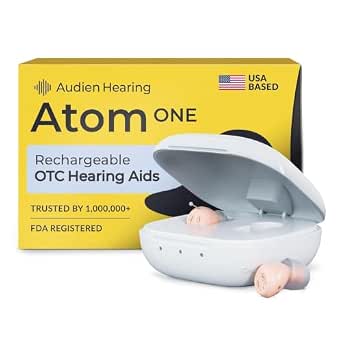 | Best for Simple, Discreet Wear | Device type: FDA-registered OTC hearing aid for adults with mild to moderate hearing loss | Fit: In-ear | Controls: Analog volume and frequency dials | VIEW ON AMAZON | See Our Full Breakdown |
| OTC Hearing Aids for Seniors with Noise Cancelling, 100 Hours Battery Life | 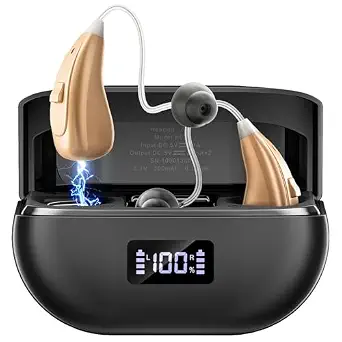 | Best for Long Battery Runtime | Fit: In-ear | Weight per hearing aid: 3 g | Noise cancellation: 16-channel | VIEW ON AMAZON | See Our Full Breakdown |
| smart hearing amplifier | Battery life |
|---|---|
| SuperEar SE5000 Personal Sound | Up to 30 hours |
| Diggingsound Neckband Bluetoot | Up to 24 hours |
| Rechargeable Hearing Amplifier | Up to 120 hours per charge |
| Rechargeable Hearing Aids for | Up to 25 hours per charge; up to 100 hours with charging case |
| Hearing Aid for Seniors | Up to 500 hours per charge |
| Rechargeable Bluetooth Hearing | — |
| Rechargeable In-Ear Hearing Am | — |
| Rechargeable Personal Hearing | Up to 120 hours |
| Hearing Aids Hearing Amplifier | — |
| Bigprot M802 Rechargeable Hear | — |
| Blue Deer F2H PRO Bone Conduct | Up to 8–10 hours |
| Bone Conduction Hearing Amplif | Up to 10 hours per charge |
| Audien Atom One OTC Hearing Ai | Up to 24 hours per charge |
| OTC Hearing Aids for Seniors w | — |
More Details on Our Top Picks
SuperEar SE5000 Personal Sound Amplifier with Headphones and Earbuds
Two listening options and simple tactile control give the SuperEar SE5000 a distinct role among these amplifiers. Its swivel microphone picks up nearby sound, while the included headphones and earbuds let buyers choose a listening style for conversations or TV in the room. Compared with the Rechargeable Hearing Amplifier with Headphones, it offers less listed amplification and lacks automatic gain control, but its handheld design and belt clip make it easy to carry between settings. The tradeoff is that it does not connect directly or wirelessly to a TV, so it amplifies room sound rather than TV audio from a dedicated connection. Up to 30 hours from one AAA battery is convenient, though buyers must replace batteries instead of recharging the device.
Pros:- Includes both stereo headphones and stereo earbuds
- Swivel microphone and tactile volume wheel provide straightforward control
- Lightweight handheld design includes a stainless steel belt clip
- Runs for up to 30 hours on one AAA battery
Cons:- Does not connect directly or wirelessly to a TV
- Requires disposable AAA battery replacement
- Lacks the directional microphone and automatic gain control listed for the Rechargeable Hearing Amplifier with Headphones
Best for: People who want a portable amplifier for nearby conversations and room listening, with both headphones and earbuds included
Not ideal for: TV viewers who need audio streamed directly to their headphones or buyers who prefer rechargeable devices
- Amplification:Up to 50+ dB
- Battery:1 AAA battery included
- Battery life:Up to 30 hours
- Included accessories:Stereo headphones, stereo earbuds, belt clip, and screw
- Volume control:Adjustable tactile wheel
- Microphone:Swivel microphone
- TV connection:Does not connect directly or wirelessly
Our verdict“Choose the SuperEar SE5000 if you want a carryable ambient-sound amplifier with two listening accessories and can do without direct TV audio.”
Diggingsound Neckband Bluetooth Hearing Aids for Seniors
Bluetooth headset functionality is the Diggingsound neckband’s clearest advantage for buyers who want amplification alongside music or TV listening. Its rechargeable design runs for up to 24 hours after a 1.5-hour charge, avoiding the disposable battery changes required by the SuperEar SE5000. Five volume levels and two noise reduction modes offer some adjustment, while five ear dome sizes give buyers more fit options than the listed details for the SuperEar. The tradeoff is that the product data does not establish how well its noise reduction works, so I would not choose it solely for noisy environments. Its stated compensation is up to 35 dB, below the SuperEar’s listed amplification figure; these figures describe different products and should not be treated as a direct measure of real-world hearing benefit.
Pros:- Bluetooth headset functionality supports listening to music or TV
- Rechargeable battery provides up to 24 hours of use
- Charges in 1.5 hours
- Offers five volume levels, two noise reduction modes, and five ear dome sizes
Cons:- Noise reduction performance is not independently verified in the supplied product information
- Up to 35 dB hearing compensation is lower than the SuperEar SE5000’s listed 50+ dB amplification
- A 1.5-hour charge is needed before use when the battery runs down
Best for: Listeners who want a rechargeable neckband amplifier that can also serve as a Bluetooth headset for music or TV
Not ideal for: Buyers who prioritize independently documented noise reduction performance or want a simple, ambient-only device
- Charging time:1.5 hours
- Battery life:Up to 24 hours
- Hearing compensation:Up to 35 dB
- Volume control:5 levels
- Noise reduction modes:2
- Ear dome sizes:5
- Connectivity:Bluetooth headset functionality
Our verdict“Pick Diggingsound if Bluetooth audio and rechargeable neckband convenience matter more to you than independently verified noise reduction.”
Rechargeable Hearing Amplifier with Headphones
Up to 120 hours per charge makes this the strongest choice here for buyers who want to spend less time charging. Its directional microphone and automatic gain control are designed to focus on a speaker and adjust amplification as surroundings change, giving it a more conversation-focused feature set than the SuperEar SE5000, which uses a swivel microphone and manual volume wheel. It also charges in about an hour, so a low battery need not mean a long wait. The single knob keeps operation simple, while a two-year warranty and lifetime repair service add ongoing support. The tradeoff is a less adjustable control scheme: buyers who want multiple volume levels, programs, or documented noise reduction settings may prefer the Diggingsound Neckband Bluetooth Hearing Aids. No independent performance details are supplied.
Pros:- Up to 120 hours of use per charge
- Charges in about one hour
- Directional microphone and automatic gain control are designed to support conversations
- Includes a two-year warranty and lifetime repair service
Cons:- Single power and volume knob offers fewer adjustment options than Diggingsound’s five volume levels
- Bluetooth connectivity is not listed
- No review content or independent performance details are provided
Best for: People who want a rechargeable conversation amplifier with a long stated runtime and simple controls
Not ideal for: Buyers who need Bluetooth streaming, multiple selectable programs, or independently documented performance
- Sound gain:Up to 65 dB
- Charging time:About 1 hour
- Battery life:Up to 120 hours per charge
- Controls:Single knob for power and volume
- Microphone:Directional
- Gain control:Automatic gain control
- Warranty:2 years
- Repair service:Lifetime
Our verdict“Choose this amplifier if long runtime, a quick charge, and a conversation-oriented microphone matter more than Bluetooth or multiple controls.”
Rechargeable Hearing Aids for Seniors and Adults with 5-Level Volume Control
A charging case with up to 100 hours of total use gives this rechargeable RIC model an advantage for people who want extra power away from an outlet. It provides up to 25 hours per charge, remembers the last of its five volume settings, and includes several ear tip sizes. That combination makes daily use more adaptable than the one-knob Rechargeable Hearing Amplifier with Headphones, though that alternative has a much longer stated runtime per charge. The 16-channel chip and intelligent noise-canceling technology are intended to help separate voices from background sound, but the supplied information includes no independent performance details. Its listed amplification is up to 40 dB ±5 dB, so buyers comparing it with the SuperEar SE5000’s 50+ dB figure should not assume the specs alone predict which will sound clearer.
Pros:- Charging case provides three to four full charges and up to 100 hours of stated use
- Five volume levels with memory restore the previous setting
- Includes small, medium, and large ear tips
- RIC design places the receiver in the canal
Cons:- Up to 25 hours per charge is shorter than the Rechargeable Hearing Amplifier with Headphones’ stated 120 hours
- Noise reduction performance is not independently detailed
- Listed amplification of up to 40 dB ±5 dB is below the SuperEar SE5000’s listed 50+ dB
Best for: Rechargeable RIC users who want remembered volume settings, multiple ear tips, and spare charges in a case
Not ideal for: Buyers who need a long runtime from each individual charge or want independently documented noise reduction results
- Technology:RIC (receiver-in-canal)
- Sound amplification:Up to 40 dB ±5 dB
- Battery life:Up to 25 hours per charge; up to 100 hours with charging case
- Charging case:Provides 3 to 4 full charges
- Volume control:5 levels with volume memory
- Noise reduction:16-channel chip with intelligent noise-canceling technology
- Ear tip sizes:1 small, 2 medium, 1 large
- Battery display:LED battery display
Our verdict“Choose this model if you prefer a rechargeable RIC fit with remembered settings and a case that carries extra charges.”
Hearing Aid for Seniors – Noise Cancelling – 500‑Hour Battery Life
Up to 500 hours from a P675 battery sets this behind-the-ear amplifier apart from the rechargeable picks in this group. Its rotatable design and secure hook are intended to keep it in place for extended wear, while four frequency programs let the wearer choose among High, Low, Mid, and Wide settings. That makes it more configurable by listening profile than the SuperEar SE5000, which adjusts volume with a wheel but does not list selectable frequency programs. The tradeoff is battery convenience: the Diggingsound and other rechargeable models avoid replacing disposable cells, while this device relies on P675 batteries. Its 36 dB gain is described for mild to moderate hearing loss, so it is not the choice for severe loss or deafness. Noise reduction is described, but its performance is not independently established in the supplied details.
Pros:- Up to 500 hours of stated battery life
- Four selectable frequency programs: High, Low, Mid, and Wide
- Rotatable behind-the-ear design with a secure hook
- 36 dB gain is specified for mild to moderate hearing loss
Cons:- Requires disposable P675 batteries rather than recharging
- Not recommended for severe hearing loss or deafness
- Noise reduction performance is not independently verified in the supplied information
Best for: People with mild to moderate hearing loss who want a behind-the-ear fit and long operation between battery changes
Not ideal for: People with severe hearing loss, those who prefer rechargeable devices, or buyers seeking documented noise reduction results
- Battery type:P675 Zine Air Varta
- Battery capacity:620 mAh
- Battery life:Up to 500 hours per charge
- Gain:36 dB
- Frequency programs:High, Low, Mid, Wide
- Suitable hearing loss level:Mild to moderate
- Fit:Rotatable behind-the-ear design with secure hook
Our verdict“Choose this behind-the-ear amplifier if you have mild to moderate hearing loss and value long battery life over rechargeable convenience.”
Rechargeable Bluetooth Hearing Aids for Seniors
This is the most flexible pick here for someone who wants hearing amplification and everyday Bluetooth audio in one device. Its five volume settings and three noise reduction modes give more ways to adjust than the simpler knob on the Rechargeable Personal Hearing Amplifier with Headphones and Directional Microphone. Bluetooth calling and music playback add convenience, while the flexible ear hooks may help keep the aids in place. The tradeoff is a more feature-heavy setup: buyers who only want straightforward speech amplification may prefer the simpler controls and stated long runtime of the Bigprot M802. The case can recharge the aids up to 17 times and charge small devices, but the product details do not independently verify battery or noise-reduction performance. I’d choose it for audio versatility, with expectations kept measured.
Pros:- Bluetooth supports phone calls and music playback
- Five volume settings and three noise reduction modes allow adjustment
- Flexible ear hooks may help keep the devices secure
- Charging case can recharge the aids up to 17 times and charge small devices
Cons:- Battery-life and noise-reduction claims are not independently verified in the supplied information
- More functions may be unnecessary for buyers who only want basic amplification
Best for: People who want hearing amplification plus Bluetooth calling and music playback, with ear hooks for a more secure fit
Not ideal for: Buyers seeking a basic amplifier with independently verified performance or who do not need Bluetooth audio features
- Volume settings:5
- Voice amplification:Up to 42 dB
- Noise reduction:3 levels; up to 18 dB
- Battery case capacity:2000 mAh
- Case charging time:1 hour
- Hearing aid charges per case charge:Up to 17
- Ear tips:3 sizes
- Additional functions:Bluetooth calls and music playback
Our verdict“Choose this model if Bluetooth audio and configurable listening matter more to you than the simpler controls of a basic amplifier.”
Rechargeable In-Ear Hearing Amplifier with Noise Reduction and Volume Control
If charging frequency is your main concern, this in-ear amplifier makes a focused case with a stated approximately 80 hours of use per charge. That gives it a different appeal from the Rechargeable Bluetooth Hearing Aids for Seniors, which add calls and music but emphasize a multi-use charging case. Here the design stays simpler: adjustable volume, noise reduction, and a compact carrying case. The nano-coated shell is described as waterproof and sweat-proof, which may suit active daily routines, though the provided details offer no independent evidence for that protection or the noise-reduction claim. Charging takes about two to four hours, so it is less convenient when you need a quick turnaround than the one-hour Rechargeable Personal Hearing Amplifier with Headphones and Directional Microphone. It suits buyers who value a simple rechargeable in-ear format and can plan charging ahead.
Pros:- USB-rechargeable design avoids frequent battery replacement
- Approximately 80 hours of stated use per charge
- Adjustable volume supports personal tuning
- Compact carrying case is included
Cons:- Charging takes approximately two to four hours
- Noise-reduction and shell-protection claims lack independent evidence in the supplied information
Best for: People who want a compact in-ear amplifier and prioritize fewer charging sessions over fast recharging
Not ideal for: Buyers who need rapid charging, Bluetooth functions, or independently substantiated water-resistance claims
- Type:In-ear hearing amplifier
- Power:USB rechargeable
- Charging time:Approximately 2–4 hours
- Use time:Approximately 80 hours
- Volume:Adjustable
- Noise reduction:Included
- Shell:Nano-coated; described as waterproof and sweat-proof
Our verdict“Pick this for a straightforward in-ear amplifier with long stated runtime if you can accommodate its longer charging window.”
Rechargeable Personal Hearing Amplifier with Headphones and Directional Microphone
The standout here is its directional, noise-canceling microphone, paired with automatic gain control to adjust amplification as sound changes. That makes this a more focused option for listening to speech than the Rechargeable Bluetooth Hearing Aids for Seniors, which add calls and music playback alongside amplification. A simple on/off and volume knob keeps operation direct, and the stated up to 120-hour battery life is longer than the roughly 80-hour claim for the Rechargeable In-Ear Hearing Amplifier with Noise Reduction and Volume Control. The tradeoff is limited fit information: the supplied details do not explain compatibility or how the headphones sit, making comfort harder to judge in advance. A two-year warranty and lifetime repair service add support, though the product information does not include independent reviews. I’d shortlist it for buyers who prefer a basic control scheme and targeted microphone pickup.
Pros:- Directional microphone is designed to focus on voices and reduce background sound
- Automatic gain control adjusts amplification in real time
- Stated battery life is up to 120 hours per charge
- Includes a two-year warranty and lifetime repair service
Cons:- Fit and compatibility details are not specified
- Independent customer feedback is not included in the supplied information
Best for: Listeners who want a headphone-style personal amplifier with a directional microphone and simple knob controls
Not ideal for: Buyers who need clearly specified fit or compatibility details, or who want an in-ear aid with Bluetooth audio
- Maximum sound gain:65 dB
- Charging time:1 hour
- Battery life:Up to 120 hours
- Controls:On/off and volume knob
- Microphone:Directional, noise-canceling
- Warranty:2 years
- Repair service:Lifetime
Our verdict“Choose this if directional speech pickup and straightforward controls matter more than Bluetooth features or detailed fit guidance.”
Hearing Aids Hearing Amplifiers for Seniors Rechargeable with Noise Cancelling Hearing Aid Loss Amplifier Seniors – Rechargeable with 48+ Hour Battery & Charging Case -Blue Red
This model puts ease of setup and a discreet fit at the center: a single button cycles through five volume levels, while the case is described as switching the devices on or off when they are inserted or removed. Its claimed 2 g weight and miniature in-ear shape may appeal to first-time users who want something less visible than the behind-the-ear Bigprot M802. The case also promises over 110 hours of backup power, a more travel-oriented setup than the Rechargeable In-Ear Hearing Amplifier with Noise Reduction and Volume Control, which lists use time but no case capacity. The tradeoff is that the supplied specs section is empty, so key claims come only from the description; fit comfort and adaptive noise cancellation are not independently established here. I’d favor it for buyers who value simple controls and discretion, while treating the performance claims cautiously.
Pros:- Single button cycles through five volume levels
- Described as a miniature, virtually invisible in-ear design weighing 2 g
- Charging case is described as automatically powering devices on and off
- Case is claimed to provide over 110 hours of backup power
Cons:- The supplied technical specs section contains no structured specifications
- Comfort, adaptive noise cancellation, and battery claims are not independently verified in the supplied information
- Deep in-ear fit may not suit buyers who prefer a behind-the-ear style
Best for: First-time users seeking a discreet, lightweight in-ear design with one-button volume adjustment and case-assisted power
Not ideal for: Buyers who need a detailed technical specification sheet or independent confirmation of sound and battery claims
- Volume levels:5
- Weight:2 g
- Battery use:Up to 60 hours on a single charge, as stated
- Charging case backup:Over 110 hours, as stated
- Fit material:Medical-grade silicone
- Noise control:Adaptive noise cancellation, as described
- Power controls:Long-press for 5 seconds; case described as automatic on/off
Our verdict“Consider this for a discreet, simple first in-ear amplifier if you are comfortable relying on manufacturer-described fit and runtime claims.”
Bigprot M802 Rechargeable Hearing Aids with Charging Case, White
The Bigprot M802 makes its strongest case through three listening modes for quiet, social, and outdoor settings, giving it a more structured way to adapt than the simple volume adjustment on the Rechargeable In-Ear Hearing Amplifier with Noise Reduction and Volume Control. Its 16-channel digital processing and noise cancellation are aimed at shaping sound across different environments, while no app is required. The included six pairs of tips, in three sizes, give buyers more fit options than the directional headphone amplifier, whose fit details are not specified. The main uncertainty is runtime: the listing says up to 120 hours per full charge but does not clarify whether that means the aids alone or includes case recharges. Device weight is also missing. I’d rank it for buyers who want multiple preset environments and a fuller accessory kit, while keeping those runtime details in mind.
Pros:- Three modes target quiet, social, and outdoor listening
- 16-channel digital sound processing with noise cancellation
- Six pairs of ear tips in S, M, and L sizes are included
- No app is required
Cons:- The stated up to 120-hour runtime does not clarify whether it includes case recharges
- Exact device weight is not specified
Best for: People who move between quiet rooms, social settings, and outdoor environments and want selectable listening modes without an app
Not ideal for: Buyers who need a clearly defined standalone device runtime or exact weight before deciding
- Model:M802
- Color:White
- Type:Rechargeable behind-the-ear hearing aids
- Sound processing:16-channel digital
- Listening modes:Quiet, Social, Outdoor
- Runtime:Up to 120 hours per full charge, as stated; basis unspecified
- Charging:USB-C charging cable
- Included ear tips:6 pairs in S, M, and L sizes
- Included accessories:Display charging case, 2 cleaning brushes, cleaning cloth, user manual
Our verdict“Choose the M802 if you want selectable environment modes and included fit accessories, provided the runtime ambiguity is acceptable.”
Blue Deer F2H PRO Bone Conduction Hearing Amplifiers with Bluetooth
The Blue Deer F2H PRO suits listeners who want streaming and adjustable amplification while keeping their ear canals open. Its independent left and right volume controls make it easier to compensate for uneven hearing than a single-control design, while Bluetooth 5.3 adds calls and music to the listening options. Compared with the Aurimi bone conduction hearing amplifier, it weighs more and has a shorter stated battery range, but its app and physical buttons offer two ways to adjust settings. The 35 g behind-the-ear frame and IPX5 rating support everyday wear, though the 8–10-hour battery life may mean charging during a long day. Choose it for flexible controls; skip it if you need an in-ear fit or extended use between charges.
Pros:- Open-ear bone conduction fit leaves the ear canals clear
- Separate left and right volume controls help tailor sound to each side
- Bluetooth 5.3 supports calls and music streaming
- App and physical button controls provide two adjustment options
Cons:- Up to 8–10 hours of battery life may require a recharge during a long day
- At 35 g, it is heavier than the 25 g Aurimi model
Best for: Open-ear listeners who want Bluetooth streaming and separate left/right volume adjustment
Not ideal for: People who need a full day of use without recharging or prefer a discreet in-ear device
- Fit:Open-ear, behind-the-ear bone conduction
- Connectivity:Bluetooth 5.3
- Weight:35 g
- Battery life:Up to 8–10 hours
- Water resistance:IPX5
- Controls:App and buttons; independent left/right volume
- Materials:Nickel-titanium alloy memory wire and silicone
- Color:Grey and black
Our verdict“Pick the Blue Deer F2H PRO if you want open-ear listening with streaming and side-specific controls, and can charge it daily.”
Bone Conduction Hearing Amplifier for Seniors, Bluetooth with App Control
The Aurimi bone conduction hearing amplifier is the app-focused choice for people who want more than volume adjustment from an open-ear device. Its companion app offers custom audio settings, device locating, firmware updates, and AI voice translation, while the 25 g cheekbone-resting design is lighter than the Blue Deer F2H PRO. That lower weight may suit longer wear, and magnetic charging makes connecting the device straightforward. The tradeoff is that key functions depend on a smartphone, which adds setup and interaction that the Audien Atom One avoids with its analog dials. Aurimi also lists Bluetooth connectivity without specifying a version or call and music features. Choose it for app-based tools; skip it if you want simple, phone-free controls.
Pros:- Open-ear bone conduction design keeps the ear canal clear
- At 25 g, it is lighter than the Blue Deer F2H PRO
- App includes customizable settings, device locating, translation, and firmware updates
- Magnetic charging and IPX5 water resistance support daily use
Cons:- Full app functionality may be inconvenient for people uncomfortable with smartphones
- Up to 10 hours of battery life may not cover especially long days
- The provided specifications do not identify Bluetooth version or streaming details
Best for: Smartphone-comfortable users who want an open-ear amplifier with app settings and device-locating tools
Not ideal for: People who prefer physical controls or want a hearing device that works without app setup
- Fit:Open-ear; rests on cheekbone
- Weight:25 g
- Battery life:Up to 10 hours per charge
- Charging:Magnetic
- Water resistance:IPX5
- Connectivity:Bluetooth
- Control interface:Aurimi companion app
- App features:Audio settings, AI voice translation, device locating, and firmware updates
Our verdict“Choose Aurimi if you want lightweight open-ear wear and app extras, and are comfortable managing settings on a phone.”
Audien Atom One OTC Hearing Aid
The Audien Atom One takes a different route from the bone conduction picks: it sits inside the ear, with a nano-size design and analog volume and frequency dials. That makes it a fit for adults with mild to moderate hearing loss who want direct controls without an app. Its stated up to 24-hour rechargeable battery also outlasts the 8–10-hour ranges listed for the Blue Deer F2H PRO and Aurimi. In exchange, the Atom One gives up their open-ear fit and Bluetooth streaming; it cannot double as a wireless audio device. The included expert-guided setup session may help new OTC users get started, but dial adjustments offer less digital customization than app-controlled alternatives. Consider it for discreet, straightforward amplification; skip it if streaming matters.
Pros:- Nano in-ear design is discreet
- Analog volume and frequency dials work without an app
- USB-C rechargeable battery provides up to 24 hours per charge
- Includes an expert-guided setup session and accessories
Cons:- No Bluetooth or wireless streaming, unlike the Blue Deer F2H PRO
- Analog dials may offer less precise adjustment than app controls
- In-ear fit does not leave the ear canal open
Best for: Adults with mild to moderate hearing loss seeking a small OTC in-ear device with physical adjustment dials
Not ideal for: Listeners who want open-ear comfort, Bluetooth streaming, or app-based fine-tuning
- Device type:FDA-registered OTC hearing aid for adults with mild to moderate hearing loss
- Fit:In-ear
- Controls:Analog volume and frequency dials
- Battery:Rechargeable lithium-ion
- Battery life:Up to 24 hours per charge
- Charging:USB-C
- Color:Beige
- Included support:Expert-guided setup session and accessories
Our verdict“Choose the Atom One for discreet OTC amplification and simple dial controls if Bluetooth streaming is not a priority.”
OTC Hearing Aids for Seniors with Noise Cancelling, 100 Hours Battery Life
For buyers who prioritize fewer charging interruptions, these in-ear OTC hearing aids pair up to 25+ hours of use per charge with a case rated for 100+ hours total. The listed 16-channel noise cancellation targets speech clarity in background noise, while one-button operation and five volume levels keep adjustments simple. Compared with the Audien Atom One, this model offers longer stated runtime and preset button controls, but it does not include the Audien’s volume and frequency dials or setup session. It also lacks Bluetooth and app connectivity, limiting personal adjustment and streaming. The 3 g per-aid weight is suited to discreet wear, though five preset levels may not match every listener’s preferences. Choose it for runtime and simplicity; skip it if you need fine-grained controls.
Pros:- Up to 100+ hours total battery life with the charging case
- Each hearing aid weighs 3 g for discreet, lightweight wear
- One-button operation and five volume levels keep adjustments simple
- 16-channel noise cancellation is designed to filter background sound
Cons:- Five preset volume levels may not provide enough adjustment
- No Bluetooth or app connectivity for streaming or digital customization
- In-ear fit may not suit people who prefer an open ear canal
Best for: People who want a lightweight in-ear device with long case-supported runtime and straightforward button controls
Not ideal for: Listeners who need Bluetooth streaming, app customization, or more than five volume settings
- Fit:In-ear
- Weight per hearing aid:3 g
- Noise cancellation:16-channel
- Controls:One-button control
- Volume levels:5
- Single-use battery life:25+ hours
- Total battery life with case:100+ hours
- Charging time:2 hours
Our verdict“Pick this model if long case-supported runtime and simple controls matter more than streaming or detailed adjustment.”

How We Picked
I compared the 14 products by how clearly their stated design and features map to everyday listening: wearing style, adjustment method, connectivity, power approach, and the ease of handling or charging. I gave more weight to features that help a buyer predict the day-to-day experience, such as physical volume control, a charging case, or a distinct fit style, than to broad claims like noise cancelling or long battery life without enough detail to explain the conditions.
The order reflects how broadly each product appears to serve likely buyers, then how specialized or feature-dependent its appeal becomes. The Audien Atom One leads as a compact OTC-style option; the SuperEar is a simpler alternative for buyers who value direct controls and headphones; and Bluetooth or bone-conduction picks rank for more specific preferences. Product names and listing claims alone cannot establish medical suitability, sound quality, or fit for an individual, so buyers should use these distinctions to shortlist options rather than treat the ranking as a diagnosis.
Factors to Consider When Choosing Smart Hearing Amplifiers
Choose by the listening situations you want to improve and the routine you can comfortably maintain. A long battery claim or a wireless feature can sound decisive, but practical fit, accessible controls, and realistic expectations are often more useful when comparing amplifiers.
Match the wearing style to your comfort
Start with where you are comfortable wearing a device for several hours, not with the smallest-looking option. In-ear designs can be less visually prominent, while headphones and neckbands are easier for some people to position and remove. Bone-conduction models avoid placing a conventional earpiece in the ear, but their contact points and feel are different, so the format deserves a careful fit check. A common mistake is choosing by appearance and discovering that the device presses, slips, or is awkward to handle. If dexterity or ear sensitivity is a concern, prioritize simple placement and controls. Check return and fitting terms before buying because fit is personal.
Think about where you need clearer sound
A device intended for television or one-on-one conversation may not work equally well in a busy room. Directional microphones and noise-reduction claims can help narrow a shortlist, but listings rarely describe how performance changes across settings. Decide whether your priority is speech across a table, sound from a nearby source, or general awareness around you. Avoid assuming that turning up amplification will make speech clearer; it can also make background sounds more noticeable. If you routinely struggle in several different environments, a professional hearing assessment can help clarify what kind of support is appropriate. Match the product’s described use to your most frequent listening situation.
Choose controls you can adjust without friction
Volume steps, buttons, and app controls shape how quickly you can respond when a room changes. Physical controls may be more direct for someone who prefers not to use a phone, while app control can offer another way to adjust a compatible device. Confirm whether the app is required for setup or only adds optional adjustments. Check that the controls are easy to see, reach, and distinguish by touch. Buyers sometimes focus on the number of settings instead of whether they can reliably find the one they need. A simpler device can be the better fit when quick, repeatable adjustments matter most.
Compare battery claims by daily routine
Battery life is useful only when the stated figure matches how you plan to use the amplifier. A long runtime claim may depend on usage or settings, while rechargeable models and charging cases trade periodic charging for less frequent battery replacement. Look for whether the listing separates device runtime from extra power supplied by its case. Think through where you will charge it and whether you need a spare set ready for travel or long days. A common buying error is comparing headline hours without checking what is included. Favor a power setup that fits your routine over the largest number in a product name.
Treat smart features as conveniences, not proof of suitability
Bluetooth can make a device more flexible for calls or audio, but it does not by itself establish that amplification will meet your needs. Check which functions connect wirelessly and whether you can still use the core listening features without a phone. App-based adjustment may be helpful if you want settings at hand, yet it adds setup and compatibility questions. Also distinguish a personal sound amplifier from an OTC hearing aid and from a professionally fitted prescription device. Those categories serve different needs and should not be treated as interchangeable based on marketing language. When hearing difficulty is persistent, a hearing care professional can help identify the right route.
Know when to choose clinical guidance
Amplifiers may suit some listening needs, but they do not diagnose hearing loss or address every cause of reduced hearing. If the change is sudden, affects one ear much more than the other, or comes with pain, dizziness, or ringing, seek medical advice instead of relying on a consumer device. For gradual difficulty, an assessment can provide a baseline and help determine whether an OTC option is appropriate. Buyers should also check whether the device has accessible support, clear fitting guidance, and a usable return window. Paying more for connectivity or a particular form factor will not replace a proper fit or clinical advice. Use product features to narrow choices after you understand the kind of support you need.
Frequently Asked Questions
Should I choose a smart amplifier or an OTC hearing aid?
Start by checking how the product is described and what level of support you are seeking. A personal sound amplifier generally makes nearby sound louder, while an OTC hearing aid is intended for adults with perceived mild to moderate hearing loss and may offer more hearing-focused adjustment. Labels can be confusing, so review the manufacturer’s intended use and fitting guidance rather than relying on the word “smart.” If you are unsure what is causing your hearing difficulty, get a hearing assessment before choosing. A product’s Bluetooth or noise-reduction features do not determine whether it is suitable for your hearing profile.
Is Bluetooth worth prioritizing if I mainly want to hear conversations?
Bluetooth is most useful when you want wireless audio or call features as part of your routine. It does not guarantee that speech in a crowded room will become clearer, and some models may require setup through a phone. If conversation is your main goal, pay close attention to microphone design, adjustment options, and the environments named in the product guidance. Compare those details with your typical settings before paying more for connectivity. A simpler amplifier with controls you can adjust easily may suit you better if streaming is not a priority.
How should I compare a long battery claim with a charging case?
Check whether the listed hours refer to continuous use, standby time, or total use including the charging case. Those figures are not directly comparable unless the manufacturer explains the same measurement conditions. A long-life battery may reduce charging interruptions, while a case can make it easier to recharge between uses or while traveling. Consider whether the device itself is rechargeable and how often you can access a power outlet. Choose the setup that fits your schedule, and treat unusually large runtime claims as something to verify in the product details.
Will a bone-conduction amplifier work if I dislike in-ear devices?
Bone conduction can be appealing because it uses contact points outside the ear canal rather than a conventional in-ear fit. It still needs to sit securely and comfortably against the head, so it is not automatically more comfortable for everyone. The sound experience and adjustment options also differ from in-ear models. Compare the placement instructions and return terms, and check whether the design matches your hearing needs. If you have a specific medical condition or uncertainty about the cause of hearing difficulty, ask a hearing professional before relying on this format.
What should I do if an amplifier makes everything louder but speech is still unclear?
More volume does not always improve speech understanding, particularly when background noise is also amplified. First check the fit, settings, and instructions, then try the device in a quieter setting to see whether the issue changes. Avoid continuing to raise volume if sounds become uncomfortable. Persistent difficulty understanding speech can point to a need for a hearing evaluation or a different type of device. A clinician can assess your hearing and discuss options that match the pattern of difficulty rather than simply adding amplification.
Conclusion
For a compact OTC-style starting point, I’d choose the Audien Atom One; for a straightforward setup with headphones and direct listening, the SuperEar SE5000 is the strongest beginner-friendly alternative. Buyers seeking a more feature-rich wireless format should compare the Blue Deer F2H PRO with the app-controlled bone-conduction model, while those who prefer a neckband can look at Diggingsound. The lineup does not provide enough consistent detail to name a defensible best-value or best-premium pick, so compare included accessories, support, fit guidance, and return terms before deciding. For specific needs, consider the rechargeable models with a charging case if easy recharging matters, or the long-runtime listings if fewer charging interruptions are your priority. If you need help across daily listening situations or are unsure about your hearing, start with a professional assessment and use that guidance to select a device.
Halloween Picks
halloween
As an affiliate, we earn on qualifying purchases.