
Smart document scanners can turn paper records into searchable, shareable files, but the right choice depends on what you scan and where you work. I’d start with the ScanSnap iX2500 for its fast duplex scanning and flexible wireless or USB connections, while the Canon imageFORMULA R40II suits a home office that needs a straightforward desktop workflow. For scanning books and larger pages, the CZUR Aura Pro fills a different role than the sheet-fed models. The main tradeoffs are speed versus portability, automatic feeding versus careful page-by-page capture, and bundled workflow features versus a simpler setup. Read on for the full breakdown of where each of the 15 options fits.

Get business pricing on tech for your team
- Business-only prices and quantity discounts
- Tax-exempt purchasing
- Multiple users, one account, clear invoices
Key Takeaways
- The iX2500 is the strongest all-around fit for people who scan batches and want both wireless and USB workflows; compact mobile models sacrifice feed capacity and speed for easy transport.
- Sheet-fed duplex scanners suit recurring paperwork, while the CanoScan LiDE 300, CZUR Aura Pro, and CZUR Shine Ultra address flat items, books, and larger pages that an automatic document feeder cannot handle as well.
- Portability comes with workflow tradeoffs: the Brother DS-640, Epson ES-50, ES-60W, Canon R10, and Epson RR-60 are easier to move, but they are not substitutes for a desktop scanner built for frequent batches.
- The lineup separates by connection and capture style. Wireless options such as the iX1300 and ES-60W can reduce cable dependence, while compact USB models keep setup simple when scanning from a nearby computer.
- Two iX1300 listings differ by color only. Choosing between the black and white versions is an appearance decision; the broader choice is whether its compact duplex design fits your volume better than a faster desktop model.
| Brother DS-640 Compact Mobile Document Scanner |  | Best for Travel | Model: DS640 | Scan speed: Up to 16 ppm | Weight: About 1.5 lb | VIEW ON AMAZON | See Our Full Breakdown |
| ScanSnap iX1300 Wireless or USB Double-Sided Color Document Scanner, Black |  | Best Compact Duplex Scanner | Model: iX1300 | Color: Black | Connectivity: USB, Wi-Fi | VIEW ON AMAZON | See Our Full Breakdown |
| Canon imageFORMULA R40II Office Document Scanner |  | Best for Fast Office Batches | Scan speed: Up to 45 ppm | Duplex scanning: Yes | Automatic document feeder: 60 sheets | VIEW ON AMAZON | See Our Full Breakdown |
| ScanSnap iX2500 Wireless or USB High-Speed Document Scanner, Black |  | Best Premium Workflow | Scanning speed: 45 ppm double-sided | Document feeder: 100 sheets | Connectivity: Wi-Fi 6, USB-C | VIEW ON AMAZON | See Our Full Breakdown |
| CZUR Aura Pro Book & Document Scanner for A3 and A4 |  | Best for Books and Oversize Pages | Supported capture size: A3, A4 | Scanning speed: About 2 seconds per page | Output formats: JPG, Word, PDF, searchable PDF | VIEW ON AMAZON | See Our Full Breakdown |
| ScanSnap iX1300 Wireless or USB Double-Sided Color Document Scanner, White |  | Best Compact All-Rounder | Model: iX1300 | Color: White | Connectivity: USB and Wi-Fi | VIEW ON AMAZON | See Our Full Breakdown |
| Canon imageFORMULA R10 Portable Duplex Document Scanner | 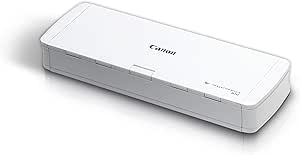 | Best for Portable Paperwork | Power: USB-powered | Duplex scanning speed: Up to 12 pages per minute | Automatic document feeder: 20 sheets | VIEW ON AMAZON | See Our Full Breakdown |
| HP HPPS100 Small USB Document & Photo Scanner, Portable 1-Sided Sheetfed, PC & Mac Compatible |  | Best for Simple Photo and Page Scans | Model: HPPS100 | Scan type: Simplex, one-sided | Scan speed: Up to 15 pages per minute | VIEW ON AMAZON | See Our Full Breakdown |
| Epson WorkForce ES-50 Compact & Lightweight Mobile Document Scanner |  | Best for Long Receipts and Forms on the Go | Scan speed: Single page in as little as 5.5 seconds | Maximum document size: 8.5 × 72 inches | Connectivity: USB 2.0 | VIEW ON AMAZON | See Our Full Breakdown |
| Epson Workforce ES-400 II High-Speed Color Duplex Desktop Document Scanner |  | Best for High-Volume Office Batches | Automatic document feeder: 50 sheets | Duplex scanning: Yes | Software and driver: Epson ScanSmart and TWAIN | VIEW ON AMAZON | See Our Full Breakdown |
| Canon CanoScan LiDE 300 Scanner |  | Best for Simple Desk Scanning | Scanner type: Document | Connectivity: USB | Auto Scan Mode: Yes | VIEW ON AMAZON | See Our Full Breakdown |
| Plustek PS186 Desktop Document Scanner with 50-Page ADF, Windows 7/8/10/11 |  | Best for Windows Batch Scanning | Scanner type: Document | Connection: USB | Resolution: 600 dpi | VIEW ON AMAZON | See Our Full Breakdown |
| Epson WorkForce ES-60W Wireless Compact Mobile Document Scanner |  | Best for Wireless Mobile Scanning | Scan speed: Single page in as fast as 4 seconds at 300 dpi | Connectivity: Wireless, USB | Compatibility: PC, Mac, iOS, Android | VIEW ON AMAZON | See Our Full Breakdown |
| Epson RapidReceipt RR-60 Compact Mobile Document Scanner |  | Best for Receipt and Expense Workflows | Product type: Mobile document and receipt scanner | Power source: USB-powered | Weight: Under 10 oz | VIEW ON AMAZON | See Our Full Breakdown |
| CZUR Shine Ultra Portable Document Scanner |  | Best for A3 Pages and Document Presentations | Maximum scan size: A3 (11.69 × 16.53 inches) | Scanning speed: About 1 second per page | Camera resolution: 13 MP (4160 × 3120) | VIEW ON AMAZON | See Our Full Breakdown |
More Details on Our Top Picks
Brother DS-640 Compact Mobile Document Scanner
The Brother DS-640 earns its place for people who need to scan on the move: at under a foot long and about 1.5 pounds, it fits easily in a work bag, while USB power avoids the need for a separate outlet. Its rated speed of up to 16 pages per minute suits receipts, forms, and short document batches. Compared with the ScanSnap iX1300, it gives up duplex scanning and wireless sharing, but is slimmer and simpler to carry. OCR software can turn paper into searchable files, though scanning still depends on a connected computer or USB power source. This is a focused portable choice, not a small office’s batch scanner; image rotation is also limited to PC use.
Pros:- Compact, lightweight body is easy to pack
- USB powered for use with a compatible computer
- Scans color and black-and-white documents at up to 16 ppm
- Includes OCR and image optimization software
Cons:- Requires a computer or USB power source
- No duplex scanning for two-sided originals
- Image rotation is limited to PC
Best for: Traveling professionals who scan occasional receipts, forms, or single pages from a laptop
Not ideal for: People scanning frequent two-sided batches or sending files wirelessly, since it lacks duplex scanning and Wi-Fi
- Model:DS640
- Scan speed:Up to 16 ppm
- Weight:About 1.5 lb
- Length:Less than 1 ft
- Power:Micro USB 3.0
- Compatibility:Windows, Mac, Linux
- Drivers:TWAIN/WIA for PC; ICA for Mac; SANE
- Software:Brother iPrint&Scan, document management software, OCR software
Our verdict“Choose the DS-640 if portability and laptop-powered scanning matter more than wireless use or double-sided speed.”
ScanSnap iX1300 Wireless or USB Double-Sided Color Document Scanner, Black
The ScanSnap iX1300 pairs a space-saving footprint with the features that make routine scanning feel less manual: one-touch duplex capture, Wi-Fi, and automatic deskew and blank-page removal. Those tools help when mixed paperwork includes receipts, cards, and two-sided forms, and ScanSnap Home gives files a central place to land. Against the Brother DS-640, it is less convenient to slip into a bag but far more capable for both sides of a page and wireless workflows. Its compact design favors a home desk over sustained high-volume batches, and the product description notes that it has no automatic document feeder. Buyers should also be comfortable relying on ScanSnap software for the full set of functions.
Pros:- Duplex scanning reaches up to 30 ppm
- Wi-Fi and USB support computer, mobile, and cloud workflows
- Automatic deskew, color optimization, and blank-page removal reduce cleanup
- Compact design fits small workspaces
Cons:- Product description specifies no automatic document feeder, limiting batch handling
- Full functionality may depend on ScanSnap software
- Less suited to high-volume scanning than the 45 ppm office models in this roundup
Best for: Home-office users with limited desk space who scan mixed, two-sided paperwork to computers or mobile devices
Not ideal for: People processing long unattended batches or those who need broad driver support outside the ScanSnap software workflow
- Model:iX1300
- Color:Black
- Connectivity:USB, Wi-Fi
- Scanning speed:Up to 30 ppm duplex
- Scan type:Double-sided color
- Compatible devices:Mac, PC, mobile devices, Chromebook via mobile app
- Software:ScanSnap Home
Our verdict“Pick the iX1300 for compact, wireless duplex scanning of everyday home-office documents.”
Canon imageFORMULA R40II Office Document Scanner
For a small office that prioritizes throughput, the Canon imageFORMULA R40II brings together 45 ppm duplex scanning and a 60-sheet feeder, so a stack of contracts or receipts takes less hands-on feeding than it would on the compact ScanSnap iX1300. One-touch operation and CaptureOnTouch keep the workflow straightforward, while USB-C provides a direct connection. The feeder’s ability to handle varied paper types makes it more practical for mixed office paperwork than a pocket scanner. The tradeoff is software flexibility: Canon says the R40II does not support TWAIN or ISIS, limiting integration with applications that expect those drivers. Its monochrome LCD is functional rather than a rich workflow interface, and it lacks the wireless options of the ScanSnap iX2500.
Pros:- Up to 45 ppm duplex speed handles routine batches quickly
- 60-sheet automatic feeder reduces page-by-page handling
- One-touch operation simplifies common scan jobs
- USB-C connectivity and support for varied document types
Cons:- Does not support TWAIN or ISIS drivers
- Workflow is limited to Canon CaptureOnTouch software
- Monochrome LCD offers basic controls
Best for: Small-office teams digitizing regular stacks of mixed paperwork through Canon CaptureOnTouch
Not ideal for: IT teams that need TWAIN or ISIS integration, or users who want wireless scanning and touchscreen controls
- Scan speed:Up to 45 ppm
- Duplex scanning:Yes
- Automatic document feeder:60 sheets
- Color scanning:Yes
- Display:Monochrome LCD
- Connectivity:USB-C
- Software:Canon CaptureOnTouch
- Driver support:TWAIN and ISIS not supported
- Warranty:1 year
Our verdict“Choose the R40II for fast USB-connected office batches if its Canon-only software workflow fits your setup.”
ScanSnap iX2500 Wireless or USB High-Speed Document Scanner, Black
The ScanSnap iX2500 is the roundup’s strongest fit for a busy desk where scanning is a repeatable workflow, not an occasional chore. Its 100-sheet feeder and 45 ppm double-sided speed let users load a substantial stack, while the touchscreen makes saved destinations easier to select than on the Canon R40II’s basic monochrome display. Wi-Fi 6 and USB-C cover wireless and direct connections, and feed safeguards help catch skew or multiple pages moving together. Compared with the smaller iX1300, this model is built for greater batch capacity and more guided operation. That capability brings setup work: users need to configure profiles to benefit from it, and casual scanners may find the added controls and capacity unnecessary.
Pros:- 100-sheet feeder supports larger batches
- 45 ppm double-sided scanning speeds routine document capture
- Touchscreen profiles simplify choosing scan destinations
- Wi-Fi 6, USB-C, and paper-feed safeguards support flexible workflows
Cons:- Profile setup takes time before workflows feel streamlined
- Capacity and controls may be unnecessary for occasional scanning
- Larger feeder-focused design is less compact than the iX1300
Best for: Busy home offices or small teams that scan large batches to multiple computers, mobile devices, or cloud destinations
Not ideal for: Occasional scanners with little desk space or no need to configure saved workflows and feeder safeguards
- Scanning speed:45 ppm double-sided
- Document feeder:100 sheets
- Connectivity:Wi-Fi 6, USB-C
- Display:Large touchscreen
- Supported devices:PC, Mac, mobile devices, cloud services
- Paper handling:Brake roller system, multi-feed sensor, skew detection
- Color:Black
Our verdict“Choose the iX2500 when high-capacity duplex scanning and configurable destinations justify its setup and footprint.”
CZUR Aura Pro Book & Document Scanner for A3 and A4
The CZUR Aura Pro serves a different scanning job from the feeder-based Canon R40II and ScanSnap models: it captures books and larger pages from above, including A3 and A4 formats. Its laser-assisted page flattening helps reduce the distortion that curved book pages can create, while OCR in more than 180 languages can turn captures into searchable PDFs or editable Word files. At about two seconds per page, it is designed for quick page capture rather than processing a stack through an automatic feeder. The built-in lighting also gives it a dual role as a document lamp. Its software is central to the workflow, and language support excludes Thai, Hebrew, and Arabic; Mac users also need to check the stated minimum operating-system versions.
Pros:- Captures A3 and A4 pages, including bound books
- Laser lines help flatten curved pages in scans
- OCR supports more than 180 languages and searchable PDF output
- Integrated lighting has adjustable color temperature
Cons:- Not a feeder-based scanner for rapid processing of document stacks
- OCR excludes Thai, Hebrew, and Arabic
- Some functions depend on CZUR software, with minimum macOS versions required
Best for: Researchers, students, and archivists digitizing bound books, oversized pages, or documents that cannot go through a feeder
Not ideal for: Office teams scanning large stacks of loose pages, or users who need OCR for Thai, Hebrew, or Arabic
- Supported capture size:A3, A4
- Scanning speed:About 2 seconds per page
- Output formats:JPG, Word, PDF, searchable PDF
- OCR language support:180+ languages; Thai, Hebrew, and Arabic not supported
- Lighting:32 LED lights plus 2 supplemental side lights
- Color temperature settings:4
- Page flattening:Three laser lines for curved book pages
- Compatibility:Mac and Windows; minimum OS versions vary
Our verdict“Pick the Aura Pro for books and oversized pages that feeder scanners like the Canon R40II cannot handle conveniently.”
ScanSnap iX1300 Wireless or USB Double-Sided Color Document Scanner, White
The ScanSnap iX1300 is the most flexible pick here for a small desk: it handles receipts and cards alongside everyday documents, and its duplex scanning up to 30 pages per minute can reduce the time spent digitizing two-sided paperwork. Wi-Fi gives it a practical advantage over the USB-only Epson WorkForce ES-50 when scanning to a mobile device or cloud service, while its support for thick items and photos covers more than the paper-focused Canon imageFORMULA R10. It also offers automatic image adjustments and blank-page removal to cut down on manual cleanup. Its compact footprint means less room for a large document feeder, though, so it is a better fit for mixed, modest batches than sustained office-volume scanning. Choose it for flexibility and wireless convenience; skip it if throughput is your main priority.
Pros:- Compact design fits small work areas
- Duplex scanning handles both sides of a page in one pass
- Supports documents, photos, receipts, plastic cards, and thick items
- USB and Wi-Fi support scanning from computers and mobile devices
Cons:- Compact size is less suited to sustained high-volume batches
- Wireless setup and computer-free scanning rely on compatible software and services
Best for: Home office users with limited desk space who scan a mix of two-sided paperwork, receipts, photos, and cards
Not ideal for: Busy offices that regularly process large stacks and need a high-capacity automatic document feeder
- Model:iX1300
- Color:White
- Connectivity:USB and Wi-Fi
- Scanning:Double-sided color
- Scanning speed:Up to 30 pages per minute
- Supported media:Documents, photos, receipts, business cards, plastic cards, and thick items
- Software:ScanSnap Home
Our verdict“Choose the iX1300 if you want a compact scanner that handles varied media and wireless duplex scanning.”
Canon imageFORMULA R10 Portable Duplex Document Scanner
The Canon imageFORMULA R10 suits people who need to scan paperwork away from a fixed desk: it draws power over USB and includes built-in software, so there is no separate power supply or software installation to manage. Its 20-sheet feeder and duplex scanning make short stacks less fiddly than feeding pages one at a time through the Epson WorkForce ES-50. At up to 12 pages per minute, however, it is slower than the ScanSnap iX1300, and its focus is firmly on documents, receipts, and cards rather than photographic media. That tradeoff makes sense for travel paperwork and modest daily workloads, but not for someone digitizing photos or processing a steady stream of large batches. It offers a practical middle ground between a single-sheet mobile scanner and a larger desktop unit.
Pros:- USB-powered design is portable and avoids a separate power adapter
- Duplex scanning captures both sides in one pass
- 20-sheet automatic feeder handles short stacks
- Built-in software works with Windows and Mac without installation
Cons:- Slower duplex speed than the ScanSnap iX1300
- Not intended for photographic media
- Requires a connected device or power source to operate
Best for: Mobile professionals who scan short stacks of receipts, forms, and cards from a Windows or Mac computer
Not ideal for: People who need to digitize photo prints or scan large daily batches at higher speeds
- Power:USB-powered
- Duplex scanning speed:Up to 12 pages per minute
- Automatic document feeder:20 sheets
- Suggested daily volume:500 scans
- Power consumption:2.5 W or less
- Compatibility:Windows and Mac
- Supported media:Receipts, business cards, plastic or embossed cards, reports, and legal documents
- Photo scanning:Not intended for photographic media
Our verdict“Pick the R10 for portable, feeder-based scanning of everyday paper and cards, but not for photos or fast batch work.”
HP HPPS100 Small USB Document & Photo Scanner, Portable 1-Sided Sheetfed, PC & Mac Compatible
The HP HPPS100 is a straightforward choice when you want a lightweight USB scanner for individual documents and photos, with 1200 dpi resolution for detailed image capture. Its listed speed of up to 15 pages per minute is useful for single-sided pages, but it scans only one side at a time. That makes it less efficient for two-sided paperwork than the duplex-capable Canon imageFORMULA R10 or ScanSnap iX1300. Unlike the more paperwork-focused R10, this model is described as suitable for photos, and HP WorkScan adds editing and image cleanup tools. The single-sheet feed is the main constraint: it keeps the unit compact, but each page needs individual handling, so a pile of forms can become tedious. It fits light, varied scanning better than recurring bulk work.
Pros:- Compact, lightweight body suits travel and small workspaces
- 1200 dpi resolution supports detailed scans
- Can scan documents and photos
- HP WorkScan includes editing and image cleanup features
Cons:- Simplex scanning requires a separate pass for the reverse side
- Single-sheet feeding is cumbersome for larger batches
- USB connection ties scanning to a compatible computer
Best for: Students and home users who want a compact USB scanner for occasional single-sided pages and photo prints
Not ideal for: People who regularly scan two-sided forms or need to feed a large stack without supervision
- Model:HPPS100
- Scan type:Simplex, one-sided
- Scan speed:Up to 15 pages per minute
- Resolution:1200 dpi
- Paper size range:2 × 2.9 inches to 8.5 × 14 inches
- File formats:PDF, JPG, and others
- Power:USB 2.0, cable included
- Compatibility and software:PC and Mac; HP WorkScan included
Our verdict“Choose the HPPS100 for occasional single-sided document and photo scans when portability matters more than batch handling.”
Epson WorkForce ES-50 Compact & Lightweight Mobile Document Scanner
The Epson WorkForce ES-50 earns its place as a travel-friendly scanner for people who need to digitize long forms, receipts, or ID cards from a computer. It accepts documents up to 8.5 × 72 inches, a useful reach for lengthy pages that the HPPS100’s listed paper range does not match. Its USB power and compact design keep a mobile kit simple, while included OCR software can turn scans into searchable PDFs or editable Word and Excel files. The tradeoff is its single-sheet feed: the Canon imageFORMULA R10 is a better fit for short stacks, and the ScanSnap iX1300 adds duplex and Wi-Fi flexibility. The ES-50 also needs a computer connection to operate. It makes the most sense when portability and long-page handling matter more than batch speed.
Pros:- Handles documents up to 72 inches long
- Compact and lightweight for travel
- USB-powered without batteries or a separate power supply
- Included OCR supports searchable PDFs and editable Word or Excel files
Cons:- Single-sheet feeding makes stack scanning slow
- Must be connected to a computer to operate
- No duplex scanning or Wi-Fi connectivity listed
Best for: Mobile workers who scan long forms, receipts, or ID cards to a Windows or Mac computer
Not ideal for: Users who need wireless scanning, hands-free stack feeding, or one-pass duplex capture
- Scan speed:Single page in as little as 5.5 seconds
- Maximum document size:8.5 × 72 inches
- Connectivity:USB 2.0
- Power source:USB-powered; no batteries or external power supply
- Software:Epson ScanSmart, Nuance OCR, and TWAIN driver
- Compatibility:Windows and Mac
- Feeding:Single-sheet-fed with automatic feeding mode
Our verdict“Pick the ES-50 for mobile, computer-connected scanning of long pages when a single-sheet workflow is acceptable.”
Epson Workforce ES-400 II High-Speed Color Duplex Desktop Document Scanner
For a desk-bound workload built around stacks, the Epson WorkForce ES-400 II is the clear throughput pick in this group. Its 50-sheet auto document feeder and duplex scanning reduce page-by-page handling, while ultrasonic double-feed detection and skew correction help keep batches orderly. OCR can produce searchable PDFs and editable Word or Excel files, giving it a stronger document-processing role than portable models such as the Epson WorkForce ES-50. The compact ScanSnap iX1300 is easier to place in a tight workspace and handles a broader stated mix of media, but the ES-400 II is better equipped for recurring stacks of paper. Its feeder-based design is less suited to photos, thick items, or bound material, and cloud workflows depend on compatible software and services. Choose it for organized paper throughput, not versatile media handling.
Pros:- 50-sheet feeder reduces manual handling of document stacks
- Duplex scanning captures both sides automatically
- OCR creates searchable PDFs and editable Word or Excel files
- Double-feed detection and skew correction support cleaner batch scans
Cons:- Feeder-based design is poorly suited to photos, thick media, and bound documents
- Cloud and document management workflows rely on compatible software and services
- Desktop format is less portable than the ES-50 or Canon R10
Best for: Home offices and small teams that regularly scan stacks of two-sided paperwork into searchable files
Not ideal for: People with limited desk space who mainly scan photos, bound documents, or thick items
- Automatic document feeder:50 sheets
- Duplex scanning:Yes
- Software and driver:Epson ScanSmart and TWAIN
- OCR:Searchable PDF, Word, and Excel output
- Cloud services:Dropbox, Evernote, Google Drive, and OneDrive
- Image processing:Auto crop, blank-page removal, and background removal
- Double-feed detection:Ultrasonic
- Skew correction:Dynamic
Our verdict“Choose the ES-400 II when regular batches and searchable output matter more than portability or mixed-media scanning.”
Canon CanoScan LiDE 300 Scanner
The Canon CanoScan LiDE 300 suits someone who scans occasional paperwork and photos at a desk and wants the scanner to identify what is placed on it. Its Auto Scan Mode handles that decision, while PDF, copy, and send functions cover everyday tasks without a paper feeder to configure. Compared with the Plustek PS186, it is a simpler fit for mixed flat items rather than batches of loose documents; the Plustek’s 50-page feeder and OCR are better for office queues. The tradeoff is that the Canon connects by USB only, with no wireless option listed, and its description does not specify a feeder for multi-page jobs. Choose it for straightforward desktop scans, not regular high-volume paperwork.
Pros:- Auto Scan Mode detects whether the item is a document or image
- Handles both documents and images
- PDF, copy, and send functions support common scanning tasks
- USB connection provides a direct wired setup
Cons:- USB-only connectivity limits placement and mobile workflows
- No automatic document feeder is specified for scanning stacks
- OCR and searchable PDF features are not listed
Best for: Home users who occasionally scan flat documents and photos from a computer
Not ideal for: People who scan stacks of paperwork or need wireless scanning, since this model lists USB connectivity only
- Scanner type:Document
- Connectivity:USB
- Auto Scan Mode:Yes
- Functions:PDF, AutoScan, Copy, Send
- Media:Documents and images
- Wireless scanning:Not listed
Our verdict“Choose the LiDE 300 for occasional flatbed-style document and photo scanning when a simple USB workflow is enough.”
Plustek PS186 Desktop Document Scanner with 50-Page ADF, Windows 7/8/10/11
For a Windows user digitizing recurring paper batches, the Plustek PS186 brings the most office-oriented workflow in this group: its 50-page ADF feeds a stack, while OCR and automatic rotate, crop, deskew, and blank-page removal can reduce cleanup afterward. Barcode categorization and saving to FTP or NAS destinations add value for people filing documents into an established system. The Epson ES-60W is easier to carry and can scan wirelessly, but it handles one sheet at a time; the Plustek is the more practical choice for volume at a fixed desk. Its limits are meaningful: it is Windows-only and USB-connected, so it is a poor fit for Mac households or mobile scanning. Its 600 dpi capability is useful for detail, though batch throughput is the main reason to choose it.
Pros:- 50-page automatic document feeder handles batches
- OCR can create searchable PDFs
- Automatic rotate, crop, deskew, and blank-page removal reduce manual cleanup
- Scans can be sent to FTP servers or personal NAS storage
Cons:- Compatible with Windows 7/8/10/11 only
- USB-only connection offers no wireless workflow
- Desktop feeder design is less suited to portable, occasional single-page use
Best for: Windows-based small offices and home businesses that regularly scan batches and file searchable documents
Not ideal for: Mac users or people who need wireless, mobile scanning, since it is Windows-compatible and USB-connected
- Scanner type:Document
- Connection:USB
- Resolution:600 dpi
- Automatic document feeder:50 pages
- Color depth:24 bpp
- Optical sensor:CIS
- Output formats:PDF, JPEG, TIFF, PNG
- Operating system compatibility:Windows 7/8/10/11 (Intel/AMD only)
- Power:18 watts
Our verdict“Pick the PS186 when a Windows desk setup needs batch feeding, OCR, and direct filing to network storage.”
Epson WorkForce ES-60W Wireless Compact Mobile Document Scanner
The Epson WorkForce ES-60W is the clearest choice here for professionals who need scans away from a desk: it works with PCs, Macs, iOS, and Android, and can switch between USB and battery-powered wireless modes. A single page can scan in as fast as four seconds at 300 dpi, while included Nuance OCR supports searchable PDFs and editable Word or Excel files. That makes it more flexible across devices than the Epson RapidReceipt RR-60, which focuses on receipt organization and is USB-powered. The ES-60W’s compromise is its single-sheet feed: scanning a pile means handling sheets one at a time, unlike the Plustek PS186’s 50-page feeder. Wireless scanning to computers also requires internet access and software setup, so it suits travel and small jobs better than unattended batch work.
Pros:- Wireless and USB connectivity with automatic mode switching
- Compatible with PC, Mac, iOS, and Android
- Battery-powered wireless operation supports mobile use
- Nuance OCR supports searchable PDFs and editable Word or Excel files
Cons:- Single-sheet feed makes large batches slow to process
- Wireless scanning to PC or Mac requires internet and software setup
- No automatic document feeder is included
Best for: Traveling consultants and field staff who need occasional document, receipt, or ID scans across computers and mobile devices
Not ideal for: People digitizing large stacks or avoiding software and internet setup for wireless computer scanning
- Scan speed:Single page in as fast as 4 seconds at 300 dpi
- Connectivity:Wireless, USB
- Compatibility:PC, Mac, iOS, Android
- Maximum document size:8.5 × 72 inches
- Media types:Documents, ID cards, receipts
- Software:Epson ScanSmart, Nuance OCR
- Power:USB or battery-powered
- Display:LCD for wireless and battery status
Our verdict“Choose the ES-60W for portable, cross-device scanning when wireless flexibility matters more than batch speed.”
Epson RapidReceipt RR-60 Compact Mobile Document Scanner
The Epson RapidReceipt RR-60 is aimed at people whose paper problem is a steady stream of receipts, invoices, and business cards rather than thick document stacks. Its ScanSmart AI PRO software can categorize files, create searchable PDFs, and export information to QuickBooks or TurboTax, turning a scan into a more useful record. Compared with the ES-60W, it puts more emphasis on expense organization and financial exports, while the ES-60W offers battery-powered wireless scanning across mobile devices. The RR-60 weighs under 10 ounces and draws power over USB, which keeps it compact but ties a scanning session to a powered device. Its stated rate of up to 10 pages per minute is adequate for routine receipts, not high-volume office batches like those handled by the Plustek PS186.
Pros:- Categorizes receipts and invoices with ScanSmart AI PRO
- Can export scanned information to QuickBooks and TurboTax
- Creates searchable and editable PDFs with image cleanup features
- Compact design weighs under 10 ounces
Cons:- USB-powered operation depends on a connected powered device
- Up to 10 pages per minute is limited for high-volume scanning
- Advanced exports depend on compatible software or apps
Best for: Freelancers and small-business owners who need to organize receipts and invoices for bookkeeping
Not ideal for: Travelers who need battery-powered wireless operation or offices digitizing large document batches
- Product type:Mobile document and receipt scanner
- Power source:USB-powered
- Weight:Under 10 oz
- Scan speed:Up to 10 pages per minute in Automatic Feeding Mode
- Maximum document size:8.5 × 72 inches
- Supported media:Receipts, invoices, documents, business cards, ID cards, long pages
- Financial software:QuickBooks, TurboTax
- Cloud compatibility:OneDrive, Dropbox, Google Drive
- Device compatibility:Windows, Mac, Epson Smart Panel mobile app
Our verdict“Pick the RR-60 when receipt categorization and bookkeeping exports matter more than wireless independence or batch capacity.”
CZUR Shine Ultra Portable Document Scanner
The CZUR Shine Ultra covers a different job from the sheet-fed models: its 13 MP camera captures pages up to A3 size, and it can also act as a USB document camera for presenting material. At about one second per page, it is designed for quick overhead capture, with OCR in more than 180 languages and tools such as auto cropping and combining sides. Compared with the Canon CanoScan LiDE 300, it handles larger pages and can show documents live, while the Canon is a simpler USB choice for flat documents and photos. The Shine Ultra’s foldable design and included foot pedal support hands-free capture, but at 4 lbs it is less pocketable than the Epson mobile scanners. Curved-page flattening is intended for thinner books, and Thai, Hebrew, and Arabic are excluded from OCR support.
Pros:- Captures pages up to A3 size
- About one-second scan speed supports quick overhead capture
- Can function as a USB document camera
- Foldable, height-adjustable design includes a foot pedal
Cons:- Not compatible with Android or iOS
- Curved-page flattening is intended only for thinner books
- OCR does not support Thai, Hebrew, or Arabic
Best for: Educators, archivists, and presenters who need fast overhead capture of large pages or live document display
Not ideal for: Mobile-first users who scan from phones, or readers digitizing thick books and documents in unsupported OCR languages
- Maximum scan size:A3 (11.69 × 16.53 inches)
- Scanning speed:About 1 second per page
- Camera resolution:13 MP (4160 × 3120)
- Resolution:Approximately 340 DPI for A4; 245 DPI for A3
- OCR languages:180+; Thai, Hebrew, and Arabic not supported
- Compatible operating systems:Windows XP/7/8/10/11, macOS 10.13 or later
- Design:Two-level height-adjustable neck; folds 90 degrees
- Weight:4 lbs
- Included accessory:Foot pedal
Our verdict“Choose the Shine Ultra for fast A3 overhead capture and presentation, provided its desktop setup and OCR language limits fit your work.”

How We Picked
I ranked these scanners by how well their design supports common document-scanning jobs: handling multi-page batches, capturing both sides, moving between locations, and managing books, receipts, or photos. I also weighed setup demands, connection options, footprint, and whether the scanner’s workflow appears suited to regular office use or occasional personal tasks. A feature matters here when it changes what a buyer can scan or how much effort routine scanning takes.
The ranking favors adaptable scanners that balance useful speed, duplex capture, and convenient operation for everyday paperwork. Compact models rank higher for buyers whose main need is mobile scanning, while book and flatbed models earn their place through specific capture strengths rather than all-purpose batch handling. The two iX1300 color listings are treated as one capability tier, since color does not change the core scanning tradeoffs. I also account for limitations: simplex capture, computer or operating-system requirements, and the lack of an automatic feeder can make a model a poor fit for some workloads.
Factors to Consider When Choosing Smart Document Scanners
Before choosing a smart document scanner, define the job it will handle most often. A scanner that excels at quick receipts may frustrate someone digitizing a filing cabinet, and a fast feeder will not help much with bound books. These factors can help you match the scanner’s workflow to your real paper habits.
Match the feeder to your typical pile
An automatic document feeder can save time when you scan several loose pages at once, but it adds size and creates a need to load pages carefully. If you usually capture one form or receipt at a time, a compact single-sheet model may be easier to keep nearby. Think about how often you scan a batch, not just the largest batch you might scan once a year. Mixed paper sizes, curled receipts, and delicate sheets can also slow a feeder-based workflow. A flatbed or overhead scanner handles bound or fragile material differently, though each page may need more manual attention. Choose for the routine job that repeats; occasional exceptions can often be handled with a second method.
Decide whether duplex scanning saves enough effort
Duplex scanning captures both sides of a page in one pass, which matters when forms, notes, or records often contain information on the back. For mostly single-sided mail, that capability may add little to your daily routine. Check whether the scanner captures both sides automatically or requires you to turn and reload pages. Manual handling is easy to overlook when comparing headline speed claims. A slower duplex workflow can still beat a faster simplex scanner if it avoids a second pass through a large stack. Estimate the number of double-sided pages you handle in a typical week before paying for a feature that may sit unused.
Choose wireless for placement flexibility, not as a speed promise
Wireless connections can make it easier to place a scanner away from a computer or share a scanning point around a home office. They do not automatically make scanning faster, and the setup can depend on network conditions and compatible software. USB connections tend to be a direct fit when the scanner will stay next to one computer. Before buying, confirm which devices and operating systems you need to use, along with where scans are saved and how they reach their destination. A scanner that connects easily but leaves you sorting files by hand may not improve the whole process. Consider the path from paper to a named, searchable file, not just the connection on the product description.
Treat portability as a tradeoff with batch capacity
A lightweight scanner is easier to carry between home, work, and appointments, but compact designs often depend on feeding pages individually. That is a sensible trade for someone who scans a few documents away from a desk. It is less appealing if you regularly digitize contracts, invoices, or archived paperwork. Also consider what must travel with the scanner: cables, a computer, and any power or software requirements can affect how portable the full setup feels. Buyers sometimes focus on the scanner’s dimensions and overlook the space needed to feed or collect pages. If it will live in one place, a desktop footprint may be a fair exchange for a smoother batch workflow.
Pick the right capture method for books, photos, and receipts
Sheet-fed scanners are built around loose pages, so bound books and delicate originals call for a different approach. Overhead models can capture pages without forcing a book through rollers, while a flatbed can hold flat items in place for scanning. Receipt-focused workflows may benefit from software that helps organize expense records, though the scanner still needs to suit the paper sizes and condition you handle. A frequent mistake is buying one device for every kind of original and then discovering that one category is awkward to scan. List the materials you need to digitize and identify the hardest one first. If that item is an open book or a photo, prioritize capture geometry and handling over feeder speed.
Budget time for software and file maintenance
Scanning creates files that still need useful names, folders, and backups. Searchable text recognition can make a large archive easier to find, but results depend on the original print quality and the software workflow. Check whether the included tools fit your operating system and whether they support your preferred destinations, such as local folders or cloud storage. A scanner that is simple to operate may still leave you with repetitive sorting work if its software is limited. For household paperwork, a consistent folder and naming routine can matter more than a long list of advanced settings. For business records, confirm document handling and retention needs before relying on a consumer scanning workflow.
Frequently Asked Questions
Should I choose a wireless scanner or a USB-only model?
Choose wireless when you need flexible placement or expect to scan from more than one compatible device. A USB model can be a cleaner fit if the scanner will sit beside one computer and you want a direct connection. Wireless support does not by itself guarantee that scans will go straight to the apps or folders you use, so check the software path as well. The iX1300 and Epson ES-60W represent portable wireless options in this lineup, while several compact models center on USB workflows. Match the connection to where the scanner will live and how you want files delivered.
Is a compact mobile scanner enough for a home office?
It can be enough if you scan a small number of pages at a time and value a small footprint or the ability to carry the scanner. For frequent multi-page paperwork, a desktop model with an automatic feeder is usually a more comfortable workflow. Small mobile scanners often require more hands-on page feeding, which becomes tedious across large batches. The Canon R10 and Epson ES-50 are portable choices, while desktop options such as the Epson ES-400 II are aimed at recurring batch work. Consider your weekly volume and whether scanning happens at a desk or in several locations.
Can a document scanner handle books and bound pages?
Most sheet-fed document scanners are meant for loose pages, so a bound book is a poor match for their feed path. An overhead scanner such as the CZUR Aura Pro or Shine Ultra is designed to capture pages from above, which avoids sending a book through rollers. A flatbed can also scan flat items, though positioning each page takes time. Think about book size, page curvature, and how often you need to scan this material. If books are your main job, prioritize page handling and capture area over duplex speed.
Do I need duplex scanning if most of my paperwork is single-sided?
Not necessarily. Duplex scanning is most useful when the back of a page often contains notes, terms, or additional form fields and you want to avoid turning the stack manually. If your routine is mostly one-sided receipts and letters, a simpler scanner may suit you. Keep in mind that paperwork can vary: occasional two-sided documents may still make duplex useful if you scan them in large batches. Compare the time saved across your normal workload with the added size or complexity of a duplex model. Your usual stack should drive the decision.
What should I check before buying a scanner for receipts and expense records?
Check that the scanner accepts the narrow, sometimes curled paper receipts you actually receive, and see whether its software supports an expense workflow that fits your records. A dedicated receipt-oriented option such as the Epson RapidReceipt RR-60 may be more relevant than a general office model if expense capture is the main task. A feeder can help with a pile of receipts, but fragile thermal paper may need careful handling. Confirm compatible operating systems and where the resulting files or data can be stored. If you also scan standard documents, make sure the receipt focus does not leave those pages awkward to process.
Conclusion
For the broadest mix of everyday paperwork, I’d choose the ScanSnap iX2500 as the best overall pick, with the Epson ES-400 II a strong alternative when desktop batch work matters most. The Brother DS-640 is a sensible value-minded choice for simple mobile scanning, while the Canon imageFORMULA R10 is approachable for beginners who want a portable duplex workflow. For a premium, specialized setup, choose the CZUR Aura Pro when books and larger pages are central to the job. The Epson RapidReceipt RR-60 makes more sense for receipt-heavy records, and the Canon CanoScan LiDE 300 suits occasional flatbed scanning. If you need wireless convenience in a compact device, compare the ScanSnap iX1300 with the Epson ES-60W based on whether batch handling or mobility matters more.
Fall Picks
fall essentials
As an affiliate, we earn on qualifying purchases.