Among these premium espresso machines, I rank the Breville Barista Pro best overall for its integrated grinder and streamlined workflow. The Rancilio Silvia Pro X is a stronger fit for buyers who prioritize dual-boiler control, while the Breville Barista Touch makes guided drink preparation its main advantage. The central tradeoff is between hands-on control and convenience: more capable machines can demand more skill, space, and care, while all-in-one models simplify setup but offer less room to tailor each step. I also compare traditional machines with built-in-grinder options and compact designs. Read on for the full breakdown, buying advice, and a pick for different kinds of home baristas.

Get business pricing on tech for your team
- Business-only prices and quantity discounts
- Tax-exempt purchasing
- Multiple users, one account, clear invoices
Complete the kit


Key Takeaways
- The Barista Pro leads as the most balanced choice: its built-in grinder and quick, direct workflow make it a more complete daily setup than the standalone Gaggia Classic models.
- The Silvia Pro X is the control-focused pick: its dual-boiler design suits buyers who want to brew and steam with less workflow compromise, though that capability is more than casual users may need.
- Guidance and control pull in different directions: the Barista Touch prioritizes guided drink preparation, while the Gaggia Classic Evo Pro leaves more of the brewing process to the user.
- Built-in grinders reduce setup friction, not all learning: the Chefman Crema Supreme, Amaste, and Hanrose combine grinding and espresso preparation, but buyers still need to dial in coffee and learn consistent technique.
- Several models serve distinct traditional-machine preferences: the Diletta Bello+ and Gaggia Classic Pro offer alternatives to integrated grinder systems, while the Parvusli emphasizes a compact, touch-screen-led format.
| Parvusli Compact 20 Bar Espresso Machine with Milk Frother & Touch Screen |  | Best Compact Pick | Operation mode: Semi-automatic | Pump pressure: 20 bar | Power: 1200 watts | VIEW ON AMAZON | See Our Full Breakdown |
| De’Longhi Classic Signature Espresso Machine with Adjustable Milk Frother |  | Best for Guided Everyday Brewing | Operation mode: Fully automatic | Pump pressure: 15 bar | Power: 1350 watts | VIEW ON AMAZON | See Our Full Breakdown |
| Tuni E2 Gen3 Dual Boiler Espresso Machine, Ivory |  | Best for Temperature Control and Milk Drinks | Operation mode: Semi-automatic | Heating system: Dual boiler | Temperature control: PID + NTC | VIEW ON AMAZON | See Our Full Breakdown |
| Breville BES878BSS Barista Pro Espresso Machine, Brushed Stainless Steel |  | Best All-in-One Pick | Operation mode: Semi-automatic | Grinder: Integrated conical burr grinder with dose control | Heating system: ThermoJet | VIEW ON AMAZON | See Our Full Breakdown |
| Gaggia Classic Evo Pro Espresso Machine, Brushed Stainless Steel | 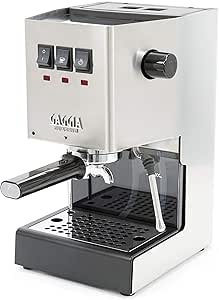 | Best Traditional Barista Platform | Model: Classic Evo Pro, RI9380/46 | Operation mode: Semi-automatic | Extraction pressure: 9 bar | VIEW ON AMAZON | See Our Full Breakdown |
| Chefman Crema Supreme Semi-Automatic Espresso Machine with Grinder and Milk Frother |  | Best for Adjustable Brewing | Machine type: Semi-automatic espresso machine | Grinder: Integrated conical burr grinder, 30 settings | Pump pressure: 15 bar | VIEW ON AMAZON | See Our Full Breakdown |
| Breville Barista Express Espresso Machine, Black Truffle |  | Best for Traditional Home Baristas | Model: BES870BTR | Machine type: Semi-automatic espresso machine | Grinder: Integrated precision conical burr grinder | VIEW ON AMAZON | See Our Full Breakdown |
| Diletta Bello+ Espresso Machine (Black) |  | Best for Hands-On Premium Brewing | Model: Bello+ | Machine type: Semi-automatic espresso machine | Boiler system: Dual boiler | VIEW ON AMAZON | See Our Full Breakdown |
| Breville BES880BSS Barista Touch Espresso Machine, Brushed Stainless Steel |  | Best for Convenient Milk Drinks | Machine type: Fully automatic espresso machine | Grinder: Integrated conical burr grinder | Heating system: ThermoJet | VIEW ON AMAZON | See Our Full Breakdown |
| Amaste Espresso Machine with Grinder and Steam Wand – Retro Green |  | Best for Compact Counter Setups | Machine type: Semi-automatic espresso machine | Grinder: Integrated conical burr, 15 settings | Output pressure: 15 bar, with visual pressure gauge | VIEW ON AMAZON | See Our Full Breakdown |
| Rancilio Silvia Pro X Espresso Machine |  | Best for Temperature Control | Boiler configuration: Dual boiler | Brew boiler capacity: 300 ml | Steam boiler capacity: 1 liter | VIEW ON AMAZON | See Our Full Breakdown |
| Hanrose Espresso Machine with Built-in Grinder, 20 Bar ULKA Pump, Stainless Steel |  | Best All-in-One Setup | Operation mode: Semi-automatic | Pump: Italian ULKA, 20 bar | Grinder settings: 15 | VIEW ON AMAZON | See Our Full Breakdown |
| Gaggia Classic Pro Espresso Machine, 1.3 L, Cherry Red |  | Best Compact Manual Machine | Capacity: 1.3 liters | Output pressure: 9 bar | Portafilter: Commercial-style 58 mm | VIEW ON AMAZON | See Our Full Breakdown |
| premium espresso machine | Dimensions | Power | Operation mode | Water tank |
|---|---|---|---|---|
| Parvusli Compact 20 Bar Espres | 7.8" D x 10.4" W x 10.8" H | 1200 watts | Semi-automatic | 61 fluid ounces |
| De’Longhi Classic Signature Es | 11.22" D x 13.98" W x 15.94" H | 1350 watts | Fully automatic | — |
| Tuni E2 Gen3 Dual Boiler Espre | — | 1500 watts | Semi-automatic | — |
| Breville BES878BSS Barista Pro | — | 1680 watts | Semi-automatic | 2 liters (67 ounces) |
| Gaggia Classic Evo Pro Espress | 8" D x 9.5" W x 14.2" H | — | Semi-automatic | 2.1 liters |
| Chefman Crema Supreme Semi-Aut | 16.14 × 13.39 × 16.34 inches | 1450 watts | — | 3 liters, removable |
| Breville Barista Express Espre | 13.8 × 12.5 × 15.9 inches | 1600 watts | — | 67 fl oz |
| Diletta Bello+ Espresso Machin | 17.75 × 11 × 14.5 inches | 1500 watts | — | — |
| Breville BES880BSS Barista Tou | — | — | — | 67 oz |
| Amaste Espresso Machine with G | 11.61 × 11.02 × 16.14 inches | 1450 watts | — | 68 oz, removable |
| Rancilio Silvia Pro X Espresso | 16.5 × 10 × 15.2 inches (D × W × H) | — | Semi-automatic | — |
| Hanrose Espresso Machine with | 13.76 × 12.73 × 17.18 inches (D × W × H) | — | Semi-automatic | — |
| Gaggia Classic Pro Espresso Ma | 8 × 9.5 × 14.2 inches (D × W × H) | — | — | — |
More Details on Our Top Picks
Parvusli Compact 20 Bar Espresso Machine with Milk Frother & Touch Screen
The Parvusli makes the most sense when counter space matters more than an integrated grinder or advanced temperature controls. At just 10.4 inches wide, it takes up less room than the De’Longhi Classic Signature and is easier to fit into a crowded kitchen. Its 61-ounce removable tank also means fewer refills across several drinks, while the touch screen offers a straightforward way to operate a semi-automatic machine. The adjustable steam wand gives milk-drink makers room to practice foam texture, though it still takes hands-on work. Compared with the Tuni E2 Gen3, the Parvusli has a smaller footprint but lacks dual boilers and stated PID temperature control. Its ground-coffee-only workflow and learning curve make it less convenient for beginners seeking one-touch drinks.
Pros:- Compact 10.4-inch width suits kitchens with limited counter space.
- 61-ounce removable water tank supports multiple drinks before refilling.
- Adjustable steam wand allows hands-on milk texturing.
- Touch-screen controls provide a clear operating interface.
Cons:- Semi-automatic brewing requires practice with dosing and extraction.
- Uses ground coffee and has no built-in grinder.
- Does not list the temperature-control features offered by the Tuni E2 Gen3.
Best for: Apartment dwellers and coffee drinkers with limited counter space who want a compact machine, a large tank, and manual milk steaming.
Not ideal for: Beginners who want a highly guided, low-effort workflow, or espresso enthusiasts seeking dual boilers and precise stated temperature controls.
- Operation mode:Semi-automatic
- Pump pressure:20 bar
- Power:1200 watts
- Water tank:61 fluid ounces
- Dimensions:7.8″ D x 10.4″ W x 10.8″ H
- Coffee input:Ground coffee
- Controls and features:LED touch screen, adjustable steam wand, cup warmer, auto-off safety
Our verdict“Choose the Parvusli if a compact footprint and large tank matter more to you than an integrated grinder or dual-boiler control.”
De’Longhi Classic Signature Espresso Machine with Adjustable Milk Frother
The De’Longhi Classic Signature is the approachable choice for buyers who want espresso presets without giving up the ability to steam milk manually. Its single- and double-shot buttons simplify routine brewing, and Thermoblock heating is designed to bring the machine up to temperature quickly. A pressure gauge adds a visual reference for the extraction process, while the adjustable wand offers settings for silky milk or thicker foam. Compared with the Parvusli, the De’Longhi is wider and has a smaller listed tank capacity, but it provides more guided shot selection. It is less self-contained than the Breville Barista Pro, which includes a grinder, so buyers will need pre-ground coffee or a separate grinder. Its controls reduce some guesswork, but do not make milk steaming or espresso dialing fully automatic.
Pros:- Single- and double-shot presets simplify repeat brewing.
- Thermoblock heating is designed for rapid, stable temperature control.
- Adjustable steam wand supports both steamed milk and microfoam.
- Removable water tank and pressure gauge make routine operation more accessible.
Cons:- No built-in grinder, unlike the Breville Barista Pro.
- Wider and taller than the compact Parvusli.
- Manual milk steaming still takes practice for consistent texture.
Best for: Home or office users who want preset single and double espresso buttons, a visual pressure gauge, and manual control over milk texture.
Not ideal for: Buyers looking for an all-in-one grinder-and-brewer, or those who need the smallest possible machine for a narrow counter.
- Operation mode:Fully automatic
- Pump pressure:15 bar
- Power:1350 watts
- Heating system:Thermoblock
- Dimensions:11.22″ D x 13.98″ W x 15.94″ H
- Weight:9.3 pounds
- Coffee input:Ground coffee
- Milk frother:Adjustable steam wand with two settings
Our verdict“Pick the De’Longhi for guided everyday espresso and flexible milk steaming, provided you already have a grinder or use pre-ground coffee.”
Tuni E2 Gen3 Dual Boiler Espresso Machine, Ivory
The Tuni E2 Gen3 is the strongest fit here for buyers who make espresso and milk drinks back to back. Its dual boilers let brewing and steaming happen without waiting for one heating system to switch tasks, while PID and NTC controls offer more explicit temperature management than the Parvusli or De’Longhi listings provide. The 58 mm brew head and included baskets, pitcher, dosing ring, and cleaning tools support a more hands-on espresso routine. Hot and cold brewing adds flexibility beyond the classic espresso focus of the Gaggia Classic Evo Pro. That capability comes with a tradeoff: this is still a semi-automatic machine using ground coffee, so it asks more of the buyer than the De’Longhi’s preset-driven workflow. Its technical feature set makes it compelling, but the data does not specify dimensions or tank capacity.
Pros:- Dual boilers allow brewing and milk steaming without waiting for a heating-system changeover.
- PID and NTC temperature controls provide more explicit control than the Parvusli listing.
- 58 mm brew head and multiple baskets suit hands-on espresso preparation.
- Includes a milk pitcher, dosing ring, tamper, and cleaning kit.
Cons:- Semi-automatic operation requires grinding, dosing, and tamping by hand.
- Uses ground coffee and does not include a grinder.
- Dimensions and water-tank capacity are not specified in the supplied product data.
Best for: Home baristas who regularly prepare espresso and milk drinks in sequence and want temperature controls, dual boilers, and a 58 mm setup.
Not ideal for: People who prioritize simple push-button operation, an integrated grinder, or a compact machine with clearly stated dimensions.
- Operation mode:Semi-automatic
- Heating system:Dual boiler
- Temperature control:PID + NTC
- Brew head:58 mm
- Pump pressure:20 bar
- Power:1500 watts
- Material and color:Stainless steel, ivory
- Included accessories:Filter baskets, portafilter, tamper, 400 ml milk pitcher, dosing ring, cleaning kit
Our verdict“Choose the Tuni E2 Gen3 if you value dual-boiler drink-making and temperature control more than beginner-friendly automation.”
Breville BES878BSS Barista Pro Espresso Machine, Brushed Stainless Steel
The Barista Pro stands out as the most complete daily workflow in this group: its integrated conical burr grinder grinds and doses directly for espresso, cutting out the need to buy and position a separate grinder. The ThermoJet system is specified to reach extraction temperature in three seconds, while the LCD guides users through grinding and brewing. That combination makes it more self-contained than the De’Longhi Classic Signature, which relies on ground coffee, and less technically specialized than the Tuni E2 Gen3’s dual boilers and PID/NTC controls. The manual steam wand also gives latte-art practice room to grow. The compromise is size and weight: at 19.5 pounds and 14 inches wide, it is a substantial countertop fixture. Buyers who already own a capable grinder may find its all-in-one design less valuable.
Pros:- Integrated conical burr grinder with dose control keeps grinding and brewing in one machine.
- ThermoJet system is specified to reach brewing temperature in three seconds.
- LCD interface guides users through the espresso workflow.
- Manual steam wand supports microfoam and latte-art practice.
Cons:- Large 14-inch width and 19.5-pound weight make it a poor fit for cramped or frequently rearranged counters.
- Buyers who already own a grinder may not benefit from the integrated setup.
- Unlike the Tuni E2 Gen3, it does not list a dual-boiler system or PID/NTC temperature control.
Best for: Home espresso drinkers who want fresh grinding, guided controls, and manual milk texturing in one substantial countertop machine.
Not ideal for: Small-kitchen owners, people who need to move or store their machine often, or users who already have a grinder they prefer.
- Operation mode:Semi-automatic
- Grinder:Integrated conical burr grinder with dose control
- Heating system:ThermoJet
- Warm-up time:Three seconds to extraction temperature
- Power:1680 watts
- Water tank:2 liters (67 ounces)
- Bean hopper:1/2 pound
- Dimensions and weight:13″ D x 14″ W x 16″ H; 19.5 pounds
- Warranty:2-year limited
Our verdict“Choose the Barista Pro if you want an integrated grinder and guided espresso workflow and have room for a heavier machine.”
Gaggia Classic Evo Pro Espresso Machine, Brushed Stainless Steel
The Gaggia Classic Evo Pro is the pick for buyers who want a traditional, hands-on espresso machine with commercial-style components rather than built-in convenience features. Its 9-bar extraction pressure, commercial 58 mm portafilter, and steam wand put the focus on learning and controlling the process. The included commercial and pressurized baskets also give it more flexibility across ground-coffee preparation than a machine limited to one basket style. Compared with the Breville Barista Pro, the Gaggia skips the integrated grinder and guided LCD, but its straightforward format may suit owners who want to choose their grinder separately. It is also heavier than the compact Parvusli at 20 pounds, despite its relatively narrow 9.5-inch width. Expect a steeper manual workflow, not a preset-led experience.
Pros:- Commercial 58 mm portafilter and steam wand support a traditional barista workflow.
- 9-bar extraction pressure is specified for espresso preparation.
- Commercial and pressurized baskets offer options for different coffee setups.
- Brushed stainless-steel exterior and stated Italian origin.
Cons:- Semi-automatic operation demands more preparation and skill than the De’Longhi’s preset workflow.
- No built-in grinder, unlike the Breville Barista Pro.
- At 20 pounds, it is difficult to move or store despite its narrow width.
Best for: Hands-on home baristas who want a traditional 58 mm portafilter setup, commercial-style steaming, and the freedom to choose a separate grinder.
Not ideal for: Beginners seeking guided controls, buyers who want a built-in grinder, or anyone who needs a lightweight machine that is easy to move.
- Model:Classic Evo Pro, RI9380/46
- Operation mode:Semi-automatic
- Extraction pressure:9 bar
- Power and voltage:1200 watts, 120 V
- Water tank:2.1 liters
- Coffee input:Ground coffee, pod
- Dimensions:8″ D x 9.5″ W x 14.2″ H
- Weight:20 pounds
- Materials and origin:Brass, plastic, and stainless steel; made in Italy
Our verdict“Pick the Gaggia if you want a durable-feeling, traditional espresso platform and are comfortable pairing it with a separate grinder.”
Chefman Crema Supreme Semi-Automatic Espresso Machine with Grinder and Milk Frother
The Chefman Crema Supreme gives hands-on home baristas useful control without requiring a separate grinder: its built-in conical burr grinder offers 30 settings, and shot temperature and volume are adjustable. That range is wider than the 15 grind settings on the Amaste Espresso Machine, making the Chefman a stronger fit for owners who want to tune their grind across different beans. A 3-liter removable tank also means fewer refills than the Breville Barista Express’s 67-ounce tank. The tradeoff is that this remains a manual, semi-automatic setup; grinding, pulling shots, and steaming milk take practice and attention. Its roughly 16-inch dimensions and 21.8-pound weight also claim substantial counter space, so it suits a dedicated coffee area better than a crowded kitchen.
Pros:- Integrated conical burr grinder with 30 settings gives room to adjust for different beans.
- Adjustable shot temperature and volume allow more brewing control.
- Steam wand and single- and double-shot baskets support espresso and milk drinks.
- Removable 3-liter water tank reduces refill frequency.
Cons:- Semi-automatic brewing and milk steaming require practice and active involvement.
- Large dimensions and 21.8-pound weight make it difficult to move and demanding on counter space.
Best for: Home baristas who want a built-in grinder, a broad range of grind adjustments, and control over shot temperature and volume.
Not ideal for: Buyers seeking one-touch drinks or a compact machine; it requires hands-on preparation and occupies a sizable counter footprint.
- Machine type:Semi-automatic espresso machine
- Grinder:Integrated conical burr grinder, 30 settings
- Pump pressure:15 bar
- Portafilter:58 mm
- Water tank:3 liters, removable
- Power:1450 watts
- Dimensions:16.14 × 13.39 × 16.34 inches
- Weight:21.8 pounds
Our verdict“Choose the Chefman if you want extensive grind and shot adjustments in one machine and are comfortable with a hands-on workflow.”
Breville Barista Express Espresso Machine, Black Truffle
The Breville Barista Express is a strong match for people who want the traditional sequence of grinding, dosing, pulling a shot, and steaming milk rather than touchscreen-led automation. Its integrated grinder doses into the portafilter, while PID temperature control and low-pressure pre-infusion help support more even extraction. Compared with the Breville Barista Touch, the Express offers a more manual routine: that gives the operator direct involvement but leaves drink timing and milk texture in their hands. The manual steam wand can create microfoam for latte art, though doing so takes technique. Its 67-ounce tank and half-pound hopper suit regular home use, but this is still a substantial machine at 22.1 pounds. Skip it if a guided, mostly automated drink process matters more than learning the craft.
Pros:- Integrated conical burr grinder delivers fresh grounds directly into the portafilter.
- PID temperature control and low-pressure pre-infusion support controlled extraction.
- Manual steam wand allows users to practice microfoam and latte art.
- Includes portafilter, filter baskets, milk jug, tamper, and cleaning accessories.
Cons:- Manual grinding, espresso preparation, and milk texturing demand time and practice.
- At 22.1 pounds, it is cumbersome to move once set up.
Best for: Espresso enthusiasts who want an integrated grinder, hands-on shot preparation, and the chance to learn milk texturing and latte art.
Not ideal for: People who want automatic milk drinks or a guided touchscreen workflow; brewing and steaming require manual skill.
- Model:BES870BTR
- Machine type:Semi-automatic espresso machine
- Grinder:Integrated precision conical burr grinder
- Water tank:67 fl oz
- Bean hopper:1/2 lb
- Power:1600 watts
- Dimensions:13.8 × 12.5 × 15.9 inches
- Weight:22.1 pounds
Our verdict“Pick the Barista Express if you want to develop a traditional barista routine rather than hand drink preparation over to automation.”
Diletta Bello+ Espresso Machine (Black)
The Diletta Bello+ is the most enthusiast-oriented pick here: its E61 group head, dual boilers, PID control, and programmable preinfusion put brewing precision ahead of convenience. A shot timer gives the operator a clear reference during extraction, while separate boilers support a workflow that can brew and steam without treating milk drinks as an afterthought. Compared with the integrated-grinder Breville Barista Express, the Bello+ asks for a separate grinder and more espresso knowledge, but gives a more equipment-focused platform for dialing in shots. Its stainless-steel construction and low-power eco mode suit a permanent coffee station. The tradeoff is a steeper learning curve and no one-touch drink features; buyers wanting a grinder, guided controls, or automatic milk texturing should look elsewhere.
Pros:- E61 group head and dual-boiler design support a barista-focused brewing workflow.
- PID temperature control and programmable preinfusion offer fine control over extraction.
- Shot timer helps track brewing duration while dialing in coffee.
- Stainless-steel construction and eco mode suit a dedicated home coffee station.
Cons:- No integrated grinder, so buyers need a separate grinder and counter space for it.
- Manual operation has a steeper learning curve than the touchscreen Breville Barista Touch.
- Lacks automatic drink preparation and milk texturing.
Best for: Experienced home espresso makers who already own or plan to buy a grinder and want PID-led control, programmable preinfusion, and dual boilers.
Not ideal for: Beginners or convenience-focused buyers who want an integrated grinder, automatic milk frothing, or one-touch drinks.
- Model:Bello+
- Machine type:Semi-automatic espresso machine
- Boiler system:Dual boiler
- Group head:E61
- Material:Stainless steel
- Water capacity:3 liters
- Dimensions:17.75 × 11 × 14.5 inches
- Power:1500 watts
Our verdict“Choose the Bello+ if you value a manual, dual-boiler platform and brewing control more than an integrated grinder or automated drinks.”
Breville BES880BSS Barista Touch Espresso Machine, Brushed Stainless Steel
The Breville Barista Touch is the convenience pick for households that want fresh-ground espresso without managing every step by hand. Its touchscreen pairs an integrated conical burr grinder with automatic milk frothing, so users can adjust drink settings and save up to eight custom profiles instead of repeating a manual routine. The ThermoJet system reaches extraction temperature in three seconds, a practical advantage for quick drinks; the Barista Express is a better fit for buyers who prefer a more hands-on steam wand and traditional workflow. The Touch’s 54 mm portafilter and compact bean hopper are part of a streamlined home setup, not a prosumer platform like the dual-boiler Diletta Bello+. Its main costs are counter space and less direct control over milk technique, and it is a poor match for anyone seeking a fully manual process.
Pros:- Touchscreen simplifies drink selection and allows storage of up to eight custom settings.
- Integrated conical burr grinder provides fresh grounds for each drink.
- ThermoJet heating reaches extraction temperature in three seconds.
- Automatic milk frothing offers adjustable texture and temperature.
Cons:- Automation offers less hands-on control over milk texturing than the Barista Express’s manual wand.
- Its 12.7 × 15.5 × 16-inch footprint can be difficult to fit in a small kitchen.
- The 54 mm portafilter and automated design are less suited to buyers seeking a prosumer-style manual setup.
Best for: Busy households and newer espresso drinkers who want integrated grinding, saved drink settings, and automatic milk texturing.
Not ideal for: Traditionalists who want manual control over every shot and milk texture, or buyers with limited counter space.
- Machine type:Fully automatic espresso machine
- Grinder:Integrated conical burr grinder
- Heating system:ThermoJet
- Water tank:67 oz
- Bean hopper:0.5 lb
- Portafilter:54 mm
- Pre-programmed drinks:5
- Custom drink settings:Up to 8
Our verdict“Choose the Barista Touch if saved drink settings and automatic milk frothing matter more than a fully manual espresso routine.”
Amaste Espresso Machine with Grinder and Steam Wand – Retro Green
The Amaste Espresso Machine pairs an integrated conical burr grinder and steam wand in a narrower footprint than the Chefman Crema Supreme, making it the more practical choice for a crowded counter. Its 15 grind settings, low-pressure preinfusion, and visual pressure gauge give new home baristas some useful feedback as they learn to adjust their shots. The included portafilter, dosing ring, tamper, pitcher, and cleaning tools mean the basic workflow is covered from the start. Compared with the Breville Barista Touch, however, the Amaste keeps preparation manual: it has no touchscreen profiles or automatic milk frothing. Its 51 mm portafilter and fewer grind settings also make it a less adaptable choice for buyers who want a wider range of adjustments. The 68-ounce removable tank helps reduce refills, but this is not a small machine in height.
Pros:- Integrated conical burr grinder offers 15 settings for dialing in whole-bean coffee.
- Low-pressure preinfusion and a visual pressure gauge provide useful brewing feedback.
- Removable 68-ounce water tank helps limit refills.
- Includes a 51 mm portafilter, dosing ring, tamper, pitcher, and cleaning accessories.
Cons:- Semi-automatic brewing and manual steaming require practice.
- The 51 mm portafilter and 15 grind settings offer less flexibility than the Chefman’s 58 mm setup and 30 grind settings.
- Its 16.14-inch height may not fit beneath some kitchen cabinets.
Best for: Newer home baristas who want an integrated grinder, visible pressure feedback, and a broad accessory set in a narrower countertop footprint.
Not ideal for: Buyers wanting automated milk drinks, extensive grinder adjustment, or compatibility with a 58 mm portafilter setup.
- Machine type:Semi-automatic espresso machine
- Grinder:Integrated conical burr, 15 settings
- Output pressure:15 bar, with visual pressure gauge
- Portafilter:51 mm stainless steel
- Water tank:68 oz, removable
- Power:1450 watts
- Dimensions:11.61 × 11.02 × 16.14 inches
- Warranty:Product warranty; details via seller
Our verdict“Pick the Amaste if you want an all-in-one grinder-and-wand setup with pressure feedback and can accept a manual workflow.”
Rancilio Silvia Pro X Espresso Machine
The Silvia Pro X suits espresso drinkers who want hands-on control without giving up the pace of making milk drinks. Its separate brew and steam boilers let you pull a shot while steaming milk, unlike the single-boiler Gaggia Classic Pro, which requires more sequencing between tasks. PID temperature controls and adjustable low-pressure preinfusion give experienced users ways to tune extraction, while the shot timer makes timing easier to track. A programmable wake-up feature adds convenience for a regular morning routine. The tradeoff is a roughly 15-minute warm-up, plus a deeper footprint than earlier Silvia machines; its 10-inch width is modest, but the 16.5-inch depth still needs planning. Choose this over a built-in-grinder machine if you already have a grinder and value brew control over an all-in-one setup.
Pros:- Separate boilers support brewing and steaming at the same time.
- PID controls allow adjustable brew and steam temperature management.
- Adjustable low-pressure preinfusion and a shot timer support more controlled shot preparation.
- Programmable wake-up time and a removable 2-liter tank add daily convenience.
Cons:- Takes about 15 minutes to warm up.
- Its 16.5-inch depth can be difficult to accommodate on shallow counters.
- Semi-automatic operation and separate grinder requirements add setup and learning demands.
Best for: Experienced home baristas who already own a capable grinder and want simultaneous brewing and steaming with adjustable temperature and preinfusion.
Not ideal for: Buyers seeking a compact, quick-start all-in-one machine, or anyone who wants an integrated grinder and minimal setup.
- Boiler configuration:Dual boiler
- Brew boiler capacity:300 ml
- Steam boiler capacity:1 liter
- Water tank capacity:2 liters
- Operation mode:Semi-automatic
- Preinfusion:Adjustable low-pressure
- Dimensions:16.5 × 10 × 15.2 inches (D × W × H)
- Material:Stainless steel
Our verdict“Choose the Silvia Pro X if temperature control and simultaneous milk preparation matter more to you than fast startup or an integrated grinder.”
Hanrose Espresso Machine with Built-in Grinder, 20 Bar ULKA Pump, Stainless Steel
The Hanrose packs grinding, espresso brewing, steaming, and hot-water dispensing into one machine, making it a practical alternative to the Rancilio Silvia Pro X, which requires a separate grinder. Its 15 grinder settings and 58mm portafilter give owners room to adjust grind and use a familiar commercial-style basket format, while programmable brew options can save preferred volumes and temperatures. The separate hot-water outlet also makes americanos or tea simpler without using the steam wand. This convenience comes with a more involved learning curve than a push-button approach: grind selection, dosing, and milk technique still take practice. Unlike the Silvia Pro X, the supplied details do not specify separate boilers or PID control, so buyers seeking independently managed brew and steam temperatures should look elsewhere. The 3-liter tank is generous, but the 17.18-inch height may limit placement under cabinets.
Pros:- Built-in grinder offers 15 adjustable settings and a removable assembly for cleaning.
- 58mm portafilter and Italian ULKA pump support a more hands-on espresso workflow.
- Separate hot-water outlet expands drink options beyond espresso and steamed-milk drinks.
- Programmable brewing and a 3-liter water tank reduce repeated setup and refilling.
Cons:- Semi-automatic grinding, dosing, and extraction require practice.
- At 17.18 inches tall, it may not fit beneath some kitchen cabinets.
- The supplied specifications do not identify dual boilers or PID temperature control.
Best for: Home coffee drinkers who want a grinder, espresso machine, milk wand, and hot-water outlet in one stainless-steel setup.
Not ideal for: Buyers who prioritize documented dual-boiler temperature control, very compact storage, or a beginner-friendly automated workflow.
- Operation mode:Semi-automatic
- Pump:Italian ULKA, 20 bar
- Grinder settings:15
- Portafilter size:58 mm
- Water tank capacity:3 liters
- Bean hopper capacity:200 g
- Wattage:1500 W
- Dimensions:13.76 × 12.73 × 17.18 inches (D × W × H)
- Warranty:12 months
Our verdict“Pick the Hanrose if you want an integrated grinder and broad drink-making functions, but choose the Silvia Pro X for clearly specified dual-boiler control.”
Gaggia Classic Pro Espresso Machine, 1.3 L, Cherry Red
The cherry-red Gaggia Classic Pro is the straightforward, space-conscious pick for buyers who want a serious manual espresso foundation without the Silvia Pro X’s deeper, dual-boiler design. Its 9-bar extraction, commercial-style 58mm portafilter, and three-way solenoid valve give home baristas familiar tools for pulling shots and handling spent grounds. The powerful steam wand supports microfoam and latte art, while the steel housing and self-serviceable construction suit owners who prefer a repairable machine. At 9.5 inches wide and 14.2 inches tall, it takes less counter width than the Hanrose all-in-one, though it has no built-in grinder, so budget space and effort for separate grinding. The 1.3-liter capacity is smaller than the Silvia Pro X’s 2-liter tank, and this single-boiler-style workflow is less suited to making espresso and steamed milk simultaneously.
Pros:- Commercial-style 58mm portafilter and three-way solenoid valve support a familiar manual workflow.
- 9-bar output pressure is specified for espresso extraction.
- Powerful steam wand can produce microfoam for milk drinks and latte art.
- Steel housing and self-serviceable design favor long-term maintenance.
Cons:- No built-in grinder, so fresh-ground espresso requires separate equipment.
- Its 1.3-liter capacity is smaller than the Silvia Pro X’s 2-liter tank.
- Brewing and steaming are less streamlined than on the dual-boiler Silvia Pro X.
Best for: Hands-on home baristas with limited counter width who want a repairable machine, a commercial-style portafilter, and a capable steam wand.
Not ideal for: People who want an integrated grinder, a larger water reserve, or to brew and steam simultaneously for several milk drinks.
- Capacity:1.3 liters
- Output pressure:9 bar
- Portafilter:Commercial-style 58 mm
- Dimensions:8 × 9.5 × 14.2 inches (D × W × H)
- Weight:20 pounds
- Wattage:1200 watts
- Materials:Brass, plastic, and stainless steel
- Color:Cherry red
Our verdict“Choose the Gaggia Classic Pro for a compact-width, repairable manual machine, and skip it if an integrated grinder or simultaneous brewing and steaming is a priority.”

How We Picked
I compared the 13 machines by the parts of ownership that most affect a home espresso routine: brewing control, grinder arrangement, milk-steaming workflow, ease of learning, construction cues, cleaning needs, and how much equipment a buyer must add. I treated premium as a question of capability and fit, not a promise that every buyer needs the most complex machine. A built-in grinder can make a setup more convenient, but it does not automatically make a machine a better choice for someone who already owns a capable grinder.
The ranking favors machines that balance useful control with a workable everyday routine, which puts the Breville Barista Pro first. Models with stronger specialization rank well for the buyers who need that feature, but not necessarily for everyone: the Silvia Pro X stands out for dual-boiler workflow, and the Barista Touch for guided operation. Traditional machines and compact or bundled-grinder models rank according to their specific appeal, with tradeoffs in setup, user input, or room to grow made clear rather than glossed over.
| premium espresso machine | Operation mode |
|---|---|
| Parvusli Compact 20 Bar Espres | Semi-automatic |
| De’Longhi Classic Signature Es | Fully automatic |
| Tuni E2 Gen3 Dual Boiler Espre | Semi-automatic |
| Breville BES878BSS Barista Pro | Semi-automatic |
| Gaggia Classic Evo Pro Espress | Semi-automatic |
| Chefman Crema Supreme Semi-Aut | — |
| Breville Barista Express Espre | — |
| Diletta Bello+ Espresso Machin | — |
| Breville BES880BSS Barista Tou | — |
| Amaste Espresso Machine with G | — |
| Rancilio Silvia Pro X Espresso | Semi-automatic |
| Hanrose Espresso Machine with | Semi-automatic |
| Gaggia Classic Pro Espresso Ma | — |
Factors to Consider When Choosing Premium Espresso Machines
Before choosing among these machines, I would match the equipment to the routine you actually want—not the most elaborate routine you imagine having. The right decision hinges on workflow, existing gear, drink preferences, and how much time you want to spend dialing in espresso.
Choose Your Workflow Before Comparing Feature Lists
Think through the steps you want to repeat each morning: grinding, dosing, tamping, brewing, steaming, and cleanup. An integrated grinder can reduce counter clutter and make a first setup simpler, but it also ties more of your workflow to one machine. A separate-grinder setup takes more planning and space, yet can make sense if you already own a grinder or want to upgrade components independently. A common mistake is treating a long feature list as proof of an easier routine. Decide which steps you want guided and which you are happy to learn by hand.
Match Boiler Design to How You Make Milk Drinks
If you mostly drink straight espresso, simultaneous brewing and steaming may not matter much. For a household making several milk drinks in a row, boiler arrangement can shape how often you wait between tasks and how smoothly drinks come together. Dual-boiler machines such as the Silvia Pro X target that more demanding workflow, while simpler machines can be a sensible fit for occasional cappuccinos. Do not pay for capacity that will sit unused, but do not ignore workflow if you regularly serve multiple people. Think about your busiest realistic morning, not just a single shot.
Separate Guided Operation From Genuine Skill-Building
Touch controls and preset-style guidance can make drink preparation feel more approachable, particularly for people who do not want to manage every variable from the start. A more manual machine can teach you how grind, dose, and technique affect the cup, but it asks for patience and repeat practice. Neither route guarantees better espresso on its own. Buyers sometimes mistake automation for consistency across every coffee and grinder setting; beans and dialing-in still matter. Choose guidance for a smoother start, or hands-on control if learning the process is part of the appeal.
Plan for the Grinder You Have—or the One You Will Need
A machine with a built-in grinder can be a practical all-in-one choice, but the grinder is not a minor accessory: it affects how finely and consistently coffee can be prepared for espresso. If you already have a suitable grinder, an integrated one may duplicate equipment and take up space without adding much value. If you do not, compare the convenience of a bundled system with the flexibility of choosing a grinder separately. Also leave room in your routine for adjusting grind settings as coffee changes. Buying only for an included grinder can lead to a setup that is convenient but poorly matched to your preferences.
Budget Counter Space and Maintenance Alongside the Machine
Premium home equipment takes more than a spot beneath a cabinet: allow room for the machine, grinder access, milk preparation, and the movements needed to fill and clean it. Before buying, check the manufacturer’s care instructions and consider how often you are willing to clean the brew area, steam wand, and water-contact parts. More features may add convenience, but they can also add parts and steps to maintain. A compact machine can suit a tighter kitchen, while a more involved setup may justify its footprint for an enthusiastic daily user. Treat maintenance and access as part of the purchase, not a task to solve later.
Frequently Asked Questions
Is a built-in grinder a good choice if I already own a coffee grinder?
It depends on whether your current grinder can produce consistent espresso-fine grounds and whether you want a simpler countertop setup. If it already suits espresso, a machine with a separate grinder arrangement may avoid paying for a feature you will rarely use. An integrated grinder can still be useful as a dedicated option or backup, but it may add bulk. Compare the whole workflow rather than choosing by the machine’s included accessories alone. Your existing gear should shape the decision.
Should I choose a dual-boiler machine for making cappuccinos at home?
A dual-boiler design makes the most sense when you frequently prepare several drinks and want brewing and steaming to fit a smoother sequence. If you make one milk drink now and then, the added capability may not change your daily experience enough to justify choosing a more specialized machine. Consider how many drinks you prepare back to back and whether waiting between tasks bothers you. The Silvia Pro X is the lineup’s control-focused dual-boiler option, but a simpler model may suit occasional use. Match the machine to your normal routine, not a rare gathering.
Is the Barista Touch a better beginner choice than the Barista Pro?
The Touch makes more sense if guided, screen-led drink preparation is your main priority. The Barista Pro is a better fit if you prefer a more direct workflow and want an all-in-one machine without making guided controls the centerpiece. Both combine espresso preparation with a built-in grinder, so the choice is less about avoiding every learning step and more about how you want to interact with the machine. Beginners who enjoy experimenting may prefer the Pro’s style; buyers who value prompts may lean toward the Touch. Consider which interface you will want to use every day.
Do the Gaggia Classic models make sense for someone new to espresso?
They can, if you want a traditional, hands-on machine and are willing to learn the steps around espresso preparation. Unlike an all-in-one pick such as the Barista Pro, the Gaggia Classic models do not make an integrated grinder the center of the setup, so you should plan for suitable grinding equipment. That separation can leave room to choose your grinder independently, but it adds another decision and countertop item. New users who want a more guided route may prefer the Barista Touch. Choose a Gaggia when hands-on control appeals more than a bundled workflow.
How much counter space should I reserve for a premium espresso setup?
Measure more than the machine’s base: leave working room for a portafilter, grinder access if separate, a milk pitcher, and routine cleaning. Check cabinet clearance as well, especially if filling the water reservoir requires lifting it out or opening the machine from above. Integrated-grinder models combine more tasks in one footprint, while separate equipment can spread across the counter. Compact options may fit a tighter kitchen, but still need usable space around them. Measuring the full workflow before purchase helps prevent an awkward fit.
Conclusion
For most buyers seeking one capable machine with a practical all-in-one workflow, I recommend the Breville Barista Pro as best overall. The Chefman Crema Supreme is my value-minded pick for buyers who want a grinder and milk frother in one package, while the Rancilio Silvia Pro X is the best premium fit for people who prioritize dual-boiler control and make milk drinks often. For beginners who want guided operation, choose the Breville Barista Touch; for a more hands-on traditional route, look at the Gaggia Classic Evo Pro. If counter space and a compact format matter most, the Parvusli is the lineup’s space-conscious alternative. The best choice is the one whose workflow, learning curve, and care demands fit the way you actually make coffee.
Evergreen bestsellers Picks
bestsellers
As an affiliate, we earn on qualifying purchases.