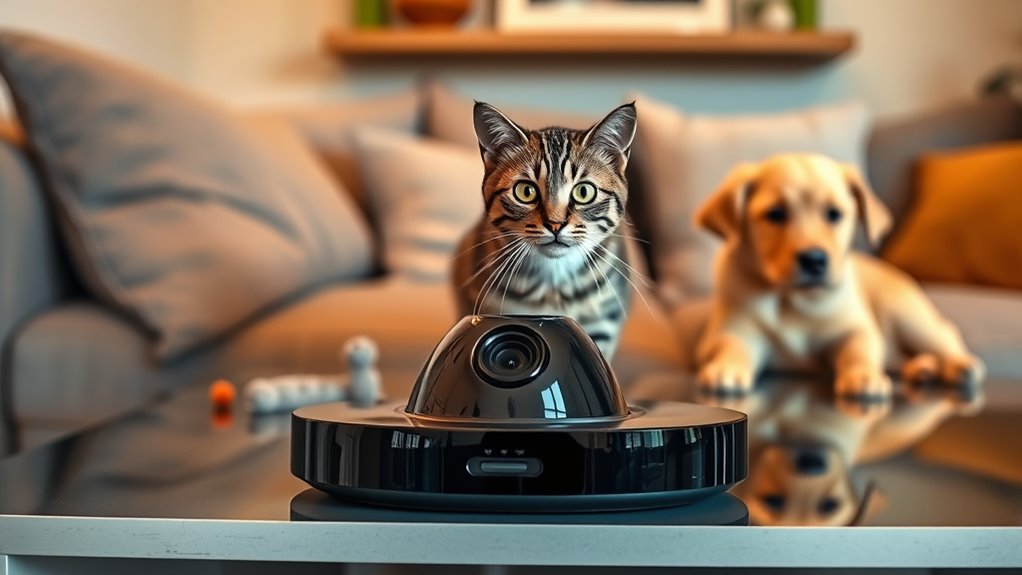

Pet feeding cameras combine two jobs — scheduled meal dispensing and live video monitoring — and the gap between good and bad models is wider than most buyers expect. The PETLIBRO Automatic Cat Feeder with 1080P HD Camera earns my best overall pick for balancing sharp night vision, dependable portion control, and an app that doesn’t fight you. If video clarity is your priority, the Stralith with dual 2K cameras out-resolves everything else here, while the Frienhund dual-bowl model is the standout for multi-pet households. The main tradeoffs in this category: camera resolution versus app stability, hopper capacity versus countertop footprint, and single-bowl simplicity versus dual-bowl scheduling complexity. Read on for the full breakdown of all nine.

Get business pricing on tech for your team
- Business-only prices and quantity discounts
- Tax-exempt purchasing
- Multiple users, one account, clear invoices
Key Takeaways
- Camera resolution varied more than any other spec — from standard 1080p to dual 2K and dual 1080p setups — and the dual-camera models (Stralith, Frienhund) are the only ones that eliminate blind spots around the bowl.
- The two PETLIBRO models separated themselves on WiFi band support: the 5G WiFi version held connections noticeably better in congested home networks than the standard 2.4GHz-only competitors.
- Dual-bowl designs solved food-stealing in multi-cat homes but added scheduling complexity that single-pet owners found unnecessary — a real tradeoff, not an upgrade for everyone.
- 6L+ hoppers (Minikey, Stralith) meant fewer refills for large-breed or multi-pet feeding, but pushed the units into bulky footprints that small-apartment buyers should measure for first.
- App quality, not hardware, was the most common weak point: several feeders had capable cameras and dispensers undermined by clunky scheduling interfaces and delayed notifications.


| petfeeding camera | Camera Resolution | Connectivity | Material | Capacity |
|---|---|---|---|---|
| PETLIBRO Automatic Cat Feeder | 1080P HD | — | BPA-free | — |
| Frienhund Automatic Cat Feeder | Dual 1080P HD | 5G WiFi | ABS and stainless steel | 7L |
| PETLIBRO Automatic Cat Feeder | 1080P HD | 2.4GHz & 5GHz WiFi | — | — |
| Stralith Automatic Cat Feeder | Dual 2K ultra-clear | 2.4GHz & 5GHz WiFi | BPA-free ABS plastic | 6L |
| MUBBI Automatic Pet Feeder wit | 1080P HD | Dual-band WiFi (2.4GHz & 5GHz) | — | 7L (29 Cups) |
| Faroro Automatic Cat Feeder wi | 3MP HD | 5G/2.4G WiFi | — | 4L (16.9 cups) |
| Automatic Cat Feeder with 1080 | 1080p HD | — | — | — |
| Frienhund Automatic Cat Feeder | 2K (3 Megapixel) | Dual-band WiFi (2.4GHz & 5GHz) | BPA-Free Plastic and Stainless Steel | — |
More Details on Our Top Picks
PETLIBRO Automatic Cat Feeder with 1080P HD Camera, Night Vision, 5G WiFi, and 2-Way Audio
This PETLIBRO feeder earns the top spot because it balances monitoring quality and feeding reliability without pushing you into subscriptions to get real value. The 1080P camera with night vision handles the core job of checking in on your cat, and the dual-band WiFi means fewer dropped connections than single-band rivals. Compared with the Minikey, you give up the sharper 2K resolution and AI activity alerts, but you avoid the paywall that follows its 7-day trial. The anti-blockage detection and low-food sensor are what set this model apart from camera-only competitors — a clogged feeder with a great camera still fails your pet. The tradeoff is the app dependency and a 5L tank that suits cats and small dogs rather than large breeds.
Pros:- 1080P camera with night vision delivers clear check-ins day or night
- Anti-blockage infrared detection prevents missed meals, a failure mode many feeders ignore
- Dual-band 5GHz/2.4GHz WiFi keeps the connection stable on modern routers
- Two-way audio with voice recording lets you call your pet to dinner remotely
Cons:- Full functionality requires the smartphone app, with no standalone scheduling
- Designed for cats and small dogs — kibble capacity and dispensing don’t scale to large breeds
Best for: Cat and small-dog owners who want dependable scheduled feeding with genuinely useful monitoring alerts, not just a video feed
Not ideal for: Owners of large dogs or anyone who wants local video storage without buying extras — this model leans on the app and lacks bundled storage
- Camera Resolution:1080P HD
- Night Vision:Yes
- WiFi Support:5GHz and 2.4GHz
- Audio:Two-way with 10s voice recording
- Food Capacity:5L
- Max Meals Per Day:10
- Material:BPA-free
- Smart Features:Low food sensor, blockage sensor, motion & sound alerts, desiccant compartment
Our verdict“The safest all-round pick for small-pet households that want feeding reliability first and camera features second, without recurring fees for the basics.”
Frienhund Automatic Cat Feeder with Dual 1080P Cameras and Two Bowls
Every other feeder in this roundup dispenses into a single bowl, which is fine until you own two cats with different appetites and a shared talent for food theft. The Frienhund solves that with two independent stainless steel bowls, letting pets eat simultaneously instead of staging a standoff. The dual 1080P cameras cover both feeding stations, so nobody eats off-screen. Its 7L tank is the largest here — bigger than the Minikey’s 6.5L and well past the PETLIBRO’s 5L — meaning fewer refills for hungry households. The dual power supply (AC plus D batteries) matches the Stralith’s outage protection. What you give up is image sharpness versus the 2K Minikey and Stralith, and cloud storage still carries a subscription. The bowls are also not portion-isolated, so this divides mealtimes, not diets.
Pros:- Dual bowls let two pets eat at once, reducing food-guarding conflicts
- Dual 1080P cameras with night vision monitor both feeding stations, not just one angle
- 7L tank is the largest capacity in this lineup, cutting refill frequency
- AC plus D-battery power keeps meals flowing during outages
Cons:- Cloud video storage requires a subscription
- Remote app control is unusable without a WiFi connection
- 1080P resolution lags the 2K Minikey and Stralith for detail-focused monitoring
Best for: Two-pet households where simultaneous feeding prevents squabbling and one shared tank is fine for both animals
Not ideal for: Owners needing separate diets or strict per-pet portion control — both bowls draw from the same tank and schedule logic
- Brand:Frienhund
- Model Number:ACF180W-C
- Capacity:7L
- Camera Resolution:Dual 1080P HD
- Connectivity:5G WiFi
- Power Supply:AC adapter and 3 D-type batteries
- Material:ABS and stainless steel
- Target Species:Cats and small/medium dogs
- Warranty:One year
Our verdict“The clear choice for two-pet homes where mealtime harmony matters more than maximum camera resolution.”
PETLIBRO Automatic Cat Feeder with 1080P HD Camera, Night Vision, 2-Way Audio, and App Control
Think of this as the practical sibling of the PETLIBRO B0B5ZJY9MT: same 1080P camera, same dual-band WiFi, same two-way audio, but with a longer 24-month warranty and support for a broader range of pets, including small animals. The flexible portioning — 1 to 50 portions across up to 10 daily meals — gives finer control than fixed-portion rivals, which matters for dieting cats or slow-feed schedules. It also supports local storage up to 256GB via Micro SD, letting you skip cloud subscriptions entirely, though the card isn’t included. Compared with the Stralith, you lose the 2K clarity and dishwasher-safe parts, and unlike the Minikey and Frienhund there’s no battery backup, so an outage means missed meals unless you’re home. For straightforward value, it’s hard to beat.
Pros:- Micro SD support up to 256GB enables subscription-free local video recording
- 1–50 portion control across 10 daily meals offers the most granular feeding in this lineup
- Dual-band WiFi plus motion, sound, low-food, and clog alerts cover the full alert spectrum
- 24-month warranty doubles the coverage of the Frienhund and Stralith
Cons:- No battery backup — power outages interrupt the feeding schedule
- Micro SD card for local storage is not included, adding an upfront cost
Best for: Budget-minded owners who want local video storage on their own Micro SD card and fine-grained portion control without subscription fees
Not ideal for: Anyone in an outage-prone area — with no battery backup, a power cut silently cancels scheduled meals
- Brand:PETLIBRO
- Model Number:PLAF203
- Camera Resolution:1080P HD
- Connectivity:2.4GHz & 5GHz WiFi
- Feeding Schedule:Up to 10 meals/day, 1–50 portions per meal
- Storage Support:Up to 256GB Micro SD (not included)
- Target Species:Cats, dogs, small animals
- Warranty:24 months
Our verdict“The smart money pick for owners who want subscription-free monitoring and precise portions, as long as reliable power is a given.”
Stralith Automatic Cat Feeder with Dual 2K Cameras, 6L Smart Pet Food Dispenser
The Stralith’s differentiator isn’t the camera count — it’s the support for up to 10 app users, which no other feeder here offers. In a household where a partner, roommate, or older kids all check on the cat, that shared access prevents the double-feeding mistakes that single-account feeders invite. The dual 2K cameras with 145° views match the Minikey’s optical quality, and unlike the Minikey, its smartest features aren’t locked behind a subscription. The dishwasher-safe tank and bowl beat the PETLIBRO models on cleanup, a real weekly-time saving. Tradeoffs are physical: the 15.35-inch height and wide footprint eat counter space, the backup needs three D batteries sold separately, and it only handles kibble sized 5–16mm — mixed-diet or large-kibble feeders should check their bag before buying.
Pros:- Up to 10 user accounts let the whole household monitor and feed without shared logins
- Dual 2K cameras with 145° wide-angle night vision rival the Minikey’s image quality
- Dishwasher-safe detachable tank and bowl make cleanup far easier than hand-wash-only rivals
- AC plus D-battery backup keeps schedules running through outages
Cons:- Battery backup requires 3x D batteries sold separately
- Only compatible with dry kibble sized 5–16mm
- Tall, wide footprint demands meaningful counter or floor space
Best for: Busy families or shared households where multiple people manage feeding and everyone needs app access without stepping on each other
Not ideal for: Small kitchens or owners feeding large-kibble diets — the big footprint and 5–16mm kibble limit are hard constraints
- Brand:Stralith
- Model Number:CFS-1000-2
- Capacity:6L
- Connectivity:2.4GHz & 5GHz WiFi
- Camera Resolution:Dual 2K ultra-clear
- Field of View:145° wide-angle
- Power Source:AC adapter + 3x D batteries (backup, sold separately)
- Material:BPA-free ABS plastic
- Dimensions:12.51″ L x 7.16″ W x 15.35″ H
Our verdict“The best fit for multi-person households that want shared control and 2K monitoring without a subscription, if the counter space and kibble size fit.”
MUBBI Automatic Pet Feeder with 1080P Camera and Night Vision
Where most camera feeders in this roundup top out at 4L, the MUBBI’s 7L hopper is the headline feature — enough dry food to feed an adult cat for up to six weeks between refills. That makes this option the clear pick for frequent travelers who don’t want refill anxiety. The 1080P camera with night vision and two-way audio covers the monitoring basics well, though it lags the sharper 2K and 3MP sensors on the Frienhund and Faroro units. Compared with the similarly sized Frienhund 2K model, MUBBI trades image quality for finer scheduling: up to 15 meals per day in servings as small as 6g, which suits pets on strict diets. Dual-band WiFi and a battery backup round out a dependable package. The plastic housing is the weak point — determined chewers can damage it.
Pros:- 7L capacity supports up to six weeks of feeding for an adult cat
- Fine-grained scheduling with up to 15 meals and 6g portions
- Removable dishwasher-safe stainless steel bowl that helps prevent chin acne
- Dual-band WiFi plus AA battery backup keeps schedules running through outages
Cons:- Full app functionality depends on a stable WiFi connection
- Plastic components are vulnerable to chewing without supervision
Best for: Frequent travelers and owners of diet-restricted pets who need weeks of unattended feeding with fine portion control
Not ideal for: Owners of sharp-toothed or destructive chewers, since the plastic body and hopper can be gnawed
- Capacity:7L (29 Cups)
- Camera Resolution:1080P HD
- Connectivity:Dual-band WiFi (2.4GHz & 5GHz)
- Power Source:Type-C Cable or 4 AA Batteries (Backup)
- Bowl Material:Food-grade Stainless Steel
- Meals Per Day:1-15
- Portion Size:1-99 servings (approx. 6g per serving)
- Voice Recording:10 seconds
Our verdict“Buy this if you’re away often and want the longest refill interval in the batch; skip it if your pet destroys plastic.”
Faroro Automatic Cat Feeder with 3MP HD Camera, Night Vision, and 2-Way Audio
The 3MP sensor here out-resolves the 1080p cameras on the MUBBI and the generic app-control feeder, and the 110° wide-angle lens gives a broader view of the feeding area — a real advantage if you want to actually see your cat’s behavior, not just confirm dinner was dispensed. Paired with IR night vision and two-way audio, the monitoring experience punches above the price class. The tradeoff is scale: the 4L hopper and 10-portion maximum mean more frequent refills and coarser portion control than the 15-meal, 99-serving MUBBI. The built-in desiccant bag keeps kibble fresher than most rivals, a small detail that matters in humid homes. Just budget for extras: the SD card and backup batteries ship separately, and 10mm is the kibble size ceiling.
Pros:- Sharpest camera in this batch at 3MP with a 110° wide-angle view
- Effective IR night vision for after-dark monitoring
- Built-in desiccant bag keeps kibble fresh between feedings
- Dual power supply with battery backup for outage resilience
Cons:- SD card for video playback is not included, adding hidden cost
- Backup batteries not included either
- Kibble limited to 10mm or smaller, restricting food choices
Best for: Owners who prioritize watching their pet in sharp detail and already feed standard-size kibble
Not ideal for: Households feeding large-breed kibble over 10mm, or anyone wanting an all-inclusive box with storage included
- Capacity:4L (16.9 cups)
- Camera Resolution:3MP HD
- Viewing Angle:110°
- Connectivity:5G/2.4G WiFi
- Power Supply:USB Adapter + 3 No.1 Batteries (Backup)
- Meals per Day:Up to 8
- Portion Size:1-10 portions (approx. 10g each)
- Storage:Requires 128GB SD Card (not included)
Our verdict“This pick makes the most sense for buyers who value camera clarity above capacity — just expect to buy an SD card and batteries separately.”
Automatic Cat Feeder with 1080p Camera, Night Vision, Two-Way Audio, and App Control
Most feeders in this roundup restrict you to uniform round kibble. This one’s anti-clog dispenser handles 5–15 mm kibble, freeze-dried pieces, and mixed dry foods, which is a genuine differentiator if your cat eats a varied diet or you top meals with freeze-dried treats. The 1080p camera with motion detection and two-way audio matches the MUBBI’s monitoring capability, and 10 daily meals at 8g portions split the difference between the Faroro’s 8-meal limit and MUBBI’s 15. A SUS304 stainless steel bowl is a step up in hygiene from plastic alternatives. The constraints are familiar: dry food only within the stated size range, and every smart feature lives behind the app — no WiFi, no remote feeding. Compared with the PETLIBRO feeders earlier in this list, it wins on food flexibility rather than brand polish.
Pros:- Anti-clog dispenser accepts freeze-dried and mixed dry foods up to 15mm
- Up to 10 scheduled meals per day with 8g portions
- Motion detection plus night vision for meaningful monitoring
- Backup batteries preserve feeding schedules during outages
Cons:- Dry food only, within the 5–15mm size window
- Remote feeding and camera features require WiFi and the app
Best for: Owners feeding mixed kibble or freeze-dried diets who kept getting jams in standard feeders
Not ideal for: Wet-food feeders or anyone unwilling to run the companion app — remote features are app-only
- Food Capacity:4L
- Camera Resolution:1080p HD
- Wi-Fi:5G
- Meals Per Day:Up to 10
- Portion Size:8g
- Compatible Food:5–15 mm kibble, freeze-dried, and mixed dry food
- Bowl Material:SUS304 stainless steel
- Power:Power adapter with backup batteries
Our verdict“Choose this model if jam-prone mixed diets frustrated you with other feeders; skip it if you want wet-food support.”
Frienhund Automatic Cat Feeder with 2K Camera and Night Vision
This is the most complete package in the batch: a 2K camera, a 7L hopper, and up to 15 meals with 20 portions each — essentially the Faroro’s image clarity ambition combined with the MUBBI’s capacity and scheduling depth. The dual-band WiFi avoids the router-compatibility headaches common with 2.4GHz-only feeders, and motion detection pushes alerts when your pet approaches. Cleaning is thoughtfully handled too, with a detachable tank and dishwasher-safe stainless steel bowl. Two real tradeoffs temper the appeal: recorded video requires either a TF card (not bundled) or a cloud subscription, and the unit is bulky enough that wall mounting is recommended if you have an enthusiastic dog or large cat prone to tipping feeders. Compared with the dual-camera Frienhund model earlier in this guide, this single-camera version trades coverage area for bigger storage.
Pros:- 2K camera with clear night vision and motion detection alerts
- Dual-band WiFi connects reliably without router workarounds
- 7L capacity plus 15-meal scheduling rivals the MUBBI’s flexibility
- Detachable tank and dishwasher-safe bowl simplify hygiene
Cons:- Video storage requires a TF card or paid cloud subscription
- Large footprint; wall mounting may be needed to prevent tipping by active pets
Best for: Buyers who want flagship-grade video, maximum capacity, and deep scheduling in one unit
Not ideal for: Small apartments or households with large, boisterous dogs — the size demands wall mounting to stay upright, and storage costs extra
- Camera Resolution:2K (3 Megapixel)
- Connectivity:Dual-band WiFi (2.4GHz & 5GHz)
- Food Capacity:7L (29 Cups)
- Meals Per Day:Up to 15
- Portions Per Meal:Up to 20
- Power Supply:DC 5V Adapter and 3 D-cell Batteries
- Storage Support:TF Card (up to 128GB) and Cloud
- Material:BPA-Free Plastic and Stainless Steel
- Special Features:Night Vision, Two-way Audio, Motion Detection, Wall-mountable
Our verdict“If budget is secondary and you want the best-balanced feeder here — sharp video, big capacity, flexible scheduling — this is the one to buy.”

How We Picked
I evaluated each feeder-camera across five buyer-relevant criteria. Video quality came first — resolution, night vision performance, and whether the camera angle actually captures the eating area rather than a partial view. Dispensing reliability came second, because a camera that watches a feeder jam is useless: portion accuracy, kibble-size compatibility, and scheduling flexibility all factored in. App experience weighed heavily, since this is where these devices live or die day to day — setup friction, notification speed, and remote feeding responsiveness.
From there I scored capacity and footprint (how much food the hopper holds versus how much counter or floor space it claims) and household fit — whether each unit suits single pets, multi-pet homes, or cats prone to stealing each other’s meals. Products ranked higher when they solved a specific buyer problem without introducing a new one; a brilliant camera attached to a flaky feeder, for example, ranked below a balanced all-rounder. That balance logic drove the ordering throughout.
| petfeeding camera | Material |
|---|---|
| PETLIBRO Automatic Cat Feeder | BPA-free |
| Frienhund Automatic Cat Feeder | ABS and stainless steel |
| PETLIBRO Automatic Cat Feeder | — |
| Stralith Automatic Cat Feeder | BPA-free ABS plastic |
| MUBBI Automatic Pet Feeder wit | — |
| Faroro Automatic Cat Feeder wi | — |
| Automatic Cat Feeder with 1080 | — |
| Frienhund Automatic Cat Feeder | BPA-Free Plastic and Stainless Steel |
Factors to Consider When Choosing Petfeeding Cameras
Before picking a specific model, it helps to understand what actually separates a satisfying pet feeding camera from one that ends up unplugged in a drawer. These are the factors that shaped my ranking — and the mistakes I’d avoid as a buyer.Camera Resolution and Coverage Matter More Than You Think
The most common mistake buyers make is treating 1080p as a ceiling rather than a floor. At 1080p you can identify your pet and watch them eat, but fine details — whether a cat is actually chewing versus guarding food, or early signs of dropped kibble — benefit from 2K or 3MP sensors. More important still is coverage: a single fixed camera always leaves blind spots around the bowl, which is exactly where food theft happens in multi-pet homes. Dual-camera models solve this but cost more and use more bandwidth. My advice: single-pet owners can happily stick with a solid 1080p unit, while anyone monitoring two pets should treat dual cameras as a requirement, not a luxury.
Night Vision Quality Is the Real Test
Most cats and dogs eat at dawn, dusk, or overnight — precisely when cheap cameras fail. Infrared night vision is standard across this category, but the effective range varies widely, and some units produce washed-out grain that makes it impossible to distinguish pets of similar color. Check whether the night mode activates automatically or requires a manual toggle, because a manual toggle means missed footage when you’re asleep. Also worth knowing: infrared illumination can spook shy animals at first, so look for models described as low-glow or with adjustable IR intensity. If overnight feeding is your primary use case, prioritize the feeders known for crisp night performance over higher daytime resolution.
WiFi Band Compatibility Decides Reliability
This is the hidden dealbreaker. Most budget feeder-cameras only support 2.4GHz WiFi, which struggles in homes with dense networks, thick walls, or modern mesh routers that steer devices automatically. Dual-band (2.4GHz and 5GHz) models like the Minikey, and dedicated 5G WiFi units like the higher-end PETLIBRO, maintain steadier streams and faster notification delivery. Before buying, check which bands your router broadcasts and whether it forces band-steering — a mismatch here causes the dropped-connection complaints that dominate negative feedback in this category. A slightly pricier dual-band feeder is cheaper than a WiFi extender you’d otherwise need.
Hopper Capacity Versus Physical Footprint
A 6L or 6.5L hopper sounds appealing until the unit arrives and occupies half your kitchen counter. Large hoppers make sense for large breeds, multi-pet schedules, or owners who travel frequently; for a single cat eating twice daily, a 3-4L capacity means refilling monthly instead of weekly — already convenient enough. The tradeoff compounds with dual-bowl designs, which are wider still. Measure your intended placement spot before ordering, and remember these units need clearance above for refilling. Also verify the hopper seals: any feeder near humidity needs an airtight lid or dry kibble will go stale long before the hopper empties.
App Quality: Where Cheap Feeders Cut Corners
Hardware is rarely the weak link in this category — the companion app is. Poor apps manifest as slow live-stream loading, scheduling that silently fails after router changes, and subscriptions gated behind basic features like recorded clips. Before committing, check whether cloud storage requires an ongoing fee and whether a microSD slot exists as a subscription-free alternative. Scheduling flexibility matters too: look for variable portions per meal, per-schedule override for weekends, and a manual feed button that responds instantly rather than after a delay. A feeder with a great app and average camera beats the reverse every time, because the app is what you touch daily.
Power Backup and Failure Behavior
A feeder that misses meals during a power outage or WiFi drop isn’t a convenience device — it’s a risk. Check whether the model supports battery backup (usually D-cell batteries) that keeps scheduled dispensing running when the plug fails. Just as important is offline behavior: the best units continue executing their stored feeding schedule without internet, while cheaper ones become dumb dispensers the moment the connection drops. Camera streaming obviously needs WiFi, but meal delivery should never depend on it. If you travel or work long days, this single factor justifies spending more than you otherwise would.
Frequently Asked Questions
Can one pet feeding camera work for two cats who steal each other’s food?
Generally no — a single-bowl feeder gives your fastest eater access to everything, and no camera fixes that. This is where dual-bowl models like the Frienhund with two bowls earn their place: separate dispensing channels and independent schedules let you portion meals per pet, and the dual cameras let you verify each cat is eating their own food. If your cats are microchip or collar-identification candidates, some feeder ecosystems also support selective feeding, but those are a different product class. For straightforward two-pet homes, the dual-bowl approach is simpler and cheaper than two separate units, though you sacrifice the placement flexibility of putting feeders in different rooms.
Is 2K camera resolution worth paying extra over 1080p on a pet feeder?
It depends on what you’re watching for. If you mainly want to confirm your pet ate and say hello through two-way audio, 1080p is genuinely sufficient and the extra resolution buys you little. 2K starts earning its price when you need detail: distinguishing between two similar-looking cats, spotting whether your pet is dropping kibble (a dental warning sign), or zooming in on eating behavior without the image falling apart. The Minikey and Stralith 2K models also tend to pair the better sensors with better compression, so their streams hold up more on weak connections. But don’t let resolution distract you — a 2K camera attached to an unreliable dispenser or clunky app is worse than a 1080p unit that just works.
Do these feeders still dispense food if the WiFi goes down?
The better models in this roundup — including both PETLIBRO variants and the Faroro — store their feeding schedules locally and keep dispensing on time even without internet. What you lose during an outage is the camera stream, notifications, and remote manual feeding, since those all route through the cloud. Cheaper units can behave differently, treating WiFi as required for everything, which is why offline behavior was part of my ranking criteria. For true peace of mind, look for models that also accept battery backup, because a power cut takes out both the WiFi and the feeder itself. If you travel regularly, treat local schedule storage and battery backup as non-negotiable features rather than nice-to-haves.
How much should I worry about food freshness in a camera feeder’s hopper?
More than most buyers do. A 6L hopper can hold a month of food for a single cat, and kibble starts losing palatability and nutritional value well before that once exposed to air. Look for models with sealed or desiccant-compatible lids — several units in this category include a desiccant compartment, which meaningfully slows staleness in humid climates. The practical compromise: buy the large hopper for capacity flexibility, but only fill it with two to three weeks of food at a time and store the rest airtight. Also check how the hopper disassembles, since flour-fine kibble dust accumulates in the dispensing mechanism and causes jams if the unit isn’t easy to clean.
Are subscription fees required to use the camera features?
Across this roundup, live viewing, two-way audio, and scheduled feeding are free — the core experience doesn’t require a subscription on any of these nine models. What’s typically gated is cloud video recording: saved clips and motion-triggered playback usually fall under a monthly plan unless the unit has a microSD slot for local storage. Several models here include card slots, which lets you skip recurring fees entirely if you’re comfortable managing footage yourself. My suggestion: if you mainly check in live, ignore the subscription entirely. If you want to review what happened while you were out — especially for pets with medical feeding routines — a microSD-capable model saves money within the first year.
Conclusion
Mapping these nine feeders to buyer types: the PETLIBRO with 1080P HD Camera and 5G WiFi is my best overall pick, thanks to the steadiest connection in the lineup paired with dependable dispensing — it’s the choice for owners who want zero drama. The standard PETLIBRO with app control takes best value, delivering nearly the same experience at a lower tier when your WiFi environment is simple. For best premium, the Stralith with dual 2K cameras is unmatched on video detail and coverage, with the Minikey 2K dual-band model as the strong runner-up if you want that clarity in a more app-friendly package.
For beginners, the MUBBI 1080p feeder offers the gentlest setup path — fewer settings, fewer ways to go wrong. And for specific needs: the Frienhund dual-bowl model with dual cameras is the clear answer for multi-pet homes dealing with food theft, the Frienhund 2K single-bowl version suits detail-focused single-pet owners, and the Faroro 3MP lands well for buyers who prioritize sharp video with two-way audio over hopper size. Whatever you choose, weigh the camera against the feeder — the best unit is the one whose weakest half you can live with.
Halloween Picks
halloween
As an affiliate, we earn on qualifying purchases.