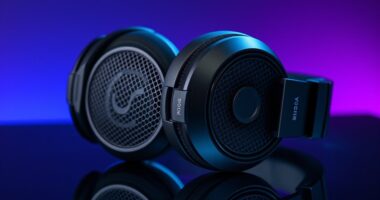
Searching for a noise cancelling headset for VR means weighing two different goals: blocking household noise and keeping a headset comfortable with a VR visor. My strongest pick for actual active noise cancellation is the Razer BlackShark V3 Pro, while the SARLAR VR Gaming Headphones are more directly shaped around Quest use and passive noise reduction. PlayStation VR owners may prefer the Plantronics RIG 4VR for its console-focused cable setup and vented cups.

Get business pricing on tech for your team
- Business-only prices and quantity discounts
- Tax-exempt purchasing
- Multiple users, one account, clear invoices
These five options do not all cancel noise in the same way. Razer uses hybrid active noise cancellation; SARLAR relies on ear-pad coverage, while the RIG 4VR deliberately lets some ambient sound through. AMVR takes a different route with compact Quest 2 earbuds. I rank them by how well their isolation approach, fit, connection, and platform compatibility serve VR play—not by treating every headset as if it offers the same kind of noise cancellation.
Complete the kit


Key Takeaways
- The Razer BlackShark V3 Pro is the only option here with specified hybrid active noise cancellation, but its approximately 367 g weight may be tiring under a VR headset.
- SARLAR’s Quest 2 and Quest 3 headphones use full-size ear pads for passive noise reduction, trading more coverage for a wired connection.
- The Plantronics RIG 4VR is designed for PlayStation VR and vents its earcups; that helps with heat but makes it a poor choice for blocking room noise.
- AMVR’s 20 g earbuds are the lightest, most compact option, but fit Quest 2 only and require a 3.5 mm headphone jack.
- Check how your VR visor sits with over-ear cups before choosing: headset bulk and clamp can matter as much as audio features during a session.
| Razer BlackShark V3 Pro Wireless Gaming Headset with ANC, Black |  | Best Overall for Active Noise Cancellation | Noise cancellation: Hybrid active noise cancellation | Driver size: 50 mm | Connectivity: 2.4 GHz wireless, Bluetooth 5.3, USB, and 3.5 mm | VIEW ON AMAZON | See Our Full Breakdown |
| SARLAR VR Gaming Headphones for Meta Quest 2 and Quest 3 |  | Best Quest-Focused Passive Isolation | Compatibility: Meta Quest 2 and Quest 3 | Connectivity: Wired | Connector: 3.5 mm jack | VIEW ON AMAZON | See Our Full Breakdown |
| Plantronics RIG 4VR White Stereo Gaming Headset for PlayStation |  | Best for PlayStation VR Comfort and Compatibility | Model: RIG 4VR, 206816-01 | Fit: Over-ear | Driver size: 40 mm | VIEW ON AMAZON | See Our Full Breakdown |
| AMVR Noise-Isolating Earbuds for Meta Quest 2 |  | Best Compact Option for Quest 2 | Compatibility: Meta Quest 2 only; not compatible with Quest 3 | Driver: 10 mm neodymium magnet | Connectivity: Wired, 3.5 mm jack | VIEW ON AMAZON | See Our Full Breakdown |
| Plantronics RIG 4VR Gaming Headset for PlayStation VR and PS4 | 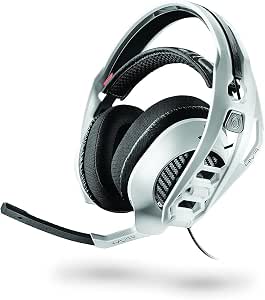 | Best Alternative RIG 4VR for Multi-Device Use | Model: Plantronics RIG 4VR, 206816-05 | Color: Black and silver | Driver size: 40 mm | VIEW ON AMAZON | See Our Full Breakdown |
| noise cancelling headset for vr | Connectivity | Driver size | Weight | Microphone |
|---|---|---|---|---|
| Razer BlackShark V3 Pro Wirele | 2.4 GHz wireless, Bluetooth 5.3, USB, and 3.5 mm | 50 mm | Approximately 367 g | Detachable HyperClear Full Band 12 mm |
| SARLAR VR Gaming Headphones fo | Wired | 45 mm | — | — |
| Plantronics RIG 4VR White Ster | 3.5 mm jack; product information also lists Bluetooth 4.2 | 40 mm | 241 g | Detachable noise-cancelling boom; flips up to mute |
| AMVR Noise-Isolating Earbuds f | Wired, 3.5 mm jack | — | 20 g | — |
| Plantronics RIG 4VR Gaming Hea | Interchangeable cables | 40 mm | — | Detachable noise-cancelling boom; flips up to mute |
More Details on Our Top Picks
Razer BlackShark V3 Pro Wireless Gaming Headset with ANC, Black
The Razer BlackShark V3 Pro is the clearest match for anyone who means active noise cancellation when searching for a VR headset. Its hybrid ANC sets it apart from the other four picks: the SARLAR model relies on ear-pad coverage, and both RIG 4VR versions use vents that intentionally admit ambient sound. Razer also gives you 2.4 GHz wireless, Bluetooth, USB, and 3.5 mm connections, making it the most flexible choice if you move between a PC gaming setup and other devices.
That versatility has a physical tradeoff. At approximately 367 g, it is the heaviest option with a listed weight, and a VR visor already adds pressure and bulk. I would check how its earcups and headband sit with your particular headset before committing to long sessions. Its up-to-70-hour battery life reduces charging interruptions, but the THX Spatial Audio feature is specified for supported Windows systems; it should not be assumed to provide the same spatial processing on every standalone VR platform.
Compared with the lighter AMVR earbuds or the Quest-focused SARLAR headphones, Razer is better for users who want one adaptable gaming headset and genuine active noise reduction. It is less directly tailored to a particular VR headset than the RIG 4VR is to PlayStation VR, and its weight makes it a less comfortable bet for buyers prioritizing minimum bulk.
Pros:- Hybrid active noise cancellation is the strongest stated noise-blocking feature in this lineup.
- 2.4 GHz wireless, Bluetooth, USB, and 3.5 mm connections provide multiple setup options.
- Up to 70 hours of battery life on 2.4 GHz reduces the need for frequent charging.
- Detachable microphone supports team communication and can be removed when not needed.
Cons:- Approximately 367 g may add noticeable weight during VR sessions.
- THX Spatial Audio is limited to supported Windows systems.
- The product information does not establish compatibility or ideal fit with every VR visor.
Best for: VR players who want active noise cancellation and a headset that can also serve PC and other gaming devices.
Not ideal for: Buyers focused on a very light headset, or anyone whose visor fit cannot accommodate a full-size gaming headset.
- Noise cancellation:Hybrid active noise cancellation
- Driver size:50 mm
- Connectivity:2.4 GHz wireless, Bluetooth 5.3, USB, and 3.5 mm
- Battery life:Up to 70 hours on 2.4 GHz
- Weight:Approximately 367 g
- Microphone:Detachable HyperClear Full Band 12 mm
- Spatial audio:THX Spatial Audio with 7.1.4 surround on supported Windows systems
- Warranty:2 years
Our verdict“Choose the Razer if active noise cancellation and broad connectivity matter more than keeping weight to a minimum.”
SARLAR VR Gaming Headphones for Meta Quest 2 and Quest 3
For Quest owners who want more coverage around the ears without paying the weight penalty of the Razer, SARLAR’s wired headphones make the most direct platform-specific alternative. Their protein ear pads help reduce outside noise through passive coverage. That is not the same as active noise cancellation, but it may suit buyers who want a simpler setup and do not need electronic ANC. The listing names both Meta Quest 2 and Quest 3, giving SARLAR a wider stated Quest range than the AMVR earbuds, which are not compatible with Quest 3.
The custom-length 3.5 mm cable keeps the headset connected without relying on a battery, but it also links your audio gear to the visor. During active movement, a cable can tug or snag, so I would favor a tidy routing setup. The included carrying case and lens cover are practical extras for storage and transport, while the 45 mm drivers are larger than AMVR’s 10 mm in-ear drivers. Driver size alone does not establish sound quality or noise reduction, though, so the key difference here is the over-ear format and ear-pad coverage.
Compared with the vented RIG 4VR, SARLAR makes more sense when room-noise reduction matters; compared with Razer, it gives up active cancellation and wireless options for a Quest-specific wired design. Buyers should still confirm that the earcups and strap work together comfortably on their own headset, as fit depends on the complete VR setup.
Pros:- The listing specifically names Meta Quest 2 and Quest 3 compatibility.
- Protein ear pads help reduce outside noise through passive coverage.
- A wired 3.5 mm connection avoids headset battery charging.
- Includes a carrying case, lens cover, Velcro tie, and microfiber cloth.
Cons:- The wired connection can restrict movement or catch during active play.
- Passive ear-pad coverage is not active noise cancellation.
- The listing does not specify a weight or provide fit measurements for different VR visors.
Best for: Meta Quest 2 or Quest 3 owners who want wired, over-ear headphones with passive outside-noise reduction.
Not ideal for: Players who need active noise cancellation, wireless movement, or a setup with no cable attached to the visor.
- Compatibility:Meta Quest 2 and Quest 3
- Connectivity:Wired
- Connector:3.5 mm jack
- Driver size:45 mm
- Ear-pad material:Protein
- Color:Black
- Included accessories:Carrying case, lens cover, Velcro tie, microfiber cleaning cloth
Our verdict“SARLAR is the practical Quest-focused choice when passive ear-pad coverage matters more than wireless freedom or active ANC.”
Plantronics RIG 4VR White Stereo Gaming Headset for PlayStation
The white Plantronics RIG 4VR earns its place for buyers who prioritize a headset designed around PlayStation VR rather than strong sound isolation. Its 40 mm drivers and low-frequency resonators are intended to support positional audio, while vented oval earcups help dissipate heat. That venting is a deliberate comfort tradeoff: unlike the closed coverage of SARLAR’s ear pads or Razer’s hybrid ANC, the RIG lets ambient sound through and cannot serve as the leading choice for blocking a noisy room.
Its detachable boom microphone flips up to mute, and the interchangeable cables are listed for PlayStation VR, PS4 controllers, computers, tablets, and phones. Routing from the back is useful around a VR setup because it keeps the connection oriented toward the console rather than dangling from the front. The listed weight is only 241 g, lighter than the Razer, although a headset’s fit with a visor still depends on the exact strap and ear-cup arrangement.
Compared with the black-and-silver RIG listing below, this version has clearer listed over-ear fit information and a white finish; both share the same basic VR-oriented, vented approach. I would choose it over SARLAR when airflow and PlayStation VR integration outweigh isolation, but skip it if the goal is to seal out voices, fans, or other room sounds.
Pros:- Designed to integrate with PlayStation VR, with cable routing intended for that setup.
- Vented oval cups help dissipate heat during play.
- Detachable microphone flips up to mute.
- Interchangeable cables support several 3.5 mm devices.
Cons:- Vented earcups let ambient sound through instead of sealing it out.
- Product information lists both wired connections and Bluetooth, leaving the connection setup unclear.
- Plastic enclosure material may feel less substantial than more heavily built alternatives.
Best for: PlayStation VR owners who want a lightweight, console-oriented headset with vented cups and a flip-to-mute boom.
Not ideal for: Anyone seeking strong passive isolation or active noise cancellation for a noisy room.
- Model:RIG 4VR, 206816-01
- Fit:Over-ear
- Driver size:40 mm
- Connectivity:3.5 mm jack; product information also lists Bluetooth 4.2
- Microphone:Detachable noise-cancelling boom; flips up to mute
- Weight:241 g
- Color:White
- Compatible devices:PlayStation VR, PS4 wireless controller, laptops, tablets, smartphones
Our verdict“The white RIG 4VR is a sensible PlayStation VR comfort pick, but its vented design makes it the wrong choice for genuine noise isolation.”
AMVR Noise-Isolating Earbuds for Meta Quest 2
AMVR’s Quest 2 earbuds are the most compact pick in this group and the only option built around an in-ear fit. At 20 g, they avoid the bulk of full-size cups, which can be appealing when over-ear headphones compete with a VR strap or feel too warm. The package includes three sizes of silicone tips plus silicone holders, so buyers have some flexibility in finding a secure fit and keeping the pair together between sessions.
The short, unequal cable lengths—9.3 inches on the left and 18.3 inches on the right—are specified for use with a headset rather than a typical long headphone lead. That can keep slack under control, but the wired 3.5 mm connection still requires a compatible jack and ties the earbuds to the visor. The product description says the audio is direction-calibrated for 360-degree VR sound. That makes it more VR-specific than a generic earbud, though it does not change the fact that this is Quest 2-only; the listing explicitly excludes Quest 3.
Compared with SARLAR, AMVR gives up the broad ear coverage that helps reduce outside noise in favor of a light, low-profile fit. It is also less suitable than the Razer for active cancellation. I would pick it for compactness and Quest 2 compatibility, not for silencing a shared room.
Pros:- Lightweight 20 g design avoids adding full-size ear cups around a VR visor.
- Three silicone tip sizes allow buyers to adjust the fit.
- Direction-calibrated audio is described for 360-degree VR sound.
- Includes silicone holders for storing the earbuds.
Cons:- Not compatible with Meta Quest 3.
- Wired connection requires a 3.5 mm headphone jack.
- In-ear fit may not suit buyers who prefer over-ear coverage or dislike silicone tips.
Best for: Meta Quest 2 players who prefer light in-ear audio and want a compact alternative to over-ear headphones.
Not ideal for: Quest 3 owners, people without a compatible 3.5 mm jack, or buyers who need stronger room-noise reduction.
- Compatibility:Meta Quest 2 only; not compatible with Quest 3
- Driver:10 mm neodymium magnet
- Connectivity:Wired, 3.5 mm jack
- Cable lengths:9.3 inches left; 18.3 inches right
- Weight:20 g
- Materials:Aluminum alloy and TPE
- Included:Earphones, 2 silicone holders, 6 silicone ear caps in sizes S/M/L
- Warranty:18 months
Our verdict“AMVR is the compact Quest 2 choice, but its low-profile fit should not be mistaken for broad noise-blocking coverage.”
Plantronics RIG 4VR Gaming Headset for PlayStation VR and PS4
This black-and-silver Plantronics RIG 4VR shares the core appeal of the white model: it is designed for PlayStation VR, with 40 mm drivers, low-frequency resonators, vented cups, and a detachable flip-to-mute microphone. Its interchangeable cables are listed for PS4, PC, Mac, tablets, and mobile phones, which gives it a useful range beyond the console. The defining limitation remains unchanged: vented earcups allow ambient sound in, so this is a comfort-and-compatibility pick rather than a headset for isolating a busy room.
The listing identifies this version as on-ear, unlike the white model’s stated over-ear fit. That distinction could affect how it sits around a VR visor, but the available information does not give dimensions or establish which fit works better for a particular face or strap. I would compare the retailer’s current fit details carefully rather than assuming the two listings are identical in wear. A media control and push button provide basic access to playback or headset controls.
Compared with Razer, this RIG is much more explicitly aimed at PlayStation VR but has no specified active ANC or wireless gaming connection. Compared with the white RIG, its black-and-silver finish and on-ear listing may suit buyers who prefer a less covering fit, though the shared venting means neither RIG should rank highly for sound isolation.
Pros:- Designed for PlayStation VR positional audio.
- Vented cups help dissipate heat and permit ambient sound.
- Detachable boom microphone flips up to mute.
- Interchangeable cables support PS4, PC, Mac, tablets, and mobile phones.
Cons:- Ambient sound enters through the vents, limiting isolation.
- The listing specifies on-ear placement, which may not suit every buyer or visor setup.
- No active noise cancellation or wireless gaming connection is specified.
Best for: PlayStation VR or PS4 players who want a multi-device wired headset and prefer the listed on-ear fit.
Not ideal for: Buyers who require active noise cancellation, sealed earcups, or wireless movement around a VR play space.
- Model:Plantronics RIG 4VR, 206816-05
- Color:Black and silver
- Driver size:40 mm
- Ear placement:On-ear
- Microphone:Detachable noise-cancelling boom; flips up to mute
- Controls:Media control and push button
- Compatibility:PlayStation VR, PS4, PC, Mac, tablets, and mobile phones
- Connectivity:Interchangeable cables
Our verdict“Choose this RIG 4VR for PlayStation VR compatibility and its listed on-ear fit, not for cancellation or a quiet listening bubble.”

How We Picked
I ranked these products around the specific needs behind the search for a noise cancelling headset for VR. The first distinction is active cancellation versus passive isolation. Razer explicitly lists hybrid active noise cancellation, so it leads for buyers who want electronics to reduce surrounding sound. The SARLAR product describes ear pads that help reduce outside noise, which is passive coverage rather than active cancellation. The two RIG 4VR listings use vented cups that allow ambient sound in, so their strength is VR-oriented comfort and compatibility—not isolation.
I also weighed headset and visor fit, connection freedom, and platform limits. A product can sound appealing on paper but still be a poor match if its cups interfere with a VR strap, its cable catches during movement, or its plug does not fit the headset. That is why the Quest 2-only AMVR earbuds rank below the more broadly usable options despite their low weight. The SARLAR headphones name both Quest 2 and Quest 3, while the RIG models are aimed at PlayStation VR and broader 3.5 mm devices.
Finally, I looked at comfort-related details, microphone usefulness, and meaningful tradeoffs. The supplied information does not establish that any over-ear model fits every VR visor, nor does it provide a directly comparable isolation measurement. I avoid treating those claims as proven. My ordering favors the clearest match to a buyer’s intended use: active noise reduction first, then Quest-focused passive isolation, then platform-specific or compact alternatives. Similar RIG listings are kept distinct because their listed fit and color differ, but their vented design gives them a similar role.
| noise cancelling headset for vr | Microphone | Compatibility | Color |
|---|---|---|---|
| Razer BlackShark V3 Pro Wirele | Detachable HyperClear Full Band 12 mm | — | — |
| SARLAR VR Gaming Headphones fo | — | Meta Quest 2 and Quest 3 | Black |
| Plantronics RIG 4VR White Ster | Detachable noise-cancelling boom; flips up to mute | — | White |
| AMVR Noise-Isolating Earbuds f | — | Meta Quest 2 only; not compatible with Quest 3 | — |
| Plantronics RIG 4VR Gaming Hea | Detachable noise-cancelling boom; flips up to mute | PlayStation VR, PS4, PC, Mac, tablets, and mobile phones | Black and silver |
Factors to Consider When Choosing Noise Cancelling Headset For Vr
I would start by deciding what noise control means for your VR setup. A product described as noise cancelling may reduce sound actively, cover the ear passively, or simply use a microphone with noise cancellation for calls. Those functions are not interchangeable.Active cancellation versus passive isolation
The Razer BlackShark V3 Pro is the only model in this group that explicitly lists hybrid active noise cancellation. Active cancellation uses electronics to address surrounding sound, while passive isolation comes from a physical barrier such as an ear tip or ear pad. SARLAR says its protein pads help reduce outside noise, but does not list active ANC. The RIG 4VR listings go in the opposite direction: their vents let ambient sound through to help with airflow. If blocking household noise is your main goal, this distinction should guide the shortlist before driver size or color.
Also separate a headset’s noise-cancelling microphone from noise cancellation for your ears. The RIG microphone description refers to clearer microphone pickup, not active reduction of room sound reaching you. Buyers who want quieter listening should focus on the stated ANC feature or the physical fit around their ears.
Fit around the VR visor
Over-ear headphones can compete for space with a visor strap, push against the sides of the head, or add heat. Razer’s approximately 367 g weight makes its fit worth checking, while the white RIG listing provides a lower specified weight of 241 g and vented cups. SARLAR also uses ear pads, but its listing does not provide a weight. No one product here can be declared a universal fit for every headset, so consider your strap design, facial pressure points, and session length.
If bulk is your chief concern, the 20 g AMVR earbuds take up much less space around the visor. The tradeoff is in-ear comfort: some players prefer open ears or do not like silicone tips. The RIG’s vents may feel less enclosed than padded sealed cups, but they also let more room sound reach you.
Match compatibility and plug type
Platform fit narrows the choice quickly. The AMVR earbuds are for Meta Quest 2 only and require a 3.5 mm jack; they are not listed as compatible with Quest 3. SARLAR names Quest 2 and Quest 3 and also uses a 3.5 mm connection. The RIG 4VR products focus on PlayStation VR and list use with several other devices through interchangeable cables. Razer offers the broadest connection mix, including wireless modes, USB, and 3.5 mm, but the relevant connection for a specific VR headset still needs checking.
Do not assume Bluetooth will work with every headset or provide the responsiveness expected for gaming. Check the VR device’s supported audio connections and whether the headset needs a particular cable or adapter. A cable can be reliable and battery-free, but wireless can reduce the chance of a lead catching during movement.
Think about movement, heat, and awareness
A quieter room can help concentration, but complete isolation is not right for every player or space. The vented RIG cups deliberately preserve some awareness of surroundings and may help with heat. SARLAR’s ear-pad coverage and Razer’s ANC better target outside noise, while AMVR’s earbuds offer a close, compact fit without surrounding the ear. Decide whether you want to hear people nearby, especially if you play in a shared room or need to respond to others.
Movement matters too. Wired SARLAR and AMVR models attach to the headset, so route cables carefully and leave enough slack for head turns. Razer’s 2.4 GHz wireless option may suit more active play, but the headset’s weight remains a separate comfort issue.
Do not choose by driver size alone
The lineup ranges from 10 mm AMVR earbuds to 50 mm Razer drivers, but a larger driver does not automatically mean better VR sound, stronger isolation, or more accurate positional cues. Fit, tuning, connection, and the source’s spatial-audio support all affect what you hear. Razer specifies THX Spatial Audio on supported Windows systems; the RIG products describe positional audio for PlayStation VR, while AMVR describes direction-calibrated sound for Quest 2.
For a headset used across platforms, check which spatial features are supported by the system you actually play on. For a single VR device, prioritize its stated compatibility and a comfortable fit over comparing driver measurements without context.
Frequently Asked Questions
Which headset in this roundup has active noise cancellation?
The Razer BlackShark V3 Pro is the only listed product with hybrid active noise cancellation. SARLAR describes passive noise reduction from its ear pads, while the RIG 4VR models have vented cups that allow ambient sound through. AMVR’s in-ear design offers a different fit, but the supplied information does not list active ANC.
Are the Plantronics RIG 4VR headsets good for blocking outside noise?
They are not the strongest picks for that purpose. Both RIG 4VR listings describe vented earcups that let ambient sound in to help with airflow. Their advantage is PlayStation VR-oriented design and positional audio, not creating a sealed listening space. For stated active cancellation, look at Razer; for passive ear-pad coverage on Quest, compare SARLAR.
Which options are listed as compatible with Meta Quest 3?
SARLAR specifically lists both Meta Quest 2 and Quest 3. The AMVR earbuds are listed for Quest 2 and explicitly not compatible with Quest 3. The RIG products are aimed at PlayStation VR and related devices, while Razer lists several connection types but does not establish compatibility with every VR headset. Confirm the audio connection supported by your particular Quest setup before buying.
Should I choose earbuds or over-ear headphones for VR?
Choose based on how much bulk you can comfortably wear and how much coverage you want. AMVR’s 20 g earbuds are compact and avoid full-size cups, but require an in-ear fit and only list Quest 2 compatibility. Over-ear options such as SARLAR cover more of the ear, while the RIG models use vents for airflow. An over-ear headset may press against a visor strap, so fit with your own headset is part of the decision.
Will a wired headset restrict movement during VR play?
A wired connection can catch or tug if its cable is not routed carefully, especially during active movement. SARLAR and AMVR are wired, as are the RIG products through their listed cable options. The Razer offers 2.4 GHz wireless as well as wired connections, which can reduce cable clutter, though its approximately 367 g weight may be a drawback for longer sessions. Leave enough cable slack and keep the lead clear of moving limbs and straps.
Conclusion
For buyers who want the clearest stated noise-cancelling feature, I recommend the Razer BlackShark V3 Pro, with the caveat that its weight may not suit every visor or long session. Quest 2 and Quest 3 owners who prefer wired, passive coverage should choose SARLAR; Quest 2 players who want the least bulk should look at AMVR. For PlayStation VR, the two RIG 4VR models make sense when airflow, console-focused design, and awareness of the room matter more than blocking outside noise. My main advice is to verify platform connection and visor fit before treating any gaming headset as a ready-made VR match.
Halloween Picks
halloween
As an affiliate, we earn on qualifying purchases.