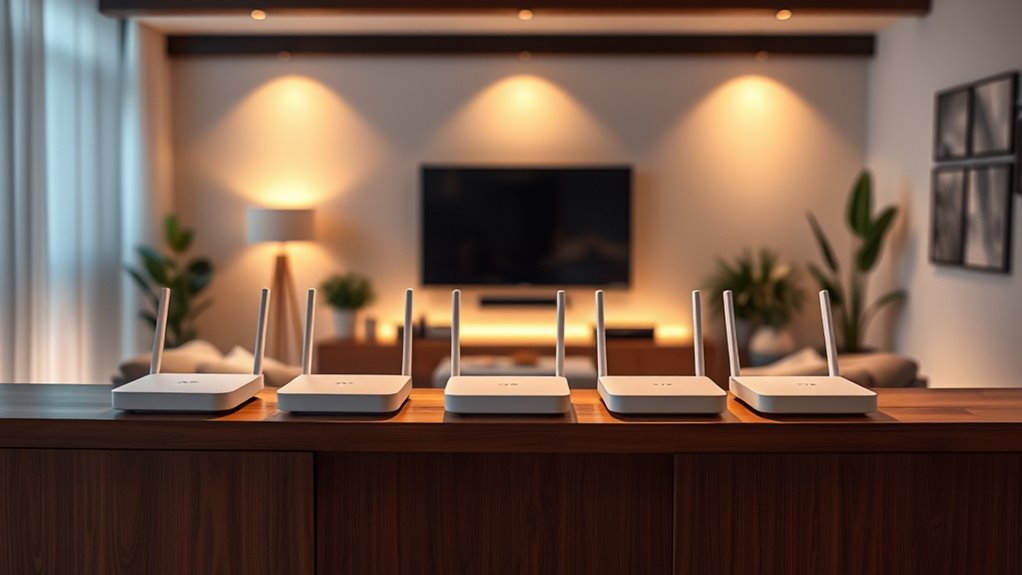

Looking for a mesh Wi-Fi system that can reliably cover your entire home? The best options today combine fast speeds, easy setup, and strong coverage, but they vary in features and price. The Deco 7 Pro Tri-Band WiFi 7 BE10000 stands out as the top overall pick thanks to its impressive speed and scalability, while the TP-Link Deco X55 AX3000 offers excellent value for most users. On the other hand, premium models like the NETGEAR Orbi 770 Series deliver cutting-edge Wi-Fi 7 performance for demanding households. The main tradeoffs often involve balancing speed, coverage, ease of use, and price. Continue reading for a detailed breakdown of each system and which might fit your needs best.

Get tech for your team delivered free — and shop member deals
- Fast, free delivery on millions of items
- Access to Prime Big Deal Days deals on October 6–7
- Prime Video, Amazon Music and more included
Key Takeaways
- Tri-band Wi-Fi 7 systems generally offer the fastest speeds and best future-proofing, but come at a higher price point.
- The number of nodes impacts coverage, with 3-pack systems suitable for most homes, while 2-packs can be enough for smaller spaces.
- Wi-Fi 6E models provide less congestion and higher speeds, especially in crowded environments, but may be more expensive.
- User-friendly setup and management features are increasingly standard, but premium models offer more advanced controls.
- Tradeoffs often involve choosing between raw speed and coverage versus affordability and simplicity.
| Deco 7 Pro Tri-Band WiFi 7 BE10000 Whole Home Mesh System 6-Stream 10 Gbps |  | Best Overall for Future-Proof High-Performance Homes | Coverage: 7,600 sq.ft. | Number of Devices Supported: over 200 | Wi-Fi Speed: up to 5,188 Mbps (6 GHz), 4,324 Mbps (5 GHz), 574 Mbps (2.4 GHz) | VIEW ON AMAZON | See Our Full Breakdown |
| TP-Link Deco XE75 AXE5400 Tri-Band WiFi 6E Mesh System (3-Pack) |  | Best for Large Homes with Cutting-Edge WiFi 6E | WiFi Standard: WiFi 6E | Bands: Tri-Band | Coverage: 7200 sq.ft. | VIEW ON AMAZON | See Our Full Breakdown |
| NETGEAR Orbi 370 Series WiFi 7 Mesh System, 3 Pack |  | Best for Reliable WiFi 7 at a Competitive Price | Coverage: 6,000 sq ft | Number of Units: 3 | WiFi Standard: WiFi 7 | VIEW ON AMAZON | See Our Full Breakdown |
| NETGEAR Orbi 770 Series WiFi 7 Mesh System, 3 Pack |  | Best for Large, High-Demand Homes Needing Speed and Coverage | Coverage: Up to 8,000 sq ft | Number of Units: 3 | WiFi Technology: WiFi 7 | VIEW ON AMAZON | See Our Full Breakdown |
| TP-Link Deco X55 AX3000 WiFi 6 Mesh System (3-Pack) |  | Best Budget-Friendly Large Coverage with WiFi 6 | Wi-Fi Standard: Wi-Fi 6 (AX3000) | Coverage: up to 6,500 sq ft | Number of Devices Supported: up to 150 | VIEW ON AMAZON | See Our Full Breakdown |
| TP-Link Deco X55 AX3000 WiFi 6 Mesh System (2-Pack) |  | Best Overall for Large Homes with Many Devices | Wi-Fi Standard: Wi-Fi 6 (AX3000) | Coverage Area: 4500 sq ft | Device Capacity: Up to 150 devices | VIEW ON AMAZON | See Our Full Breakdown |
| TP-Link Deco S4 Mesh AC1900 WiFi System (3-Pack) |  | Best Value for Large Homes on a Budget | WiFi Standard: AC1900 | Coverage: up to 5,500 sq ft | Number of Units: 3 | VIEW ON AMAZON | See Our Full Breakdown |
| Deco 7 Dual-Band WiFi 7 Mesh System with 4 Streams, 5 Gbps |  | Best for Future-Proof Speeds and Streaming | WiFi Standard: WiFi 7 | Speed: 5 Gbps | Coverage: 6,600 sq ft | VIEW ON AMAZON | See Our Full Breakdown |
| TP-Link Deco XE75 AXE5400 Tri-Band WiFi 6E Mesh System – 2 Pack |  | Best for High-Speed, Interference-Free Connections with WiFi 6E | Coverage: 5500 sq ft | WiFi Bands: Tri-Band (6 GHz, 5 GHz, 2.4 GHz) | Total Speed: 5400 Mbps | VIEW ON AMAZON | See Our Full Breakdown |
| eero 7 Dual-Band Mesh Wi-Fi 7 Router (3-Pack) |  | Best for Future-Proofing and High Device Capacity | Wi-Fi Standard: Wi-Fi 7 | Coverage: 6,000 sq ft | Supported Devices: over 120 | VIEW ON AMAZON | See Our Full Breakdown |
| mesh wi fi system | Coverage | Number of Units | Security |
|---|---|---|---|
| Deco 7 Pro Tri-Band WiFi 7 BE1 | 7,600 sq.ft. | 3-pack | — |
| TP-Link Deco XE75 AXE5400 Tri- | 7200 sq.ft. | 3 | TP-Link HomeShield |
| NETGEAR Orbi 370 Series WiFi 7 | 6,000 sq ft | 3 | — |
| NETGEAR Orbi 770 Series WiFi 7 | Up to 8,000 sq ft | 3 | — |
| TP-Link Deco X55 AX3000 WiFi 6 | up to 6,500 sq ft | — | HomeShield |
| TP-Link Deco X55 AX3000 WiFi 6 | — | — | TP-Link HomeShield |
| TP-Link Deco S4 Mesh AC1900 Wi | up to 5,500 sq ft | 3 | — |
| Deco 7 Dual-Band WiFi 7 Mesh S | 6,600 sq ft | — | — |
| TP-Link Deco XE75 AXE5400 Tri- | 5500 sq ft | 2 | TP-Link HomeShield |
| eero 7 Dual-Band Mesh Wi-Fi 7 | 6,000 sq ft | — | WPA3 |
More Details on Our Top Picks
Deco 7 Pro Tri-Band WiFi 7 BE10000 Whole Home Mesh System 6-Stream 10 Gbps
This system stands out for its expansive coverage of up to 7,600 sq.ft. and support for over 200 devices, making it ideal for large households with heavy internet demands. Its Tri-band WiFi 7 delivers speeds up to 5,188 Mbps, surpassing many competitors like the TP-Link Deco XE75, while its 10G WAN/LAN port offers future-proofing for ultra-fast internet plans. AI-driven seamless roaming ensures stable connectivity across a large home, but the setup process can be daunting for users unfamiliar with advanced networking. Unlike simpler systems, this model requires a separate modem and may involve a complex initial configuration, limiting its appeal to tech-savvy users or those with demanding needs.
Pros:- Extensive coverage up to 7,600 sq.ft. supports many devices
- Supports WiFi 7 speeds up to 5,188 Mbps for demanding applications
- Future-proof with 10G WAN/LAN port and multiple high-speed ports
- Seamless AI-driven roaming for stable connectivity
Cons:- Requires a separate modem, adding to initial setup complexity
- Setup can be complex for non-technical users
- Performance varies depending on home layout
Best for: Residents of large homes needing robust, high-speed, future-ready Wi-Fi for multiple devices and streaming or gaming.
Not ideal for: Small apartments or users seeking simple plug-and-play setups, due to its complexity and high cost.
- Coverage:7,600 sq.ft.
- Number of Devices Supported:over 200
- Wi-Fi Speed:up to 5,188 Mbps (6 GHz), 4,324 Mbps (5 GHz), 574 Mbps (2.4 GHz)
- Number of Units:3-pack
- Ports:Four 2.5G WAN/LAN ports, USB 3.0 port
- Wi-Fi Bands:Tri-band Wi-Fi 7
- Security Features:TP-Link HomeShield, parental controls, IoT security
- Additional Features:AI-Roaming, VPN support, easy setup via app
Our verdict“This mesh system is best suited for tech-savvy users or large households needing top-tier, future-proof performance despite its setup complexity.”
TP-Link Deco XE75 AXE5400 Tri-Band WiFi 6E Mesh System (3-Pack)
This mesh system shines with its support for WiFi 6E, adding the 6 GHz band to reduce interference and boost speeds, covering up to 7,200 sq.ft. — slightly less than the Deco 7 Pro, but still ample for most large homes. Its AI-driven mesh technology simplifies setup, and its security features with TP-Link HomeShield help keep connected devices safe. While it supports high-speed WiFi 6E, actual internet speeds will depend heavily on your ISP plan, unlike the NETGEAR Orbi 770, which offers higher peak speeds. Its compatibility with all major ISPs makes it a flexible choice, but the price may be higher, and support for WiFi 6E devices is still emerging, possibly limiting immediate benefits.
Pros:- Supports WiFi 6E with the new 6 GHz band for less interference
- Coverage up to 7,200 sq.ft., suitable for large homes
- Easy setup with the Deco app and voice control compatibility
- Includes security features with TP-Link HomeShield
Cons:- Requires a modem for most internet services
- High price compared to WiFi 6 systems without 6E
- Performance limited by internet plan and device compatibility
Best for: Homeowners looking to future-proof their network with WiFi 6E and extensive coverage for multiple devices.
Not ideal for: Users on limited budgets or those with smaller homes, as the added WiFi 6E features come at a premium and the coverage might be more than needed.
- WiFi Standard:WiFi 6E
- Bands:Tri-Band
- Coverage:7200 sq.ft.
- Max Speed:5400 Mbps
- Number of Units:3
- Security:TP-Link HomeShield
Our verdict“Ideal for those eager to adopt WiFi 6E technology in large homes, though at a higher cost with some compatibility considerations.”
NETGEAR Orbi 370 Series WiFi 7 Mesh System, 3 Pack
The Orbi 370 Series offers up to 6,000 sq.ft. of coverage with WiFi 7 speeds reaching 5 Gbps, making it a solid choice for users who want the latest WiFi standard without the higher price of the NETGEAR Orbi 770. Its straightforward setup via the Orbi app and broad ISP compatibility make it accessible, while handling multiple devices simultaneously. However, it requires a subscription for NETGEAR Armor security, which can add to the overall cost, and its real-world coverage may fall short in more complex layouts. Despite emerging WiFi 7 support, compatibility with older devices remains limited, making this a good middle ground for tech-savvy users needing reliable, fast Wi-Fi.
Pros:- Supports WiFi 7 with speeds up to 5 Gbps
- Easy to set up with the Orbi app and broad ISP compatibility
- Handles multiple devices efficiently
- Supports coverage up to 6,000 sq.ft.
Cons:- Requires subscription for Armor security
- Actual coverage varies with home layout
- WiFi 7 device ecosystem still developing
Best for: Tech-savvy households seeking WiFi 7 with reliable coverage and manageable costs, especially those on a budget compared to the premium Orbi 770.
Not ideal for: Very large or obstructed homes where maximum coverage is critical, or users unwilling to pay for security subscriptions.
- Coverage:6,000 sq ft
- Number of Units:3
- WiFi Standard:WiFi 7
- Max Speed:5 Gbps
- Expandable Coverage:Up to 2,000 sq ft per satellite
- Compatibility:Any ISP
Our verdict“A reliable WiFi 7 mesh system suitable for users wanting fast, stable connections without the highest-end price tag.”
NETGEAR Orbi 770 Series WiFi 7 Mesh System, 3 Pack
The Orbi 770 Series stands out for its extensive coverage of up to 8,000 sq.ft. and speeds reaching 11 Gbps, ideal for large homes with demanding bandwidth needs like gaming, VR, or smart home systems. Its support for up to 100 devices and easy expansion make it a versatile choice, with the added security features and optional Armor protection. Compared with the Deco 7 Pro, it offers significantly higher speeds and broader coverage, but at a higher price point and with subscription requirements for security. Its WiFi 7 technology might be underutilized unless paired with high-end devices, but it provides a future-ready backbone for tech-rich homes.
Pros:- Up to 8,000 sq.ft. coverage with no dead zones
- Speeds up to 11 Gbps for demanding applications
- Supports up to 100 devices simultaneously
- Includes security features, optional Armor
Cons:- Requires a subscription for Armor security
- Higher price point compared to other WiFi 7 options
- WiFi 7 ecosystem still emerging, device compatibility varies
Best for: Large households and tech enthusiasts who need maximum coverage, blazing-fast speeds, and robust device support for high-demand activities.
Not ideal for: Budget-conscious users or those with smaller spaces, as it involves a higher cost and may offer more capacity than needed.
- Coverage:Up to 8,000 sq ft
- Number of Units:3
- WiFi Technology:WiFi 7
- Speed:Up to 11 Gbps
- Additional Coverage:Up to 2,750 sq ft per satellite
- Compatibility:Any ISP
Our verdict“This system is best suited for large, high-demand homes seeking maximum speed and coverage with future-ready technology.”
TP-Link Deco X55 AX3000 WiFi 6 Mesh System (3-Pack)
The Deco X55 offers reliable WiFi 6 coverage up to 6,500 sq.ft. for a more affordable price compared to WiFi 7 systems like the NETGEAR Orbi 770. It supports up to 150 devices, making it suitable for busy households, and it features gigabit Ethernet ports for wired backhaul. While it doesn’t offer the lightning-fast speeds of WiFi 7, its performance is solid for streaming, browsing, and moderate gaming. Setup is straightforward with the Deco app, and security features through HomeShield add peace of mind. However, it requires a modem, and its higher price for a 3-pack might deter budget shoppers, especially since WiFi 6 is now being overshadowed by WiFi 6E and 7.
Pros:- Supports large coverage up to 6,500 sq.ft.
- Supports up to 150 devices simultaneously
- Easy setup via the Deco app
- Includes gigabit Ethernet ports for wired connections
Cons:- Requires a modem for most ISPs
- No support for WiFi 6E or WiFi 7
- Higher price point for a 3-pack versus older WiFi 5 systems
Best for: Large households seeking dependable WiFi coverage at a lower cost, with simpler setup and without the need for WiFi 7 support.
Not ideal for: Users needing the highest possible speeds or future-proof technology, as WiFi 6 may be limited compared to newer standards.
- Wi-Fi Standard:Wi-Fi 6 (AX3000)
- Coverage:up to 6,500 sq ft
- Number of Devices Supported:up to 150
- Ethernet Ports:3 per unit
- Mesh Technology:AI-Driven Mesh
- Security:HomeShield
Our verdict“A reliable, budget-friendly choice for large homes needing stable WiFi coverage without the latest WiFi standards.”
TP-Link Deco X55 AX3000 WiFi 6 Mesh System (2-Pack)
The Deco X55 stands out for delivering extensive Wi-Fi coverage up to 4,500 square feet and supporting up to 150 devices simultaneously, making it well-suited for large households. Compared with the Deco S4, it offers Wi-Fi 6 speeds and more advanced security features, though it requires a separate modem for most ISPs and lacks a built-in one. Its AI-driven mesh technology ensures reliable connections across a sizable area, but initial setup can be challenging for less tech-savvy users. This system strikes a good balance between performance and coverage, especially for those who want a secure, future-proof network without paying for premium features or Wi-Fi 7 speeds.
Pros:- Extensive coverage up to 4,500 sq ft
- Supports up to 150 devices with reliable performance
- Easy setup via user-friendly app
- Includes advanced security with TP-Link HomeShield
Cons:- Requires a separate modem for most ISPs
- No built-in modem included
- Some users may face initial setup issues
Best for: Large families with many smart devices and a preference for security features
Not ideal for: Users with small apartments or those seeking an all-in-one modem-router solution
- Wi-Fi Standard:Wi-Fi 6 (AX3000)
- Coverage Area:4500 sq ft
- Device Capacity:Up to 150 devices
- Ethernet Ports:6 total (3 per unit)
- Mesh Technology:AI-Driven Mesh
- Security:TP-Link HomeShield
Our verdict“This mesh system is ideal for large homes needing reliable, secure Wi-Fi 6 coverage with many devices.”
TP-Link Deco S4 Mesh AC1900 WiFi System (3-Pack)
The Deco S4 offers solid coverage up to 5,500 square feet and supports a large number of devices, comparable to the Deco X55 but with slower Wi-Fi 5 speeds. Its simple setup and seamless mesh with a single network name make it appealing for households that want reliable coverage without complex configurations. While it supports wired backhaul, it lacks Wi-Fi 6 or Wi-Fi 7 speeds, which means it won’t handle high-bandwidth activities as efficiently as newer models like the Deco 7 or eero 7. It’s an affordable choice for those seeking broad coverage, but users with demanding streaming or gaming needs might find its performance limiting.
Pros:- Coverage up to 5,500 sq ft
- Supports wired backhaul for enhanced speeds
- Easy setup via mobile app
- Supports all major ISPs
Cons:- Limited to Wi-Fi 5 speeds, slower for high-bandwidth tasks
- No Wi-Fi 6 or Wi-Fi 7 support
- No integrated modem
Best for: Budget-conscious families needing broad coverage and easy setup
Not ideal for: Power users or gamers who require high-speed Wi-Fi for demanding applications
- WiFi Standard:AC1900
- Coverage:up to 5,500 sq ft
- Number of Units:3
- Speed:3× 3 6 Stream
- Ethernet Ports per Unit:2
- Supports Wired Ethernet Backhaul:Yes
Our verdict“This system offers large-area coverage at a budget-friendly price but falls short on speed for intensive activities.”
Deco 7 Dual-Band WiFi 7 Mesh System with 4 Streams, 5 Gbps
The Deco 7 leverages WiFi 7 technology to deliver blazing-fast speeds up to 5 Gbps across a coverage of 6,600 square feet, making it ideal for streaming 4K/8K content and online gaming. Compared to Wi-Fi 6 systems like the Deco X55, it offers higher throughput and more advanced features, but it requires at least two units for optimal backhaul performance and a separate modem. Its seamless roaming and security features appeal to users who want a high-performance, future-ready network, though the higher price and need for compatible internet plans can be deterrents for some.
Pros:- Supports Wi-Fi 7 for faster, interference-free connections
- Coverage up to 6,600 sq ft with seamless mesh
- Easy to set up and manage via the Deco app
- Advanced security features including network and IoT protection
Cons:- Requires multiple units for best performance
- No built-in modem, separate modem needed
- Higher cost compared to Wi-Fi 6 models
Best for: Tech enthusiasts and heavy streamers seeking cutting-edge Wi-Fi 7 speeds
Not ideal for: Casual users with modest internet needs or budget constraints
- WiFi Standard:WiFi 7
- Speed:5 Gbps
- Coverage:6,600 sq ft
- Number of Streams:4
- Ethernet:2.5G Ethernet
- Device Support:up to 150 devices
Our verdict“This mesh system is perfect for early adopters and heavy users demanding ultimate speeds and future-proofing.”
TP-Link Deco XE75 AXE5400 Tri-Band WiFi 6E Mesh System – 2 Pack
The Deco XE75 excels by integrating tri-band WiFi 6E, offering a dedicated 6 GHz band for interference-free, ultra-fast connections. Covering up to 5,500 square feet, it supports WiFi 6E’s high speeds, making it suitable for demanding smart homes and heavy streaming. Compared to the Deco X55, it provides a third, 6 GHz band, which is ideal for reducing congestion. However, it requires a separate modem and comes at a higher price point. Its AI-driven mesh technology and security features make it a strong choice for tech-savvy users wanting cutting-edge performance and security, but those on a tight budget might find it less attractive.
Pros:- Supports WiFi 6E with a dedicated 6 GHz band
- Coverage up to 5,500 sq ft
- Easy setup via Deco app
- Includes security features with HomeShield
Cons:- Requires a separate modem
- Higher price compared to WiFi 6 systems
- Limited availability of WiFi 6E compatible devices
Best for: Smart home enthusiasts and users needing interference-free high-speed Wi-Fi 6E
Not ideal for: Budget shoppers or those with modest internet needs and no need for WiFi 6E
- Coverage:5500 sq ft
- WiFi Bands:Tri-Band (6 GHz, 5 GHz, 2.4 GHz)
- Total Speed:5400 Mbps
- Number of Units:2
- Security:TP-Link HomeShield
- Compatibility:All major ISPs
Our verdict“This system is tailored for users who want the fastest, interference-free Wi-Fi 6E connectivity for smart homes.”
eero 7 Dual-Band Mesh Wi-Fi 7 Router (3-Pack)
The eero 7 set supports Wi-Fi 7 with dual-band radios, offering speeds up to 6,000 sq ft and handling over 120 devices seamlessly. Its backward compatibility ensures smooth integration with existing networks, and its advanced security features bolster home protection. Compared to the Deco 7, the eero 7 emphasizes ease of use and reliable performance across a large area, but it comes at a premium price and requires a compatible internet plan for full speed. It’s an appealing choice for those planning for the future and wanting a sleek, managed mesh system with high device support.
Pros:- Supports Wi-Fi 7 with coverage up to 6,000 sq ft
- Handles over 120 devices with ease
- Backward compatible and easy to manage
- Advanced WPA3 security and optional subscription features
Cons:- Higher price point
- Full performance depends on compatible internet plan
- Some features require subscription
Best for: Tech-forward households that want future-proof Wi-Fi with simple management
Not ideal for: Budget-conscious users or those with small homes and fewer devices
- Wi-Fi Standard:Wi-Fi 7
- Coverage:6,000 sq ft
- Supported Devices:over 120
- Number of Radios:2
- Security:WPA3
- Ethernet Ports:Two 2.5 GbE
Our verdict“This mesh system is designed for users seeking future-ready Wi-Fi 7 coverage with high device capacity and simple management.”

How We Picked
In evaluating these mesh Wi-Fi systems, I focused on performance, coverage, ease of setup, and value for money. Speed benchmarks and compatibility with the latest Wi-Fi standards, such as Wi-Fi 6E and Wi-Fi 7, played a key role. Build quality and user interface also influenced rankings, with systems that are straightforward to install and manage gaining an edge. I compared each option against similar models to determine which provides the best balance of features for its price, aiming to highlight solutions suitable for different types of users—from tech enthusiasts to casual homeowners.| mesh wi fi system | Security |
|---|---|
| Deco 7 Pro Tri-Band WiFi 7 BE1 | — |
| TP-Link Deco XE75 AXE5400 Tri- | TP-Link HomeShield |
| NETGEAR Orbi 370 Series WiFi 7 | — |
| NETGEAR Orbi 770 Series WiFi 7 | — |
| TP-Link Deco X55 AX3000 WiFi 6 | HomeShield |
| TP-Link Deco X55 AX3000 WiFi 6 | TP-Link HomeShield |
| TP-Link Deco S4 Mesh AC1900 Wi | — |
| Deco 7 Dual-Band WiFi 7 Mesh S | — |
| TP-Link Deco XE75 AXE5400 Tri- | TP-Link HomeShield |
| eero 7 Dual-Band Mesh Wi-Fi 7 | WPA3 |
Factors to Consider When Choosing Mesh Wi Fi Systems
Choosing the right mesh Wi-Fi system involves more than just speed ratings. Several factors can help you find a setup that fits your specific home environment and usage habits. Understanding coverage needs, system compatibility, and future-proofing ensures you make a smart investment. It’s also important to recognize common pitfalls, like overestimating coverage or overspending on features you won’t use. This guide will walk through the key points to consider before making your purchase.Coverage and Scalability
Assess your home’s size and layout to determine how many nodes you need. Larger homes or multi-story buildings often require more units to eliminate dead zones, while smaller apartments may do fine with just two. Some systems allow easy expansion by adding more nodes, offering flexibility as your needs evolve. Keep in mind that coverage also depends on wall materials and interference from other devices, which can reduce effective range despite high specifications.
Wi-Fi Standards and Speed
Focus on systems supporting Wi-Fi 6 or Wi-Fi 6E for the best future-proofing and performance, especially if you have multiple devices or high-bandwidth needs. Wi-Fi 7 is emerging as the new standard, promising even faster speeds. However, these advanced standards come with a higher price tag. Consider your current and anticipated device ecosystem to choose a system that won’t leave you with outdated hardware too quickly.
Ease of Setup and Management
Most modern mesh systems emphasize simple setup via mobile apps, but some interfaces are more intuitive than others. Look for features like automatic network optimization, guest networks, and parental controls that are straightforward to configure. If you’re less tech-savvy, prioritize models with guided setup processes and robust customer support. Advanced users might prefer systems with more detailed controls and customization options, but these often require a steeper learning curve.
Price and Value
While higher-priced systems tend to offer faster speeds and more features, they aren’t always necessary for every home. Consider your actual internet plan and household needs—spending on premium hardware might not yield proportional benefits if your internet speed is capped. Conversely, investing in a more capable system can future-proof your setup and support more devices simultaneously. Balance your budget with the expected performance to avoid overspending on unnecessary features.
Additional Features and Compatibility
Look for features like wired backhaul, which can improve performance in larger homes, and compatibility with smart home devices. Some systems offer built-in security features or integration with voice assistants. Compatibility with your existing router or modem can also influence your choice; many mesh systems work as a standalone solution or extend your current network. Ensure the system supports your preferred management app and offers firmware updates for ongoing security and performance improvements.
Frequently Asked Questions
Will a mesh Wi-Fi system improve my internet speed?
A mesh Wi-Fi system can improve your internet experience by providing more consistent coverage and reducing dead zones, especially in larger homes. However, it doesn’t increase your internet plan’s maximum speed; it optimizes how that speed is distributed across your devices. For the best results, ensure your internet speed is sufficient for your needs and that your mesh system supports the latest Wi-Fi standards. Upgrading your router or modem might be necessary if your current setup is outdated.
How many nodes do I need for my home?
The number of nodes depends on your home’s size, layout, and construction materials. A typical 2-3 bedroom house might only need a 2- or 3-node system, while larger or multi-floor homes could require more. Think about coverage gaps you’ve experienced and aim for a system that can be expanded if needed. Remember, more nodes generally mean better coverage but also a higher cost, so balance your needs with your budget.
Are Wi-Fi 6E or Wi-Fi 7 systems worth the extra expense?
Wi-Fi 6E and Wi-Fi 7 offer higher speeds and less congestion, which benefits homes with many connected devices or high-bandwidth activities like gaming and streaming. They are more future-proof, but their advantages might not be fully realized unless most of your devices support these standards. If your current devices are still on Wi-Fi 5 or Wi-Fi 6, investing in Wi-Fi 6E or 7 may be unnecessary now but could pay off in a few years as your device ecosystem upgrades.
Can I replace my existing router with a mesh system?
Yes, many mesh systems are designed to replace traditional routers, offering improved coverage and management features. However, compatibility depends on your existing modem or ISP device; some systems work best when paired with a compatible modem. If you have a complex network setup or specific requirements, check whether the mesh system can integrate smoothly or if you’ll need to reconfigure your existing hardware. For most users, a mesh system offers a straightforward upgrade path for better Wi-Fi coverage.
What’s the typical lifespan of a mesh Wi-Fi system?
Most mesh Wi-Fi systems remain effective for about 3-5 years, depending on how quickly new standards emerge and how well the firmware is maintained. Regular updates can extend their usability by improving security and performance. As Wi-Fi standards evolve, older systems may become less compatible or less capable of supporting new technologies. Planning for an upgrade every few years helps ensure that your network stays secure and fast, especially as your household’s internet needs grow.
Conclusion
The best overall mesh Wi-Fi system for most users remains the Deco 7 Pro Tri-Band WiFi 7 BE10000, thanks to its speed, coverage, and future-proofing. Budget-conscious buyers should consider the TP-Link Deco X55 AX3000 for a reliable, cost-effective option. Tech enthusiasts or large households demanding top speeds and advanced features will find the NETGEAR Orbi 770 Series a fitting choice. For beginners, systems like the eero 7 Dual-Band Mesh Wi-Fi 7 Router combine simplicity with solid performance. Ultimately, choosing the right mesh system depends on your home size, internet use, and budget, but understanding these key factors can help you make a smarter decision.
Halloween Picks
halloween
As an affiliate, we earn on qualifying purchases.