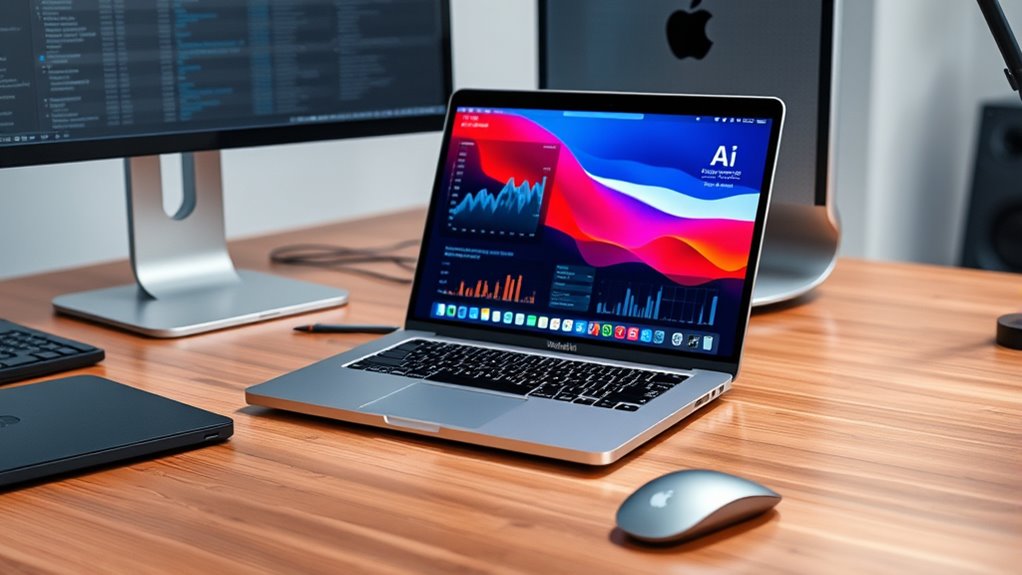

Choosing the right MacBook Pro for data science and AI in 2026 involves balancing power, portability, and price. The Apple 2026 MacBook Pro with M5 Pro Chip stands out for its cutting-edge performance and high-resolution display, making it ideal for intensive computations. The MacBook Pro with M1 Pro offers a proven balance of speed and efficiency, perfect for most data tasks, while the MacBook Pro with M5 Max delivers maximum power for large-scale AI workloads. The main tradeoffs in this category are between raw processing ability, portability, and cost. Keep reading for a detailed breakdown of each option and how to choose the best fit for your needs.

Get business pricing on tech for your team
- Business-only prices and quantity discounts
- Tax-exempt purchasing
- Multiple users, one account, clear invoices
Key Takeaways
- The M5 Max-powered MacBook Pro offers the highest computational performance but comes with a premium price and heavier weight.
- Models with 48GB or more RAM excel at handling large datasets and complex AI models, making them suitable for heavy-duty data science tasks.
- Display size and resolution significantly impact productivity, especially for multitasking and visualization work.
- The newest M5 chips provide notable performance gains over earlier M1 and M1 Pro models, but the difference may be overkill for casual or beginner users.
- Battery life varies widely; high-performance models may sacrifice endurance during intensive AI workloads.
| Apple 2026 MacBook Pro Laptop with M5 Pro Chip, 14.2-inch Liquid Retina XDR Display, 24GB RAM, 1TB SSD, Space Black |  | Best Overall for Cutting-Edge Data Science and AI | Processor: Apple M5 Pro chip with 15-core CPU and 16-core GPU | Display: 14.2-inch Liquid Retina XDR | Memory: 24GB Unified Memory | VIEW ON AMAZON | See Our Full Breakdown |
| Apple MacBook Pro (14-inch, M1 Pro, 16GB RAM, 1TB SSD, Silver) |  | Best for Balanced Performance and Portability | Processor: M1 Pro with 10-core CPU, 16-core GPU | Display: 14-inch Liquid Retina XDR | Memory: 16GB RAM | VIEW ON AMAZON | See Our Full Breakdown |
| Apple MacBook Pro Laptop with M5 Pro Chip, 14.2-inch Liquid Retina XDR Display, 48GB RAM, 1TB SSD, Space Black |  | Best for Heavy-Duty Creative and Data Tasks | Processor: Apple M5 Pro chip with 18-core CPU and 20-core GPU | Display: 14.2-inch Liquid Retina XDR | Memory: 48GB Unified Memory | VIEW ON AMAZON | See Our Full Breakdown |
| Apple 2026 MacBook Pro Laptop with M5 Pro Chip, 16.2-inch Liquid Retina XDR Display, 48GB RAM, 1TB SSD, Wi-Fi 7, Space Black |  | Best for Demanding Mobile Professionals | Processor: Apple M5 Pro chip with 18-core CPU and 20-core GPU | Display: 16.2-inch Liquid Retina XDR | Memory: 48GB Unified Memory | VIEW ON AMAZON | See Our Full Breakdown |
| Apple MacBook Pro Laptop with M5 Max, 18-core CPU, 40-core GPU, 16.2-inch Display, 128GB Memory, 2TB SSD, Space Black |  | Best for Ultra-High Performance AI and Data Science | Processor: M5 Max with 18-core CPU and 40-core GPU | Display: 16.2-inch Liquid Retina XDR | Memory: 128GB Unified Memory | VIEW ON AMAZON | See Our Full Breakdown |
| Apple 2026 MacBook Neo 13-inch Laptop with A18 Pro Chip, Liquid Retina Display, 8GB RAM, 256GB SSD, FaceTime HD Camera, Silver |  | Best for Portability and Everyday AI Tasks | Display: 13-inch Liquid Retina | Processor: A18 Pro chip | Memory: 8GB Unified Memory | VIEW ON AMAZON | See Our Full Breakdown |
| Apple 2025 MacBook Pro Laptop with M5 Chip, 14.2-inch Liquid Retina XDR Display, 16GB RAM, 1TB SSD, Space Black |  | Best for Demanding Workloads and Creative Professionals | Display: 14.2-inch Liquid Retina XDR | Processor: Apple M5 chip with 10-core CPU and GPU | Memory: 16GB Unified Memory | VIEW ON AMAZON | See Our Full Breakdown |
| Apple MacBook Pro 14-inch 2021 with M1 Pro Chip, 32GB RAM, 512GB SSD, Silver |  | Best for Heavy Multitasking and Complex Data Models | Display: 14.2-inch Liquid Retina XDR | Processor: Apple M1 Pro 8-core CPU, 14-core GPU | Memory: 32GB DDR4 SDRAM | VIEW ON AMAZON | See Our Full Breakdown |
| macbook pro for data science and ai | Processor | Display | Memory | Storage |
|---|---|---|---|---|
| Apple 2026 MacBook Pro Laptop | Apple M5 Pro chip with 15-core CPU and 16-core GPU | 14.2-inch Liquid Retina XDR | 24GB Unified Memory | 1TB SSD |
| Apple MacBook Pro | M1 Pro with 10-core CPU, 16-core GPU | 14-inch Liquid Retina XDR | 16GB RAM | 1TB SSD |
| Apple MacBook Pro Laptop with | Apple M5 Pro chip with 18-core CPU and 20-core GPU | 14.2-inch Liquid Retina XDR | 48GB Unified Memory | 1TB SSD |
| Apple 2026 MacBook Pro Laptop | Apple M5 Pro chip with 18-core CPU and 20-core GPU | 16.2-inch Liquid Retina XDR | 48GB Unified Memory | 1TB SSD |
| Apple MacBook Pro Laptop with | M5 Max with 18-core CPU and 40-core GPU | 16.2-inch Liquid Retina XDR | 128GB Unified Memory | 2TB SSD |
| Apple 2026 MacBook Neo 13-inch | A18 Pro chip | 13-inch Liquid Retina | 8GB Unified Memory | 256GB SSD |
| Apple 2025 MacBook Pro Laptop | Apple M5 chip with 10-core CPU and GPU | 14.2-inch Liquid Retina XDR | 16GB Unified Memory | 1TB SSD |
| Apple MacBook Pro 14-inch 2021 | Apple M1 Pro 8-core CPU, 14-core GPU | 14.2-inch Liquid Retina XDR | 32GB DDR4 SDRAM | 512GB SSD |
More Details on Our Top Picks
Apple 2026 MacBook Pro Laptop with M5 Pro Chip, 14.2-inch Liquid Retina XDR Display, 24GB RAM, 1TB SSD, Space Black
This model stands out for incorporating the latest M5 Pro chip, which offers significant speed boosts and advanced AI capabilities compared to previous chips like the M1 Pro. Its 14.2-inch Liquid Retina XDR display delivers high brightness and contrast, making data visualization and model development clearer. The 24GB of unified memory supports multitasking and large datasets, while the support for multiple external displays enhances productivity. However, the premium price and weight make it less suited for frequent travel, and its ecosystem lock-in limits flexibility outside Apple devices.
Pros:- Next-gen M5 Pro chip with advanced AI processing
- High-brightness Liquid Retina XDR display
- Supports multiple external monitors
- All-day battery life
Cons:- Premium price point
- Heavy for frequent portability
Best for: AI researchers and data scientists needing top-tier performance and display quality in a portable package
Not ideal for: Budget-conscious users or those requiring compatibility with non-Apple hardware, due to cost and ecosystem restrictions
- Processor:Apple M5 Pro chip with 15-core CPU and 16-core GPU
- Display:14.2-inch Liquid Retina XDR
- Memory:24GB Unified Memory
- Storage:1TB SSD
- Battery Life:All-day
- Ports:Three Thunderbolt 5, MagSafe 3, SDXC, HDMI, headphone jack
Our verdict“This is best suited for professionals who prioritize performance and display quality over portability and cost.”
Apple MacBook Pro (14-inch, M1 Pro, 16GB RAM, 1TB SSD, Silver)
This 2021 model, powered by the M1 Pro chip, provides a solid blend of performance and portability for data science and AI tasks, especially when compared to the newer M5 models. Its 14-inch Liquid Retina XDR display remains excellent for visualizing complex datasets. The 16GB RAM supports multitasking, though it’s less future-proof for very large models or datasets than the 48GB options. Its battery life of up to 17 hours makes it suitable for mobile work, but it lacks the latest connectivity options like Wi-Fi 7 found on newer models.
Pros:- Strong M1 Pro performance with high CPU and GPU cores
- Beautiful Liquid Retina XDR display
- Long battery life up to 17 hours
- Lightweight and portable
Cons:- No optical drive
- Limited to 512TB SSD in some configurations
Best for: Data scientists seeking a reliable, high-performance machine with excellent portability
Not ideal for: Power users with extremely large models or datasets who need the latest AI hardware capabilities
- Processor:M1 Pro with 10-core CPU, 16-core GPU
- Display:14-inch Liquid Retina XDR
- Memory:16GB RAM
- Storage:1TB SSD
- Battery Life:Up to 17 hours
- Weight:1.6 kg
Our verdict“Ideal for professionals who need a reliable, portable MacBook with strong performance but don’t require the latest AI hardware advancements.”
Apple MacBook Pro Laptop with M5 Pro Chip, 14.2-inch Liquid Retina XDR Display, 48GB RAM, 1TB SSD, Space Black
This configuration offers a massive 48GB of RAM and a more powerful M5 Pro chip with 18-core CPU and 20-core GPU, making it ideal for handling demanding AI workloads, large datasets, and complex modeling. Its 14.2-inch Liquid Retina XDR display ensures excellent visual clarity, while extensive connectivity options support multiple peripherals. The main tradeoffs are its heavier weight and higher price, which can limit portability and budget suitability for some users.
Pros:- High-core count M5 Pro chip with advanced AI capabilities
- Large 48GB RAM for intensive multitasking
- Excellent connectivity with multiple ports
- Premium display quality
Cons:- Heavy and less portable
- Premium price may be prohibitive
Best for: Data scientists and AI developers working with large models or intensive workflows who need maximum memory and performance
Not ideal for: Travelers or casual users who prioritize portability and lower cost over raw power
- Processor:Apple M5 Pro chip with 18-core CPU and 20-core GPU
- Display:14.2-inch Liquid Retina XDR
- Memory:48GB Unified Memory
- Storage:1TB SSD
- Ports:Three Thunderbolt 5, MagSafe 3, SDXC, HDMI, headphone jack
- Wireless:Wi-Fi 7, Bluetooth 6
Our verdict“Best suited for users who require intense processing power and memory, accepting portability and cost tradeoffs.”
Apple 2026 MacBook Pro Laptop with M5 Pro Chip, 16.2-inch Liquid Retina XDR Display, 48GB RAM, 1TB SSD, Wi-Fi 7, Space Black
This 16.2-inch model combines the powerful M5 Pro chip with a larger, stunning display, making it ideal for users who need a portable workstation with ample screen real estate. Its 48GB RAM and 1TB SSD support heavy multitasking and large datasets, while the Wi-Fi 7 connectivity ensures fast network access. Its weight and size make it less suited for frequent travel, but it offers a balanced mix of power and portability for demanding tasks on the move.
Pros:- Large 16.2-inch Liquid Retina XDR display
- Powerful M5 Pro chip with high-core CPU and GPU
- Ample 48GB RAM and fast 1TB SSD
- Seamless Apple ecosystem integration
Cons:- Heavy and sizable for ultra-portability
- High price barrier for some users
Best for: Mobile professionals and creators who need a larger display and significant processing power in a portable form
Not ideal for: Those seeking ultralight laptops or on a tight budget, given its weight and premium features
- Processor:Apple M5 Pro chip with 18-core CPU and 20-core GPU
- Display:16.2-inch Liquid Retina XDR
- Memory:48GB Unified Memory
- Storage:1TB SSD
- Battery Life:All-day
- Weight:4.71 pounds
Our verdict“Suitable for professionals needing a high-performance laptop with a larger display for demanding workloads on the go.”
Apple MacBook Pro Laptop with M5 Max, 18-core CPU, 40-core GPU, 16.2-inch Display, 128GB Memory, 2TB SSD, Space Black
This model, equipped with the M5 Max chip, delivers unmatched processing power for the most demanding AI and data science workloads. Its 128GB of RAM and 2TB SSD enable handling of massive datasets and complex models with ease. The 16.2-inch Liquid Retina XDR display offers stunning visuals, while the extensive port selection supports diverse peripherals. The primary tradeoff is its high cost and weight, making it less suitable for frequent travel or budget-conscious users.
Pros:- Ultimate M5 Max chip with highest core counts for demanding tasks
- Exceptional 128GB RAM supports massive datasets
- High-performance 16.2-inch display
- Versatile port array for extensive connectivity
Cons:- Very high price point
- Heavy and less portable
Best for: Top-tier data scientists and AI professionals working with extremely large datasets or complex models requiring maximum hardware capacity
Not ideal for: Casual users or those with mobility constraints, due to weight and cost
- Processor:M5 Max with 18-core CPU and 40-core GPU
- Display:16.2-inch Liquid Retina XDR
- Memory:128GB Unified Memory
- Storage:2TB SSD
- Ports:Three Thunderbolt 5, MagSafe 3, SDXC, HDMI, headphone jack
- Wireless:Wi-Fi 7, Bluetooth 6
Our verdict“This is the ideal choice for professionals who need the maximum possible power and are prepared to invest heavily, accepting portability limitations.”
Apple 2026 MacBook Neo 13-inch Laptop with A18 Pro Chip, Liquid Retina Display, 8GB RAM, 256GB SSD, FaceTime HD Camera, Silver
This model stands out for its ultra-lightweight design and impressive battery life, making it perfect for data scientists who need a machine on the go. Compared to the MacBook Pro M1 Pro, the Neo offers less raw power but excels in portability and battery longevity, which can be critical for fieldwork or commuting. Its A18 Pro chip provides adequate performance for light data processing and AI tasks, though the limited 8GB RAM and 256GB storage may restrict heavier workloads. The vibrant Liquid Retina display enhances visual clarity, but the small storage could become a bottleneck with larger datasets. This pick makes the most sense for students or professionals who prioritize mobility over raw computing power.
Pros:- Extremely lightweight and portable at just 2.71 pounds
- Long battery life of up to 16 hours supports extended work sessions
- Vibrant Liquid Retina display with rich color reproduction
- Seamless iPhone integration enhances user experience
Cons:- Limited storage capacity for large datasets or model files
- 8GB RAM may hinder multitasking or heavy data processing
Best for: Data science students or professionals who need a portable device for light AI and data tasks
Not ideal for: Power users running large datasets or complex models that require extensive storage and RAM
- Display:13-inch Liquid Retina
- Processor:A18 Pro chip
- Memory:8GB Unified Memory
- Storage:256GB SSD
- Camera:1080p FaceTime HD
- Battery Life:Up to 16 hours
Our verdict“This device suits those needing a lightweight, everyday AI-capable laptop with excellent battery life, but not heavy-duty data science workloads.”
Apple 2025 MacBook Pro Laptop with M5 Chip, 14.2-inch Liquid Retina XDR Display, 16GB RAM, 1TB SSD, Space Black
This model is distinguished by its powerful M5 chip, making it a clear choice for intensive data science and AI tasks compared to the Neo’s modest A18 Pro. Its high-performance 10-core CPU and GPU allow for faster model training and data processing, especially when dealing with larger datasets or complex algorithms. The 14.2-inch Liquid Retina XDR display offers exceptional clarity and contrast, ideal for visualizing data and results. While it provides more port options than the Neo, the premium price and weight might be a concern for those who need a highly portable device. This laptop makes the most sense for data scientists who value speed and multitasking capacity over light portability.
Pros:- High-performance M5 chip with 10-core CPU and GPU
- Stunning Liquid Retina XDR display with high brightness and contrast
- Excellent battery life supports all-day intensive work
- Multiple ports including SDXC and HDMI facilitate diverse workflows
Cons:- Premium pricing may be prohibitive for some buyers
- Limited port selection could require additional adapters for certain workflows
Best for: Data scientists and AI developers needing a powerful, portable workstation for complex projects
Not ideal for: Casual users or students with limited budgets who don’t require maximum processing power
- Display:14.2-inch Liquid Retina XDR
- Processor:Apple M5 chip with 10-core CPU and GPU
- Memory:16GB Unified Memory
- Storage:1TB SSD
- Battery Life:All-day
- Ports:Three Thunderbolt 4, MagSafe 3, SDXC, HDMI, headphone jack
Our verdict“This laptop is best for users who need serious computational power and display quality for AI and data science tasks on the go.”
Apple MacBook Pro 14-inch 2021 with M1 Pro Chip, 32GB RAM, 512GB SSD, Silver
This model is distinguished by its substantial 32GB RAM and the robust M1 Pro chip, making it ideal for running multiple data science environments and large AI models simultaneously. Its 14.2-inch Liquid Retina XDR display with ProMotion provides excellent visualization, although at a heavier weight compared to the Neo or the 2025 MacBook Pro. The extensive port selection enhances connectivity with external devices and data sources, which is beneficial for professional workflows. However, the high price and limited storage could be drawbacks for those with budget constraints or those managing very large datasets locally. This machine is best suited to power users who need maximum multitasking and processing capacity without sacrificing display quality.
Pros:- Powerful M1 Pro chip with high CPU and GPU performance
- Large 32GB RAM supports heavy multitasking and large datasets
- High-quality Liquid Retina XDR display with ProMotion
- Multiple connectivity options including HDMI and SDXC
Cons:- Higher price point relative to lighter models
- Limited to 512GB storage, which may necessitate external drives for large datasets
- Heavier and less portable than smaller models
Best for: Experienced data scientists and AI developers requiring extensive RAM and connectivity for complex projects
Not ideal for: Casual users or those prioritizing portability over raw power and extensive connectivity
- Display:14.2-inch Liquid Retina XDR
- Processor:Apple M1 Pro 8-core CPU, 14-core GPU
- Memory:32GB DDR4 SDRAM
- Storage:512GB SSD
- Weight:2.15 kg
- Ports:Thunderbolt 4, HDMI, SDXC, MagSafe 3
Our verdict“This machine perfectly suits professionals who need maximum performance and connectivity for intensive data science and AI tasks, accepting portability compromises.”

How We Picked
Our evaluation focused on performance benchmarks relevant to data science and AI, including CPU and GPU power, RAM capacity, and storage speed. Build quality, display clarity, and portability also played key roles, as these influence daily usability for demanding tasks. We prioritized models with the latest Apple silicon chips, ensuring future-proofing and compatibility with AI frameworks. Cost-to-performance ratio was considered, aiming to identify models that deliver high-end capabilities without excessive premiums. The ranking reflects a balance of raw power, usability, and value for data professionals and AI developers.
| macbook pro for data science and ai | Battery Life | Ports |
|---|---|---|
| Apple 2026 MacBook Pro Laptop | All-day | Three Thunderbolt 5, MagSafe 3, SDXC, HDMI, headphone jack |
| Apple MacBook Pro | Up to 17 hours | — |
| Apple MacBook Pro Laptop with | — | Three Thunderbolt 5, MagSafe 3, SDXC, HDMI, headphone jack |
| Apple 2026 MacBook Pro Laptop | All-day | — |
| Apple MacBook Pro Laptop with | — | Three Thunderbolt 5, MagSafe 3, SDXC, HDMI, headphone jack |
| Apple 2026 MacBook Neo 13-inch | Up to 16 hours | — |
| Apple 2025 MacBook Pro Laptop | All-day | Three Thunderbolt 4, MagSafe 3, SDXC, HDMI, headphone jack |
| Apple MacBook Pro 14-inch 2021 | — | Thunderbolt 4, HDMI, SDXC, MagSafe 3 |
Factors to Consider When Choosing Macbook Pro For Data Science And Ai
When selecting a MacBook Pro for data science and AI, it’s essential to consider not just raw specs but how they align with your workflow, project size, and mobility needs. The right choice depends on balancing performance with budget and portability. Here are key factors to guide your decision-making process.
Performance and Processing Power
For data science and AI, CPU and GPU capabilities are paramount. Choose a model with a high-core CPU and a dedicated GPU if you plan to run complex models or large datasets. The M5 Max chip, for instance, offers substantial power, but if your projects are less demanding, an M1 Pro may suffice and save costs. Over-investing in power when not needed can lead to unnecessary expense, so match your compute needs with your workload.
Memory (RAM)
RAM impacts how many tasks you can run simultaneously and how large datasets your machine can handle efficiently. For intensive AI and data science work, 32GB or more is advisable, especially with large models or datasets. However, more RAM also increases price and weight. Consider future needs—opting for 48GB or 64GB can extend your device’s relevance, but for lighter tasks, 16-32GB might be enough.
Display and Screen Size
A larger, high-resolution display improves productivity, especially when visualizing data or coding. The 16.2-inch models provide more workspace but tend to be bulkier and more expensive. The 14-inch options strike a balance between portability and screen real estate. Think about your typical working environment and whether portability outweighs screen size for your workflow.
Portability and Battery Life
Heavy-duty models with top-tier power often sacrifice battery life and portability. If you frequently work on the go, prioritize models that balance power with battery endurance, such as the 14-inch M1 Pro. Conversely, if mobility is less critical, a larger, more powerful model might be worth the extra weight. Consider your typical work environment to avoid tradeoffs that hinder your productivity.
Price and Future-Proofing
While premium models with the latest chips and maximum RAM deliver the best performance, they come at a higher cost. Think about how long you plan to use the device and whether investing in the newest technology will pay off in the long run. Budget models with slightly older chips can still serve well for less demanding tasks or as secondary machines but may need upgrading sooner.
Frequently Asked Questions
Is a MacBook Pro with M5 Max necessary for AI projects?
For most AI projects, especially those involving large data sets or complex models, the M5 Max offers the best performance with its powerful CPU and GPU. However, it’s not strictly necessary unless your work consistently pushes the limits of computational power. Many developers find that an M1 Pro or M5 Pro provides sufficient speed for typical AI and data science workloads, making the M5 Max more suitable for specialized, large-scale tasks.
How much RAM do I need for data science on a MacBook Pro?
At least 16GB of RAM is recommended for basic data science tasks, but 32GB or more will significantly improve performance when working with large datasets or running multiple models simultaneously. If you handle very large datasets or plan to use extensive machine learning libraries, opting for 48GB or 64GB can offer more headroom and smoother workflow, though it will increase the overall cost.
Should I prioritize display size over portability?
The choice depends on your typical work environment. Larger screens like the 16.2-inch models provide more space for multitasking and data visualization but can be less portable. If you often work while traveling or in different locations, a 14-inch model might serve better while still delivering ample screen real estate for most tasks. Balance your need for space against the convenience of portability.
Are newer chips always better for AI computing?
Newer chips like the M5 series generally offer better performance and power efficiency, which can translate into faster processing and longer battery life. However, the difference may be less noticeable for lighter workloads. If your projects are highly demanding, opting for the latest hardware makes sense; otherwise, an earlier generation like the M1 Pro can still deliver solid performance at a lower cost.
How long should I expect my MacBook Pro to last for data science and AI work?
With proper care, a MacBook Pro equipped with the latest Apple silicon can remain relevant for 4-6 years, especially if you choose higher specs like increased RAM and storage. Regular software updates from Apple also extend usability. Investing in a higher-tier model now can help future-proof your setup, reducing the need for early upgrades as software and project demands evolve.
Conclusion
For those seeking the best overall performance, the MacBook Pro with M5 Max is the top choice, ideal for heavy-duty AI and data science tasks. If you want a strong balance of power and value, the M1 Pro-based models provide excellent performance without the premium price. Beginners or those with less demanding needs might prefer the 13-inch MacBook Neo with A18 Pro Chip for portability and affordability. Finally, professionals requiring maximum display and processing capacity should consider the newest 16.2-inch models with M5 chips. Your choice ultimately depends on your workload intensity, portability needs, and budget constraints.
Halloween Picks
halloween
As an affiliate, we earn on qualifying purchases.